
children leave their mark on haus der kunst
Across the marble floor of Haus der Kunst’s central hall, wax-crayon scribbles spread over pale stone and slip through its grid of seams. Ei Arakawa-Nash’s Mega Please Draw Freely began with an invitation that sounds almost suspiciously simple inside a museum: choose a color and draw.
Each visitor added to the same surface and lends a dense, changing field that belonged to everyone who played within it. Children left evidence of their presence behind, while the architecture became part of the picture. This permission sets the terms for For Children. Art Stories since 1968, which brought together works made for young audiences by more than twenty artists.
The exhibition follows a shift that took hold during the late 1960s, when artists began approaching children as capable audiences and collaborators with a role in forming the work itself. It becomes an art history of redistributed authorship. Its central question concerns who gets to define an artwork and how it may be used.

For Children. Art Stories since 1968, Ei Arakawa-Nash, Mega Please Draw Freely, 2025, exhibition view. Haus der Kunst München, 2025 | image by Agostino Osio
a museum built through action
The historical starting point of Haus der Kunst‘s For Children. Art Stories since 1968 sits close to home in the archive of KEKS, a group formed around the Munich Art Academy in 1968. Its name is an acronym for the German words for art and education with cybernetics and sociology.
The members of KEKS left conventional lessons behind and moved into the city, where simple materials became tools for collective experiments. The group treated art as something that happened between people, with no finished object waiting at the end.
After presenting Biennale Bambini, the Venice Biennale’s first art-education contribution, in 1970, KEKS returned to Munich two years later to create a children’s and youth center inside Haus der Kunst. They imagined the museum as an environment its users could alter through experience.
Arakawa-Nash picks up this history through Jirō Yoshihara’s 1956 Gutai action, which invited children and adults to draw together on a large outdoor canvas in Ashiya Park. At Haus der Kunst, the gesture moves onto marble as an ever-growing drawing.

For Children. Art Stories since 1968, Basim Magdy, PINGPINPOOLPONG, or How I Learned to Laugh at Failure, 2018, exhibition view, Haus der Kunst München, 2025 | image by Agostino Osio
rules made to be rewritten by children
Basim Magdy’s PINGPINPOOLPONG, or How I Learned to Laugh at Failure gives children authority to create their own rules for a seemingly familiar game. Altered tables fuse table tennis with pool, then interrupt both with pinball-like obstacles. Balls disappear into holes or bounce away at strange angles.
Winning becomes nearly impossible, which is part of the design. A rulebook developed with children encourages players to enjoy randomness and celebrate together, while a blackboard leaves room for further inventions.

For Children. Art Stories since 1968, Ernesto Neto, Uni Verso Bebé II Lab, 2007/2025, exhibition view, Haus der Kunst München, 2025 | image by Agostino Osio
At the center of the exhibition, Uni Verso Bebé II Lab by Ernesto Neto approaches learning through the body before language takes over. Soft fabric forms hang from a glowing tent-like structure, creating an interior that refers to the shelter of the womb.
Visitors remove their shoes and crawl inside, where they can lie down among elastic membranes and padded volumes. Neto gives touch and bodily awareness the status of knowledge. Play begins here as curiosity, with no prescribed answer waiting at the end.

For Children. Art Stories since 1968, KOO JEONG A, HAUS DER MAGNET, 2025, exhibition view, Haus der Kunst München, 2025 | image by Agostino Osio
building the world, then taking it apart
Across the terrace facing the Eisbach, KOO JEONG A’s HAUS DER MAGNET turns sculpture into a space whose form becomes legible through use. The wooden structure wraps around a large magnet-shaped center, with skateable curves and extended platforms for watching or resting.
Skaters choose their own lines across its surfaces, while photoluminescent paint absorbs sunlight and glows after dark. The museum supplies the structure. Its users decide the rhythm.

For Children. Art Stories since 1968, Ólafur Elíasson, The cubic structural evolution project, 2004, exhibition view, Haus der Kunst München, 2025 | image by Agostino Osio
Building blocks bring the same question into the model city, though each work carries a different sense of time. The cubic structural evolution project by Olafur Eliasson places more than 500 kilograms of white LEGO bricks on a round table, where a shared city is built and dismantled throughout the exhibition.
Meanwhile, Yto Barrada’s Lyautey Unit Blocks (Play) begins with forms that spell LYAUTEY, referring to the first Resident-General of French-occupied Morocco and his role in Casablanca’s urban transformation. Visitors can break the name apart and use the blocks to form other words. One work asks how a future city might be built together. The other asks what histories have already been built into its pieces.
image courtesy Haus der Kunst
who writes the lesson?
Emily Floyd’s six-meter Steiner Rainbow enlarges a wooden stacking toy associated with Waldorf education until visitors can walk beneath it. Behind the arch, Jan Peter Hammer’s The Jungle Book borrows the hand-puppet language of children’s television for an unsettling lesson in contemporary economics. Its central character attacks the welfare state while praising privatization and financial growth. The child-friendly format becomes a delivery system for themes catered to grown-ups.
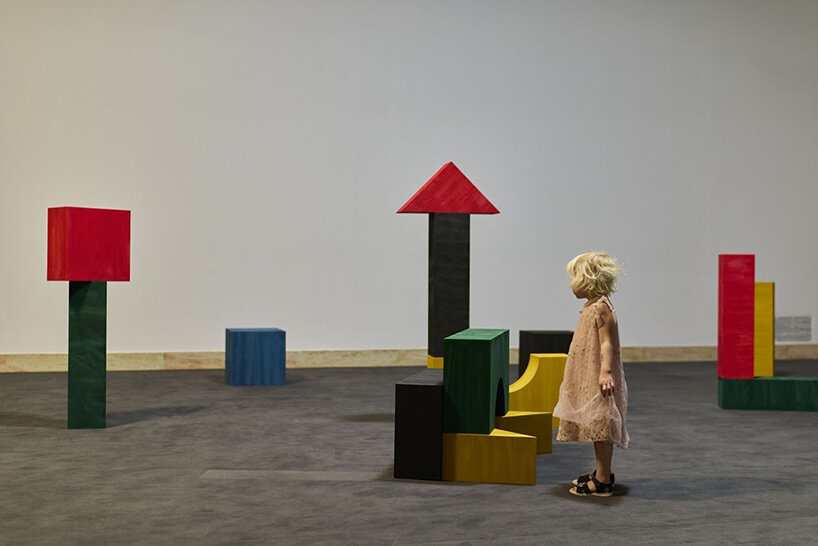
For Children. Art Stories since 1968, Yto Barrada, Lyautey Unit Blocks (Play), 2010, exhibition view, Haus der Kunst München, 2025 | image © David Levene
The tension between childlike representation and sophisticated themes gives For Children its strongest position within an exhibition about play. Childhood appears as a way of encountering culture while its terms are still open to revision. The artists hand over materials and make room for young people to alter what happens next.
Play first emerges through crayons and unstable rules, then expands through structures activated by movement. It becomes a first experience of cultural power. The art history here belongs as much to the children who draw across the floor and rebuild what adults placed in front of them.
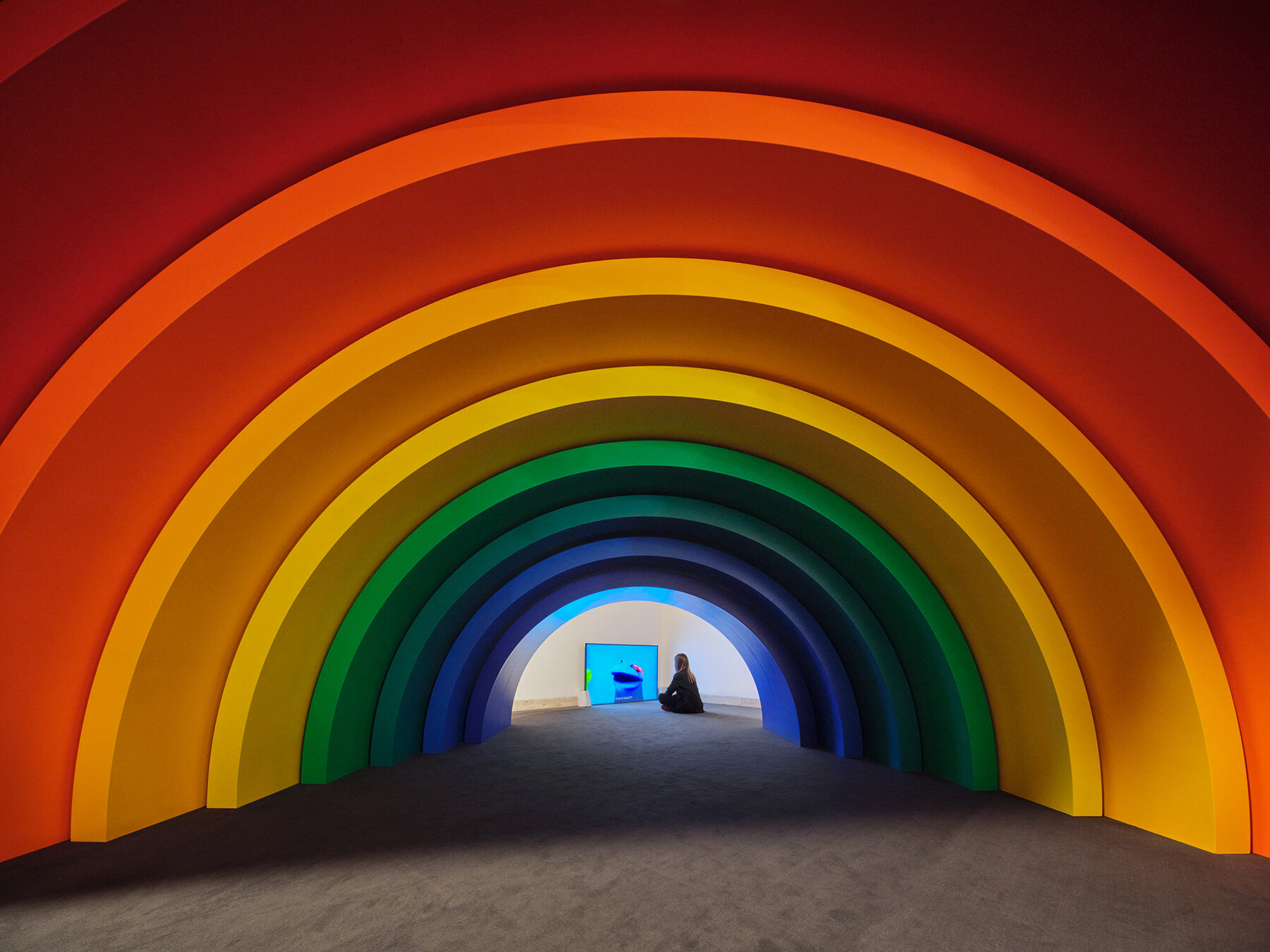
For Children. Art Stories since 1968, in front: Emily Floyd, Steiner Rainbow (6 Meters), 2025. behind: Jan Peter Hammer, The Jungle Book, 2013, exhibition view, Haus der Kunst München, 2025 | image © Agostino Osio
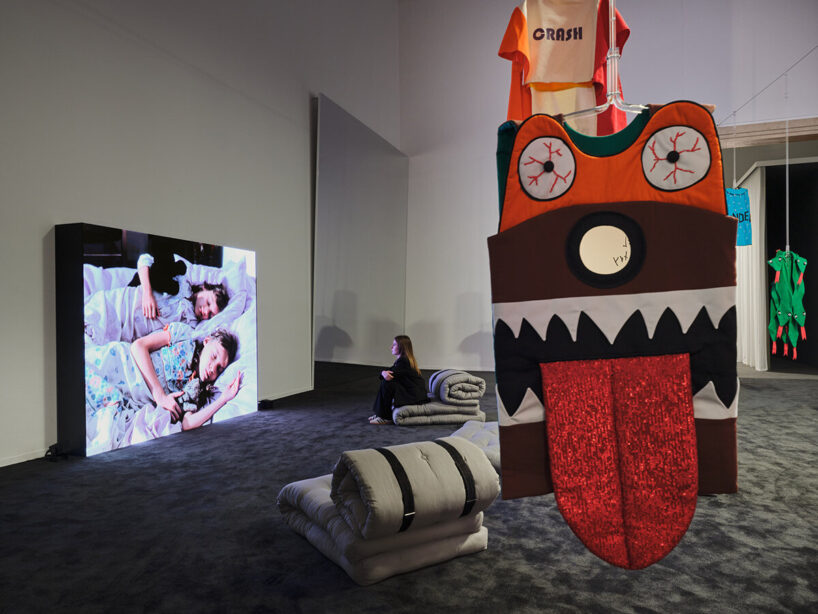
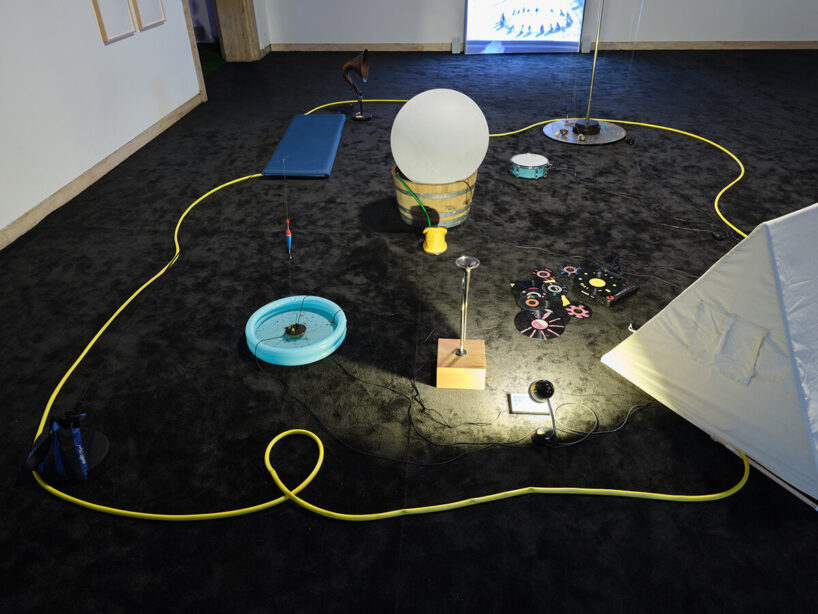
project info:
exhibition name: For children. Art stories since 1968
museum: Haus der Kunst | @haus_der_kunst
location: Munich, Germany
dates: July 18th, 2025 to May 31st, 2026
photography: © Agostino Osio
This article is part of designboom’s PLAY chapter, exploring what would happen if form didn’t follow function, but pleasure. Discover more stories that celebrate joy, imagination and playfulness here.
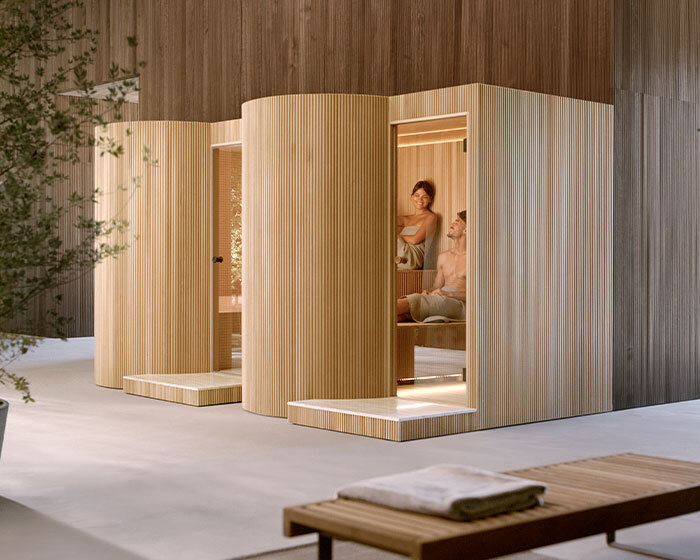
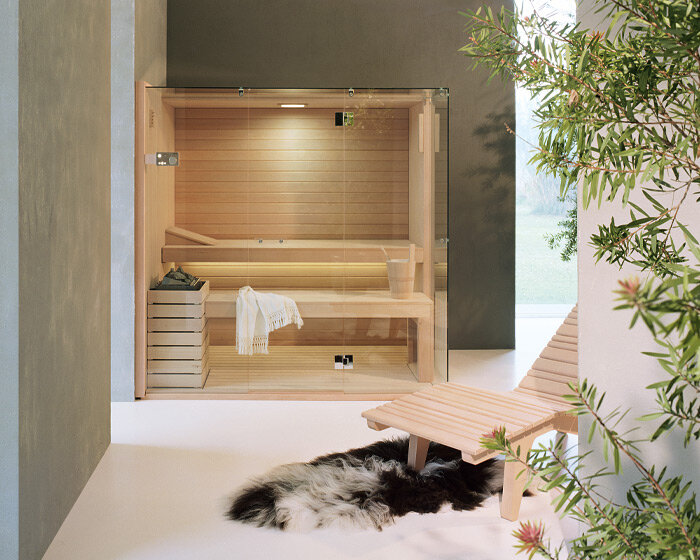
happening now! effe and patricia urquiola design baluar, a sauna and hammam collection translating medieval bastion geometries into wellness architecture.
children's spaces (154)
 Sep 03, 2026
 Aug 06, 2026
 Jun 03, 2026
 May 23, 2026
 May 19, 2026
ernesto neto (18)
 Aug 27, 2025
 Jun 08, 2025
 Jan 17, 2025
 Apr 26, 2024
exhibition design (810)


PLAY (45)
 Aug 10, 2026
 Aug 10, 2026
 Aug 09, 2026
 Aug 08, 2026
 Aug 08, 2026
 Sep 17, 2026
 Sep 15, 2026
 Sep 14, 2026