
3D printed cloak tricks infrared cameras through carefully redirected heat
free-form aluminum lattice hides irregular objects without leaving suspicious thermal gaps behind.
3D CLOAK SENDS HEAT THE LONG WAY ROUND
Researchers at the University of Illinois Urbana-Champaign and the Technical University of Denmark have developed a free-form 3D thermal cloak that can hide complex objects from infrared detection. Instead of simply blocking heat and leaving behind a suspicious cold patch, the device guides thermal energy around a protected space before allowing it to continue on its original path. From the outside, the temperature pattern appears largely undisturbed — which is considerably more convincing than placing a very obvious thermal wall around whatever you are trying to hide.
Earlier thermal cloaks typically worked with flat surfaces, simple geometries, or heat arriving from one fixed direction. This new version is designed for irregular three-dimensional forms and changing heat flows. The researchers first map how heat should move around the hidden object, then translate that pattern into a connected structure whose density and orientation vary from one area to another.

ALUMINUM LATTICE GIVES HEAT A DETOUR
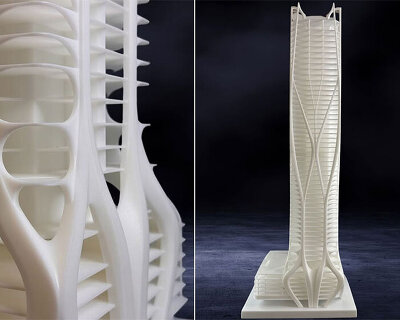
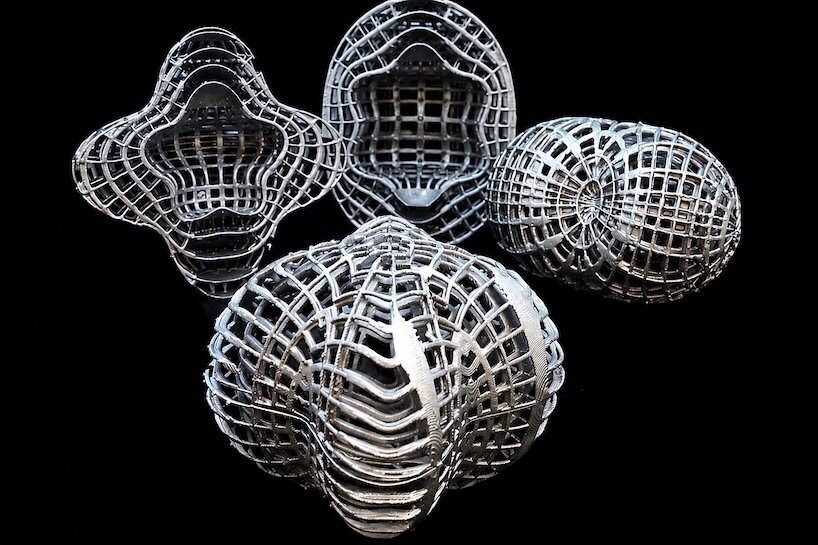
The cloak combines a 3D-printed aluminum lattice with PDMS, a rubber-like material that conducts very little heat. The aluminum forms carefully positioned routes through the structure, while the softer material slows heat down elsewhere. By changing the thickness and direction of the lattice bars, the researchers can control where heat travels — less invisibility cape, more highly organized thermal traffic system.
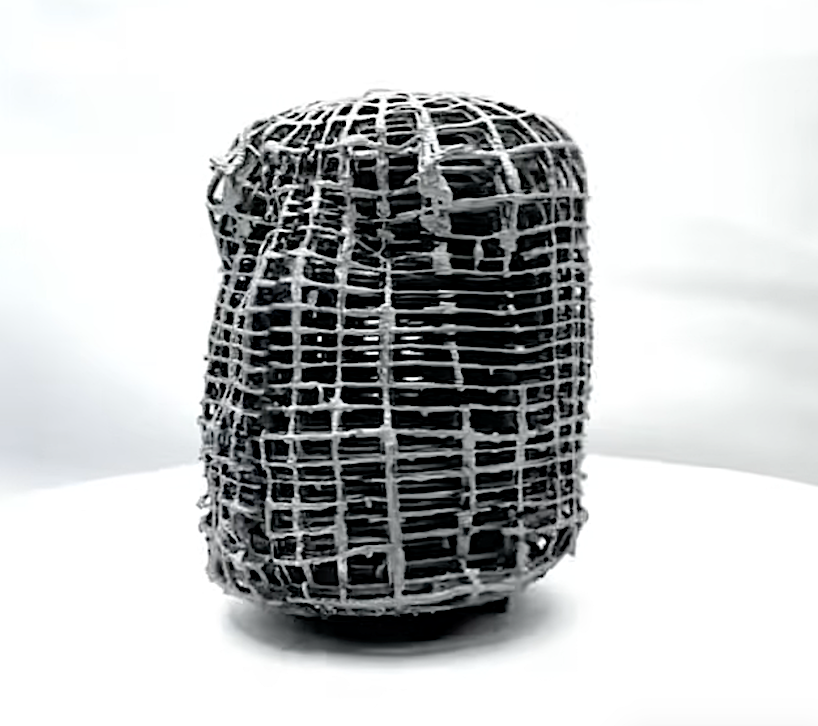
For the main experiment, the team placed an apple-shaped core inside a pear-shaped shell and positioned the structure between two aluminum plates. One side was heated to 40°C, while the other was cooled with iced water. After an hour, infrared images showed heat flowing around the inner object and returning to a nearly uninterrupted pattern outside the cloak, whether it travelled vertically or horizontally. The apple, at least thermally speaking, stayed out of the fruit bowl.
FROM FRUIT TESTS TO FACE-SHAPED CLOAKS
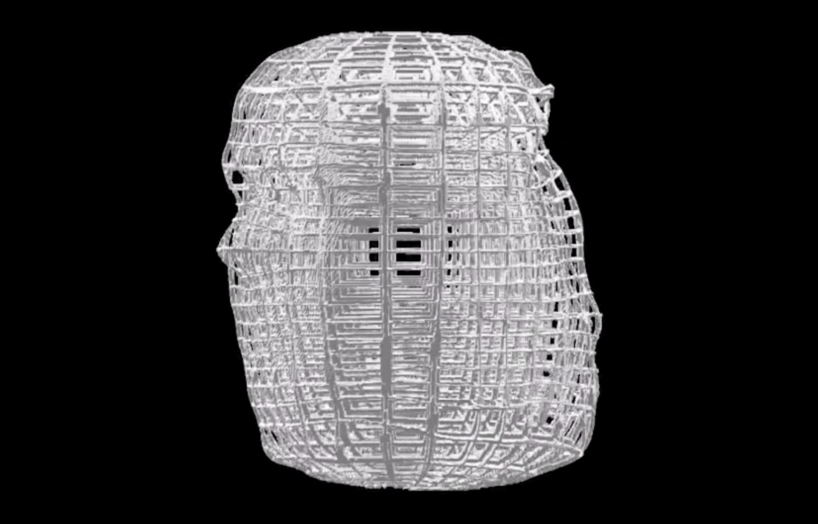
The method was tested on several other free-form shapes, including a second metal prototype and more intricate face-like structures produced from digital surface data. Some were printed in plastic to confirm that the designs could actually be manufactured, while simulations showed that the face-shaped versions could handle heat arriving along three different axes. Evidently, circles and spheres were no longer offering enough drama.
Beyond infrared concealment, the technology could help redirect heat around delicate sensors, electronic components, batteries, or equipment exposed to extreme temperatures. For now, however, the cloak remains a rigid, shape-specific laboratory prototype operating inside a controlled solid environment. It cannot yet be draped over a person or machine, especially one generating its own heat. The next stage will explore active systems capable of managing that internal warmth too — the point at which thermal invisibility may finally begin edging closer to the wardrobe.
project info:
name: Free-form thermal cloaks in three dimensions
researchers: Weichen Li, Yibo Wang, Ole Sigmund, Xiaojia Shelly Zhang
institutions: University of Illinois Urbana-Champaign and Technical University of Denmark
shop
your own online design shop — no sales commission collected