the city as a field of possibility
What if the city wasn’t something to consume but something to play? For the Situationists, this was a way of challenging the passive role assigned to people in modern society. Instead of simply following the routes, functions, images, and routines laid out for them, they imagined inhabitants who could wander, interfere, improvise, and collectively reshape the environments around them. The city, in other words, could become a field of possibility.
This ambition runs through the work of the Situationist International, the group of artists, writers, and theorists formed in Europe in 1957. Their critique extended from advertising and mass media to architecture, urban planning, art, and everyday life, all of which they saw as contributing to a culture in which people would experience the world as spectators. Guy Debord gave this condition its most influential name: the spectacle. But the Situationists’ response was not to produce better images. They wanted to change the relationship between people and the world those images represented, proposing wandering through cities without predetermined destinations, hijacking existing cultural material, constructing temporary situations, and imagining entirely new environments organized around play.
More than half a century later, their ideas have become strangely familiar. We move through immersive installations, interact with responsive architecture, participate in temporary urban interventions, and constantly produce and circulate our own images. Yet this raises a question the Situationists would probably have recognized immediately: when a space asks us to participate, are we actually given agency or are we being offered a more sophisticated way to perform within the spectacle?

New Babylon-Barcelona, 1963, original dimensions | image via @constant.101
the problem with being a spectator
The Situationist International emerged in postwar Europe amid economic growth, expanding consumer culture, mass media, and the reconstruction of cities. Everyday life was becoming more and more mediated by advertising and images of consumption. Urban space was being reorganized around specialized functions: housing here, work there, shopping somewhere else, with movement between them structured by roads, schedules, and infrastructure.
Guy Debord gave this condition its most influential formulation in The Society of the Spectacle, published in 1967. For Debord, the spectacle did not mean television, advertising, cinema, or visual entertainment, but it described a social condition in which relationships between people take place through representations and images. As he writes, the spectacle is ‘a social relation between people that is mediated by an accumulation of images that serve to alienate us from a genuinely lived life.’
The distinction matters because the Situationists were not simply opposed to images. Their criticism was directed at the relationship produced by the image, the distance between the person watching and the reality being watched.
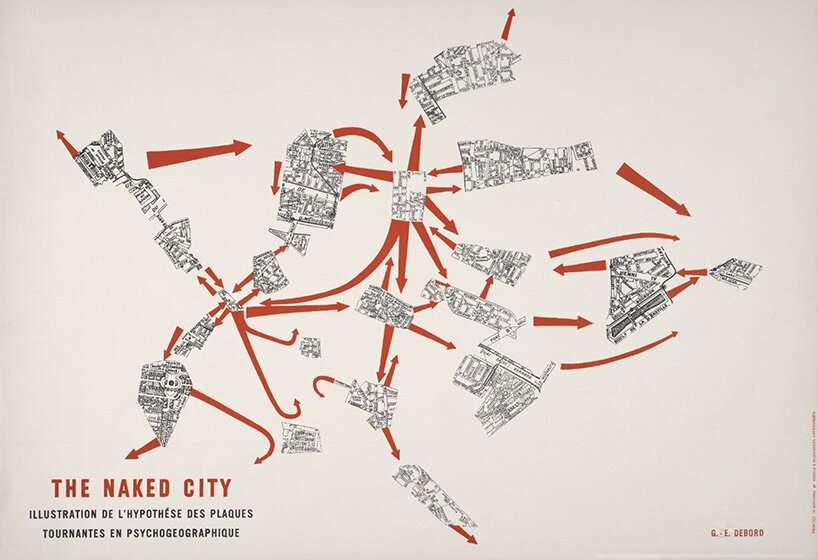
Asger Jorn and Guy Debord, The Naked City, 1957, published in Guide psychogéographique de Paris
leave the map behind
One of the Situationists’ most concrete attempts to create that activity was the dérive, or drift. Instead of moving through the city according to practical objectives like going to work or buying something, the dérive asked participants to abandon their usual reasons for moving and allow the attractions of the terrain and unexpected encounters to influence their route. The practice grew out of psychogeography, which the Situationists used to describe the effects of geographical environments on emotions and behavior. A street could feel inviting or hostile. A familiar route could produce a completely different experience depending on the person moving through it. The city was psychological.
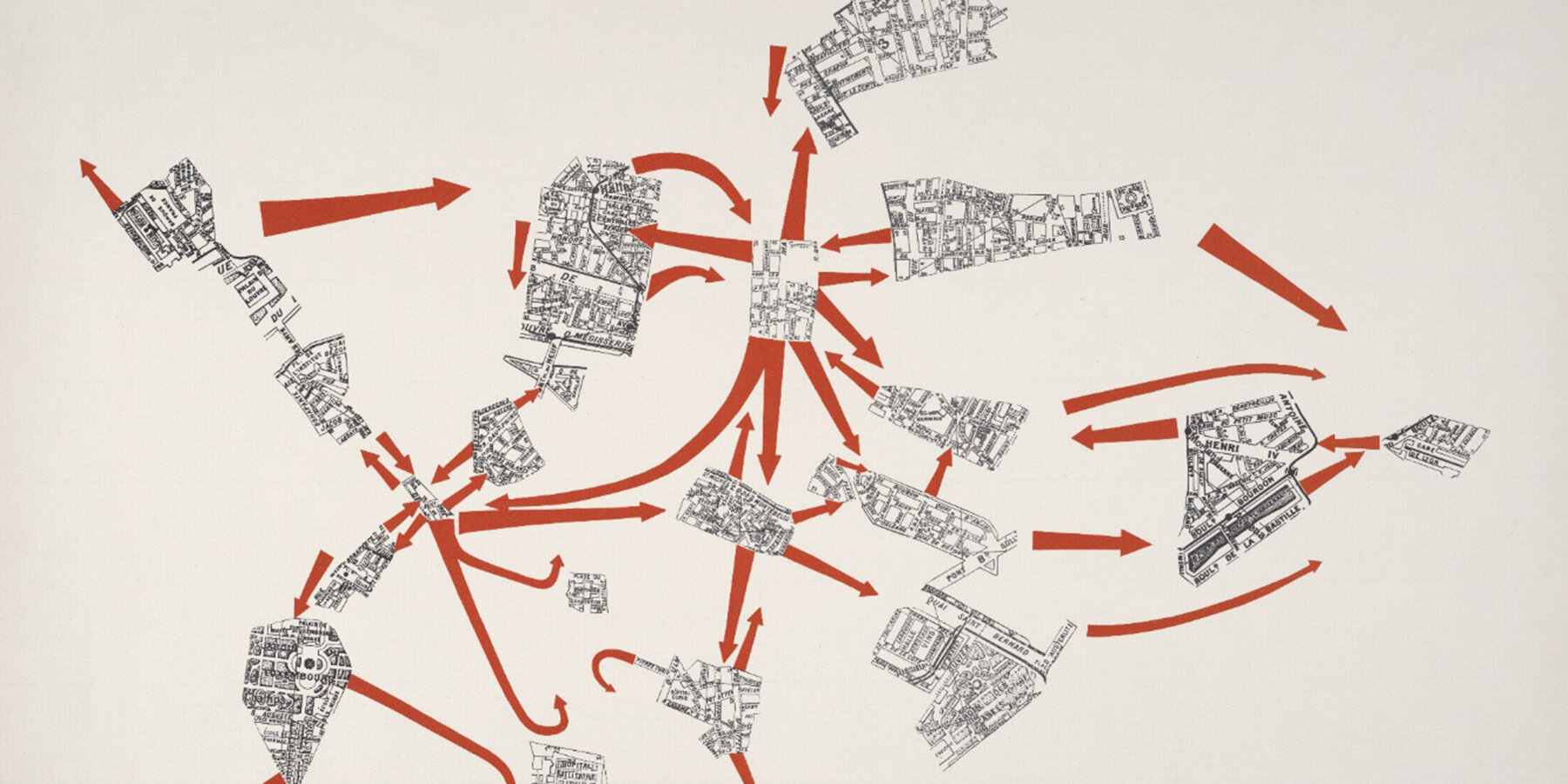
The Situationists responded by trying to read it differently. Their maps and diagrams did not describe streets according to geography but attempted to represent zones of attraction, movement, and atmosphere. Guy Debord’s The Naked City, produced in 1957, fragments a map of Paris into separate pieces connected by arrows, presenting the city through psychogeographical relationships. The dérive changes the relationship between an existing environment and the person moving through it, and architecture becomes more about the behaviors it permits, discourages, or makes imaginable.
If the dérive attempted to disrupt the way people moved through the city, détournement attempted to disrupt the way they read culture. The Situationists used détournement (rerouting) to describe the reuse of existing cultural material within a new context. Images, texts, advertisements, comics, films, and other familiar forms could be appropriated and reorganized so that their original meanings were altered or contradicted. The Situationists hijacked the language that already surrounded them. Asger Jorn’s Modifications, for example, intervened in existing paintings with new painted elements, transforming the source material. The gesture reflected a broader Situationist interest in taking existing cultural forms and putting them to different uses.
For design, the interesting part is the shift from making to using, as a cultural object is no longer understood as a finished message passed from an author to an audience, but as something whose meaning can change through the way it is picked up, reused, and reinterpreted by the people who encounter it. In this sense, the spectator is no longer just receiving meaning but interfering with the work and helping to shape what it becomes.
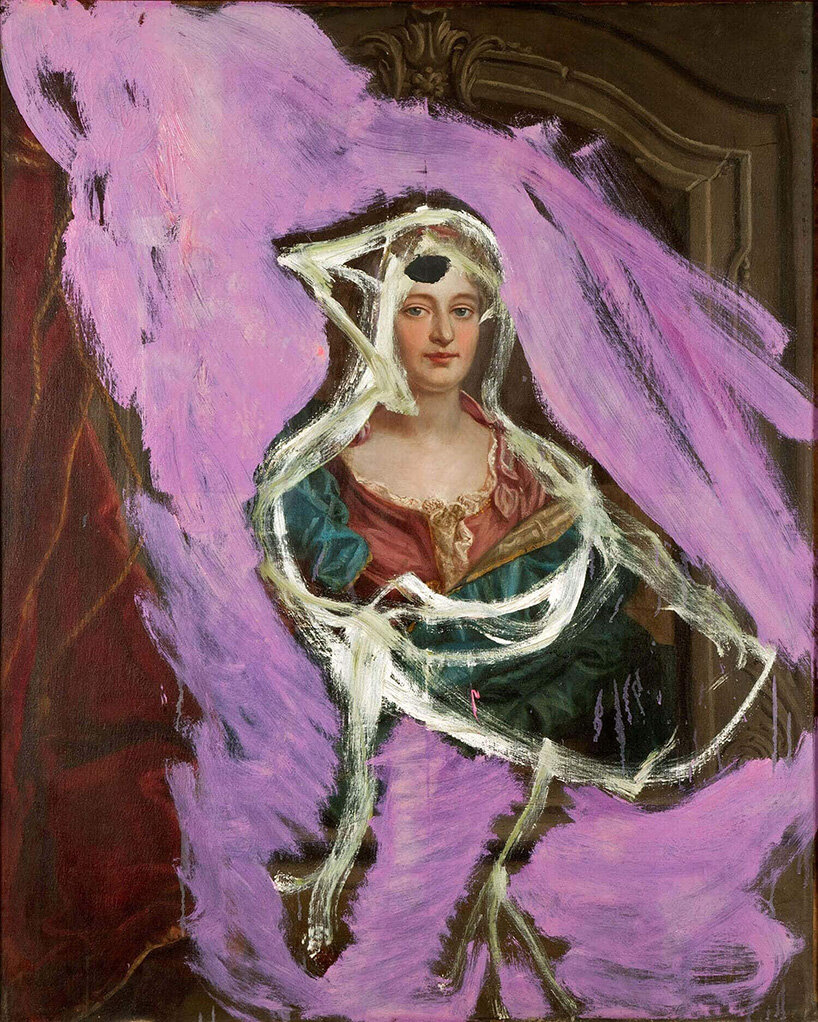
Untitled (unfinished dis-figuration), 1962, Oil on canvas, 122 × 97 cm, Museum Jorn Collection
build a situation, not an object
This idea comes into focus with the Situationist concept of the constructed situation, which treated everyday experience as something that could be deliberately set in motion. The Situationists were interested in creating temporary environments, events, and encounters that people could enter and influence, with the outcome left open to what happened between them.
The distinction becomes particularly interesting when we look at experience design today. An installation might invite visitors to move, touch, trigger sounds or lights, and follow different paths, while every possible response has already been anticipated by its designer. It can feel highly interactive while leaving the structure of the experience untouched. For the Situationists, participation depended on the possibility of changing what was happening and introducing something that had not been planned in advance. Play offered one way to make this possible. It loosened the fixed functions of everyday spaces and opened them to experimentation. A street could become a place to wander, a building could take on an unexpected use, and a gathering could develop according to the people involved.
These moments gave people a chance to test the limits of their surroundings and discover forms of activity that ordinary routines tended to suppress. The ambition was to bring that sense of possibility into everyday life, where people could have a greater hand in shaping the experiences and environments they moved through.
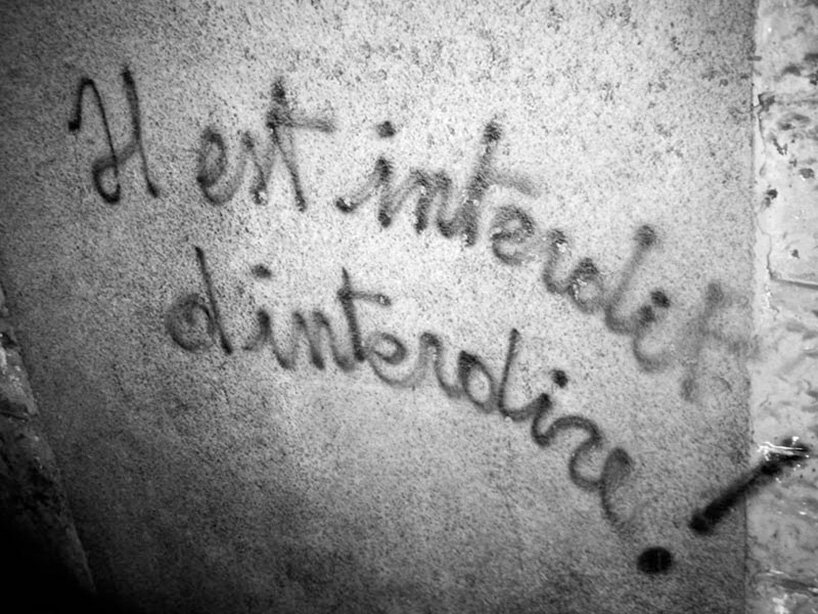
Espencat, Public domain, via Wikimedia Commons
constant imagines a city without fixed uses
No project brings this ambition into architecture more clearly than Constant Nieuwenhuys’ New Babylon, the vast urban vision he developed from the mid-1950s through 1974 around the idea of homo ludens, the playing human. Constant imagined a city made up of interconnected sectors where living, working, moving, and leisure could overlap, giving inhabitants the freedom to continually alter the spaces around them. Light, climate, color, and atmosphere could all become part of this changing environment, with the configuration of spaces responding to the activities taking place within them. Constant was interested in what might happen when a city could accommodate a society that was constantly changing, with its inhabitants shaping their surroundings through everyday use.
The project was deeply utopian, but its focus was less on what the perfect city might look like and more on how people might live within it. Constant gave considerable attention to models, drawings, maps, and other studies that allowed him to explore an environment without a fixed final form. The city remained open because its inhabitants were expected to give it meaning through the way they occupied it.
Freedom in New Babylon was never completely without structure. Constant was designing the spaces, systems, and conditions within which people would be able to change their surroundings, so the question of how much an architect could determine and how much could be left to the people living there was built into the project from the beginning. The architecture had to provide enough structure to hold the city together while leaving enough open for its inhabitants to take over, adapt it, and give it new uses.
Constant’s time with the Situationist International was relatively short. He joined in 1958 and left in 1960, after which New Babylon continued to develop as an independent project. He worked on it until 1974, producing an extensive body of models, drawings, maps, texts, and paintings around the idea of a city shaped by the people who inhabit it.

New Babylon-Paris, 1963 | image via @constant.101
when the ideas reached the street
By 1968, Situationist ideas about everyday life, participation, and the use of public space had begun to circulate beyond the group itself. When students and workers occupied universities, factories, and streets across France in May, the city became a place for collective action, with familiar spaces taken over and put to new uses.
The Situationists were not responsible for the uprising, but their criticism of institutions and passive social roles had already found an audience through texts such as On the Poverty of Student Life, published in Strasbourg in 1966 and principally written by Situationist member Mustapha Khayati. Two years later, the distinction between watching and taking part had become physical as people occupied the spaces around them and disrupted their usual functions.
The same period also exposed a problem that had always been present in the Situationist project: recuperation, the process through which radical ideas could be absorbed into the culture they were meant to challenge. Images, slogans, publications, and gestures could circulate as forms of resistance before eventually becoming things to reproduce, collect, exhibit, and consume. The Situationists’ own afterlife carries this contradiction, with their once-radical publications, maps, and images now preserved and displayed as cultural artifacts. Their critique was built around escaping the spectacle, but the spectacle proved capable of turning even that escape into an image.

Constant, Portfolio New Babylon, nr. 5, 1963, 37 x 36 cm, lithograph, multiple collections incl. Collection Kunstmuseen Krefeld, Germany and collection Boijmans van Beuningen, NL | image via @constant.101
are we participants now?
Today, participation is almost everywhere. We move through immersive installations, interact with responsive environments, occupy public spaces for temporary events, and spend much of our time making and sharing images online. The figure of the passive spectator seems, at first, to have disappeared. Look a little closer and the picture becomes less clear. A visitor can trigger a light, choose a route through an installation, or change something on a screen, while the experience remains tightly controlled. The visitor is active, but only within the limits of what has already been designed.
This is where the Situationists’ ideas feel current. They were interested in what people could do with a space once its usual rules were loosened: wandering without a destination, taking over an existing environment, giving a place an unexpected use, or seeing the city differently. Much of the pleasure came from not knowing exactly where the experience would lead. Contemporary interactive spaces often work in the opposite direction. They are carefully programmed to anticipate what a visitor might do, with every response, movement, sound, and image accounted for. Even the photograph taken at the end can become part of the experience, ready to be shared and circulated.
None of this makes these spaces uninteresting, and interactivity can certainly change how we experience architecture and art. The Situationists set the bar somewhere else, as for them, participation became meaningful when people could affect what happened around them, introduce their own uses, and leave the experience different from how they found it. That idea reaches beyond museums and installations, raising questions about public space, architecture, and the increasingly designed environments of everyday life: who decides what a place is for, how easily can people change it, and what happens when they use it in a way nobody anticipated?
We live with a different version of that problem now, surrounded by spaces that promise interaction and platforms that invite constant participation. The difference between taking part and having a say can be surprisingly small on the surface, and enormous underneath. When we enter a space designed to respond to us, how much of it can we actually change?
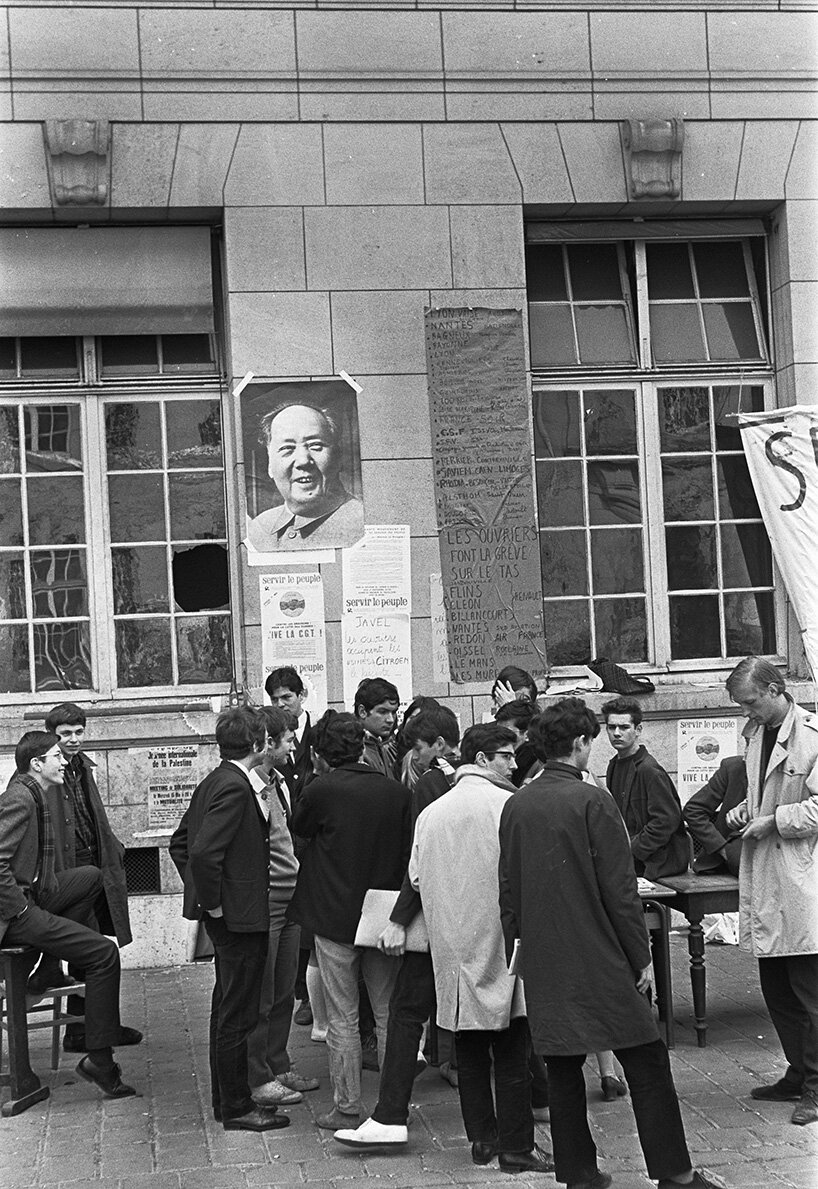
Eric Koch for Anefo, CC0, via Wikimedia Commons
This article is part of designboom’s SPECTATOR AND SPECTACLE chapter, asking how wonder gets built, presented in partnership with SolidNature, and how it might return some mystery to a world that has measured most of it away. Discover more stories that turn onlookers into participants, alter perception and disrupt the everyday here.
interactive installation (679)
 Sep 15, 2026
 Sep 15, 2026
 Sep 14, 2026
 Sep 14, 2026
SPECTATOR AND SPECTACLE (8)
 Sep 17, 2026
 Sep 16, 2026
 Sep 15, 2026
 Sep 15, 2026
 Sep 07, 2026
 Aug 26, 2026
 Aug 21, 2026
 Aug 21, 2026

