CCA Tashkent opens its doors to the public
Studio KO transforms a 1912 former tram depot and diesel station in Old Tashkent into the Centre for Contemporary Arts Tashkent (CCA Tashkent), Uzbekistan’s first permanent institution dedicated to contemporary art. Led by Gayane Umerova, Chairperson of the Uzbekistan Art and Culture Development Foundation (ACDF), the center combines exhibition spaces with a library, workshops, public programming, and artist residencies, using the existing industrial structure as the framework for a longer-term cultural program (find designboom’s previous coverage here). The center opens with Hikmah, an exhibition of contemporary works and historic Uzbek and Karakalpak art that runs through January 31st, 2027.
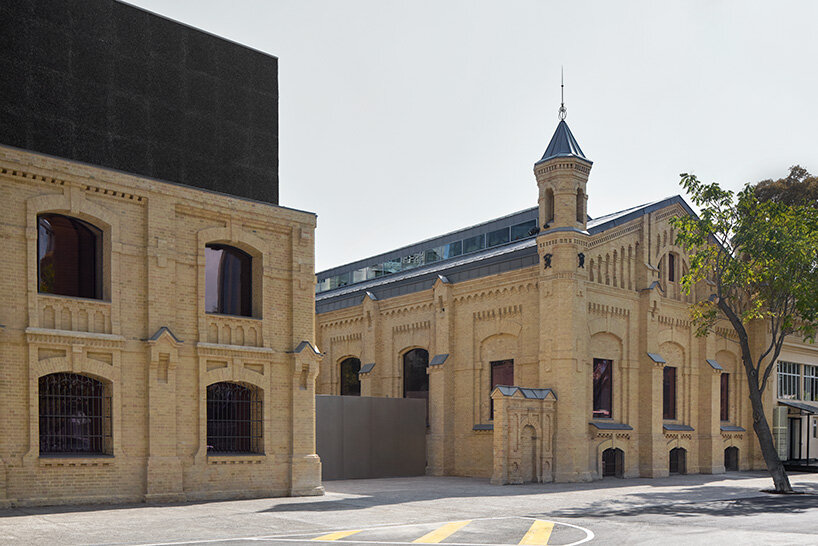
The building was designed by Wilhelm Heinzelmann and originally served Tashkent’s first tramway line before remaining part of the city’s electricity network for more than a century. In 2019, the site was entrusted to ACDF as part of its cultural development strategy. Studio KO works through a series of restrained interventions that retain the character of the existing structure while adapting it to the demands of a contemporary art institution.
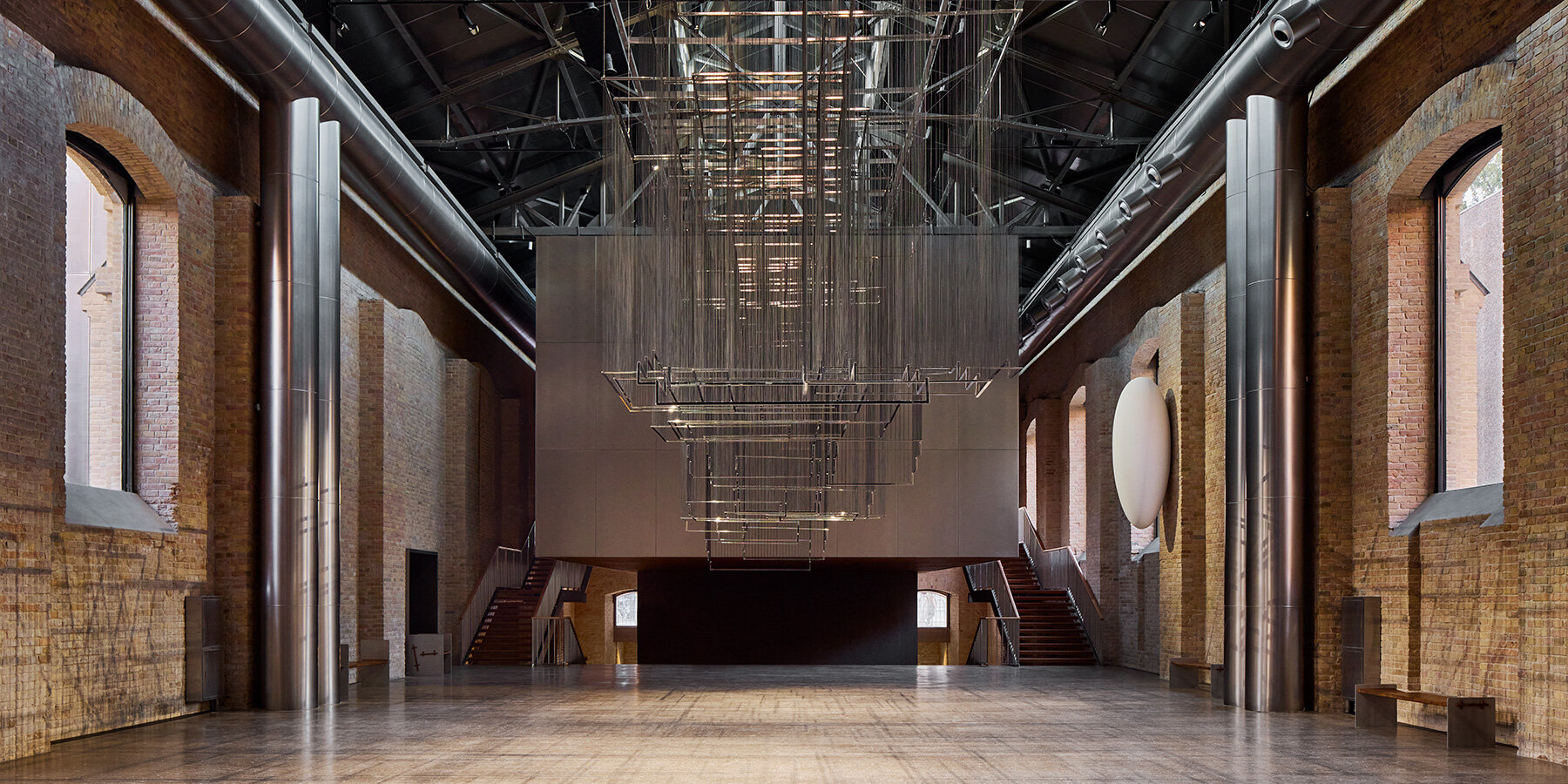
The former main diesel station now serves as the central exhibition space, with its early 20th-century Imperial-era brickwork renovated rather than concealed. The building’s former administrative hub has become a bookshop and library focused on art history, world literature, and Oriental studies. A courtyard provides space for workshops, gatherings, and an outdoor cinema, extending the institution beyond the gallery and into a more public setting.
all images courtesy of CCA Tashkent
Studio KO preserves historic industrial structure
French architecture studio Studio KO treats the existing building as an active part of the institution’s identity. The architects describe their intention as giving the industrial structure a ‘new poetic life,’ using traditional Uzbek materials and light-filtering motifs alongside the preserved fabric. The renovation also involved local artisans. A concrete mix was developed using locally sourced materials, while bespoke tiles were commissioned from the Rakhimov family ceramics studio in Tashkent. These details introduce contemporary architectural interventions without severing the building from the material culture of its setting.
The first exhibition, Hikmah, is curated by Chief Curator Dr. Sara Raza and brings together new commissions and recent works by ten Uzbek and international artists. The exhibition takes its title from the Arabic word for wisdom and uses the restored industrial spaces as a setting for conversations between contemporary practice, local histories, and artistic traditions from Uzbekistan and Karakalpakstan.
Among the new works is Tower for a Single Breath by Saudi Arabian artist Muhannad Shono, developed during his CCA Tashkent residency and drawing on Sufi traditions associated with Bukhara and Samarkand. Tashkent-based ceramicist Shokhrukh Rakhimov presents The Colour of Silence, In Search of Truth, a group of seven large-scale ceramic orbs made with locally sourced minerals and pigments.
Kimsooja’s participatory Archive of Mind invites visitors to hand-roll spheres from local clay, gradually creating a collective archive through repeated gestures. Nadia Kaabi-Linke’s Flying Carpets (2011), meanwhile, hangs within the former industrial setting as a suspended steel work based on the dimensions of woven mats used by migrant street vendors in Venice, linking migration and labor to the histories carried by everyday objects.
Other works include Ali Cherri’s A Mouth, A Wound, Tarik Kiswanson’s newly commissioned Nest, and Nari Ward’s site-specific Tashkent Groundin, which uses found materials and copper patina in dialogue with the building’s industrial character.
The exhibition also brings historical works from the collection of the State Museum of Arts of Karakalpakstan into the center. Works by Vladimir Pan, Bakhtiyar Saipov, and Daribay Saipov introduce painting, sculpture, and woodcarving traditions into the same spaces as the new commissions, making the relationship between contemporary production and cultural inheritance part of the exhibition.
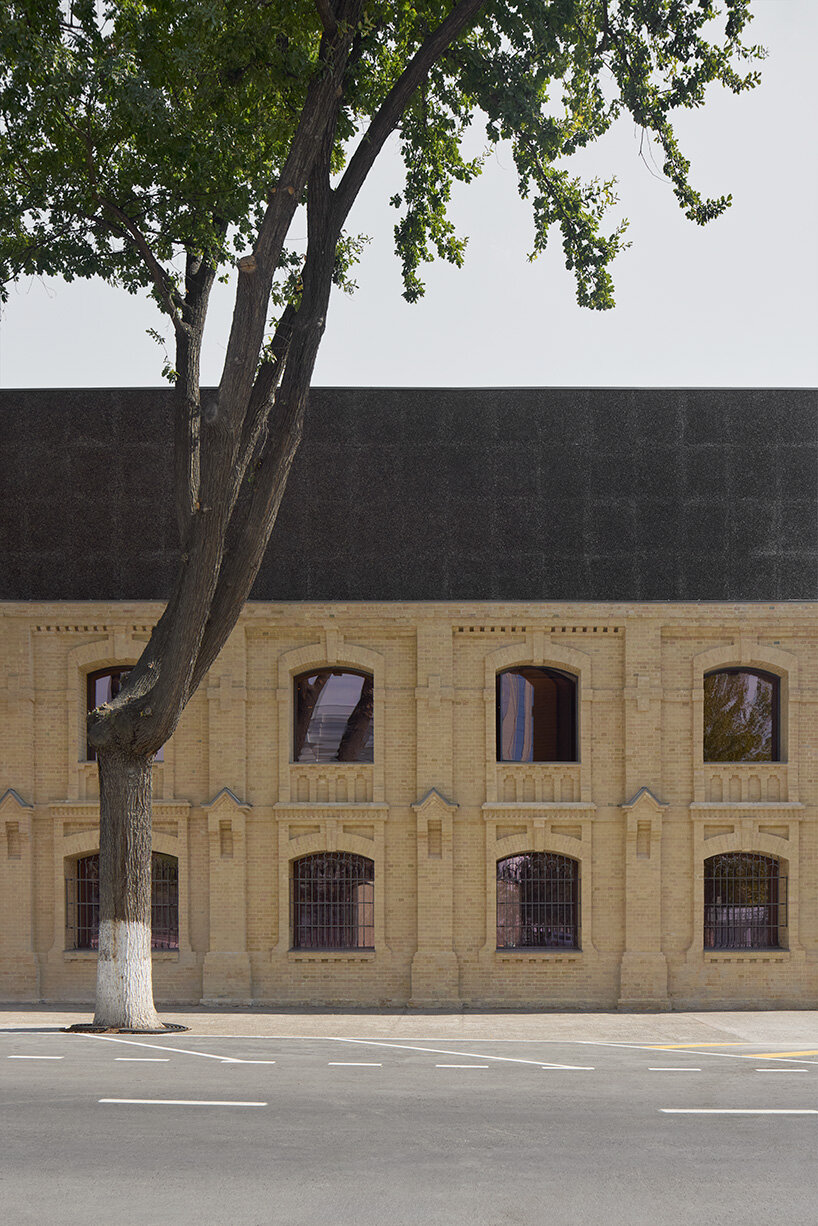
Studio KO adds a dark textured volume above the restored brick facade of CCA Tashkent
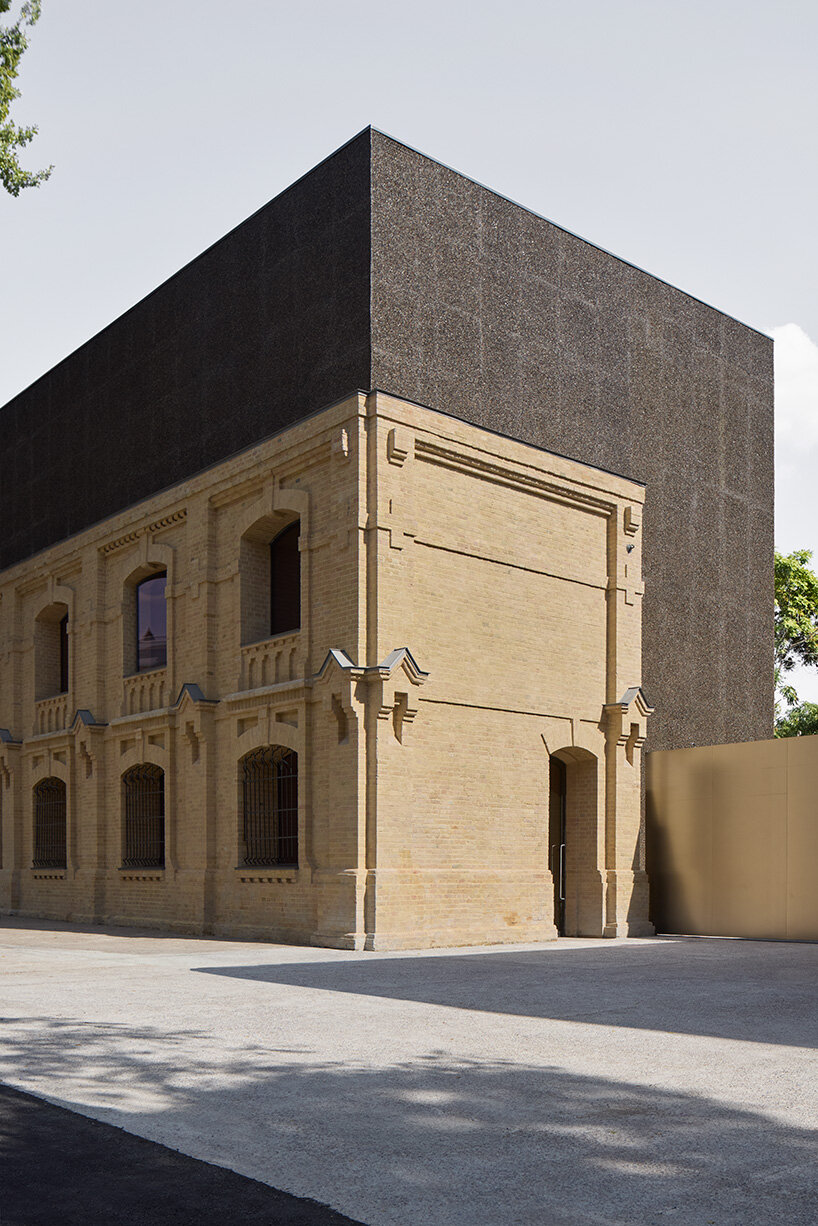
the former tram depot combines its historic brick walls with a new dark upper volume
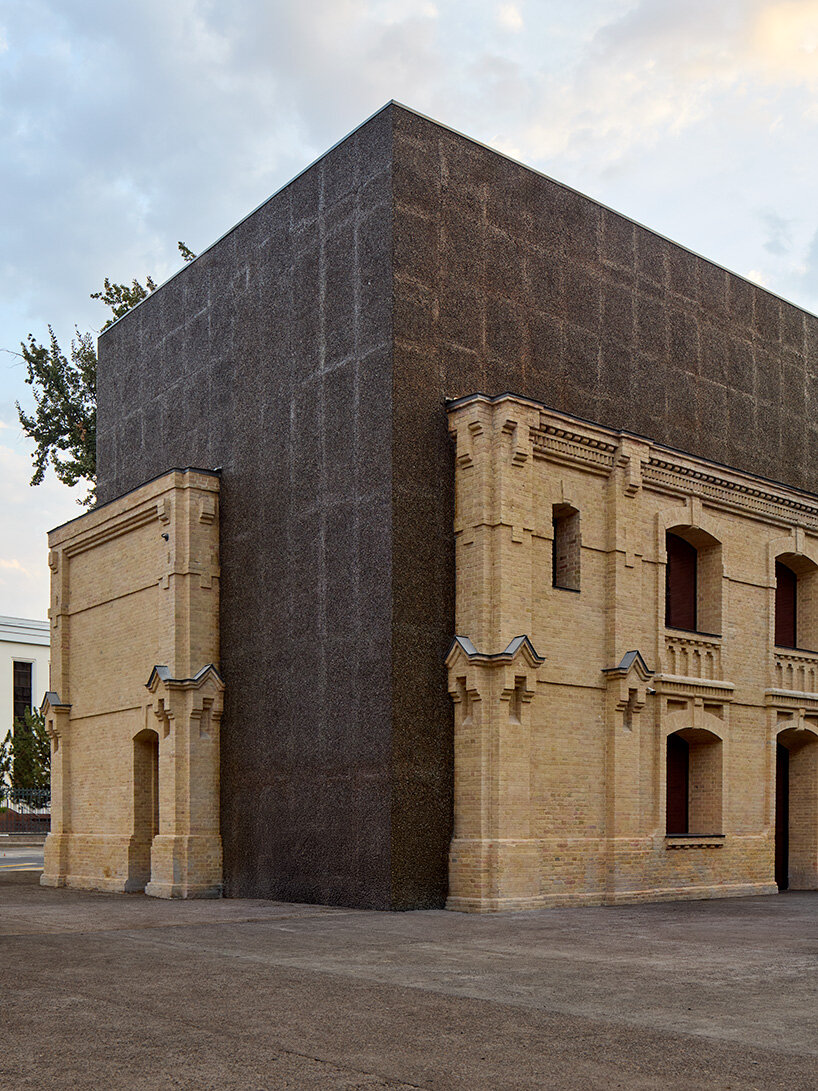
Studio KO’s extension contrasts with the preserved brick facade of the former industrial building
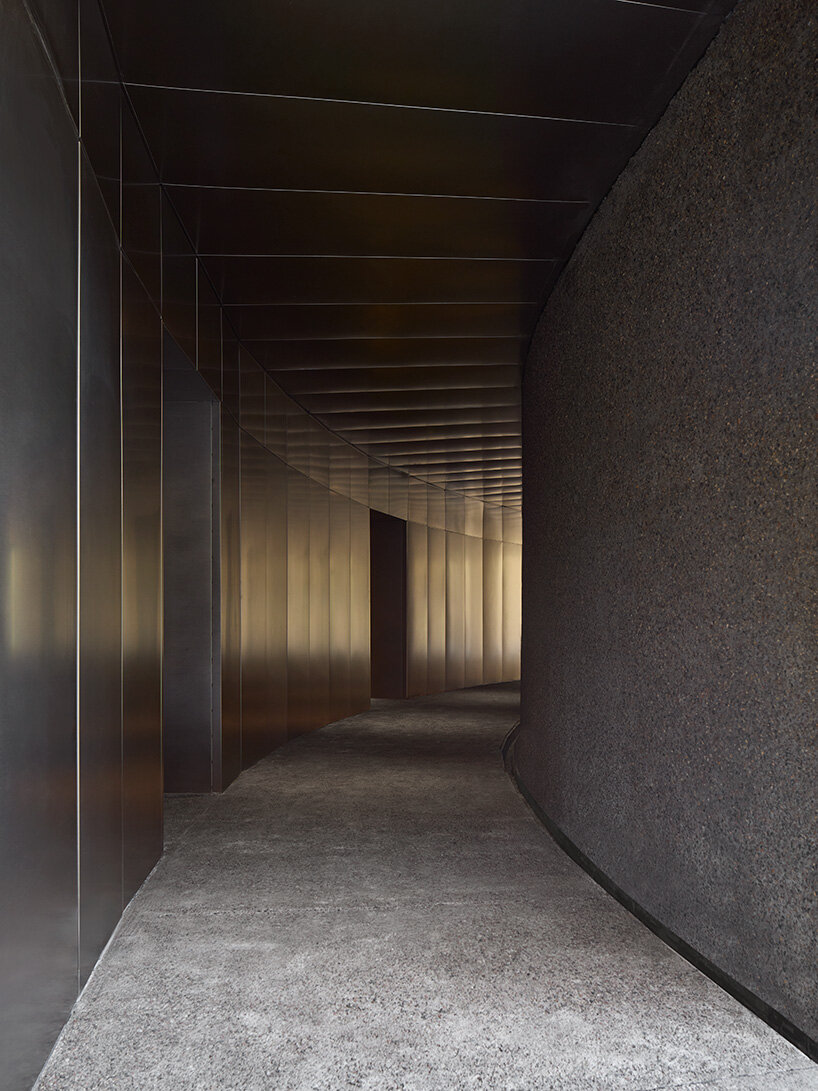
a narrow passage separates the original brick walls from the center’s new concrete interventions
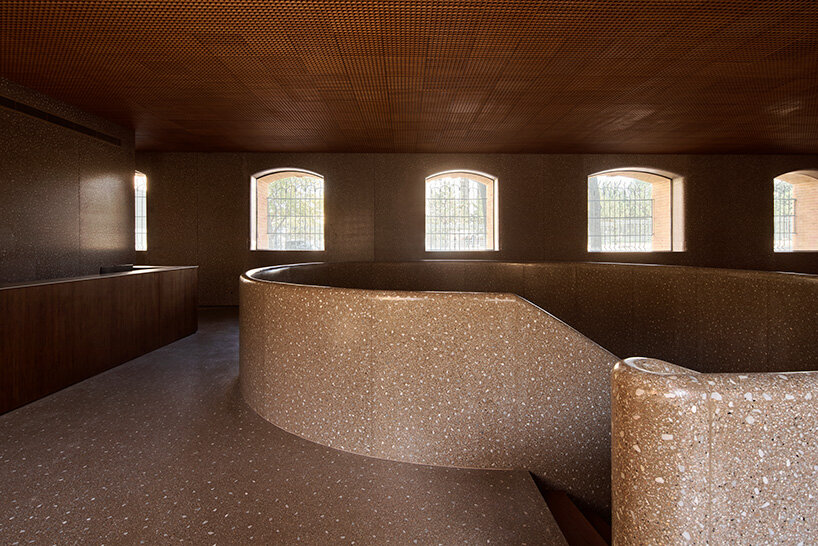
a curved circulation wall guides visitors through the upper level of CCA Tashkent
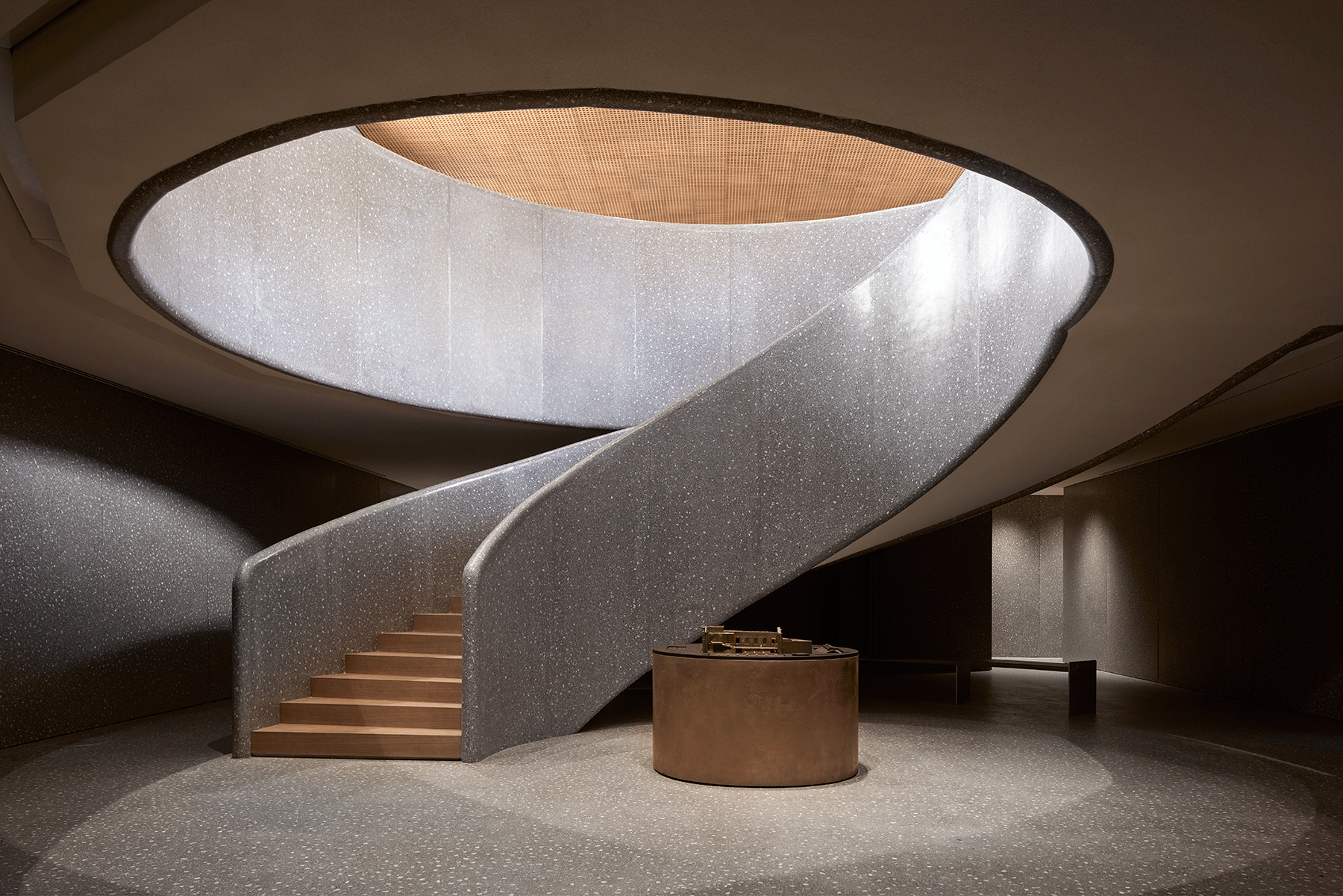
the curved staircase forms a sculptural circulation element
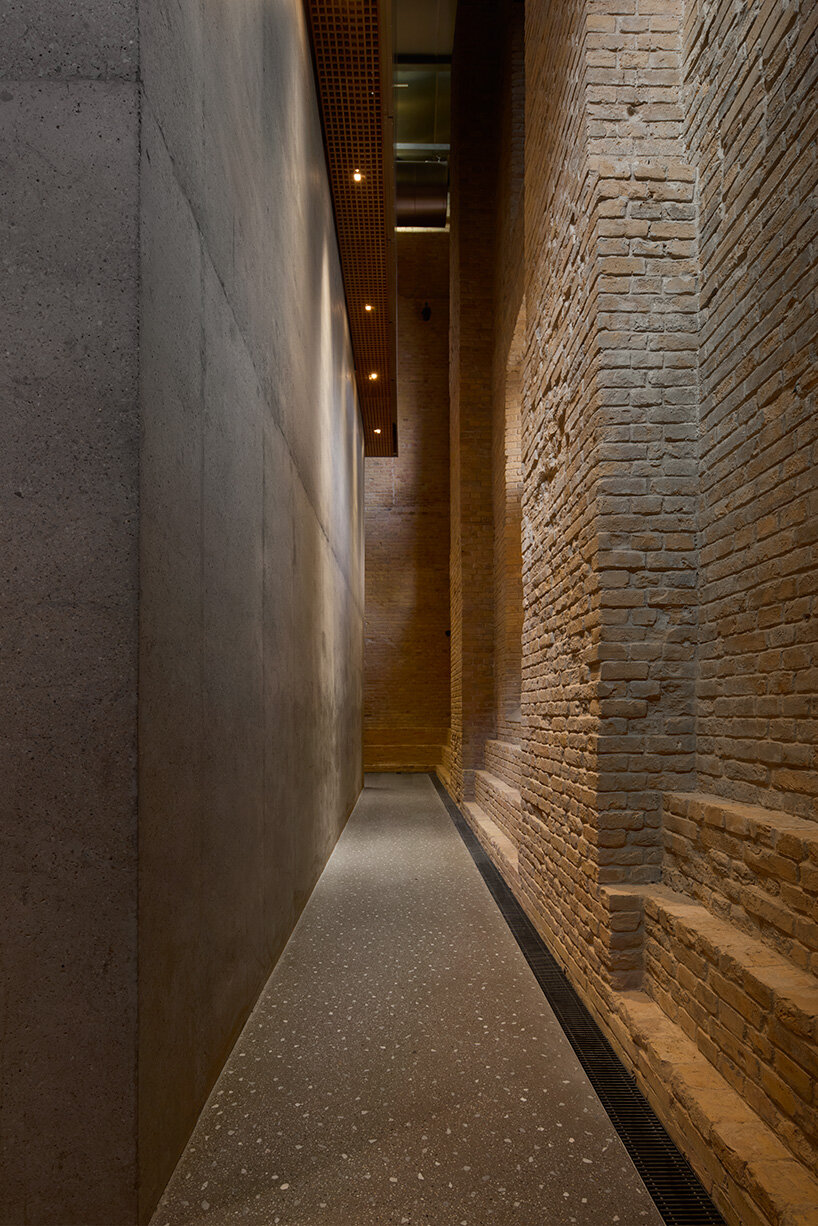
a passageway reveals the contrast between exposed brick and new concrete surfaces
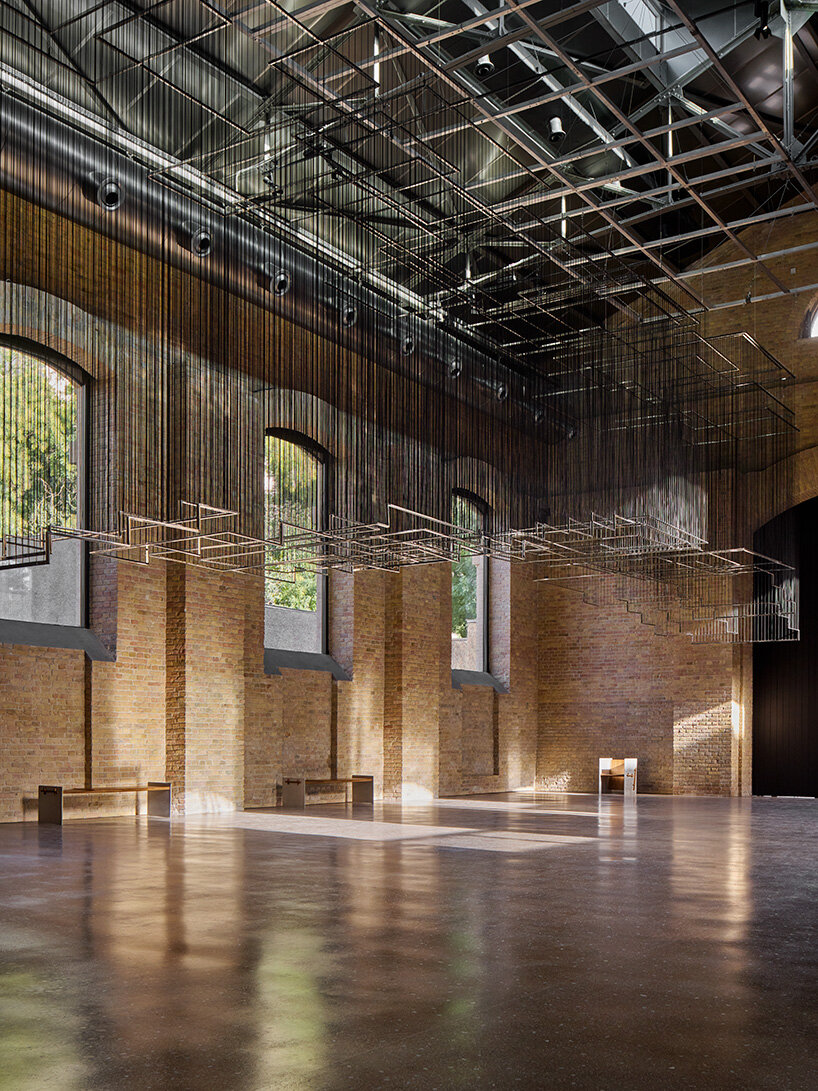
Studio KO retains the industrial character of the 1912 building while introducing exhibition infrastructure
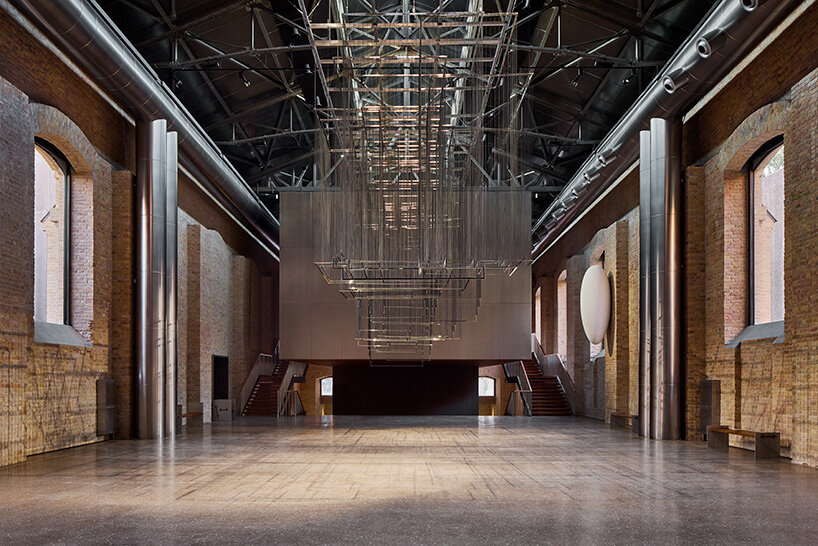
the former diesel station now serves as the central exhibition space
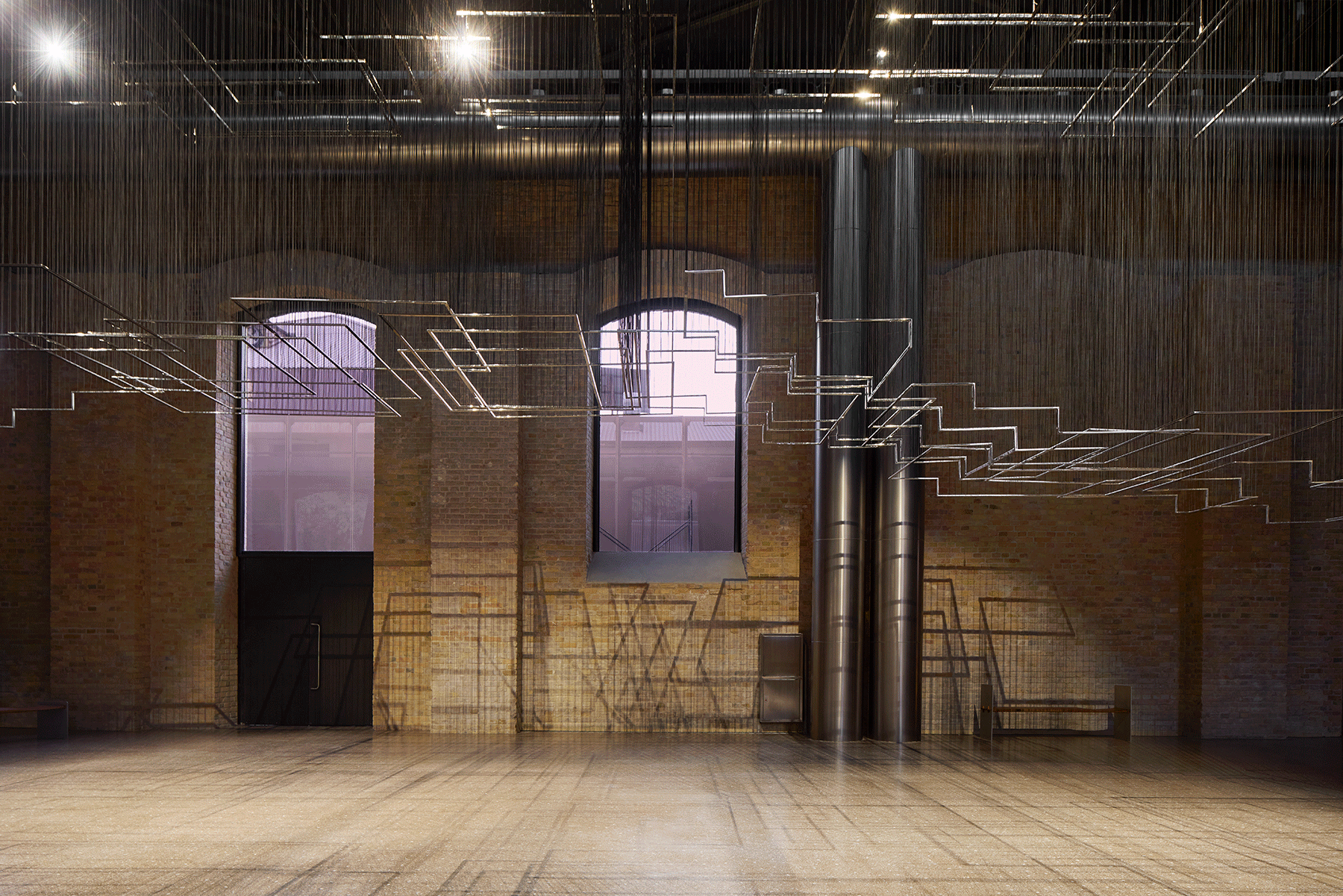
bringing together new commissions and recent works by ten Uzbek and international artists
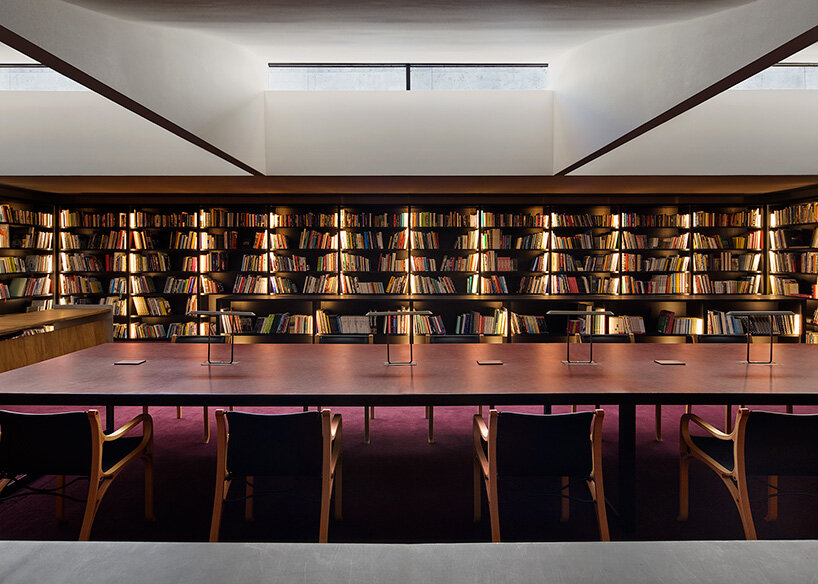
the CCA Tashkent library combines a long reading table with an extensive collection of books
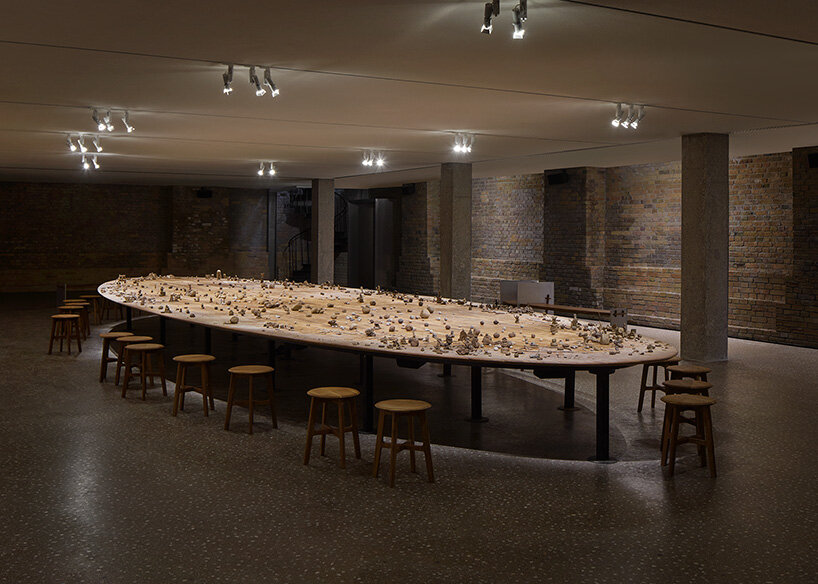
a large communal table and stools occupy one of CCA Tashkent’s interior spaces
exposed brick walls sit alongside new suspended structures and services
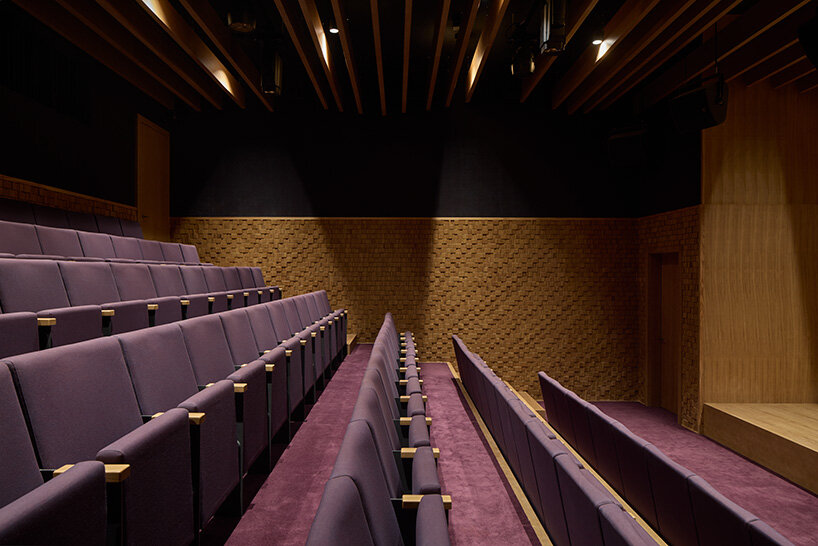
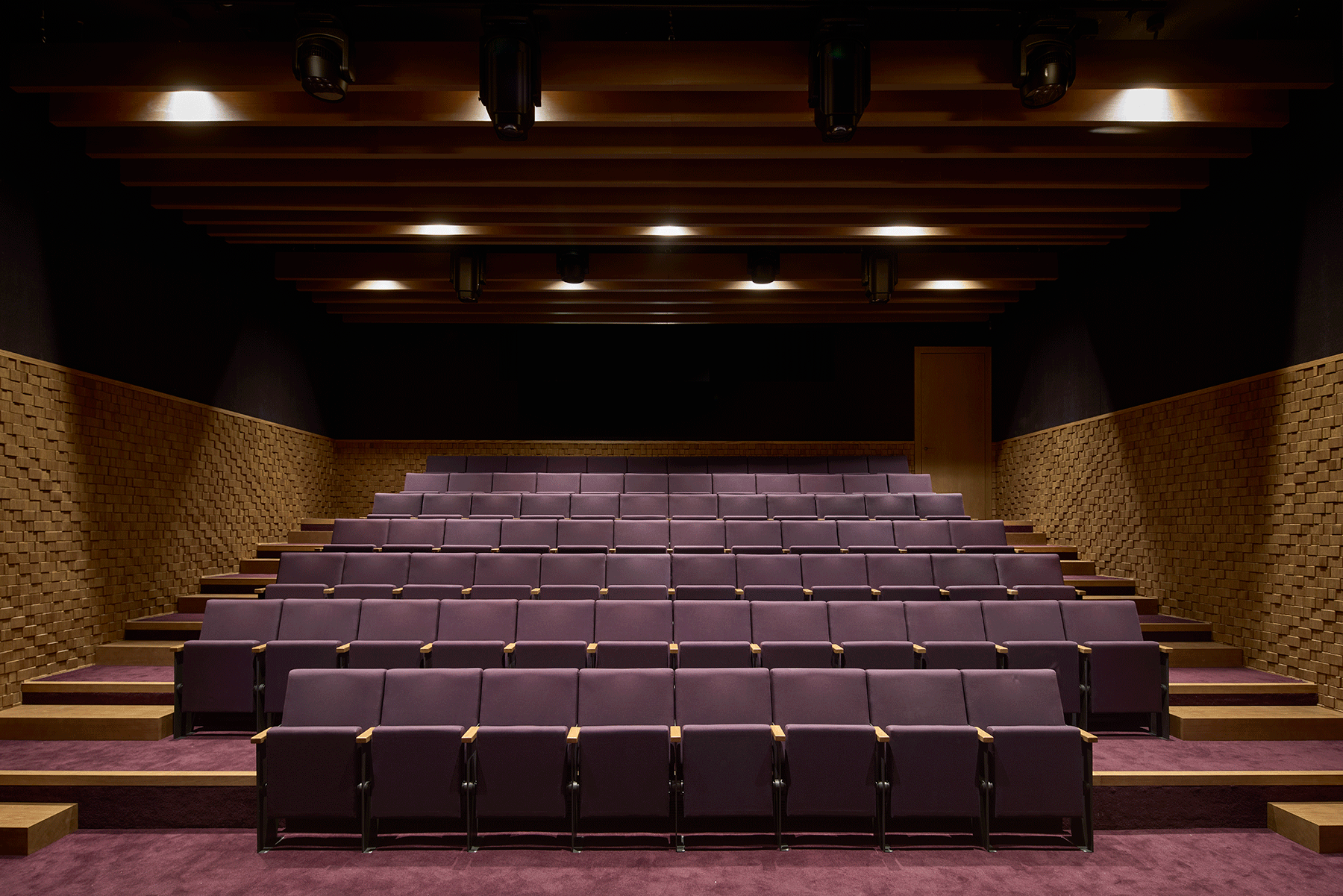
the auditorium combines tiered seating with exposed brick walls and timber detailing
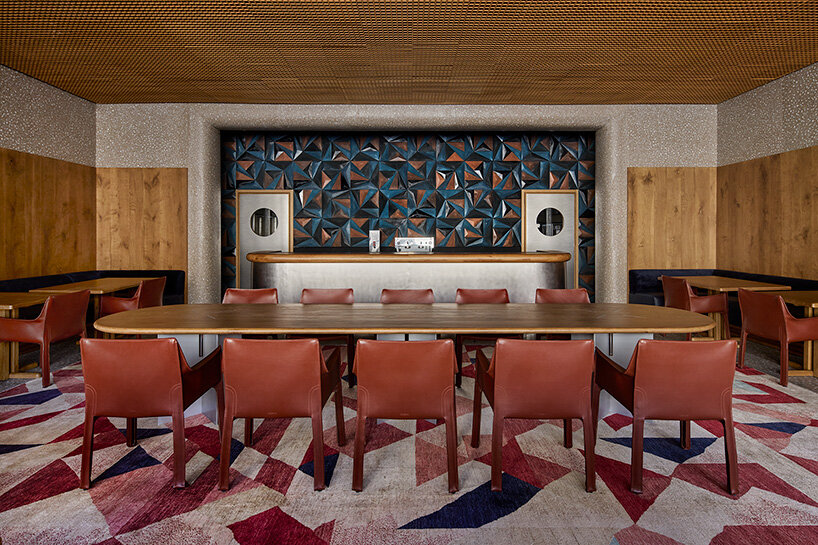
a dining and gathering space features custom furniture, patterned flooring, and a ceramic-tiled backdrop
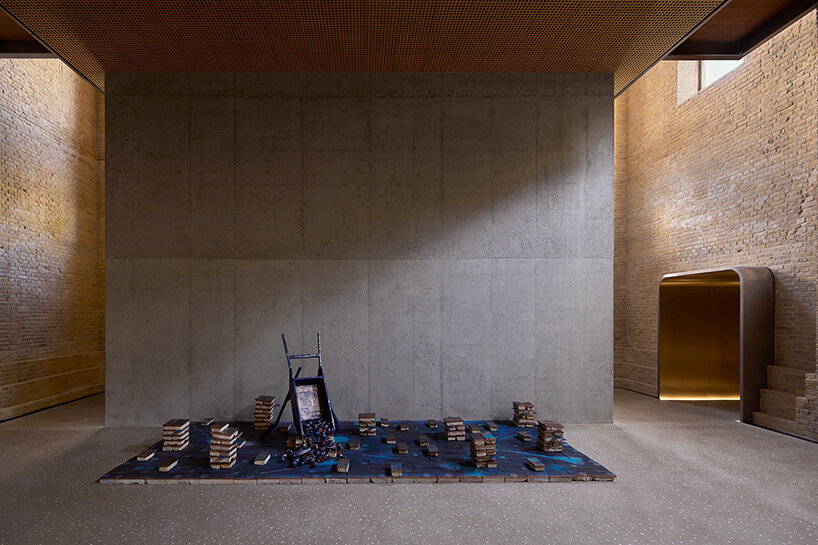
the first exhibition, Hikmah, is curated by Chief Curator Dr. Sara Raza
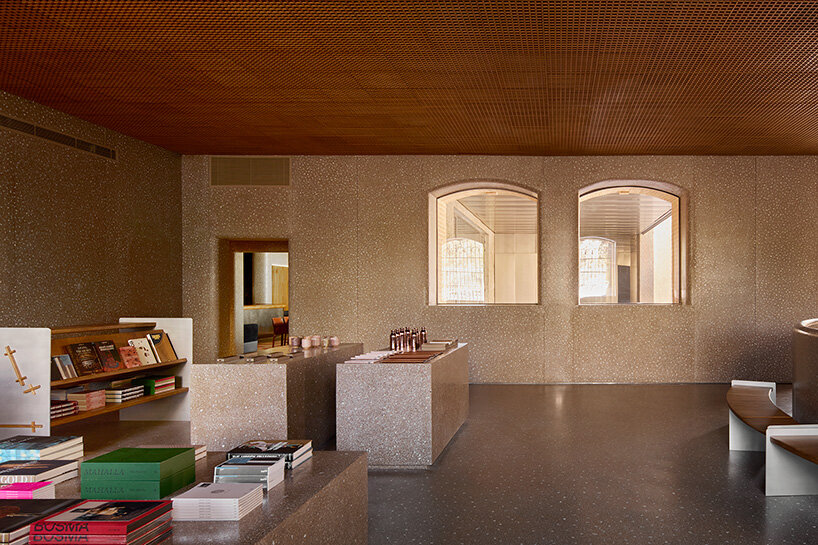
the bookshop and cultural spaces introduce warmer materials within the former industrial complex
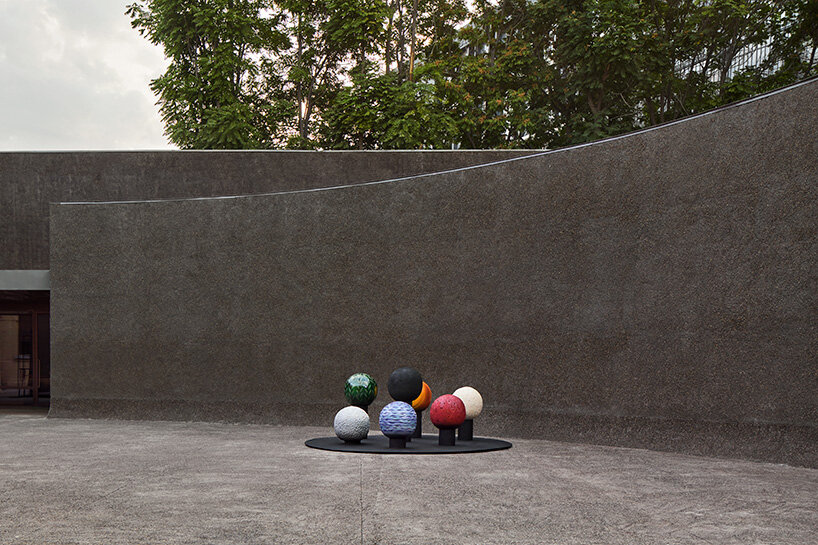
an outdoor sculpture is positioned against the textured walls of the CCA Tashkent courtyard
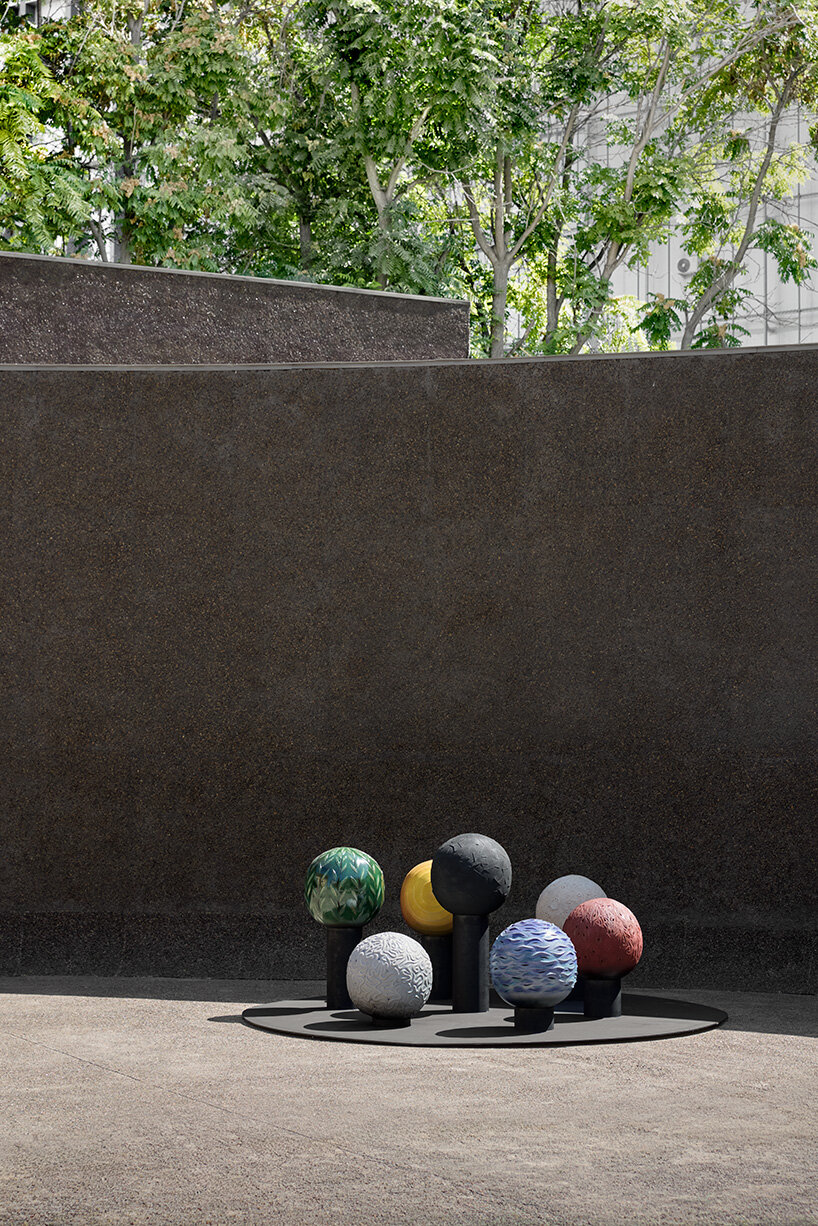
ceramic works are displayed against the textured walls
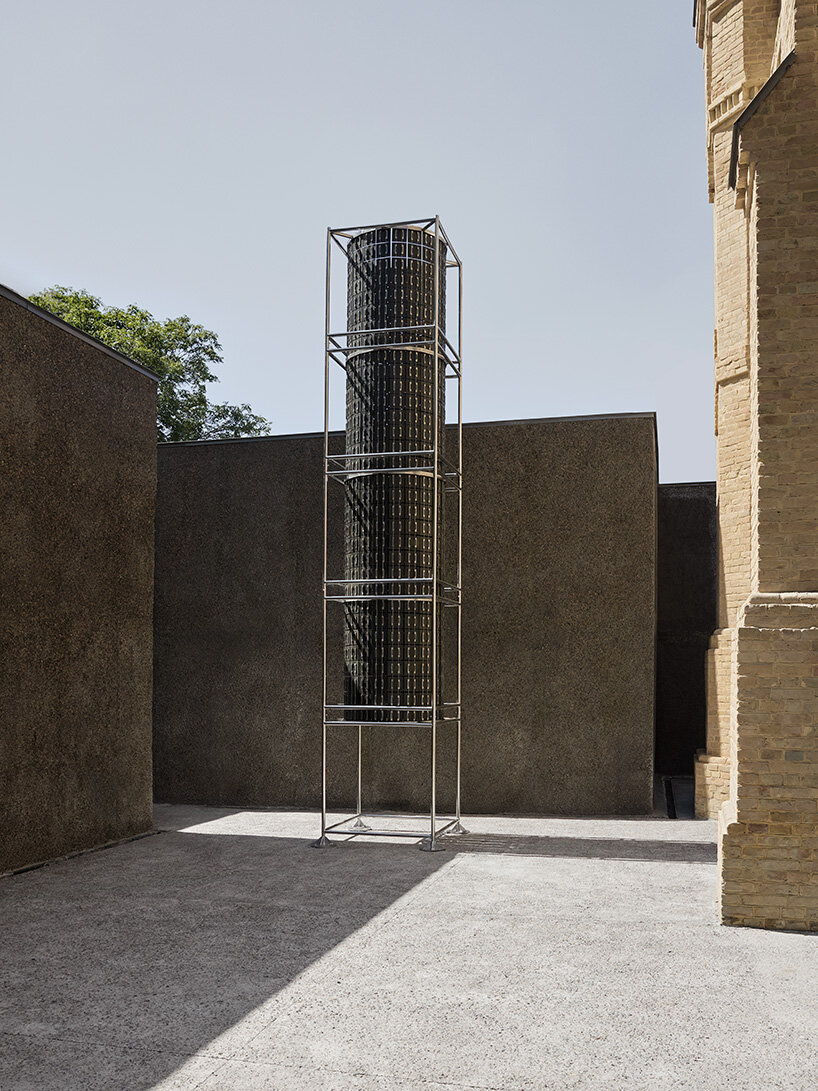
a sculptural installation occupies one of the outdoor spaces
project info:
name: Centre for Contemporary Art | @cca_tashkent
architects: Studio KO | @studioko (Karl Fournier and Olivier Marty)
original building architect: Wilhelm Heinzelmann (1912)
location: Tashkent, Uzbekistan
commissioner: Uzbekistan Art and Culture Development Foundation | @acdfuz
chairperson: Gayane Umerova
artistic director & chief curator: Dr Sara Raza
museums and galleries (906)
 Sep 10, 2026
 Sep 10, 2026
 Sep 03, 2026
 Sep 02, 2026
studio KO (9)
 Sep 11, 2025
 Oct 09, 2024
 May 23, 2023
 Mar 21, 2023
 Dec 01, 2022
 Sep 07, 2026
 Aug 26, 2026
 Aug 21, 2026
 Aug 21, 2026