where le corbusier’s plan voisin sought to organize paris, chtcheglov chose to drift
a clash between urban order and the unpredictable experience of wandering, where efficiency gives way to mood, chance and discovery.
le corbusier’s plan voisin reorganizes paris
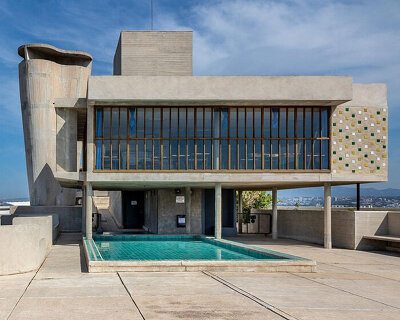
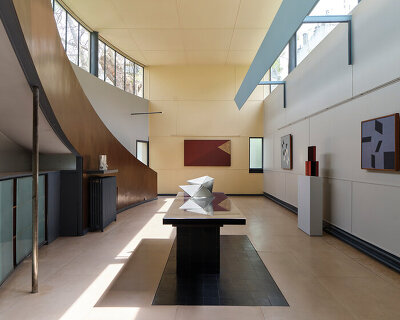
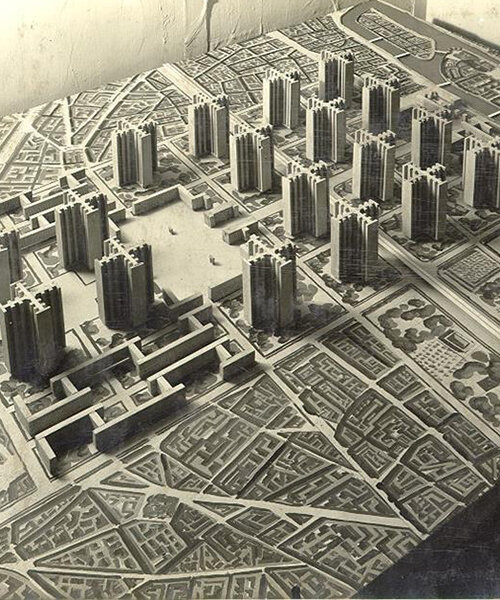
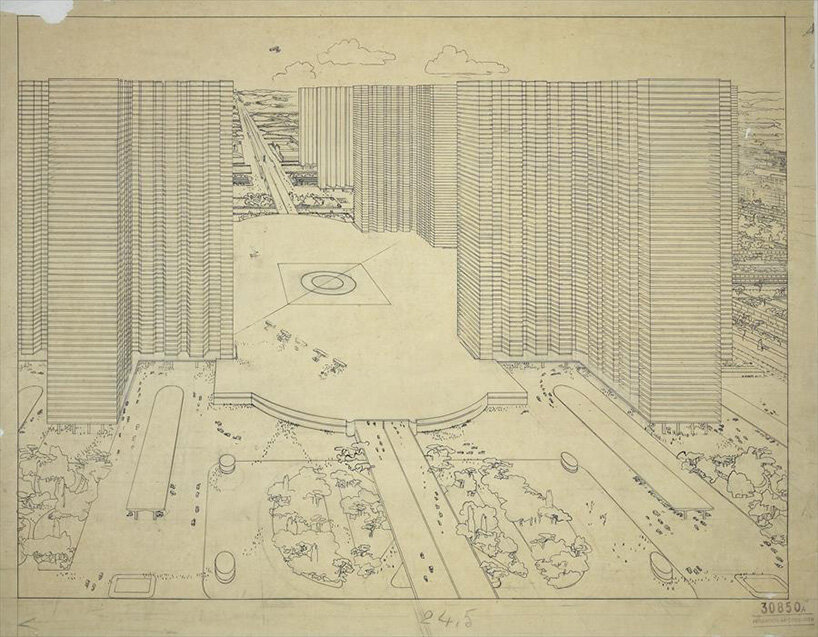
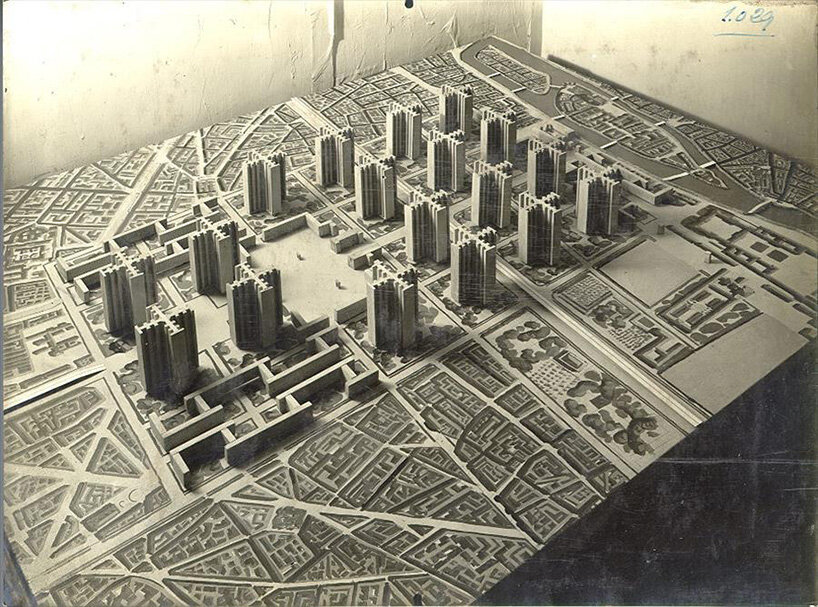
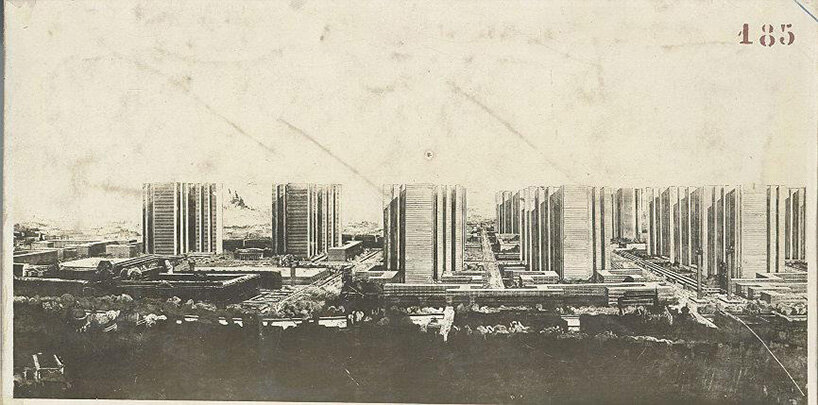
Le Corbusier’s Plan Voisin imagines Paris as a highly ordered urban system, replacing a large section of central Paris with cruciform office towers, residential blocks, open space and a hierarchical road network. The 1925 proposal responds to congestion and poor sanitary conditions, but it also advances a particular idea of urban life, where functions are separated, movement is organized, and the city becomes legible as a complete system. The scheme would have removed much of the existing fabric of the Marais and surrounding areas while preserving monuments including the Louvre, Palais-Royal and Place Vendôme. Eighteen cruciform office towers would rise from an open landscape, with residential buildings arranged separately from the business district. Plan Voisin was never built, but its principles became part of a wider modernist approach to urban planning. The separation of functions, concentration of buildings vertically and prioritization of circulation and open space continued to shape architectural thinking through the development of the Ville Radieuse and the Athens Charter.
then chtcheglov starts somewhere else
Almost three decades later, French philosopher Ivan Chtcheglov looks at the modern city and sees boredom as the main problem. In his Formulary for a New Urbanism, written in 1953 under the pseudonym Gilles Ivain, he calls for ‘new, changeable decors’ that can alter with the people living in them. He is not particularly diplomatic about Le Corbusier. Chtcheglov describes his architecture as suitable for ‘factories and hospitals’ and, eventually, prisons, before accusing him of destroying ‘joy’ and ‘love, passion, freedom.’
In the place of cities based on Plan Voisin, he imagines architecture that can alter moods, generate dreams and change the way people experience their surroundings. He describes houses that move with the sun, sliding walls that allow vegetation to enter, and buildings whose appearance changes according to the wishes of their inhabitants. He also proposes an entire city divided according to feeling, with a Bizarre Quarter, Happy Quarter, Noble and Tragic Quarter and even a Sinister Quarter.
a city built for getting lost
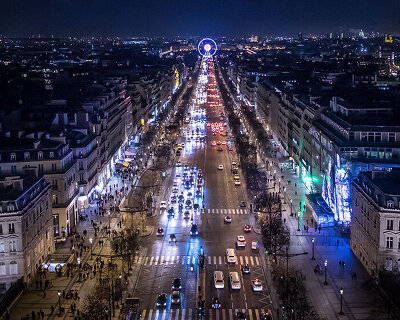
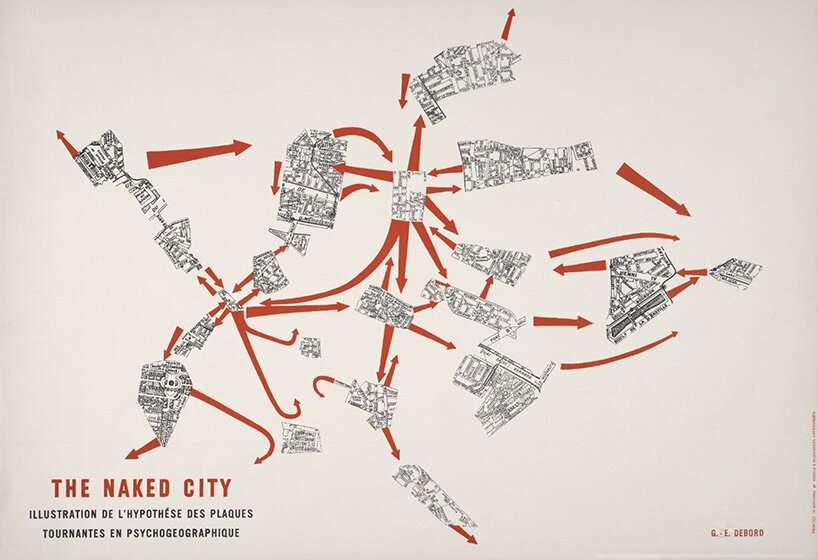
While Le Corbusier’s proposal begins with the idea that the city can be reorganized according to a rational structure, Chtcheglov is interested in what happens when the experience of moving through it is not as organized. The Situationists described this wandering through the city as the dérive, allowing streets, buildings and changing surroundings to determine where the journey goes. For Chtcheglov, a building or street did not have to serve one purpose. It could change the mood of a walk, pull someone in another direction or make a familiar part of the city feel strange. Getting somewhere was only part of the experience; the journey could be the point. Drifting runs against the logic of optimization. The shortest route gets you there faster. Chtcheglov was interested in what you might find by taking the long way. ‘The main activity of the inhabitants will be CONTINUOUS DRIFTING,’ he writes. The landscapes of the city would change from one hour to the next, producing what he calls ‘total disorientation.’ The point is not simply to arrive somewhere, but to see where the city takes you.
For Chtcheglov, even a familiar street could become something else. A building might draw you in, a change in atmosphere might send you in another direction, or an unexpected space might make an ordinary part of Paris feel unfamiliar. It is difficult to imagine anything further from Plan Voisin. Le Corbusier’s city is drawn from above, with its functions and circulation worked out in advance. Chtcheglov’s city only really comes alive once people start wandering through it.
the value of taking the long way
Plan Voisin was responding to real problems. Paris was dealing with overcrowding and poor sanitary conditions, while modernist architects were looking for ways to bring more light, air and open space into the city. But the more completely those problems are solved through planning, the more the city becomes predetermined. If every building has a function, every road has a purpose and every movement has been accounted for, there is less room for the detours and unexpected uses that make a city feel alive. This is what Chtcheglov finds troubling. He is drawn to things that are difficult to measure, such as the mood of a place, the attraction of a particular street, the feeling of discovering somewhere by accident. He takes the idea much further than simply making cities more entertaining. His imagined city is full of spaces designed around those feelings. The Sinister Quarter, for instance, would be unsettling without being dangerous. Elsewhere, there are rooms for dreaming and places intended to bring back a sense of secrecy or exoticism.
There is something almost funny about putting these two visions side by side. Le Corbusier wants to make the city more efficient; Chtcheglov wants people to wander through it and see what happens. His city does not need every space to have a clear purpose, a strange idea to put against the logic of convenience and efficiency.
The fastest route may be useful, but it is also predictable. Chtcheglov is interested in the things that happen when you take the wrong turn or come across a place you were not looking for. Plan Voisin leaves little room for that kind of accident. Chtcheglov envisions it in the city.

This article is part of designboom’s SPECTATOR AND SPECTACLE chapter, asking how wonder gets built, presented in partnership with SolidNature, and how it might return some mystery to a world that has measured most of it away. Discover more stories that turn onlookers into participants, alter perception and disrupt the everyday here.