helvetus uses FKM rubber to rethink integrated luxury watch strap
helvetus develops reference-specific FKM rubber straps for rolex watches, combining precise case-fitting geometry with the material’s durability and resistance to everyday wear.
How Vulcanised Rubber Became a Luxury Material on the Wrist
Helvetus develops reference-specific FKM rubber straps for Rolex watches, combining precise case-fitting geometry with the material’s durability and resistance to everyday wear.
From industrial seals and aerospace applications to luxury timepieces, vulcanized FKM rubber has taken on a new role in contemporary watch design. Its chemical resistance, dimensional stability, and ability to hold a precise molded shape make it suited to straps that function as engineered components rather than simple accessories.
When the strap became part of the watch case
For much of the 20th century, a watch strap was essentially a strip of leather fitted between two lugs, with its design largely independent of the watch. Integrated cases changed that relationship. When Gérald Genta designed the Royal Oak in 1972 and the Nautilus in 1976, the bracelet became a continuation of the case, carrying its geometry from the bezel to the clasp.
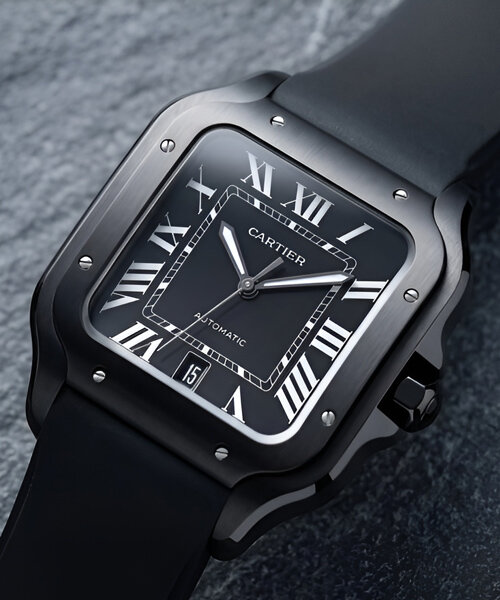
Cartier had explored a similar approach much earlier with the Santos, designed in 1904 for pilot Alberto Santos-Dumont. Its exposed bezel screws and case geometry extended into the strap. The 2018 redesign made this connection more functional, introducing QuickSwitch for tool-free strap changes and SmartLink for bracelet adjustment.
The result is a category of straps designed around specific watch references. Once a strap must follow a particular case curve and interface, its geometry, thickness, and end pieces have to be developed for that model. Helvetus, for example, produces Cartier Santos straps for Medium and Large cases with curved ends that meet the lugs without a visible gap, while retaining the original buckle.
Why Helvetus chooses FKM instead of silicone
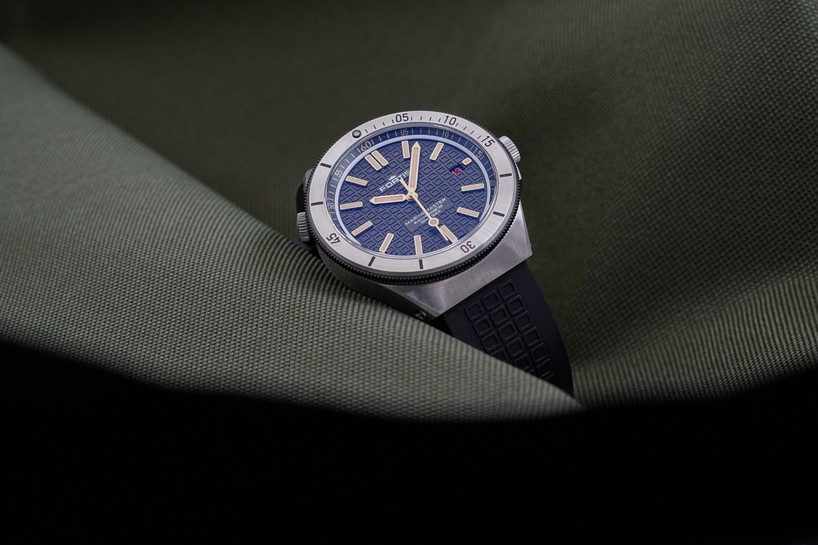
Silicone is common in watch straps, but it can attract dust and lint because of its electrostatic properties and may develop a tacky surface over time. FKM, a fluoroelastomer originally developed in the 1950s for seals and O-rings exposed to jet fuel, heat, and solvents, offers greater chemical resistance and dimensional stability across a wide temperature range.
FKM also retains its molded form instead of gradually relaxing into a curl. However, the material is more difficult to process. It must be vulcanized and is less receptive to color than silicone, contributing to the restrained palettes and higher prices of FKM straps.
Rolex’s own approach, the Oysterflex introduced in 2015, combines a titanium and nickel alloy blade with an elastomer overmold, functioning more like a bracelet with an elastomer exterior than a conventional rubber strap.
Aftermarket straps as a design discipline
Aftermarket components are often treated as secondary to the original, but their development involves a specific set of design constraints. The strap must fit a case it did not originally accompany, work with an existing buckle, and maintain the proportions and geometry of the watch.
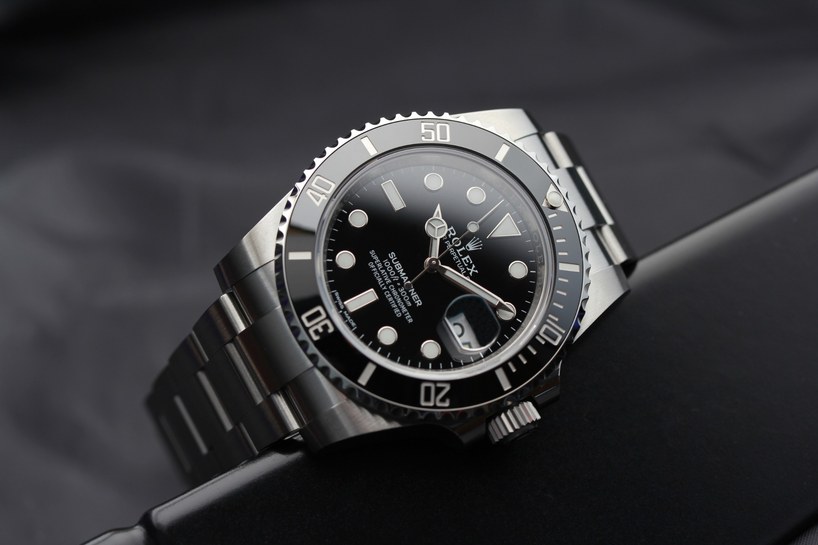
Details such as end pieces machined to match a specific case curvature, flush-fitting keepers, and carefully controlled thicknesses help maintain the continuity of the original design. The FKM rubber range for Rolex follows this reference-specific approach, with straps organized around the Submariner, Daytona, GMT-Master II, Datejust, Day-Date, and Sky-Dweller rather than simply by lug width.
A replaceable layer of wear within the life of the watch
The use of a replaceable strap also changes how wear is distributed across the watch. A factory bracelet accumulates wear directly on the original component, while a replaceable strap concentrates everyday wear in a part that can be exchanged independently.
Keeping the original bracelet stored while using a replaceable strap therefore provides a way to reduce wear on the original components while preserving the watch’s factory configuration. In this sense, the strap becomes both a functional interface and a replaceable layer within the life of the watch.


project info:
name: The FKM Rubber Range For Rolex
designer: Helvetus
designboom has received this project from our DIY submissions feature, where we welcome our readers to submit their own work for publication. See more project submissions from our readers here.