christopher glass made plaid explode and skyscrapers tilt for boots riley’s latest film
from his work on spike jonze's apple ad to the jungle book's live action sets, the production designer reveals how to create movie magic.
designing for the movies with christopher glass
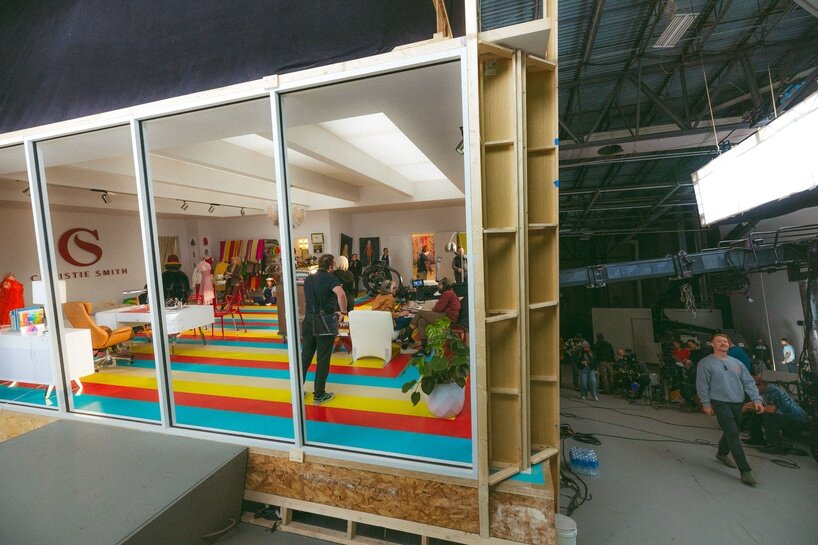
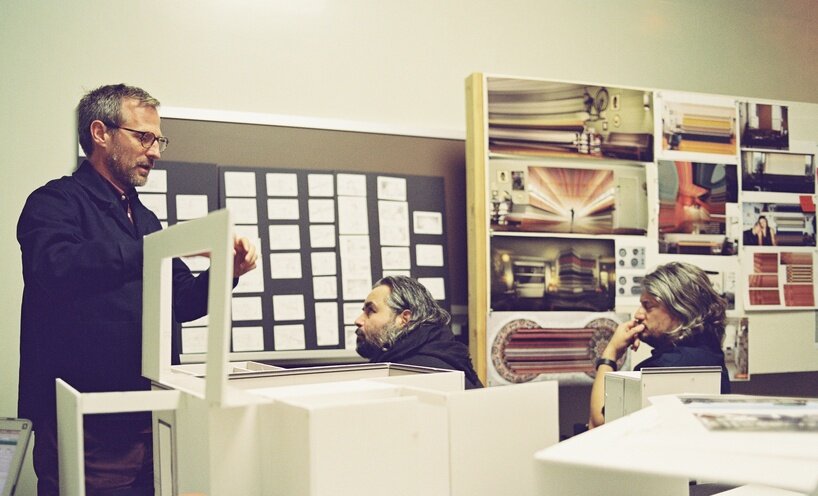
Production designer Christopher Glass has recently come off the wild and colorful sets of American director Boots Riley’s latest film, I Love Boosters, starring Keke Palmer, Demi Moore, and Eiza González. In the film, Moore plays the salacious fashion designer Christie Smith, whose office is in a fictional version of San Francisco’s Millennium Tower, which has been sinking into the ground, causing the luxury skyscraper to tilt. In Riley’s film, Smith’s offices, complete with sketches, racks of clothing, and colorful accoutrements, lampoon the structural deficit, creating an egregiously slanted office that causes those who enter to slip, slide, and struggle to close the door.
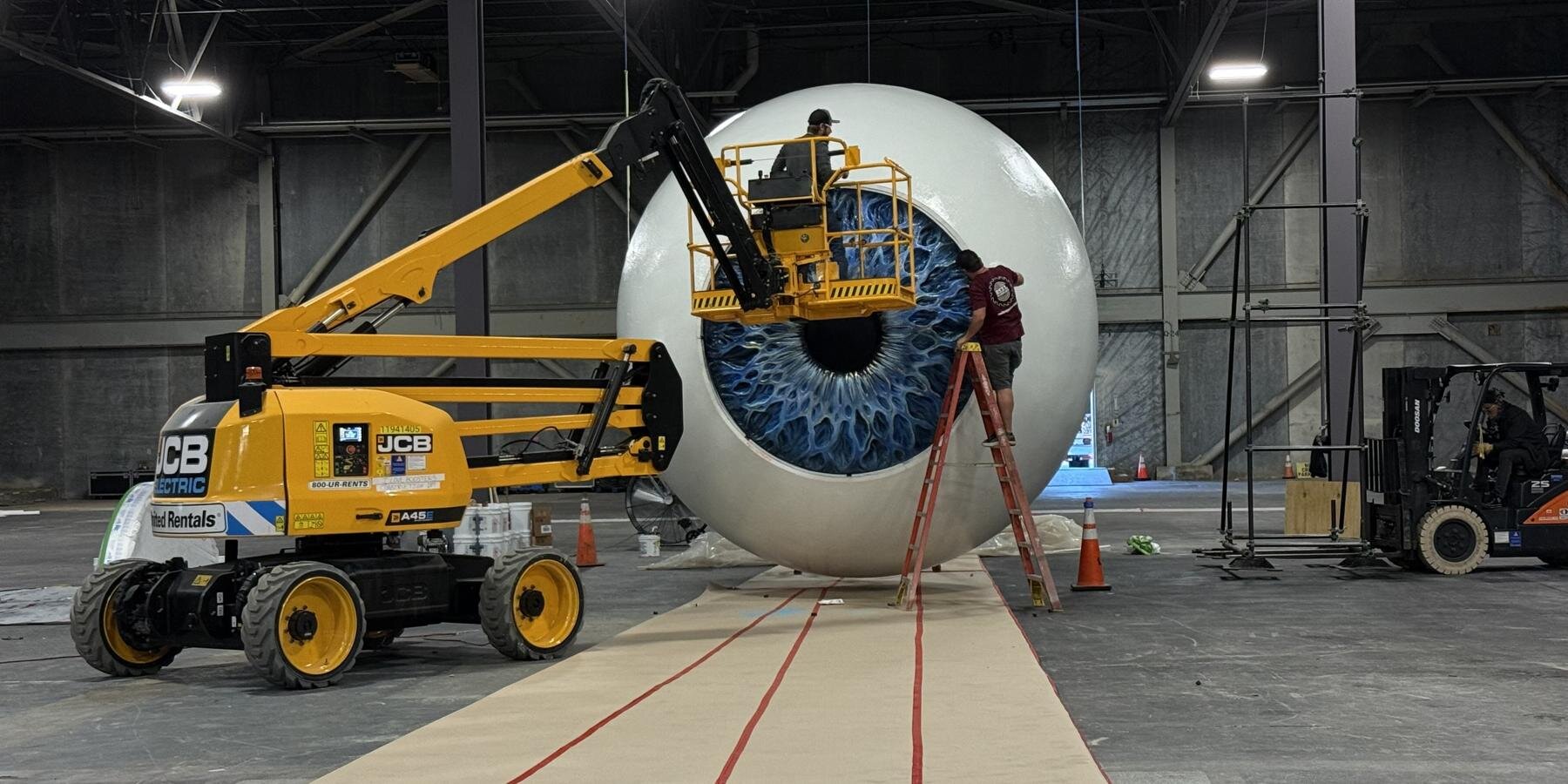
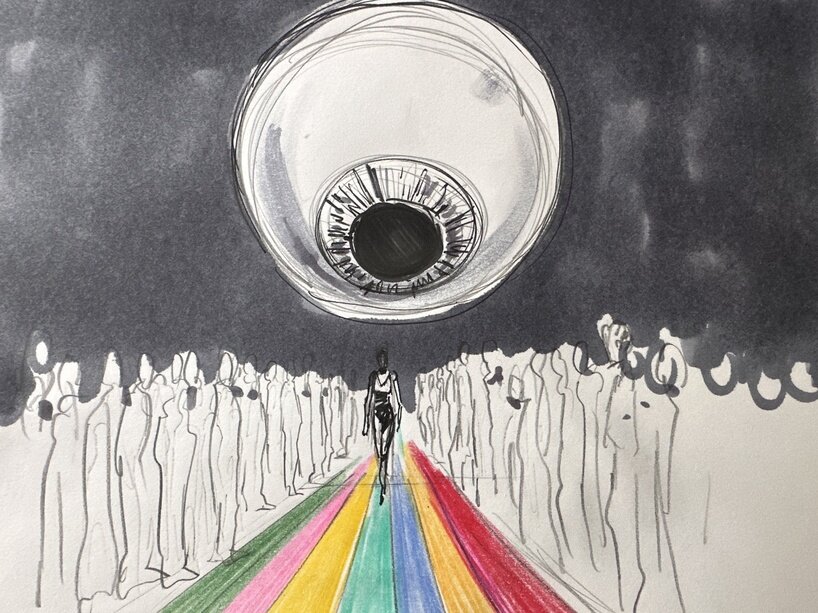
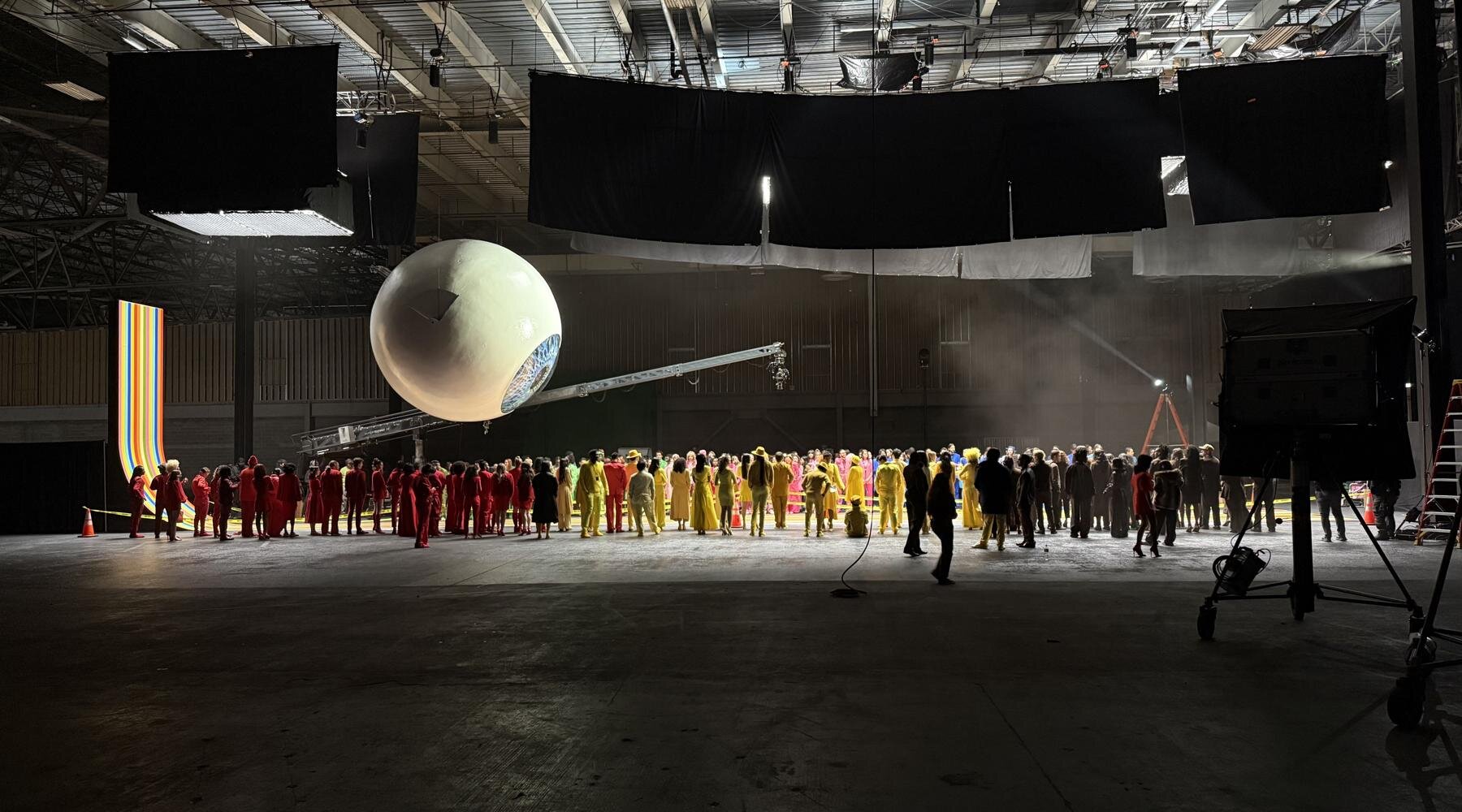
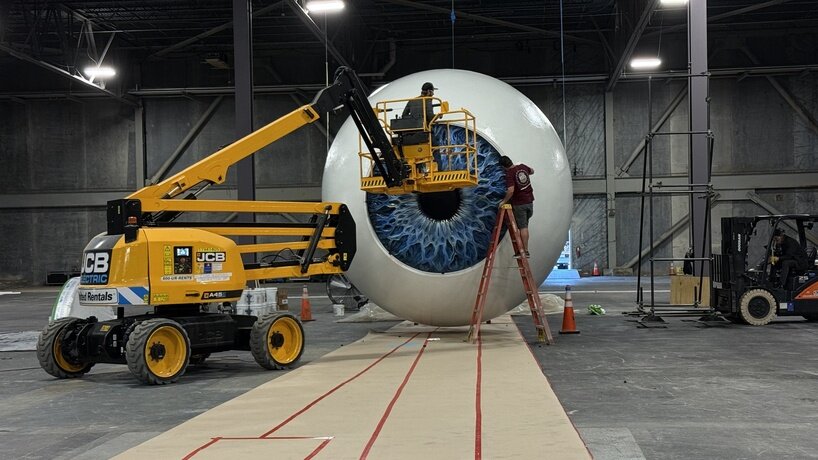
This set was actually created at a 15-degree angle (although the script said it was 45 degrees). Many of the effects in the film, like a giant threatening ball of junk that follows Palmer and plaid that explodes off a dress, were practical effects created by Glass and his team. In conversation with designboom, Glass chats about creating all types of film sets, from the physical-digital world of The Jungle Book to the ribbon-filled halls of Spike Jonze’s HomePod commercial for Apple.
On creating inside the Boots Riley universe
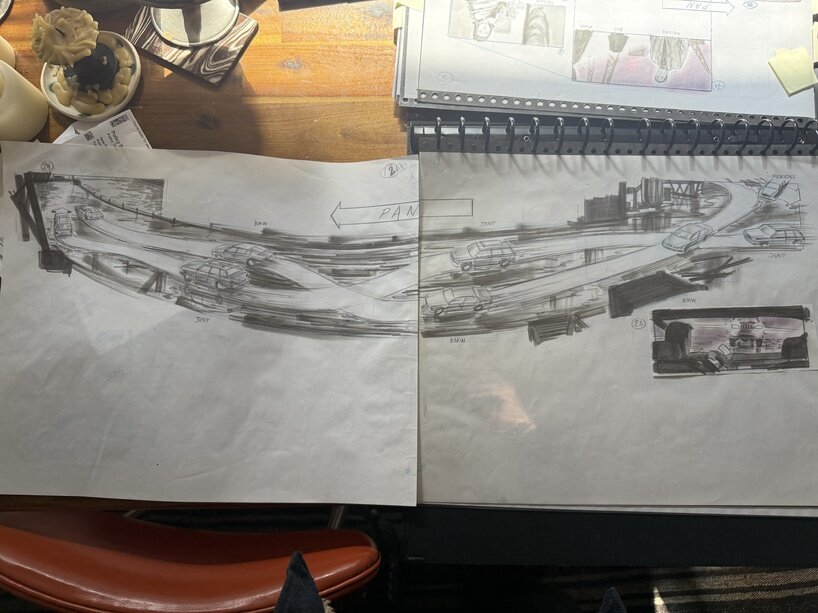
‘It’s a very strange, interesting universe and he comes up with things that that you would truly never think of,’ says Glass on Riley’s imaginative movies, which often include miniatures, puppets, stop motion, and fantastic costumes. ‘[Riley’s] actual stories are not entirely surreal! I know that sounds weird after working on a movie where there’s a giant trash ball stalking somebody and skinless people and whatnot. But I think there’s a kernel in his stories that are that are grounded and something that we can all relate to.’ The trash ball Glass refers to was a product of miniature magic. They built tiny versions of the Bay Area’s sloping streets so this ominous ball of scrapped clothing and eviction notices could roll up behind the film’s protagonist.
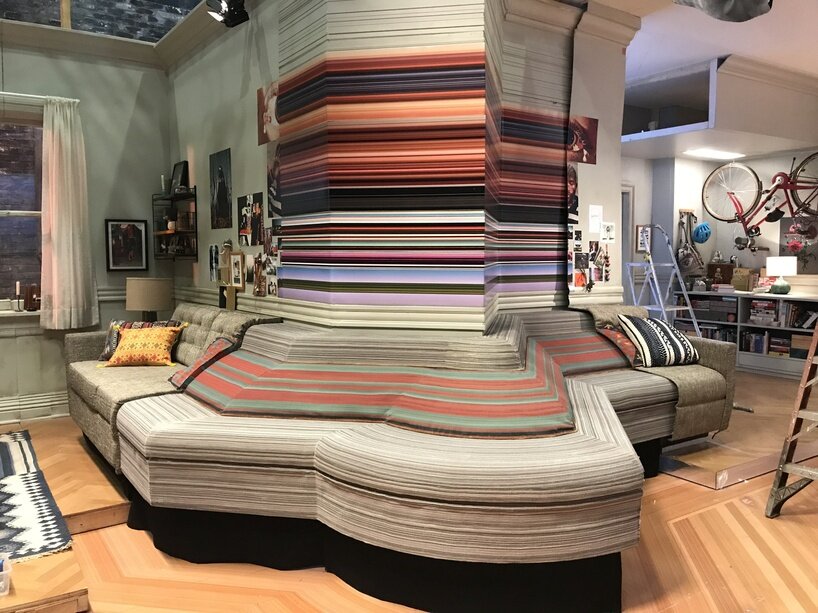
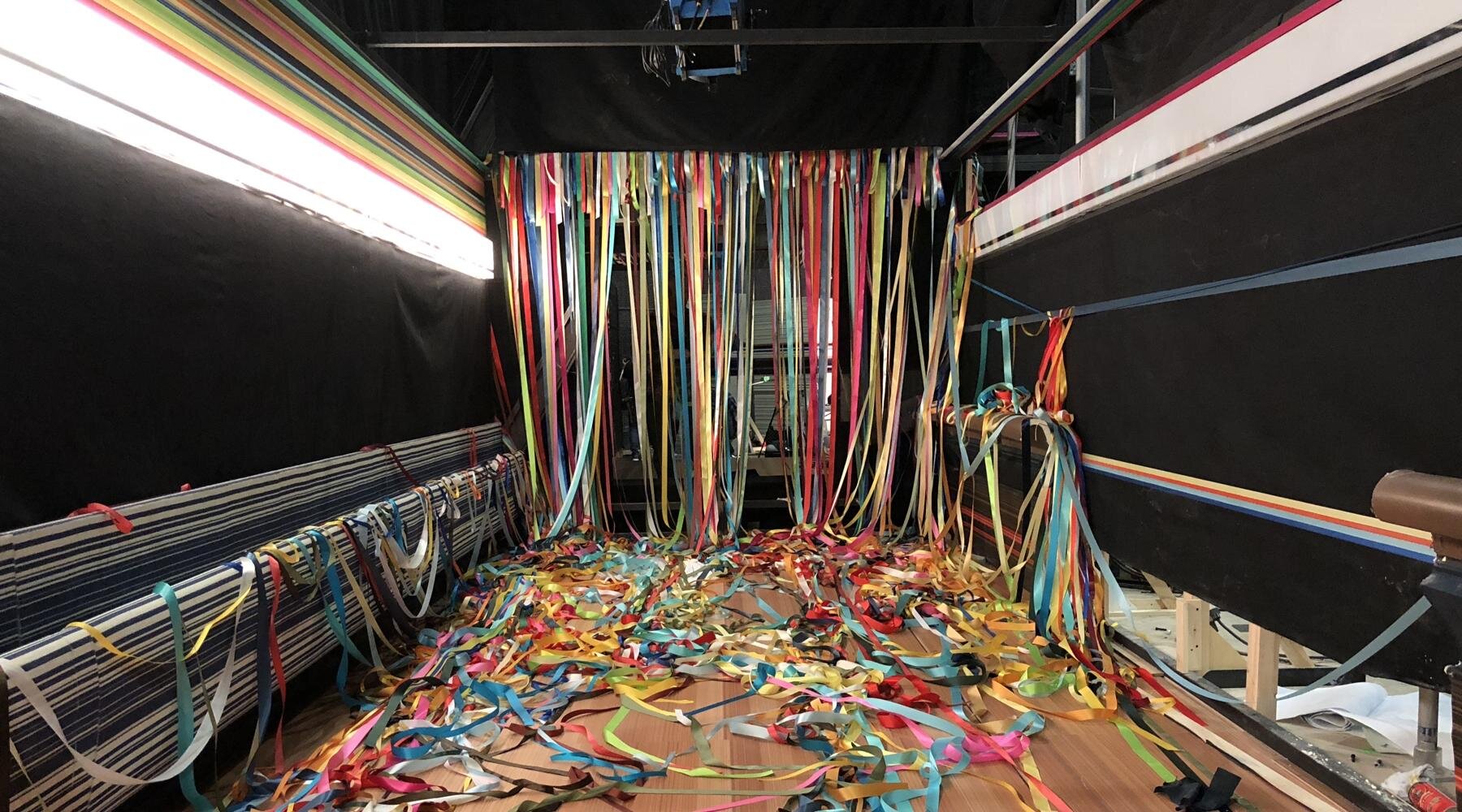
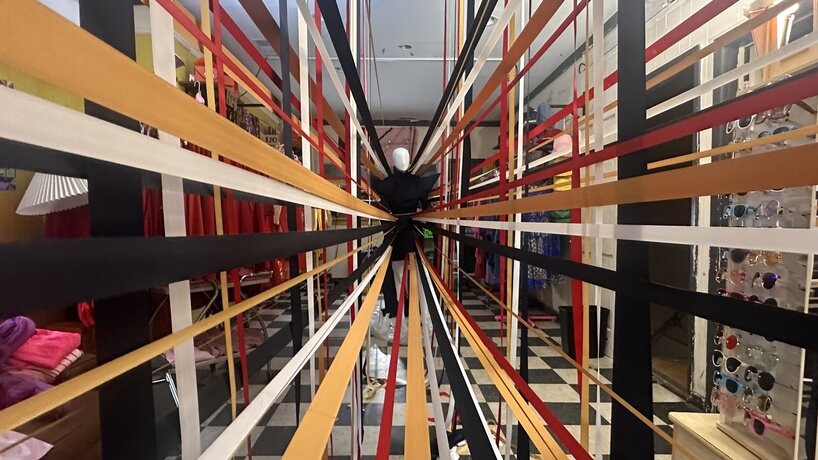
All these effects and concepts, collaged into one movie, were a creative challenge for the production designer. He recalls creating a scene where Keke Palmer’s character, Corvette, has on this dress where the plaid print explodes off the textile. ‘We didn’t want to do any computer-generated visual effects or anything like that,’ says Glass of how he started to conceptualize the dress. ‘I’ve done a lot of stuff with ribbons before, so I said, why don’t we just get a bunch of ribbons. It’s already made it’s already pre-cut and comes in very long lengths that you can use.’
From blockbusters to commercials
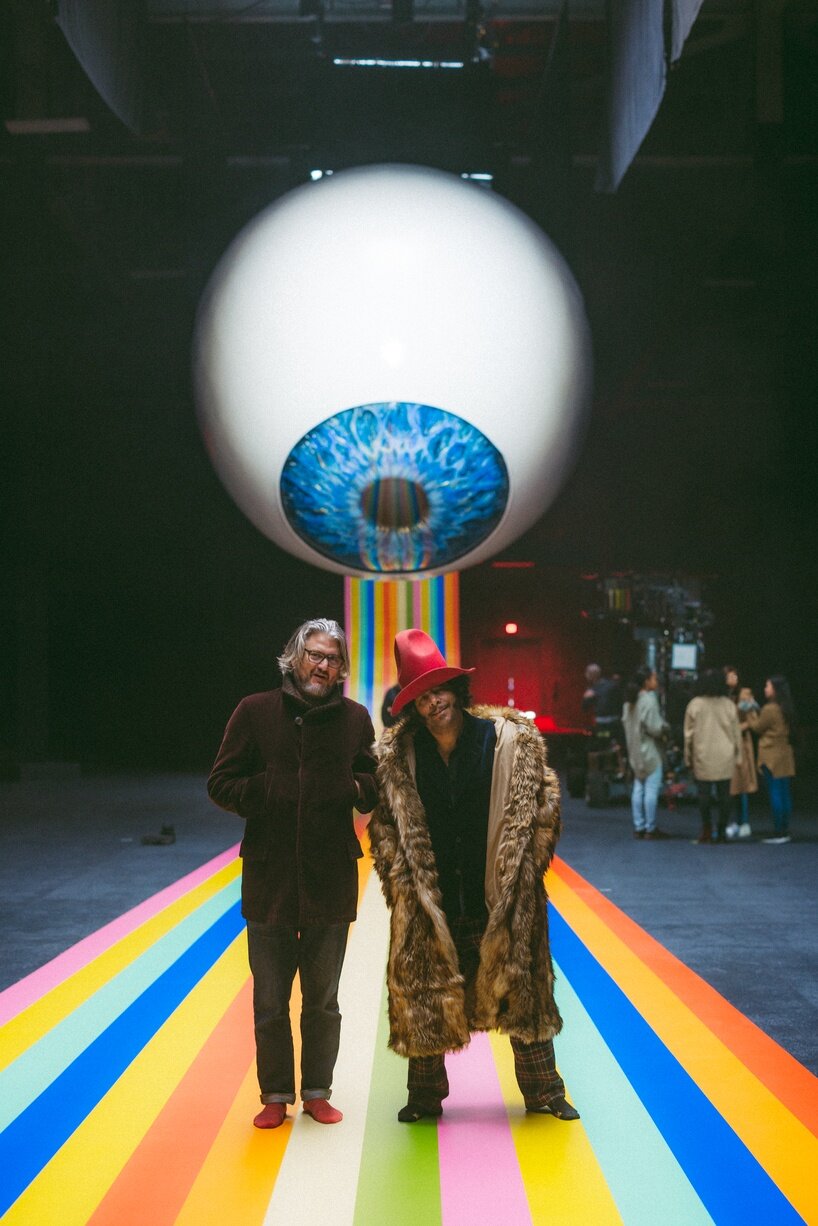
Glass is specifically referencing the expanding apartment set of Spike Jonze’s HomePod commercial, Welcome Home, which he created for Apple in 2018. In the commercial, FKA Twigs, playing a character dejected from her humdrum nine-to-five, comes home from work. Upon asking Siri to play her some music, her apartment begins to expand in a colorful flurry of rainbow stripes. To create this set involved a complex series of moving set pieces that would spin open, hallways of tightly bound ribbons, and FKA Twigs dancing with a body double.
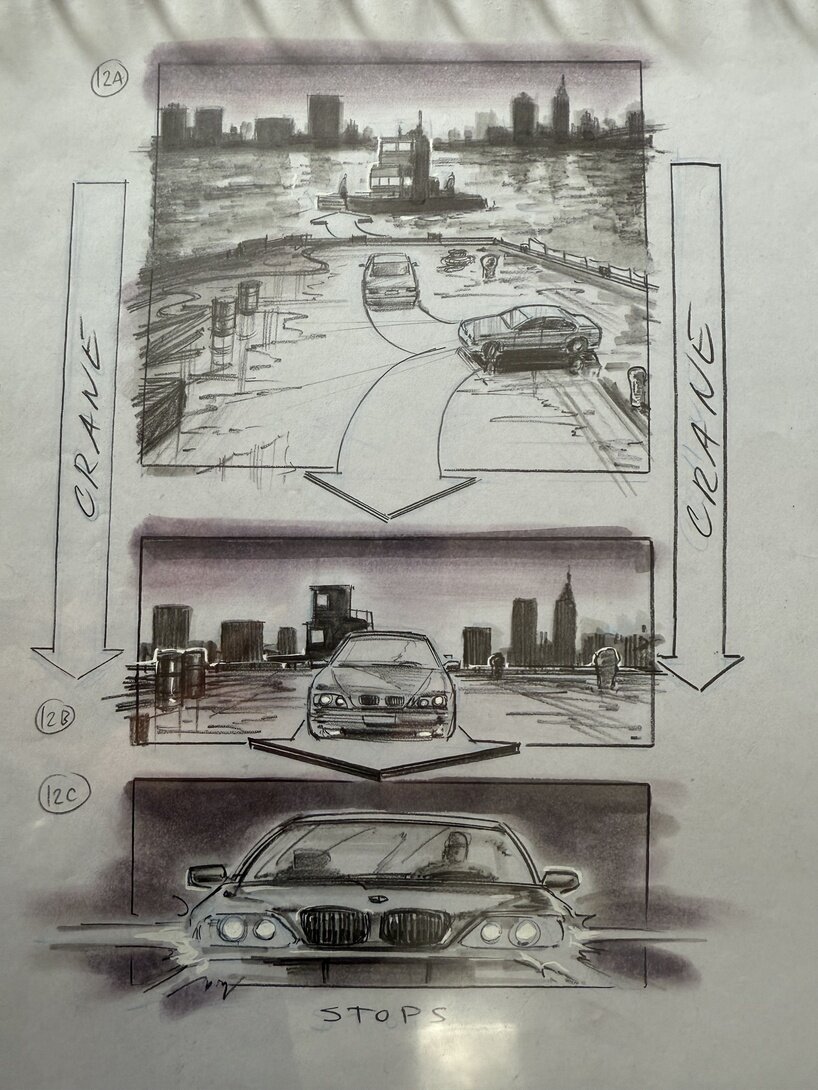
‘What’s funny is that, when I was making it, I thought it was the end of my career. I was like, this is it! This is all gonna collapse and it’s not going to work,’ mentions Glass on the technical challenges that arose around that project. Nevertheless, the visually striking advertisement went on to win a Grand Prix at the Cannes Lions festival. ‘Commercials can be very experimental or they used to be because there was more of a desire for what’s called “branding creative” where a commercial expresses an aspiration instead of focusing on solely the product feature’. He goes on to say, ‘it does give you a playground to do weird, experimental, or more risky visual ideas.’ Glass has also created a growing house for Leroy Merlin, a world for a giant financial adviser for Experian, and a noir world for Jim Beam’s Willem Dafoe ad.
When to go real and when to go digital
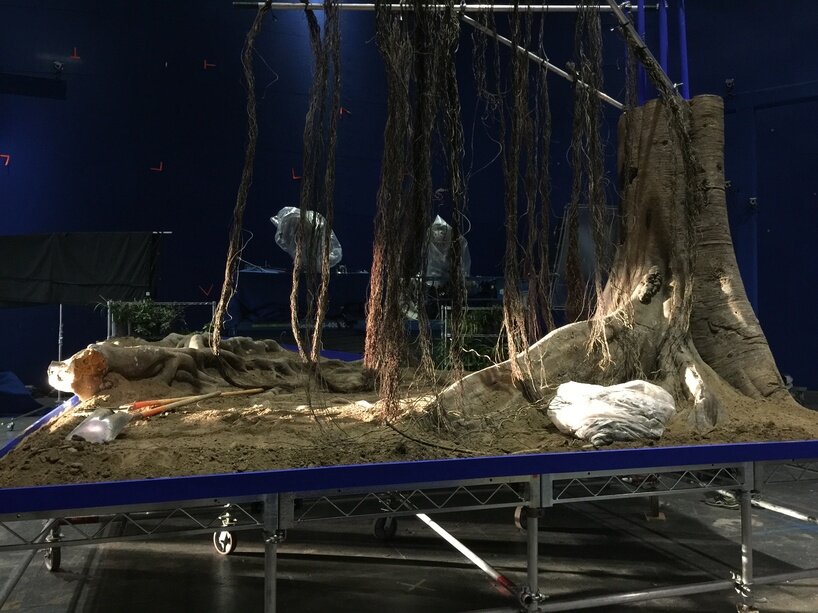
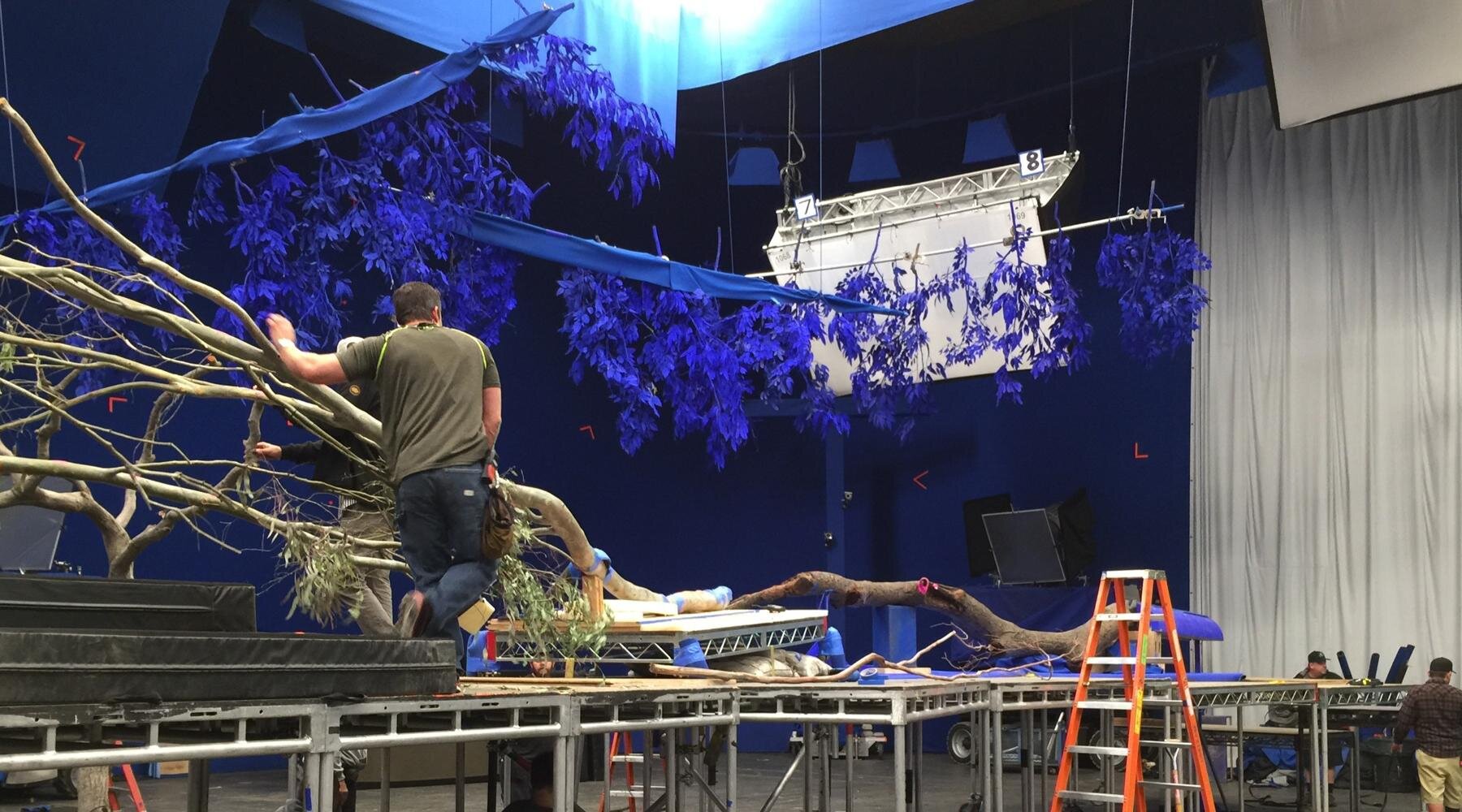
Glass’s work has taken him beyond the real and into high-action universes like Marvel’s Ms. Marvel or DC’s Batgirl. Back in 2015, he worked on The Jungle Book, a live-action movie that followed in the success of James Cameron’s Avatar, a pioneering film in merging computer graphics with real performances. ‘It used a lot of the same techniques as [Avatar], but we had to have a real kid [play Mowgli] and he’s really the only human actor in the entire film,’ Glass says on when and where the production decided to create physical sets or CGI surroundings. ‘So almost everything that he’s he interacts with physically we created, like the leaves, the snake skin he pulls up. If he’s climbing up a log and has to like duck under a branch or push it aside. [These elements are] all different sizes depending on what the action was like. Sometimes it’s very narrow if it’s a pathway and sometimes it was wider because we needed his shadow.’
Ultimately, through his wide range of production, Glass has seen, and taken part in, the creation of movie magic. Although his role is designer, he admits that sometimes he can’t help but get involved in the paint and the props. He talks about his time on 12 Strong, the war-action movie starring Chris Hemsworth, saying, ‘I was very hands-on in the battlefield dressing, like dark ash all over the place and setting up body parts for blown up people. It’s just because I’m a nerd for filmmaking and and if I if I’m not doing something I start to feel too separated from the process.’
1/4
project info:
production designer: Christopher Glass
film: I Love Boosters
director: Boots Riley
release date: 2026
This article is part of designboom’s SPECTATOR AND SPECTACLE chapter, asking how wonder gets built, and how it might return some mystery to a world that has measured most of it away. Presented in partnership with SolidNature, the stories in this chapter turn onlookers into participants, alter perception and disrupt the everyday – learn more here!
Each designboom chapter explores one theme in depth through projects, interviews, features and news across architecture, design, art and technology. Discover more chapters here, and get in touch if you’d like to submit a story through our submissions portal or contact form.
shop
your own online design shop — no sales commission collected