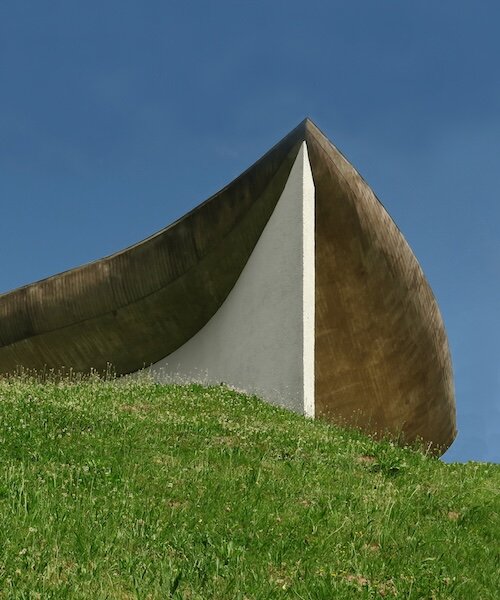
on le corbusier’s 139th birthday, revisit his iconic ronchamp chapel through paul clemence’s lens
light, texture and sculptural form come together in a building that still feels remarkably contemporary more than seven decades after its completion.
LE CORBUSIER’S RONCHAMP CHAPEL THROUGH PAUL CLEMENCE’S LENS
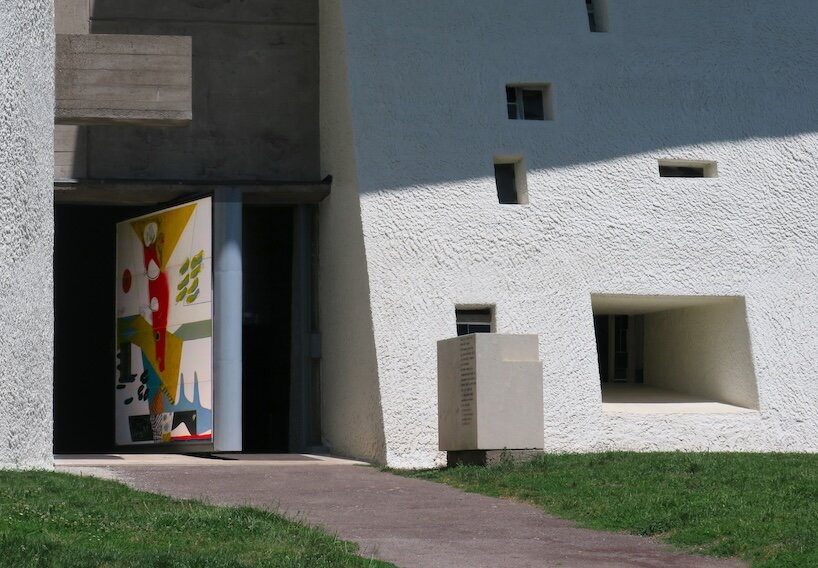
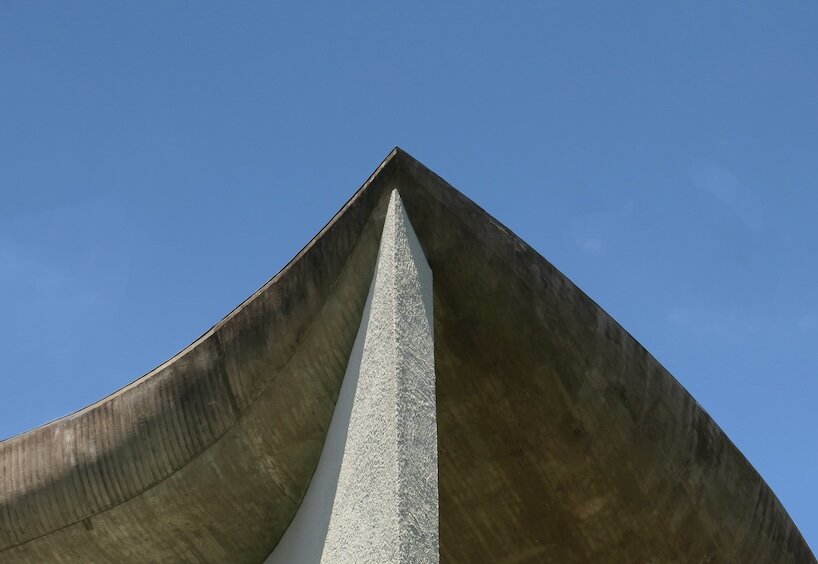
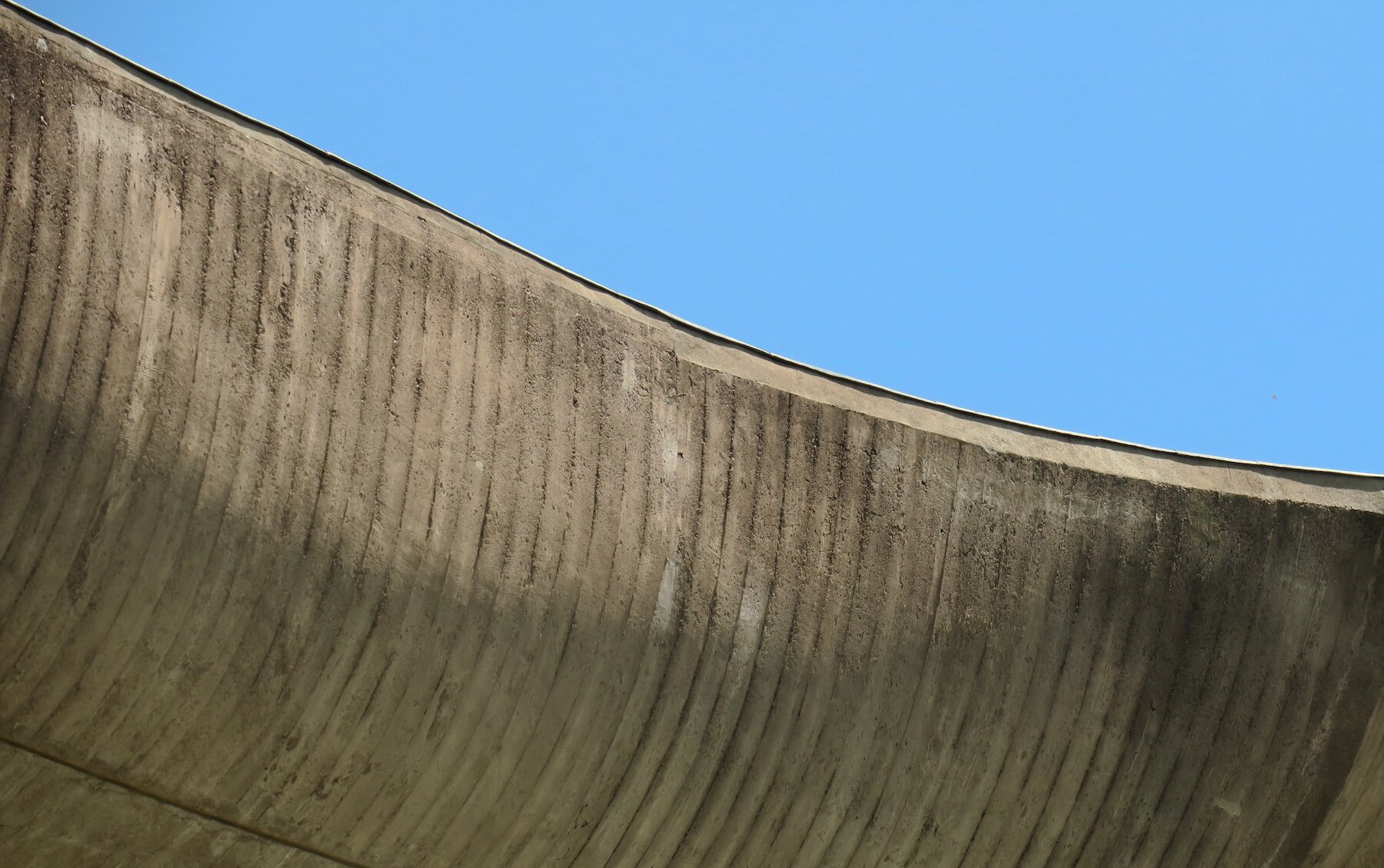
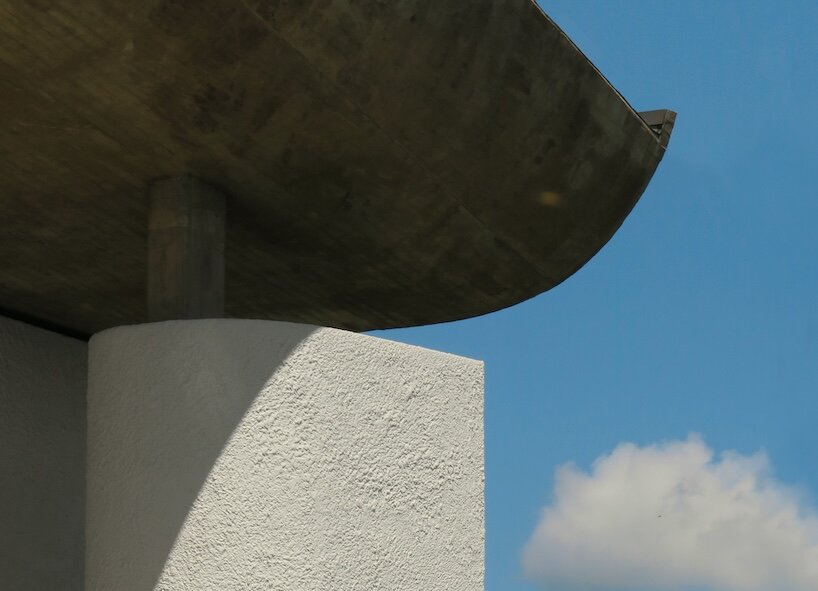
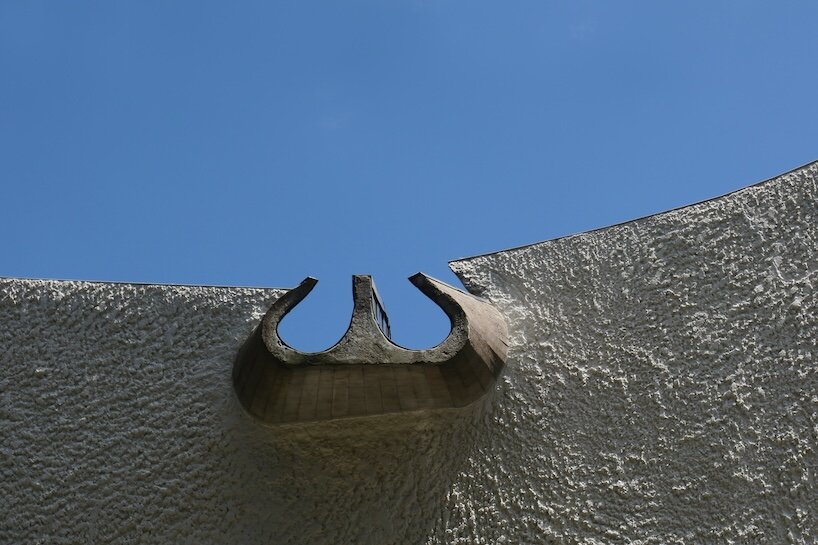
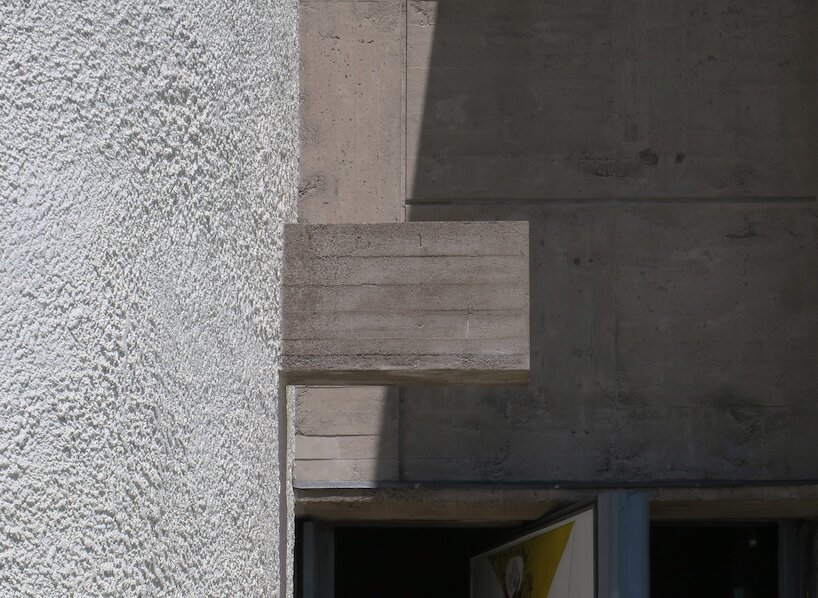
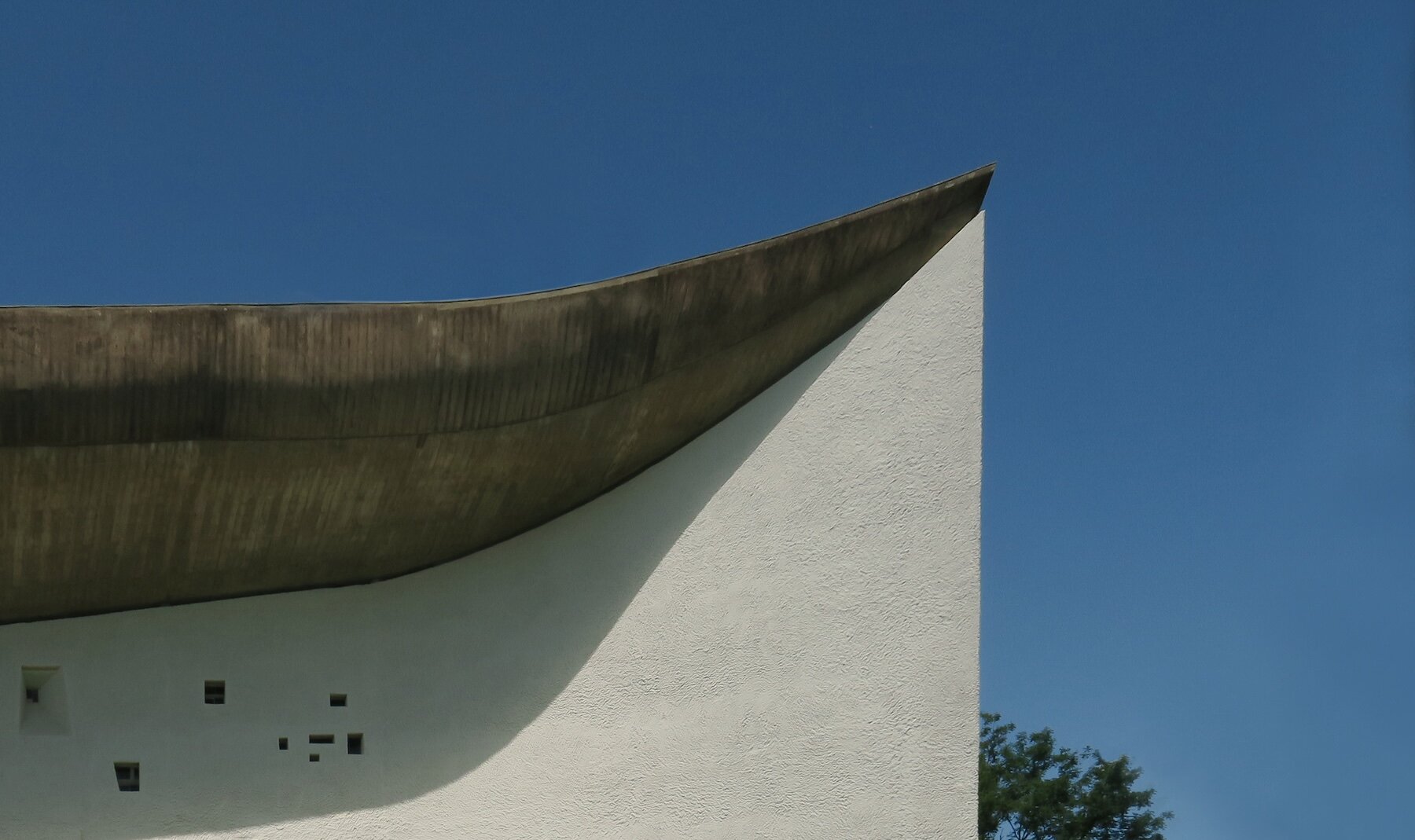
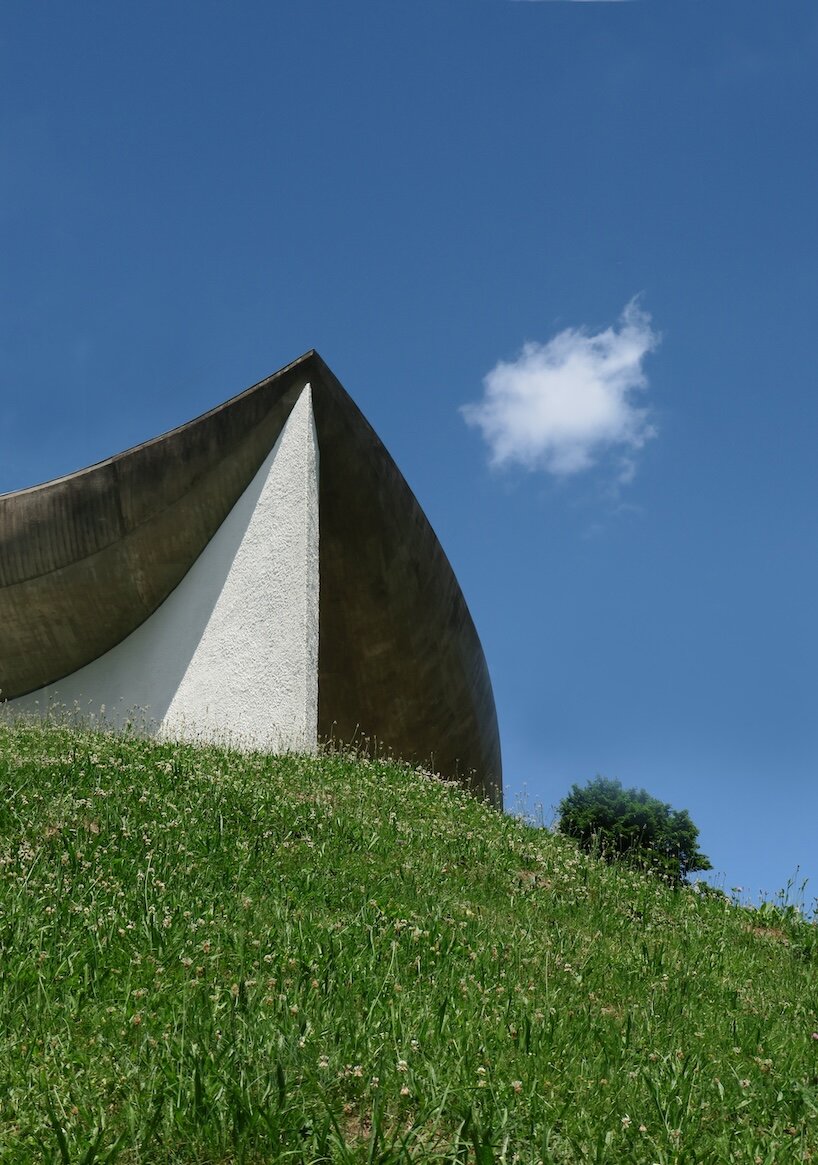
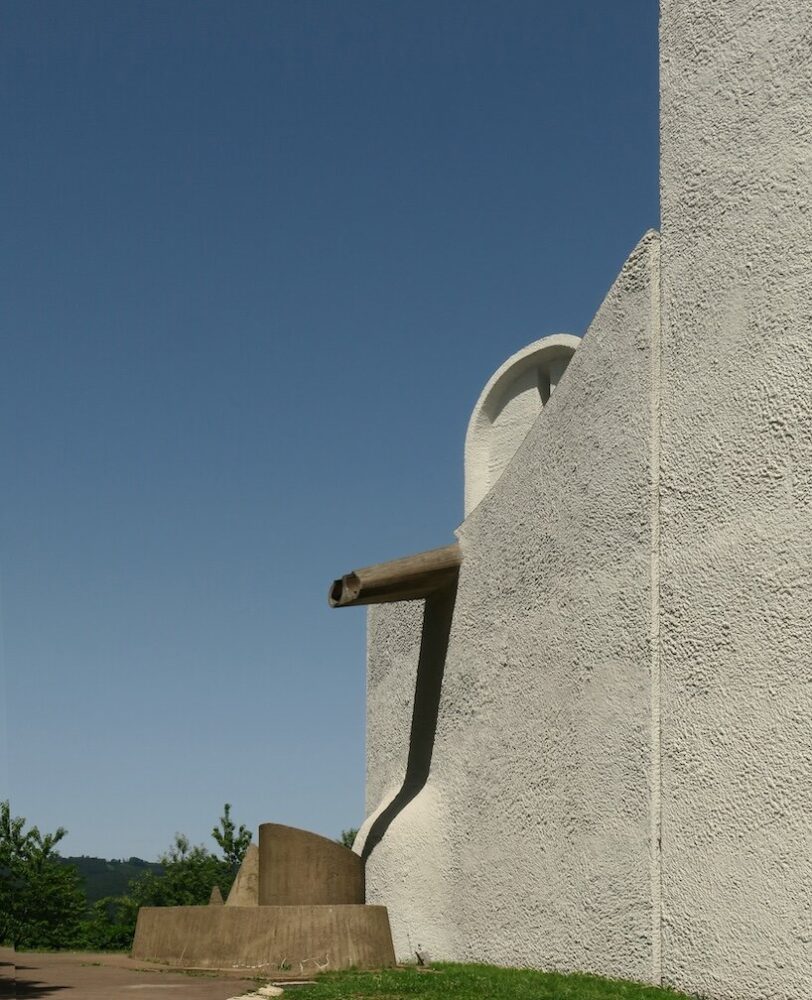
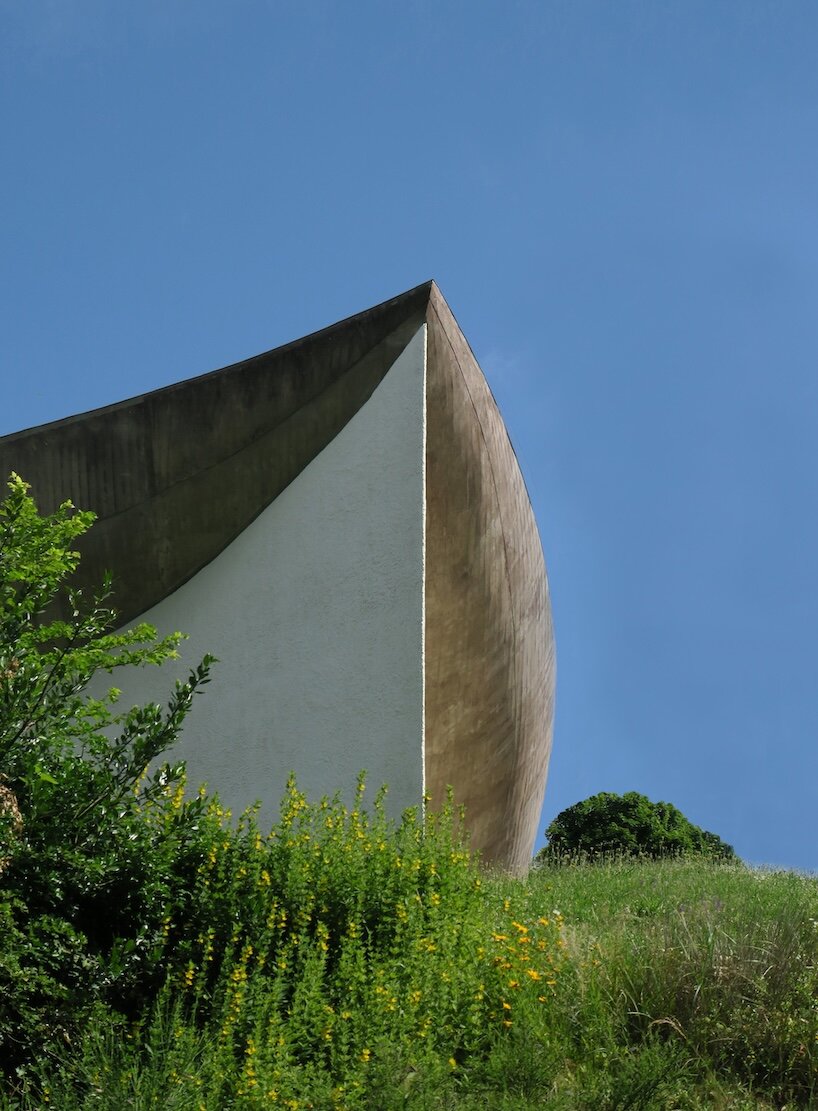
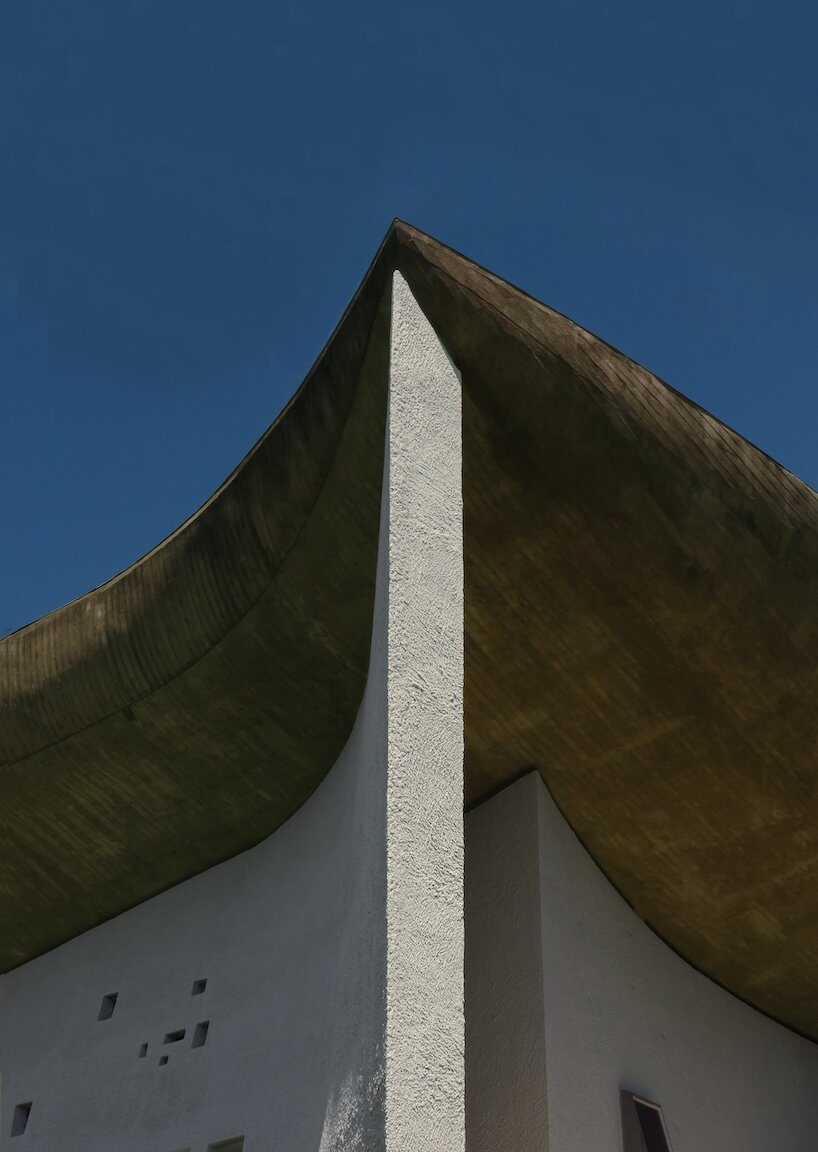
Born Charles-Édouard Jeanneret on October 6, 1887, Le Corbusier would have turned 139 today. To mark the anniversary, designboom revisits one of the architect’s most singular works through a photographic portfolio by Paul Clemence, whose images turn their attention to the light, textures and sculptural surfaces of Notre-Dame du Haut in Ronchamp, France. Le Corbusier himself reduced the thinking behind the project to an unusually concise formula: ‘the place: the four horizons; the means: the crab shell.’ Both ideas — the surrounding landscape and the object-like form of its roof — became fundamental to a chapel that seems to shift with every viewpoint.
Rising from Bourlémont hill in eastern France, Notre-Dame du Haut occupies the site of an earlier pilgrimage chapel destroyed during bombing in 1944. In the years following World War II, the site’s owners and the diocese of Besançon set out to rebuild it, eventually entrusting Le Corbusier with the commission. The choice formed part of a broader postwar movement to bring contemporary art and architecture into the Catholic Church, championed by figures including Dominican priest and art critic Father Marie-Alain Couturier, an influential advocate of Le Corbusier’s religious work. Work began in 1950 and the chapel was completed several years later, before being officially inaugurated and blessed on June 25, 1955. Rather than reconstructing what had been lost, the architect used the project to reconsider what a place of worship could be.
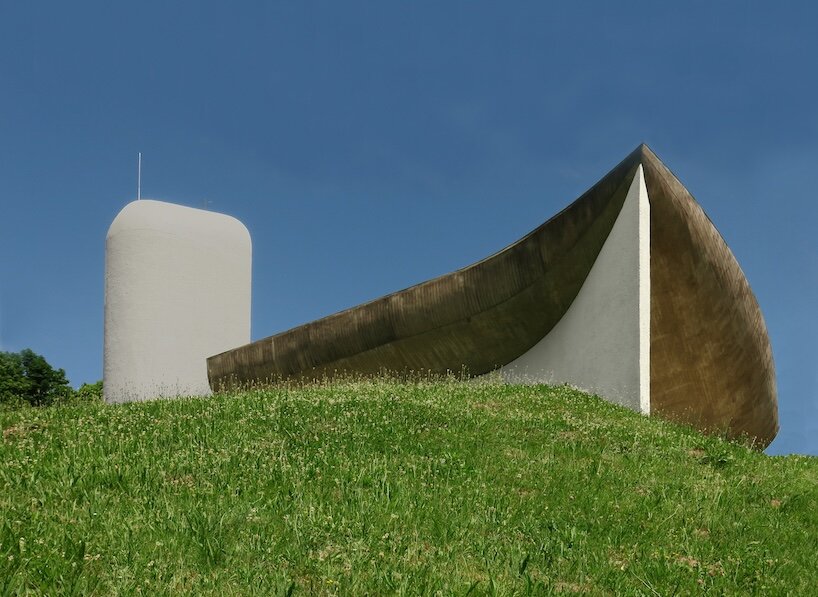
FOUR HORIZONS SHAPE THE ARCHITECTURE
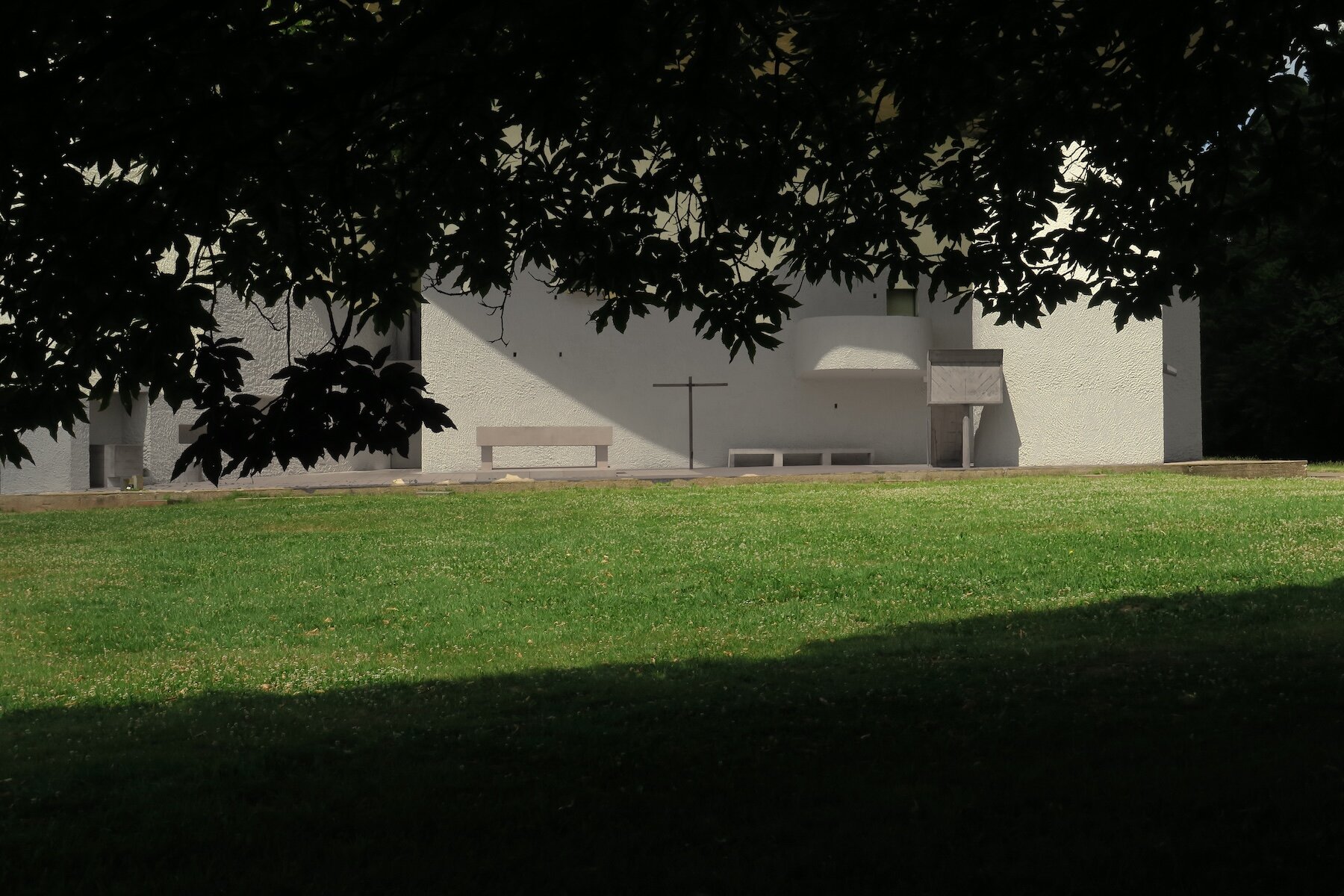
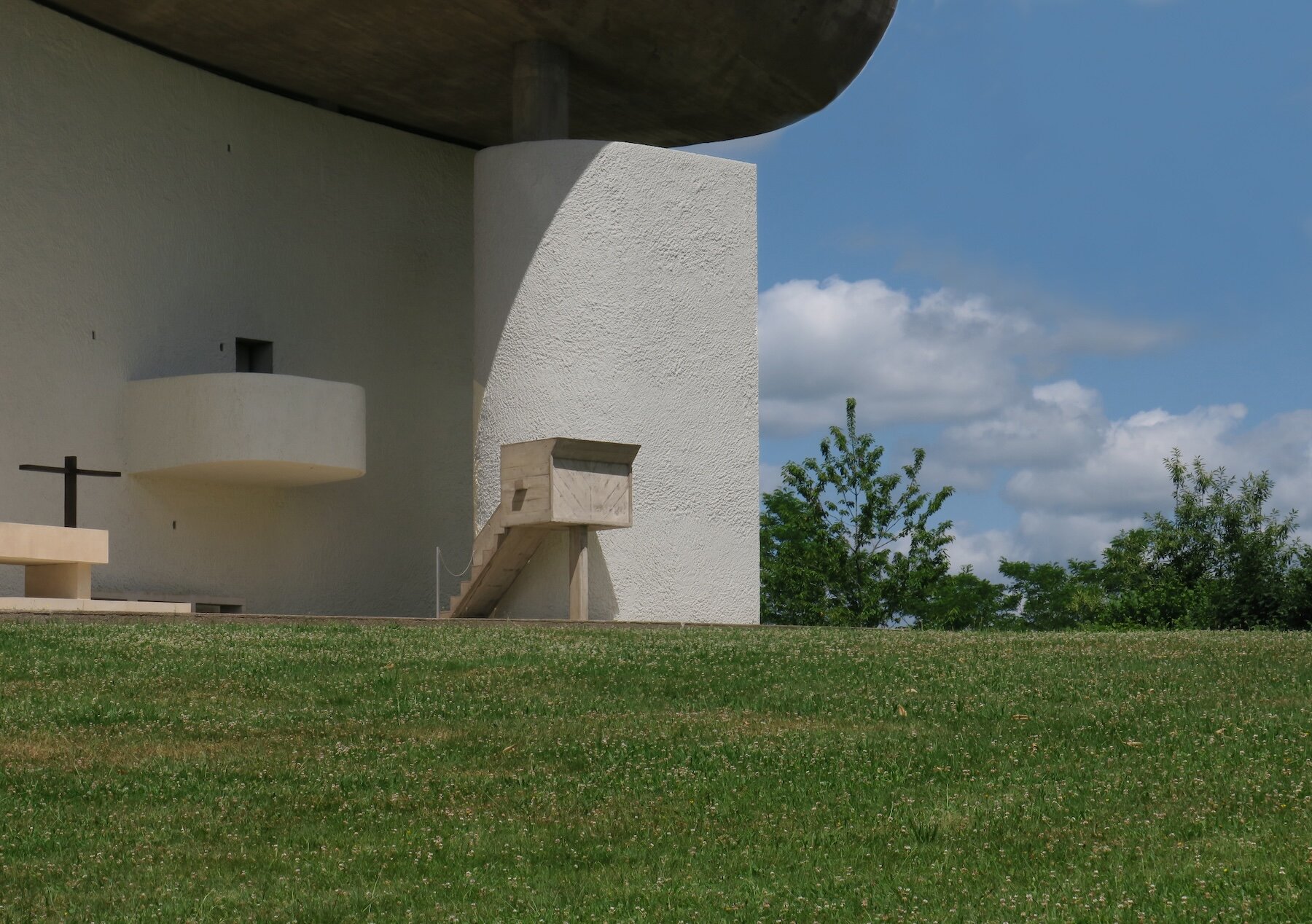
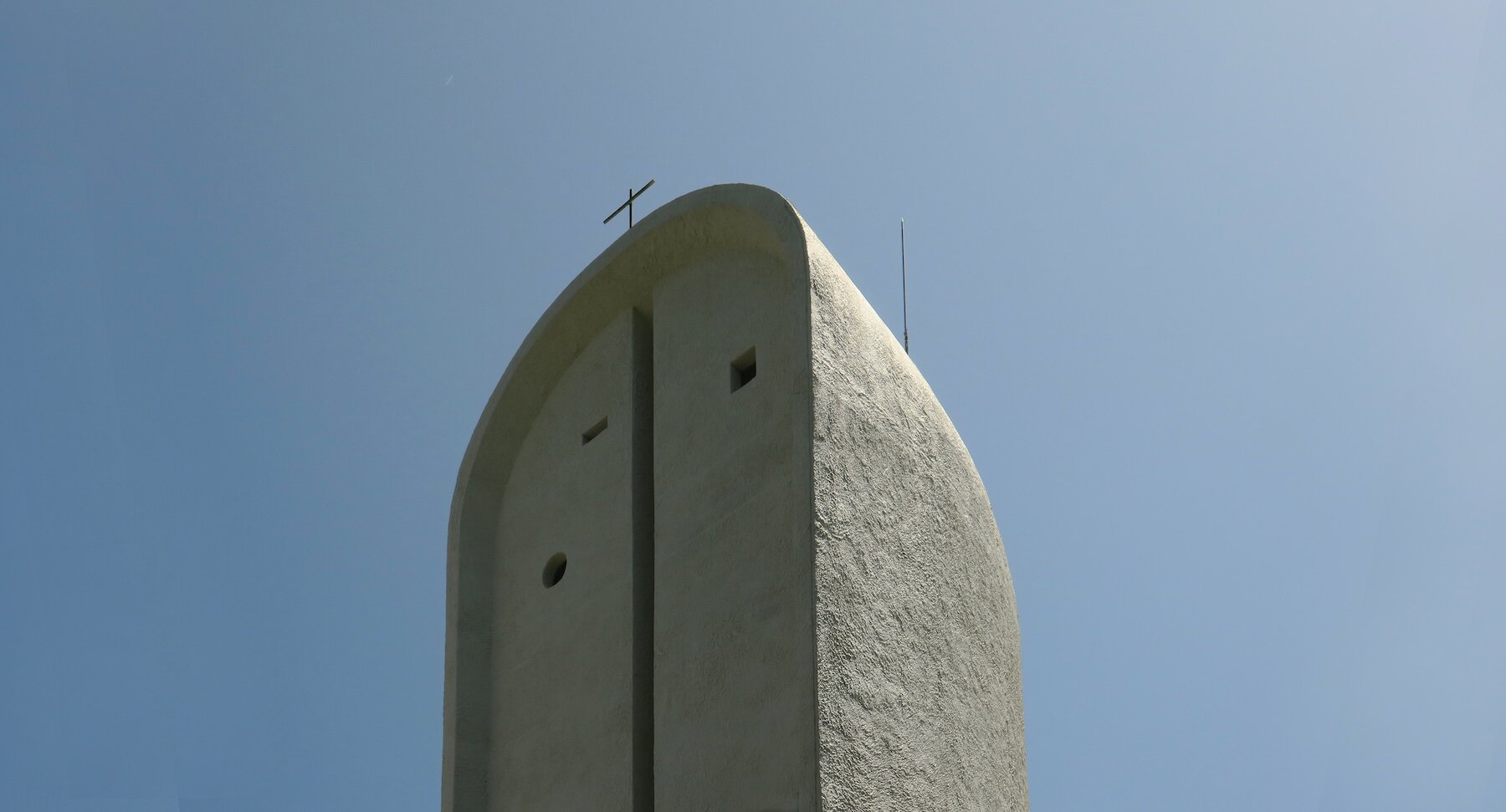
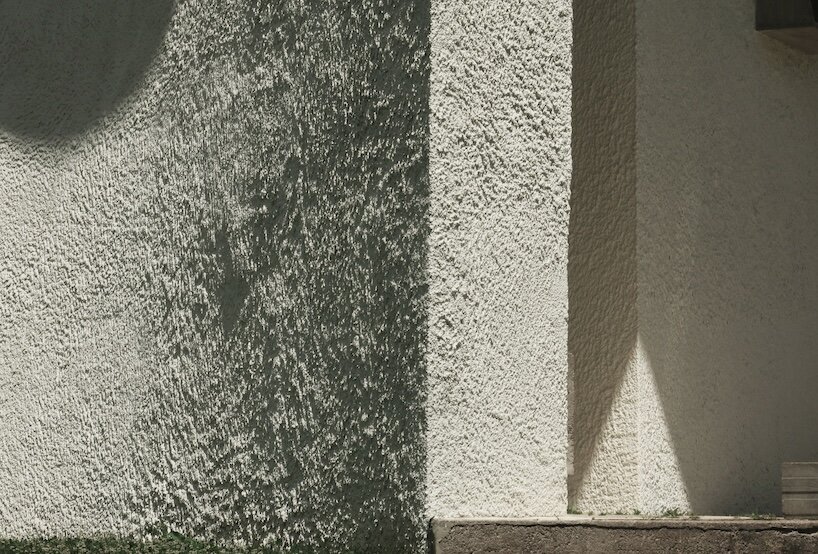
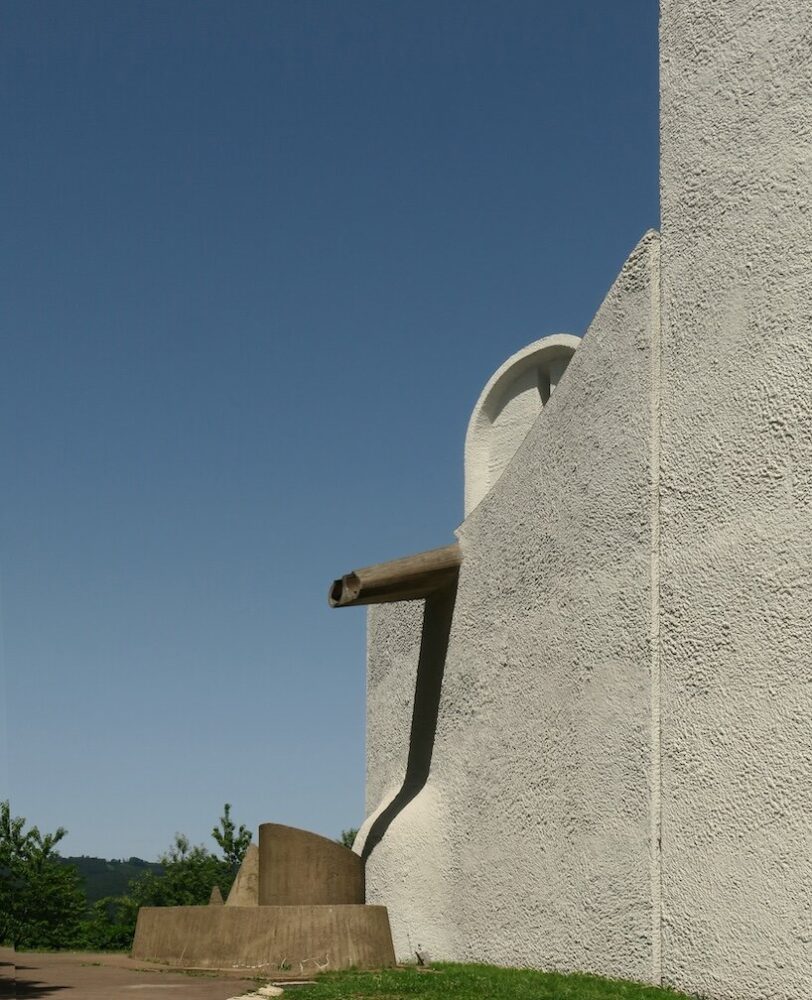
Ronchamp marked a striking departure from the rational grids and orthogonal geometries commonly associated with Le Corbusier’s earlier modernist work. Here, walls swell, taper and bend; towers emerge as rounded volumes; and the roof sweeps over the composition like an independent sculptural object. For Clemence, photographing the chapel 70 years after its inauguration also became an exercise in looking at a canonical work from the present. ‘With this photo essay I wanted to show this modern landmark through a sensibility of today, let a contemporary eye tell the story,’ he tells designboom. Before beginning the design, Le Corbusier spent hours on the hill studying and drawing the landscape around him. The plains, valleys and distant Vosges mountains became what he called the site’s four horizons, with the architecture conceived not simply as an object placed within them, but as a response to their presence.
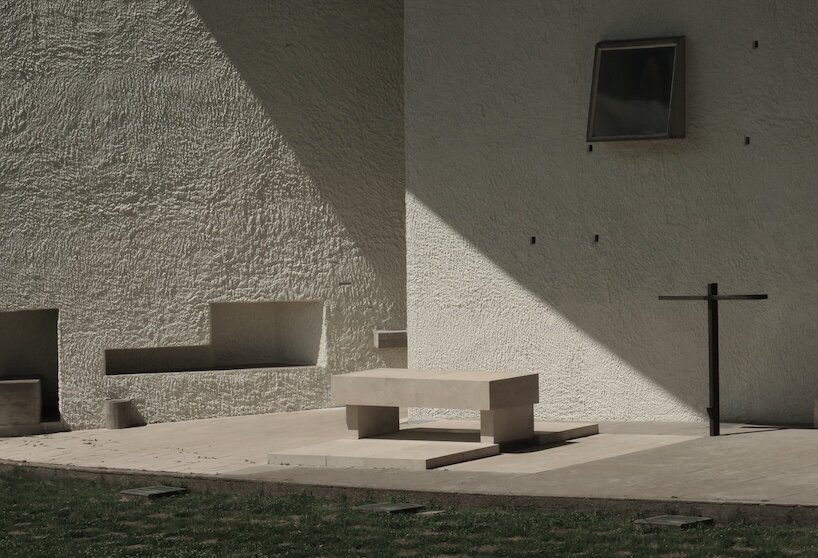
He later described Ronchamp as a ‘contact with a site’, suggesting an architecture that speaks to its surroundings rather than merely occupying them. This dialogue becomes clearest when circling the building. No single facade explains the chapel: each elevation changes its proportions and expression according to the landscape it faces. Curved walls extend outward or retreat, openings appear and disappear, and the silhouette continuously rearranges itself against the sky. Clemence was particularly struck by the way the building asserts itself on the hill without becoming imposing — monumental in presence, yet inviting in scale.
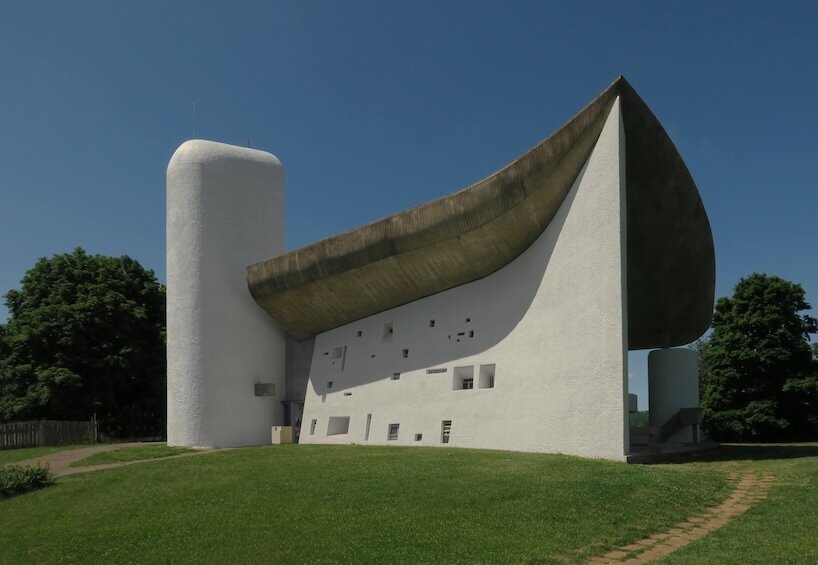
A CRAB SHELL BECOMES A CONCRETE ROOF
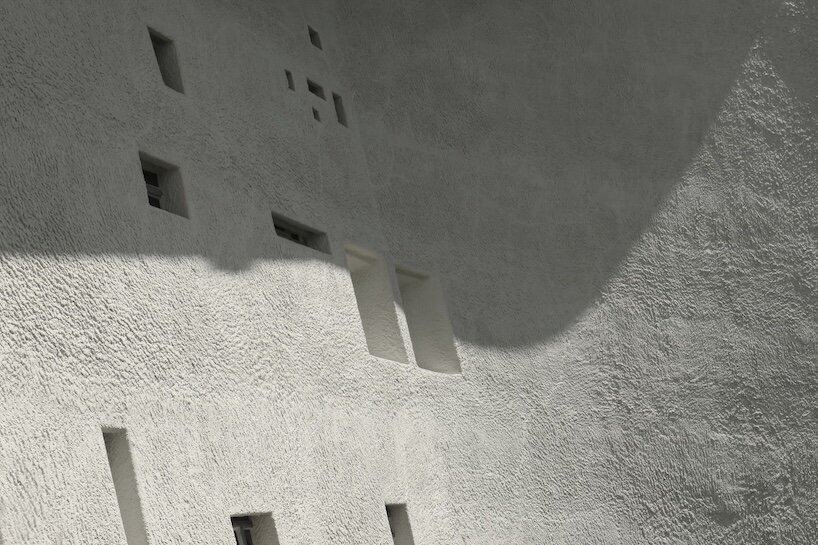
Inside, light becomes a construction material of its own. The thick south wall is perforated by an irregular constellation of openings, varying in size, depth and orientation. Some contain colored or painted glass, allowing fragments of red, blue, yellow and green to spread across the otherwise restrained interior. Rather than the continuous stained-glass windows of a traditional church, Le Corbusier created individual points of illumination whose appearance changes according to the hour, season and position of the sun. That tension between material solidity and colored light also shaped Clemence’s final edit: he chose black and white for the exterior photographs, emphasizing form, texture and shadow, while keeping the interiors in color with a subtle watercolor quality.
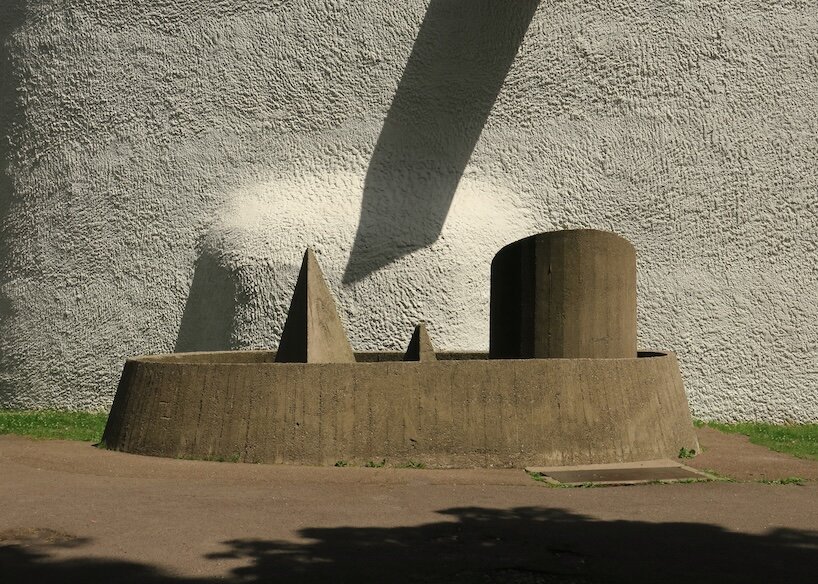
The chapel was conceived for both private contemplation and collective pilgrimage, with three smaller chapels incorporated alongside the main nave and an outdoor choir allowing ceremonies to extend into the landscape. Nearby, the Pyramid of Peace adds another layer to the site, built by Le Corbusier from rubble of the previous chapel destroyed during World War II. More than seven decades after its inauguration, Notre-Dame du Haut remains one of Le Corbusier’s most radical explorations of architecture as an emotional and sensory experience. Since 2016, it has formed part of the 17 works by Le Corbusier inscribed on UNESCO’s World Heritage List, while a major restoration carried out between 2022 and 2025 has renewed its concrete surfaces, glasswork and interiors. Seen through Clemence’s contemporary eye, Ronchamp emerges not as a frozen modernist icon, but as a building whose relationship with mass, light and landscape continues to feel immediate.
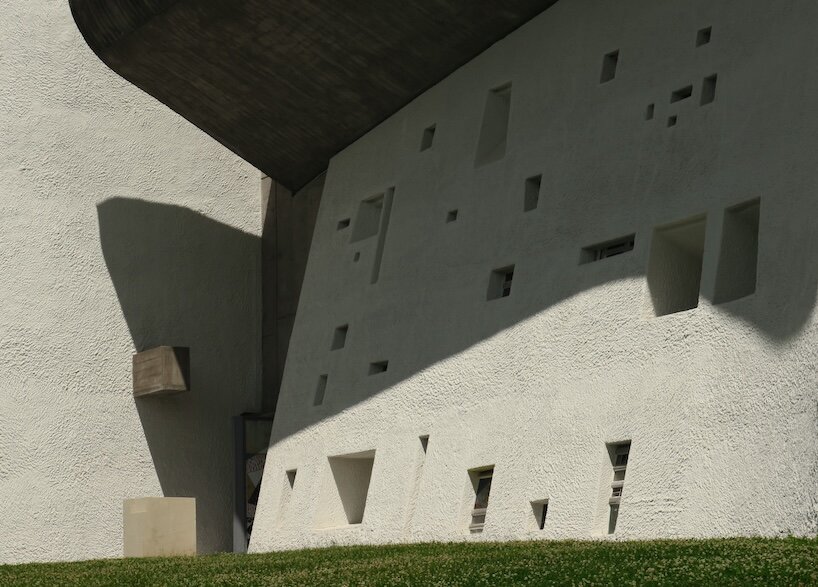
LIGHT PIERCES THE THICK WALLS
Inside, light becomes a construction material of its own. The thick south wall is perforated by an irregular constellation of openings, varying in size, depth and orientation. Some contain colored or painted glass, allowing fragments of red, blue, yellow and green to spread across the otherwise restrained interior. Rather than the continuous stained-glass windows of a traditional church, Le Corbusier created individual points of illumination whose appearance changes according to the hour, season and position of the sun.
The chapel was conceived for both private contemplation and collective pilgrimage, with three smaller chapels incorporated alongside the main nave and an outdoor choir allowing ceremonies to extend into the landscape. More than seven decades after its inauguration, Notre-Dame du Haut remains one of Le Corbusier’s most radical explorations of architecture as an emotional and sensory experience. Since 2016, it has formed part of the 17 works by Le Corbusier inscribed on UNESCO’s World Heritage List, while a major restoration carried out between 2022 and 2025 has renewed its concrete surfaces, glasswork and interiors. Seen through Paul Clemence’s photographs on what would have been the architect’s 139th birthday, Ronchamp continues to make Le Corbusier’s four horizons visible through architecture.
1/5
project info:
name: Notre-Dame du Haut chapel
architect: Le Corbusier | @fondationlecorbusier
location: Ronchamp, Haute-Saône, France
images: Paul Clemence | @photobyclemence
shop
your own online design shop — no sales commission collected