what we learned: spectator and spectacle
in this chapter, we journeyed from underground nightclubs to cinematic illusions, wearable architectures, and sculptural mirrors, exploring how spectacle can challenge our perceptions and experience the world.
prefer designboom on google[FEATURED]
WHAT HAPPENS WHEN WE STOP JUST WATCHING?
When Sofia Lekka Angelopoulou opened SPECTATOR AND SPECTACLE, she posed a question that challenged our relationship with the world around us: ‘What if we are not overwhelmed by spectacle, but starved of it?’ In her opening editorial, The Haçienda Must Be Built, she traced the history of the night, from radical discotheques to the increasingly measured and optimized rhythms of contemporary life, asking what happens when experiences become predictable and images lose their capacity to surprise us. Over the weeks that followed, the chapter explored how architecture, art, fashion, and design might recover that sense of wonder. Again and again, spectacle emerged not simply as something to observe, but as an experience capable of unsettling our habits, changing our behavior, and dissolving the boundary between those who watch and those who perform.
That conversation extended through a series of guest contributions and encounters with practitioners reconsidering what it means to create an experience. John Leo Gillen reflected on the disappearing architecture of the nightclub and the importance of moments that cannot be reproduced, while Łukasz Twarkowski blurred the boundaries between theater, cinema, and live images. Dennis Vanderbroeck considered how spatial design can create the conditions for collective experiences, while photographers David Altrath and François Prost approached the spectacle from different perspectives: one through the experience of architectural space, the other through the facades that promise extraordinary nights. Together, their perspectives revealed something that would return throughout the chapter: spectacle is not necessarily about what is in front of us, but about what happens when we encounter it.
THE CROWD IS PART OF THE ARCHITECTURE
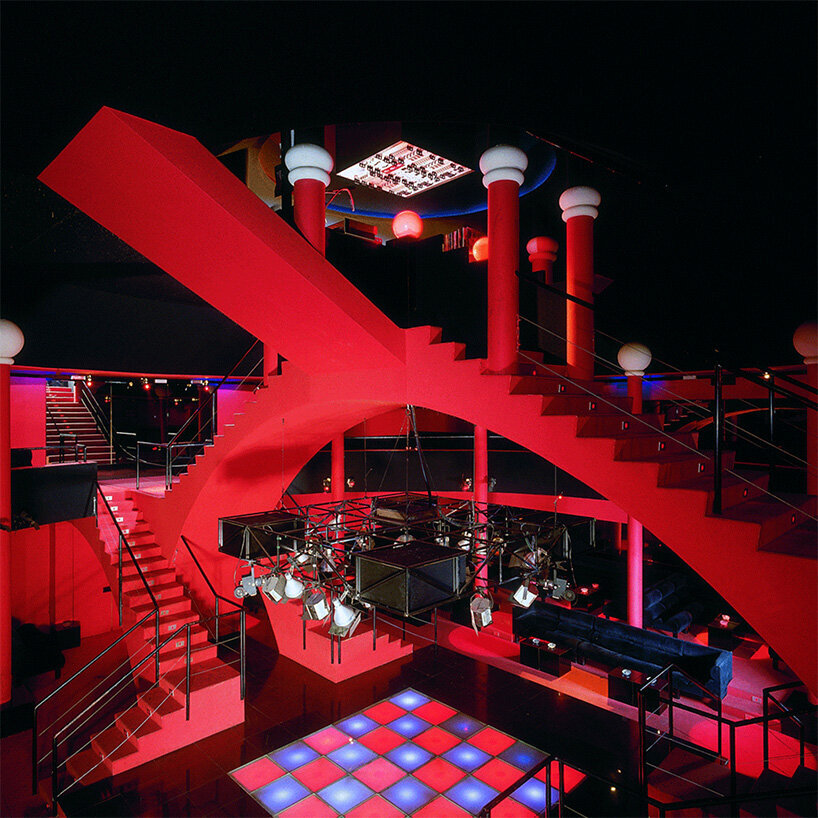
Few spaces demonstrate the relationship between spectator and spectacle as clearly as the nightclub. Looking back at the history of nightlife architecture, from Italy’s radical discotheques of the 1960s to New York’s Studio 54 and Berlin’s industrial clubs, we discovered how these environments became laboratories for collective experience. At Florence’s Space Electronic, architecture, projections, music, and performance came together in an experimental setting, while the Haçienda in Manchester offered an industrial interior that its occupants could transform through their own presence. Later, Berlin’s Berghain introduced another dimension to this relationship by restricting photography, protecting an experience that cannot easily be consumed from a distance. These spaces reminded us that architecture can establish the conditions for spectacle, but the people occupying it ultimately determine what happens.
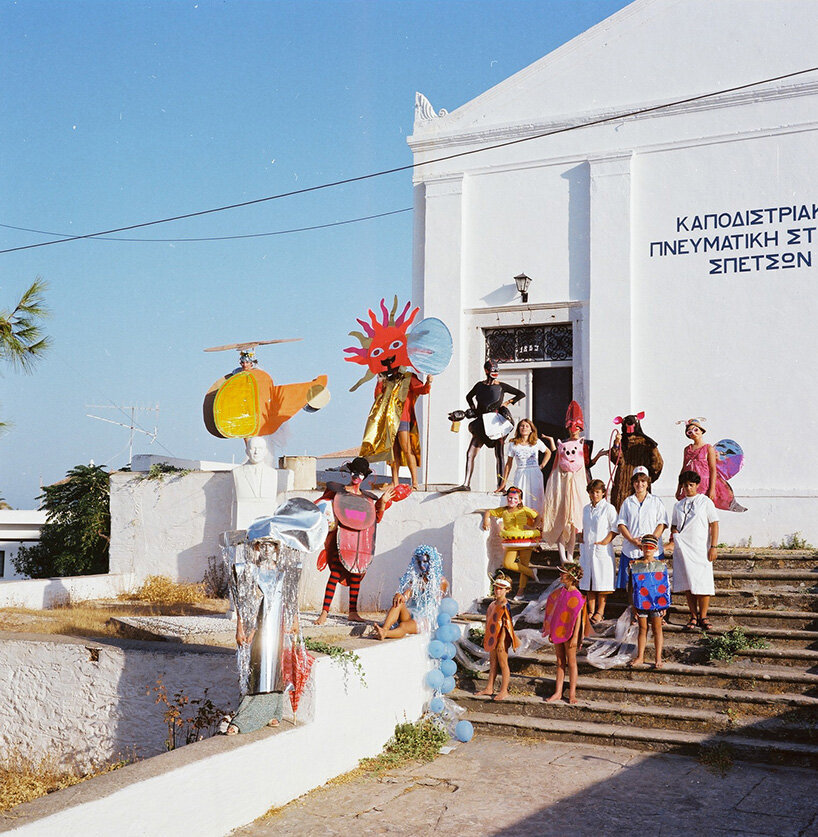
A similar understanding of collective performance emerged in our conversation with Leda Papaconstantinou, whose Spetses Players transformed a Greek island into an experimental stage during the 1970s. Rather than working with fixed scripts or conventional theatrical settings, the group developed performances around local stories, social realities, and the island’s existing architecture. Harbors, houses, and even a discotheque became temporary stages, while elaborate costumes and characters invited audiences into unfamiliar worlds. By the end of their performances, spectators would often join the performers in singing and dancing. The distinction between art and everyday life became increasingly difficult to maintain. What mattered was not simply the event itself, but the temporary community formed around it.
ILLUSION CAN CHANGE HOW WE SEE REALITY
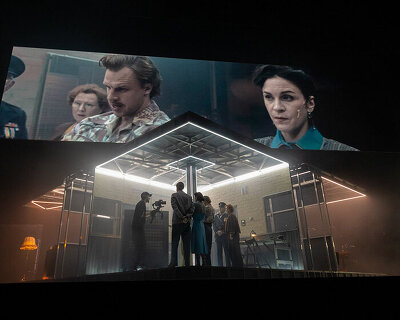
Spectacle can also challenge the distance we maintain between fiction and the world we inhabit. In Alejandro G. Iñárritu’s Digger, production design becomes a central narrative instrument, constructing layers of reality that progressively undermine the audience’s certainty about what they are watching. Designed by Dennis Gassner and Richard Johnson, the film’s environments move between elaborate interiors, theatrical scenery, and carefully exposed artifices, making the process of constructing an illusion part of the story itself. As the boundaries between performance and reality begin to collapse, the viewer’s position becomes increasingly uncomfortable. The sets do more than establish atmosphere: they measure the distance between the audience and the catastrophe unfolding before them, until the possibility of remaining a detached observer begins to disappear.
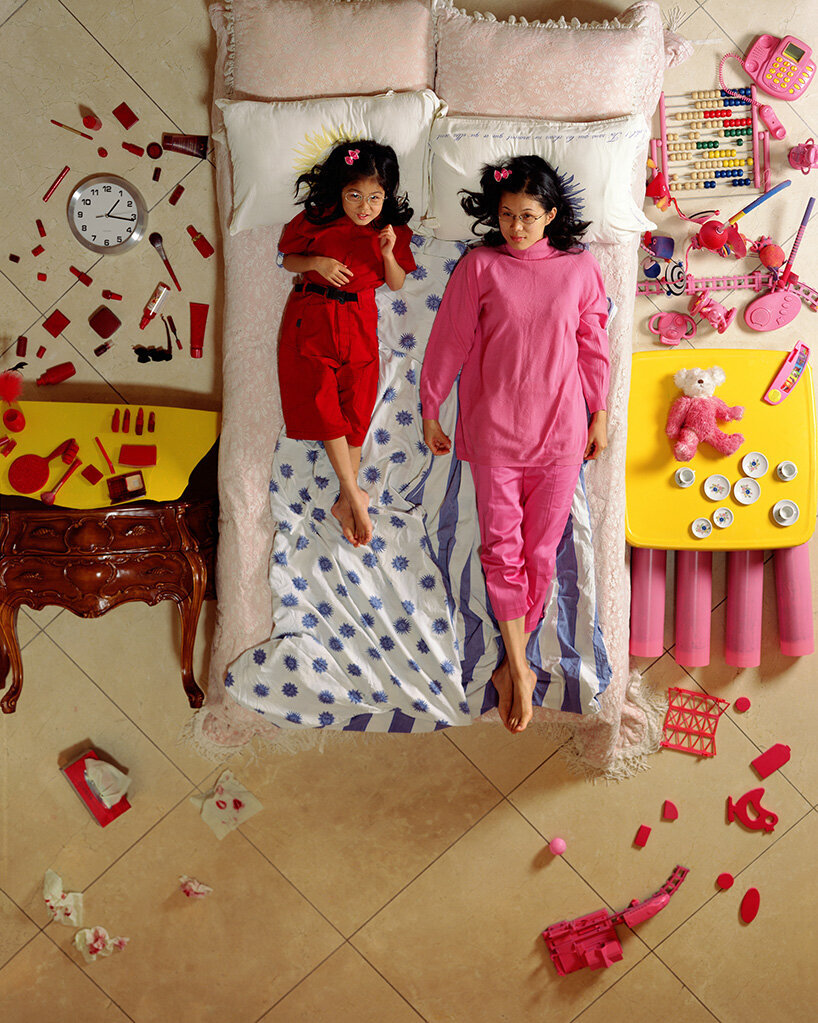
In a very different way, Yeondoo Jung’s Wonderland revealed how the construction of an image can expose unexpected truths. The Korean artist collected 1,200 drawings by young children and selected 17 to recreate as meticulously staged photographs, using teenage models, costumes, props, and locations across Seoul. Impossible proportions, floating figures, and imaginary landscapes were brought into physical existence without correcting the peculiar logic of the original drawings. Yet beneath their playful appearance, these images revealed observations about the real world, from urban development to social inequality. Two decades later, in an age when similar scenes can be generated instantly through artificial intelligence, Jung’s painstaking process offers another perspective on spectacle. The wonder lies not only in the finished image, but in the human effort, negotiation, and material reality required to make imagination visible.
THE BODY BECOMES THE SPECTACLE
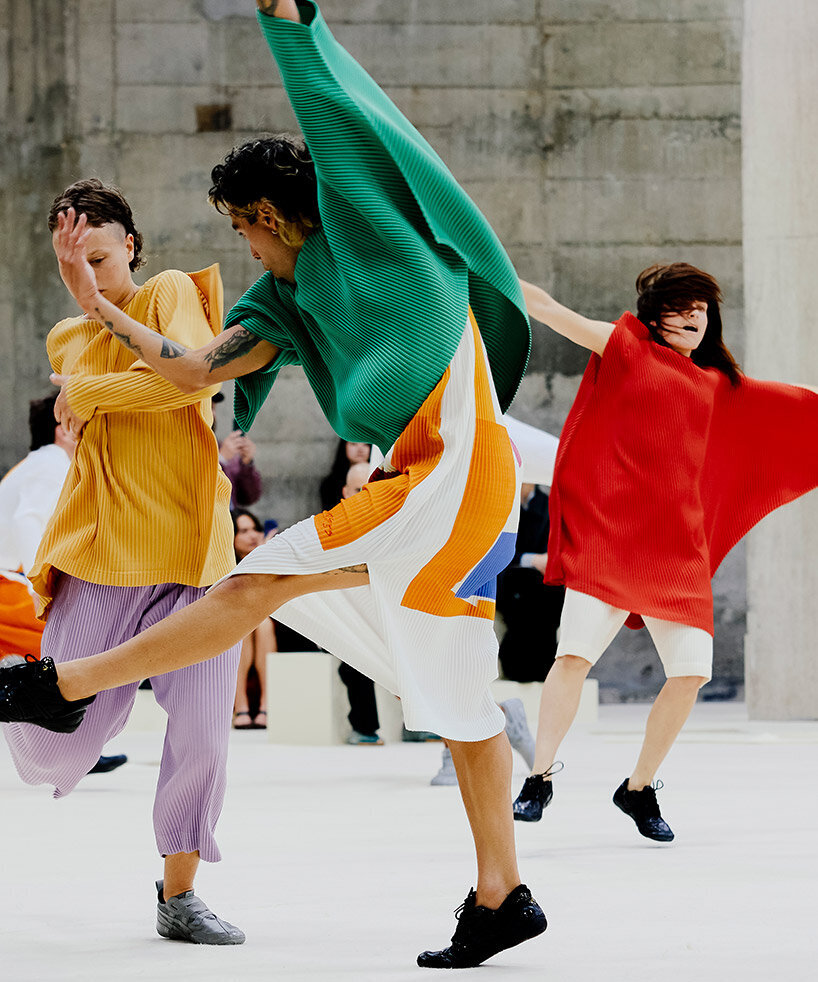
Throughout the chapter, the body repeatedly emerged as more than a passive observer. At London’s Tate Modern, HOMME PLISSÉ ISSEY MIYAKE’s OPEN STUDIO transformed Henri Matisse’s The Snail into a choreography of pleated garments, movement, and audience encounters. Inside the museum’s circular South Tank, dancers animated the colorful geometries of the painting, while individual visitors became part of improvised performances developed through eye contact and physical proximity. The audience was no longer positioned outside the work, but integrated into its changing composition. As the garments eventually returned to the floor to reconstruct Matisse’s original image, the performance revealed how an artwork can move between representation and lived experience. The body had temporarily become the medium through which the image existed.
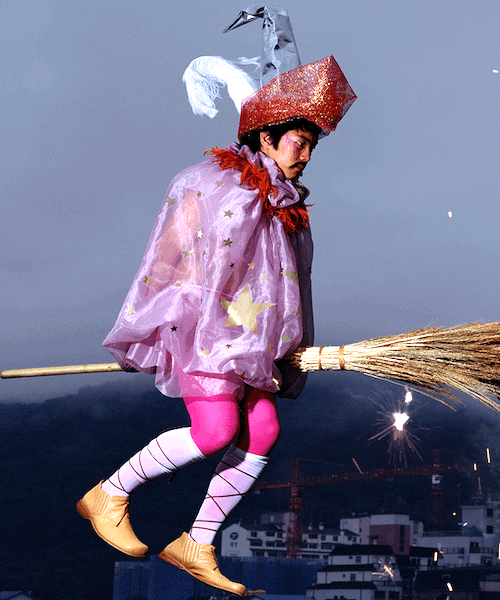
For Lucy McRae, the body is also the starting point for imagining alternative futures. Moving between sculpture, film, fashion, and speculative technology, the artist approaches clothing and wearable objects as forms of invisible architecture capable of transforming how we perceive ourselves and relate to others. Her experiments question what happens when technological innovation becomes inseparable from physical experience, and how identity might be shaped through the things we wear. Rather than presenting the future as a distant spectacle to be observed, McRae creates scenarios that invite us to imagine inhabiting it ourselves. Her work suggests that some of the most profound transformations do not require an elaborate stage or monumental setting. They can begin with the body itself, and with the subtle ways its relationship to the surrounding world changes.
SPECTACLE DOES NOT HAVE TO BE LOUD
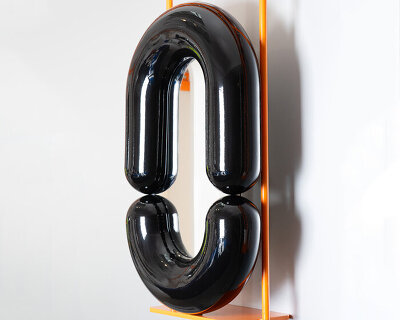
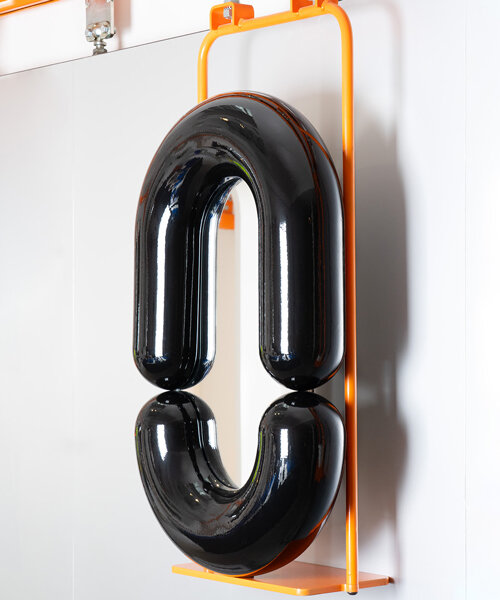
Not every spectacle requires an extraordinary setting or a dramatic performance. Sometimes, an everyday object can be enough to disrupt the familiar act of looking. French designer Jean-Baptiste Fastrez explored this possibility through his sculptural mirrors for Moustache, turning the form of an inflatable boat into a glossy ceramic frame and transforming ordinary mirror fittings into oversized chrome spheres. Both objects play with the paradox of the mirror: an object with a strong physical presence whose appearance depends almost entirely on its surroundings. Their surfaces reflect, distort, and incorporate the spaces and people around them, making the viewer an unavoidable part of the composition. Fastrez also challenges the conventional separation between function and ornament, suggesting that decoration can be as essential to an object’s purpose as its practical use. The spectacle, in this case, emerges from the act of looking itself.
That quieter understanding of spectacle also appeared in our conversation with Lausanne-based studio Panter&Tourron, whose work for brands including Balenciaga and Hermès questions the traditional codes of luxury. Rather than relying on extravagance, precious materials, or obvious displays of status, Stefano Panterotto and Alexis Tourron place emphasis on craftsmanship, material intelligence, performance, and the stories behind objects. Their designs demonstrate how something apparently restrained can still command attention, challenging the assumption that visibility must always come through excess. Perhaps this is where many of the ideas explored throughout SPECTATOR AND SPECTACLE eventually meet. Wonder cannot simply be manufactured through scale, novelty, or visual intensity. Sometimes it comes from entering a room that changes our behavior, recognizing reality inside an illusion, seeing ourselves reflected in an unexpected form, or encountering something familiar as though for the first time. The challenge may not be to make the world more spectacular, but to rediscover our capacity to be surprised by it.
This article is part of designboom’s SPECTATOR AND SPECTACLE chapter, asking how wonder gets built, and how it might return some mystery to a world that has measured most of it away. Presented in partnership with SolidNature, the stories in this chapter turn onlookers into participants, alter perception and disrupt the everyday – learn more here!
Each designboom chapter explores one theme in depth through projects, interviews, features and news across architecture, design, art and technology. Discover more chapters here, and get in touch if you’d like to submit a story through our submissions portal or contact form.
shop
your own online design shop — no sales commission collected