crafted from anti-bird spikes and 3D-printed scaffolds, nests reveal a posthuman architecture
bird nests built from human debris and experimental structures point toward a shared model of construction shaped across species.
prefer designboom on google[FEATURED]
architecture across species
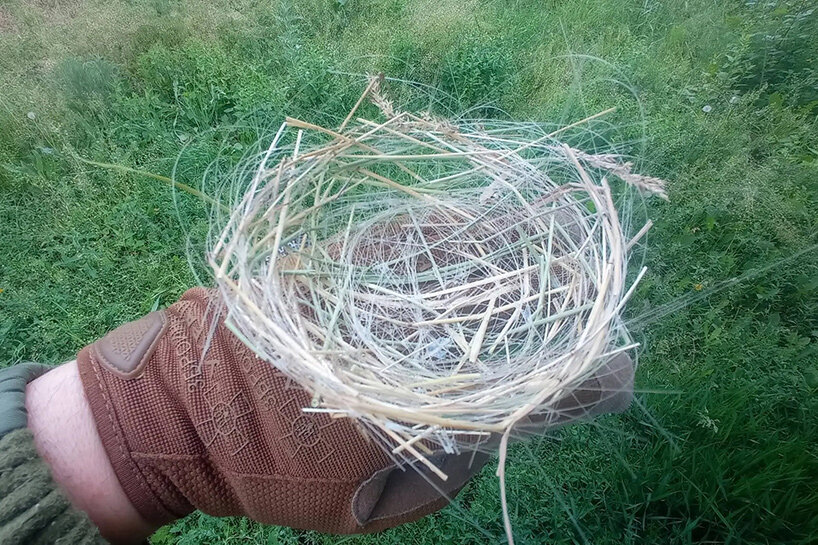
Birds have been building with human-made materials for a long time. Wire, plastic, fabric and other discarded scraps routinely find their way into nests, where they are put to work again and are given new life. In recent years, the examples have become stranger. Magpies and crows have constructed nests from metal spikes installed specifically to keep birds away from buildings. Along the front line in Ukraine, birds have woven fiber-optic cables discarded by military drones into their nests.
These structures show us a model for posthuman architecture that’s quite literal, as their authorship belongs across species. Humans manufacture the materials and alter the landscape, while birds gather, select and reorganize what they find. The nest takes shape somewhere between the two.
birds build with the anthropocene
Historian Matthew Holmes examines this relationship in his 2026 paper Feathered Architects: Collecting Histories of Anthropogenic Material in Birds’ Nests (read here). Holmes argues: ‘Looking at birds’ nests — and the items within them — is occasionally rewarded with a snapshot of the present state of the Anthropocene.‘
Human consumption and waste become entangled with animal construction, and leave traces of changing technologies inside structures built by birds. He notes that the phenomenon stretches back well beyond contemporary plastic waste. During the Dust Bowl era, American crow nests made from barbed wire pointed to an agricultural landscape stripped of usable vegetation.
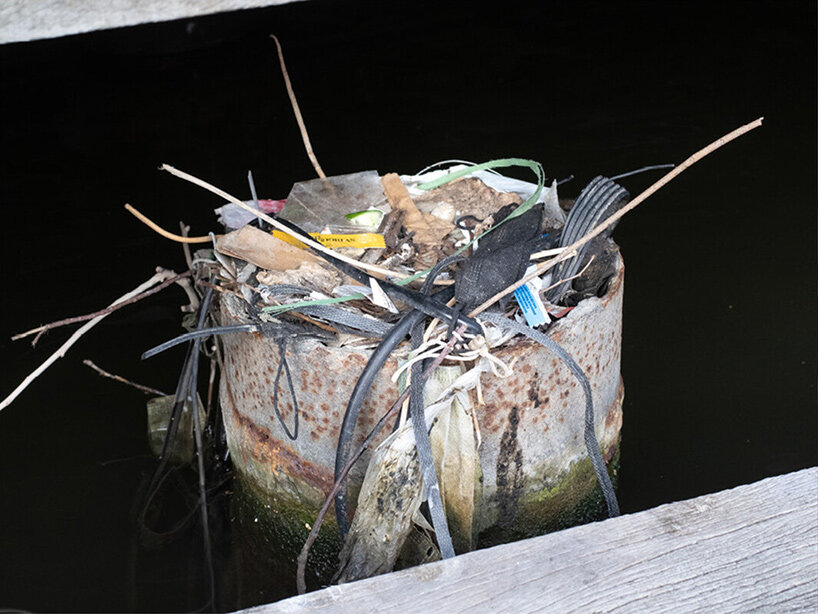
The materials tell different stories these days, with some instances showing synthetic materials to actually be the more desirable choice. Amsterdam coots have accumulated layers of plastic into nests that persist across multiple seasons. This means that a building cycle could be extended, when it once depended on vegetation that decomposed between uses. Researchers studying two canal nests found layers of plastic sourced over decades.
hostile architecture becomes habitat
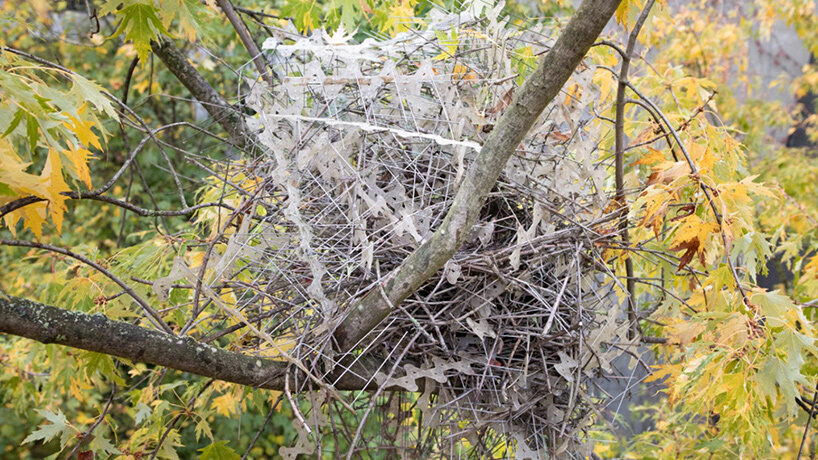
Perhaps the clearest reversal appeared in European cities, where carrion crows and Eurasian magpies began tearing anti-bird spikes from buildings and incorporating them into nests. A magpie nest discovered in Antwerp used hundreds of spikes across its outer structure, with the sharp points facing outward.
Researchers suggest the metal may serve much the same purpose as thorny branches, and helps defend eggs and chicks from other birds. An object designed to exclude birds from human architecture had become bird architecture itself.
when architects begin studying the bird
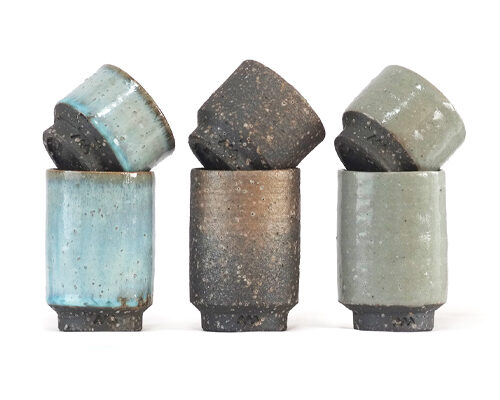
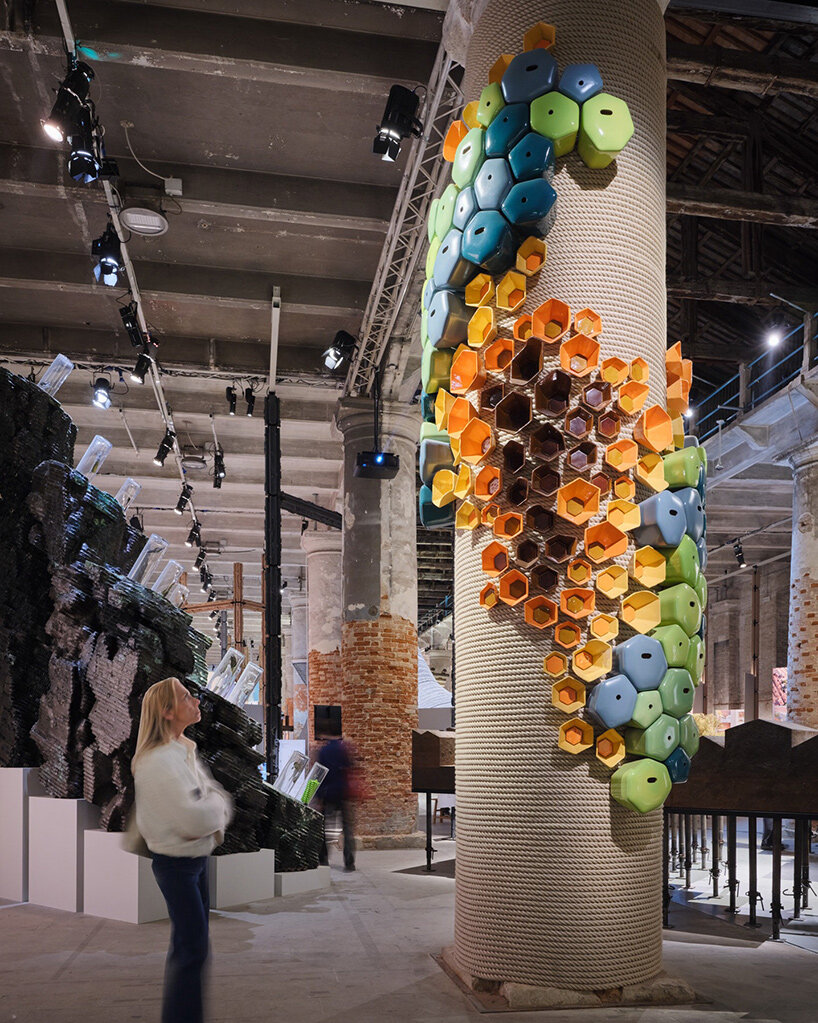
This exchange now moves in the opposite direction too. In Chicago, the ongoing exhibition Best Nest: Design for Nature and Culture examines how bird construction has informed architect Jeanne Gang and her studio’s design process. Drawings and models sit alongside objects and more than seventy ceramic nesting vessels originally developed for The Living Orders of Venice at the 2025 Venice Architecture Biennale.
The exhibition approaches the nest as architectural intelligence. Different species build according to different bodies and environmental pressures, producing structures whose geometry responds directly to inhabitation. Studio Gang carries these observations into projects at building scale and into habitat structures made specifically for birds.
The exhibition runs alongside Flyway City at the Chicago Architecture Center, where the studio turns its attention toward cities shaped by migration, avian vision and the hazards created by glass architecture. The two shows place birds on both sides of the architectural exchange. Architects study the structures birds make, while reconsidering the buildings birds must move through.
leaving the architecture unfinished
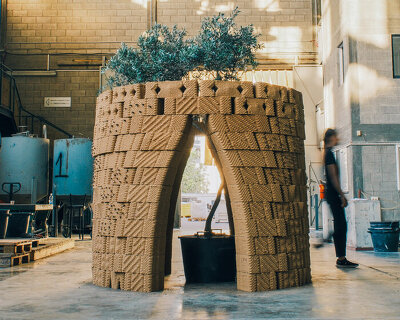
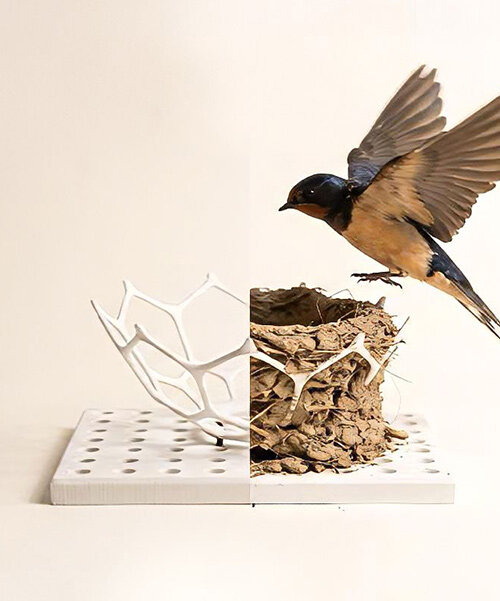
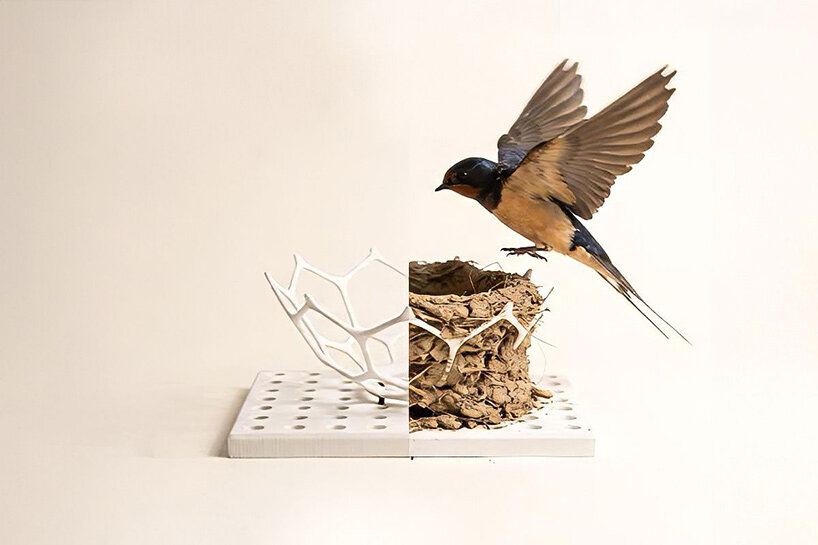
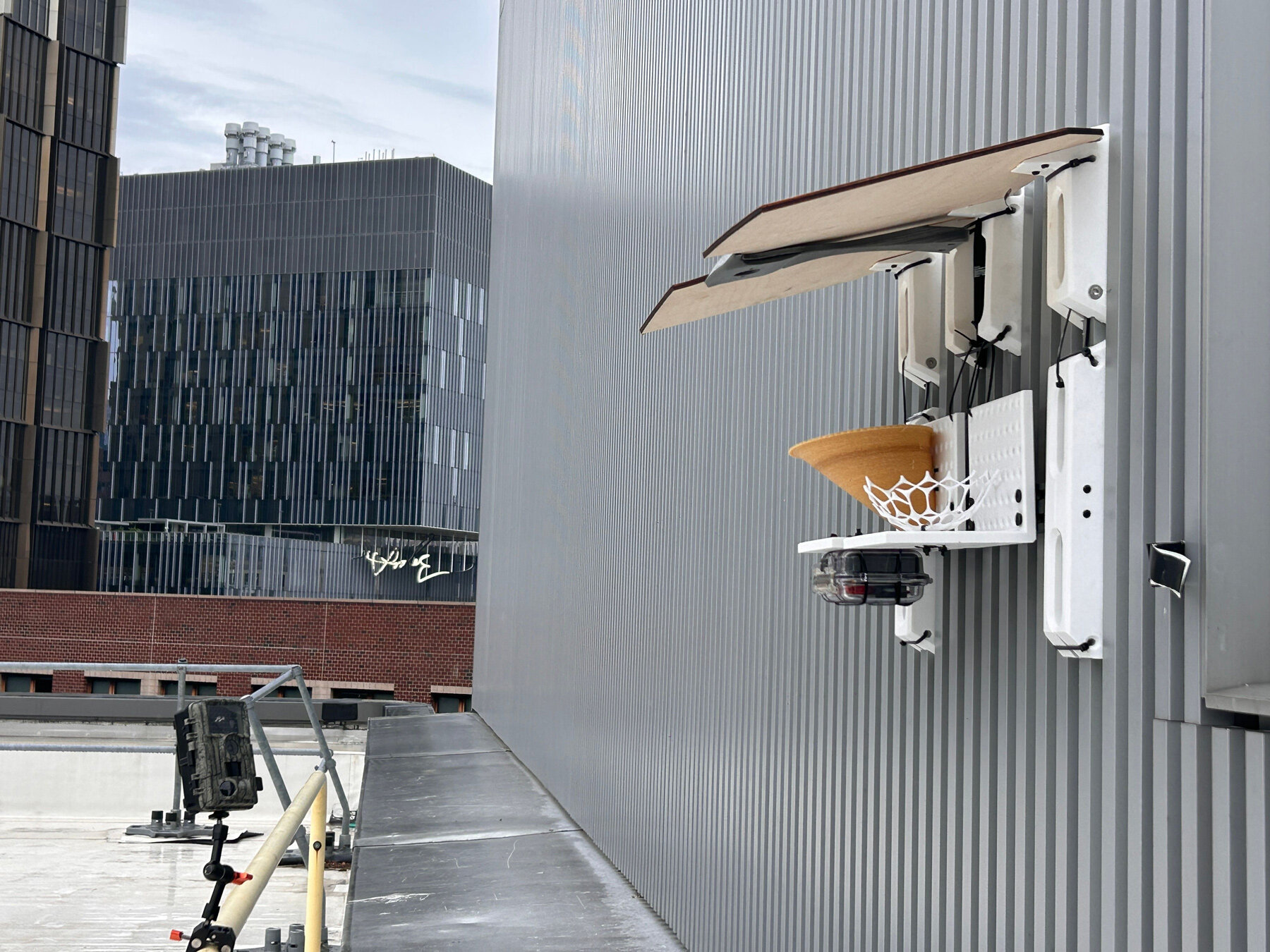
MIT-LUMA Lab’s Bird+House furthers this idea even still. Developed by Hiroshi Ishii, Lucy Li and Hye Jun Youn with input from the Cornell Lab of Ornithology, the 2026 project creates 3D-printed nesting structures for barn swallows whose traditional nesting sites are disappearing alongside barns and other familiar structures.
The team begins by 3D-scanning existing swallow nests and studying their dimensions before printing open scaffolds from locally sourced biomaterials. The most important detail is that these structures stop halfway. It’s been found that barn swallows often reject artificial nests that are fully completed, so Bird+House gives them a framework and leaves the final construction to the bird. The swallow chooses how the nest is completed by adapting the scaffold and adding its own material.
It’s a small gesture, but it shifts a familiar relationship between human and feathered builders. A birdhouse usually arrives as a finished, human-made object awaiting an occupant. Here, occupation continues the act of construction. The architect determines enough to make coexistence possible, then another species takes over.
the nest as a model for posthuman architecture
Across these examples, the nest becomes interesting far beyond its form. Birds turn plastics and defensive hardware (see here) into building material. Architects study avian structures as legitimate forms of design knowledge. At MIT, the human-made object deliberately remains incomplete until its non-human inhabitant modifies it.
Posthuman architecture, seen through the nest, therefore has little to do with copying organic curves or borrowing the appearance of animal structures. Its more radical proposition concerns authorship. Buildings exist inside landscapes already occupied and continually altered by other organisms, whether architects acknowledge those relationships or leave them out of the drawing.
The birds building with anti-bird spikes make that shared world difficult to ignore. Human architecture attempted to dictate where they could land. The birds took part of that architecture apart and built something else with it.
project info:
research: Matthew Holmes, Feathered Architects: Collecting Histories of Anthropogenic Material in Birds’ Nests, 2026
exhibition: Studio Gang, Best Nest: Design for Nature and Culture, Chicago, 2026
design research: MIT-LUMA Lab, Bird+House, 2026
This article is part of designboom’s POSTHUMAN UTOPIAS chapter, exploring what happens when humans are no longer the measure of all things. These stories rethink our relationship with the planet through interspecies architecture, living materials, regenerative landscapes and emerging technologies – learn more here! The chapter is presented in partnership with INDX|GLOBAL – a global cultural platform placing Indian architecture, design, and creative intelligence in conversation with the world.
Each designboom editorial series explores one theme in depth through projects, interviews, features and news across architecture, design, art and technology. Discover more chapters here, and get in touch if you’d like to submit a story through our submissions portal or contact form.
shop
your own online design shop — no sales commission collected