david rule’s miniature houseboat makes room for everything but space
a pair of pontoons carries this 2.6-square-meter floating cabin, whose miniature comforts are put to the test during a three-day journey through washington.
prefer designboom on google[FEATURED]
DAVID RULE SHRINKS THE HOUSEBOAT TO 2.6 SQUARE METERS
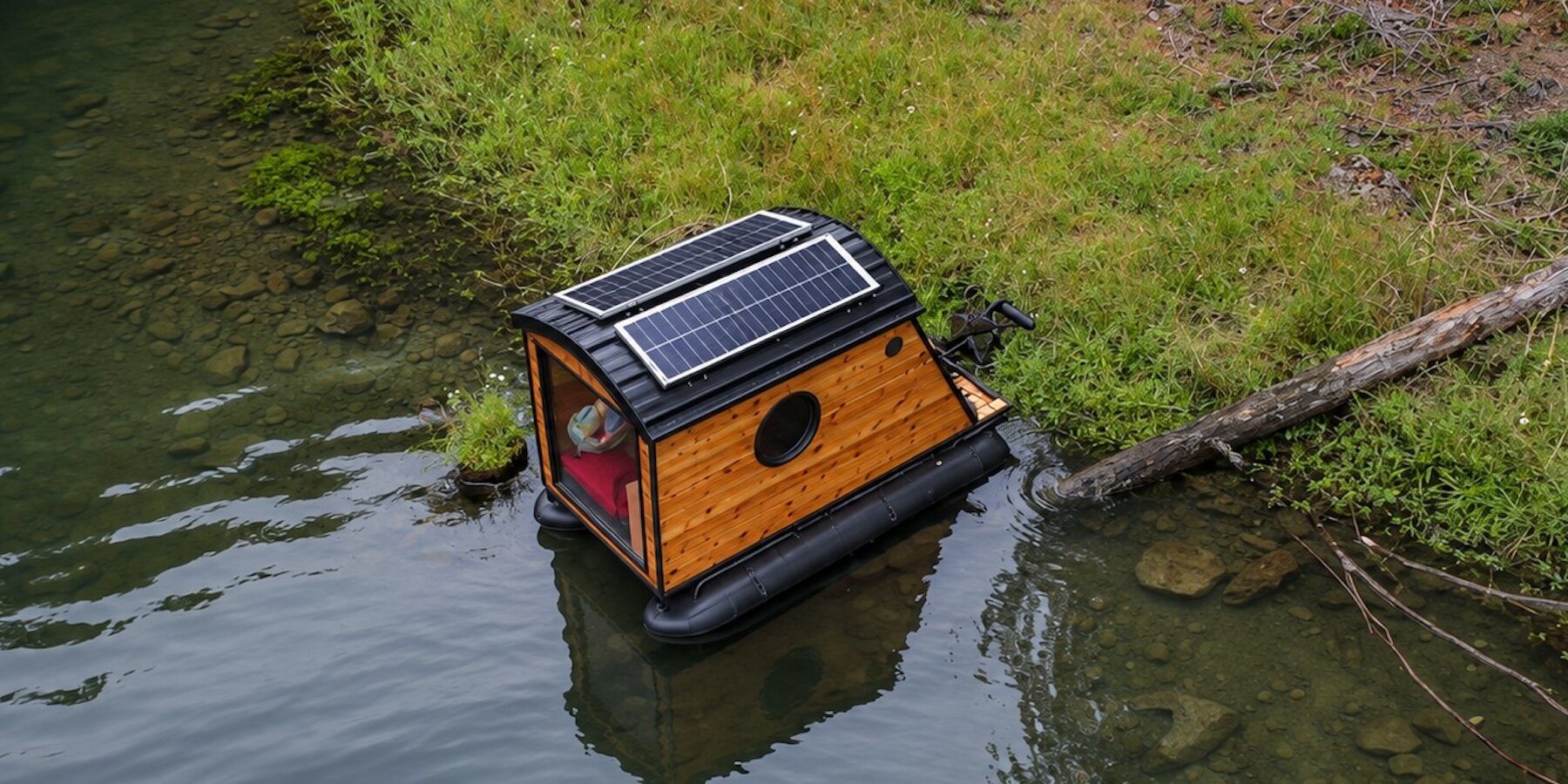
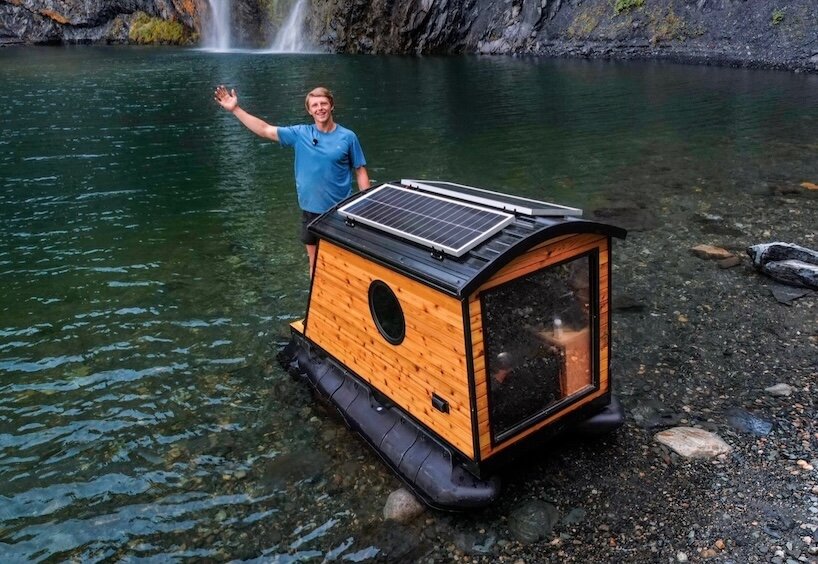
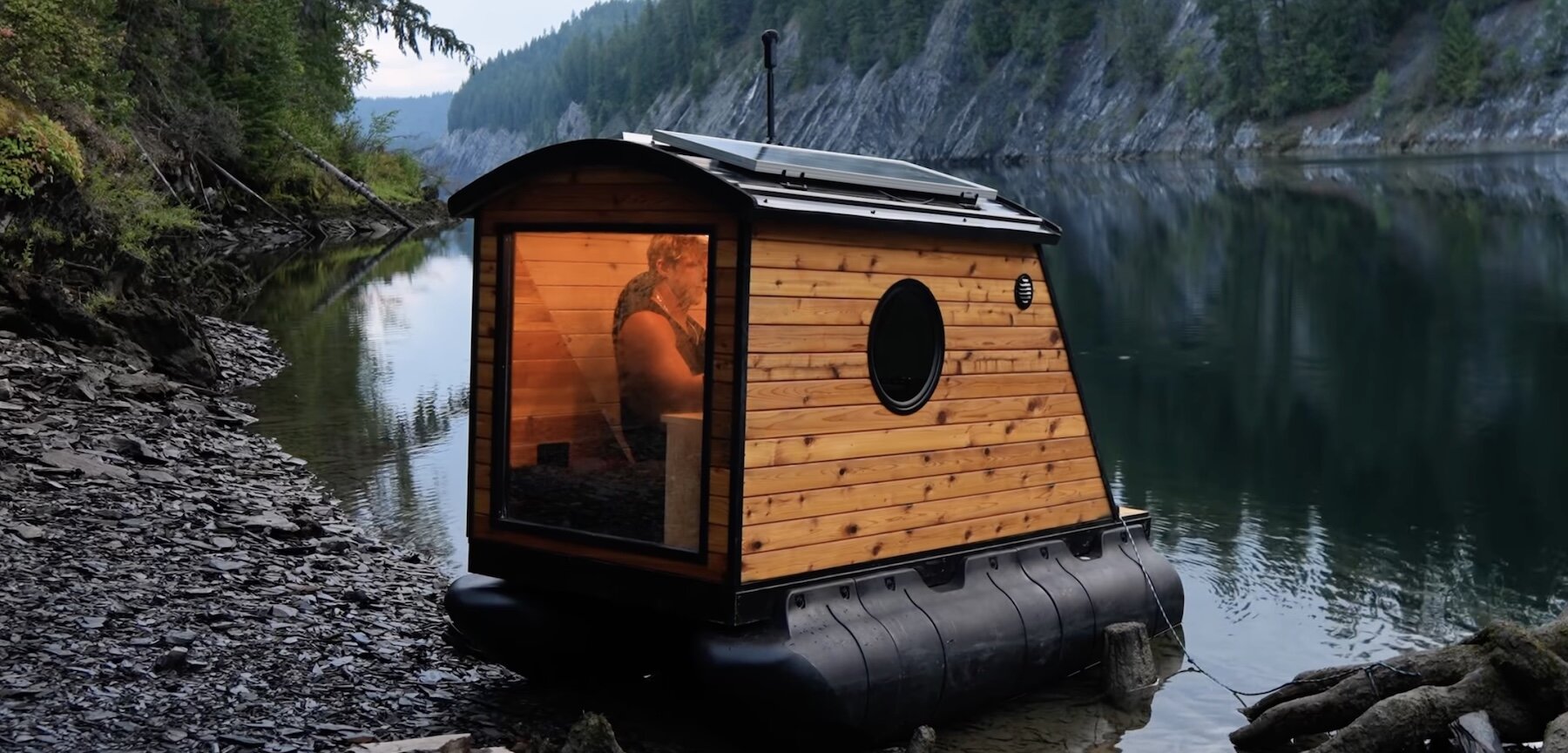
American explorer and builder David Rule has taken the tiny living movement onto the water with TinyTanic, a fully functional houseboat measuring just 2.4 meters long and 1.1 meters wide. With a total footprint of 2.6 square meters, the miniature vessel accommodates a sleeping area, kitchen, running water and an electric propulsion system. Inspired by fellow creator Zach Fowler’s 3.25-square-meter floating home, Rule set out to build something even smaller without sacrificing the essential comforts needed for a journey on the water. He describes the result as the world’s smallest functional houseboat, although the claim has not been independently certified.
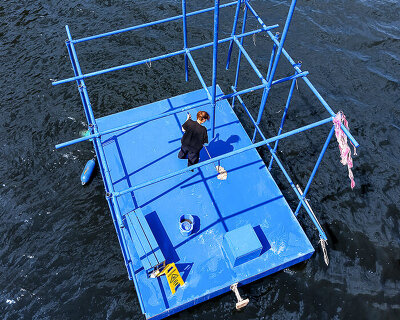
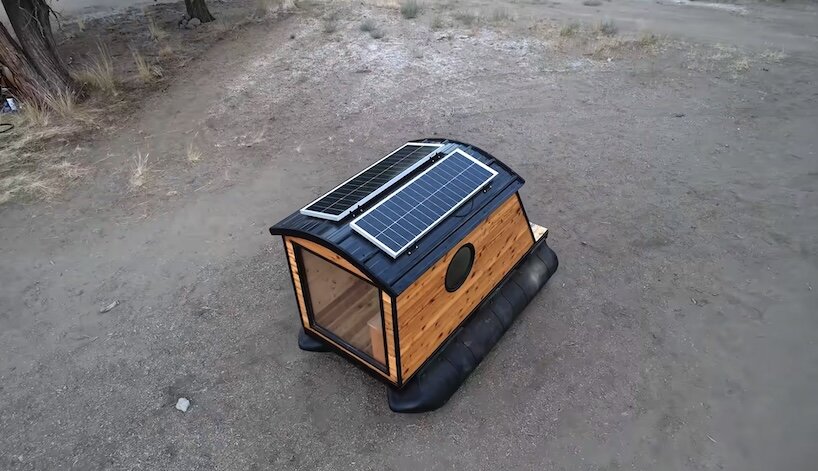
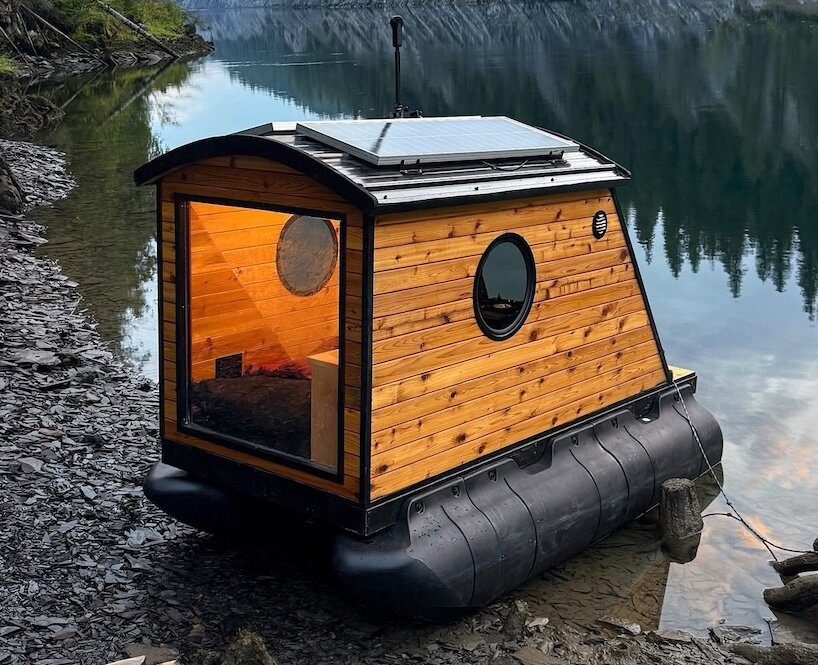
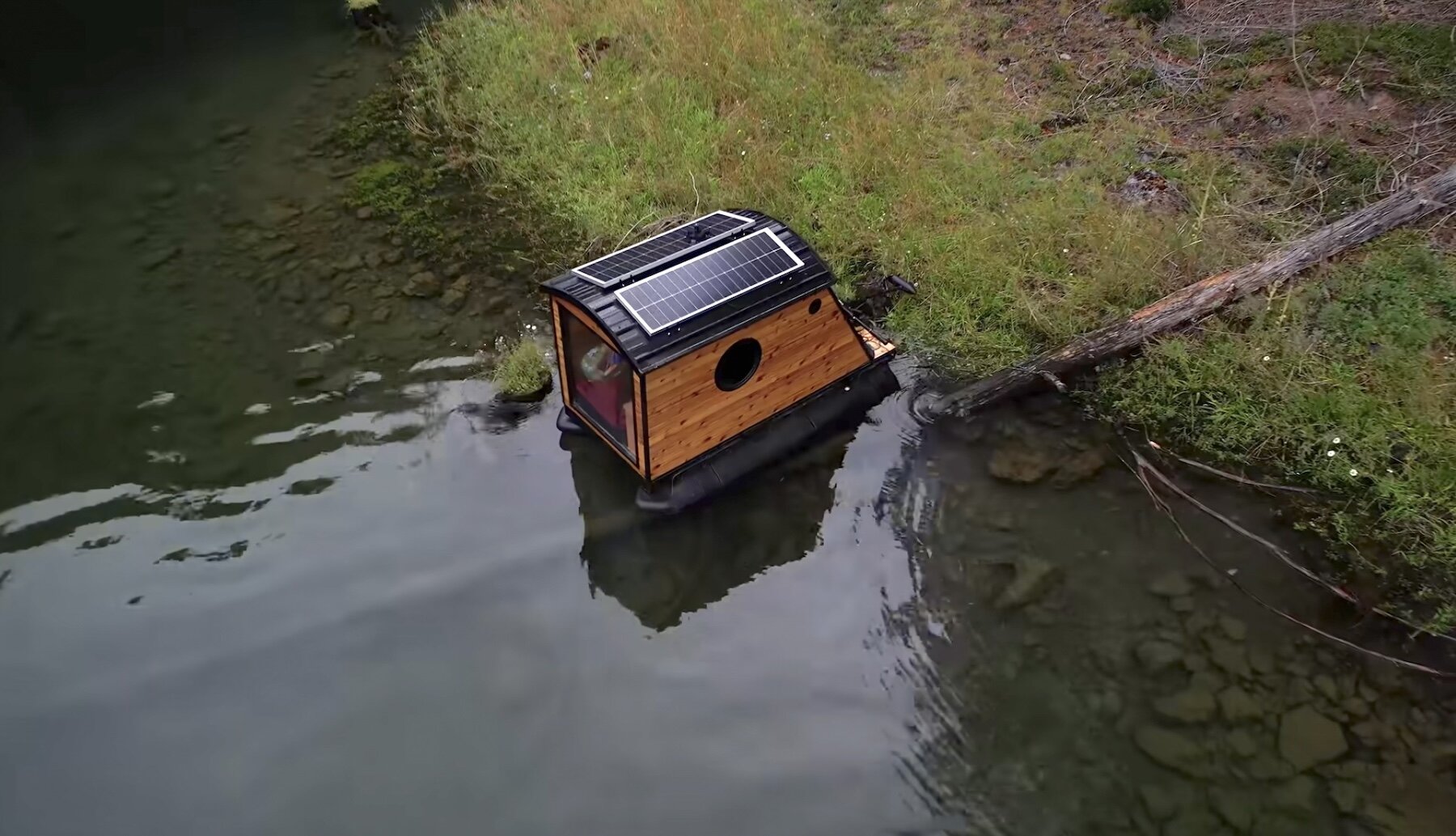
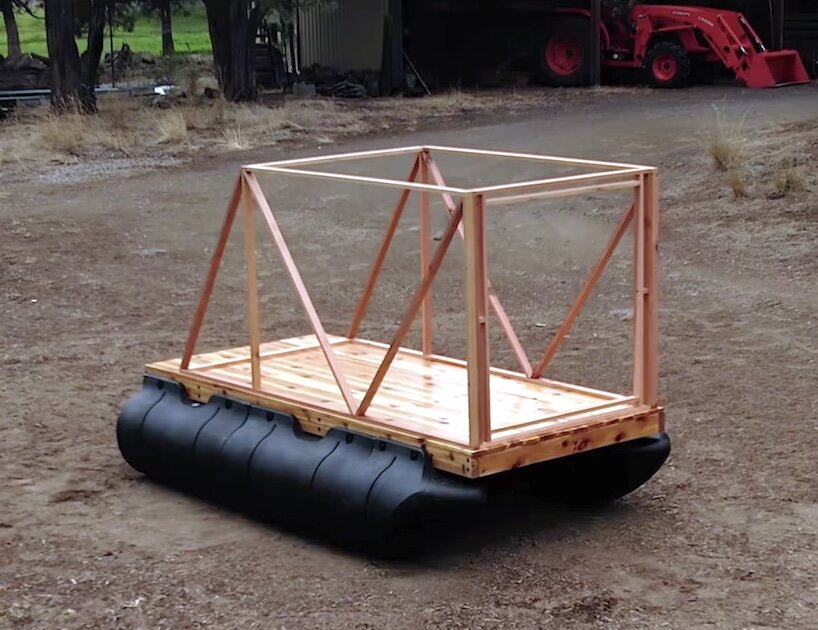
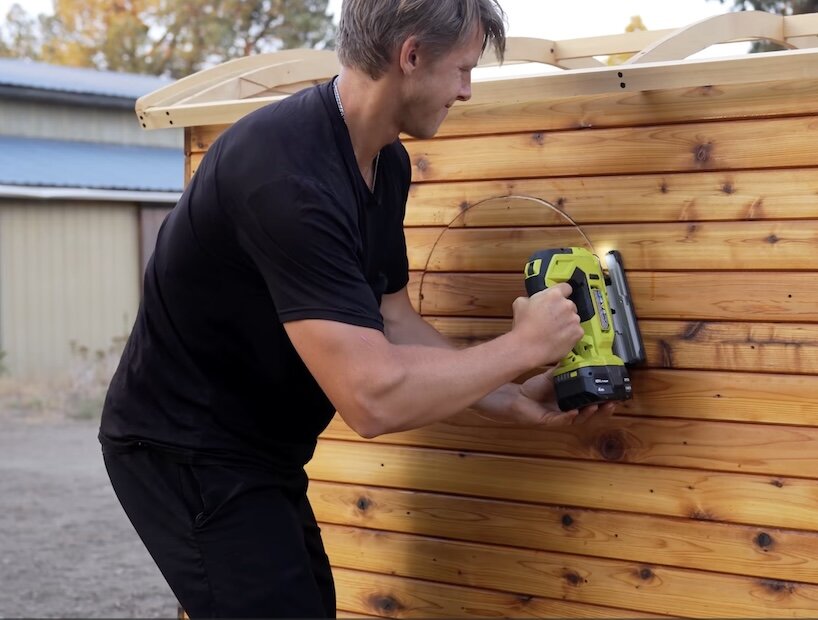
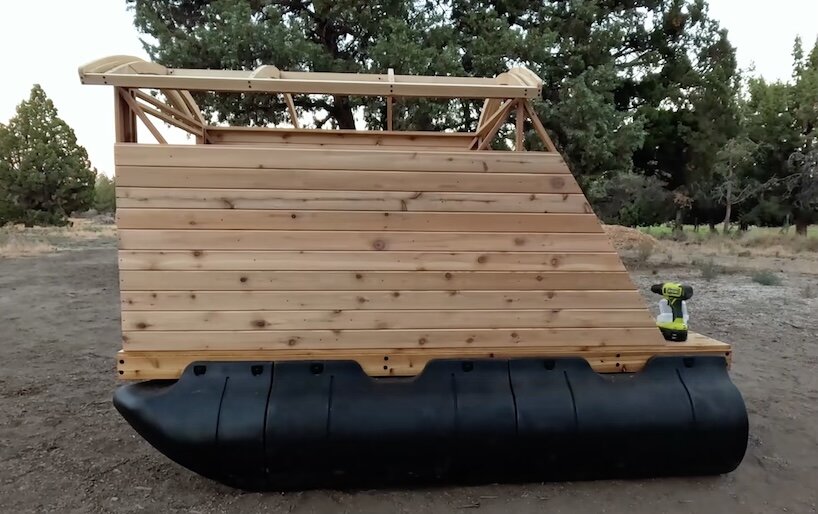
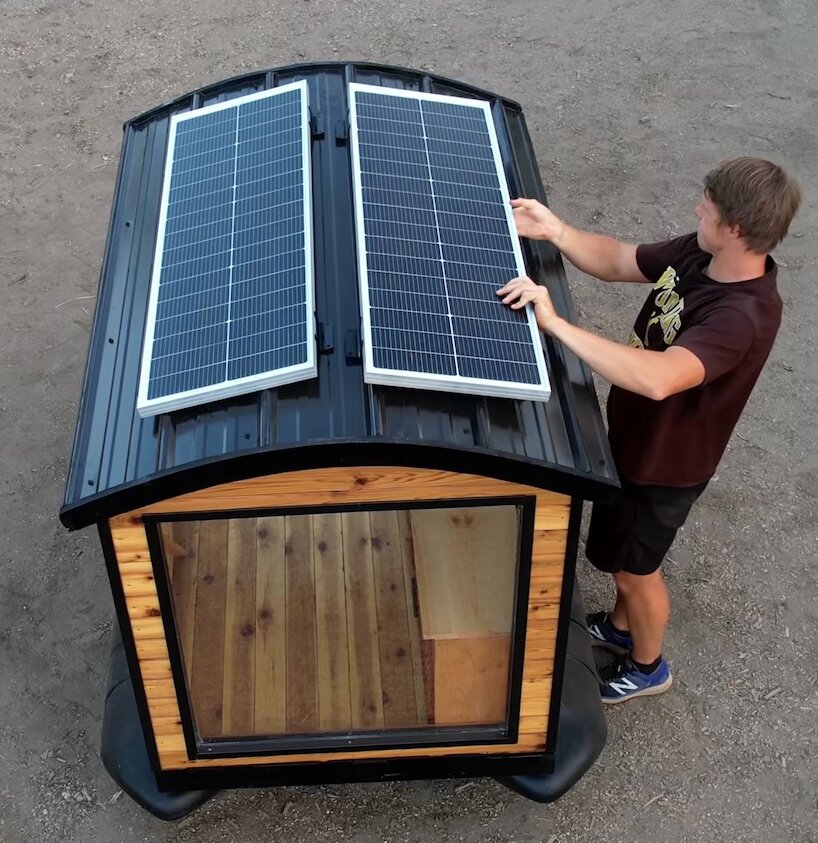
Rather than using a conventional boat hull, Rule constructed TinyTanic on a pair of modular pontoons, creating a stable platform for a lightweight timber cabin. Cedar, pine and plywood form the main structure, while an aluminum roof protects the interior from the elements. Round porthole windows punctuate the wooden walls, complemented by a large transparent panel at the front that frames views of the surrounding landscape. At the rear, a zippered panel adapted from a camping canopy can be opened to connect the cabin with a small outdoor deck. The entire construction is compact enough to fit into the bed of a pickup truck.
TINYTANIC’S COMPACT KITCHEN AND SOLAR-POWERED SYSTEM
Inside the miniature houseboat, every available centimeter serves a purpose. The cabin has an interior height of approximately 1.06 meters, allowing its occupant to sit upright but ruling out the possibility of standing. A custom sleeping platform occupies one side, while a narrow counter integrates a small refrigerator, single-burner butane stove and sink. A 12-volt pump draws water from the surrounding river or lake through a purification system, while wastewater is collected in a container beneath the counter. LED lighting, storage compartments and a ventilation fan complete the interior, giving the tiny wooden enclosure the essentials of a considerably larger recreational vessel.
Power comes from two 100-watt solar panels mounted on the roof, connected to a 100-amp-hour marine lithium battery. The system supplies electricity to the refrigerator, lighting, ventilation and charging outlets, as well as the boat’s propulsion system. At the stern, Rule installed a Minn Kota electric trolling motor delivering approximately 133 newtons of thrust, enough to move the lightweight vessel through calm waters at a leisurely pace. The stove, meanwhile, operates on butane rather than electricity. The arrangement makes TinyTanic largely self-sufficient for short excursions, although its limited battery capacity places practical restrictions on how far and how quickly it can travel.
THREE-DAY PEND OREILLE RIVER TRIP TESTS THE TINY HOUSEBOAT
To determine whether his creation could function beyond the workshop, Rule transported TinyTanic to Washington State for a three-day journey along the Pend Oreille River. Starting near Metaline Falls, he navigated approximately 19 kilometers toward Peewee Falls, traveling through a rugged canyon surrounded by forested mountains. Along the way, the builder used the compact kitchen to prepare meals, fished from the rear deck and spent his nights inside the wooden cabin. Despite its unusual proportions, the pontoon structure remained stable throughout the expedition, while the zippered rear enclosure provided protection during periods of rain.
The journey also exposed the inevitable compromises of fitting an entire floating home into such a small footprint. Cloudy conditions reduced solar charging, and the electric motor’s continuous energy demands forced Rule to conserve battery power and rely more heavily on the river’s current. Nevertheless, TinyTanic completed its maiden voyage, demonstrating that its compact design could accommodate several days of basic living on the water. The project does not attempt to compete with conventional houseboats in comfort, speed or endurance. Instead, it explores how much of a home can be compressed into a functioning vessel before space becomes the one luxury that simply cannot be included.

project info:
name: TinyTanic
designer: David Rule | @davidmrule
shop
your own online design shop — no sales commission collected