marlot meyer’s giant inflatable creatures breathe with the tides of the wadden sea
inspired by microscopic algae, these breathing sculptures translate tidal movements into an interactive experience.
prefer designboom on google[FEATURED]
a breathing ecosystem
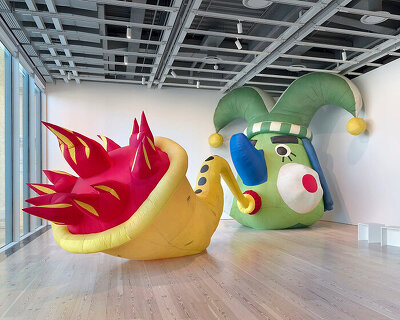
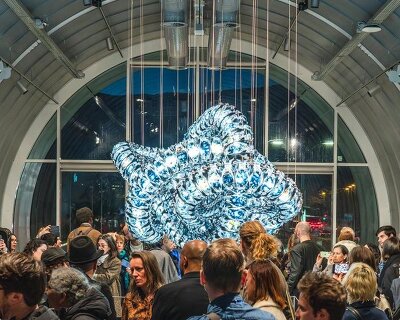
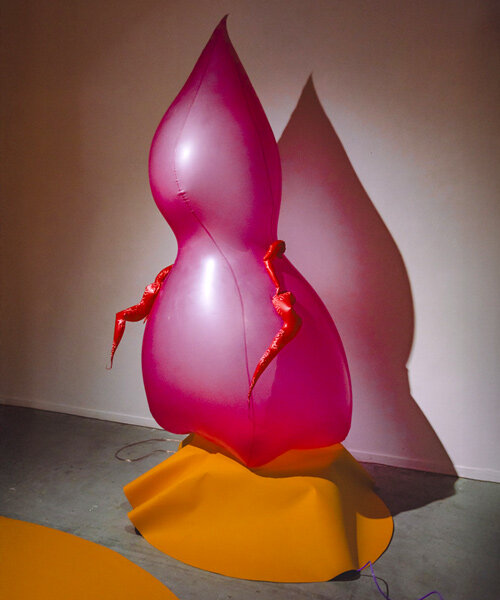
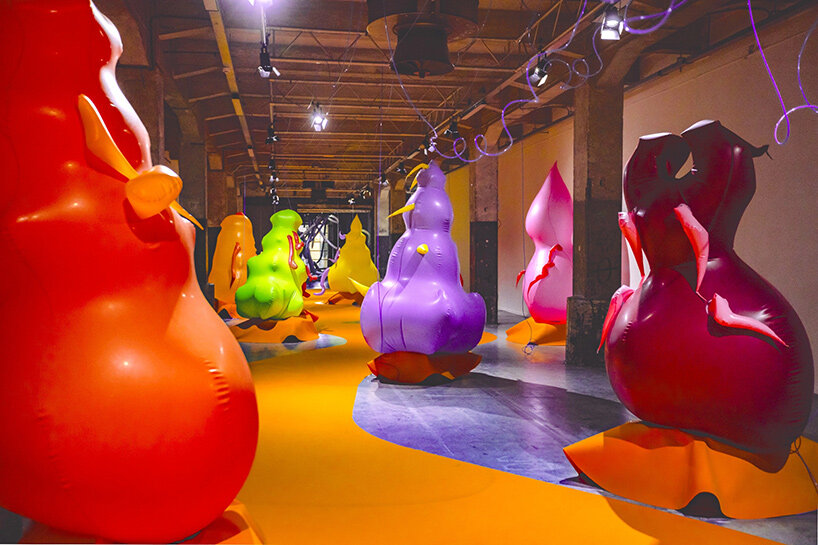
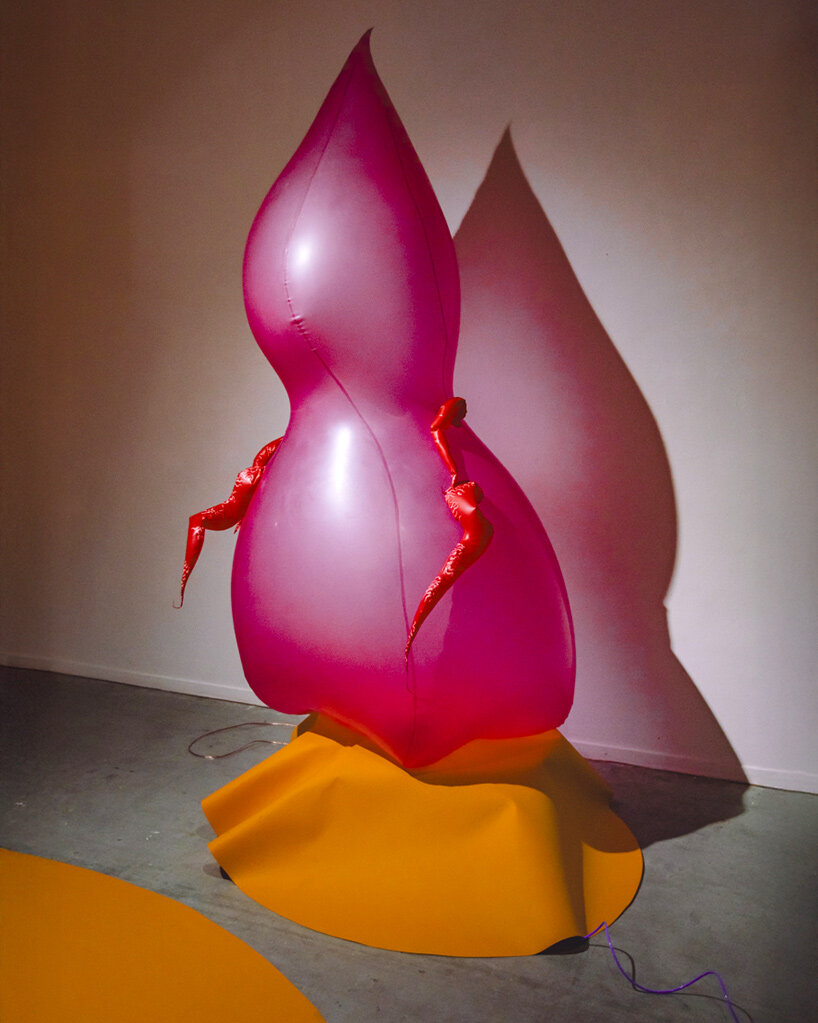
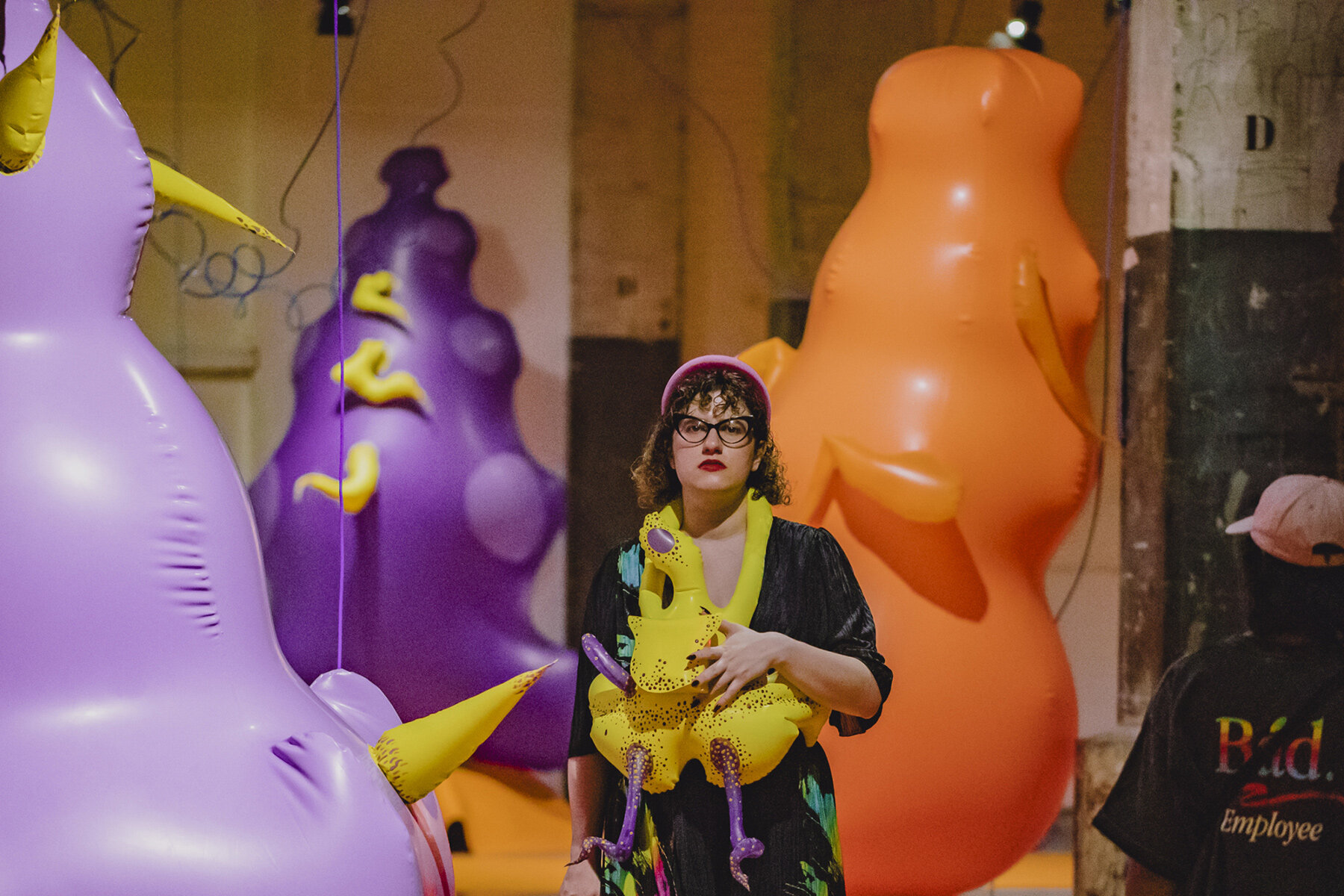
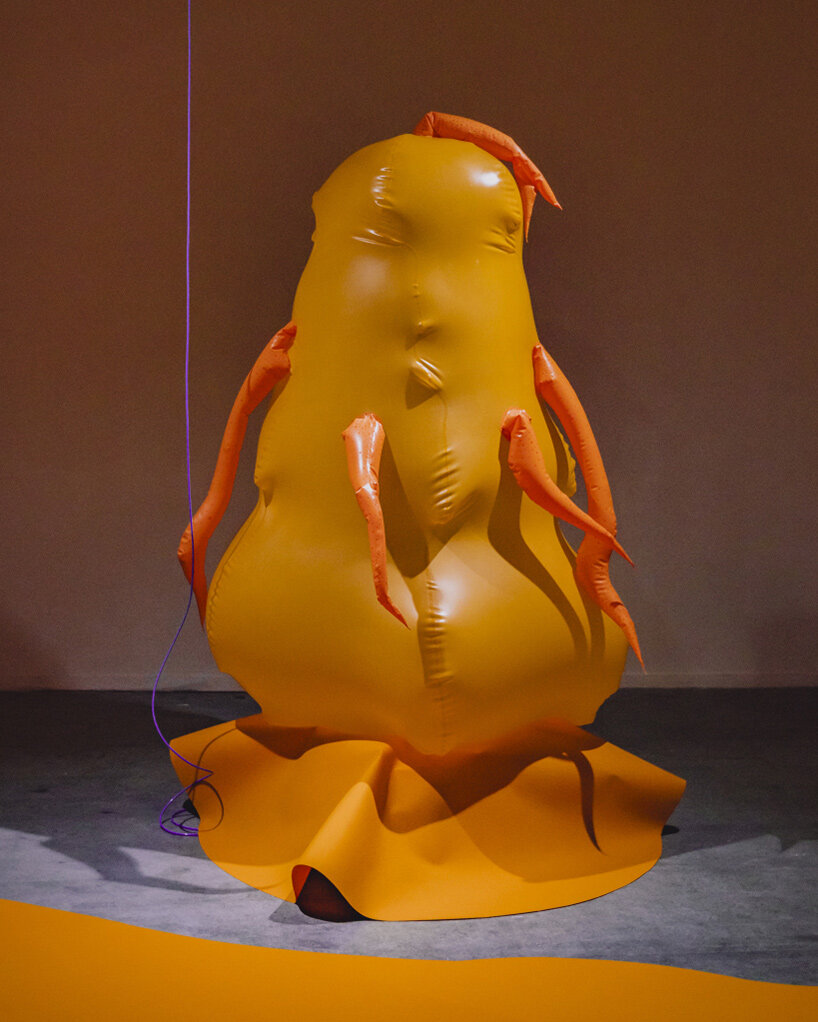
Inside an Amsterdam gallery, Dutch artist Marlot Meyer’s Pneuma (2025) brings together a curious population of giant inflatable creatures. Some tower above visitors, their brightly colored bodies swelling and shrinking as though they were breathing. Their movements follow the tides of the Wadden Sea along the Dutch coast, while visitors can influence the sculptures through their own breath.
The interactive installation connects two rhythms that operate on very different scales. This way, the movement of an entire coastal ecosystem becomes something people can experience through their own bodies.
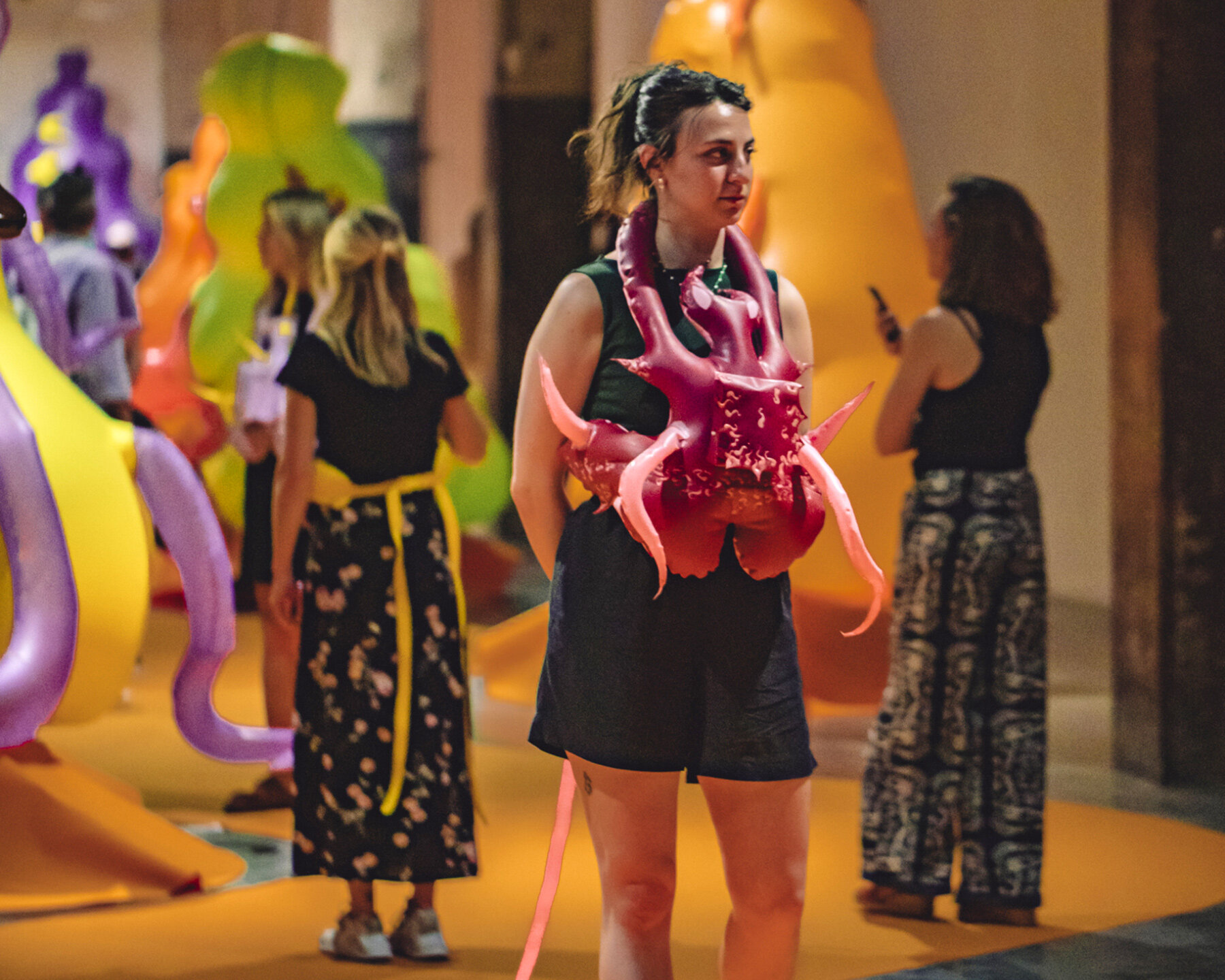
Visitors are invited to embrace smaller inflatable beings fitted to the body with sensors that register their own breathing. These signals are translated into movements within the larger sculptures, creating a strange exchange between human respiration and the movements of the sea. The creatures appear to have lives of their own, responding to a distant environment while remaining sensitive to the people around them.
teaching the body to feel the sea
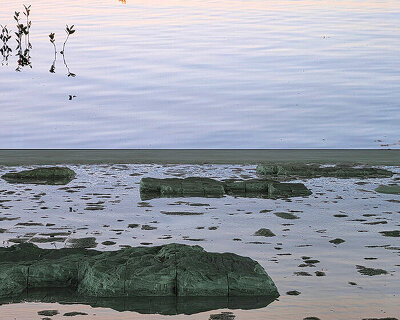
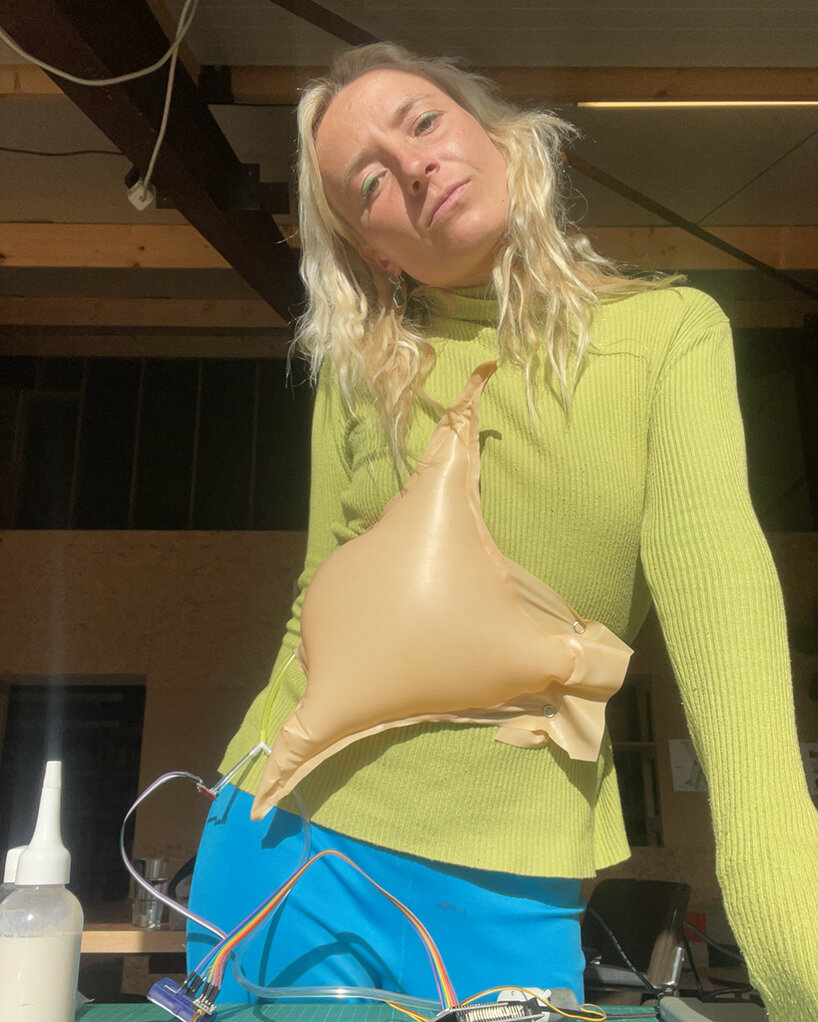
Before developing Pneuma, artist Marlot Meyer spent three months in Friesland, in the northern Netherlands, investigating whether humans could learn to physically sense the changing tides. During her residency at Het Lage Noorden, she placed wetness sensors in the mudflats near the Wadden Sea, which transmitted environmental data through radio signals to wearable devices. She called this research Project Tidal. Her aim was to introduce a new kind of sensory awareness, allowing the body to recognize the movement of water without having to see it.
Early experiments used small vibrating motors worn against the skin, with changes in the water translated into different vibrations. Meyer eventually began working with inflatable wearables, which she felt offered a more natural interpretation of the sea’s gradual movement. As water levels rose, an air-filled device would expand against her abdomen, creating pressure that would ease as the tide retreated.
The sensation was intended to become familiar over time, perhaps allowing the body’s own awareness to extend into the surrounding landscape.
when the sea takes over the experiment
The research proved to be unpredictable. Sensors lost their connection, batteries failed, and changing conditions made it difficult to collect consistent information. At one point, an especially powerful spring tide submerged Meyer’s equipment, which flooded the electronics and interrupted weeks of recordings. The experience brought her back to the very quality of the sea she had been trying to capture: its constant movement and resistance to control.
In her research journal, the artist reflects on the tension between technological precision and the experience of being in an environment that continually changes. ‘How to find the balance between information and meaning?‘ she asks. The question became central to the development of Pneuma, as the project gradually moved beyond the collection of tidal data toward finding ways to experience it.
the higher the tide, the more wet the land is, the more pressure is pumped into the inflatable
microscopic organisms become giant inflatable creatures
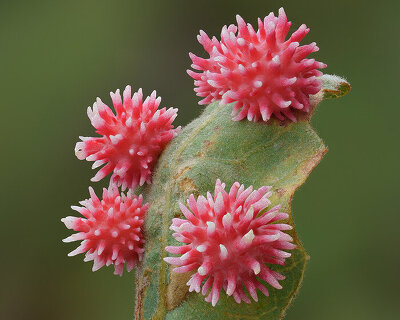
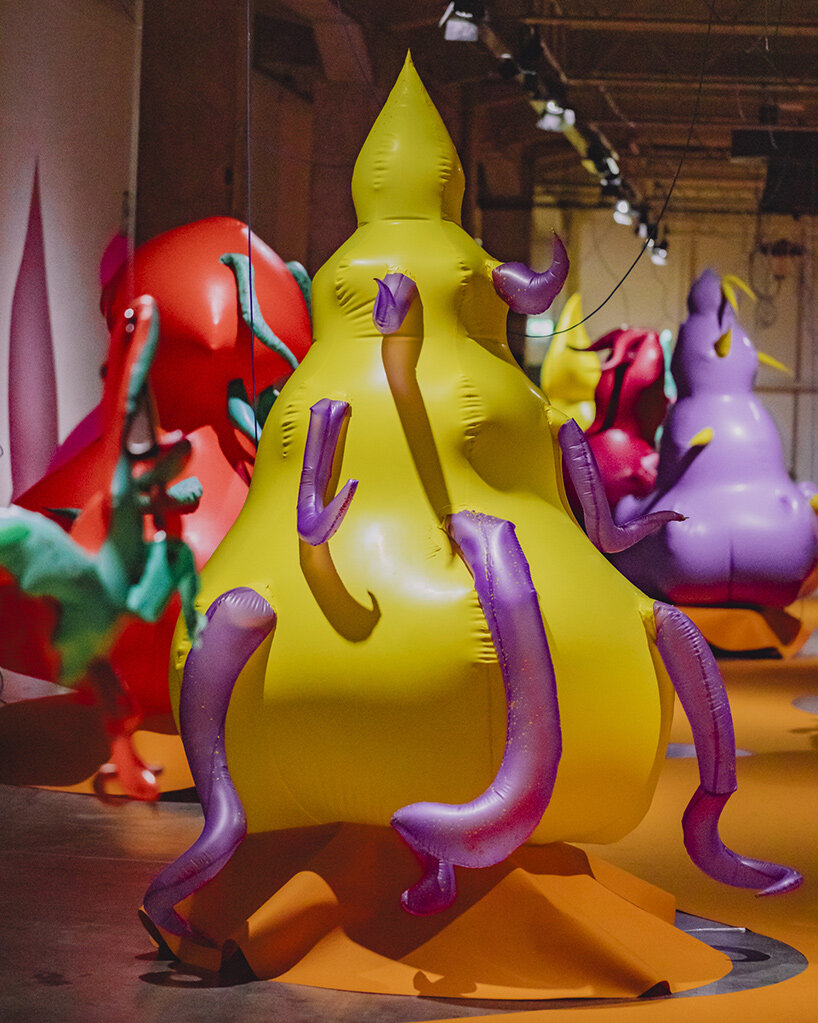
The unusual forms of Pneuma take inspiration from diatoms, microscopic algae that Meyer encountered in the Wadden Sea’s muddy sediment. These tiny organisms respond to tidal cycles, moving deeper into the mud as water rises and returning toward the surface when conditions allow them to capture sunlight. Some species can maintain their internal tidal rhythms even when removed from their natural environment.
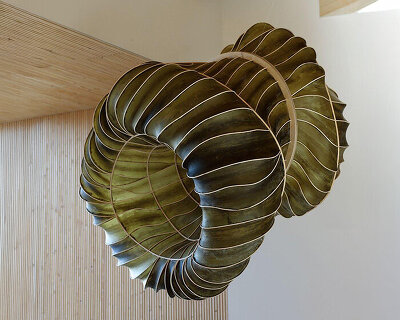
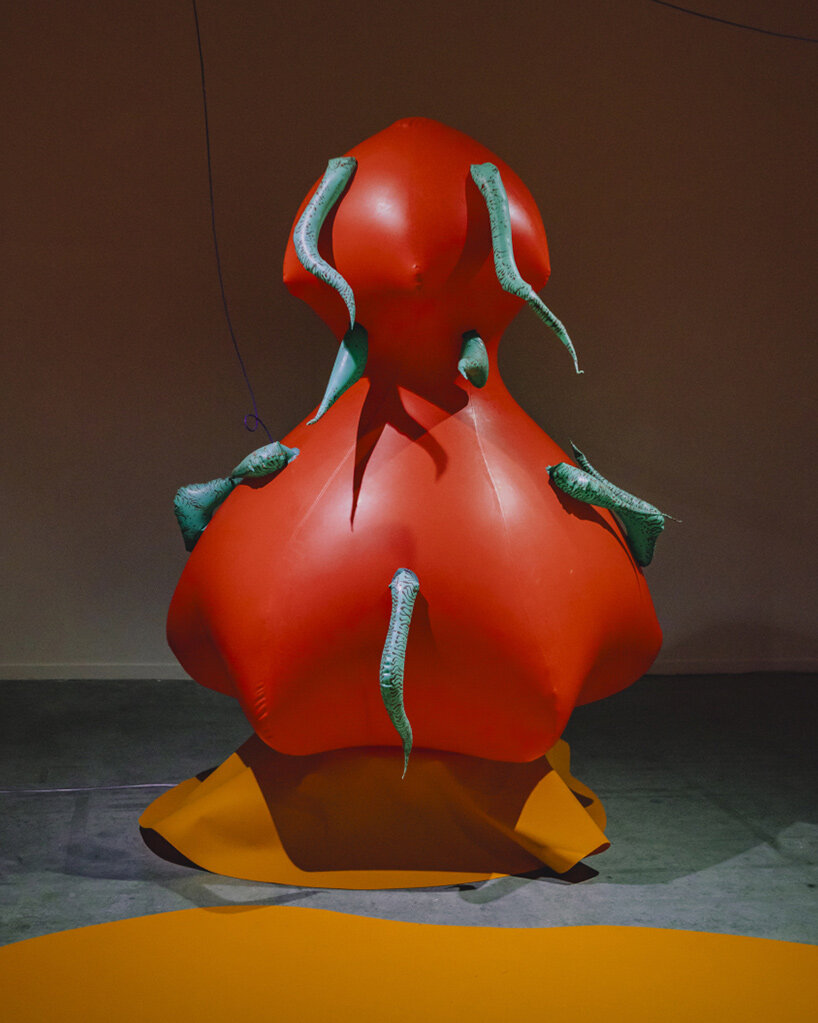
Diatoms play an important role in marine ecosystems, supporting food webs through photosynthesis. Their intricate cell walls, made from silica, give them surprisingly elaborate shapes when viewed under a microscope. Meyer translates these tiny organisms into oversized, bulbous sculptures, with rounded protrusions and brightly colored surfaces. Enlarged to the scale of the human body, creatures that ordinarily go unseen become the dominant inhabitants of the room.
can technology help us develop a new sense?
The title Pneuma comes from the ancient Greek word for both breath and spirit. In the installation, breathing becomes a way to participate in an environmental rhythm that continues well beyond the gallery. A visitor’s breath can change the shape of an inflatable creature, while the tides influence the same sculptural environment at their own pace.
Meyer’s work proposes an interesting possibility for how we might relate to the natural world. We already use technology to monitor environmental changes, usually translating them into numbers and graphs. Pneuma brings that information into the body by exploring whether physical sensation can create a more immediate relationship with forces that normally escape our perception.
The installation leaves viewers with a curious question: if we could learn to feel the movement of the sea, would we begin to experience our place within the environment differently?
project info:
name: Project Tidal, Pneuma
artist: Marlot Meyer | @marlotmeyer
This article is part of designboom’s POSTHUMAN UTOPIAS chapter, exploring what happens when humans are no longer the measure of all things. These stories rethink our relationship with the planet through interspecies architecture, living materials, regenerative landscapes and emerging technologies – learn more here! The chapter is presented in partnership with INDX|GLOBAL – a global cultural platform placing Indian architecture, design, and creative intelligence in conversation with the world.
Each designboom editorial series explores one theme in depth through projects, interviews, features and news across architecture, design, art and technology. Discover more chapters here, and get in touch if you’d like to submit a story through our submissions portal or contact form.
shop
your own online design shop — no sales commission collected