‘we are tiny ecosystems’: iris van herpen on learning to collaborate with nature
exploring the hidden intelligence of natural systems, the dutch designer reflects on living materials, experimentation, and the future of design ahead of her upcoming sculptural commission with maison perrier-jouët at design miami.
prefer designboom on google[FEATURED]
iris van herpen on expanding consciousness through technology
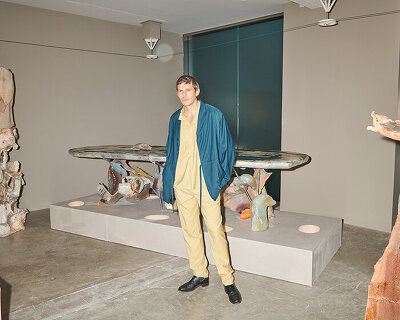
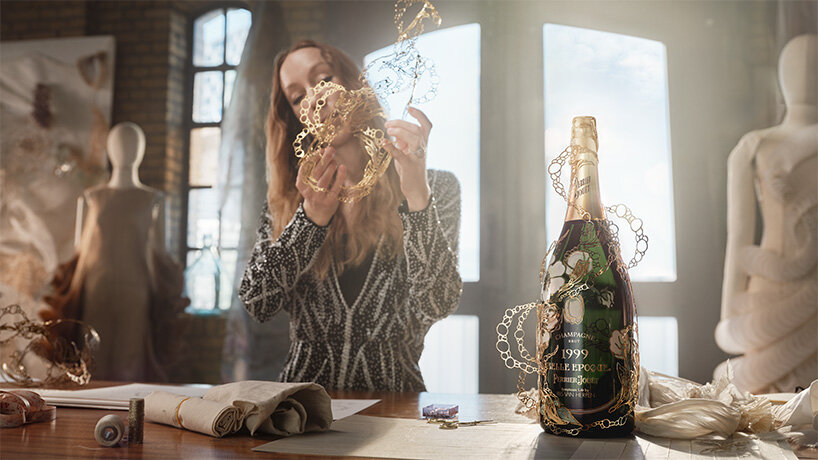
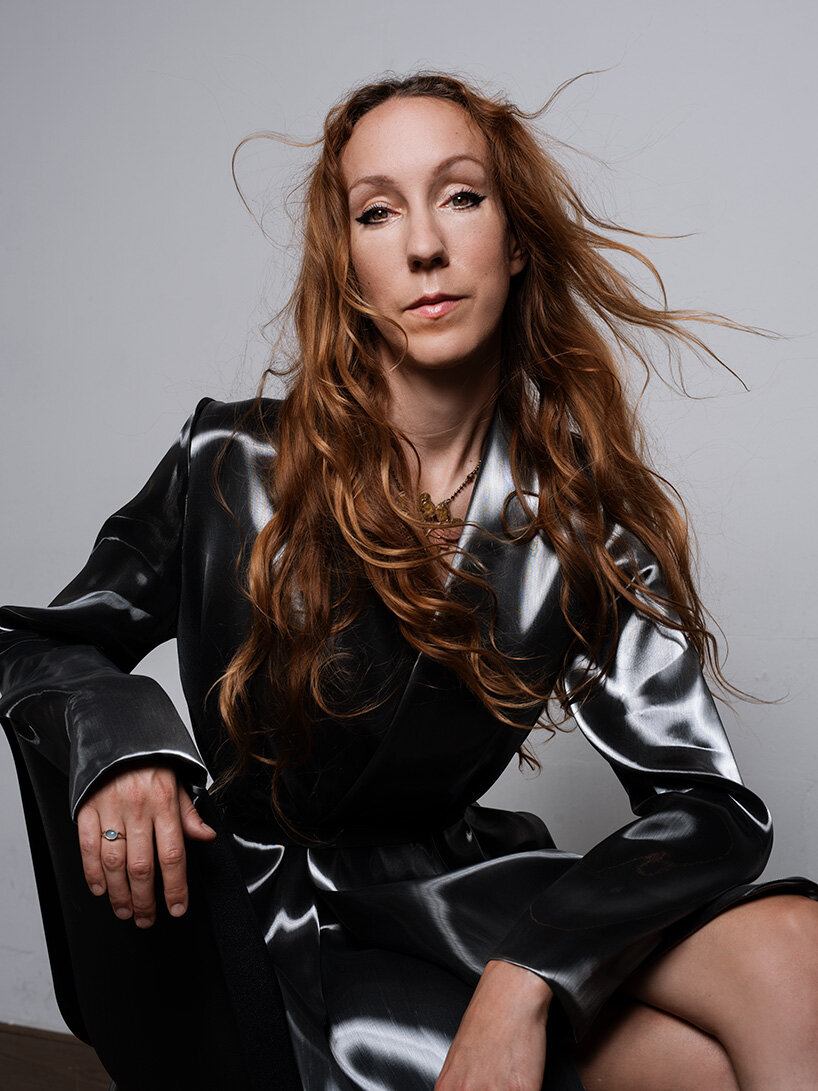
‘The extraordinary possibility is that we are not discovering intelligence, but discovering how much intelligence we have been unable to perceive,’ says marine biologist David Gruber, whom Iris van Herpen quotes during our interview. The idea resonates throughout the Dutch designer’s work, which repeatedly looks beyond the boundaries of the human body to explore the complex systems connecting people, materials, and other forms of life. Through collaborations with scientists, biodesigners, and artists, van Herpen investigates how these relationships might reshape the way we create. Her upcoming collaboration with Maison Perrier-Jouët, presented at Design Miami, continues this exploration, drawing on the vibrations and energy of microorganisms living beneath the soil of the champagne house’s vineyards to develop a new visual language (find designboom’s previous coverage here).
‘I look at the body beyond our physical boundaries, as something liquid, tiny parts of a large blue planet,’ van Herpen tells designboom. ‘We tend to perceive ourselves as individuals, but we are tiny ecosystems, existing in a complex symbiosis and entwinement with countless other forms of life, both inside us and around us.’ The designer sees technology as a way to expand human consciousness, opening up possibilities for understanding how the body relates to the natural world beyond its physical boundaries. Our senses, she points out, allow us to experience only a small part of reality, while other species communicate through systems that remain largely beyond our understanding. ‘More than 8 million species share our planet, we only understand the language of one,’ the designer highlights.
sympoiesis: couture in collaboration with living organisms
Van Herpen’s understanding of the body also shapes how she approaches couture, using the medium to explore the connections between human life and the wider natural world. ‘Couture can become an extension of our senses, inspiring us to move beyond the idea of the human being as the center of everything, towards an awareness of ourselves as part of a huge, vastly complex, living intelligence,’ the designer notes. Her work often draws on natural phenomena, but its relationship with nature goes beyond visual references. She is interested in how the processes and behaviors of living systems might influence the way garments are conceived and made.
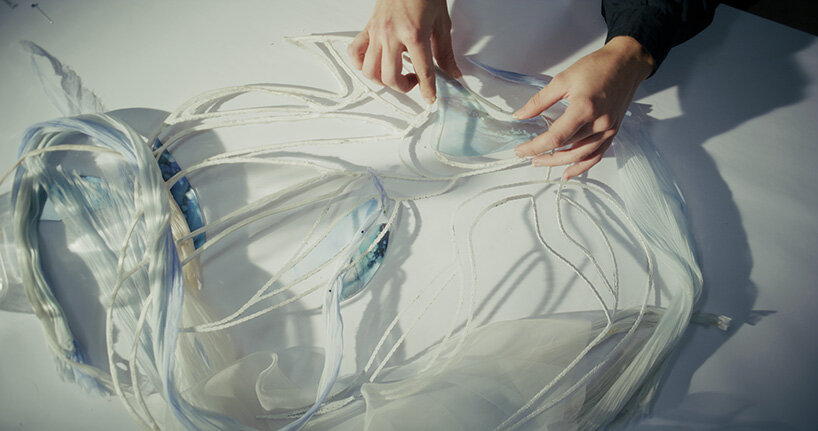
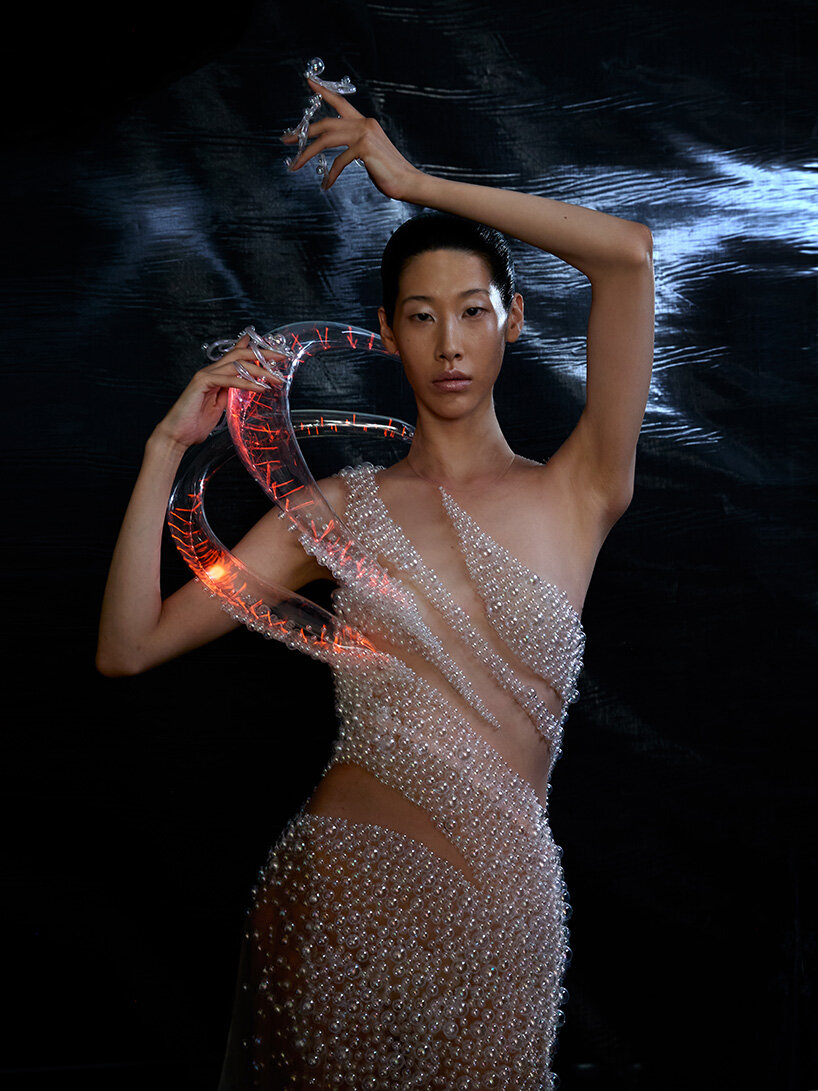
For the Sympoiesis collection, van Herpen collaborated with biodesigner Chris Bellamy on a living look inhabited by 125 million bioluminescent algae, Pyrocystis lunula. The organisms emit light in response to the wearer’s movement, creating an interaction between the human body and another biological community. ‘Instead of shaping a material towards my ideas/vision, we had to learn about and understand the needs and rhythms of these living organisms,’ she explains. ‘It was for the first time that we were not “just” constructing a look, but instead, we had to nurture a living community.’
The algae required maintaining specific levels of light, humidity, and temperature, as well as attention to their circadian rhythms. The whole experience influenced how van Herpen thinks about collaboration and authorship. The title Sympoiesis, meaning ‘making together’, reflects how living things can work together to create something. ‘We need to stop seeing ourselves as separate from nature, embrace our interdependence (for both our physical and mental well-being), and create and act with the awareness that we are nature,’ she says. For designers, she believes, this means thinking beyond the materials they use and finding ways to make the creative process and its results contribute to nature’s cycles.
embracing experimentation and the value of slow fashion
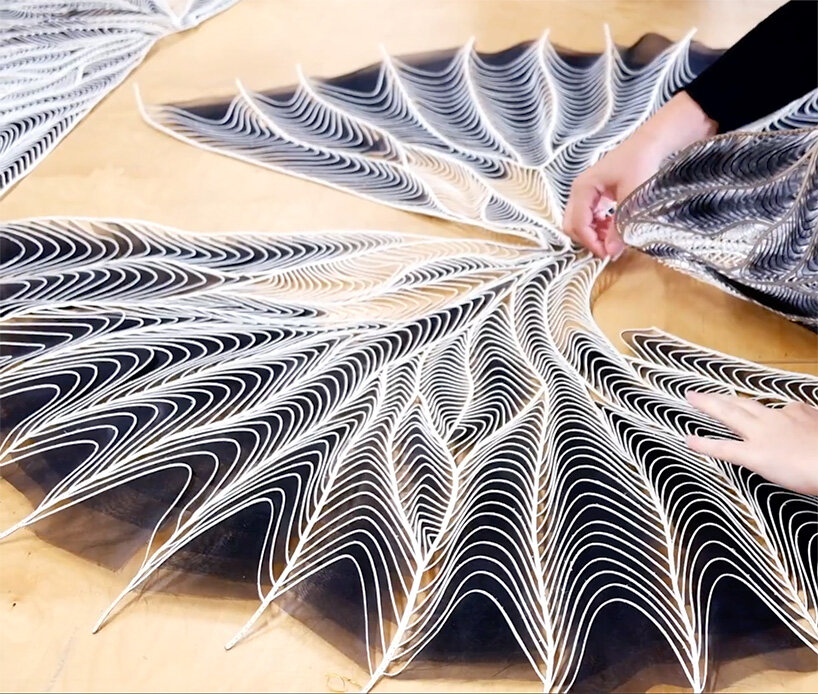
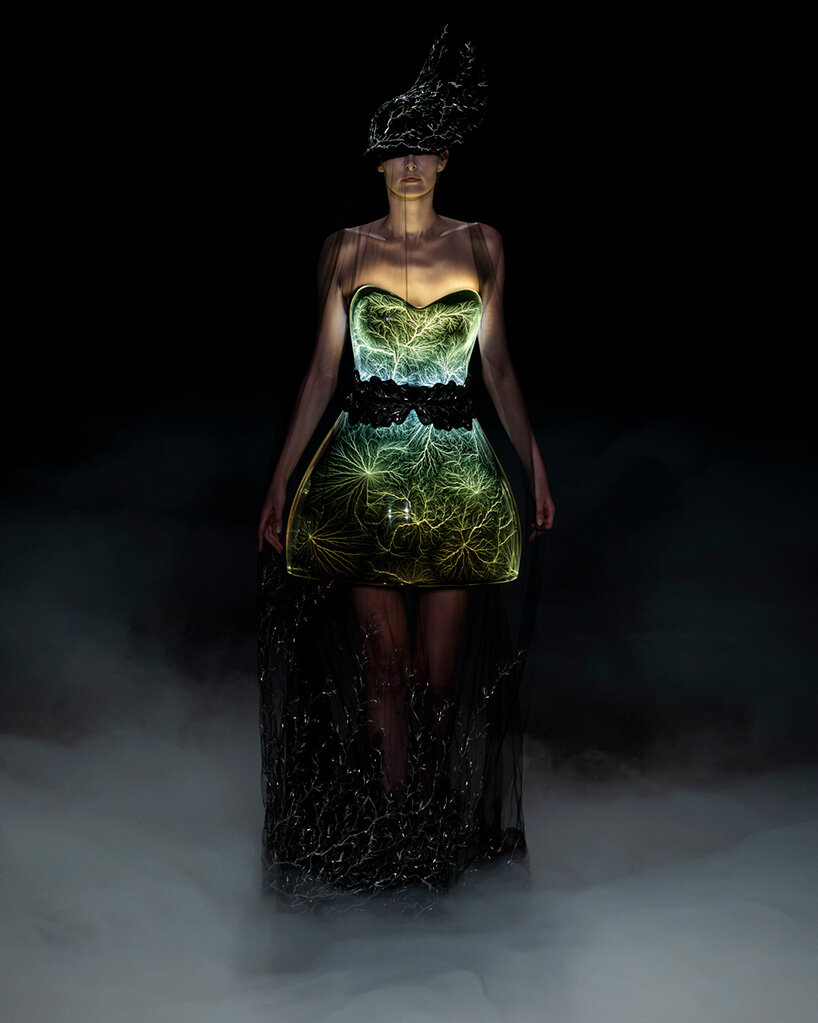
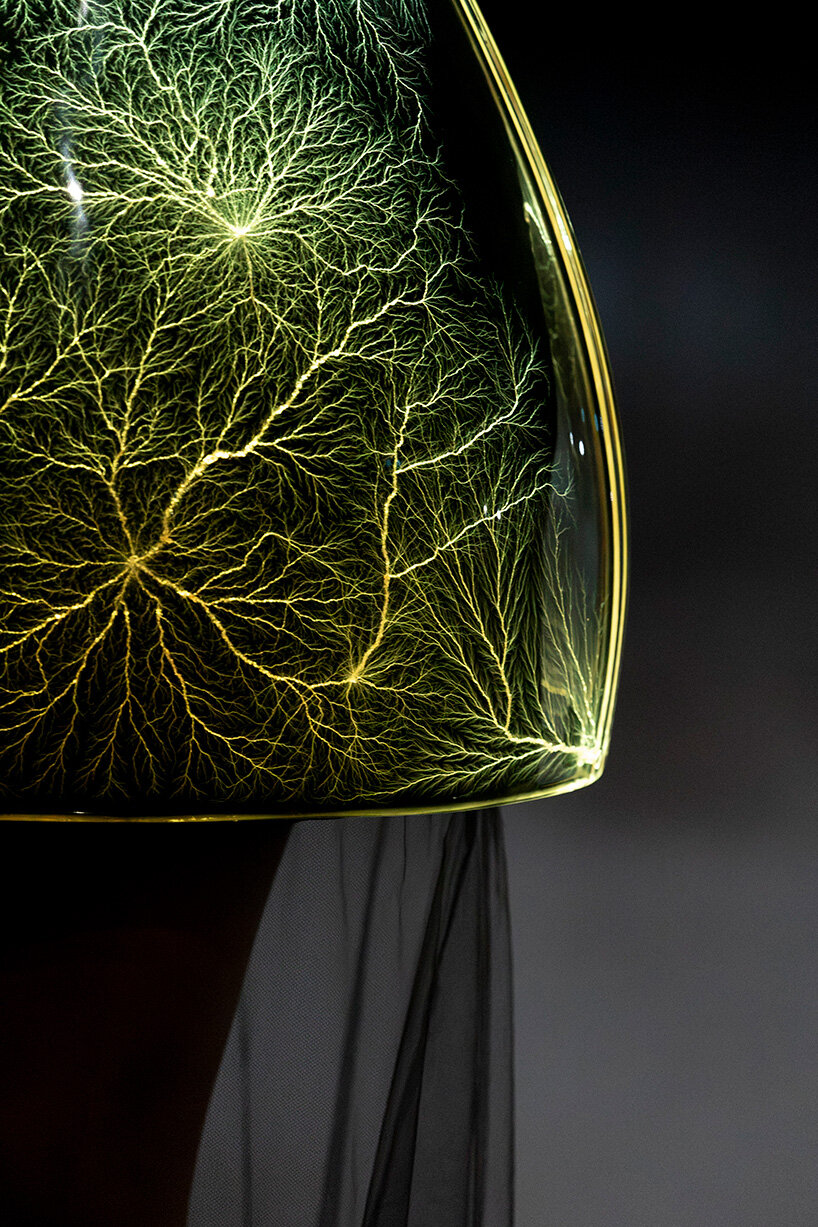
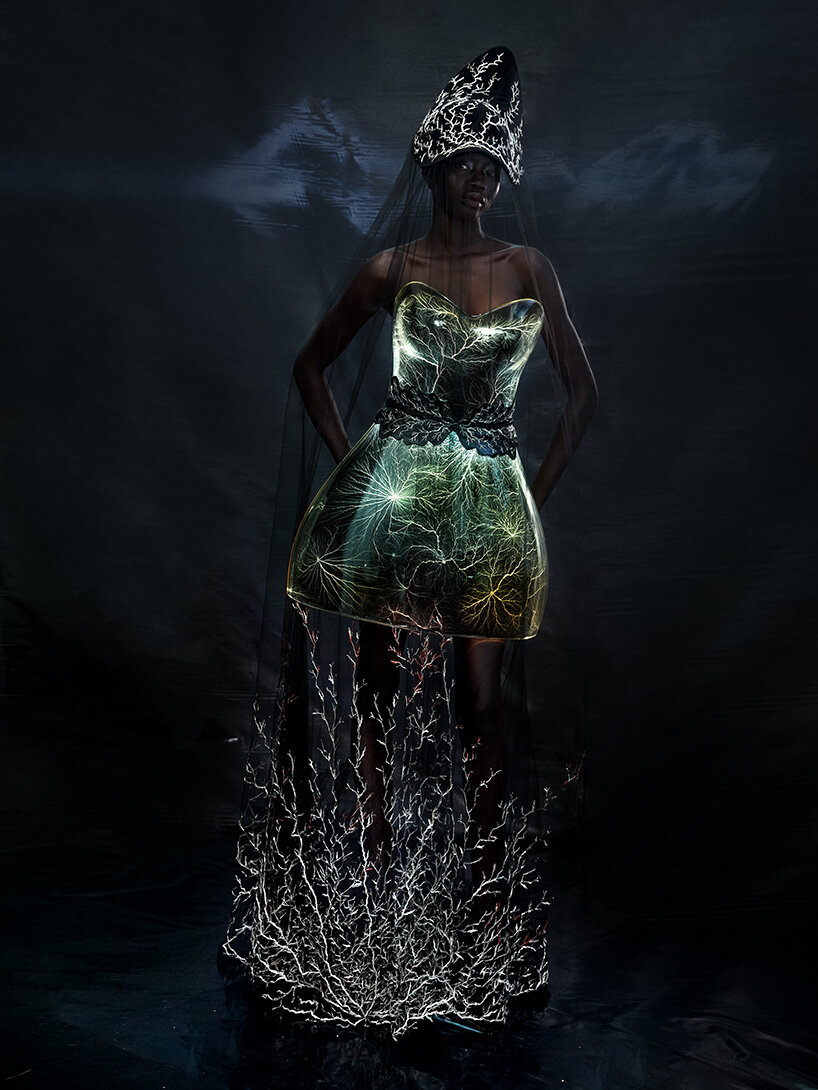
Her experiments bring her into contact with forces that cannot be entirely anticipated. For Sonic Starquakes, developed in collaboration with Dale R. Sulak, Iris van Herpen began with a relatively simple dress that was charged inside a particle accelerator and cryogenically preserved. The process left it as a metastable reservoir of energy containing billions of trapped electrons. In the nights before the show, the dress began to discharge, producing branching flashes of lightning that etched microscopic hollow channels into its three-dimensional structure. ‘The artwork you see is not controlled or created by me or anyone else; it was the pure force of lightning that created the 3-dimensional detailing,’ she tells us. The result went beyond what she had originally imagined, but this is precisely what the fashion designer seeks through experimentation. ‘That is why I invite chaos and the unknown into my everyday in the atelier.’
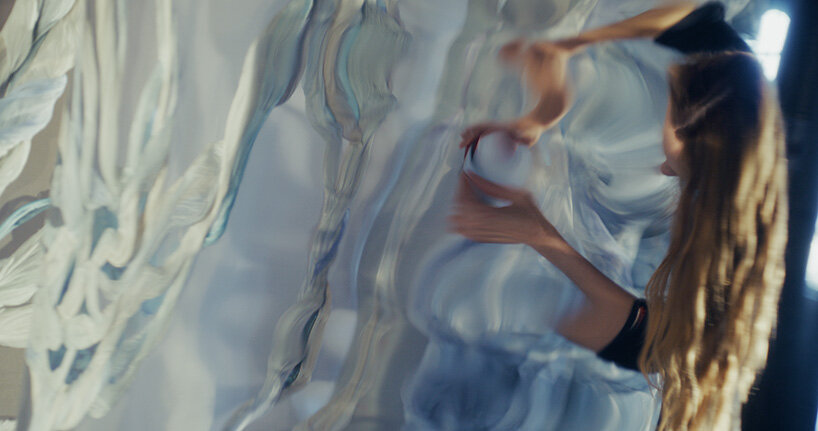
In contrast to the constant demand for new collections, van Herpen follows a slower, research-led approach that she describes as ‘slow fashion’. Her collections consist of one-off haute couture pieces, with a single look taking anywhere from four to ten months to complete. Research collaborations with scientists, artists, engineers, and architects can take one to two years, particularly when they involve developing new materials. She now presents one show annually to give these processes more time to develop. ‘Time is the new luxury,’ she points out. Much of this material research also focuses on sustainability, although for van Herpen the value of taking time lies equally in allowing unexpected discoveries to develop.
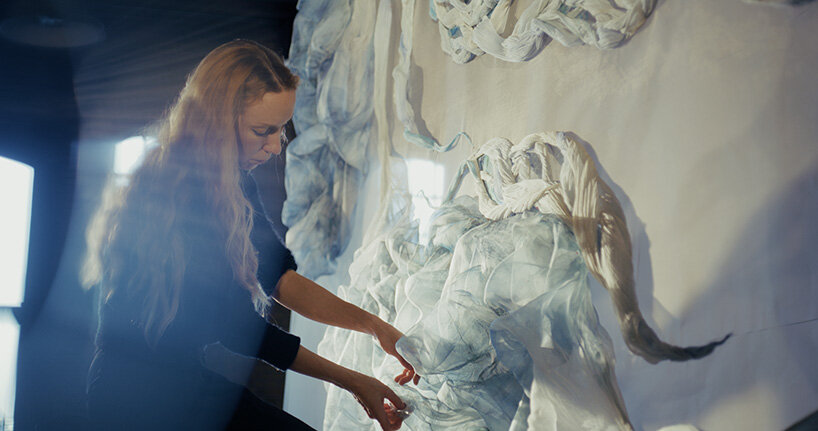
learning to design with nature
Living organisms have developed the ability to grow, adapt, repair themselves, and participate in cycles of matter and energy over billions of years. The challenge, in her view, is for human invention to learn from that complexity. ‘Some tend to think that technology is more advanced than nature. The opposite is true; nature remains infinitely more complex than current technology,’ she shares with deisgnboom.
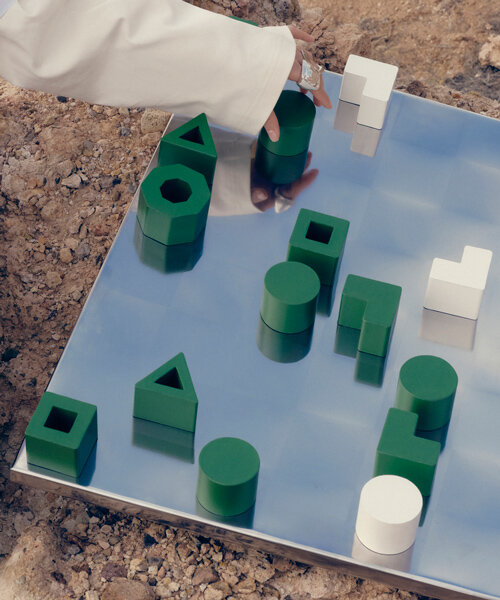
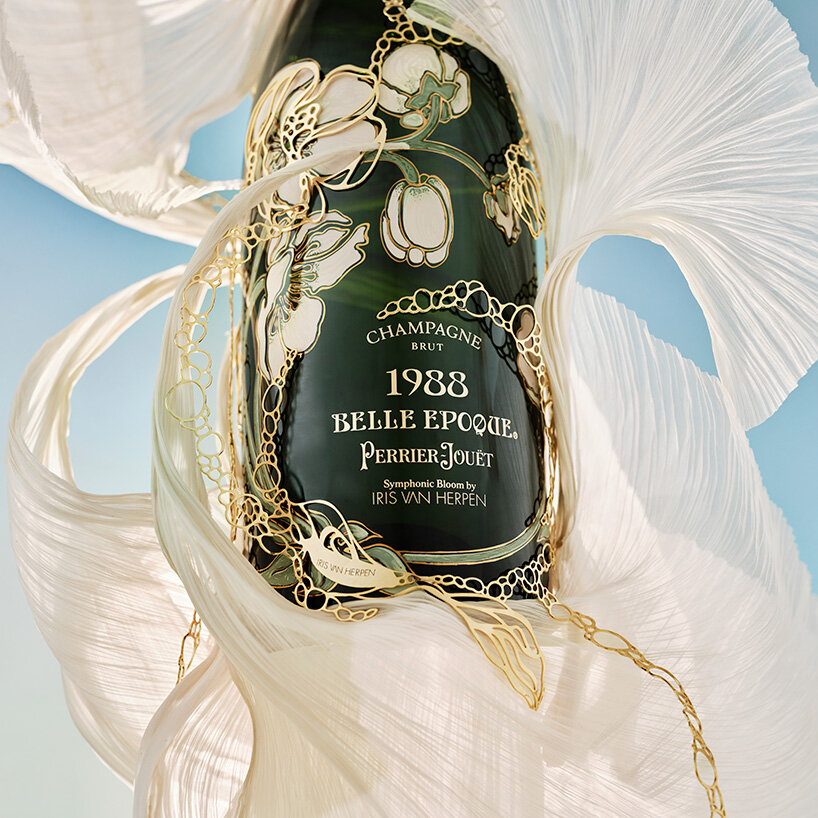
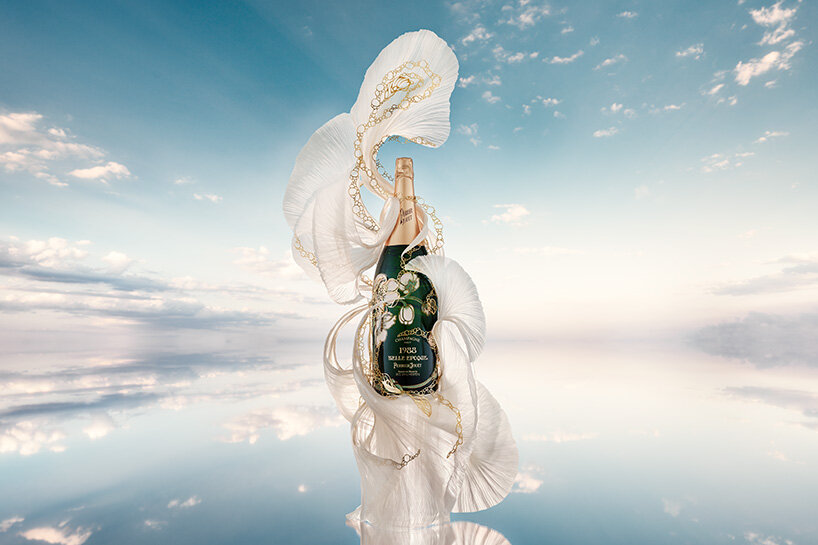
Her interest in working with nature also carries into her upcoming collaboration with Maison Perrier-Jouët, which will be presented at Design Miami. The project draws on cymatics, using vibrations and energy generated by microorganisms beneath the vineyard soil as the basis for a series of visual motifs. The work continues van Herpen’s exploration of natural processes that usually remain unseen. It also connects to her wider ideas about the future of design, from materials that can grow, regenerate, and biodegrade to architecture and cities that support the ecosystems around them.
Iris Van Herpen believes designers, architects, and engineers have much to learn from the way nature works. ‘Nature has spent billions of years evolving extraordinary systems of intelligence, adaptation and symbiosis. There is so much we can learn from these processes,’ she believes. In fashion, this could mean garments that respond and adapt to their environments, grow through biological processes, and eventually return safely to an ecosystem. ‘I am convinced that the next revolution in design will cause a shift from controlling nature to collaborating with her,’ the Dutch fashion designer argues.
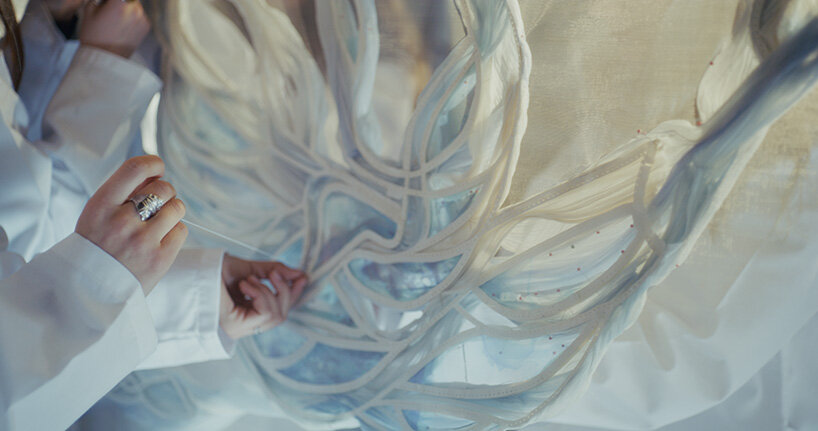
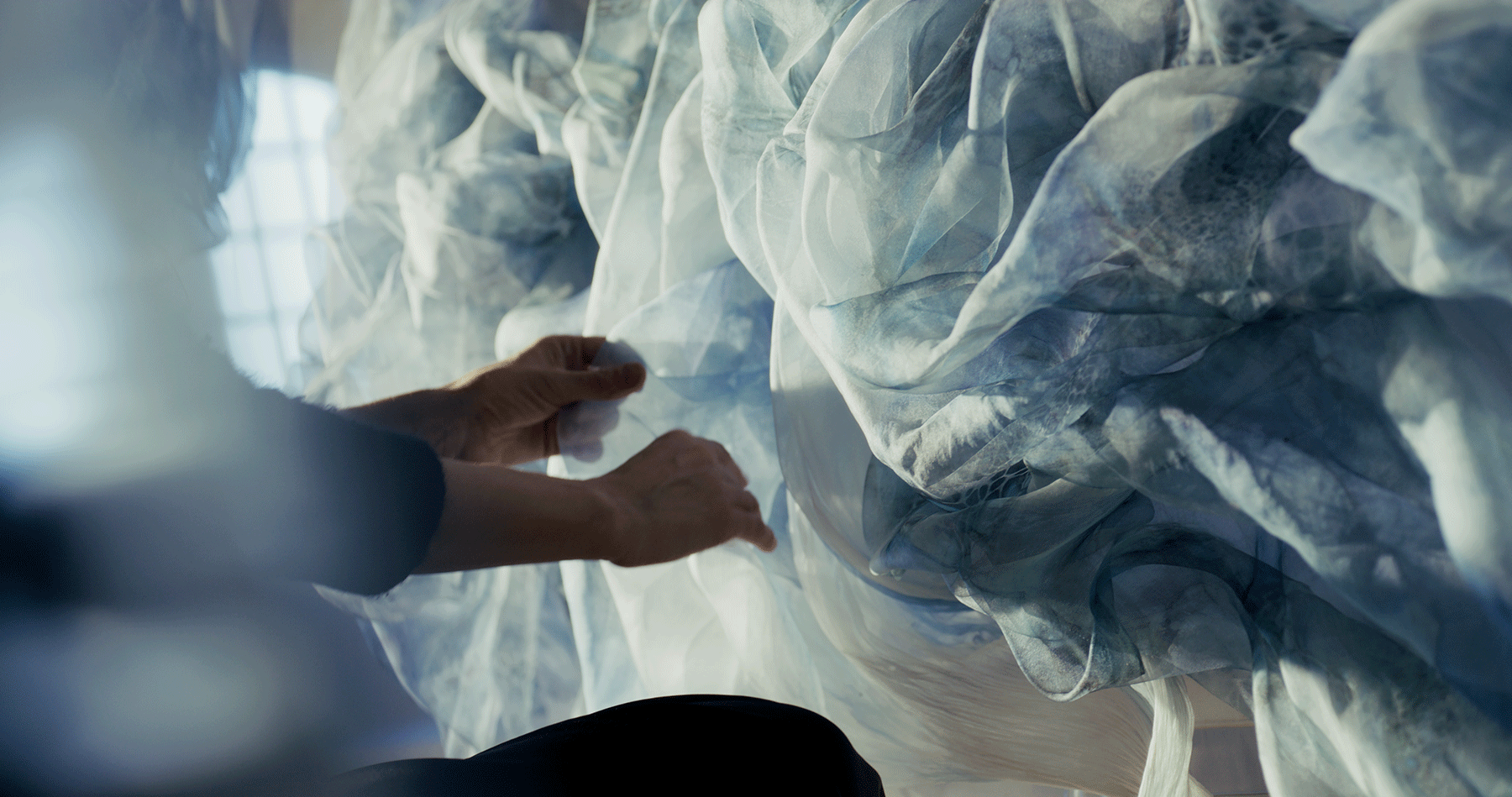
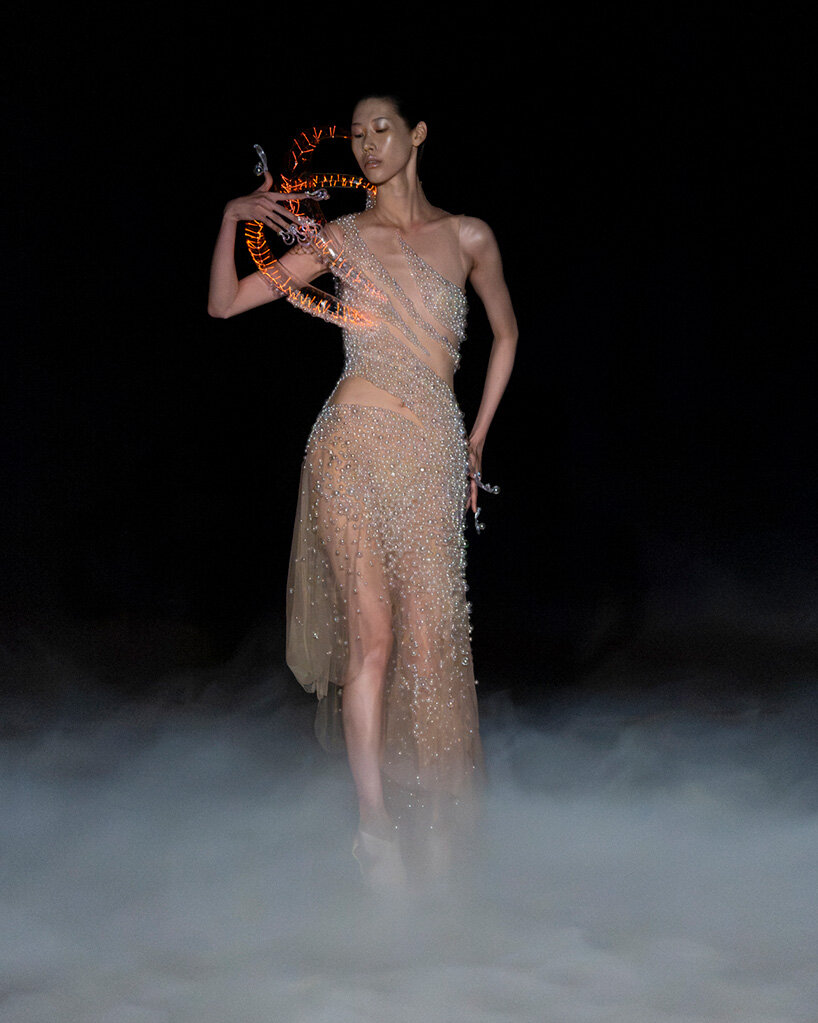
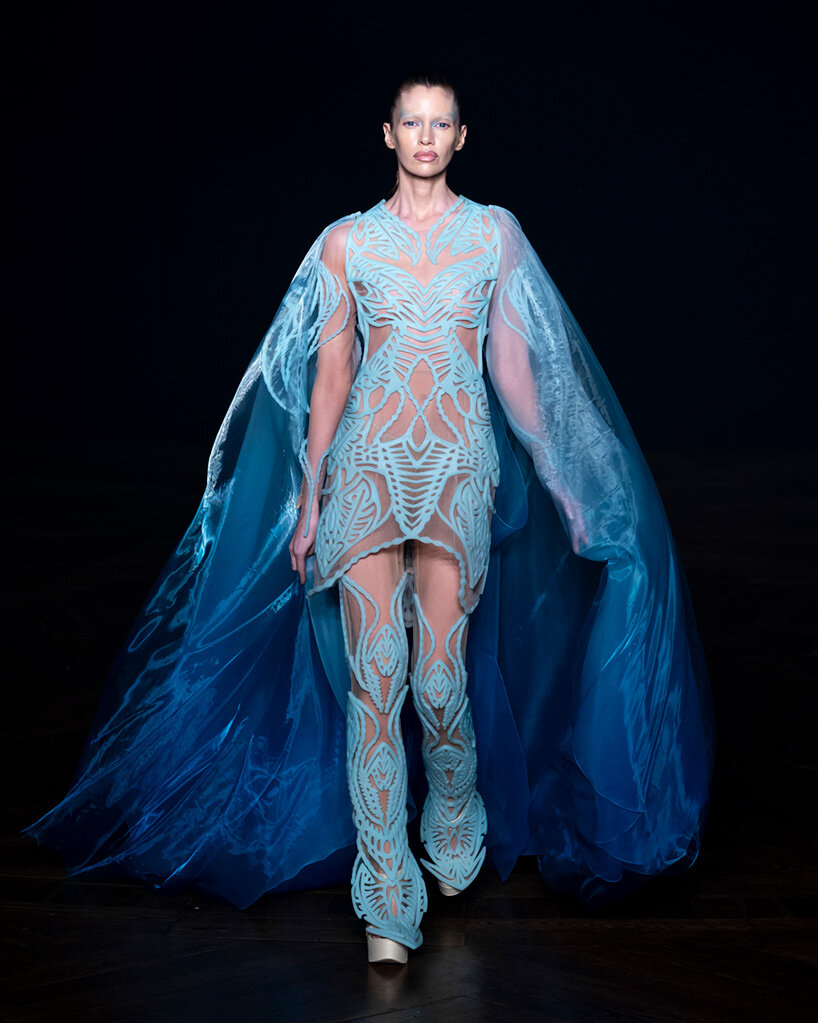
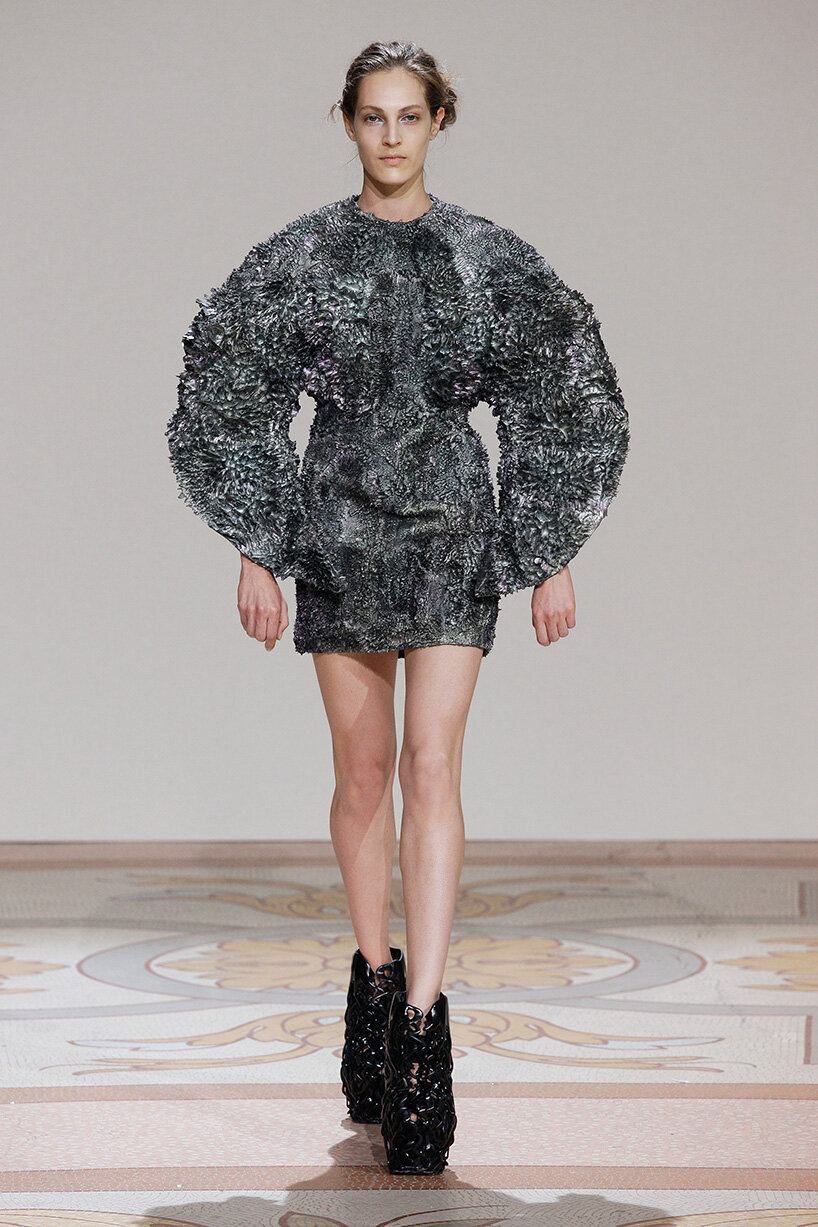
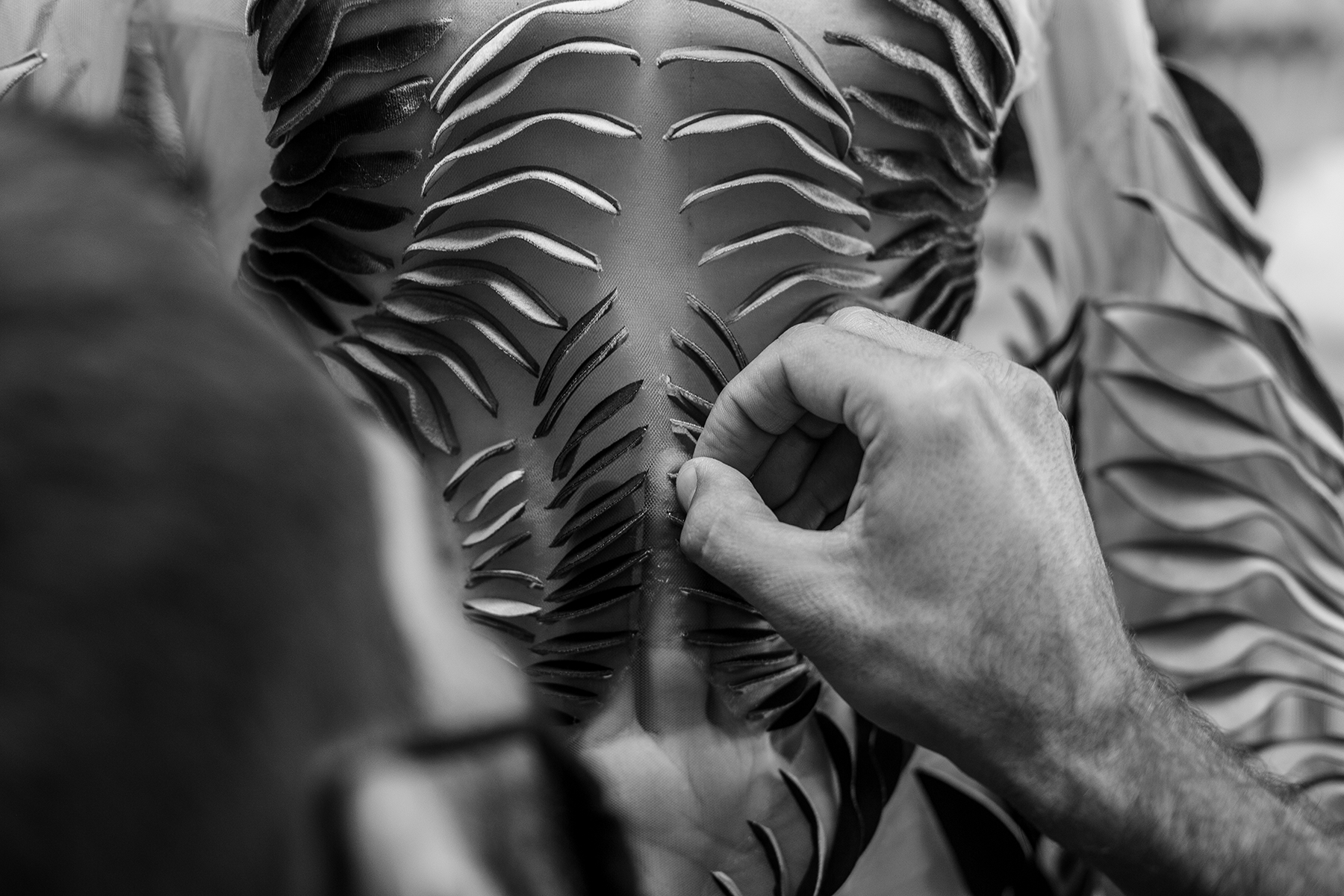
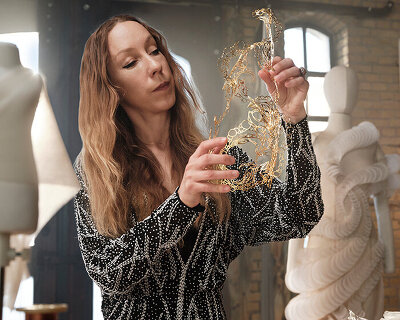
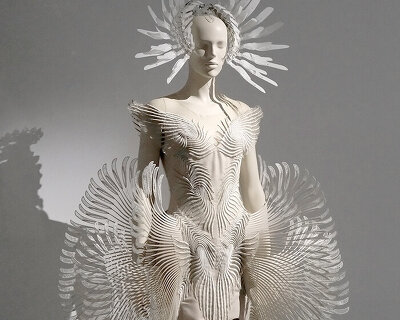
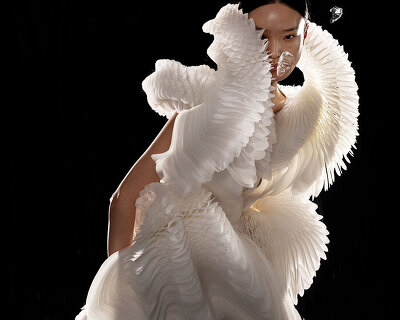
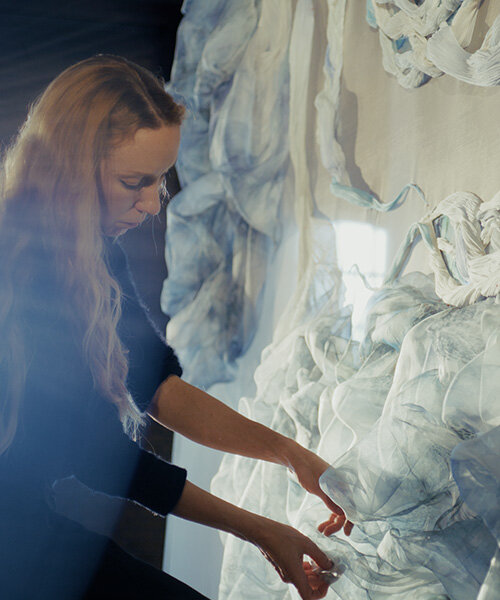
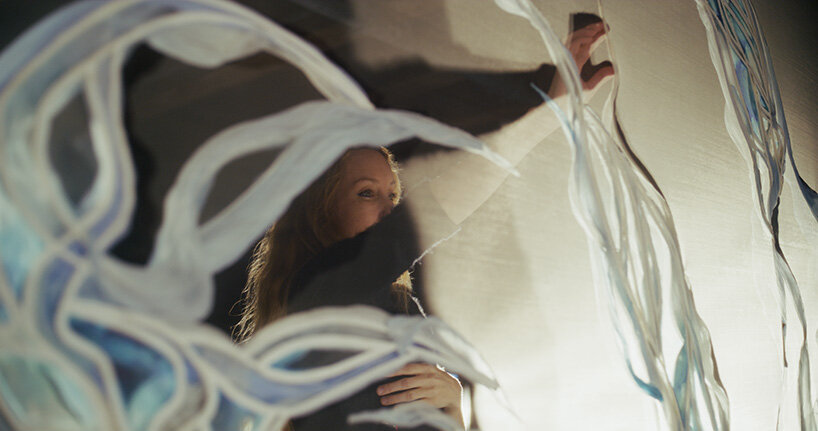
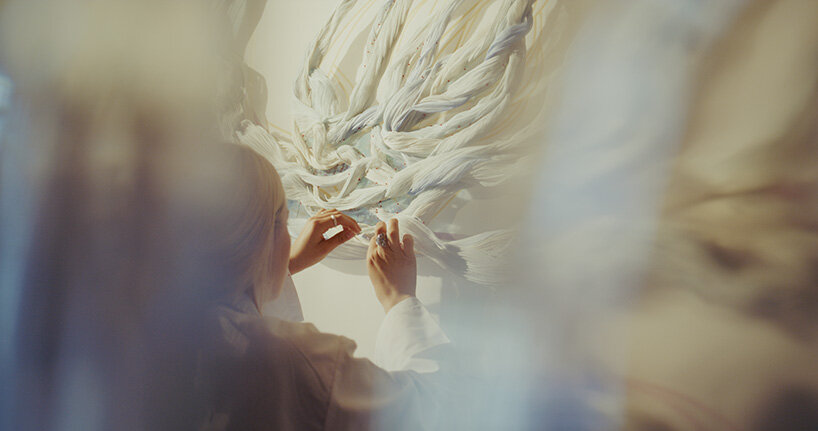
Van Herpen’s approach to couture combines traditional craftsmanship with experimentation
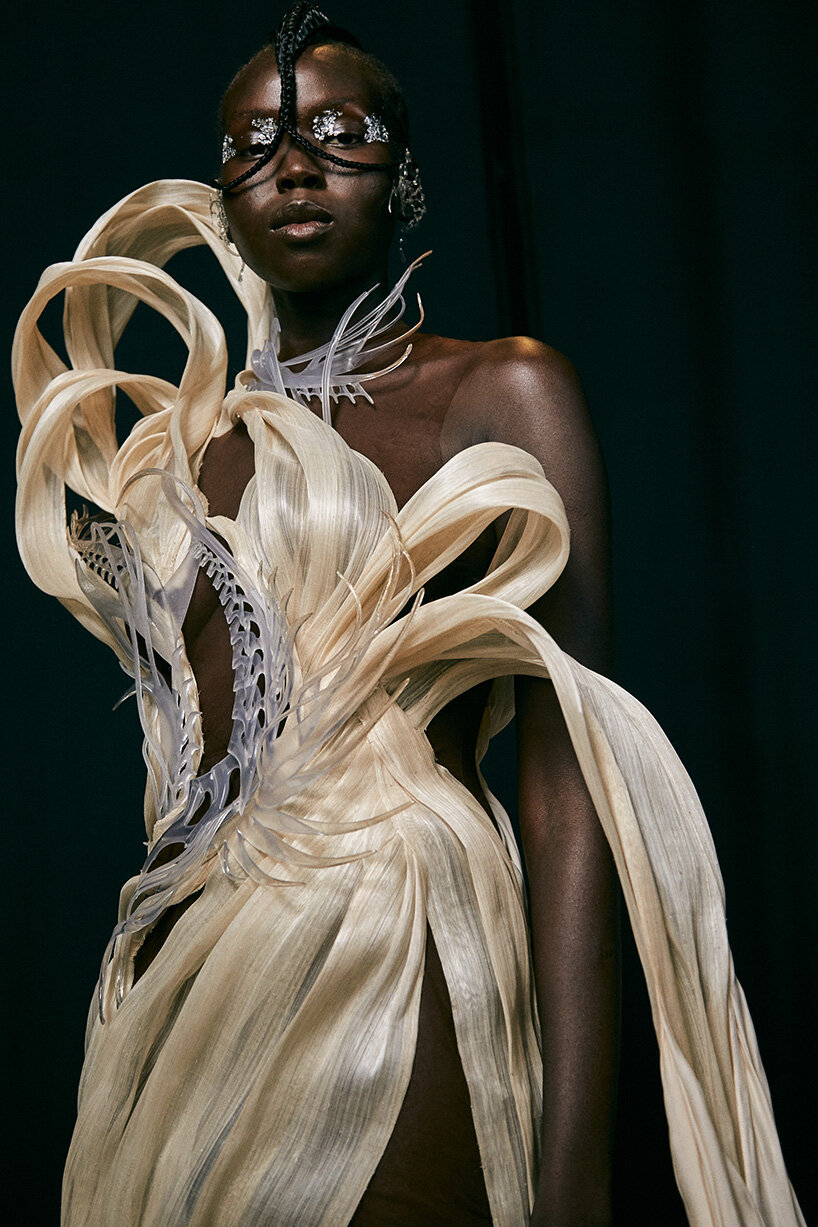
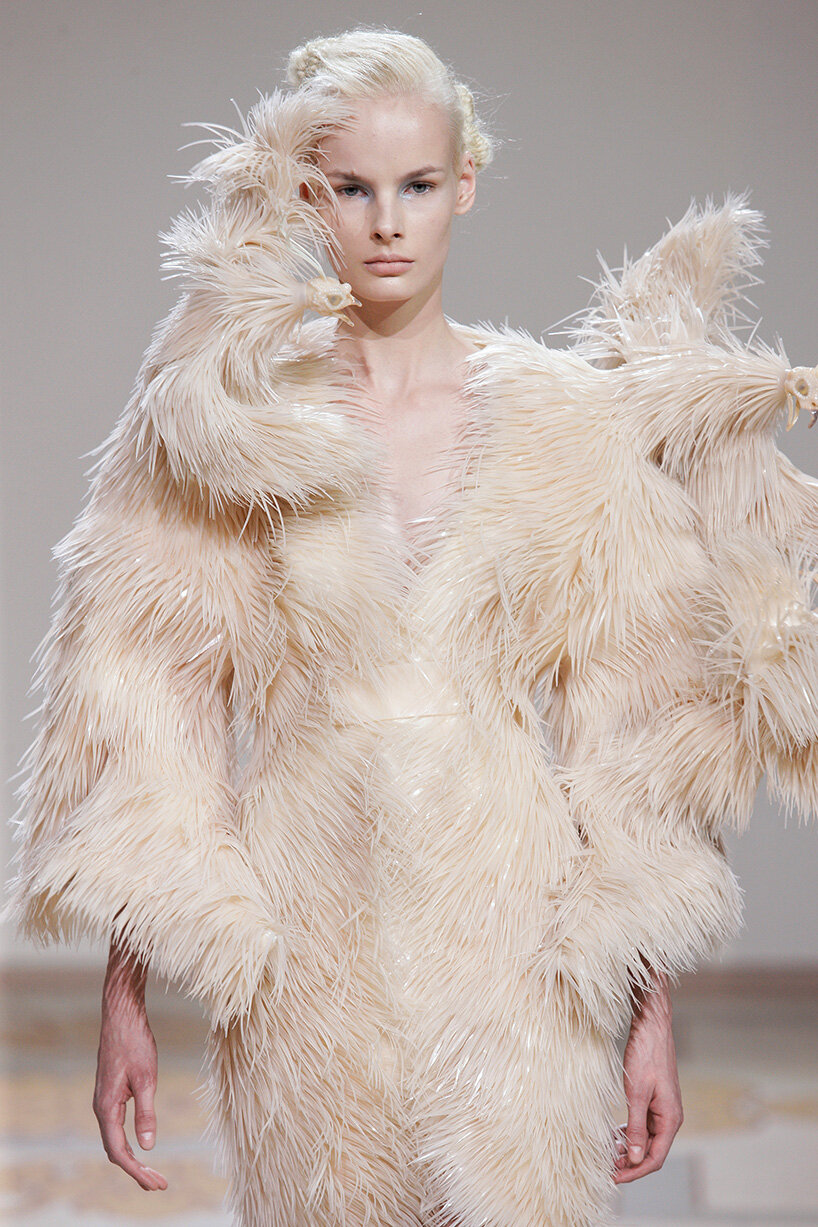
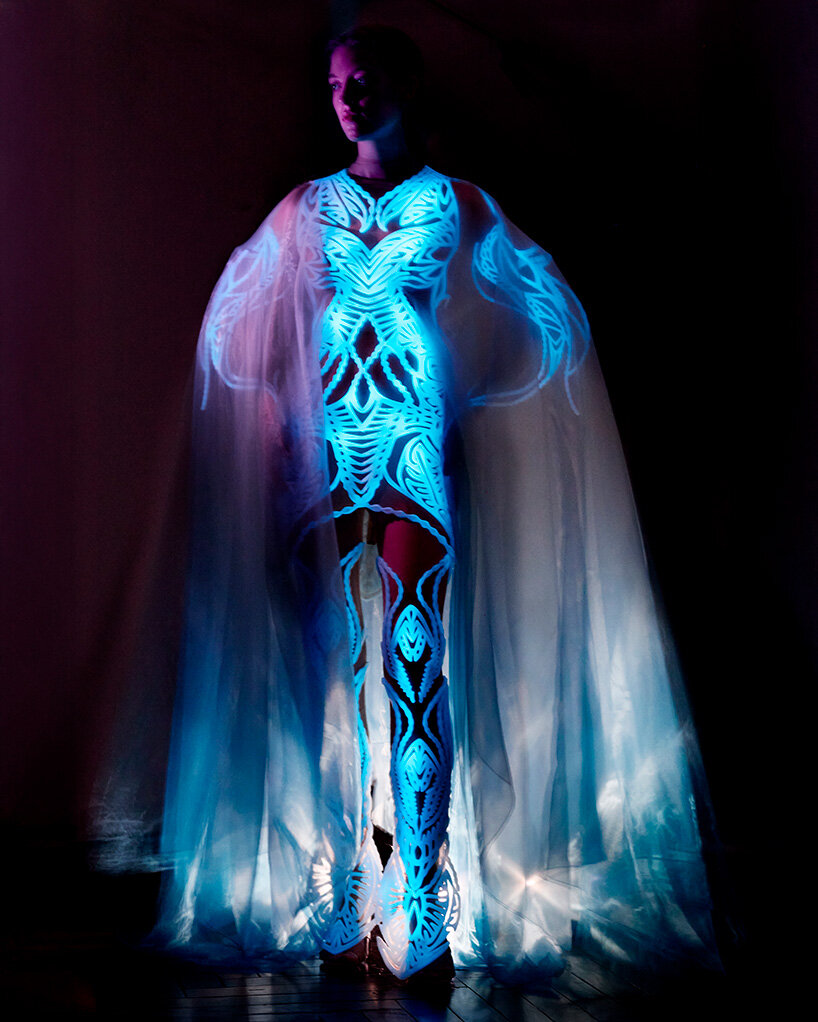
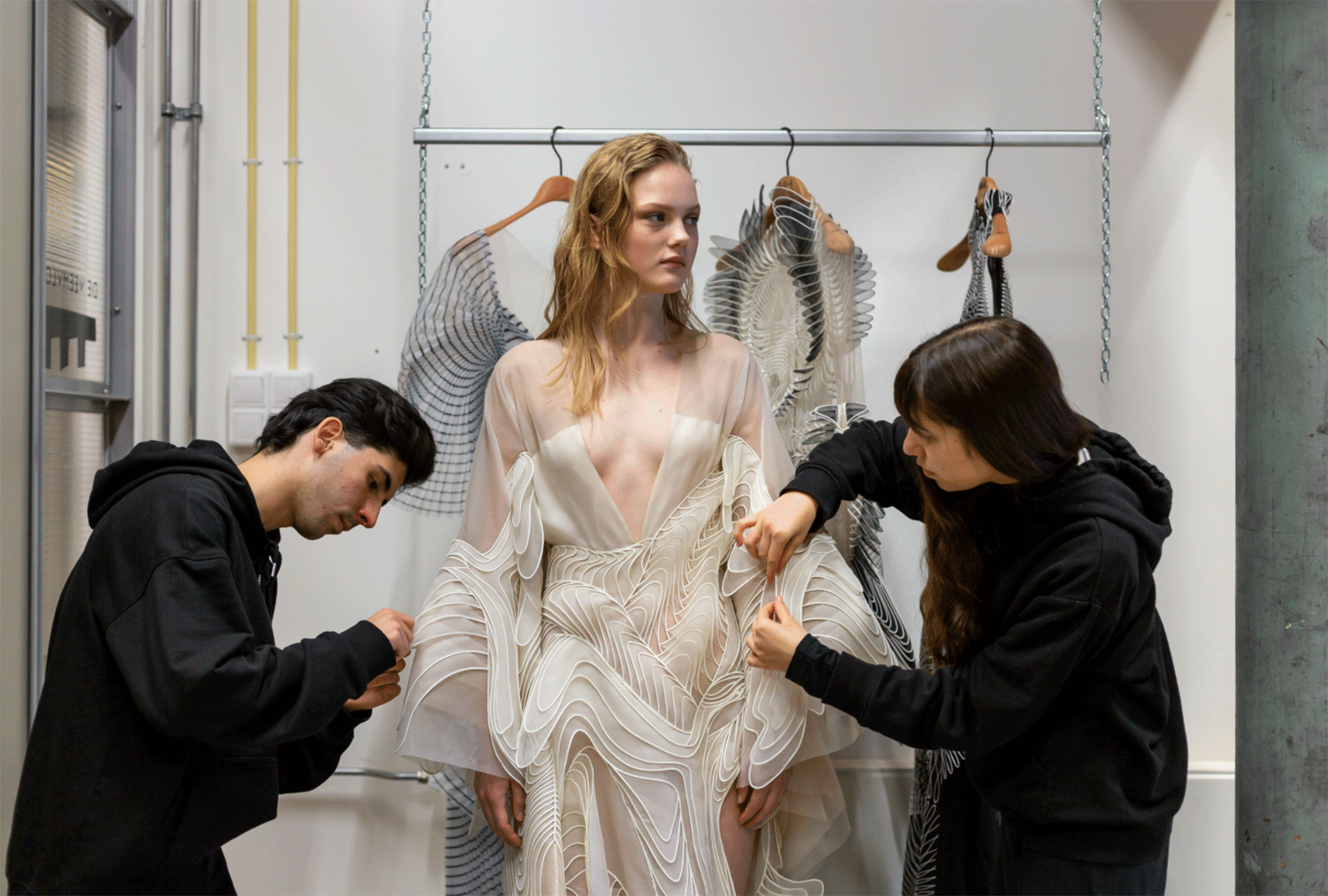
developing a single couture look can take several months
1/8
designer: Iris van Herpen | @irisvanherpen
This article is part of designboom’s POSTHUMAN UTOPIAS chapter, exploring what happens when humans are no longer the measure of all things. These stories rethink our relationship with the planet through interspecies architecture, living materials, regenerative landscapes and emerging technologies – learn more here! The chapter is presented in partnership with INDX|GLOBAL – a global cultural platform placing Indian architecture, design, and creative intelligence in conversation with the world.
Each designboom editorial series explores one theme in depth through projects, interviews, features and news across architecture, design, art and technology. Discover more chapters here, and get in touch if you’d like to submit a story through our submissions portal or contact form.
shop
your own online design shop — no sales commission collected