james bridle and the power of solar, zooplankton, and non-human entities
ancient symbols and microscopic organisms meet contemporary solar technology in an artistic reflection on energy, ecology, and coexistence.
prefer designboom on google[FEATURED]
James Bridle and Solar Panels (Radiolaria Series)
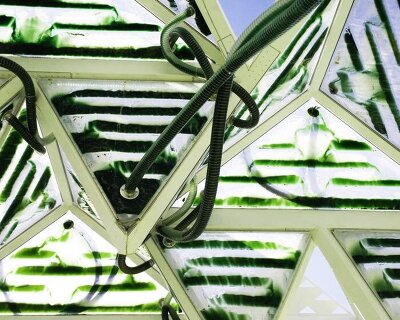
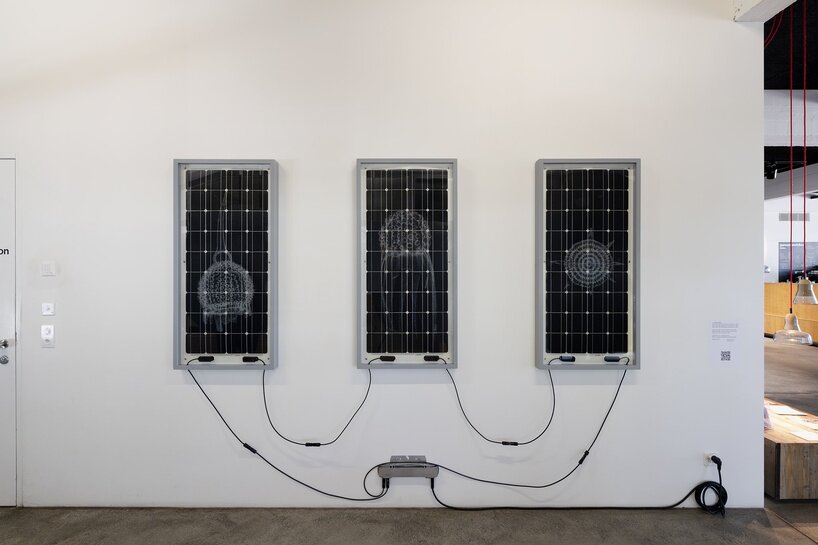
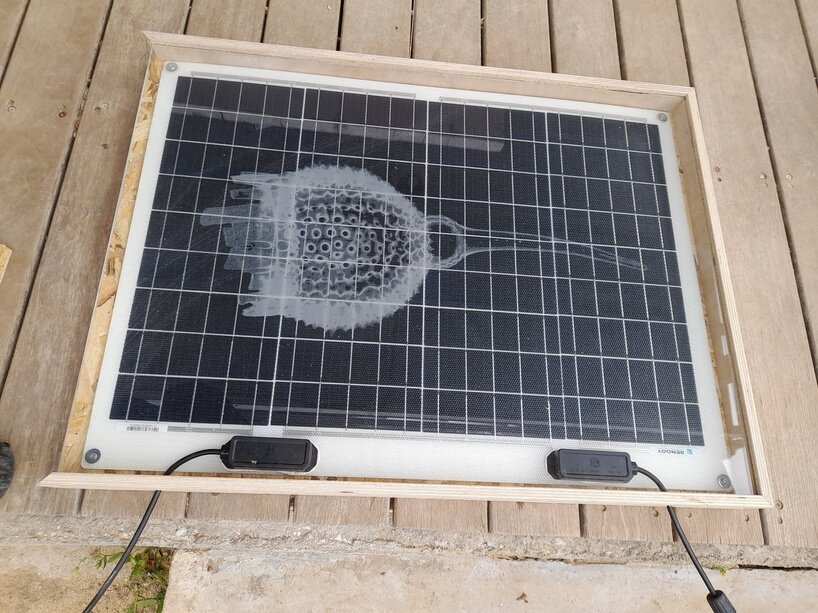
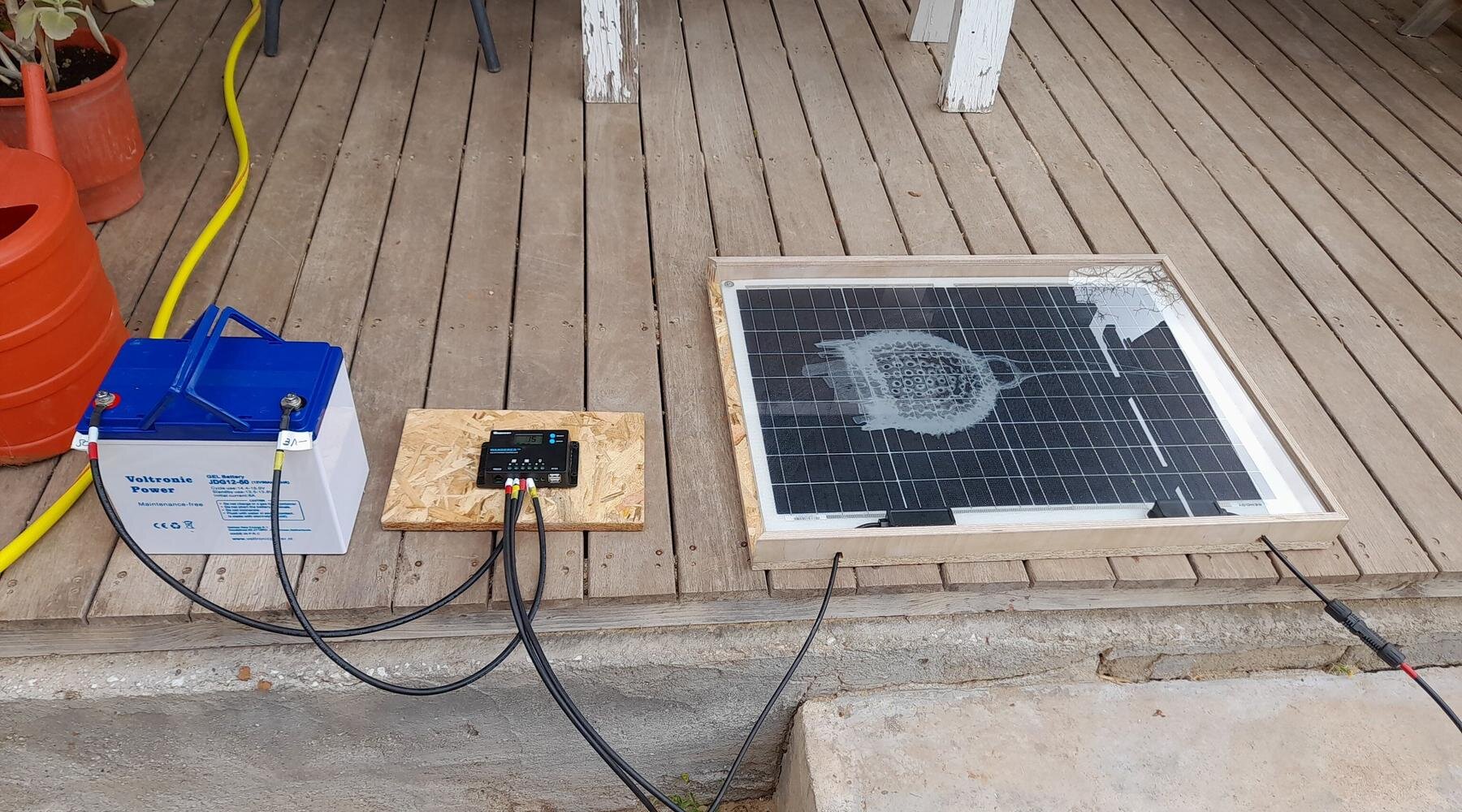
Back in 2022, James Bridle—artist, technologist, and author of the book New Dark Age (2018)—created a work called Solar Panels (Radiolaria Series). It was a series of five functional 100W photovoltaic generators, the faces of which were etched with tiny, microscopic zooplankton called Radiolaria. Looking at images of their silica skeletons, enlarged hundreds of times so they are visible to the human eye, reveals a universe of spiky arms, swirling bodies, intricate lattices, and geometric patterns. Juxtaposed with each other, and containing their own advanced modes of capturing energy, Bridle creates a compelling parallel between non-human and human intelligence, and what that could mean for the future of the earth.
Bridle and the technologies of the natural world
Across their writing, installations, and lectures, James Bridle has become known for thinking about the ways that technology, the natural world, and humanity influence each other, with a strong emphasis on understanding ‘intelligence’. They look beyond the popular, mainstream ideas associated with the word, often linked to IQ, large language models, and other forms of reconstructing human thought patterns. In their piece, AI was built on human intelligence. Nature has more to teach, they express the urgency of going beyond this definition, and to learn from the other creatures we share the Earth with.
It is this line of thinking that has underwritten their works with solar panels, water collection systems, and vernacular architecture. Looking back to their 2019 exhibition, Through Other Eyes, which they curated with NeMe Art Centre in Cyprus, an emphasis on more-than-human forms of thinking and creating is evident. Here, they invoked the 1922 writing of Dziga Vertov, in which he describes his fascination with documentation through the lens of a camera. Bridle parallels this with the technologies of the twenty-first century – all the mania, fascination, and consequences – saying that, if we apply these new or different ‘eyes’, those of machines and animals, ‘They might also, if we are open to them, offer us visions of unexpected insight, and startling beauty.’ It is within this vision – trans-species and trans-machine – that Bridle’s work takes form.
Ancient logic in contemporary models
Putting an image of radiolaria on a solar panel conjures ideas about the ability to sustain life and other modalities of using energy generated by natural processes. It calls into question the human need to consume power. Radiolaria, microscopic yet possessing highly advanced skeletal structures, can exist symbiotically with algae that provide them with energy. There is an ancient logic to their existence that can be traced back to the Cambrian. Bridle, in their description of the project, highlights how they were ‘famously illustrated, by the German naturalist Ernst Haeckel, who coined the term “ecology” in 1866.’ The complex structures of these organisms continue to inspire wonder, demonstrating how something so small can be so powerful and complex.
Expanding this logic to the scale of solar panels, a technologically intensive mode of capturing and converting energy from the sun in a way that can power human inventions calls into question the effectiveness of human ‘technology’ when compared to that of the non-human. Here is an incredible invention that can create sustainable energy, a promising alternative to fossil fuels, yet it takes advanced electronics and logistics to achieve what a single-celled organism has been doing for thousands of years. Here, Bridle once again asks us to consider what innovation means, not when we compare it to the span of human history.
Things Said, Things Seen, and Things Done
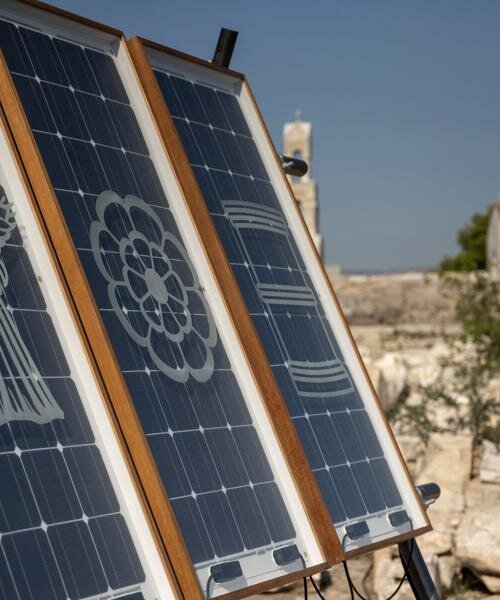
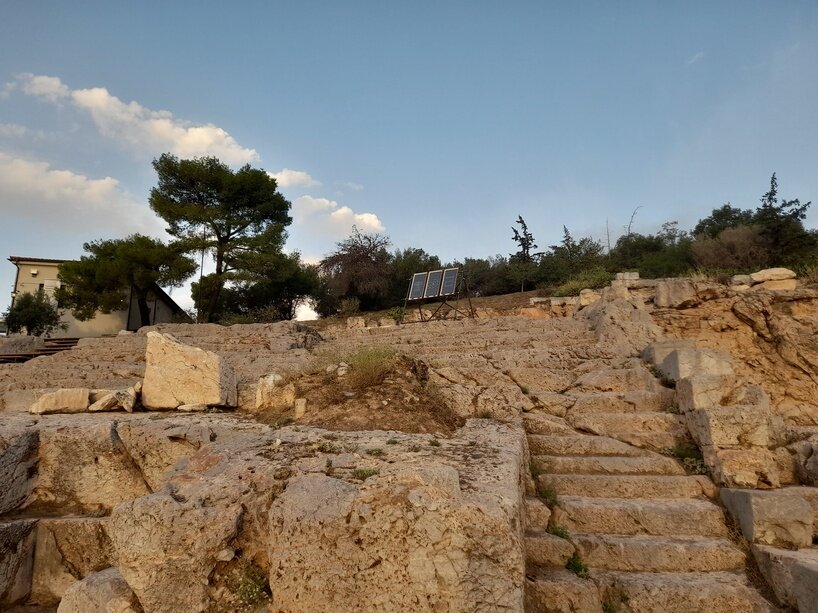
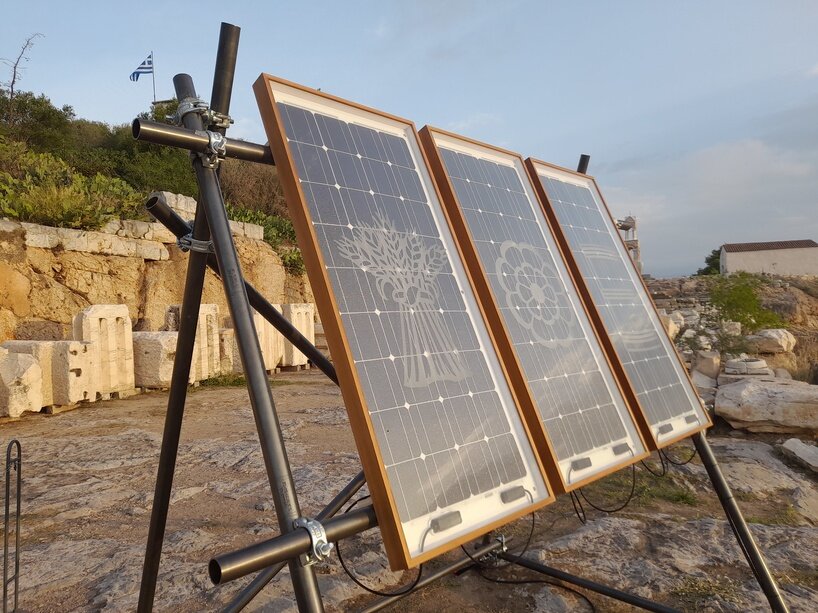
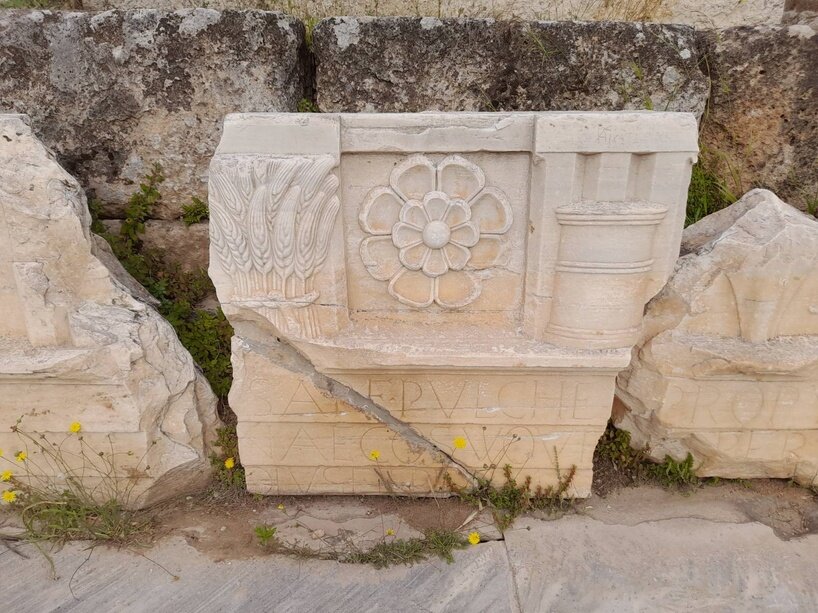
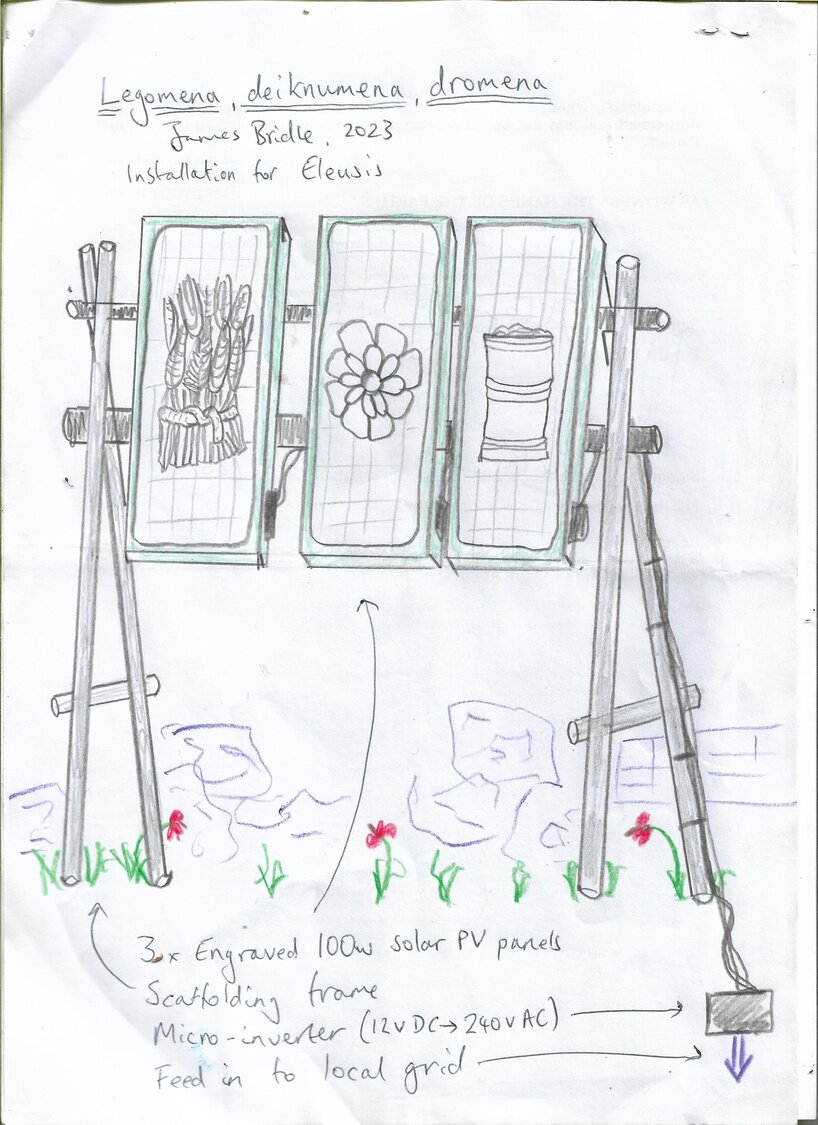
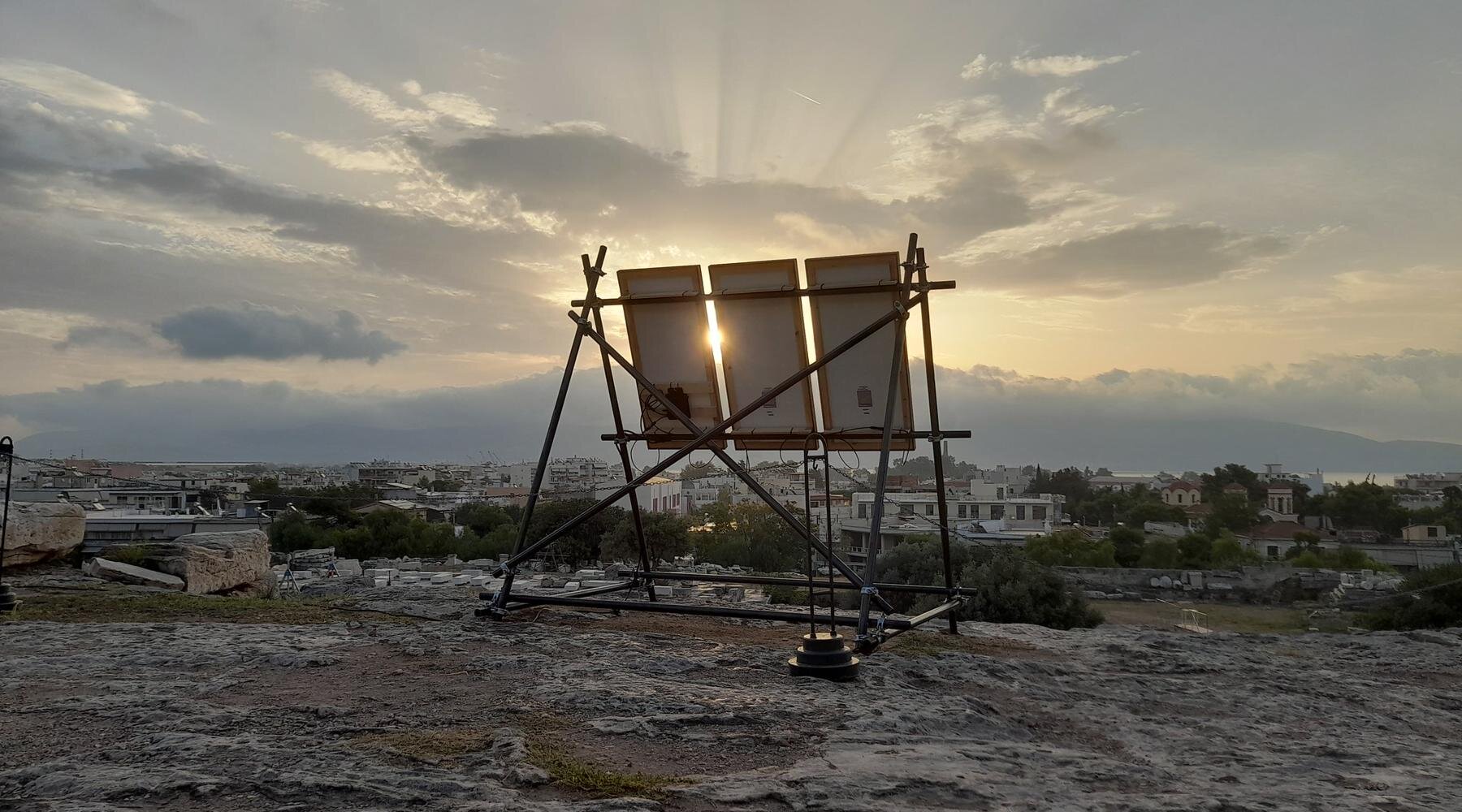
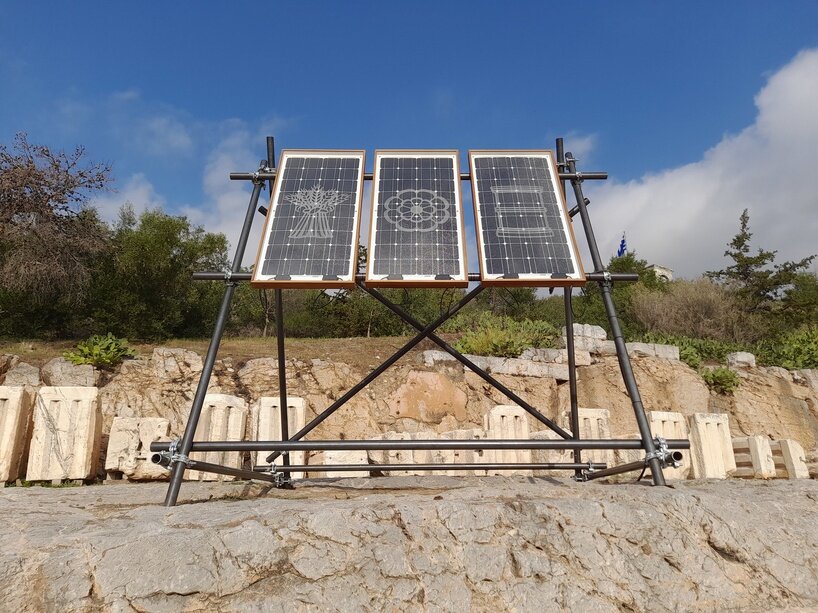
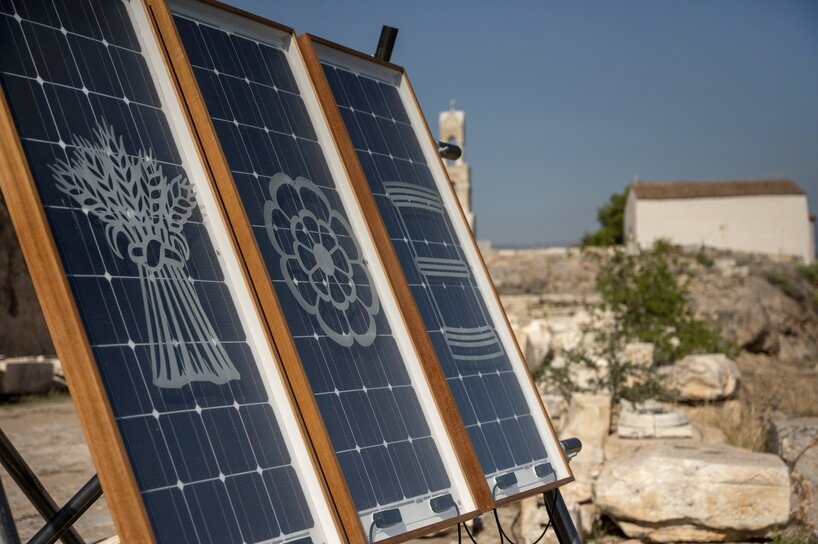
In 2023, Bridle expanded on the concept in Things Said, Things Seen, and Things Done, an installation on the archaeological site of Elefsina in Greece, Mystery 19 Visual Arts Initiator III – But Don’t Tell Anyone, just north of Athens. Instead of radiolaria, the images engraved on three 100W solar photovoltaic panels are ‘the wheatsheaf, the poppy, and the calathus,’ which ‘honor the ancient cult of Demeter, and the veneration of the living Earth which she represents.’ Here, the comparison of contemporary power generation with beliefs in ancient deities asks us to question the ways in which energy is created, used, and distributed. Bridle used solar panels to power other works in the installation and the site itself, going on to remark that ‘The technology to do these things, is available to us, and the knowledge of how to do them is not a mystery, nor a secret, but it might require new rituals, and new initiations, to distribute it more widely. This is one of those rituals.’
Bridle’s art for the posthuman utopias
Ultimately, James Bridle’s solar panel creations reflect a broader vision of posthuman utopias that runs throughout their artistic practice: one in which technology, humanity, and the natural world exist in a more reciprocal relationship. By bringing together ancient natural intelligence and contemporary technologies, Bridle challenges human exceptionalism and conventional ideas of progress. Their work encourages us to look beyond ourselves for models of innovation, recognizing that the natural world already holds sophisticated forms of knowledge. In doing so, they invite us to imagine futures founded on ecological interdependence, collaboration, and coexistence.
project info:
artist: James Bridle
works: Solar Panels (Radiolaria Series), 2022 & Things Said, Things Seen, and Things Done, 2023
This article is part of designboom’s POSTHUMAN UTOPIAS chapter, exploring what happens when humans are no longer the measure of all things. These stories rethink our relationship with the planet through interspecies architecture, living materials, regenerative landscapes and emerging technologies – learn more here! The chapter is presented in partnership with INDX|GLOBAL – a global cultural platform placing Indian architecture, design, and creative intelligence in conversation with the world.
Each designboom editorial series explores one theme in depth through projects, interviews, features and news across architecture, design, art and technology. Discover more chapters here, and get in touch if you’d like to submit a story through our submissions portal or contact form.
shop
your own online design shop — no sales commission collected