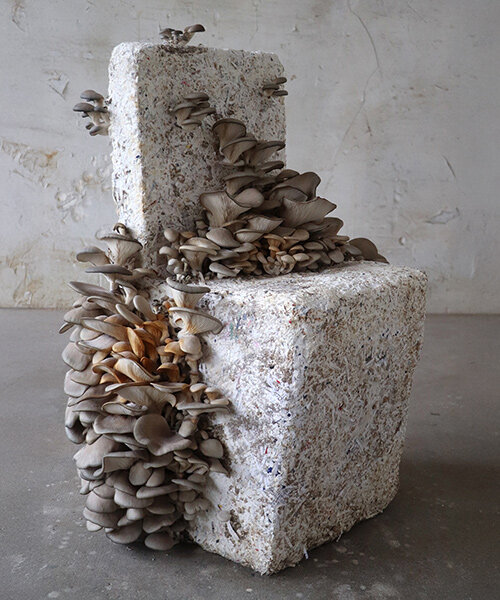
‘the material itself has agency’: aléa work grows chairs underground with fungi
speaking with designboom, aléa work talks growing furniture in soil, transforming textiles with fungi, and designing with living organisms.
prefer designboom on google[FEATURED]
aléa work’s design processes emerge from accidents
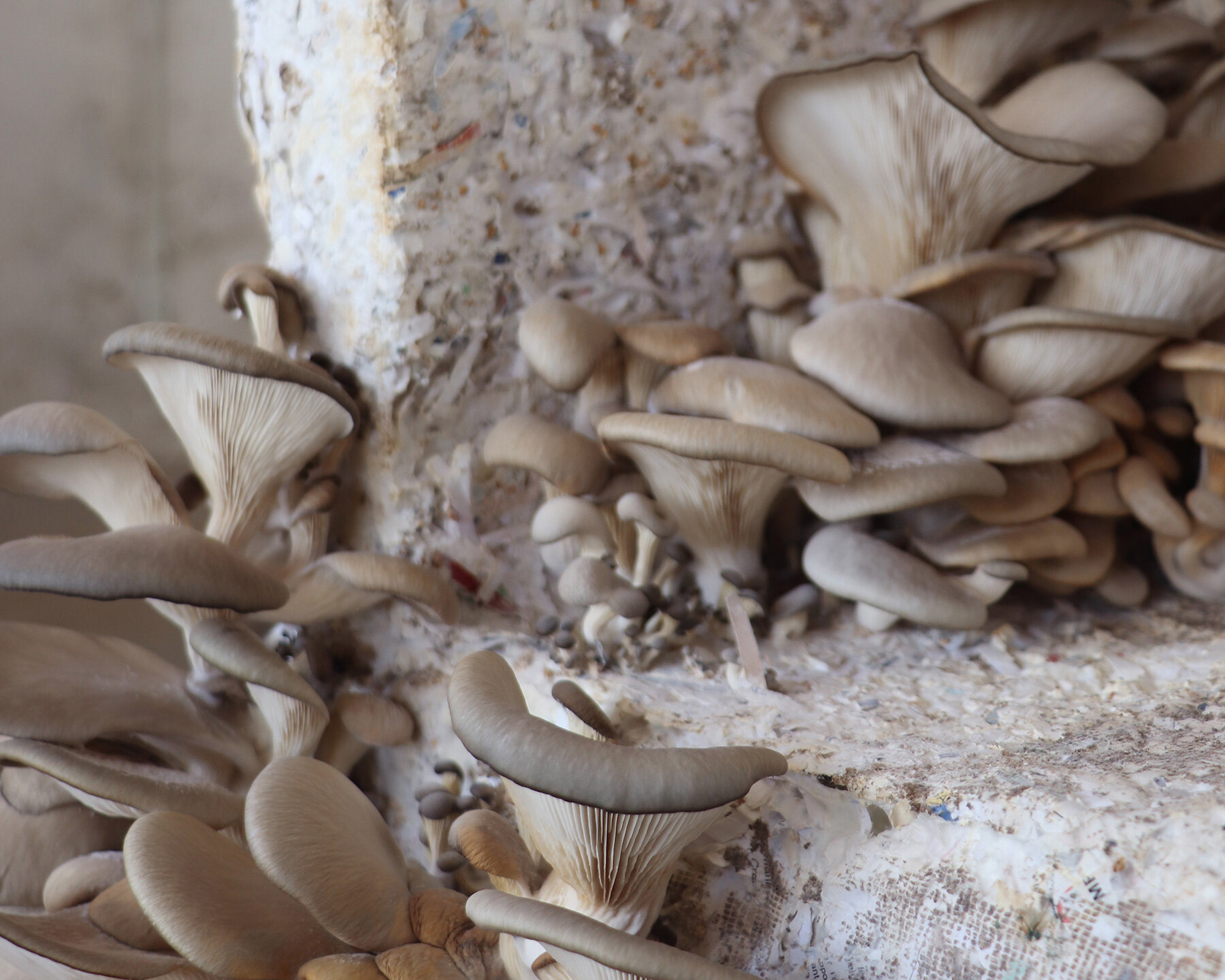
Paris-based design studio Aléa Work is growing chairs underground and using fungi to remove color from textiles, exploring what happens when living organisms become active participants in the design process. Founded by Miriam Josi and Stella Lee Prowse in 2021, the studio works with mycelium, the network of fungal filaments typically found beneath the soil, to develop objects and material processes shaped by growth and decomposition.
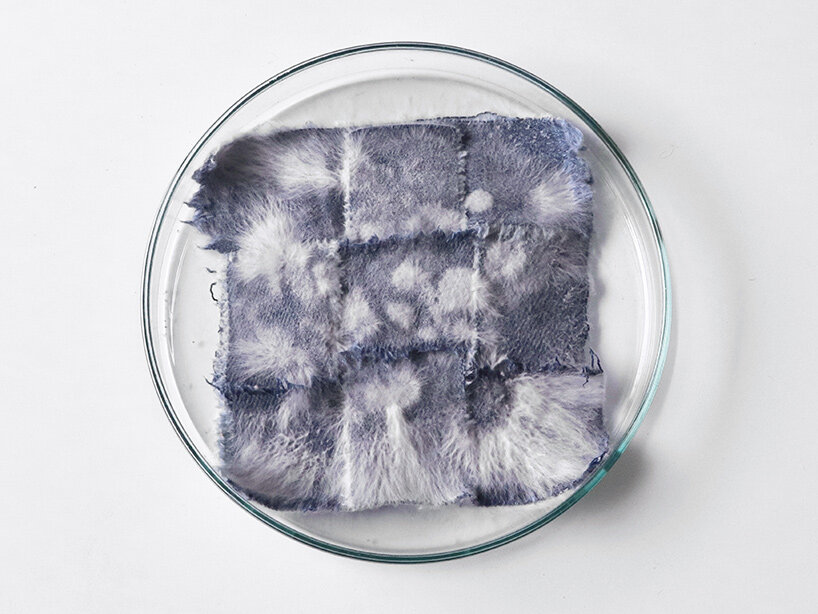
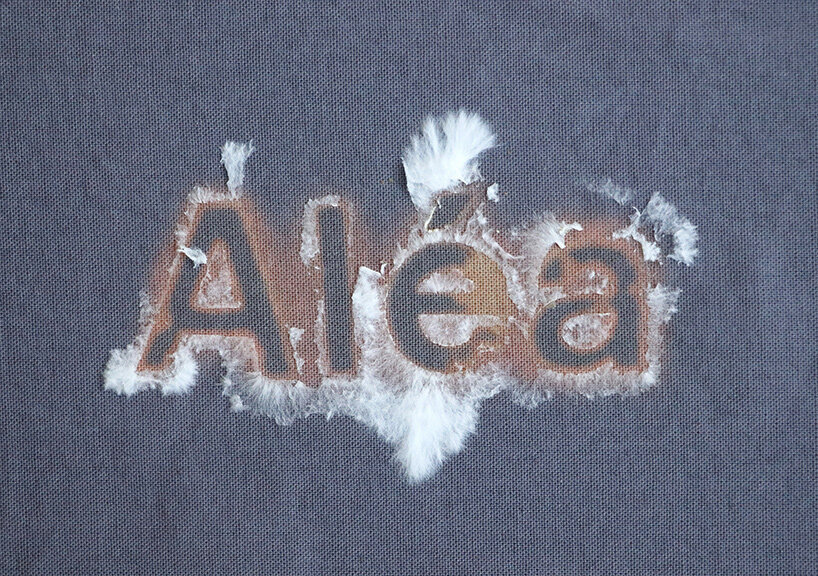
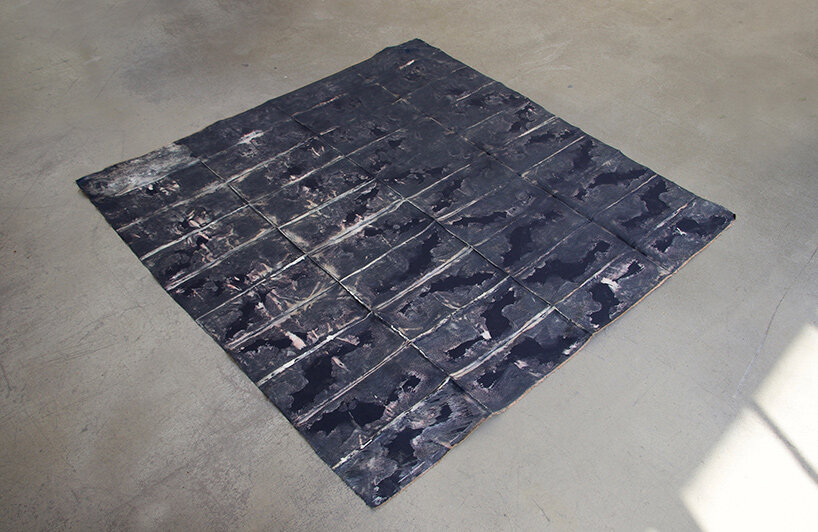
Some of their most interesting discoveries have happened by accident. In a recent experiment, the designers left fungi growing on dyed fabric for longer than intended. When they returned, they found that the organisms had begun removing the color to leave unexpected patterns across the textile.
‘Our processes often emerge from accidents,‘ the team tells designboom. ‘This actually came from an experiment we forgot about and left for too long. When we uncovered it, we noticed the fungi had begun to decolourise the fabric.‘
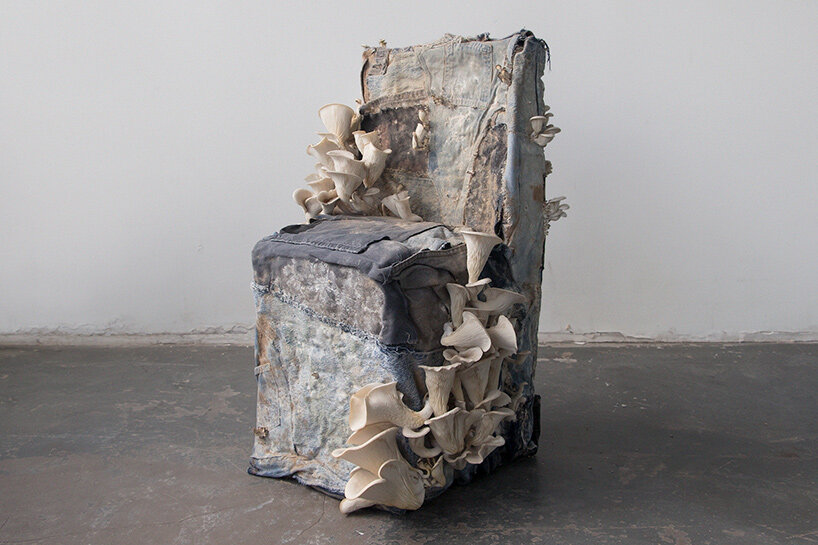
fungi become textile designers
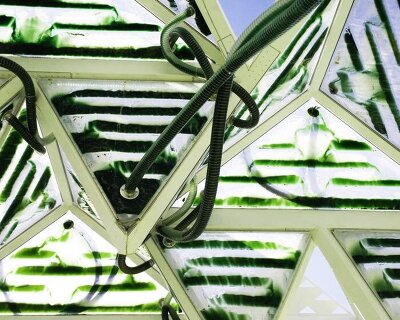
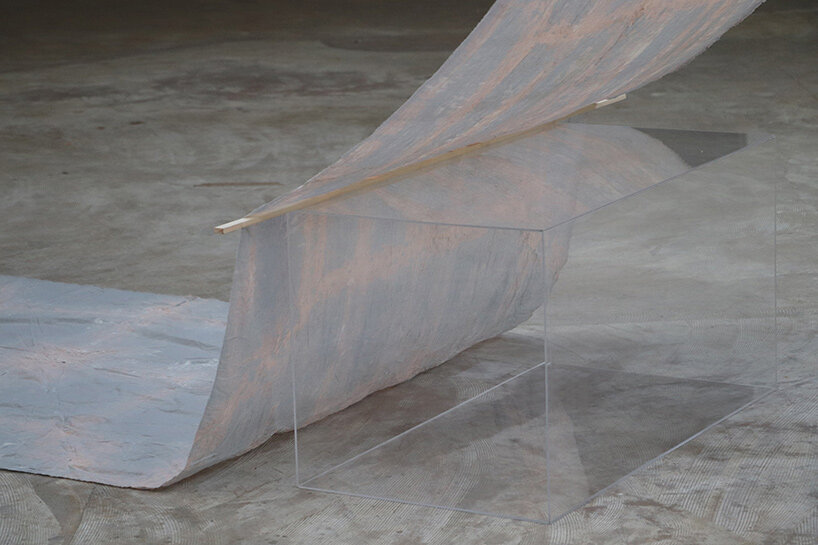
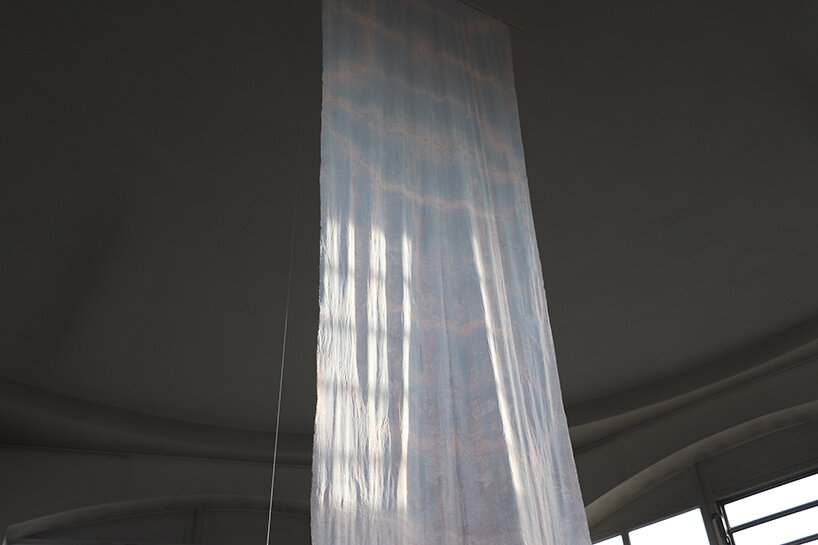
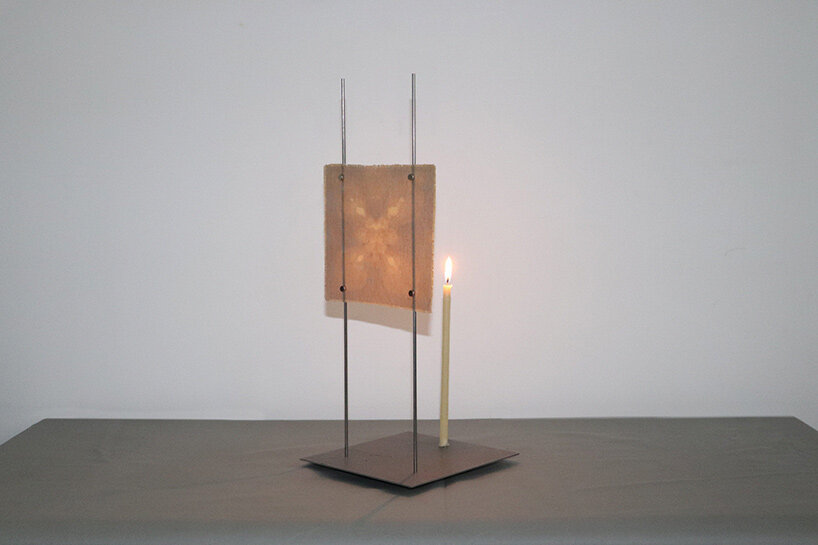
The discovery developed into Mycelial Patterns, an ongoing research project in which Aléa Work explores how fungi can selectively break down textile dyes. The resulting pieces feature irregular markings, with areas of faded color tracing the activity of the organisms across the fabric.
‘This discovery led us to ask how we could begin to guide the process intentionally,‘ Josi and Prowse explain. They describe Mycelial Patterns as ‘a kind of a negotiation between us and the fungi.‘
The experiment speaks to the thinking behind the studio’s name. Aléa refers to hazard or the unforeseen, those elements of a process that escape prediction or control. For the designers, allowing room for such uncertainty has become an essential part of working with biological materials.
from kitchen experiments to chairs grown in soil
Josi and Prowse met while studying Nature-Inspired Design at ENSCI-Les Ateliers in Paris. Their shared interest in the living world led them to begin experimenting with mycelium, initially with very little equipment.
‘One of the things that first attracted us to mycelium was the accessibility of the process,‘ they recall. ‘You need very basic equipment, so no heavy tooling or machinery. We started working with it from home, in our kitchens.‘
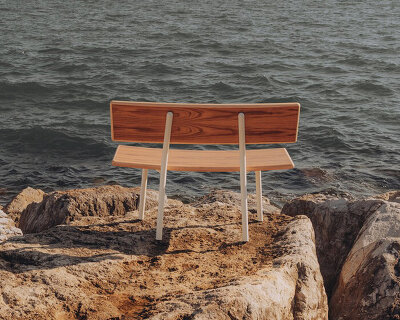
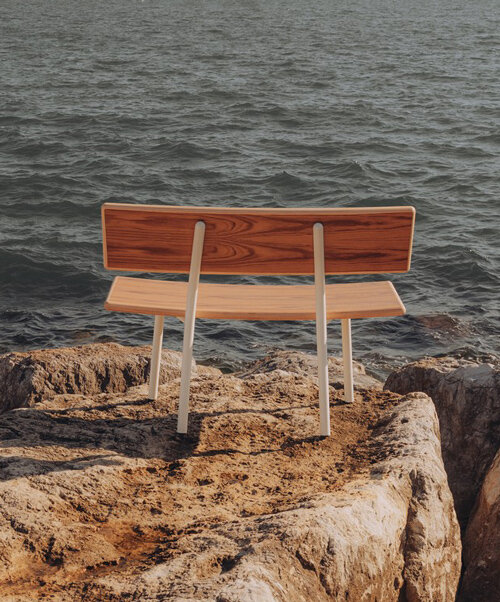
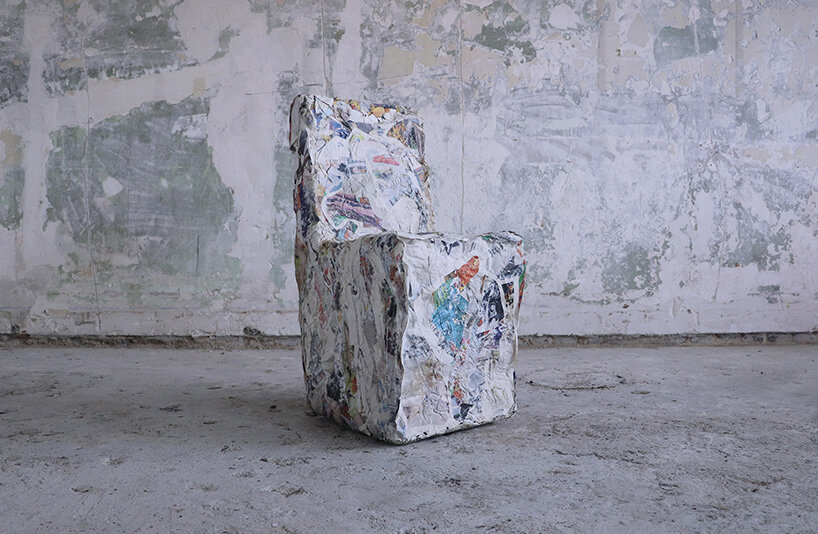
Their early research eventually took them outdoors. With Back to Dirt, the designers began growing objects directly in soil, moving myco-fabrication beyond the controlled conditions of a conventional laboratory. Among the results are their Dirty Chairs, experimental furniture pieces that bring together fungal growth and discarded materials. The research received support through FAIRE Paris, a program by the Pavillon de l’Arsenal, helping the young studio establish its practice.
‘Boisbuchet is where we grew our first chair in the ground and really, where Aléa began,‘ they explain, referring to Domaine de Boisbuchet, the rural design and research center in France where they would later establish The Garden Lab.

alternative furniture materials
Their interest in fungi began to extend beyond the possibility of producing an alternative furniture material. They became particularly curious about the work mycelium already performs within ecosystems, from breaking down organic matter to participating in nutrient cycles.
‘We felt there was a disconnect between the way mycelium is used in design and the role it plays within ecosystems,‘ they say. ‘Its ability to break down organic matter, participate in nutrient cycles and help remediate pollutants opened up possibilities beyond simply growing a material.‘
The studio began asking a question that continues to inform its experiments: ‘What if, in the process of growing a chair, we could also help remediate the soil?’
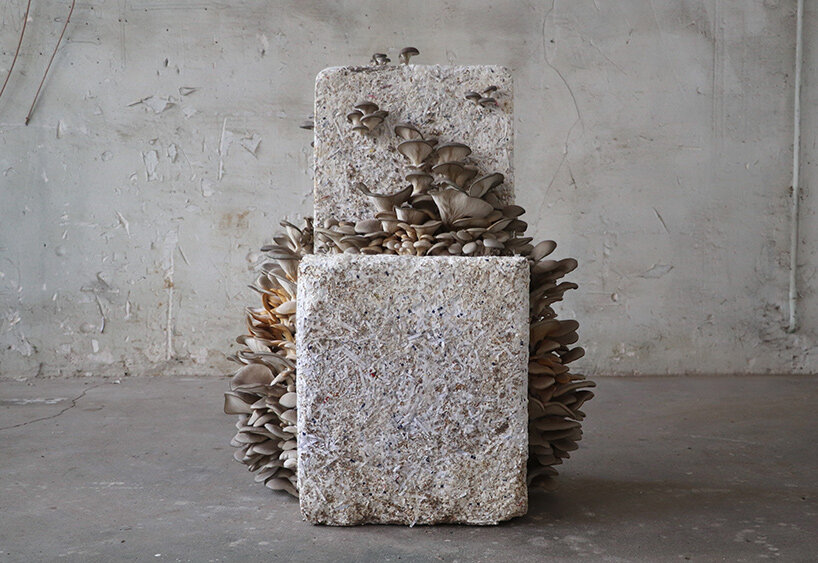
giving living materials a say in the design process
Working with organisms that grow and change on their own terms has gradually altered the designers’ understanding of authorship. They can establish the conditions for an experiment, but the organisms themselves influence what ultimately emerges.
‘With mycelium, there is another dimension to this, because we’re no longer the only ones shaping the outcome. The material itself has agency,‘ they tell designboom.
This way of working encourages a different relationship between the designer and the material. Instead of beginning with a predetermined form, Josi and Prowse often start with a process, and observe its behavior before deciding what kind of object might emerge.
‘We’ve always worked in an improvised, ad-hoc way, using found materials, working with what’s available and seeing where things go,‘ they explain. ‘There’s always been a kind of balance between intention and happenstance in the way we work, and this continued when we started working with living materials.‘
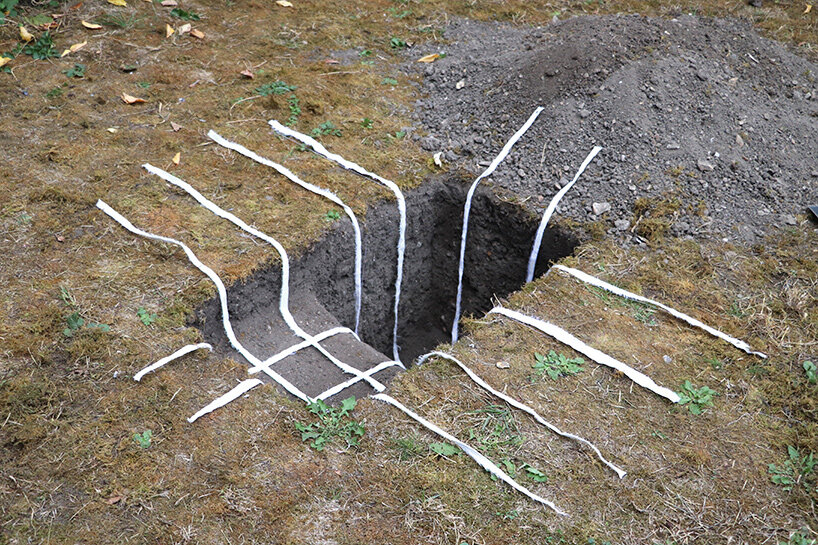
aléa work takes its research into the garden
In 2023, the studio launched The Garden Lab at Domaine de Boisbuchet, developing a longer-term research environment for working with living systems. The initiative brings designers into conversation with other disciplines, including environmental science and architecture, to investigate how materials might be grown and transformed in response to their surroundings.
‘The idea behind the Garden Lab is to bring together different disciplines and ways of understanding and working with living systems,‘ Josi and Prowse explain. ‘Focusing on mycelium has opened up so many opportunities for collaboration, bringing us into contact with people from different fields, from architects and farmers to scientists.‘
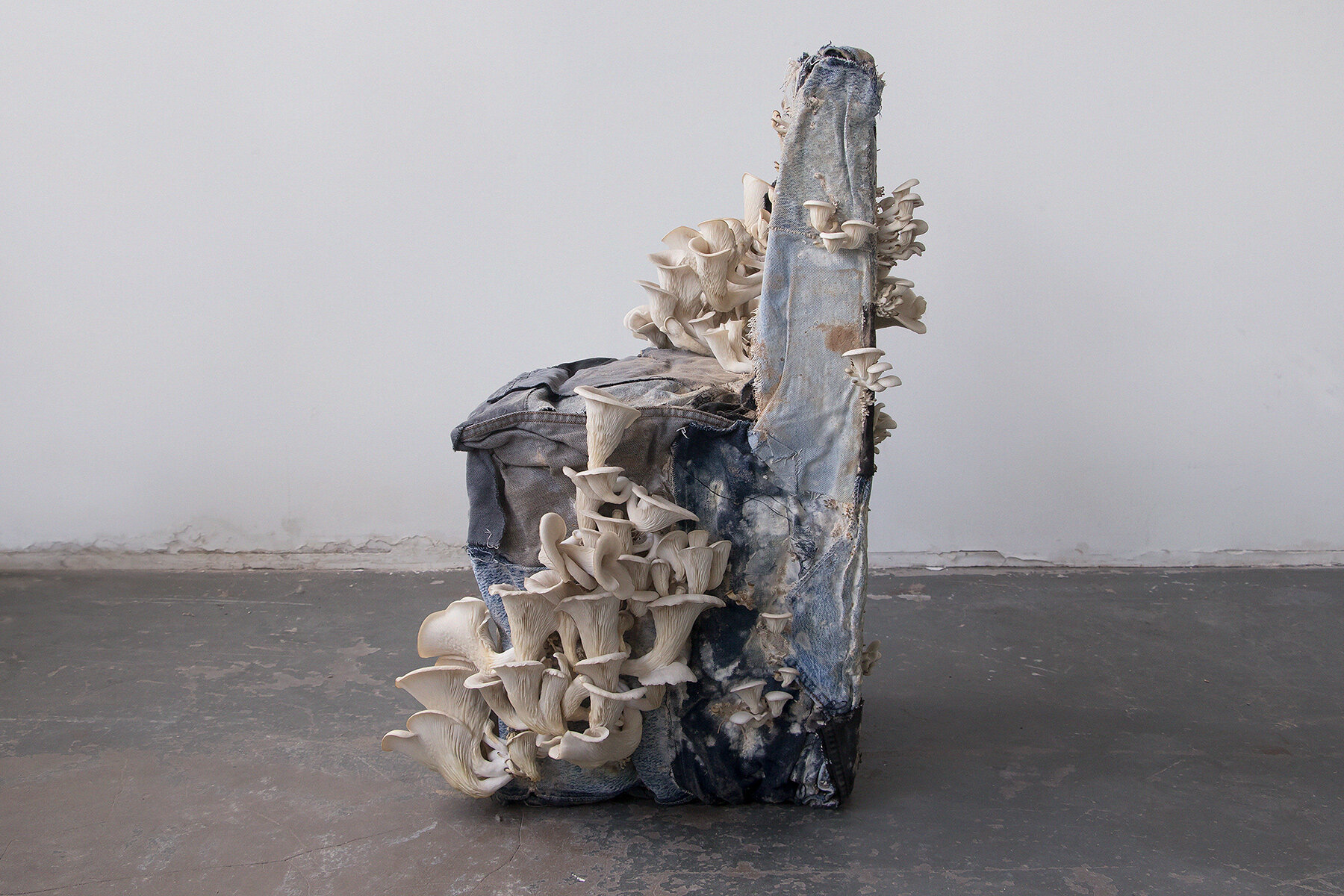
site-specific fabrication
Their research has included working with environmental scientist and mycologist Danielle Stevenson, the studio’s scientific advisor. Through such collaborations, they have found common ground in the processes of observation and experimentation, where making something often begins with understanding how an organism behaves.
The designers are especially interested in what happens when fabrication responds to a specific location. They imagine processes that draw on available resources and existing organisms, allowing local conditions to influence what gets made.
‘Rather than bringing materials into a place and imposing a standardised production process, the place itself becomes part of how something is made,‘ they go on. ‘It’s about rethinking not just what we make, but where, how and with whom we make it.‘
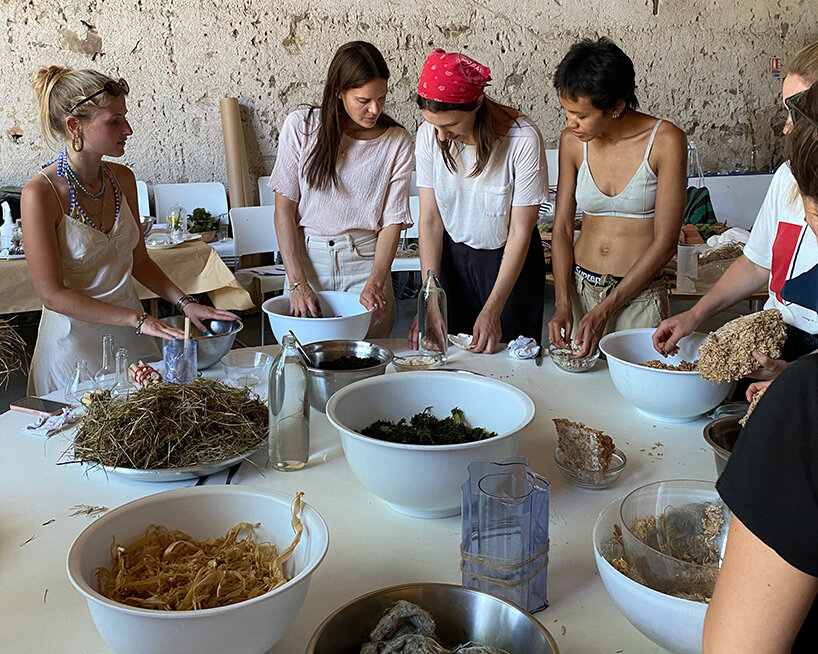
what happens when designed objects begin to decay?
Underlying Aléa Work’s experiments is a wider interest in the lifespan of materials. The studio considers decomposition a potentially productive stage of making, with processes of growth and degradation capable of generating new forms.
‘In design, permanence is often associated with value,‘ the designers observe. ‘We tend to consider durability, longevity and resistance to change as desirable qualities, while decomposition is often seen as a failure or an endpoint.‘
Their approach encourages a reassessment of those expectations, particularly as designers explore the possibilities of biological fabrication. The studio acknowledges that mycelium-based materials still require extensive testing and development before broader applications become feasible.
‘We’re conscious that bio-based design isn’t automatically sustainable, and that working with living organisms isn’t necessarily better in every context,‘ they explain.
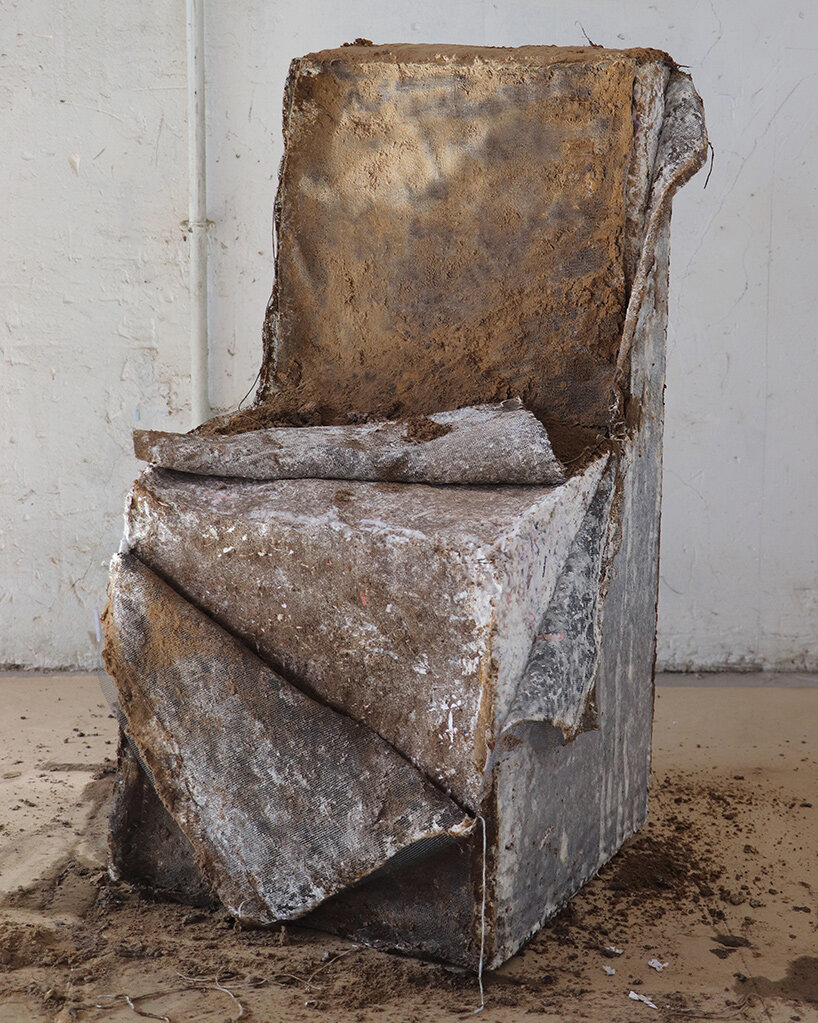
an upcoming collaboration
The studio’s research continues to expand, including an upcoming collaboration with Milan-based music studio Hidden Mountain, which brings its interest in biological transformation into conversation with experimental sound.
For Josi and Prowse, the wider ambition remains connected to the questions that first led them to grow objects with fungi. ‘For us, the challenge isn’t simply to replace conventional materials, but to rethink our relationship with the living world.’
1/6
project info:
studio: Aléa Work | @alea_work
founders: Miriam Josi, Stella Lee Prowse
founded: 2021
location: Paris, France
featured projects: Back to Dirt, Mycelial Patterns, The Garden Lab
This article is part of designboom’s POSTHUMAN UTOPIAS chapter, exploring what happens when humans are no longer the measure of all things. These stories rethink our relationship with the planet through interspecies architecture, living materials, regenerative landscapes and emerging technologies – learn more here! The chapter is presented in partnership with INDX|GLOBAL – a global cultural platform placing Indian architecture, design, and creative intelligence in conversation with the world.
Each designboom editorial series explores one theme in depth through projects, interviews, features and news across architecture, design, art and technology. Discover more chapters here, and get in touch if you’d like to submit a story through our submissions portal or contact form.
shop
your own online design shop — no sales commission collected