when bees and humans make art together
from encaustic painting to interspecies sculpture, ava roth's work draws on bees, natural materials and the possibilities of collaborative making
prefer designboom on google[FEATURED]
Ava Roth and the art of Kintsu-Bee
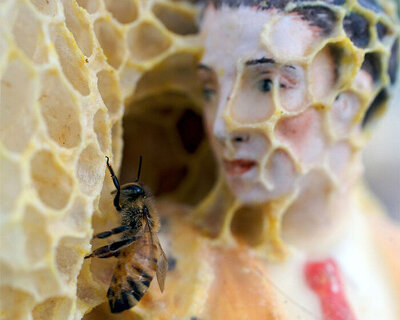
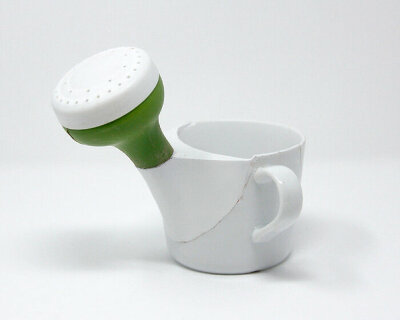
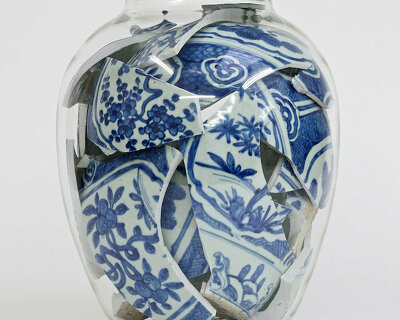
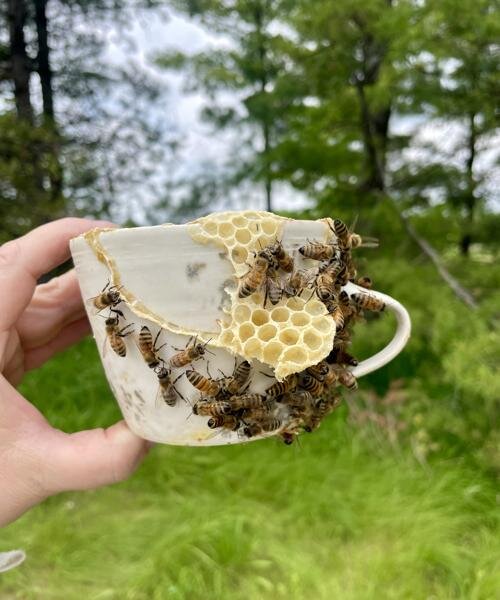
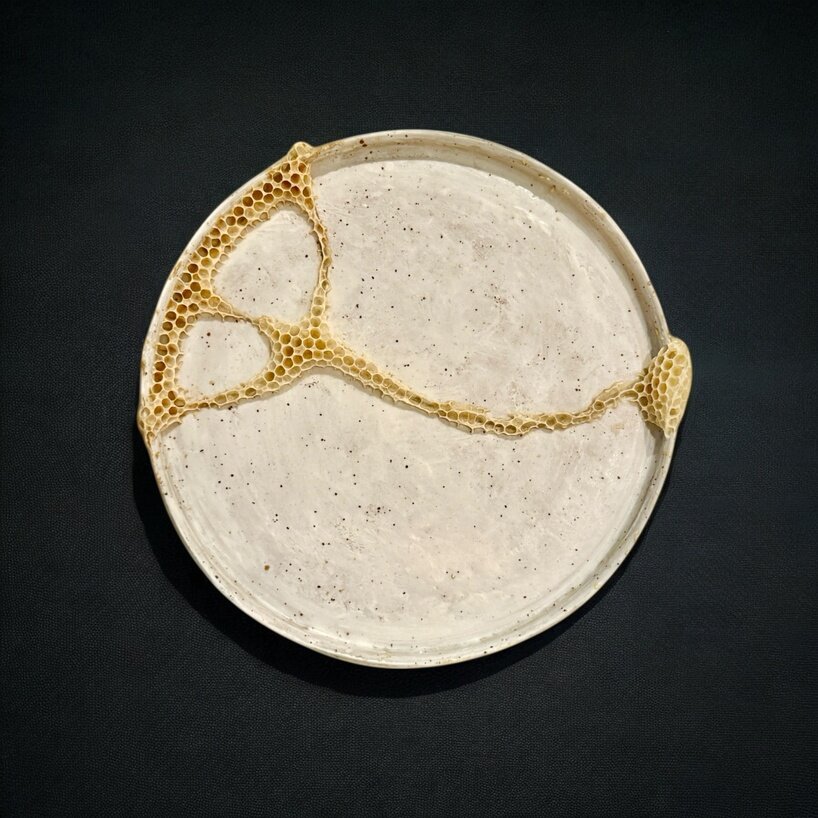
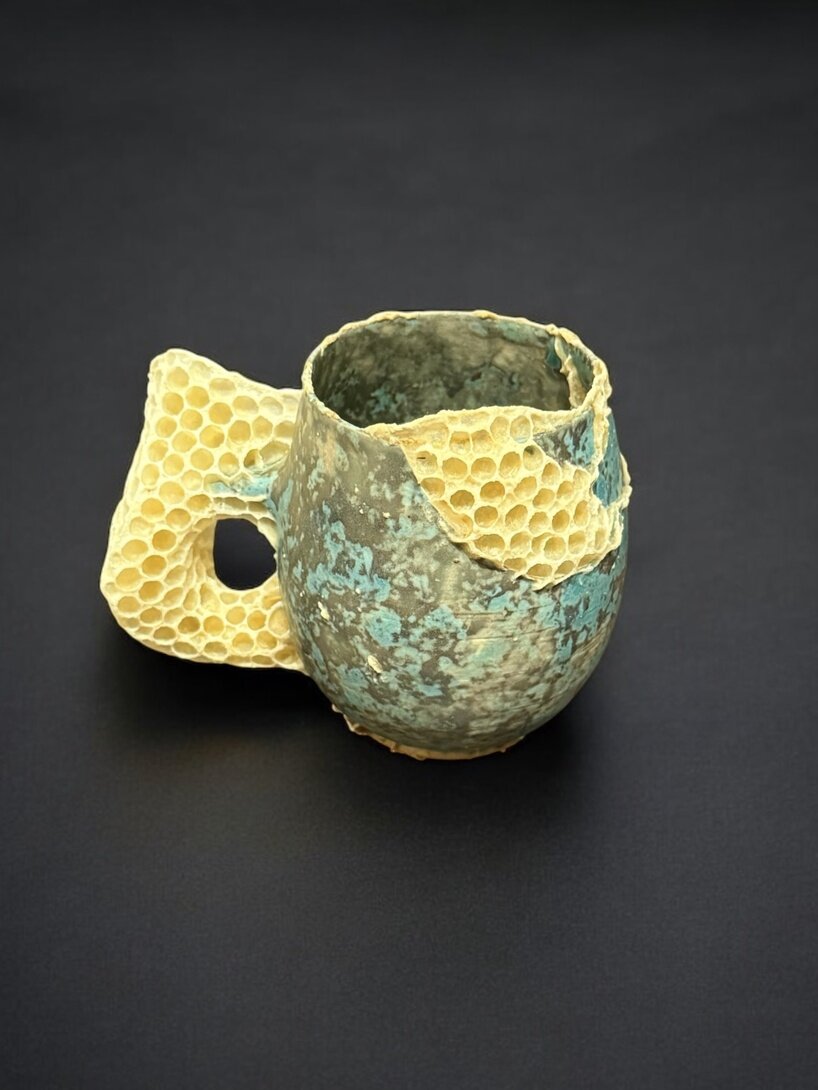
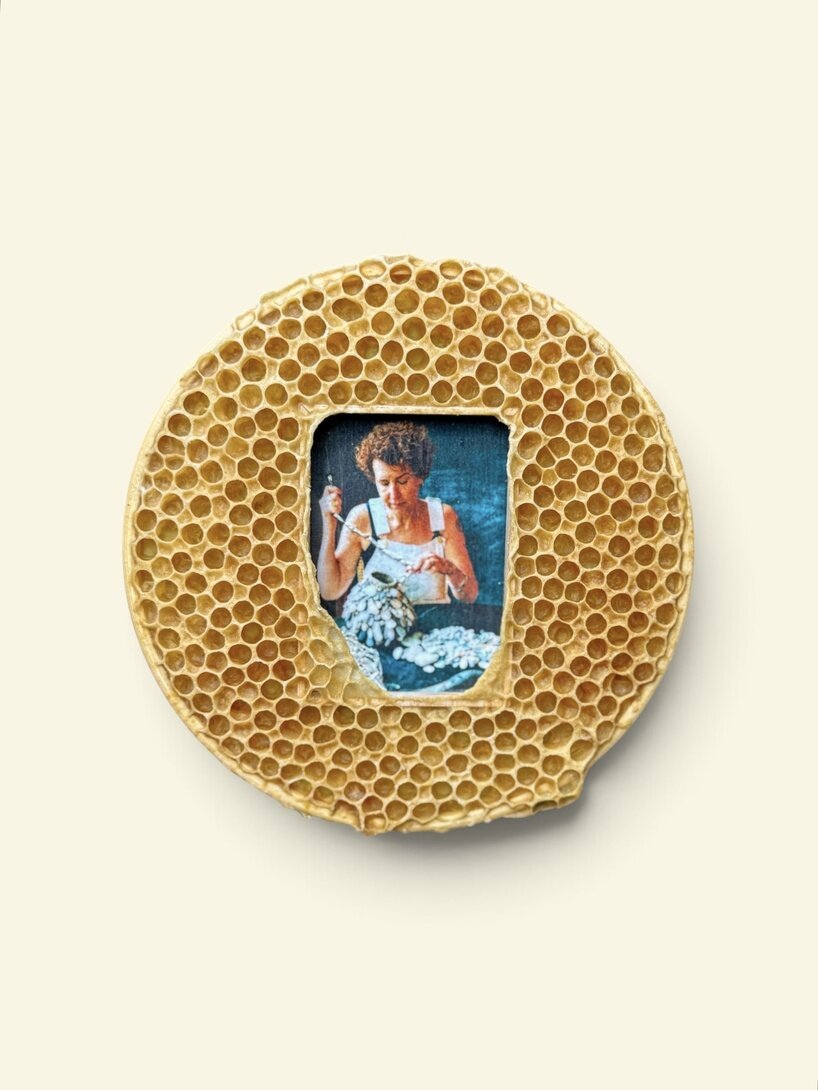
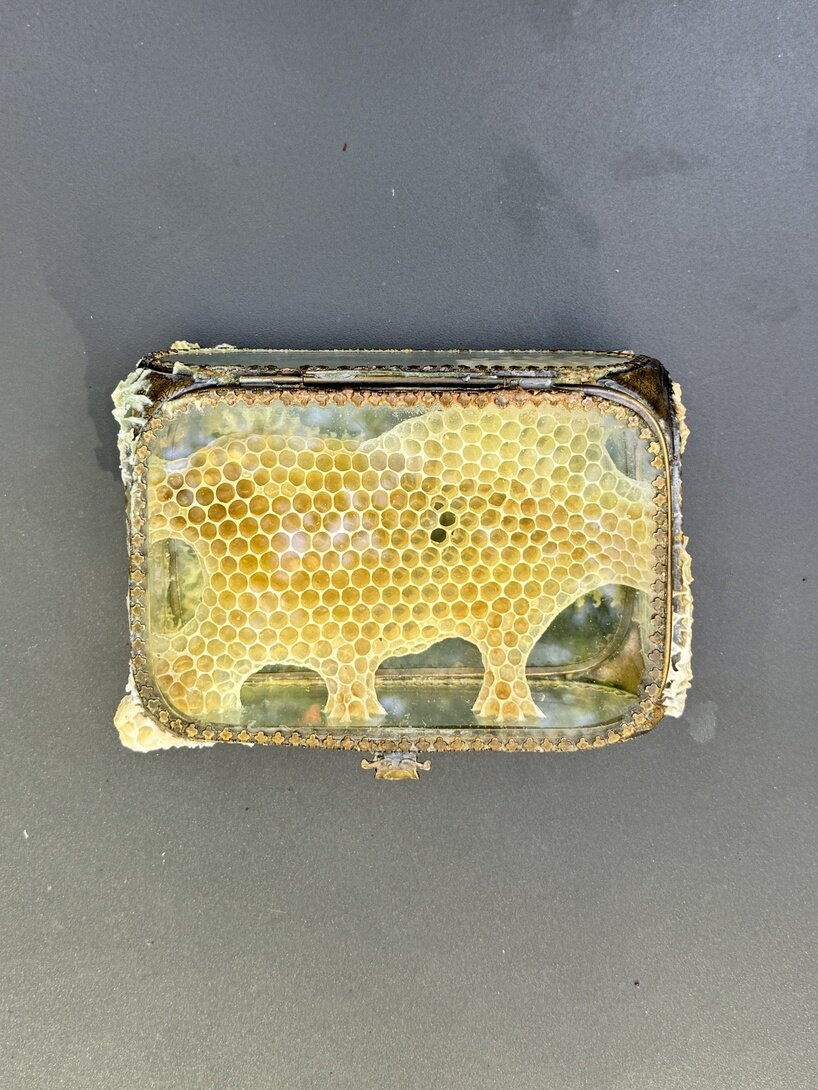
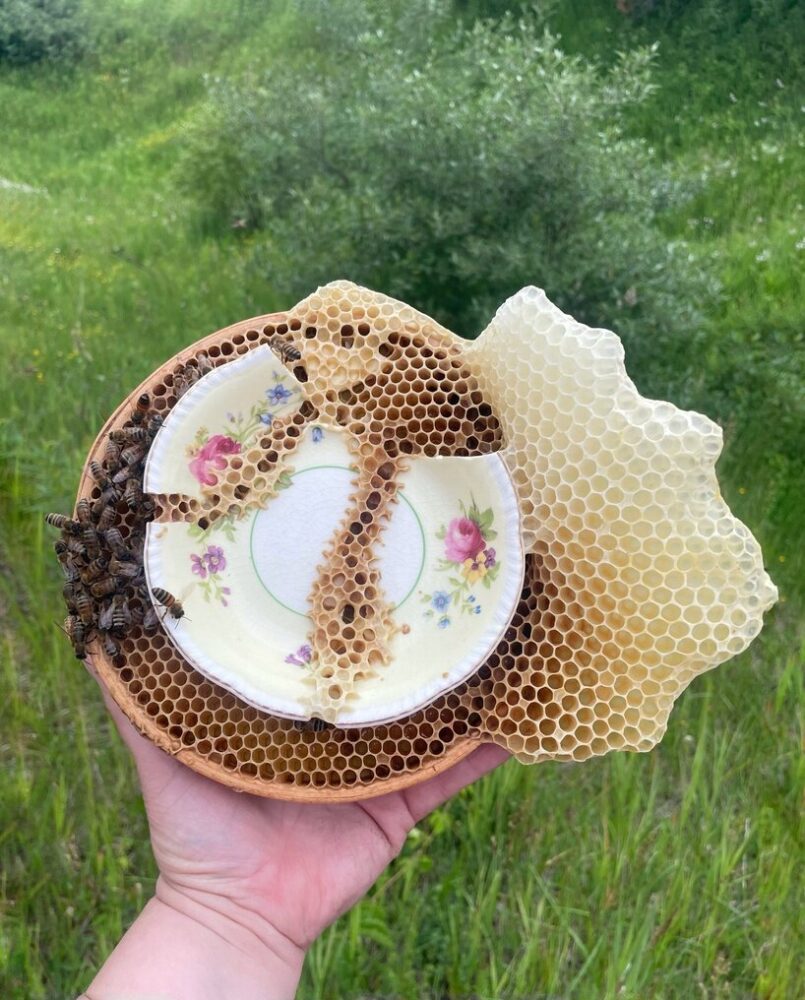
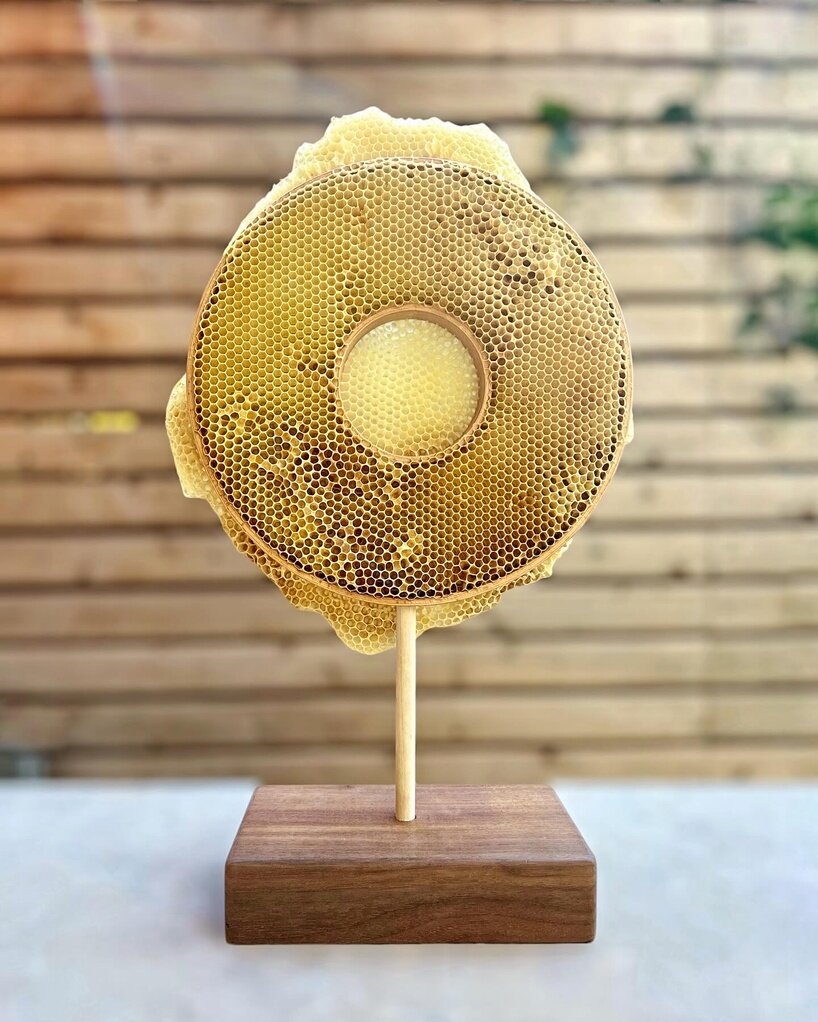
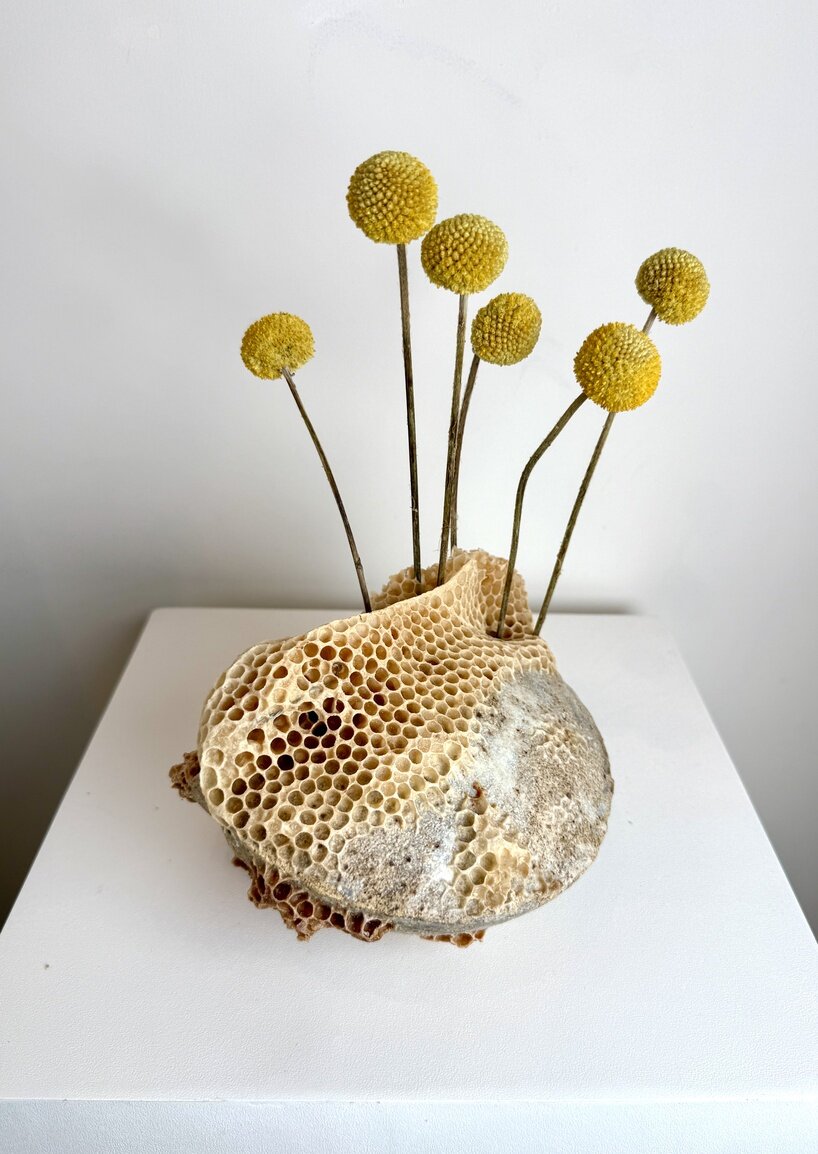
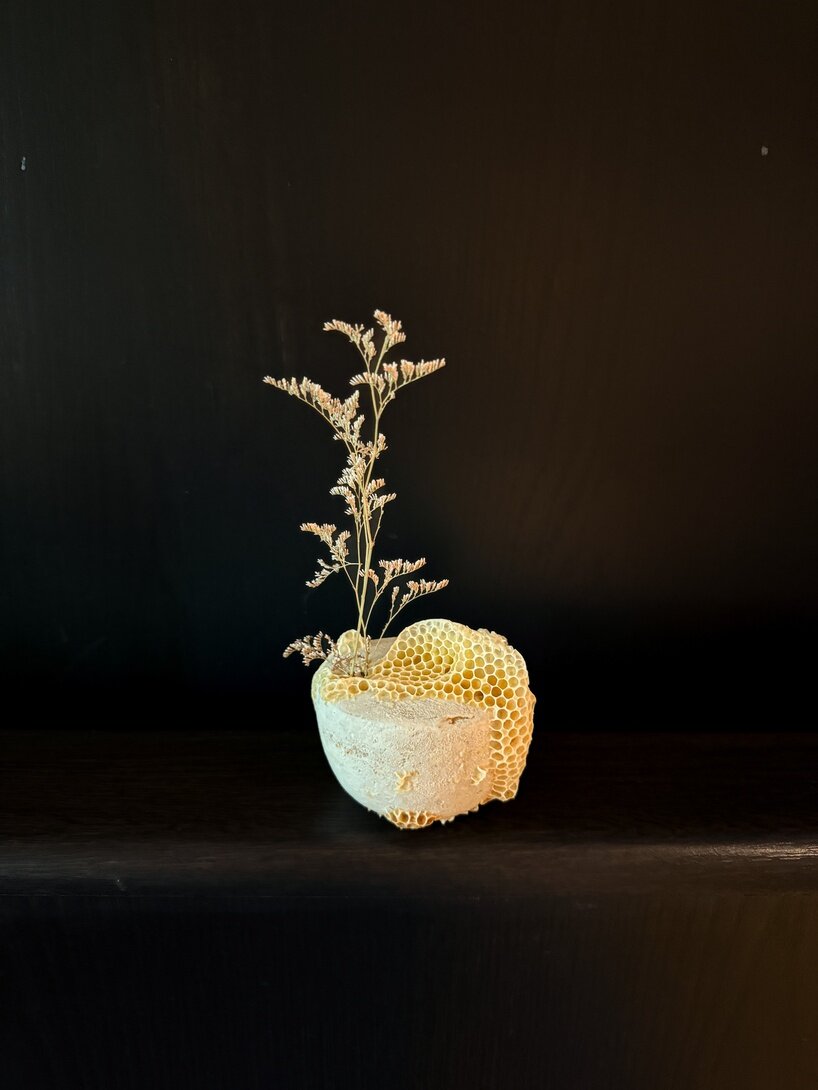
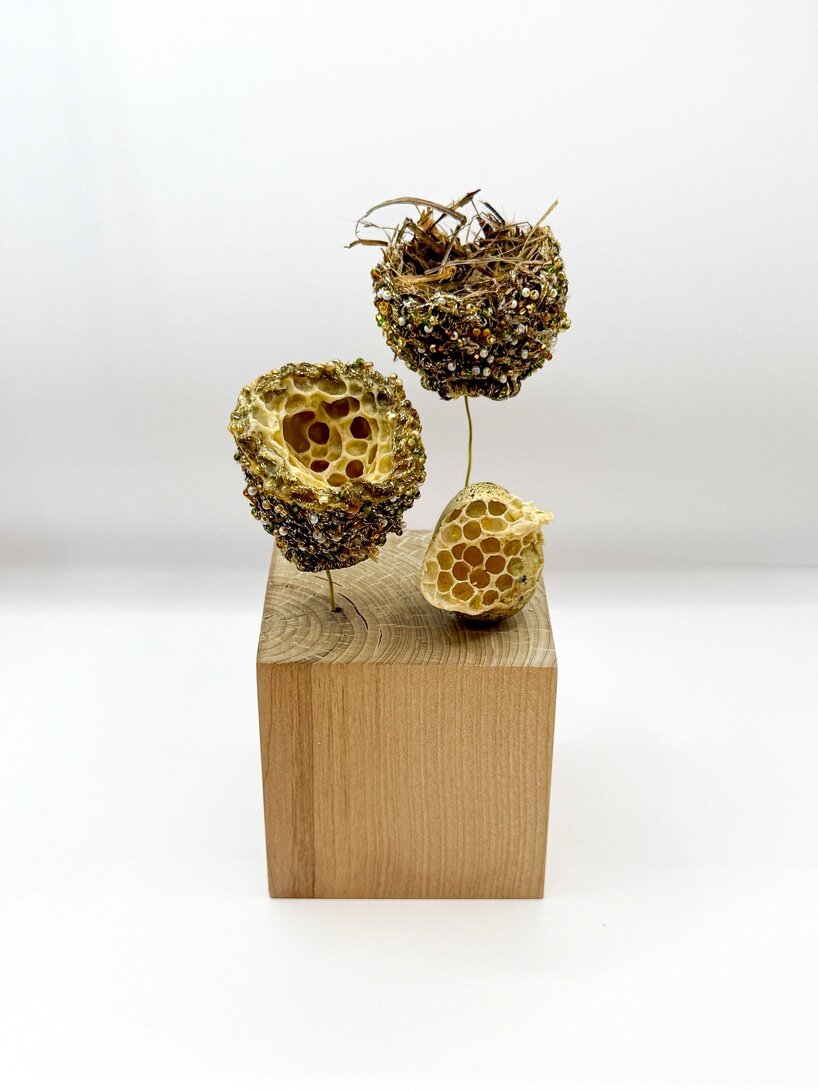
One of Ava Roth’s most valuable collaborators is not human. In fact, it’s the bees. In her series, Kintsu-Bee, she places broken ceramics into a hive of bees who, through the formation of honeycombs, create a new bond between the cracked pieces. The method is named after the Japanese repair method, kintsugi, which uses lacquer and gold leaf to create a shining new seam in broken dishware, turning what was once considered waste into a valuable new form. From this, Roth’s work expands beyond cups and plates. She has experimented with frames, textiles, and even embroidery hoops to create structures in collaboration with the planet’s busiest insects. In this extraordinary interspecies project, the Canadian artist and artisan creates a powerful meditation on the power of the natural world, craft, and more-than-human intelligence. Her work has gone on to be recognized by Homo Faber and has been exhibited internationally, including in Canada, where she’s from.
In conversation with designboom, artist Ava Roth shares what brought her to the hives, her multimedia works, and her relationship with the bees. She says of her process, ‘I am committed to sharing the labor equally, meaning that in each piece I try to give as much of my own time and effort as I am hoping the bees will offer.’
Busy bees and interspecies art
Famed American poet Emily Dickinson wrote in To make a prairie (1779), one of her poems about bees, ‘To make a prairie it takes a clover and one bee,/ One clover, and a bee./ And revery.’ In this musing on the creation of plains, the wonder bees can inspire comes to life. From their essential role as a pollinator species to their intricate hexagonal combs and the sweet honey they produce, bees are not only invaluable to the functions of the natural world, but the complex worlds they create in their hives continue to inspire artists.
Seeing their value as a keystone species, one that’s critical to the greater functioning of their environment, has inspired many artists like Roth. For example, Pierre Huyghe’s Untilled (Liegender Frauenakt) [Reclining Female Nude] (2012) features an actively maintained beehive atop a human body and is held in the collections of MoMA in New York. In this sculpture, the artist comments on the collective thinking capacity of bees. There’s also the work of Pollinator Pathmaker by Alexandra Daisy Ginsberg, which seeks to bring pollinating species back to specified regions through an algorithmically generated plot of pollinator-optimized plants. These works, just a few in a world of bee-forward art, show how the insects have inspired creatives both with their incredible intelligence and their importance to the cycles of the environment.
Roth and Beeswax
One form of art particularly linked to the legacy of bees is encaustic painting. Using a mixture of melted, pigmented beeswax and resin, an artist can build pigmented layers similar to those of an oil painter. ‘I was working with encaustic as my primary media,’ Roth says of the technique. Some of these works incorporate the golden ginkgo leaf and embroidery floss, while others feature horsehair and photographs of expansive bodies of water. ‘Being immersed in wax naturally led to a curiosity about bees. And the more I learned about bees, the more that knowledge began to inform my work, which in turn led me to take a beekeeping course. During this period of learning, I found myself incorporating pieces of burr comb into my work and building encaustic paintings inside hive frames.’
Arriving at a collaboration with the bees
After working with encaustics, Roth notes that her next big leap was training with Master Beekeeper Mylee Nordin. On this experience, she notes, ‘Her expertise and oversight provided me with the confidence to keep an apiary in my backyard. At that point, the final move to putting my work directly into hives was almost inevitable!’ She points out that this body of work wasn’t the intention. It was more, what she calls, ‘a process of playful experimentation born out of genuine curiosity and deep respect,’ for her insect collaborators.
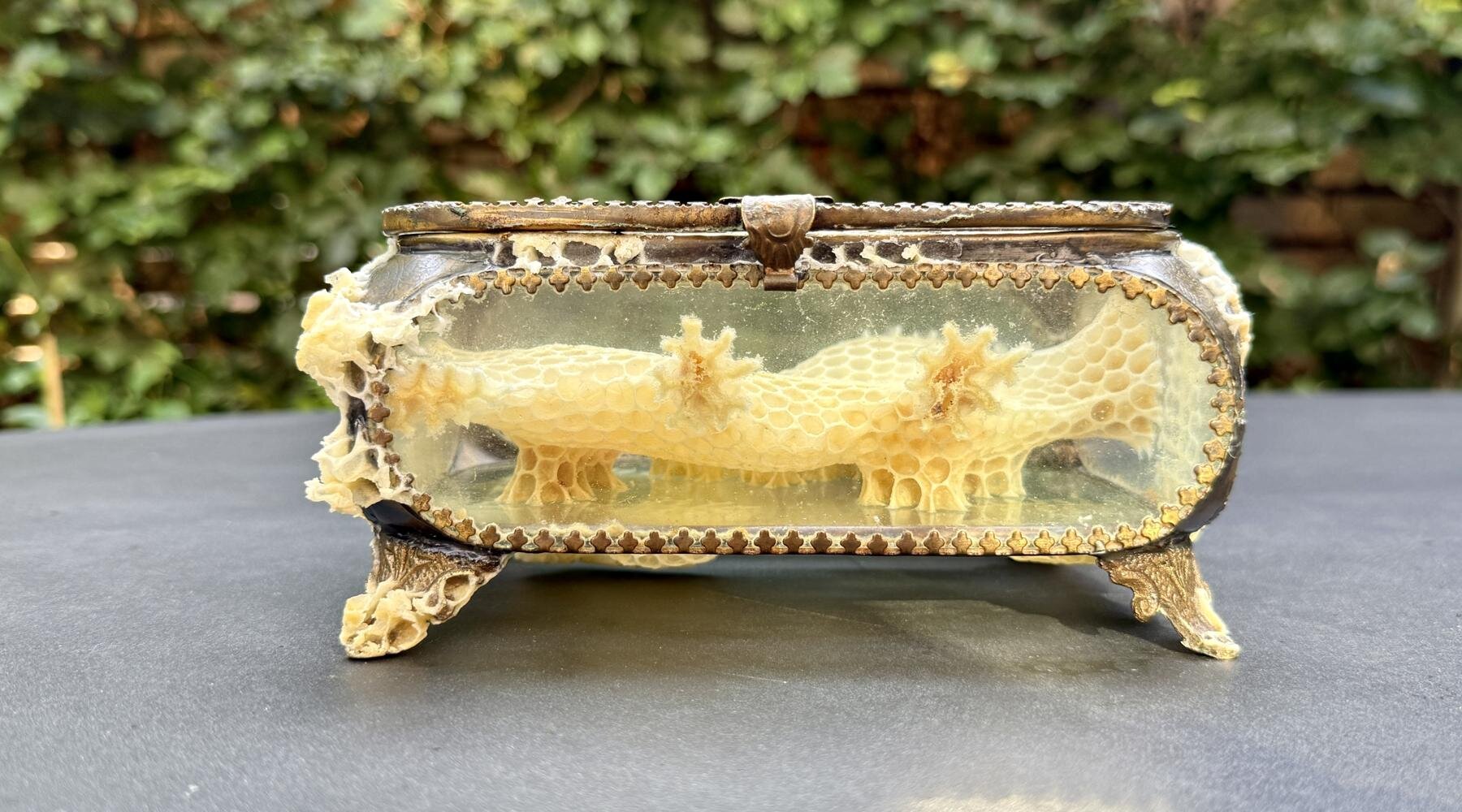
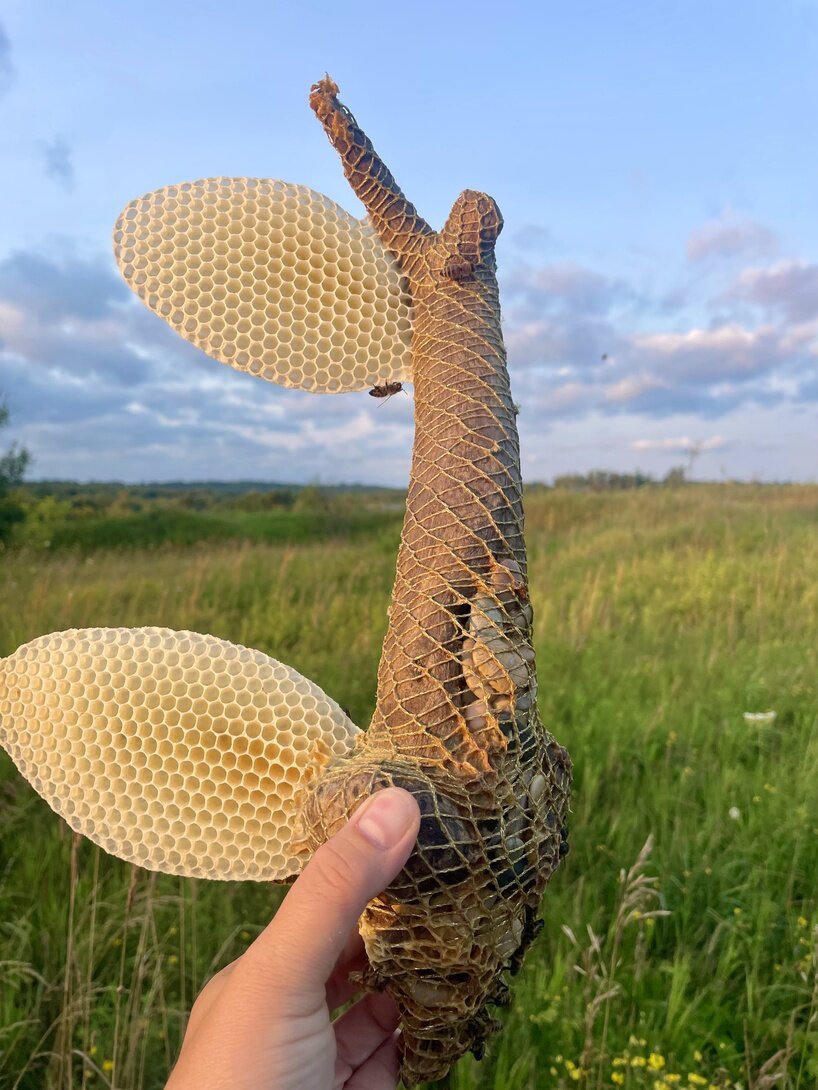
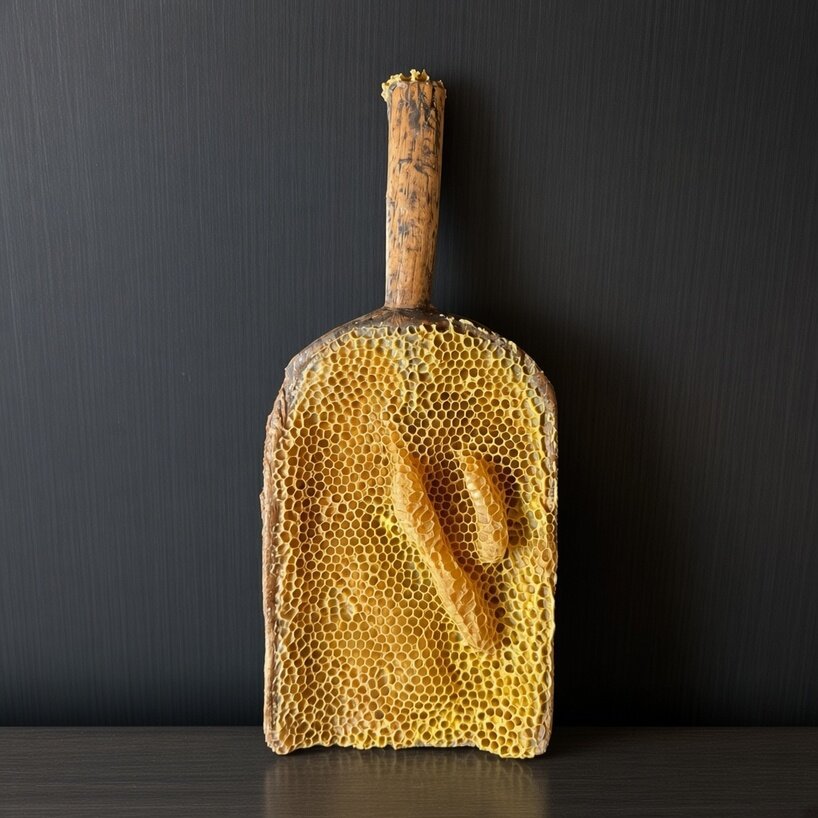
As a multimedia artist, much like in her work with encaustics, Roth’s bee sculptures start with an arrangement of embroidery, paintings, photographs, and other materials. When creating these structures, she works with space in mind for the honeycombs and other alterations that will eventually occur once they’re placed in the hive. ‘Control is also something I try hard to share equally,’ she says of the collaborative nature of her work. ‘Importantly, I don’t force the bees to engage with the art in any way. In other words, whether or not the bees build their comb on any given piece, let alone how much and in what shapes, is left entirely to them.’
More-than-human creativity abounds
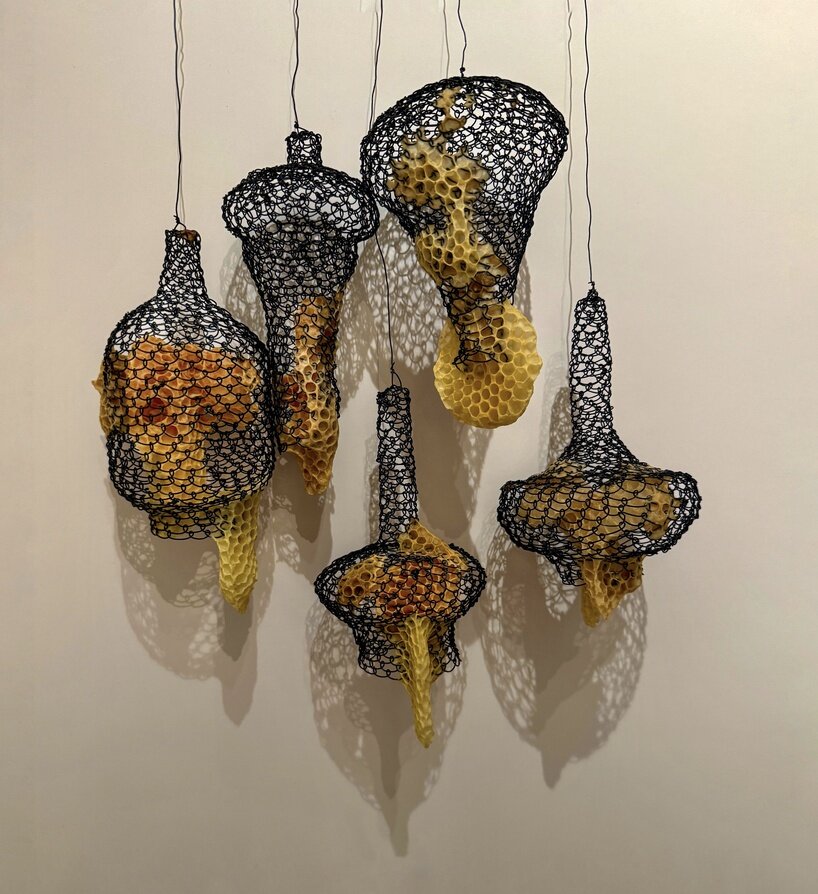
After Roth creates this structure, it’s up to the bees to finalize the form. Though the structure of a comb is fairly regular in shape and color, Roth admits that ‘Most of the pieces surprise [her] in some way, which is one of the great delights of this project.’ She highlights two pieces in particular: ‘One was a two-dimensional beaded piece that, for some reason that is beyond me, the bees built a massive and undulating armature of comb over. The structure of the comb is really gorgeous, much more complex and massive than on anything else I’ve seen in the decade I’ve been working on this project. Another is a small piece of driftwood and knitted wire, where the bees collectively decided to trace and mimic the pattern of the wire with their comb, which is truly remarkable.’
Inherent in Roth’s work is a juxtaposition between the man-made and the forces of nature. Through these small meditations on the logic of bees, their combs bulging, bonding, and restructuring her objects, she sheds light on how the intelligence of these little insects is at once comparable to our own and entirely beyond our comprehension. Yet, rather than attempting to understand or control this intelligence, Roth makes space for it to unfold. Her work asks us to reconsider what it means to create, and whether art-making must remain an exclusively human act. By sharing both the labor and the authorship with her bees, Roth offers a different model of artistic collaboration, one rooted in patience, reciprocity, and respect for the natural world.
1/5
project info:
artist: Ava Roth | @avarothart
This article is part of designboom’s POSTHUMAN UTOPIAS chapter, exploring what happens when humans are no longer the measure of all things. These stories rethink our relationship with the planet through interspecies architecture, living materials, regenerative landscapes and emerging technologies – learn more here! The chapter is presented in partnership with INDX|GLOBAL – a global cultural platform placing Indian architecture, design, and creative intelligence in conversation with the world.
Each designboom editorial series explores one theme in depth through projects, interviews, features and news across architecture, design, art and technology. Discover more chapters here, and get in touch if you’d like to submit a story through our submissions portal or contact form.
shop
your own online design shop — no sales commission collected