marguerite humeau discusses myth-making, spirituality and our connection to other forms of life
the artist reflects on how animal intelligence, ancient rituals and alternative forms of knowledge can expand our understanding of life beyond the human.
prefer designboom on google[FEATURED]
Marguerite Humeau explores contemporary mythologies
‘Extinction doesn’t necessarily only happen to bodies,’ Marguerite Humeau tells designboom during our interview. ‘We can also think about the extinction of mental landscapes and imagination.’ It is a thought that has come to shape the French artist’s practice, which moves between prehistoric life, ancient civilizations, animal intelligence and speculative futures. Through sculpture and installation, Humeau gives form to worlds that cannot be fully known, drawing on scientific research, historical accounts, mythology and forms of knowledge that sit beyond conventional disciplines.
For around 15 years, she has been interested in bringing lost lives and forgotten worlds back into view. Her early work involved resuscitating extinct bodies through imagined prehistoric creatures, before she turned to the voice of Cleopatra in Echoes (2015). The project marked a shift in her thinking. Looking for connections between ancient Egypt and contemporary attitudes toward life and death, she began to see myth-making as a central part of her practice. ‘I was trying to understand their essence, and explore whether they have parallels with our own times and how they can still help us understand the world today,’ the artist explains.
Animal intelligence, rituals and the origins of spirituality
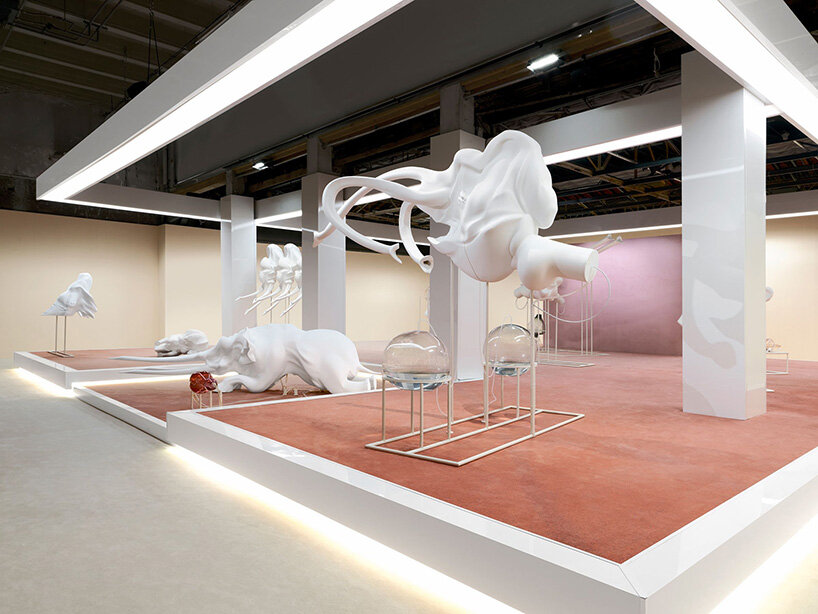
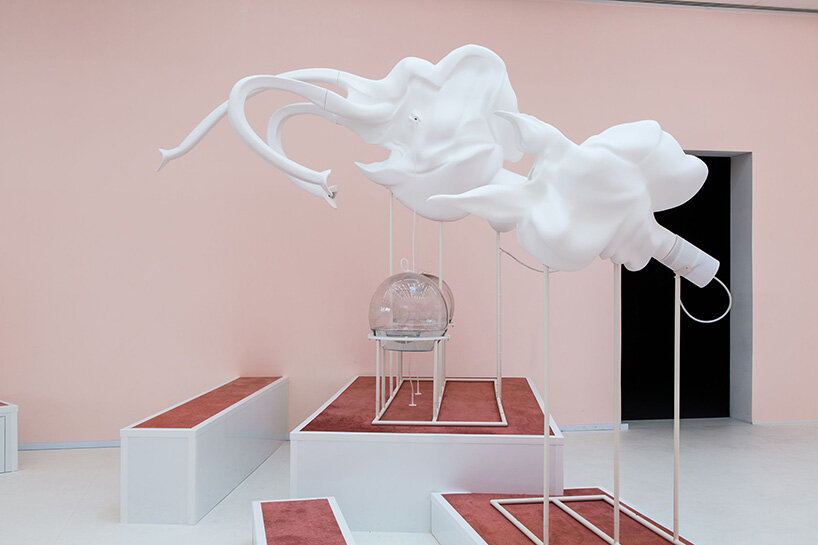
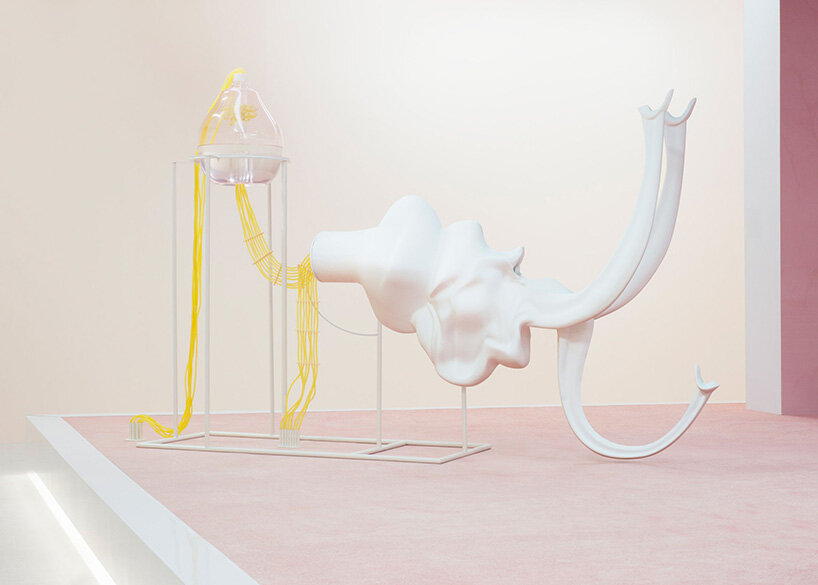
Her interest in the stories humans create to make sense of existence continues to run through her work, although its protagonists have moved beyond humanity. In FOXP2, Humeau imagined an alternate evolutionary history in which elephants, rather than humans, had developed civilization. The project opened up a longer investigation into animal rituals and parallel forms of presence, continued through MIST and her work for the Venice Biennale in 2022. She began speculating that mass death in the animal world might give rise to new forms of spirituality and ritual among other species.
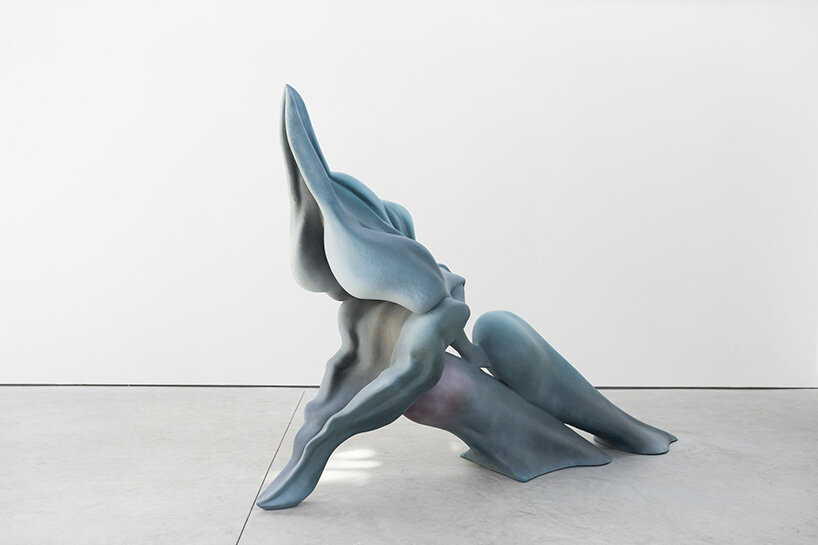
The artist’s research has also returned to the earliest stages of human experience. In ECSTASIES, she recreated an imagined early trance, considering the possibility that such an experience marked the moment when humans first sensed realities beyond what they could physically perceive. Across these projects, she is drawn to the threshold between what can be explained and what remains mysterious. ‘We’re human, and we’re longing for mystery and transcendence. We want to become part of something bigger than ourselves,’ she shares with us.
Soil ecosystems and the hidden worlds beneath our feet
After years spent imagining ancient and future worlds, during the pandemic Humeau became interested in the unfamiliar ecosystems already existing beneath the ground. ‘There were actually worlds beneath our feet that felt equally alien and already existed. We just had to dig into the ground and spend time with them,’ the artist reflects. Spending time with foragers led her to think about the landscapes people carry in their minds, and how these can disappear alongside physical environments. A place, a species or even a familiar way of seeing the world can vanish from lived experience.
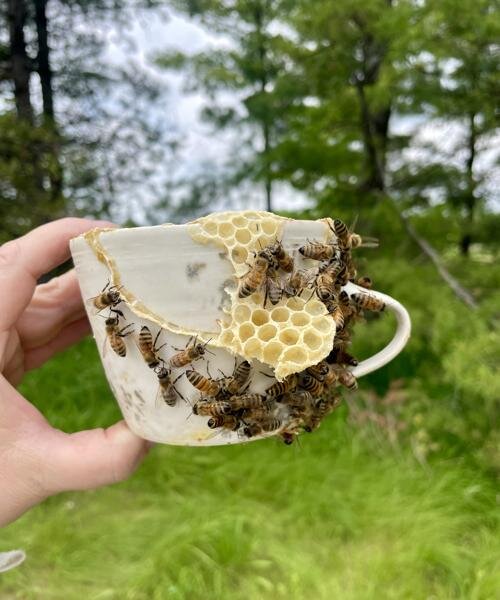
Her subsequent research into soil-dwelling animals informed projects such as meys, in which humans merge with social insects to become collective organisms. She is fascinated by species that survive in extreme conditions and may have developed forms of knowledge that humans have yet to understand. ‘There are many species that exist in extreme contexts and may have learned something about life that we don’t know,’ she says. The question of what humans might learn from other forms of life has become increasingly important to her work.
This curiosity informs Humeau’s collaborative process. Her projects bring together scientists, zoologists, anthropologists, historians and specialists whose knowledge exists outside established academic frameworks, including clairvoyants and geomancers. She is interested in what happens when different interpretations of the same place or phenomenon meet. Scientific expertise can explain the formation of a dust devil, for example, while a geomancer might describe it as a spirit or an energy moving through the landscape. ‘When you look at exactly the same landscape or site, you get all these different stories that somehow connect,’ she observes.
bringing science and alternative knowledge together
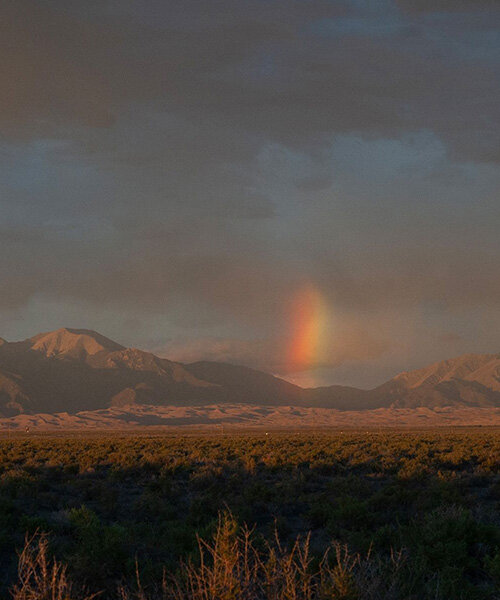
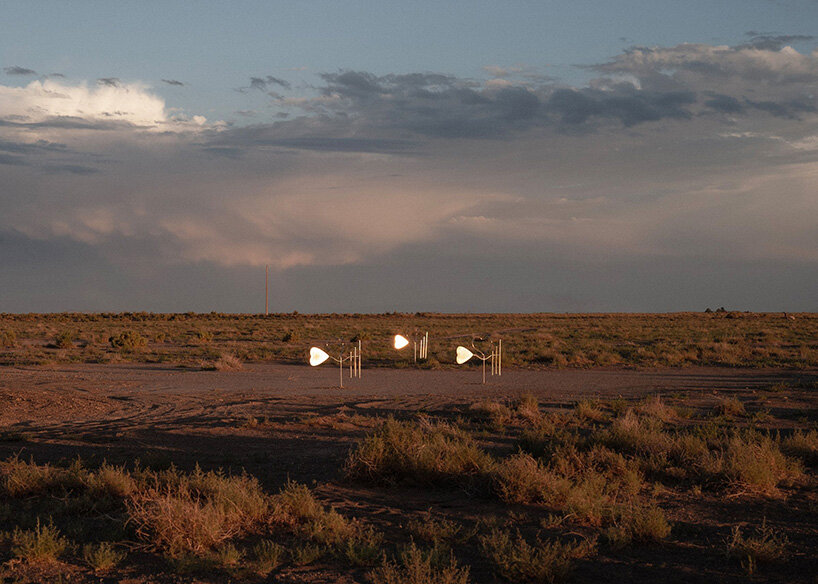
For Orisons, her monumental work in Colorado, Humeau worked with the farmers who owned the land, alongside soil scientists, botanists, ornithologists, conservationists, geomancers and clairvoyants. The project transformed a piece of land into a potato field conceived as an artwork, bringing her speculative worlds into contact with a living ecosystem. It followed an earlier site-specific project in Italy, made for Fondazione Sandretto Re Rebaudengo in 2021, which explored the origins of the vine flower in the context of a vineyard.
More recently, The Garden of Resuscitation in Norway has extended this interest in landscapes shaped by human activity. Set in a spruce forest once used for timber extraction, the project follows a piece of paper on a journey back to the forest from which its material originated, where it becomes a new, resuscitated tree. Humeau describes it as a monumental sculpture, a landscape and a garden, but also as the setting for a recurring ritual involving an elixir consumed each year. These works have led her to consider how artificial ecosystems might return to living environments and begin to evolve on their own. She is increasingly interested in artworks that can be activated, transformed and altered beyond her control.
Reconnecting art with living landscapes
For Humeau, looking beyond the human also means questioning the limits through which people understand intelligence, community and time. ‘We understand the world through our own bodies, our own lifespans, our own ideas of what intelligence is, and our own ways of connecting to others and forming communities,’ she argues. Yet life has developed countless other ways of existing. Considering these alternatives opens up questions about how humans might live differently and what they could learn from species whose survival strategies are far removed from their own.
The scale of geological and evolutionary time offers another way to unsettle human-centered thinking. ‘When you look at the history of humankind on the timeline of life, we’re just a tiny dot. We’re such a small fraction of time,’ Marguerite Humeau tells us. She recalls reading Orbital by Samantha Harvey, a novel about scientists aboard the International Space Station, whose repeated journeys around Earth shift between intimate personal experiences and the planet seen from a distance. One of the characters loses her mother while orbiting the Earth, holding personal grief against the vastness of the world below. Humeau is drawn to this movement between scales, from the immediacy of human life to the perspective of a distant observer.
imagination and the future of human thought
Her interest in other forms of intelligence also extends to plants. During the pandemic, she began foraging in London with the help of a forager, paying attention to plants commonly dismissed as weeds. Their ability to grow in damaged, polluted or extreme environments can reveal something about the conditions of the ground they inhabit. Learning to recognize where they thrive becomes a way of reading a landscape and establishing a relationship with its other inhabitants. ‘Maybe they’re not communicating specifically with humans, but they’re still delivering a message, whether we choose to read it or not,’ she suggests.
Imagination helps make these connections possible. The artist remembers spending one or two months in the Colorado desert while installing Orisons and making a film. Although she felt alone in the landscape, she also experienced an intense sense of belonging to it. The stars above and the tunnels and burrows beneath the ground suggested a vast network of life, much of it invisible. ‘I felt I was part of a web of life that was mostly invisible but also very tangible. I could feel that I was part of it, even though I couldn’t see all of it,’ the artist recalls. That sensation, she suggests, may be close to the beginning of spirituality: the feeling of being connected to something whose nature remains unknown. Myths and stories emerge from the same impulse, giving shape to experiences that resist description. ‘We invent stories to make sense of that gap, of something we feel but cannot fully describe,’ she adds.
This continuing search for connection is now taking Humeau toward the future of human thought. She is researching dreams, anxieties and fears as territories that may still hold something beyond technological access, questioning what remains of private inner life as more of human experience becomes available to technology. The direction of this research is still open. Her work continues to ask what other worlds might exist alongside our own and what forms of imagination, ritual and attention might allow us to encounter them.
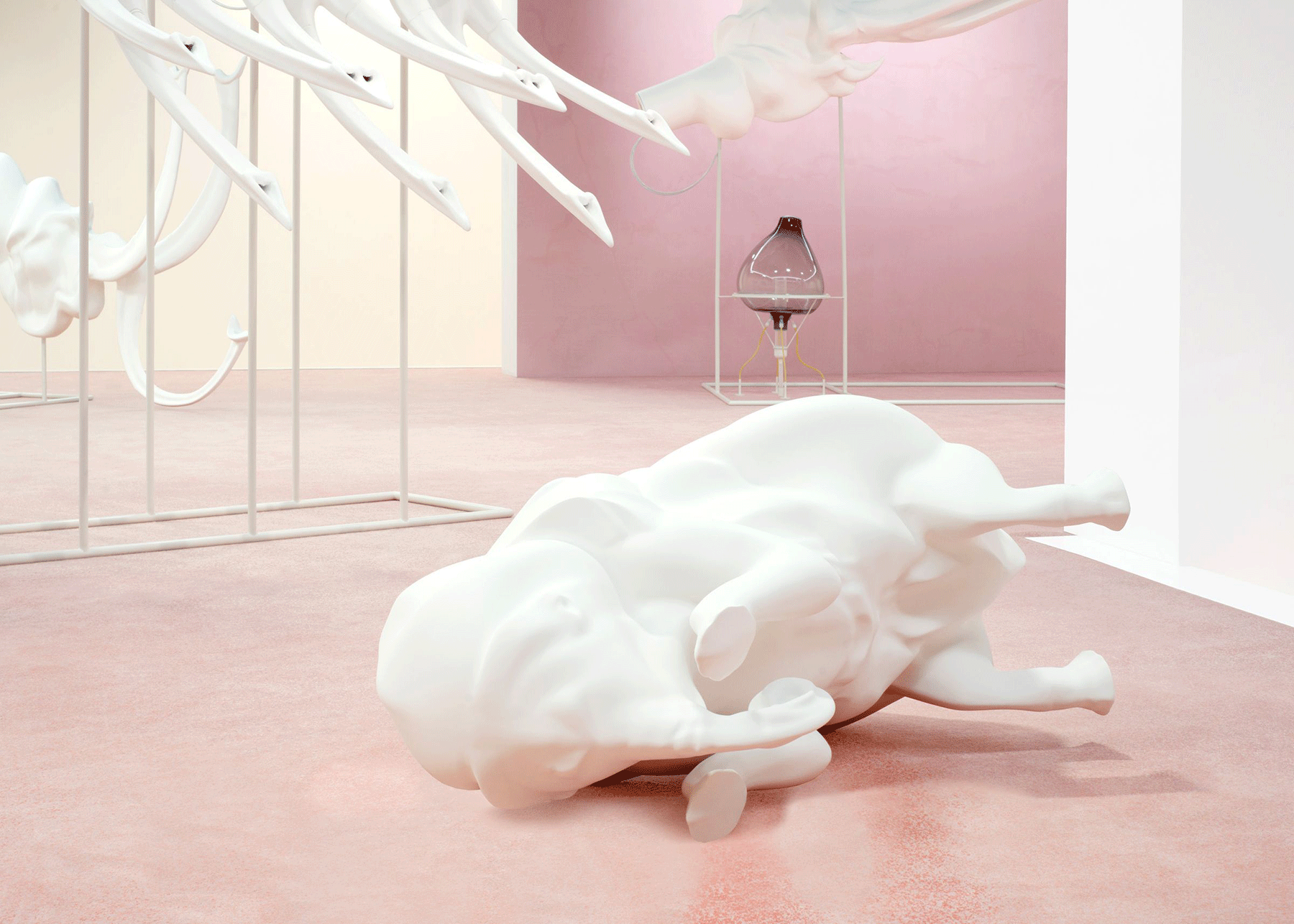
Not every life form has a brain like ours, but they have other forms of intelligence. I’m interested in understanding what they have invented and how they have learned to survive
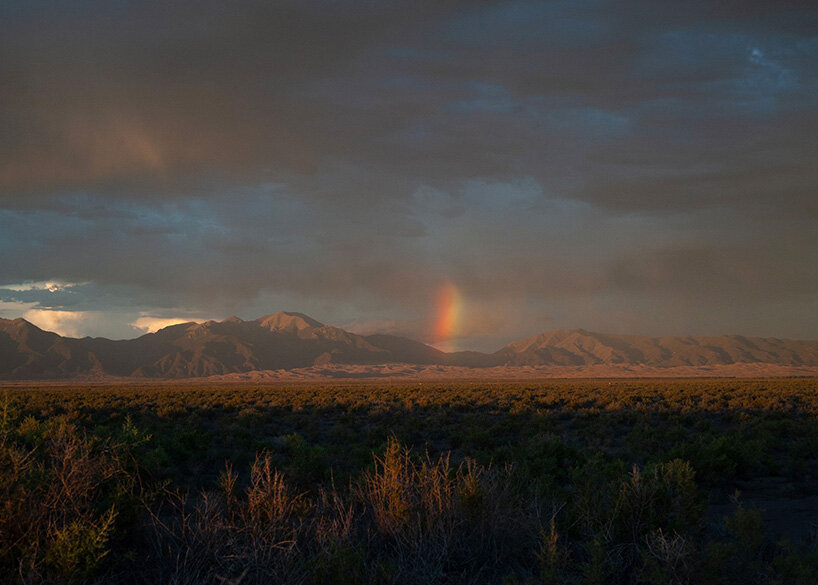
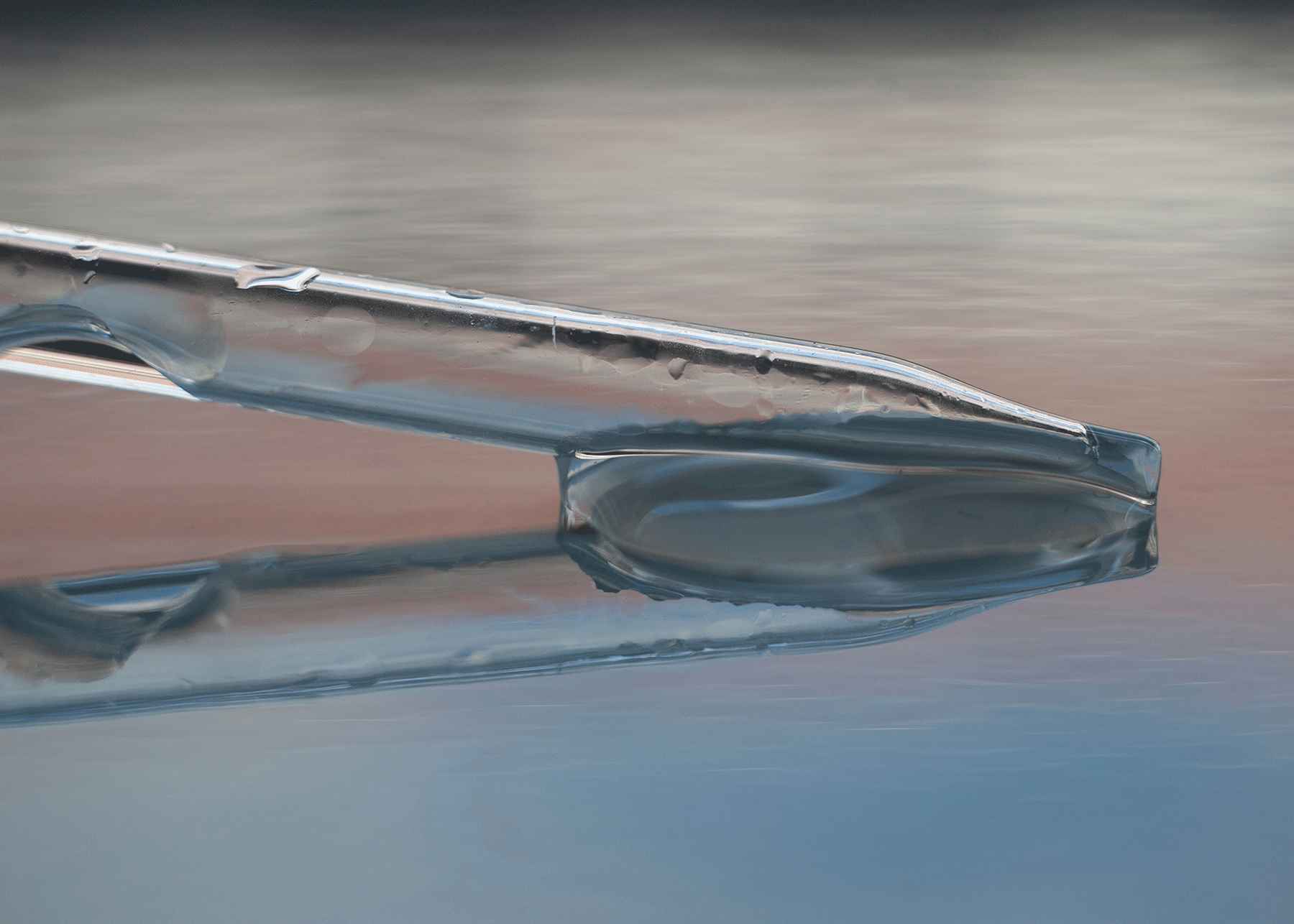
detail of Marguerite Humeau’s Orisons, 2023, captured in drone footage | cinematography by John O’Rourke, image by Julia Andréone
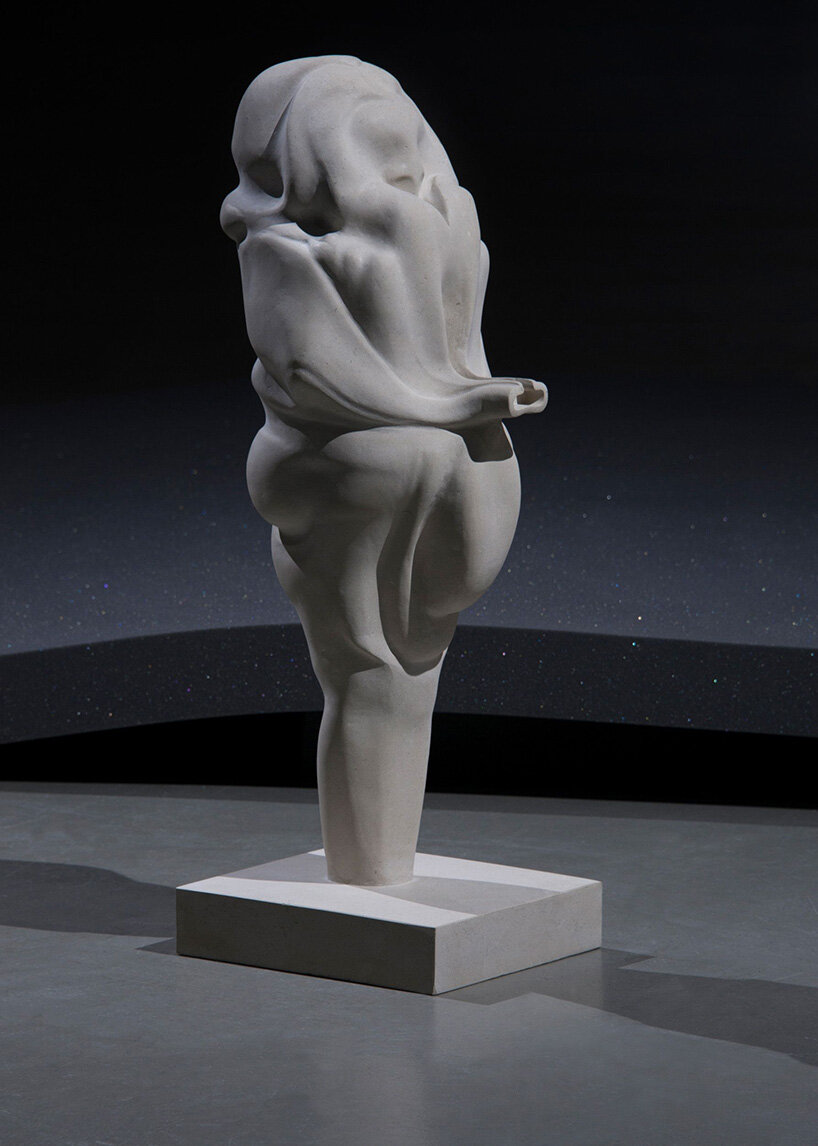
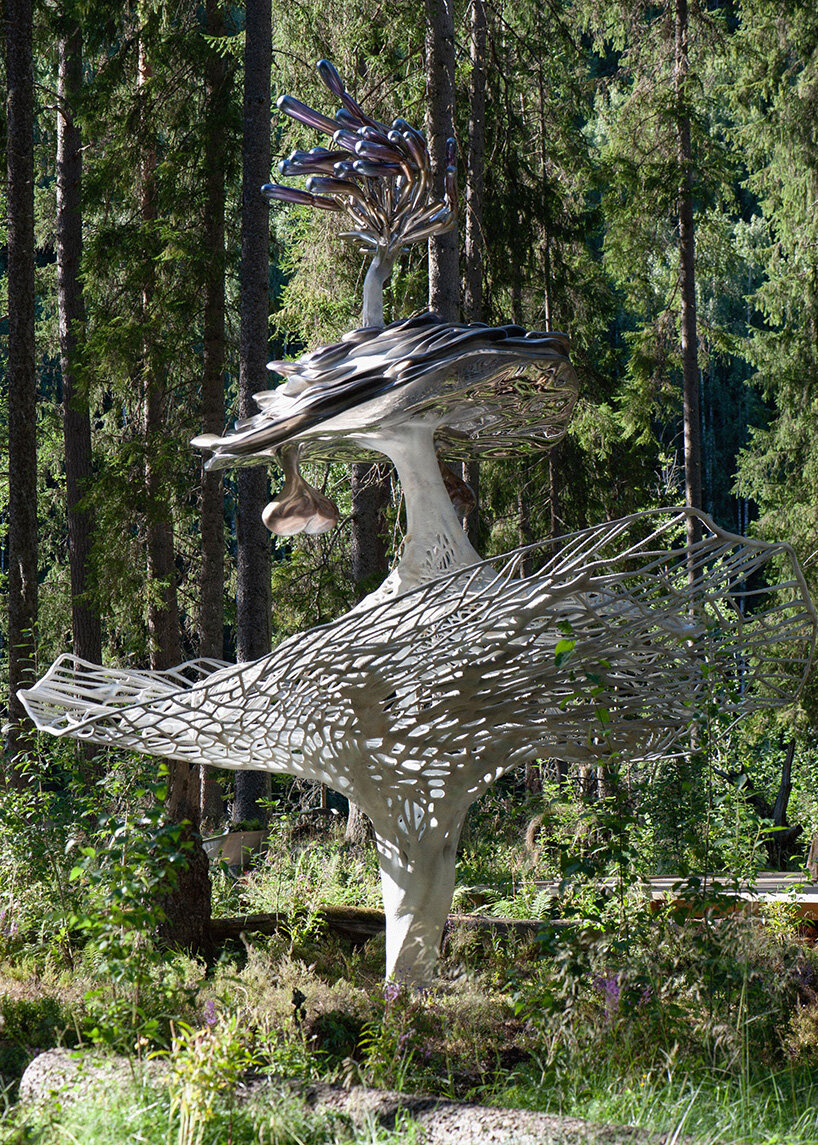
We invent stories to make sense of that gap, of something we feel but cannot fully describe.
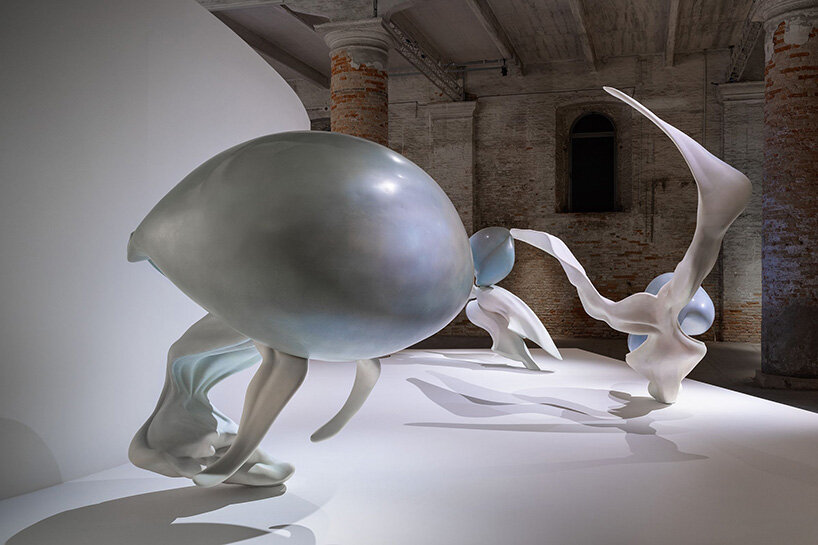
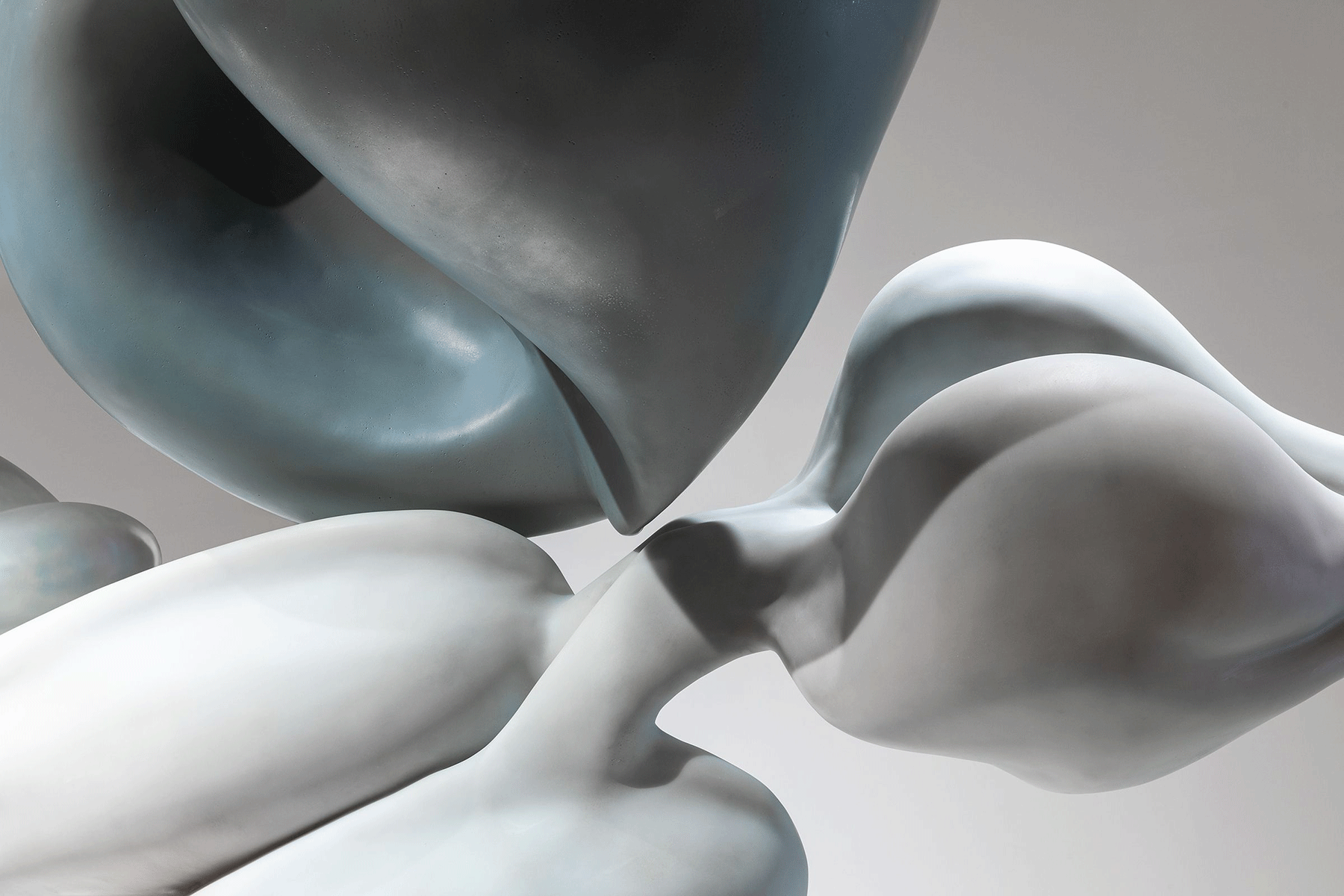
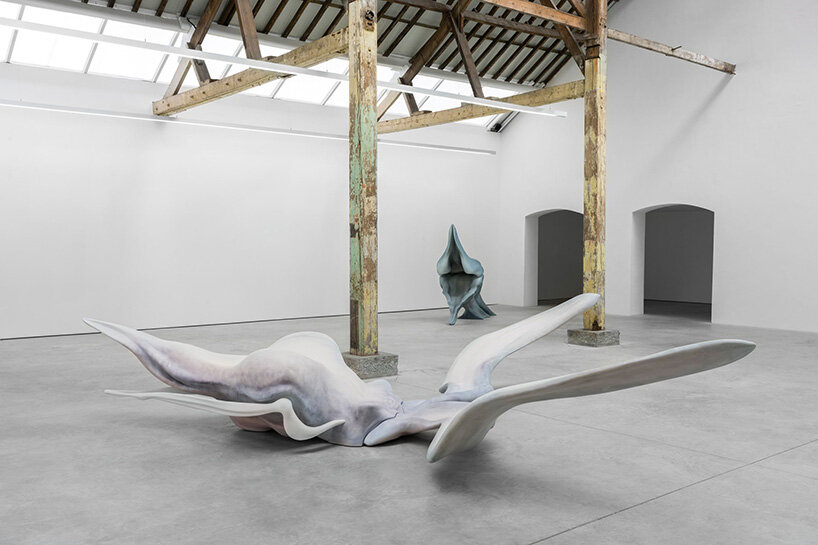
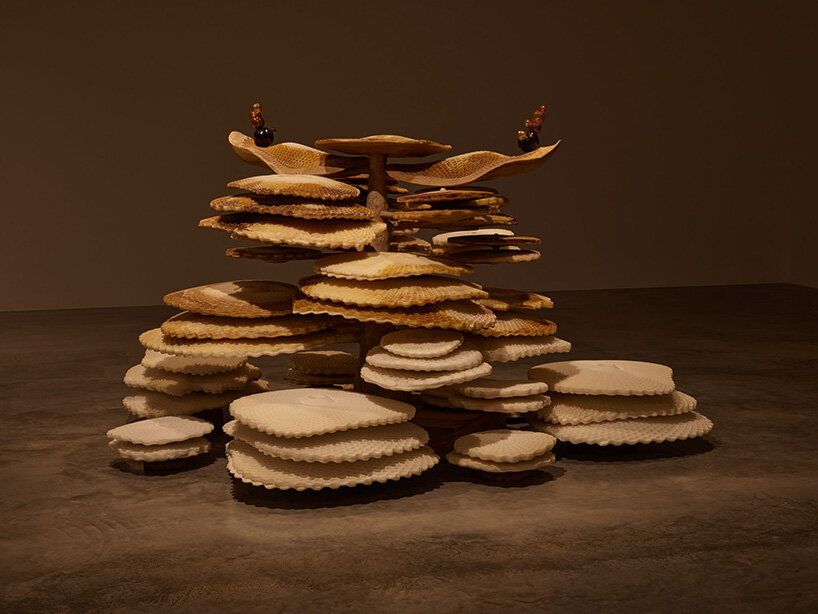
Marguerite Humeau, Migrations, The Milk of Dreams, 2022 | image by Roberto Marossi
This article is part of designboom’s POSTHUMAN UTOPIAS chapter, exploring what happens when humans are no longer the measure of all things. These stories rethink our relationship with the planet through interspecies architecture, living materials, regenerative landscapes and emerging technologies – learn more here! The chapter is presented in partnership with INDX|GLOBAL – a global cultural platform placing Indian architecture, design, and creative intelligence in conversation with the world.
Each designboom editorial series explores one theme in depth through projects, interviews, features and news across architecture, design, art and technology. Discover more chapters here, and get in touch if you’d like to submit a story through our submissions portal or contact form.
shop
your own online design shop — no sales commission collected