MIT researchers use robotic motion to weave clothing directly around the human body
InSituWear lets the body's contours and the tension of ultrafine fibers help determine the garment's final form.
prefer designboom on google[FEATURED]
a new approach to garment-making begins with the body
Researchers at MIT Media Lab have developed a robotic fabrication system that weaves textiles directly around the human body. Called InSituWear, the experimental process uses an industrial robotic arm to draw fine plastic fibers around a person’s arm or hand, building a custom-fitting garment without conventional cutting or sewing.
Developed by the Critical Matter Group, led by Behnaz Farahi, the project explores a different approach to making clothing. Instead of beginning with a finished garment pattern, the researchers use robotic motion and material tension to determine how a textile takes shape around the body. The process brings fabrication and fitting together as the material forms directly on the wearer.
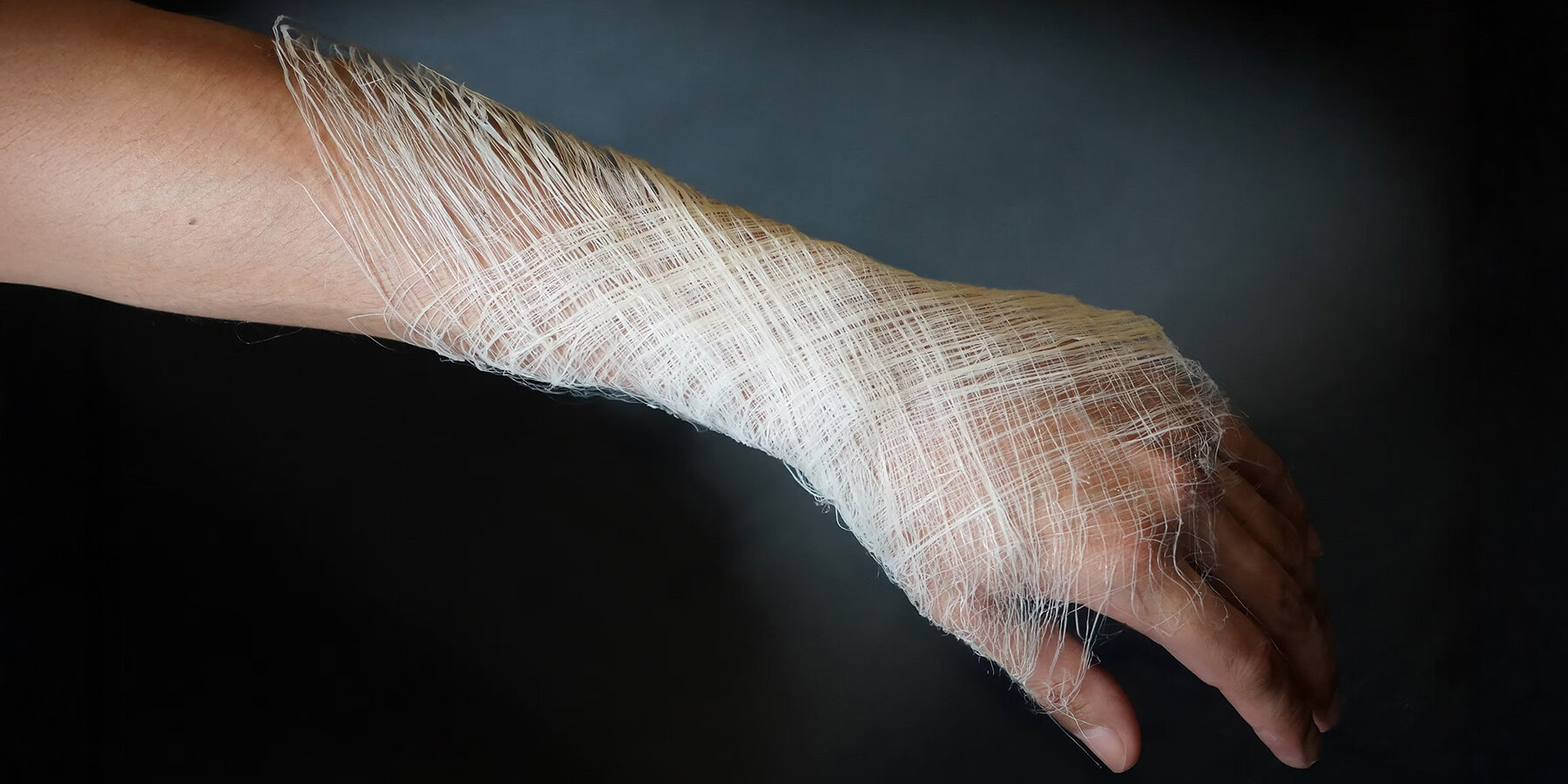
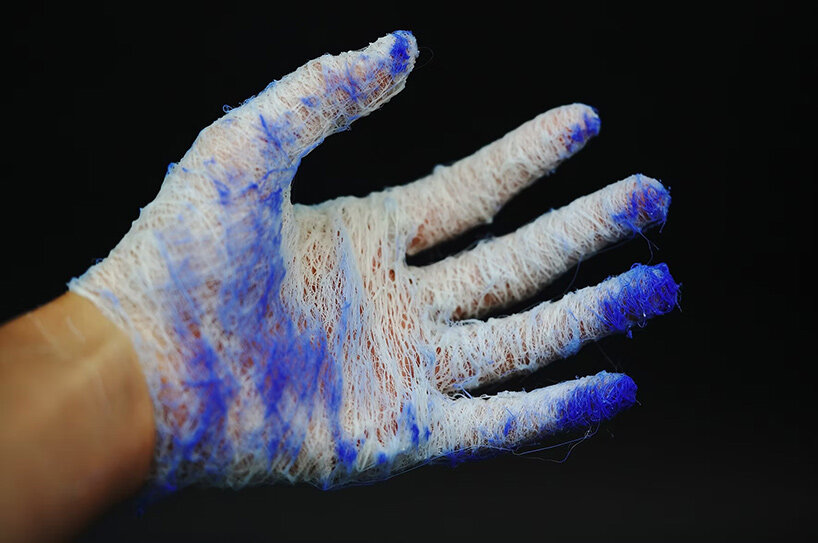
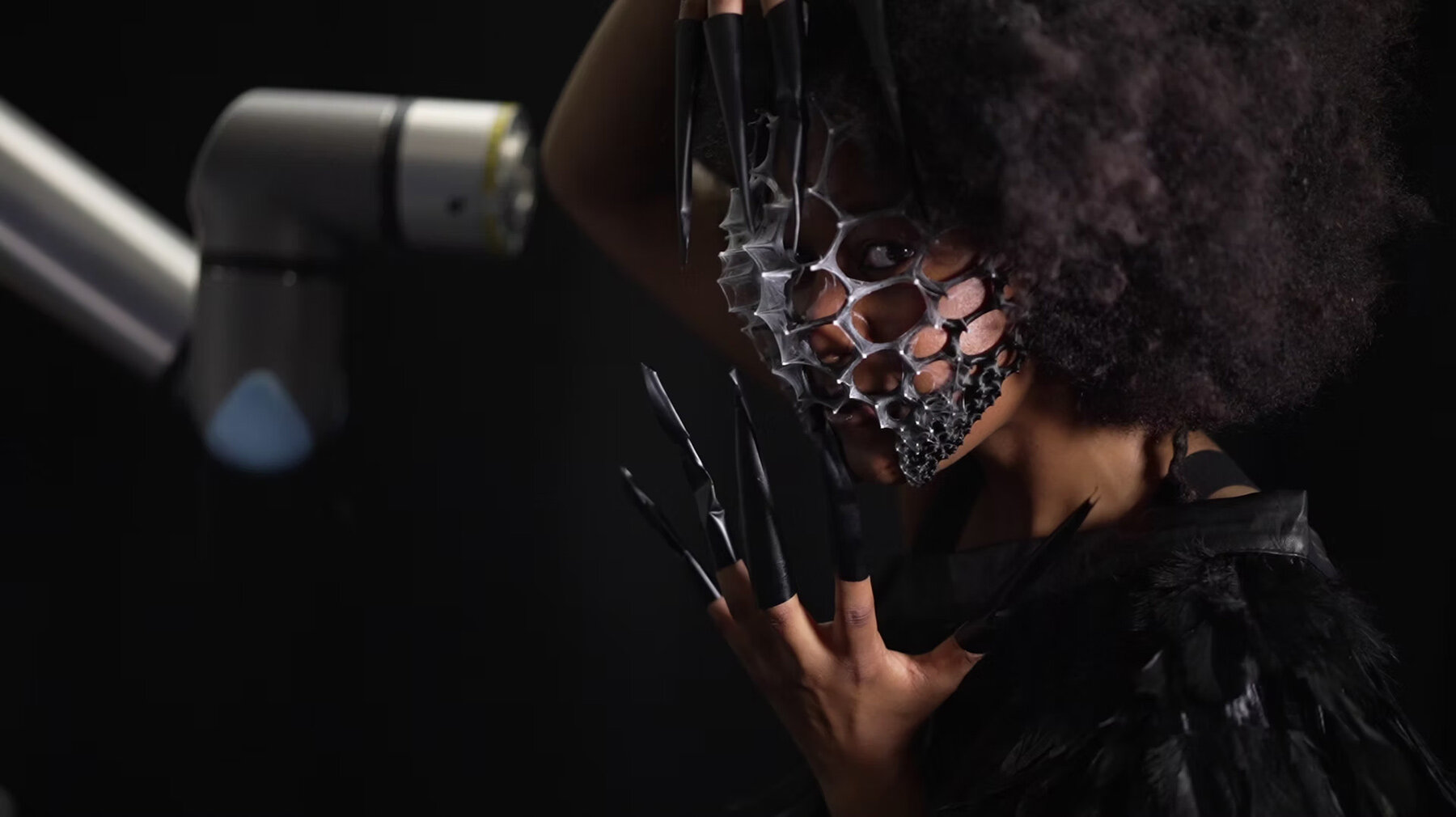
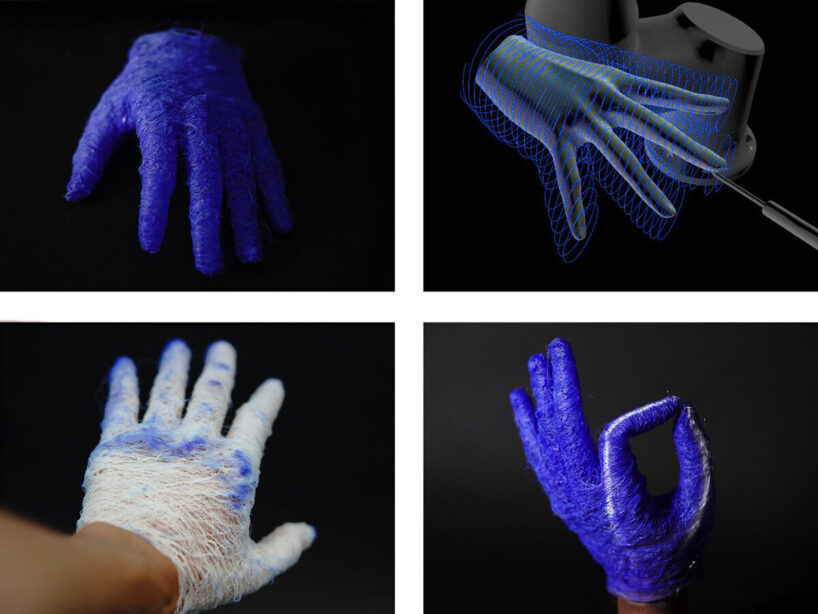
The team has demonstrated the method through a translucent sleeve and a color-changing glove. Both are made from networks of extremely fine fibers, whose arrangement depends on the movements of the robot and the physical contours beneath them.
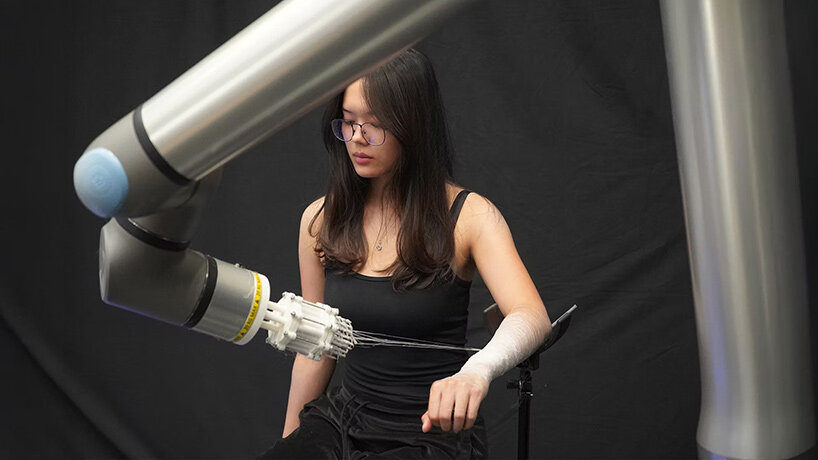
robotic movement becomes the pattern
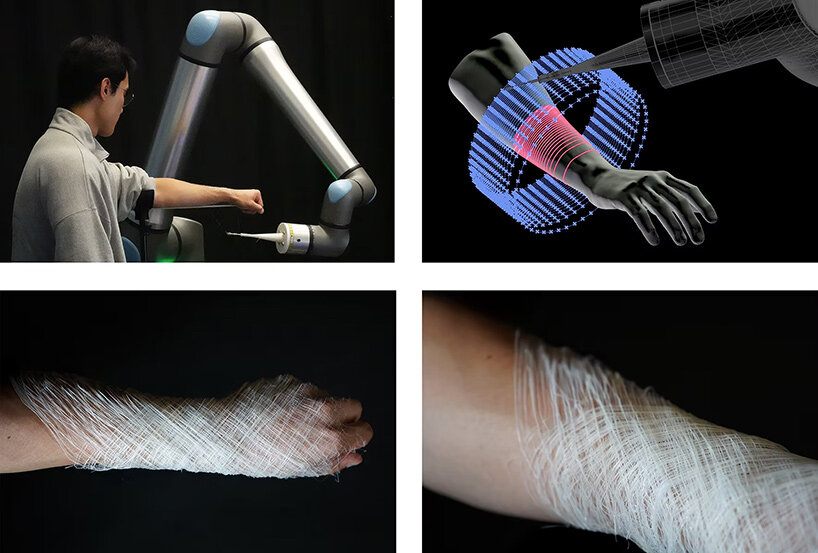
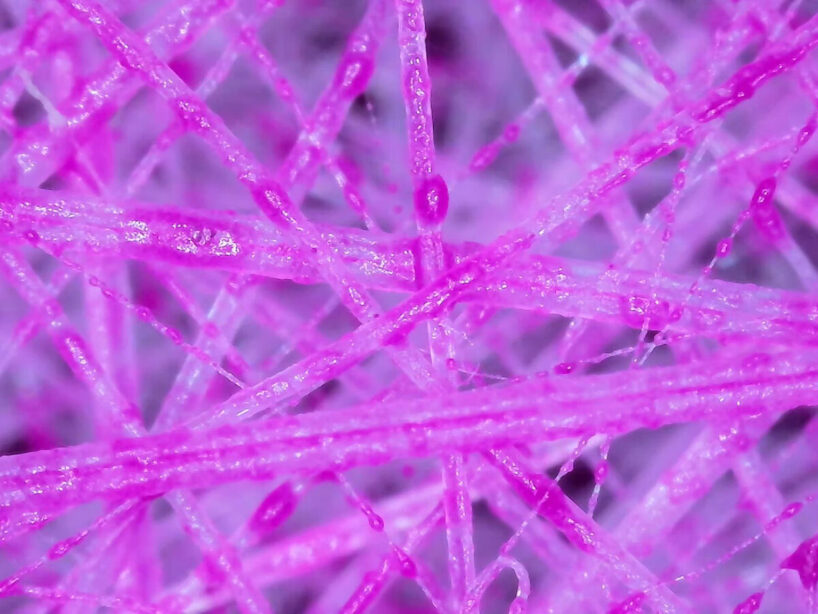
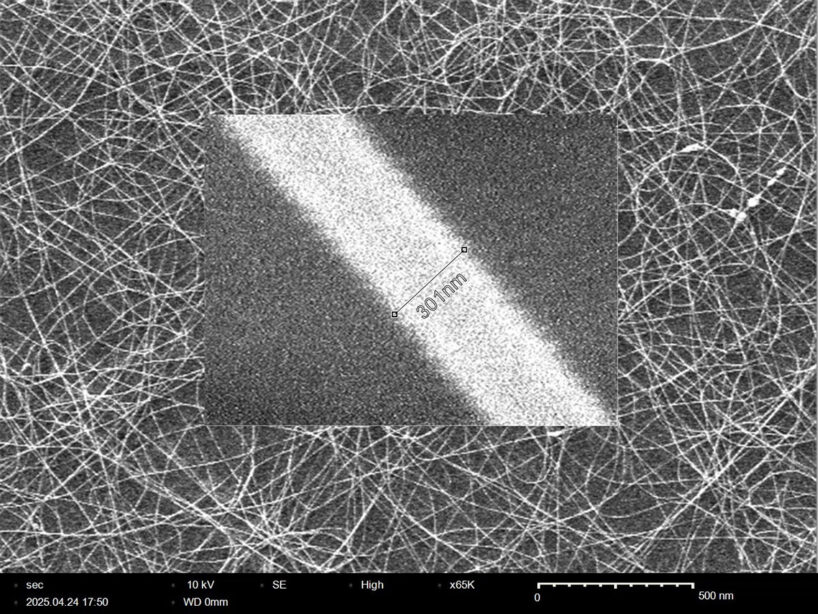
At the center of InSituWear is a process called melt-drawing, which uses polycaprolactone (PCL), a low-temperature thermoplastic. The robot pulls the heated material into fine strands, some as thin as 0.03 millimeters, and stretches them around the body. As the fibers cool, they solidify and retain their shape. The material is processed at relatively low temperatures, with the strands cooling to skin-safe levels before contact.
The robotic arm follows programmed paths around a simplified model of the wearer’s anatomy, with safety boundaries and collision checks built into the system. Interchangeable single-needle and multi-needle tools control how the fibers are drawn and positioned. The researchers can adjust the robot’s speed, the thickness of the strands, and the spacing between them to produce different textile structures.
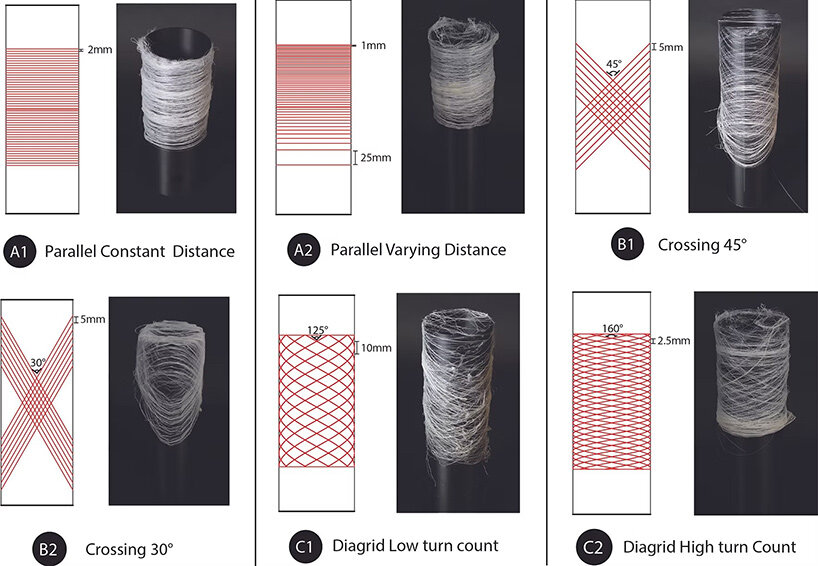
Here, movement becomes an essential part of the design. The team has experimented with parallel fibers, crossing patterns, and diagonal grids, each with its own structural properties. By changing the direction and density of the robotic paths, they can influence how flexible or stiff different areas of the finished textile become. The shape emerges through the interaction between the programmed movement, the material’s behavior under tension, and the body itself.
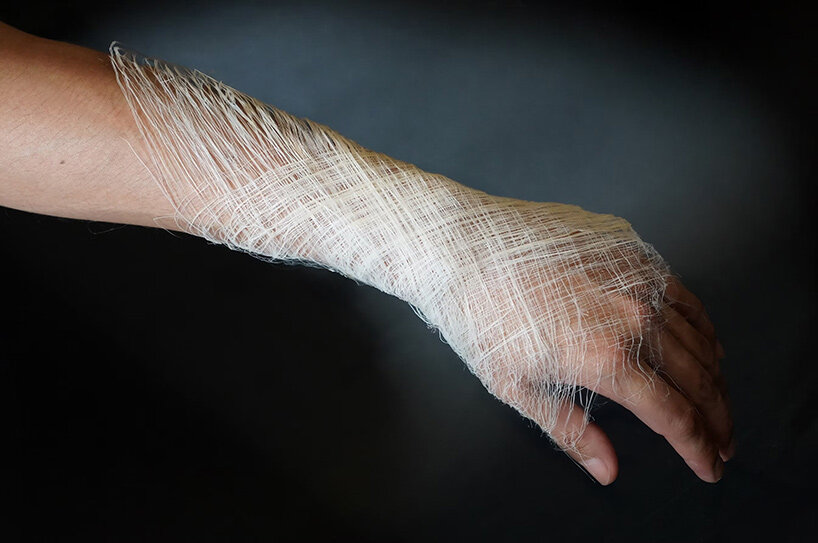
a robotic arm creates a second skin
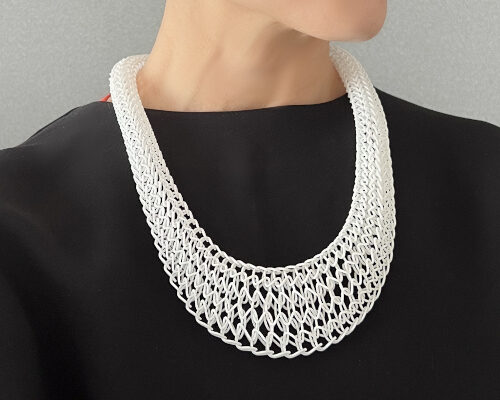
One of the first wearable demonstrations is a 35-centimeter-long sleeve, fabricated directly around a human forearm in approximately 22 minutes. Its fine white fibers form a diagonal lattice that follows the changing contours of the arm. The finished surface appears almost transparent, with overlapping strands forming a dense network around the skin.
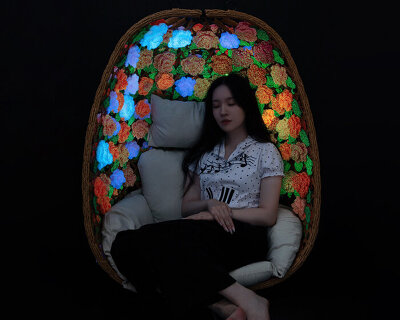
The team also developed a glove that responds to the movements of the wearer’s hand. Fabricated in 15 minutes, it combines PCL with thermochromic pigments and thin nichrome wires embedded near the fingertips. When a finger touches the thumb, an electrical circuit closes and heats the wires, activating a localized color change in the surrounding fibers. Changes in body heat can also affect the glove’s appearance.
The researchers tested the mechanical behavior of their melt-drawn textiles against conventional fabrics, including silk, cotton, and linen. Their samples performed within the mechanical range of these materials under tensile testing, while the robotic process offered control over local flexibility through fiber arrangement. Both wearable prototypes remain experimental, although they demonstrate how the structure and responsive properties of a textile can develop within the same fabrication process.
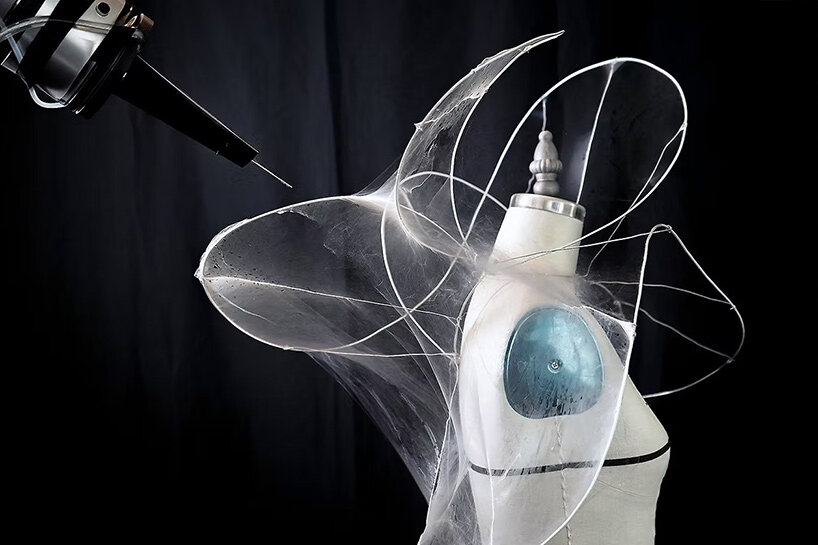
from wearable textiles to architectural structures
The approach also has connections to architectural form-finding, where material tension and physical forces help determine structural geometry. InSituWear applies similar principles at the scale of the body, with the robotic arm drawing fiber networks around an existing three-dimensional form.
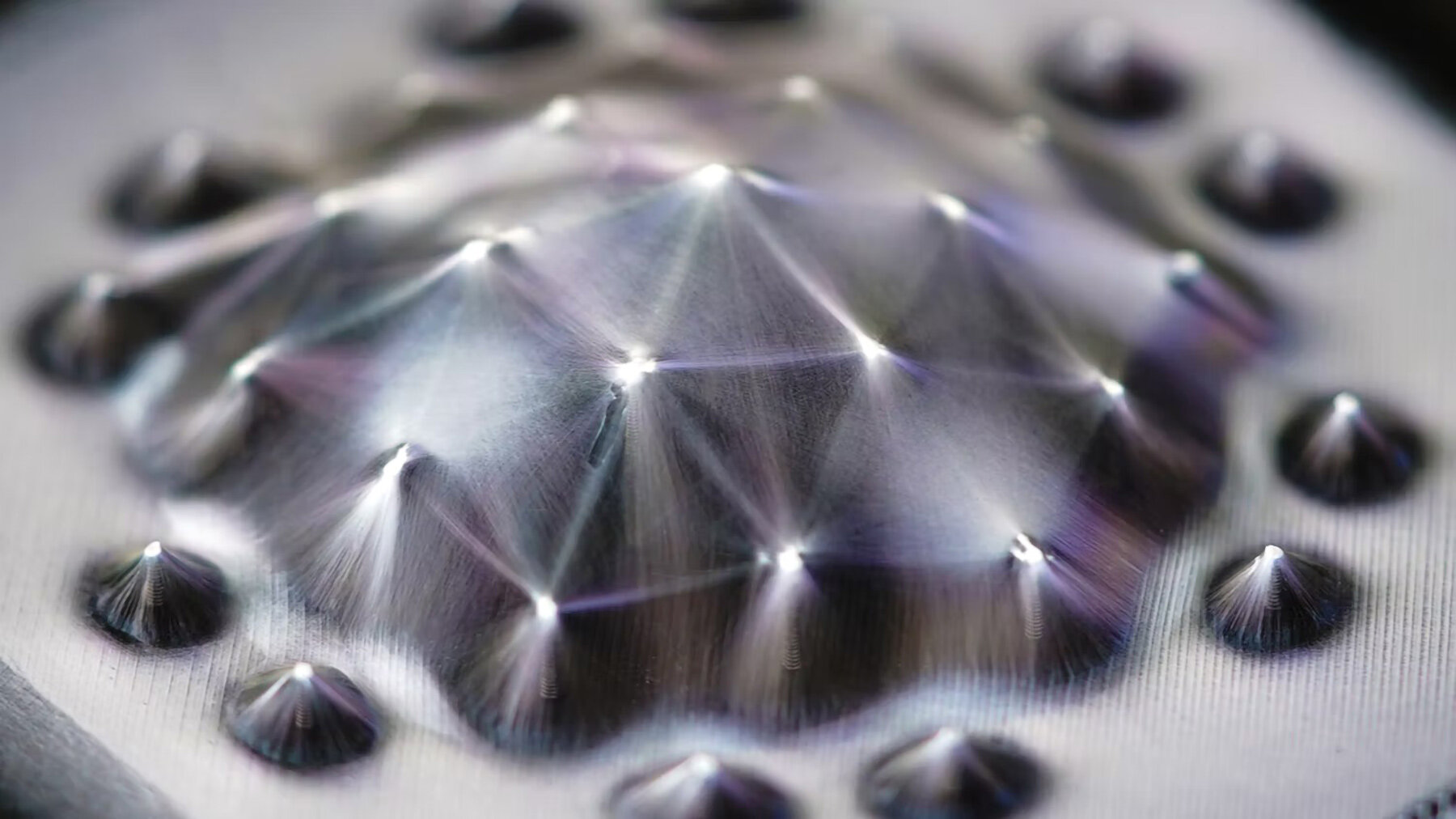
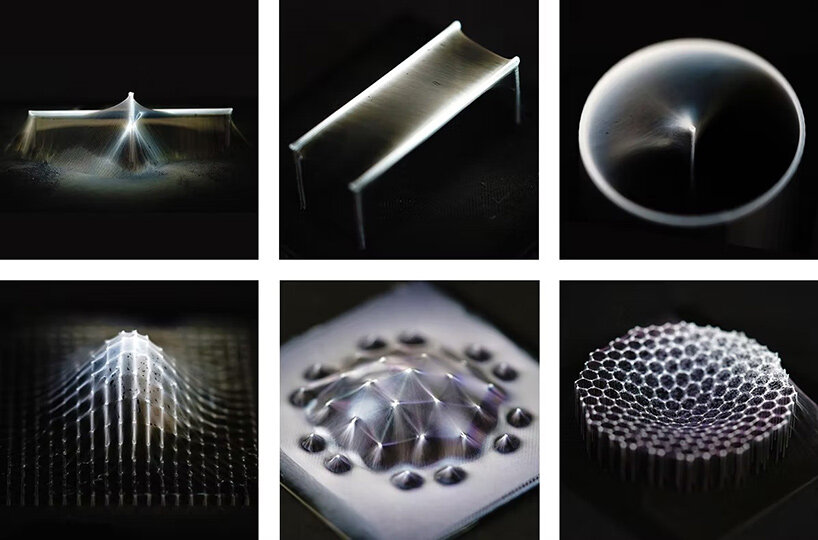
Beyond the wearable prototypes, the researchers have tested their method on small spatial frames. These experiments explore how continuous fibers can wrap around rods and open structures to create lightweight surfaces. The team has proposed future applications in furniture and architecture, including a stool and a dome-like pavilion assembled from fiber-wrapped components. These larger designs remain speculative.
For now, InSituWear uses predefined robotic paths and simplified anatomical models, with the wearer remaining stationary during fabrication. The team identifies real-time adaptation to body movement as a possible next step, alongside further work on durability and human-robot safety. The prospect is especially interesting: textiles could eventually form around bodies in motion, with the movements of both human and machine influencing the way clothing is made.
1/5
project info:
name: InSituWear: On-body Robotic Fabrication of Textiles
institution: MIT Media Lab | @mitmedialab
research group: Critical Matter Group
group director: Behnaz Farahi | @behnazfarahi
research lead: Sergio Mutis | @sergiomutis1
research team: Wai Lok Wan, Berfin Ataman, Abigail Suk, Ayah Mahmoud, Jiaji Li
year: 2026
This article is part of designboom’s STATES OF MOTION chapter, exploring how architecture, design and art are transforming the way we move. These stories rethink the experience of movement through evolving transit spaces, mobile habitats, inclusive infrastructure, slower journeys and kinetic art – learn more here! Each designboom editorial series explores one theme in depth through projects, interviews, features and news across architecture, design, art and technology. Discover more chapters here, and get in touch if you’d like to submit a story through our submissions portal or contact form.
shop
your own online design shop — no sales commission collected