nendo on bringing the river-inspired design of france’s TGV INOUI into motion
seven years of development turned an idea about the movement of water into a detailed design language, from the train’s exterior patterns to its passenger spaces and everyday fittings.
prefer designboom on google[FEATURED]
river’s flow becomes visual language for nendo’s train design
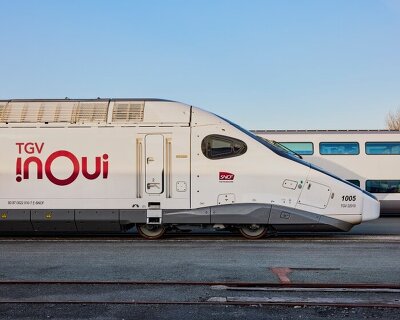
‘Unlike cars or airplanes, trains follow tracks along the contours of the landscape, flowing like a river.’ This observation from Japanese design studio nendo became the starting point for the design of France’s TGV INOUI, developed in collaboration with French agency AREP. Now in service, the fifth-generation double-decker train, formerly known as TGV M, brings this idea of flow into the experience of high-speed rail travel. Speaking with designboom, nendo reflects on how this initial reference informed a project that took approximately seven years to develop.
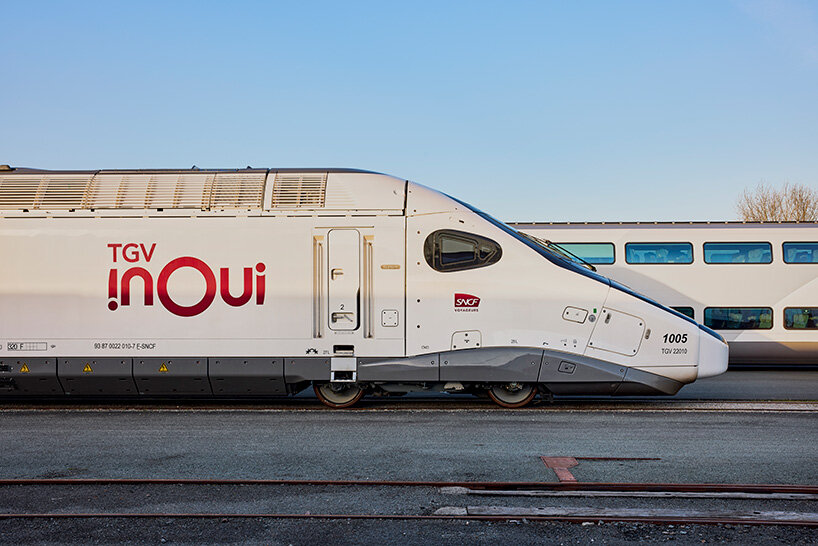
The studio was interested in all the different qualities water carries: ‘The smooth flow and depth of a river, pebbles on the riverbed, and the sense of floating and bubbles on the water’s surface informed both the exterior and interior.’ These references formed a common language for the train, connecting its outer shell to the passenger spaces and the smallest fittings. On the exterior, white and gray patterns composed of divided circles abstractly express waves against a warm gray background. The intention, as nendo explains, was for the train ‘to harmonize gently with the surrounding landscape.’ Bordeaux-colored doors introduce a contrasting accent, making boarding points easier to identify for passengers with visual impairments while giving the exterior a distinctive visual marker.
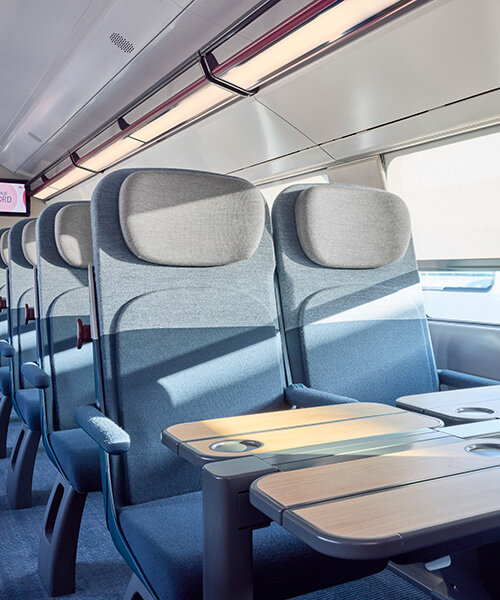
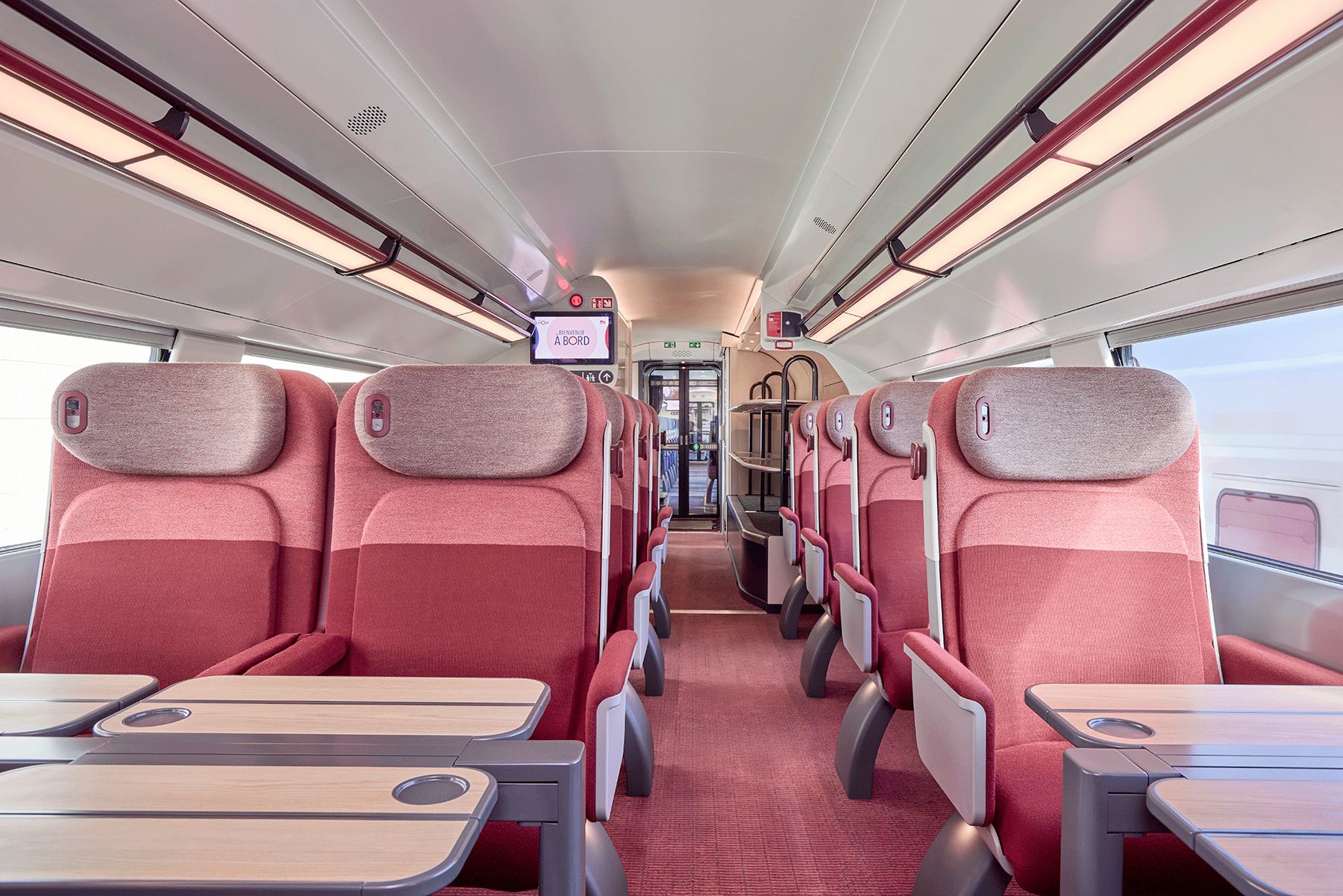
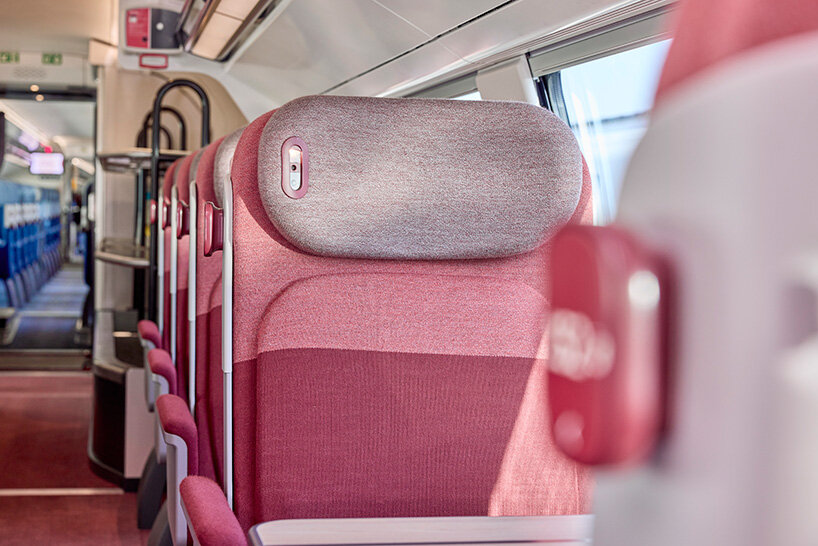
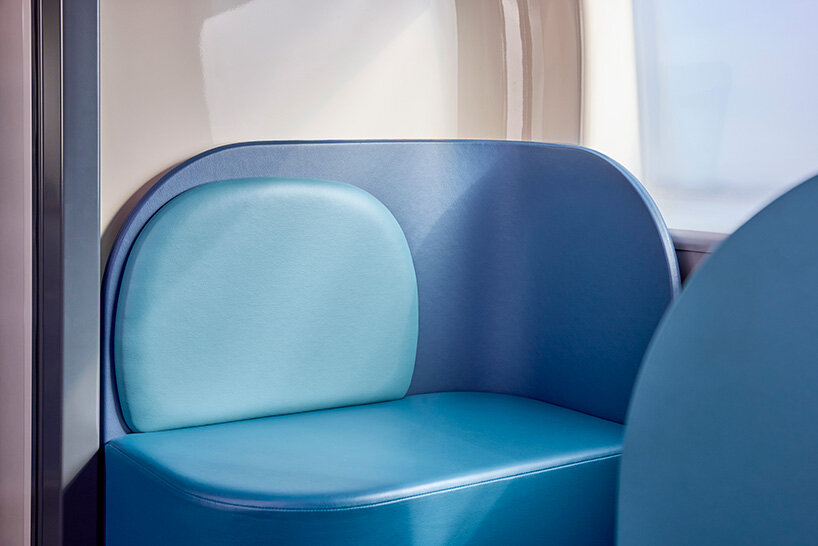
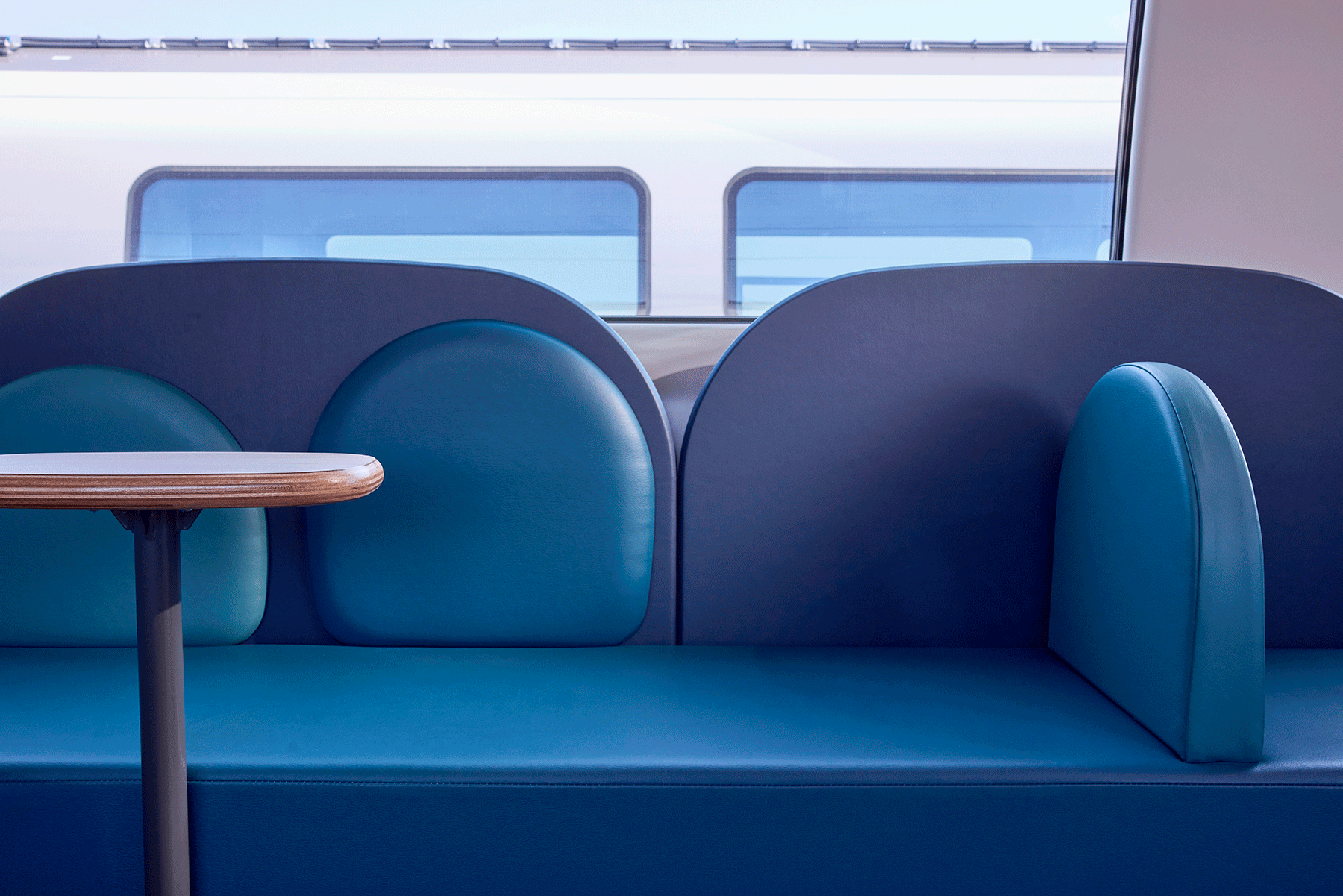
For the interior, the river becomes a way of organizing. A horizontal color division runs at the same height across the seats and walls, creating continuity through the cabin. Colors become darker towards the bottom and lighter towards the top, suggesting the depth of water. Soft, pebble-like forms appear in the headrests and lighting. As the studio puts it, ‘Through the accumulation of these details, we wanted passengers to experience the calm of being beside a river, even while travelling.’
shaped by use
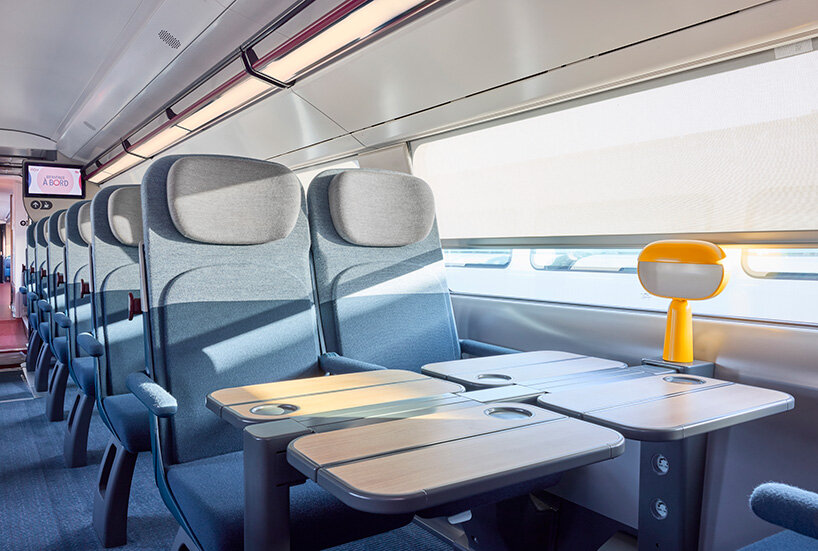
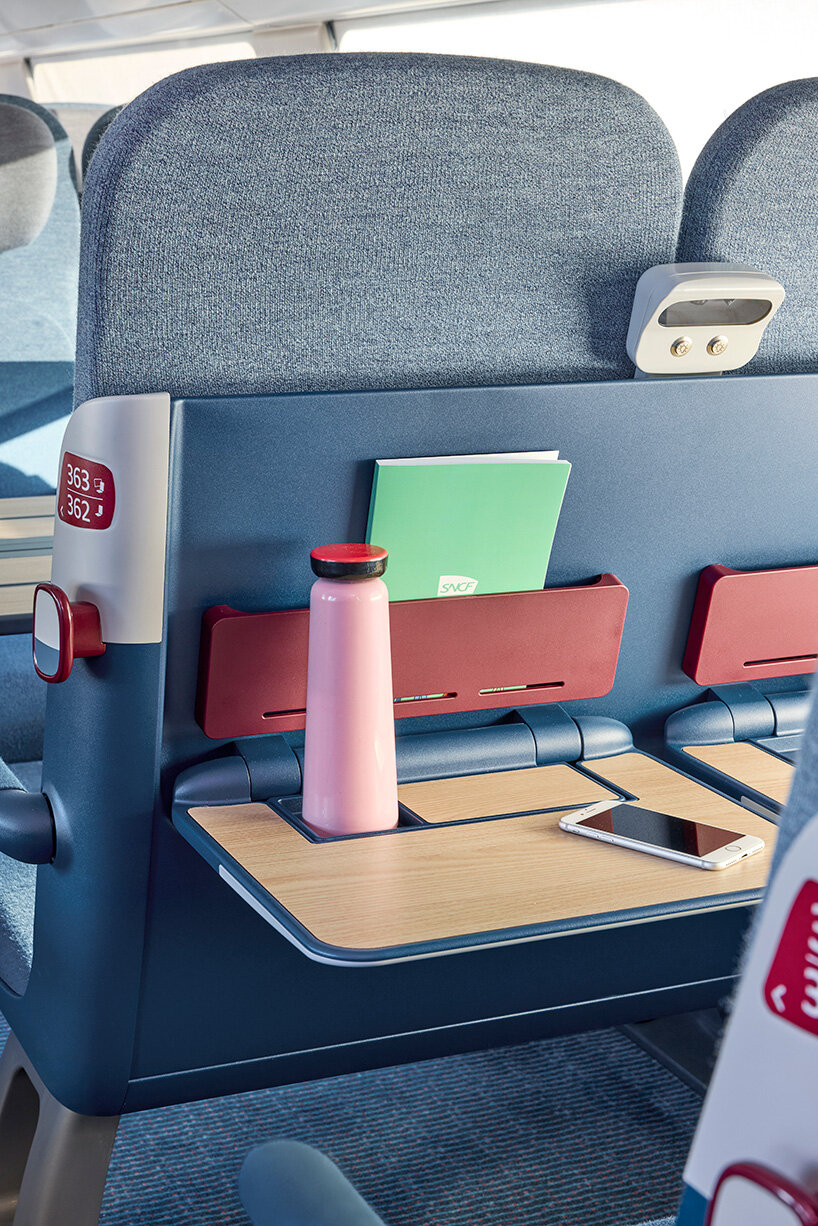
nendo’s design also had to accommodate the everyday demands of train travel, from seating comfort and adjustable tables to lighting that works across different areas of the carriages. ‘While meeting requirements for speed, passenger capacity and energy efficiency, we focused on resolving each small detail with care,’ the architects tell designboom. The seats have a shell structure that envelops the body, with soft, pebble-inspired headrests and lumbar supports. The studio selected Octaspring, a 3D knitted material that is thin, lightweight, and offers durability and cushioning. Tables can be adjusted from a compact surface for a smartphone or drink to a larger one for meals or work, adapting to the different ways passengers use their seats.
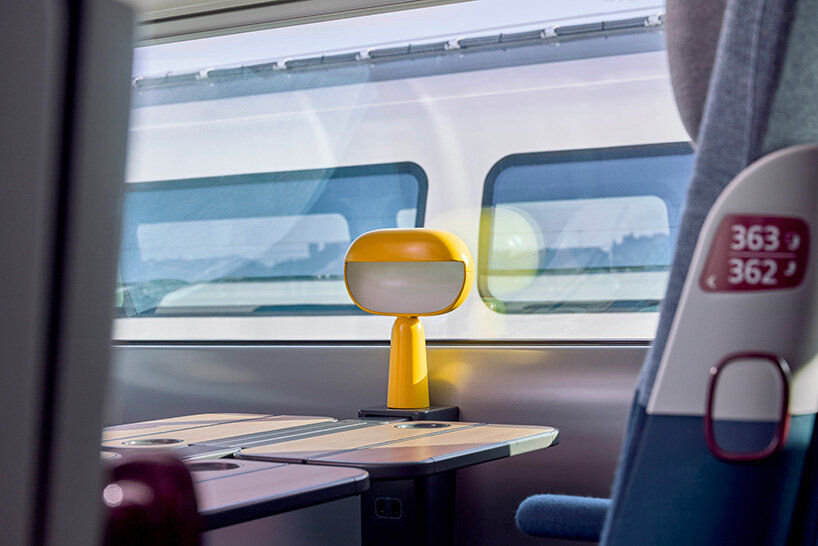
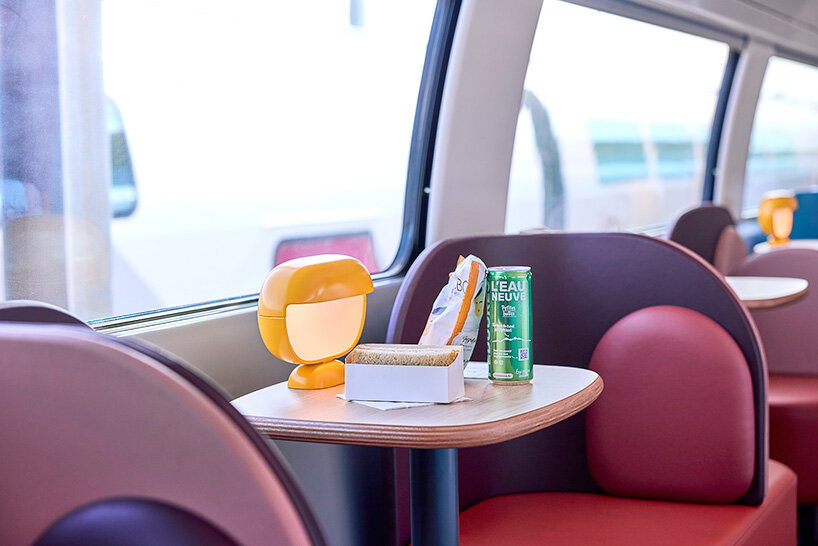
Lighting presented another opportunity to combine a consistent appearance with different functional requirements. The team developed three variations: a taller fitting that clears the folding table, a shorter version for the bar carriage, and a wall-mounted version for shared corridors. All three use the same shade. The Japanese studio describes its approach as adapting each element to its particular function while maintaining a common visual language: ‘We gave the lighting, coat hooks, and assist grips a common, pebble-like form. These details were intended to lend a comfortable softness to the space as a whole.’
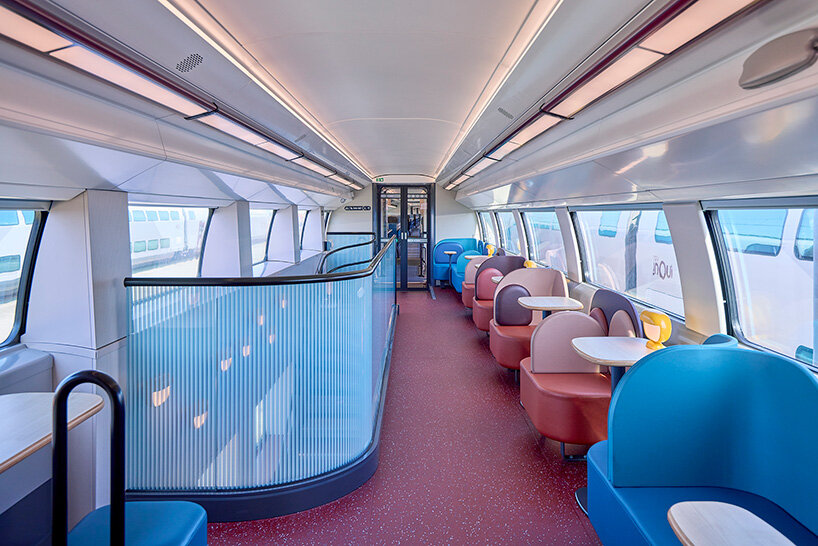
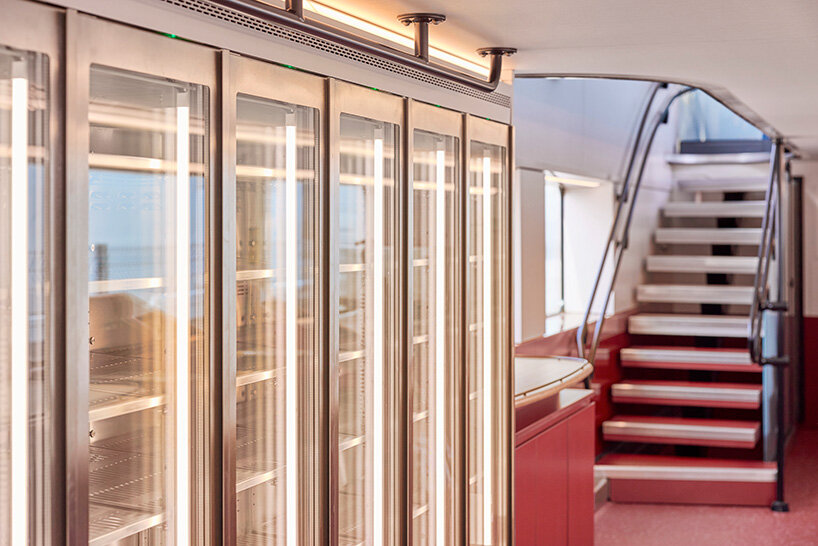
The upper deck of the bar carriage extends the riverbed reference into a shared social setting. Benches and cushions of different sizes are arranged in varying directions, recalling stones scattered along a riverbank. The arrangement accommodates different ways of spending time, ‘whether sitting quietly alone or enjoying a conversation with others,’ as nendo shares with us.
accessibility as part of the visual language
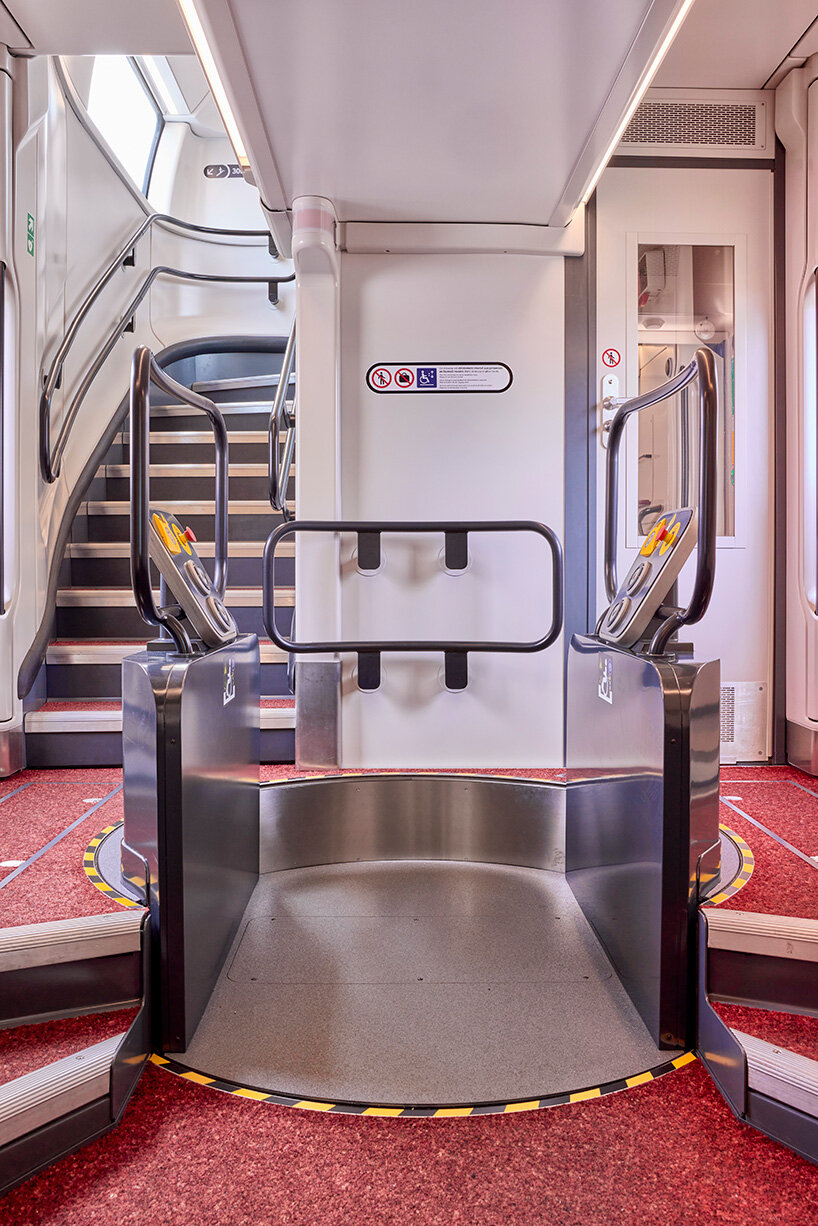
Some of the most distinctive visual decisions of the train also respond to practical requirements. The Bordeaux doors, for example, were developed to create a strong contrast with the light gray body, helping passengers with visual impairments identify boarding points. nendo explains that color plays two roles in the project: ‘Color was used both to create a sense of openness and to make boarding locations easier to identify.’ Inside, the same logic continues through the horizontal color division across the seats and walls. Folding footrests and armrests also make it easier for wheelchair users to transfer to and from their seats. The bar carriage offers a different kind of space. On the upper deck, benches and cushions of different sizes are arranged in various directions, like pebbles along a riverbank. The layout gives passengers the choice of sitting alone or gathering with others during the journey.
seven years of small decisions
The project began in 2018 and took approximately seven years to develop. For nendo, the process was not defined by one major obstacle, but by the accumulation of smaller requirements. ‘Rather than facing one major constraint, it felt as though small requirements kept arriving day after day. We tried to address each one carefully, without overlooking even the smallest detail,’ they reflect. Some of these requirements influenced the appearance of the train. The need to reduce weight, for instance, meant adding numerous perforations. By varying their shapes and spacing, nendo arrived at a pattern that recalls bubbles rising through water, turning a technical necessity into another detail connected to the original river concept.
The Bordeaux doors are another example of how a practical requirement became part of the design. Their contrast with the light gray body helps passengers with visual impairments identify the entrances. nendo sees this as one of the details that worked particularly well: ‘Combining Bordeaux doors with a light grey body turned this requirement into an accent for the exterior – a detail we particularly like.’ The development also coincided with the COVID-19 pandemic, which made travelling to France and testing physical mock-ups difficult. The team adapted by working with nendo staff based in France and adjusting the schedule. As the studio remembers, ‘There were times when travel to France and testing with mock-ups were difficult.’
Now in service, TGV INOUI puts these ideas to the test. The river motif appears throughout the train, from the exterior patterns to the cabin colors, rounded fittings, and bar carriage seating. A concept inspired by the way trains move through the landscape has become part of the journey.
This article is part of designboom’s STATES OF MOTION chapter, exploring how architecture, design and art are transforming the way we move. These stories rethink the experience of movement through evolving transit spaces, mobile habitats, inclusive infrastructure, slower journeys and kinetic art – learn more here! Each designboom editorial series explores one theme in depth through projects, interviews, features and news across architecture, design, art and technology. Discover more chapters here, and get in touch if you’d like to submit a story through our submissions portal or contact form.
shop
your own online design shop — no sales commission collected