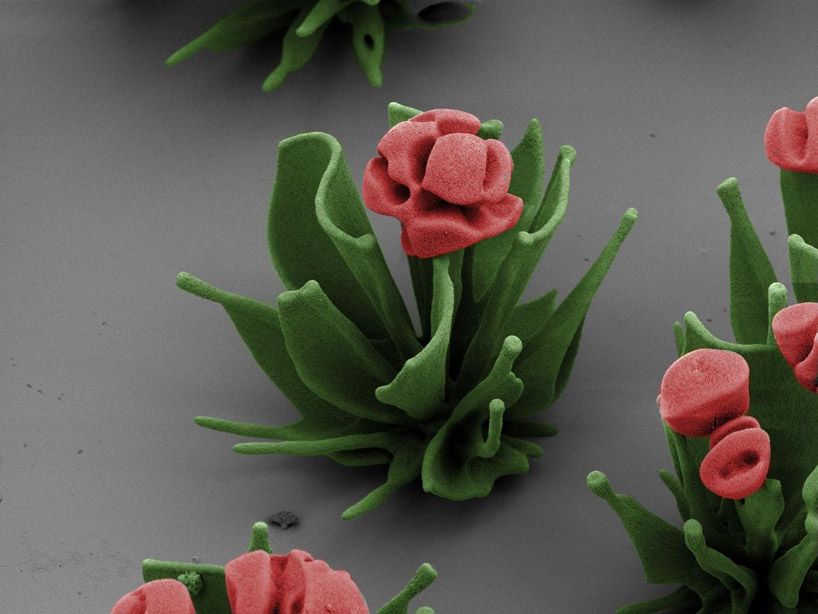
harvard researcher grows microscopic crystal flowers
a collective of microscopic flowers are produced by dissolving barium chloride and sodium silicate into a beaker of water.
harvard researcher grows microscopic crystal flowersall images © wim l. noorduin
wim l. noorduin, a postdoctoral candidate at the harvard school of engineering and applied sciences, has grown a collective of microscopic crystal flowers by dissolving barium chloride and sodium silicate into a beaker of water. in a chemical reaction, barium carbonate crystals are formed as carbon dioxide from the air to diffuses the solution, creating intricately jagged forms and patterns. ‘in nature, you see many complex shapes and patterns,’ says wim noorduin ‘there’s a huge interest to grow complex shapes at the microscale,’ in response to differences in the environment, the structure of a shell dramatically changes as the acidity of the solution and the temperature become modified. images are then taken using an electron microscope – which capture details of the composition.
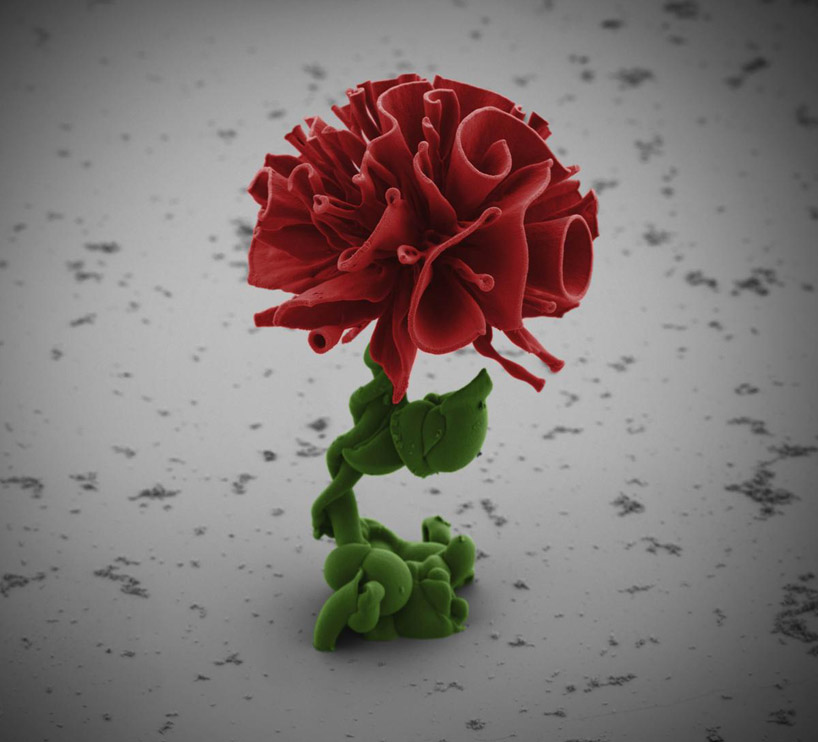 a collective of microscopic flowers are produced by dissolving barium chloride and sodium silicate into a beaker of water
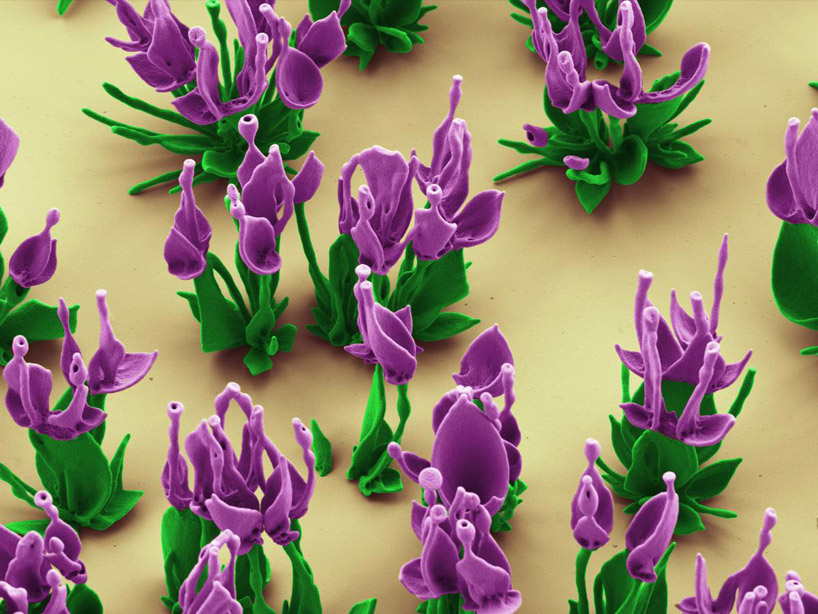 in a chemical reaction, barium carbonate crystals are formed as carbon dioxide from the air to diffuses the solution, creating an intricate jagged forms
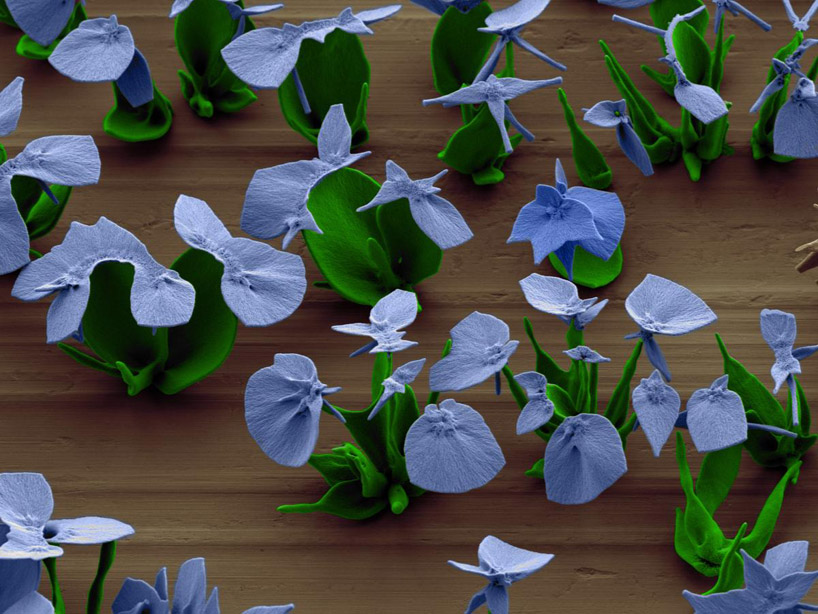 the structure of a shell dramatically changes as the acidity of the solution and the temperature become modified
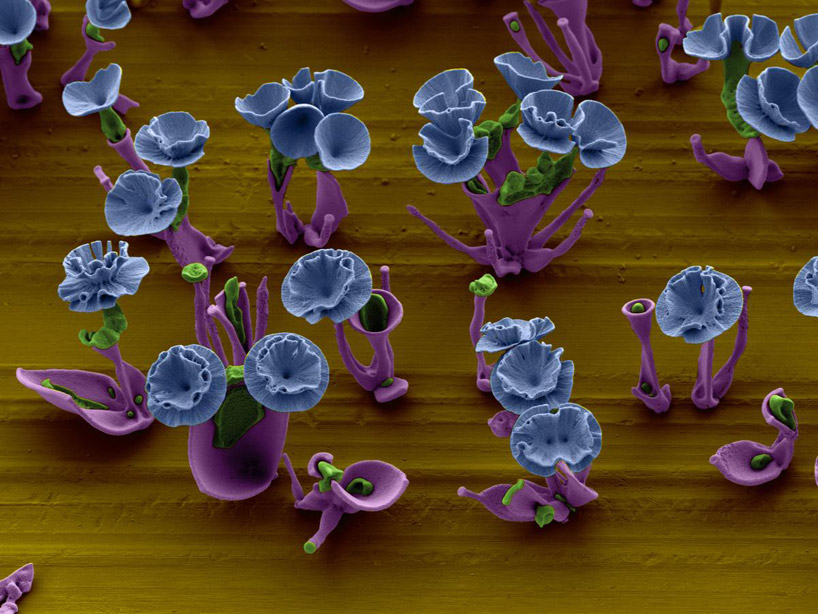 images are then taken using an electron microscope – which capture details of the composition.
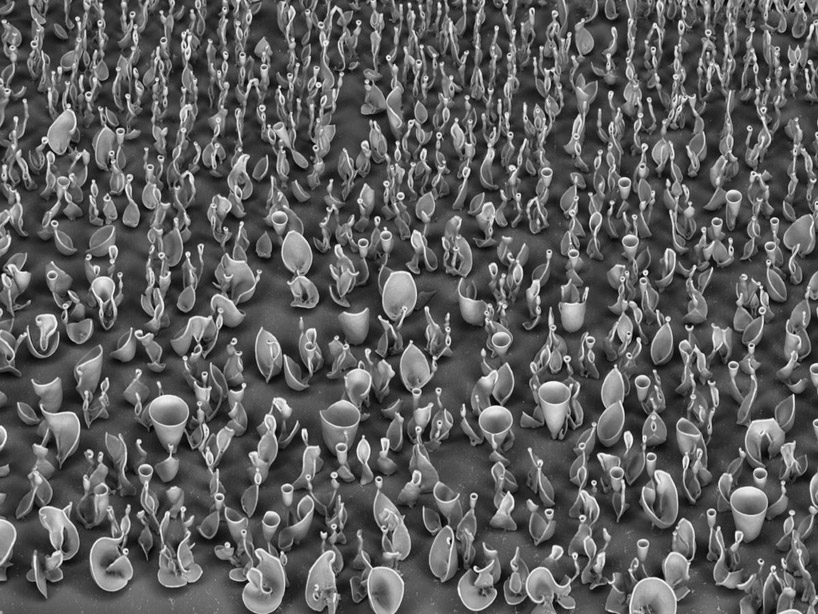 garden of flowers
shop
your own online design shop — no sales commission collected