resinance: smart materials and swarm-like interactions
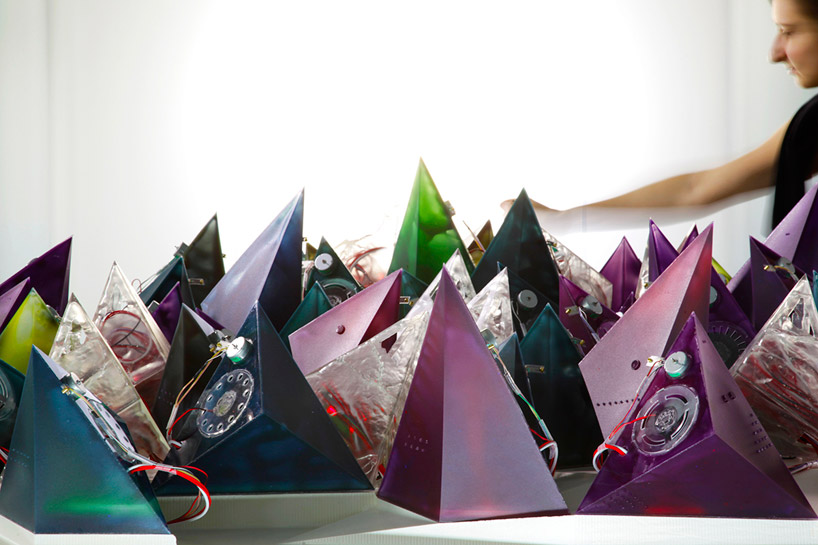
the installation develops autonomous, unpredictable swarm-like behavior depending on the tactile input of the individual molded polyester resin units.
resinance: smart materials and swarm-like interactionsimages courtesy materiability research network
exploring the potential use of smart materials in an architectural context, ‘resinance’, a project developed by the students of MA of advanced studies class at the chair for CAAD is strongly influenced by the behavior of simple organic life forms – in particular the formation of cellular colonies – represents an ecology of functional units that both work autonomously, but also in coordination with their neighboring components. consisting of 40 active elements that gradually change their surface color in response to human touch, each device is equipped with a second actuator, providing transparency to the slow transformation that directly responds through shivers and vibrations. produced from rotationally molded polyester resin that is enhanced with thermo-chromatic pigments, the units choreograph the behavior of the particular clusters and transmit the current state of each element to its adjacent counterpart. depending on the tactile input of the individual volumes the installation network develops autonomous, unpredictable swarm-like behavior.
‘resinance’images courtesy materiability research network
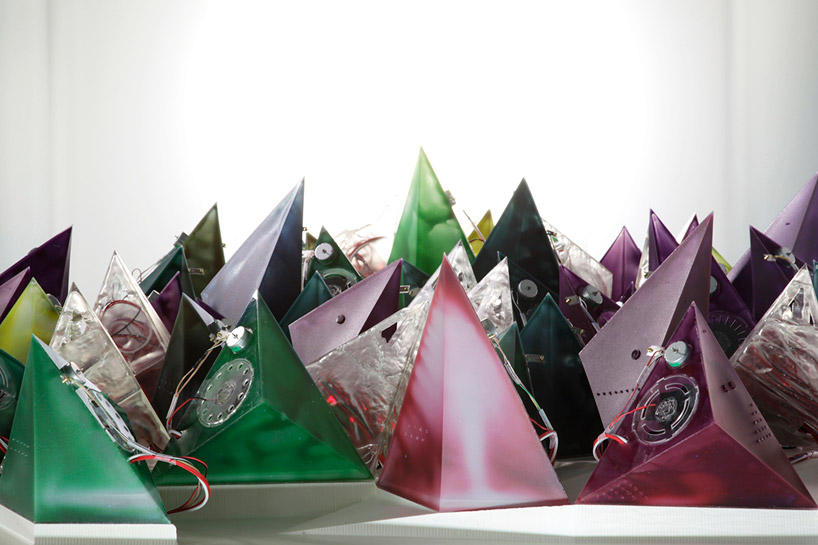
the swarm-like interactions explore the potential use of smart materials in an architectural context
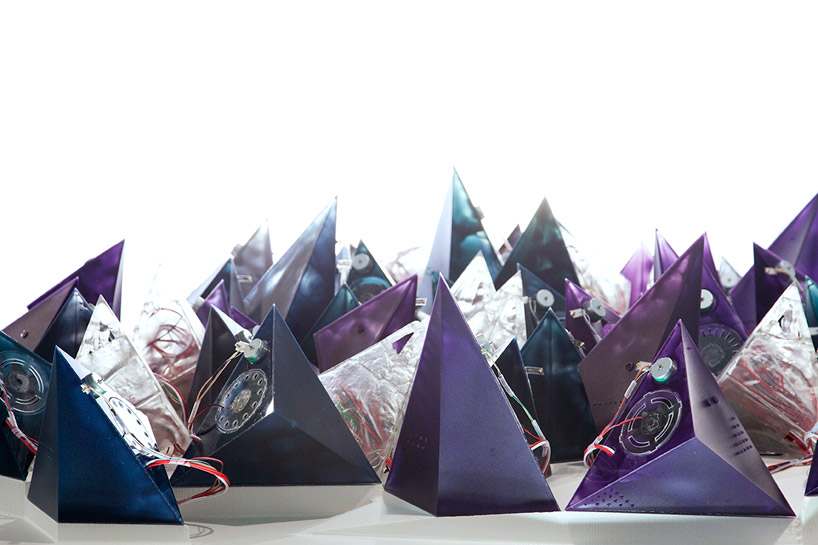
the ecology of functional units work autonomously, in coordination with their neighboring units
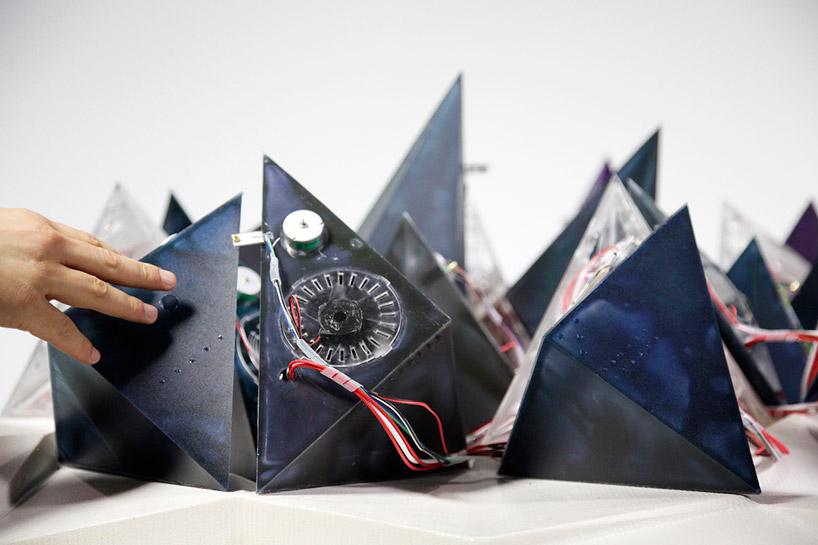
each device is equipped with an actuator, providing transparency to the slow transformation that directly responds through shivers and vibrations
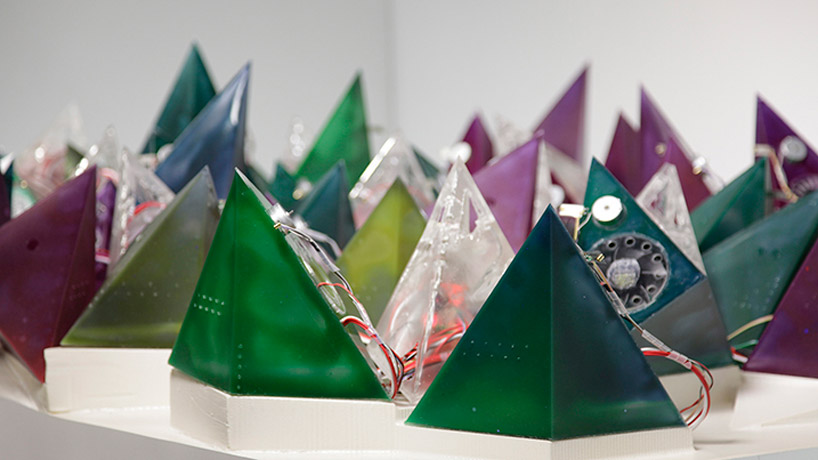 depending on the tactile input of the individual volumes the installation network develops autonomous, unpredictable swarm-like behavior
project information:
created by:
baldwin markin jessica janjusevic tihomirjiang nanletkemann joel miranda turu nicolásprieler irene schildberger david shammas demetrissmigielska mariatanigaito akixexaki evixydis achilleasyuko ishizu
co-supervision:
benjamin dillenburger and hironori yoshida, CAAD weixin huang and lei yu, tsinghua university, china tomasz jaskiewicz and mariana popescu, hyperbody, TU delft, netherlands andrei pruteanu and stefan dulman, embedded software group, TU delft, netherlands