nendo: exhibition design for the canadian museum of civilization
strong connections between classic japanese design and its impact on modern society and technology are showcased to honor the east asian country's strong rebound after the earthquake.
[FEATURED]
‘japan: tradition. innovation.’ at the canadian museum of civilization image © jimmy cohressen
japanese studio nendo is responsible for the exhibition design of the recent ‘japan: tradition. innovation’ exhibition
at the canadian museum of civilization, honoring japan’s impact on contemporary design and technology.
the installation shows how most innovations are rooted in the traditions of the past. modern art,
technology and design are placed next to traditional items from the edo period (1603-1867) to show
how the incorporation of past ideas have been put into current practices. such juxtapositions include
manga comic books and its descendant, woodblock prints, as well as the compact car embodying
characteristics of the portable carriage.
at the canadian museum of civilization, honoring japan’s impact on contemporary design and technology.
the installation shows how most innovations are rooted in the traditions of the past. modern art,
technology and design are placed next to traditional items from the edo period (1603-1867) to show
how the incorporation of past ideas have been put into current practices. such juxtapositions include
manga comic books and its descendant, woodblock prints, as well as the compact car embodying
characteristics of the portable carriage.
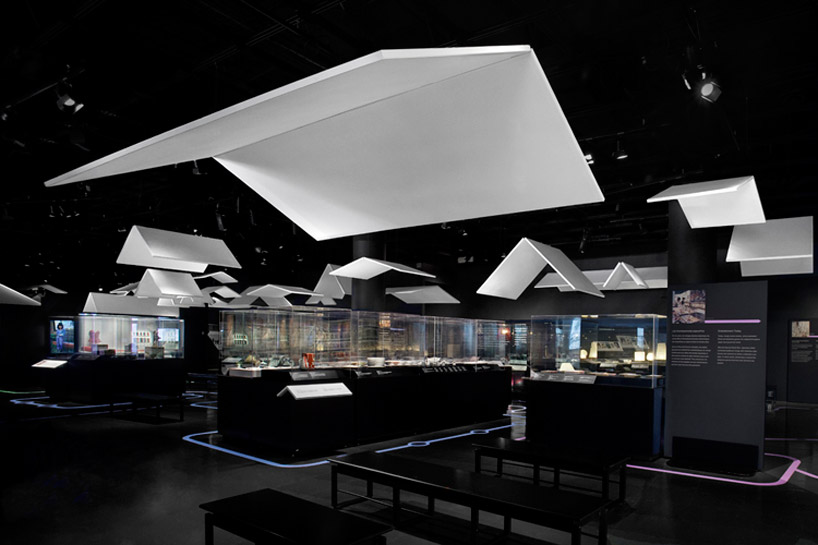
the 650 meter square hall is divided into five separate parts, each focusing on a different aspect relating
to japanese culture. travel, automation, social status, consumer culture and entertainment are defined by
different colored wayfinding graphics leading visitors through the exhibit. instead of employing walls for separation,
the zones are established using white roofs, playing with the definition of what it means to be inside verses outside.
the ancient concept of ‘ma’ (positive space) and ‘shikiri’ (joineries) are also incorporated in the layout of the installations
but not made obvious, therefore the visual impact of seeing through large spaces mimics the chaotic experience
of being in a large japanese urban areas.
to japanese culture. travel, automation, social status, consumer culture and entertainment are defined by
different colored wayfinding graphics leading visitors through the exhibit. instead of employing walls for separation,
the zones are established using white roofs, playing with the definition of what it means to be inside verses outside.
the ancient concept of ‘ma’ (positive space) and ‘shikiri’ (joineries) are also incorporated in the layout of the installations
but not made obvious, therefore the visual impact of seeing through large spaces mimics the chaotic experience
of being in a large japanese urban areas.
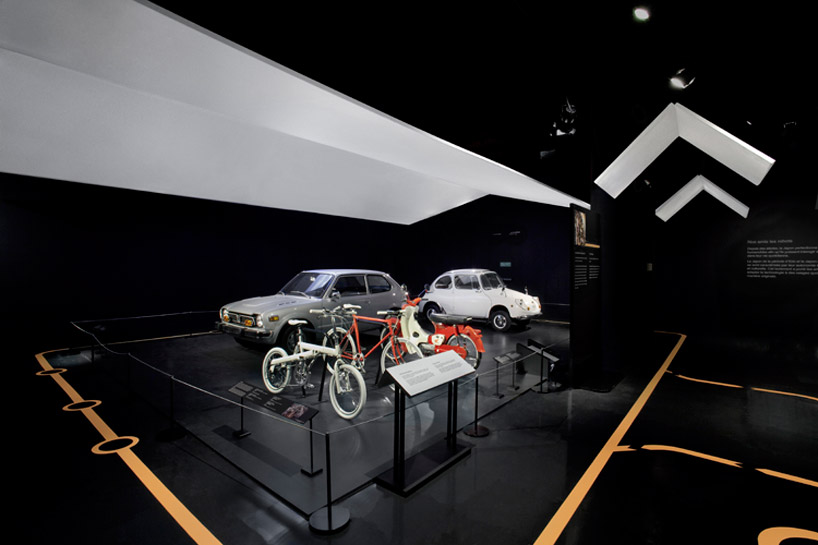 spaces are defined by white roofs
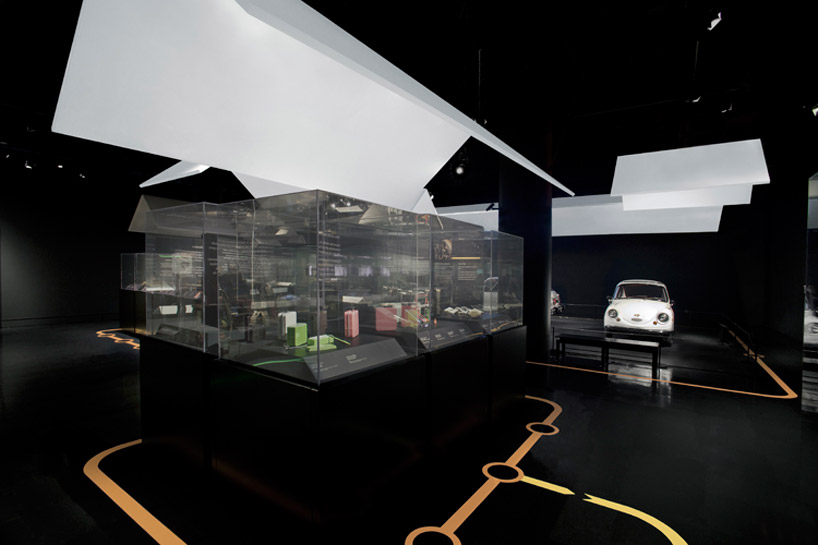 colorful graphic wayfinding leads visitors through space
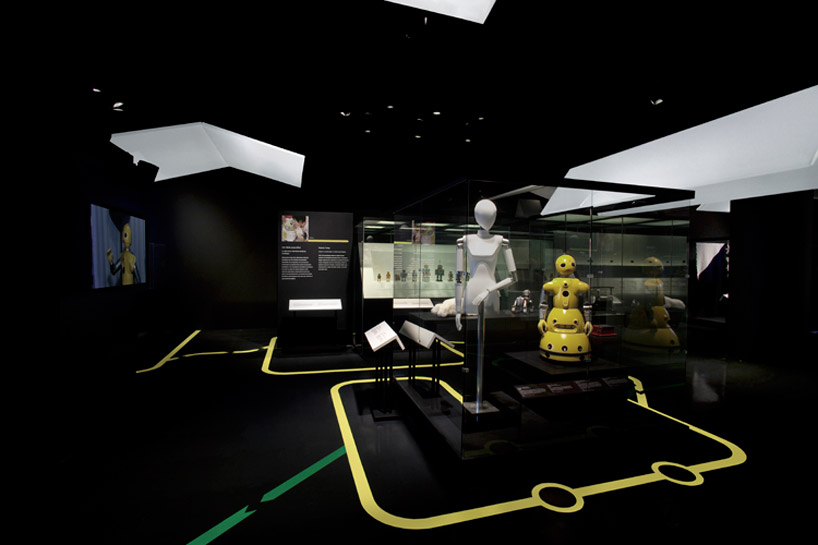 technology of past compared to new advances
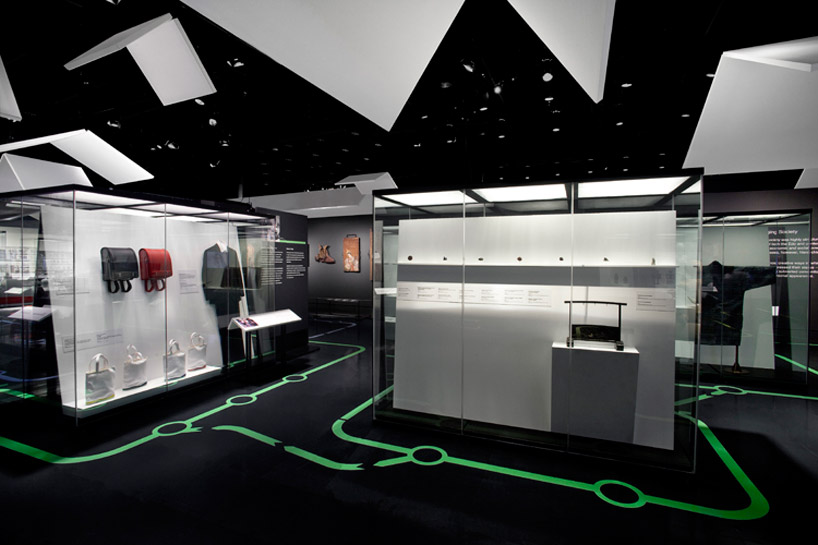 general view
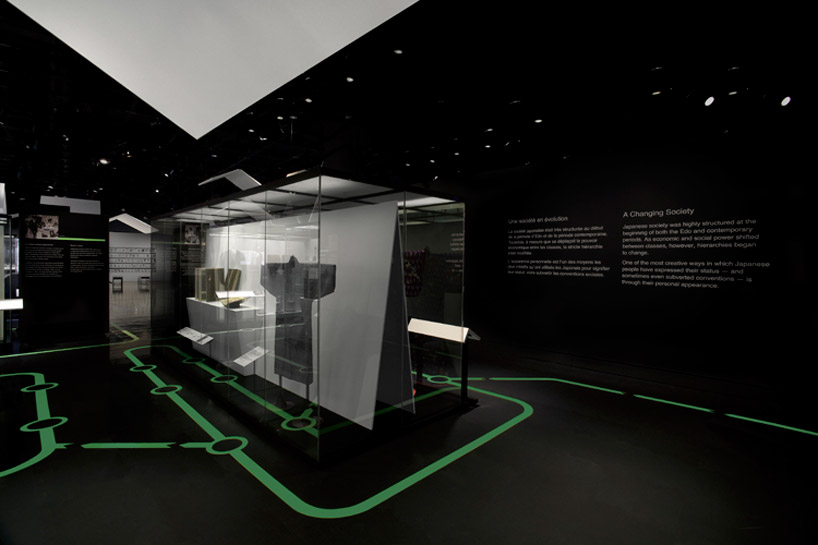 black walls, floor, and ceiling contrast with white roof and backdrop
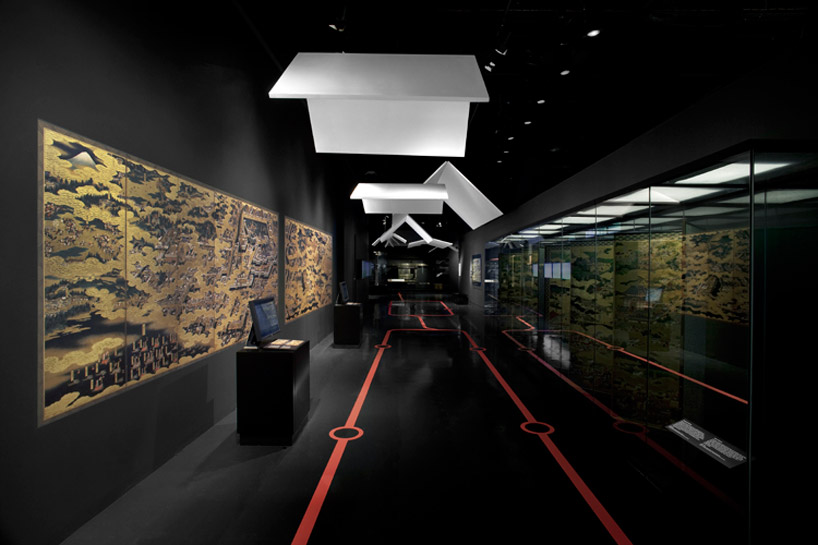 visitors follow map-like graphics along the exhibit