willy chong cultivates his dual heritage with paper shelf and silk rug
the furniture units are a marriage of materials with roots from both chinese and swedish culture, demonstrating, through design, what the two heritages have in common, rather than how they are different.
willy chong cultivates his dual heritage with paper shelf and silk rug
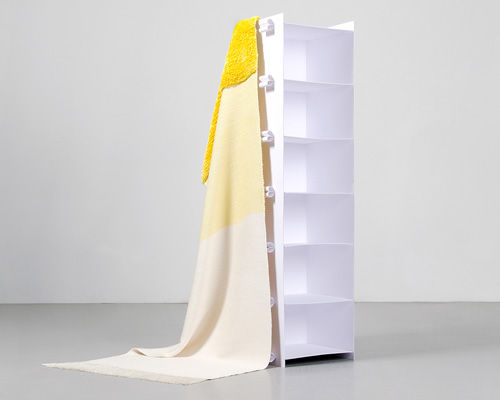
(above) the shelf ‘paper’ and the rug ‘silk’
all images courtesy of willy chong
designer willy chong has cultivated his dual heritage of chinese and swedish into his creative practice, choosing two materials with roots from both places — paper and silk — for the design of a shelf and a carpet. ‘for a long time, my nationalities created problems for me, and to some extent even today.’ chong describes ‘in recent years, I have learned that I am not chinese or swedish, and that I do not have to be any of them, but i’m a selection; a synthesis of these two, if not more. rather than showing the differences between these two cultures, I chose to focus on what they have in common.‘
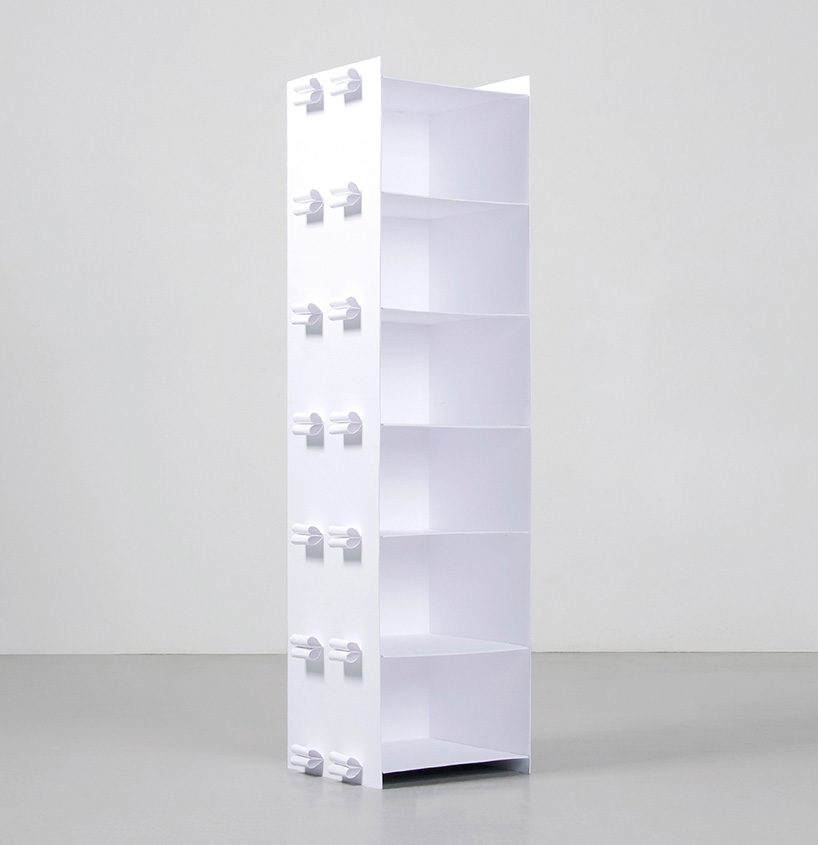
the shelf ‘paper’ is made of regular paper sheets normally used for making books
the invention of papermaking and printing in ancient china — a skill that spread through the silk road, and which sweden mastered in modern times — allowed for the transfer of knowledge and stories to the next generation. chong depicts the material by developing it in the shape of a shelf — a furniture unit designed to archive experiences. the shelf, called ‘paper’, is only made from overlapping laminated layers, which extend its height. each shelf has tabs threaded through the sides, which are secured by bending them inward, into shapes that chong describes as ‘love handles‘.
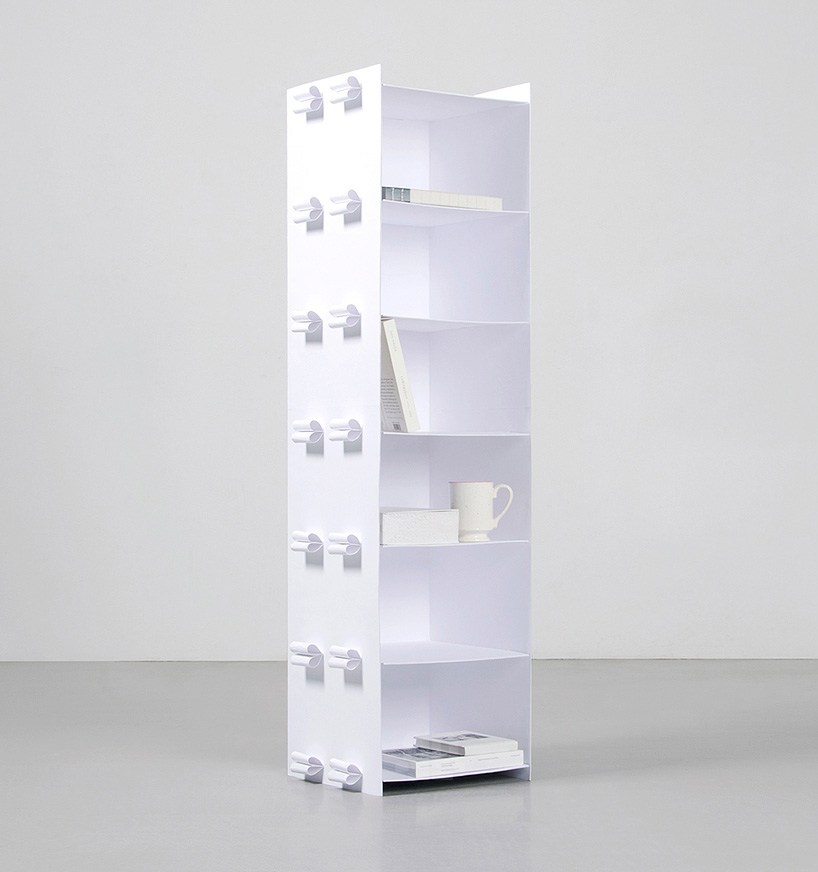
the construction is held together with tabs, that wind through the shelf sides and bend inwards
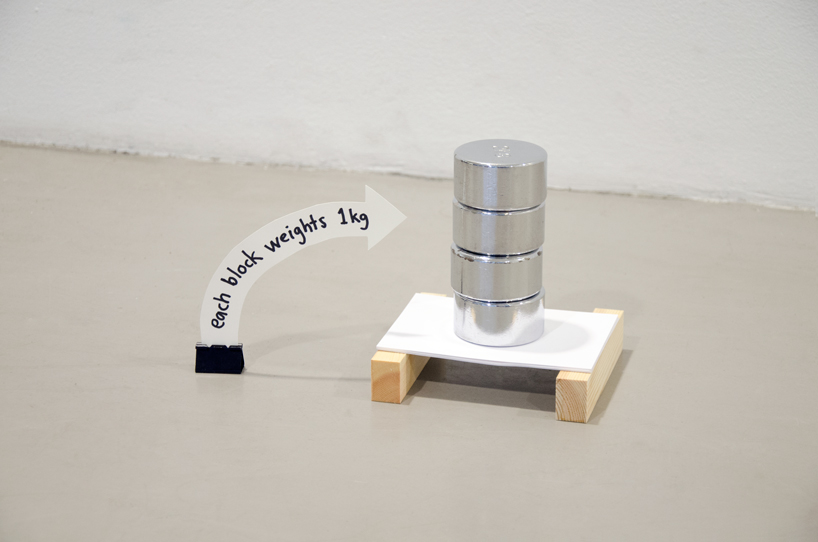
testing how much weight the laminated paper can withstand
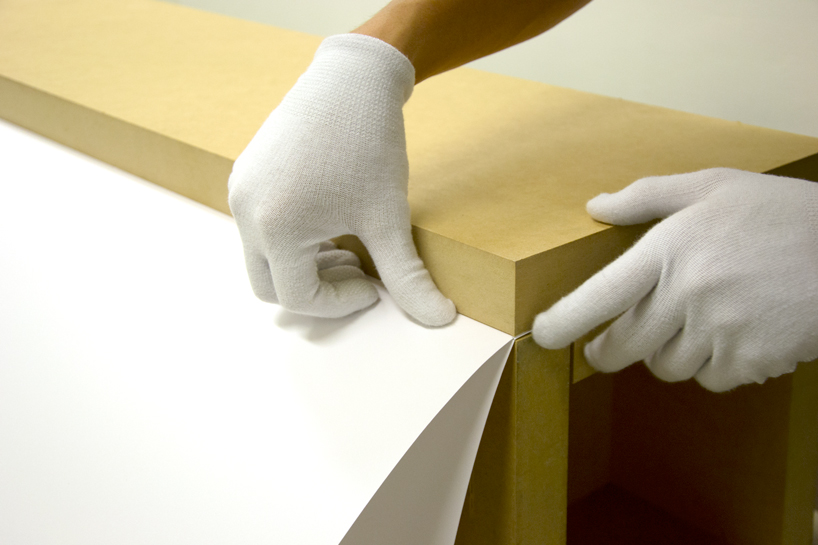
preparing to laminate the paper sheets
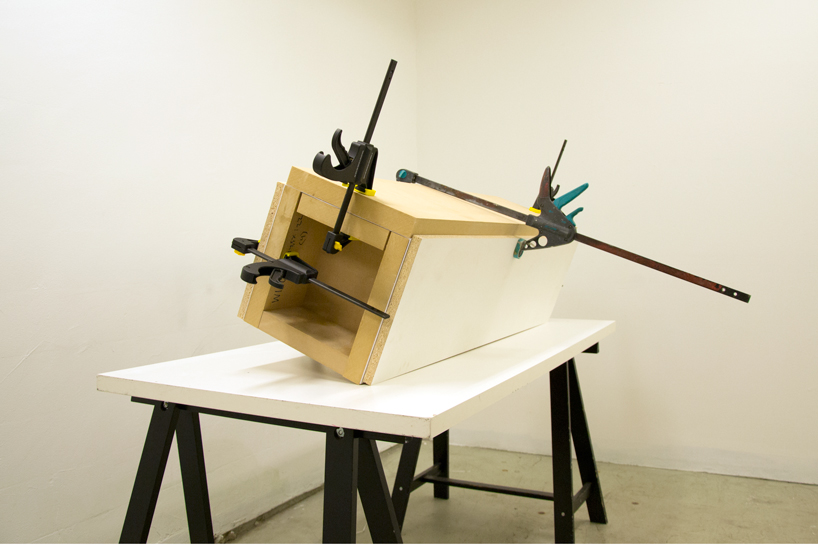
laminating the paper sheets under pressure
according to legend, silk was discovered by lei zu, a chinese empress and wife of the mythical yellow emperor xuanyuan, who was said to have ruled china around 3000 BC. during the 15th century the kingdom of sweden made an attempt at self-production, but this was short-lived and, despite a royal ban on all imports of silk, almost all silk weaving mills shut down during the 17th century. chong decided that the depiction of the natural fiber would pay homage to silk, in the form of a rug, an object which both highlights its luster and strength. influenced by two different types of tapestries — a knotted chinese carpet and the swedish rag rug — the result is the synthesis of both.
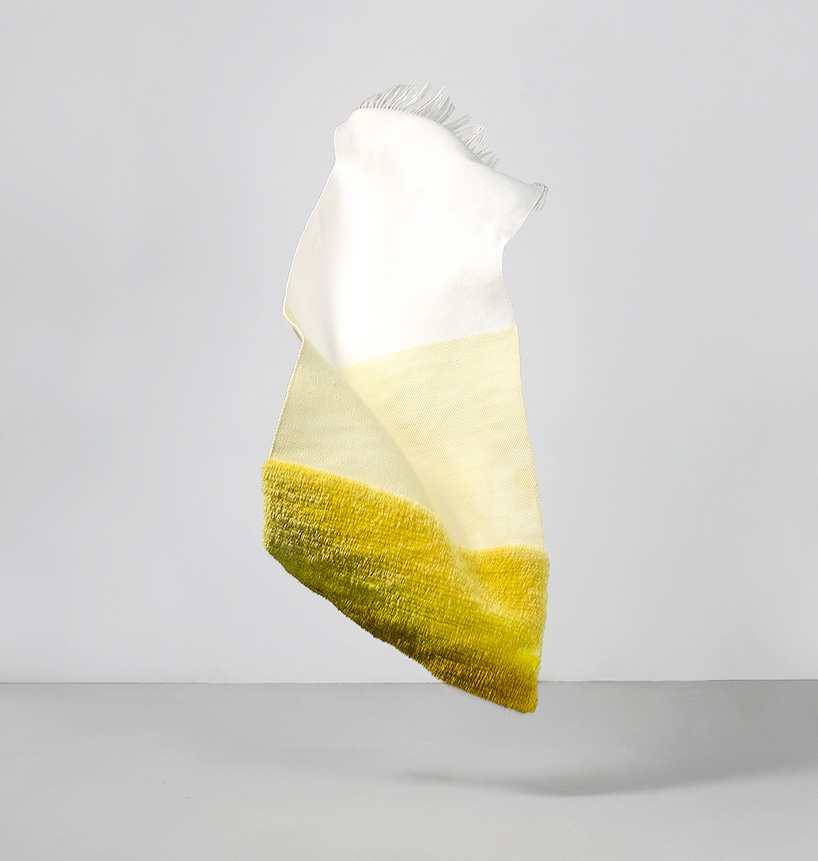
the rug ‘silk’ is made of silk yarn and dyed by hand
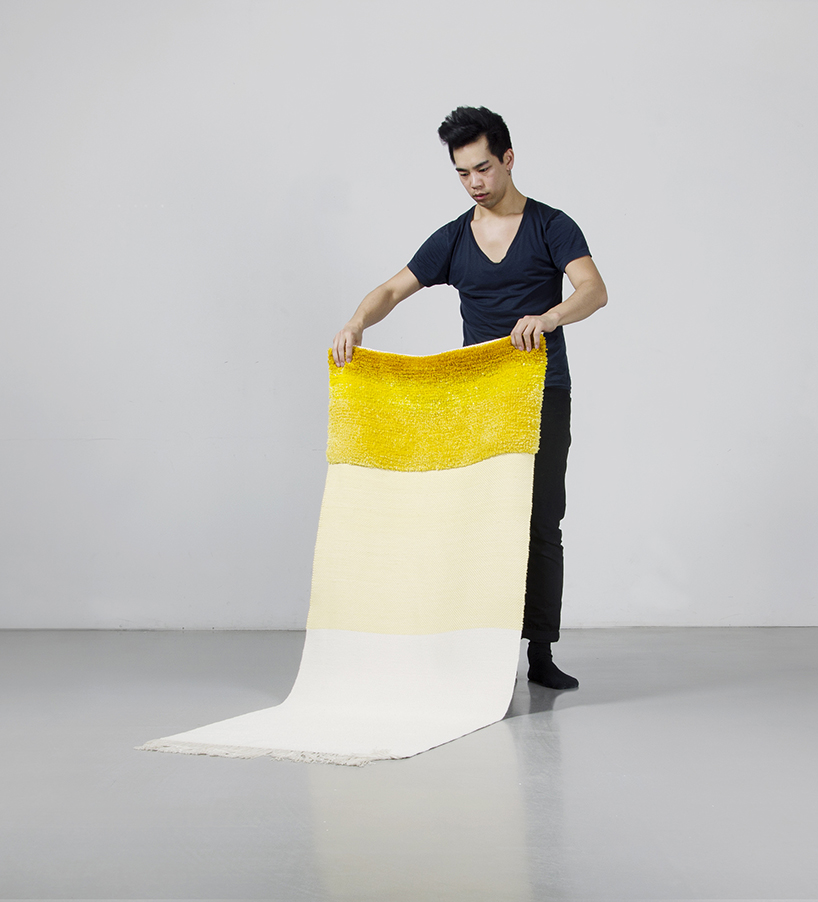
the rug is made of two different weaving techniques
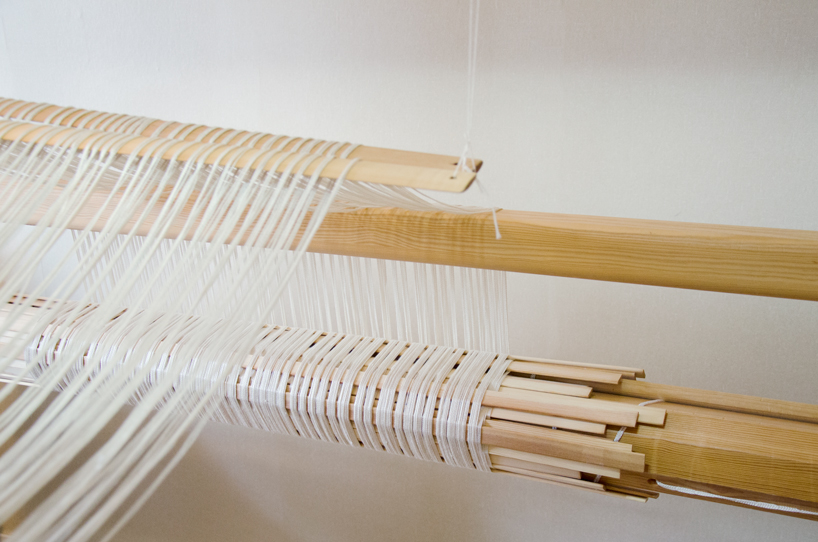
preparing the loom with silk yarn warp
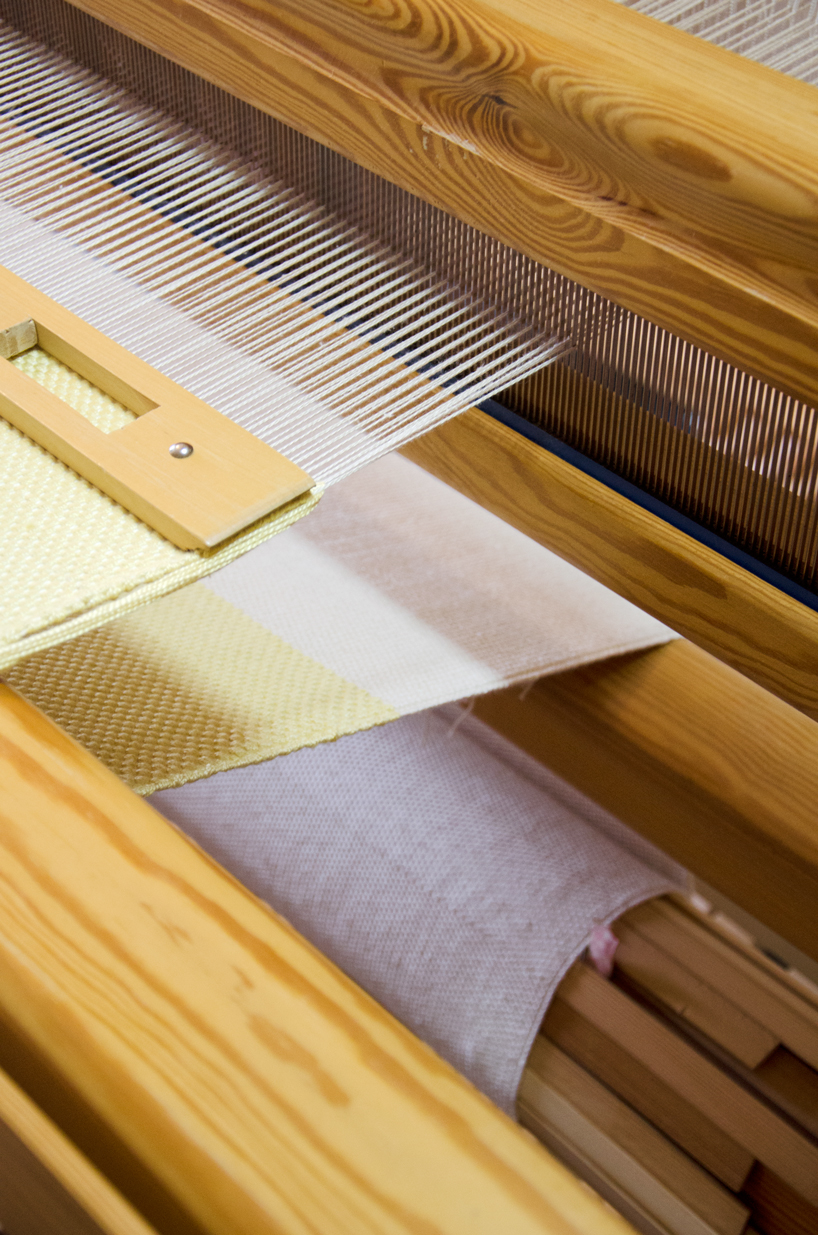
halfway through the weaving
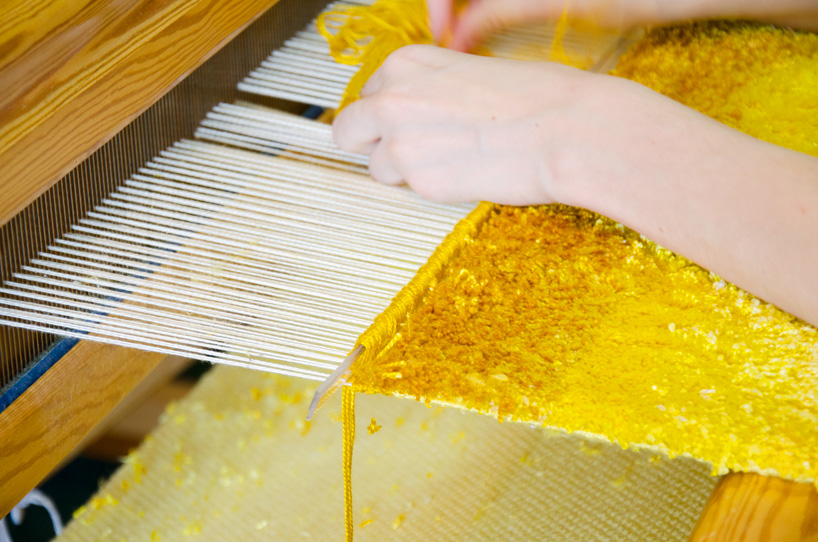
finishing touches on the rug
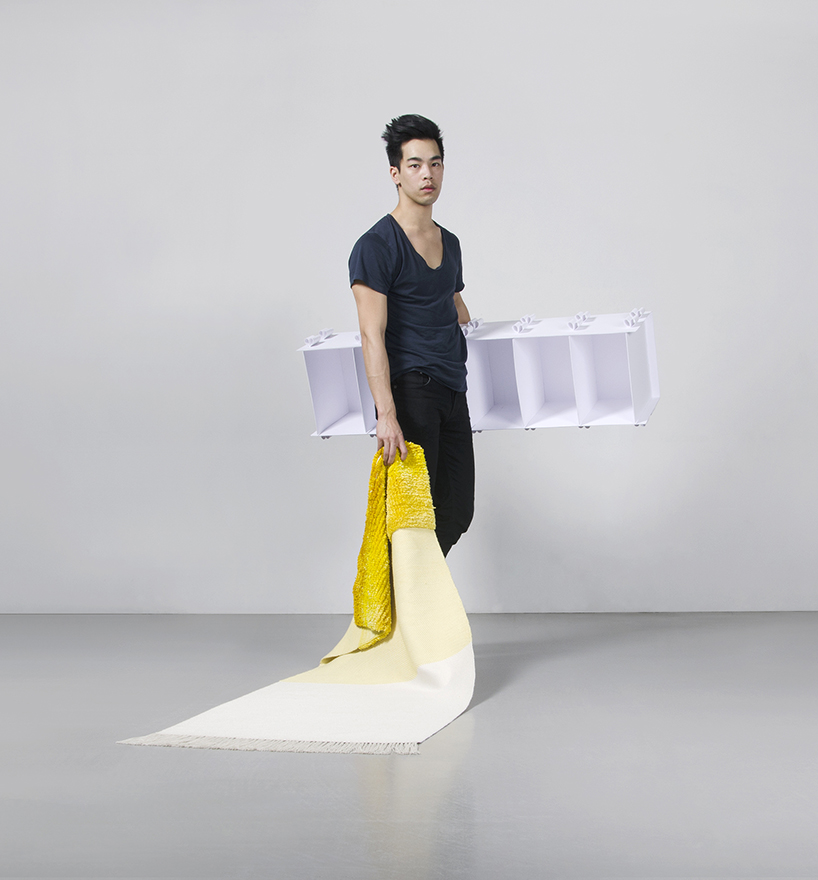
the designer with his work
designboom has received this project from our ‘DIY submissions‘ feature, where we welcome our readers to submit their own work for publication. see more project submissions from our readers here.
shop
your own online design shop — no sales commission collected