3D printed vehicle and SOM-designed building power each other wirelessly
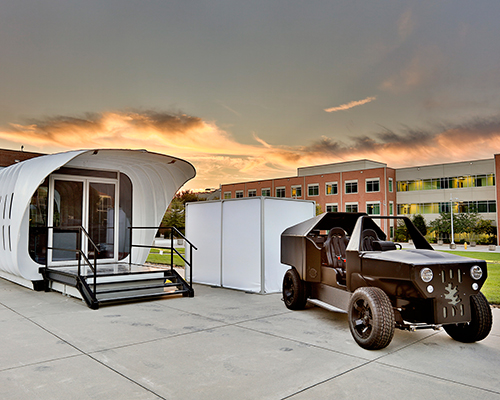
the oak ridge national laboratory worked to manufacture and connect a natural gas powered hybrid electric vehicle with a solar powered building, creating an integrated energy system.
[ADVERTISEMENT]
3D printed vehicle and SOM-designed building power each other wirelessly
image courtesy of ORNL
the U.S. department of energy’s oak ridge national laboratory (ORNL) has developed an integrated energy system, which they’re calling – ‘additive manufacturing integrated energy’, or ‘AMIE’ for short. the project comprises a natural gas powered hybrid electric vehicle and a solar powered building, designed by renowned architecture firm SOM. the approach allows the car to provide supplemental power to the 210 square foot house, even when the sun is not shining. connecting the dwelling to the car demonstrates the concept of integrating two energy streams, buildings and transportation, which typically operate independently.
overview of the system
video courtesy of ORNL
the mobile power source — combined with the structure’s highly energy-efficient design and rooftop renewable energy photovoltaics — showcase possibilities for future off grid human shelter. rapid prototyping took the project from concept to completion in less than one year, involving the university of tennessee, clayton homes, general electric, alcoa, nanopore and tru-design.
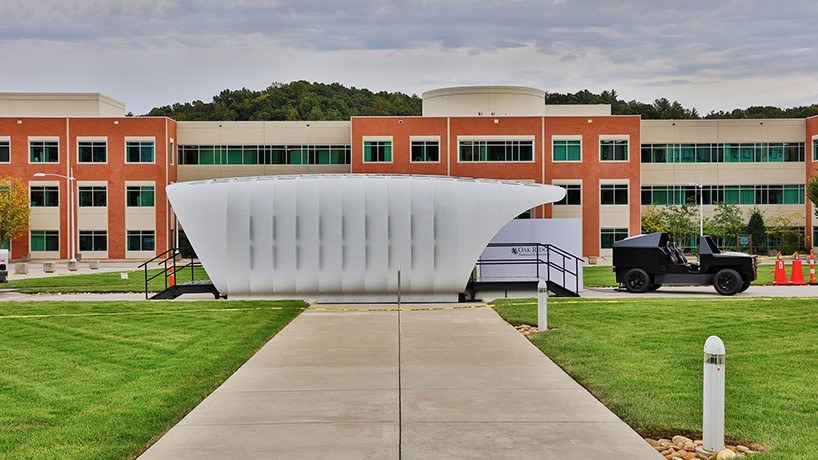
both the building and vehicle are 3D printed
image courtesy of ORNL
the SOM-designed building explores the potential for a 3D printed enclosure to condense the many functions of a conventional wall system into an integrated shell — structure, insulation, air and moisture barriers, and exterior cladding. ‘this could lead to zero-waste construction, reduced material consumption and buildings that can be ground up and reprinted for new forms and uses’, explain the architects.
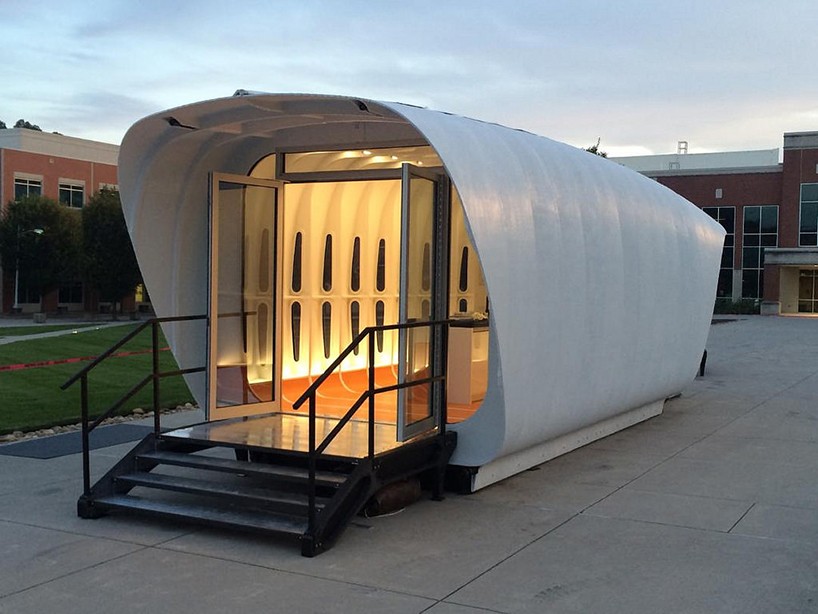
the demonstration is 210 square feet
image courtesy of ORNL
constructed of printed C-shape forms, the 38 x12 x 13 foot structure is post-tensioned with steel rods that reinforce the weak axis of the printed material. the additive manufacturing enclosure was designed to resist lateral and live loads consistent with building codes. full-scale load testing was undertaken to confirm the performance of the design.
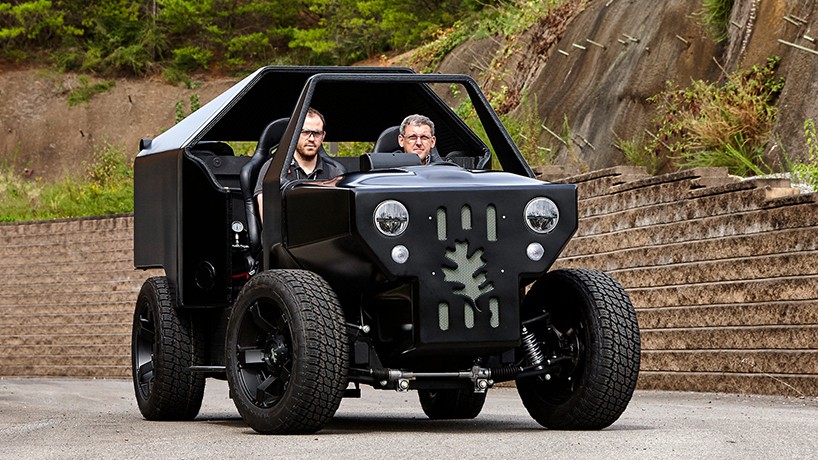
the car is powered by natural gas and electricity
image courtesy of ORNL
the structure’s photovoltaics will work in tandem with a natural gas powered generator, located in the DOE-created vehicle, to supply energy for lighting, and the GE-developed central microkitchen that incorporates advanced digital display screens, inductive cooking surfaces, waste filtering faucet and sinks, and an undercounter refrigerator. importantly, the photovoltaic will charge the enclosure’s battery when the fixtures are not in use.
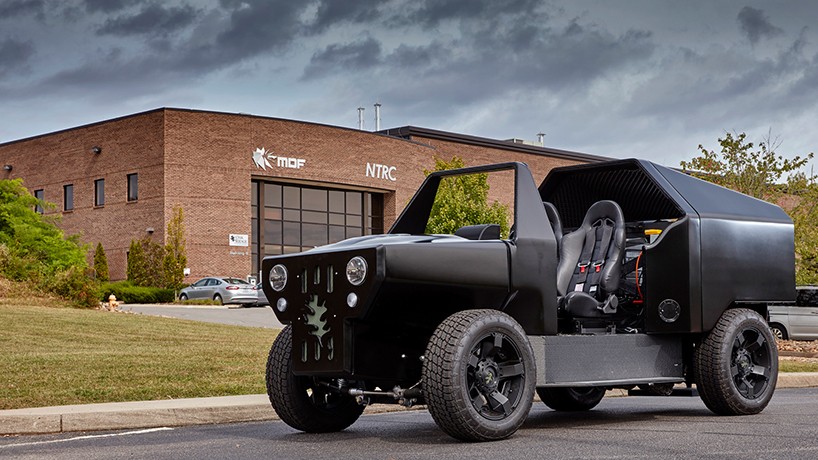
the car fits two passengers
image courtesy of ORNL
controls for the power management of the building maximize the efficiency of the system’s components. the project’s hub manages the system’s electrical demand and load from the 3.2-kilowatt solar array with extra power from the vehicle. ‘AMIE’ hopes to exhibit a pioneering move toward energy use, storage, and consumption. 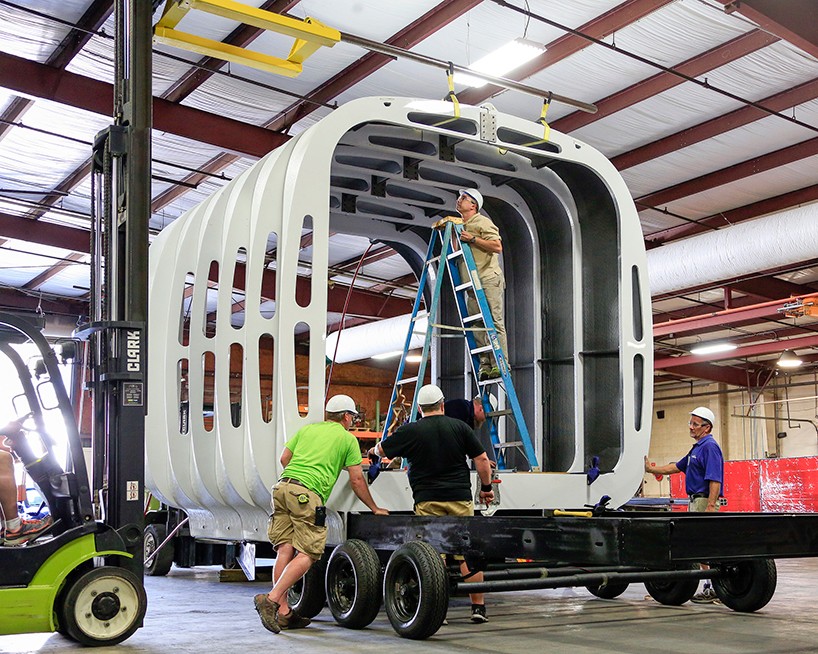 construction of the home
image courtesy of ORNL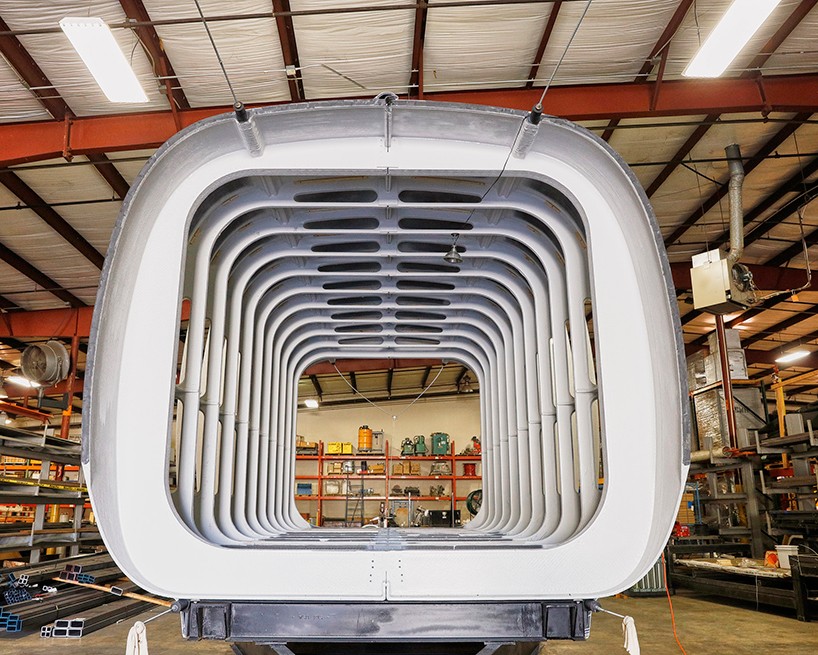
the home is constructed from multiple smaller frames
image courtesy of ORNL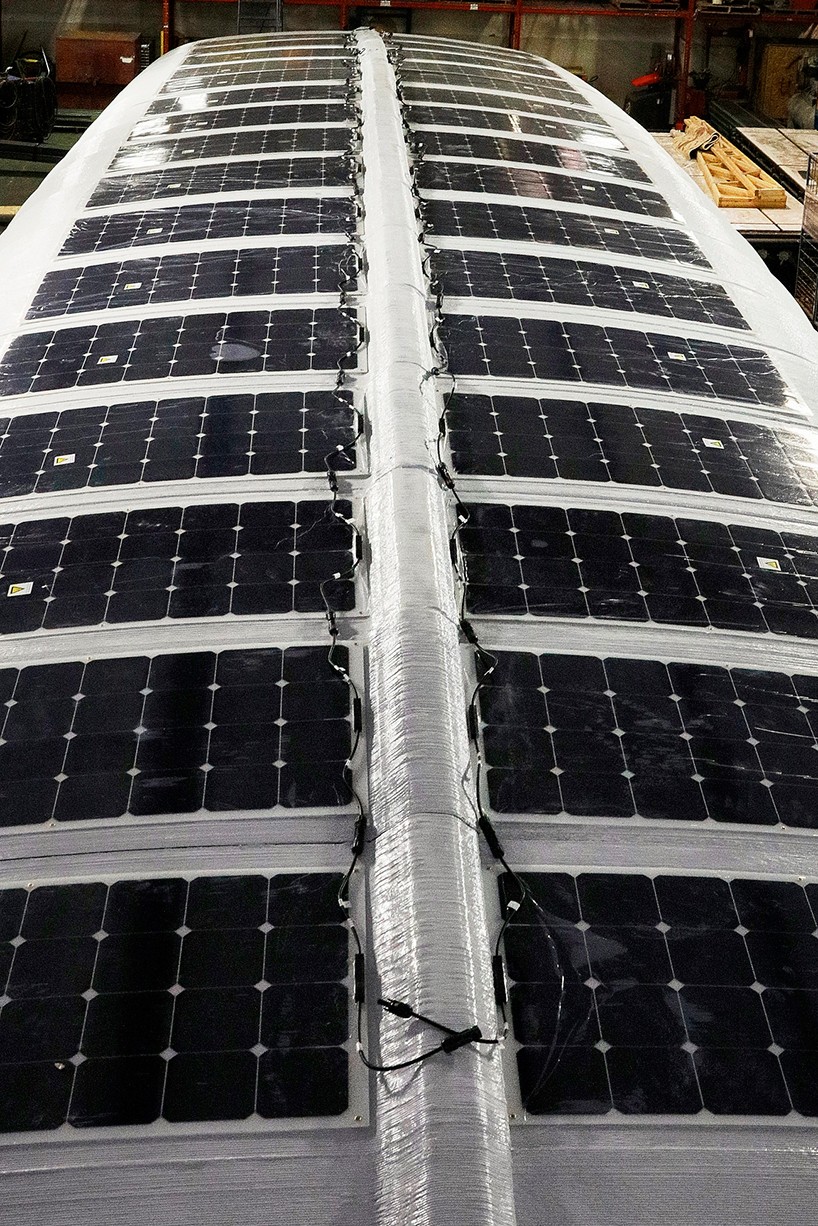
the solar array on the roof
image courtesy of ORNL
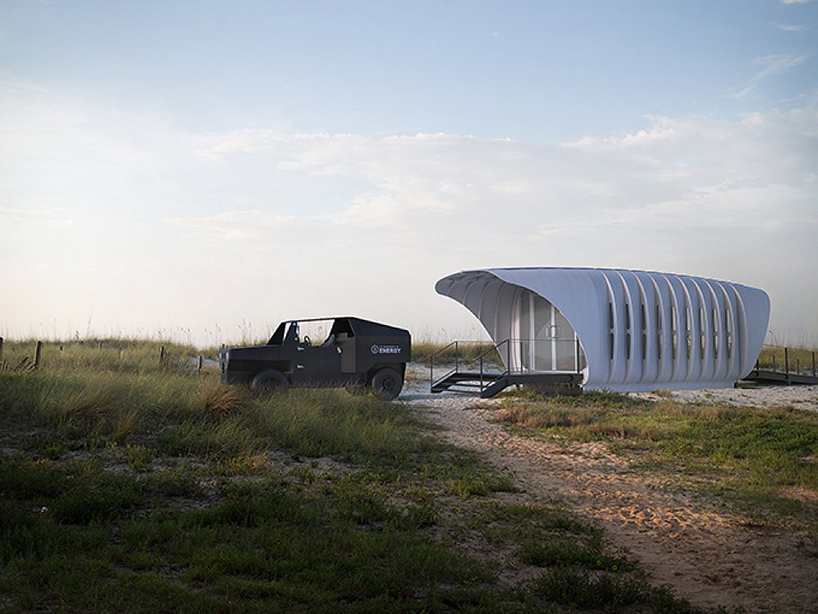
the AMIE building explores the potential for a 3D printed enclosure
image © SOM
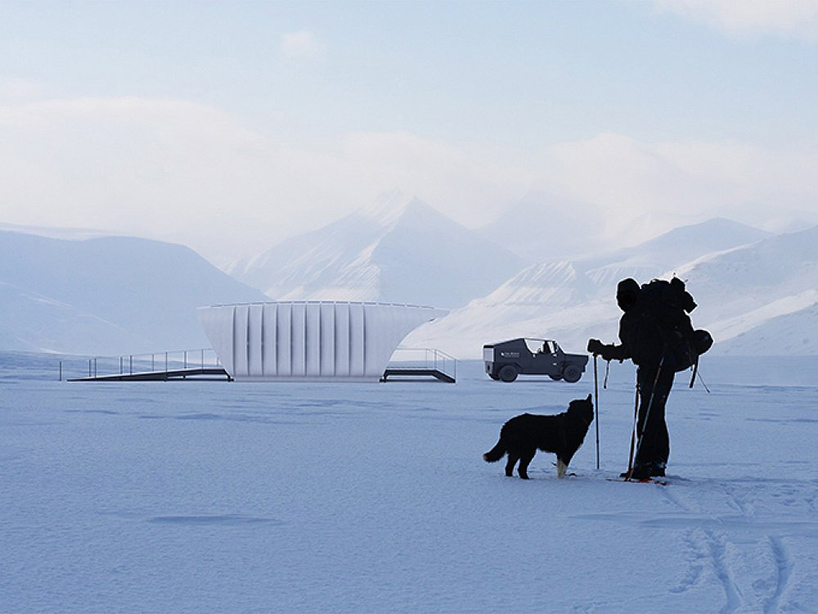
the additive manufacturing enclosure was designed to resist both lateral and live loads
image © SOM
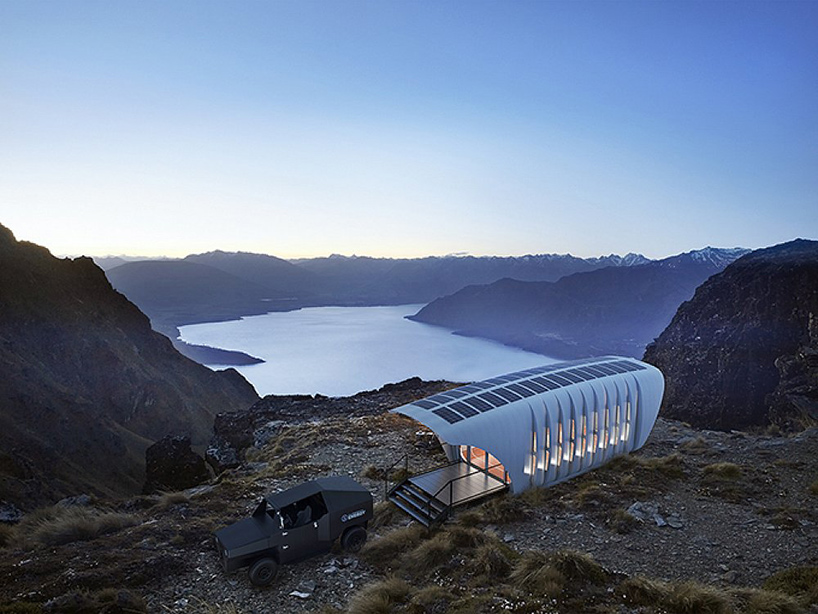
full-scale load testing was undertaken to confirm the performance of the structure
image © SOM