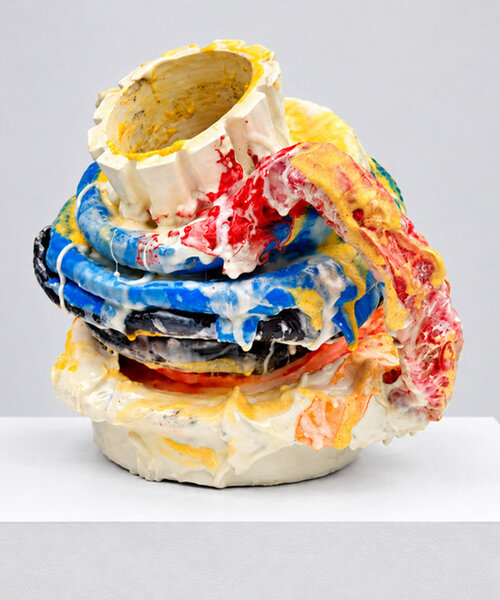
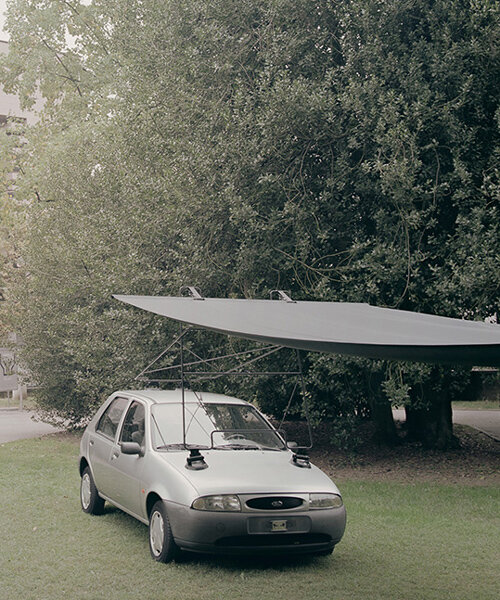
‘solids of revolution’ by max lamb
 ‘terazzo tables’ by martino gamper
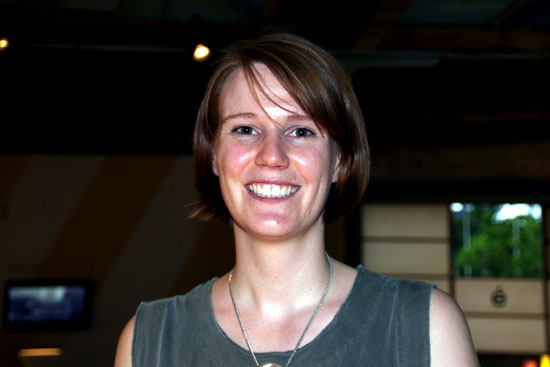
designers of the future: julia lohmann at design miami / basel 2008
julia lohmann - portrait © designboomfor design miami/ basel 2008, design miami/ named 4 'designers of the future': martino gamper, max lamb, »
prefer designboom on googlejulia lohmann – portrait © designboom
for design miami/ basel 2008, design miami/ named 4 ‘designers of the future’: martino gamper, max lamb, julia lohmann, clemens weisshaar & reed kram. each designer/collective created a new object, installation, or series using two diametrically opposed materials: concrete and wool. each designer also supplemented their work with a short video of his/her creative process. concrete was chosen as one of the materials as it reflected the site where the projects would be presented ‘the markthalle basel’ a former market hall…
 view of the the markthalle basel ceiling – image © designboom
…the dome is made almost entirely from reinforced concrete. concrete is as popular today with designers as it was when the market hall was built (1928). with the resurgence of craft processes, wool in in its many forms has gained a new vitality. the designers of the future were challenged to explore the opposing and harmonizing characteristics of the two materials.
the four designers of the future were chosen by the design miami/ committee composed of:
marc benda, didier & clémence krzentowski, murray moss & franklin getchell, and alexander von vegesack.
 ‘resilience tables’ by julia lohmann, made with concrete and wool – image © designboom
our first installment of coverage from the ‘designers of the future’ show features:
‘resilience’ concrete and wool tables by julia lohmann.
‘my response to the concrete and wool brief set by design miami/basel is based on research into manmade structures that are exposed to the elements, re-conquered by nature and demolished by humans as well as the effects of natural disasters on the built environment.
 ‘high resilience table’ by julia lohmann – image © designboom
 detail of ‘resilience table’ by julia lohmann – image © designboom
‘the concrete and wool objects on show play with a role reversal of qualities we associate with manmade and natural materials. concrete, which is normally considered a structural and long-lasting material, is cast in two-dimensional forms onto a woven wool backing. then, in a design process that harnesses destructive force and the ‘undesirable’ effects of decay as a creative tool, the concrete shapes are broken up. held together by wool, normally deemed the weaker material of the two, the fragmented forms are then reconfigured into three-dimensional shapes and fixed. this process allows the creation of a wide range of unique objects based on shapes cast in a single mould’.
 view of julia lohmann’s works at ‘designers of the future’ design miami/ basel 2008 – image © designboom
 ‘cow bench’ by julia lohmann, leather bench – image © designboom
 ‘cow bench’ by julia lohmann, leather bench – image © designboom
‘we don’t want our food to remind us of the animal it is made of and, at the same time are able to create living materials through advances in bio-technology. the ‘cow-bench’ explores the threshold between animal and material’.JL
 ‘lasting void’ – fiberglass and resin- by julia lohmann, ceramic – image © designboom
 ‘resilience tables’ by julia lohmann – image © designboom
 ‘ruminant Bloom’ by julia lohmann, lamps made from preserved sheep-stomachs – image © designboom
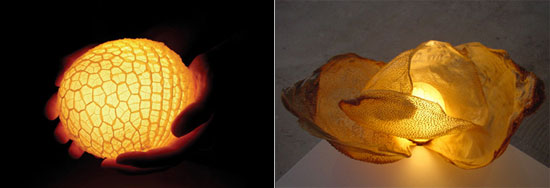 ‘ruminant Bloom’ by julia lohmann, lamps made from preserved sheep-stomachs – image © designboom
 ‘soap chair’ – soap – by julia lohmann and gero grundmann, – image © designboom
 the density and surface of the soap chair changes as it is used over time, becoming tougher and more polished. image © designboom
 ‘kelp / seaweed lamps’ by julia lohmann – image © designboom
 ‘kelp / seaweed lamps’ by julia lohmann – image © designboom
julia lohmann’s website: http://www.julialohmann.co.uk design miami/ basel 2008 website: http://www.designmiami.com/basel designers of the future: http://www.designmiami.com/basel/spotlight
 ‘vendome series’ by kram/weisshaar
shop
your own online design shop — no sales commission collected