stéphane malka forms an immersive abyss of light on 99 columns
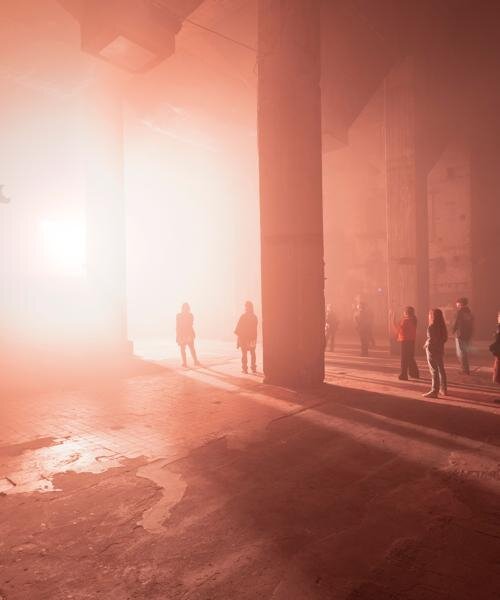
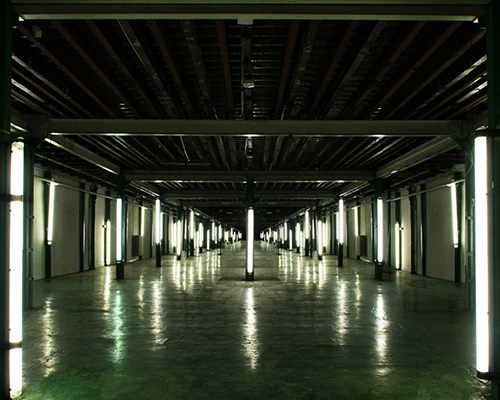
cylindrical light sources are connected to motion sensors that fluctuate in intensity throughout the hypostyle hall, completely bathing it in artificial light.
stéphane malka forms an immersive abyss of light on 99 columns
all images by laurent clement / malka architecture
for paris’ experiences art fair, stéphane malka architecture has infilled a vast exhibition space with ’99 columns’, an interactive scenographic art experience that visually and physically transforms the vacant site. attached to architectural beams installed throughout the industrial space are a sequence of vertically-oriented fluorescent tubes. these cylindrical light sources are connected to motion sensors that automatically generate fluctuating intensity within the hypostyle hall, completely bathing it in artificial light. the motion-activated system responds to visitors’ movements, blurring the line between the performance and the audience, and allowing the two to affect one other. the dynamic strings of light continually renew the viewer’s relationship to the venue, and architecture, as the space transforms, stretches and dematerializes.
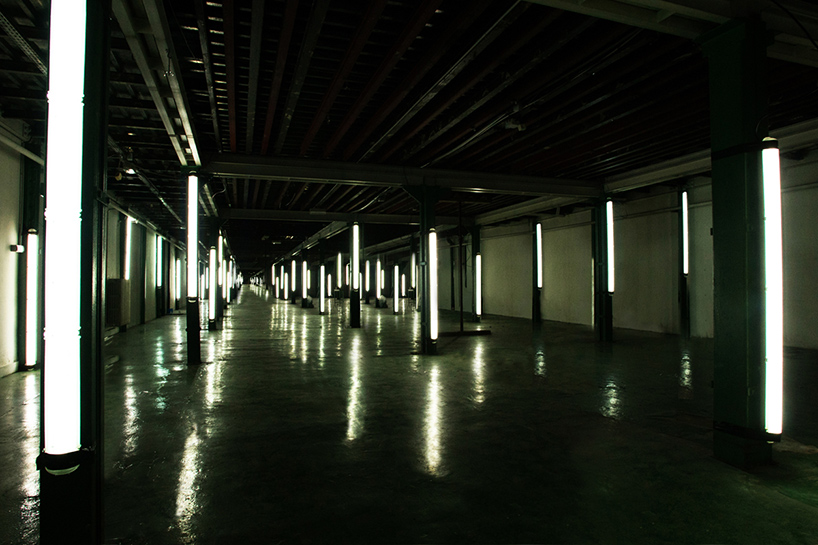
cylindrical light sources are connected to motion sensors that automatically fluctuate in intensity
this accumulation of elements — spacial, architectural and participatory — references minimalism, abstraction, and baroque, while approaching the industrial space through a contemporary lens. more than just an exposure set, the scenography reacts to the place’s specific set of rules and rhythms. aligned on the mathematics principle of recursion — the process of repeating objects in a self-similar way — the columns create an immersive, infinite space through a system of repetitive light sequences, drawing the visitor in to the depths of ever-changing abyss.
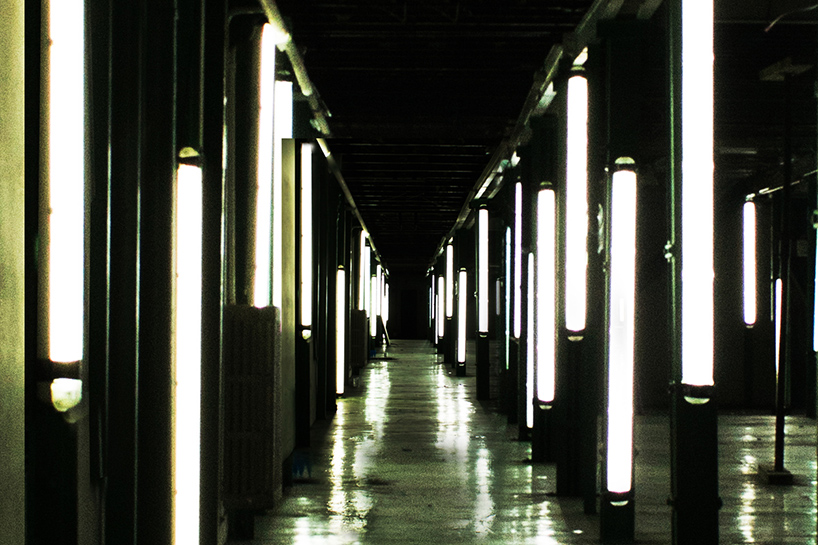
the scenographic art experience visually and physically transforms the vacant site

a sequence of vertically-oriented fluorescent tubes are attached to architectural beams
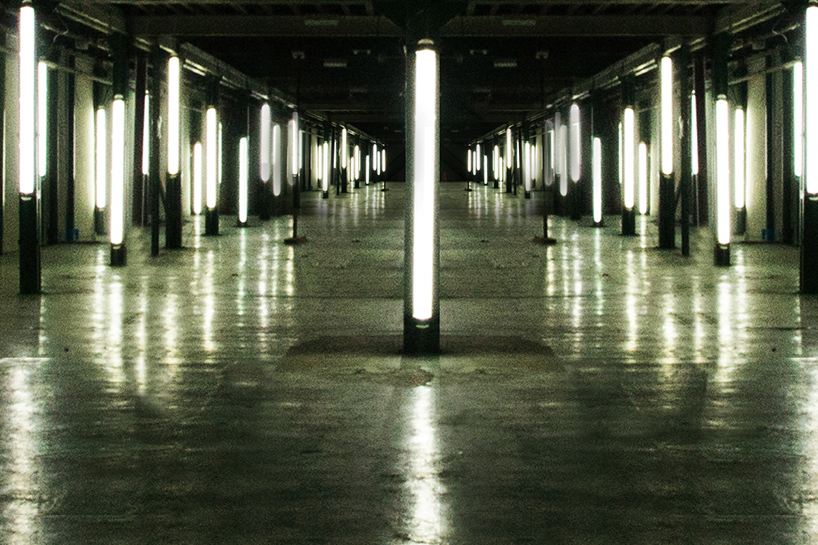
the motion-activated system responds to visitors’ movements
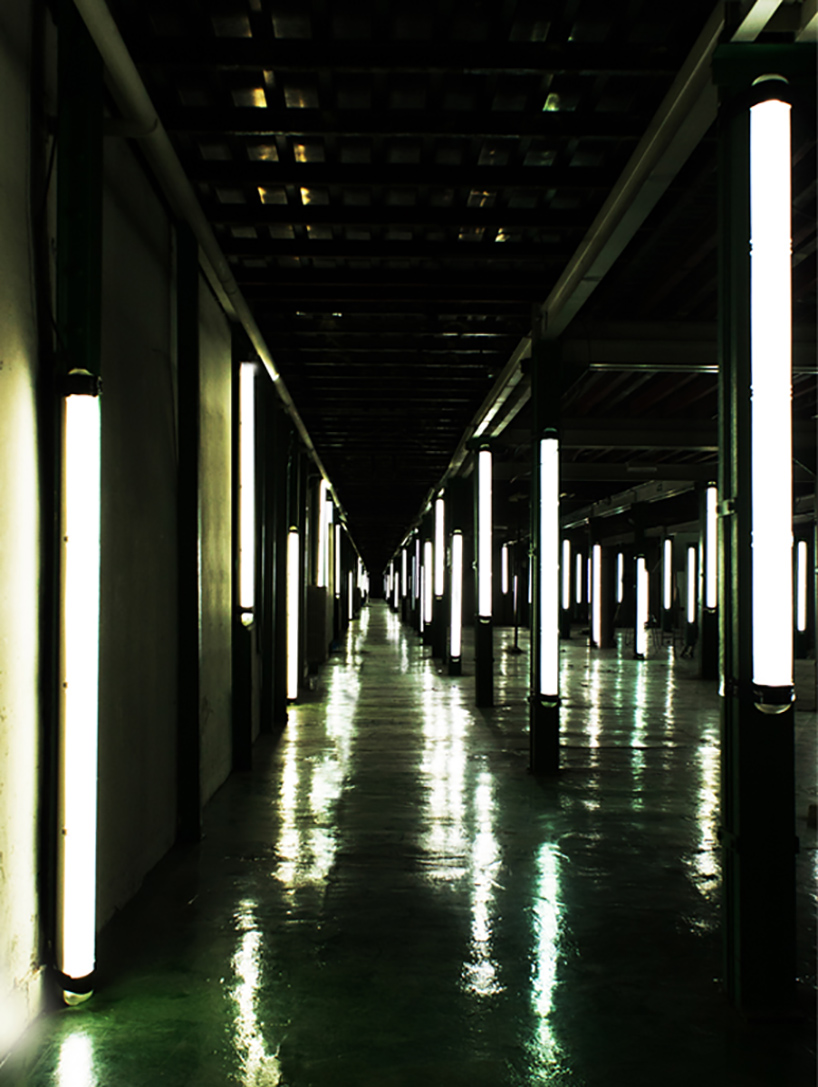
the installation blurrs the line between the performance and audience, allowing the two to affect one other
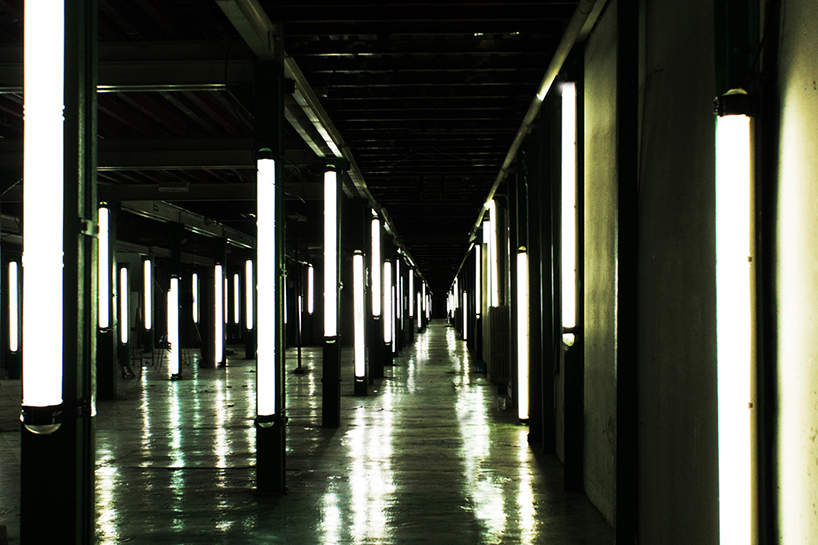
the columns create an immersive, infinite space through a system of repetitive light sequences
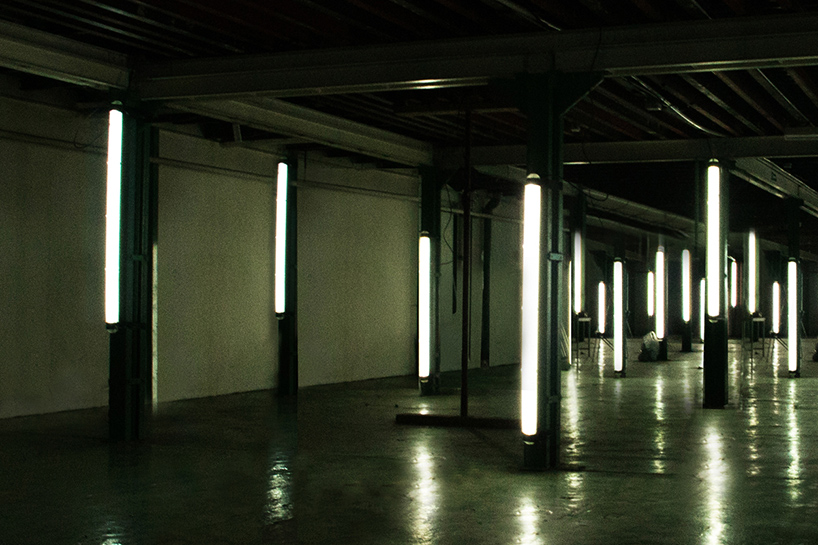
the scenography reacts to the place’s specific set of rules and rhythms
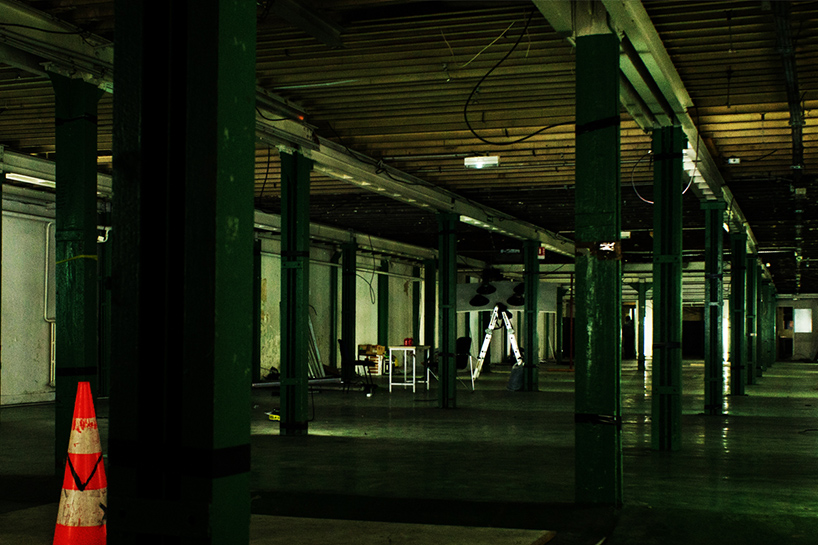
from behind, the luminous columns are not visible
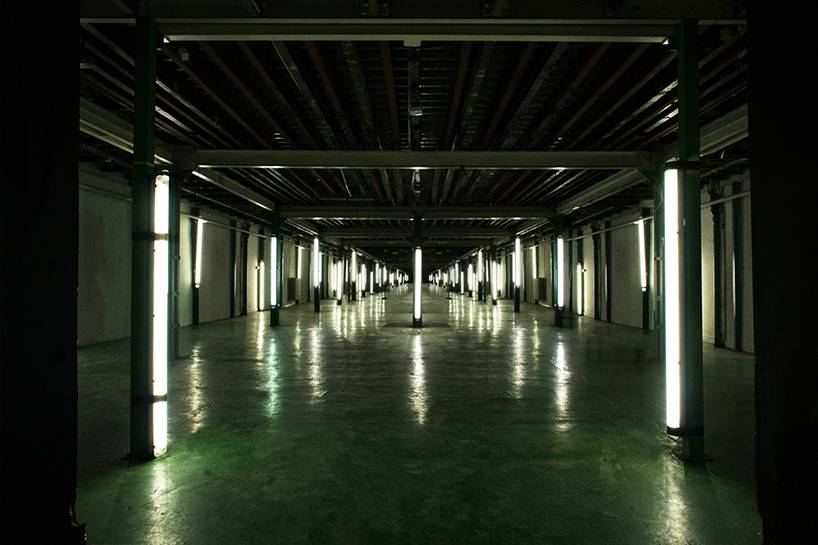
the lights are aligned on the mathematics principle of recursion, where objects repeat in a self-similar way