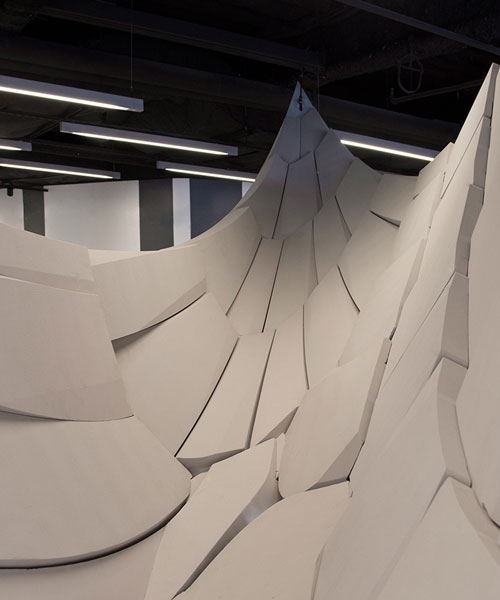
NADAAA reconsiders the tensile vault with interlocking ‘catenary compression’
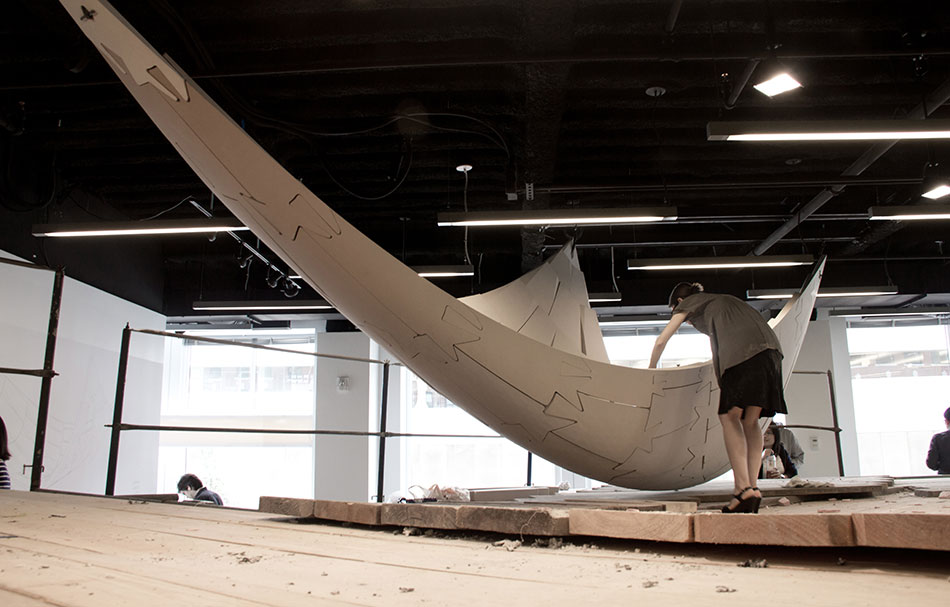
working with light block construction, the design team set out to build a structural catenary - a curve or chain that hangs freely from two points.
NADAAA reconsiders the tensile vault with interlocking ‘catenary compression’
all images by NADAAA / nicole sakr
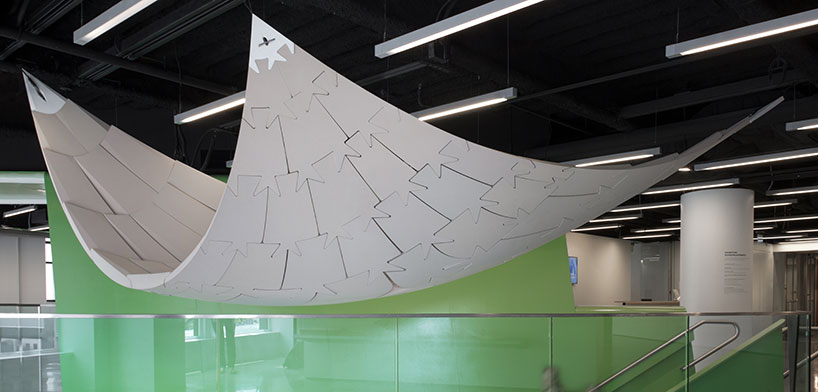
‘catenary compression’ was originally developed by boston-based architectural studio NADAAA as a research project — pairing up unlikely structural properties to work together for extraordinary circumstances. working with light block construction that conventionally operates in compression, the design team set out to build a structural catenary — a curve or chain that hangs freely from two or more points — relieving the ground from any physical contact. according to the architects, the prototype was developed for a boston society of architects-sponsored event as both a ‘provocation and experiment’.
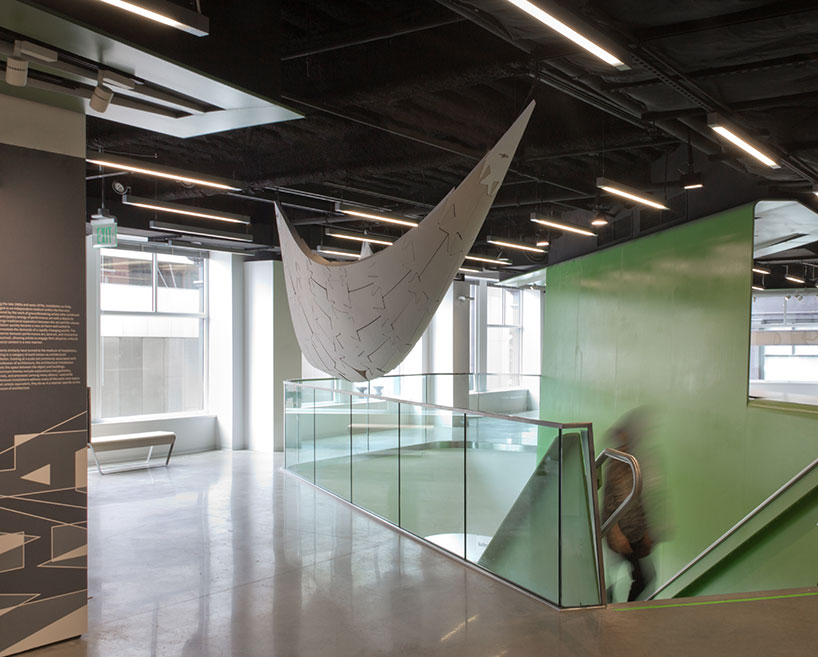
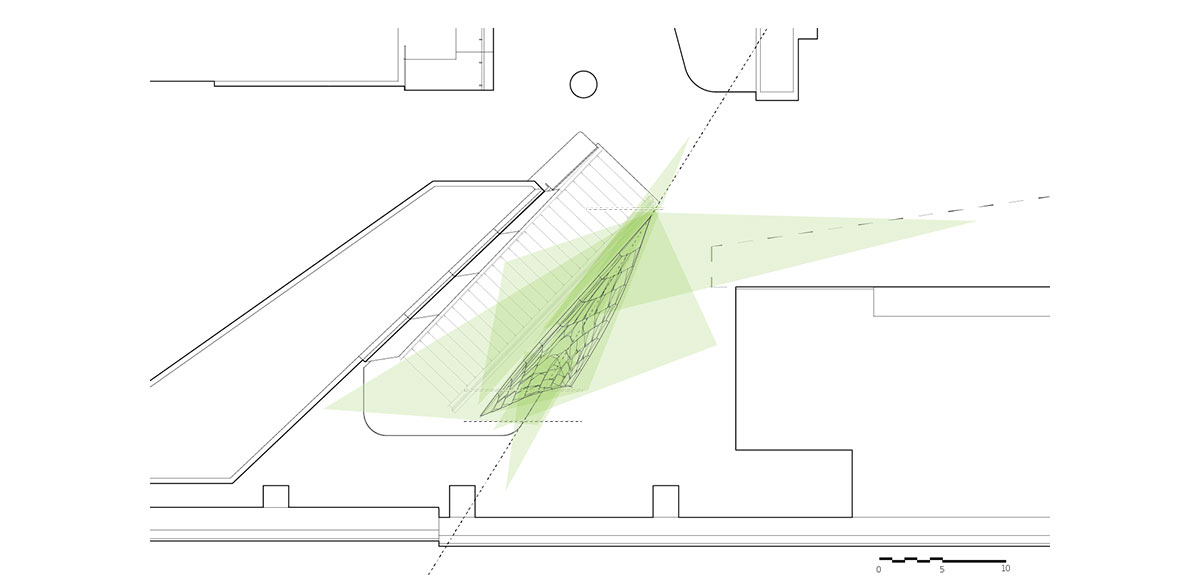
the catenary shown in situ at BSA space
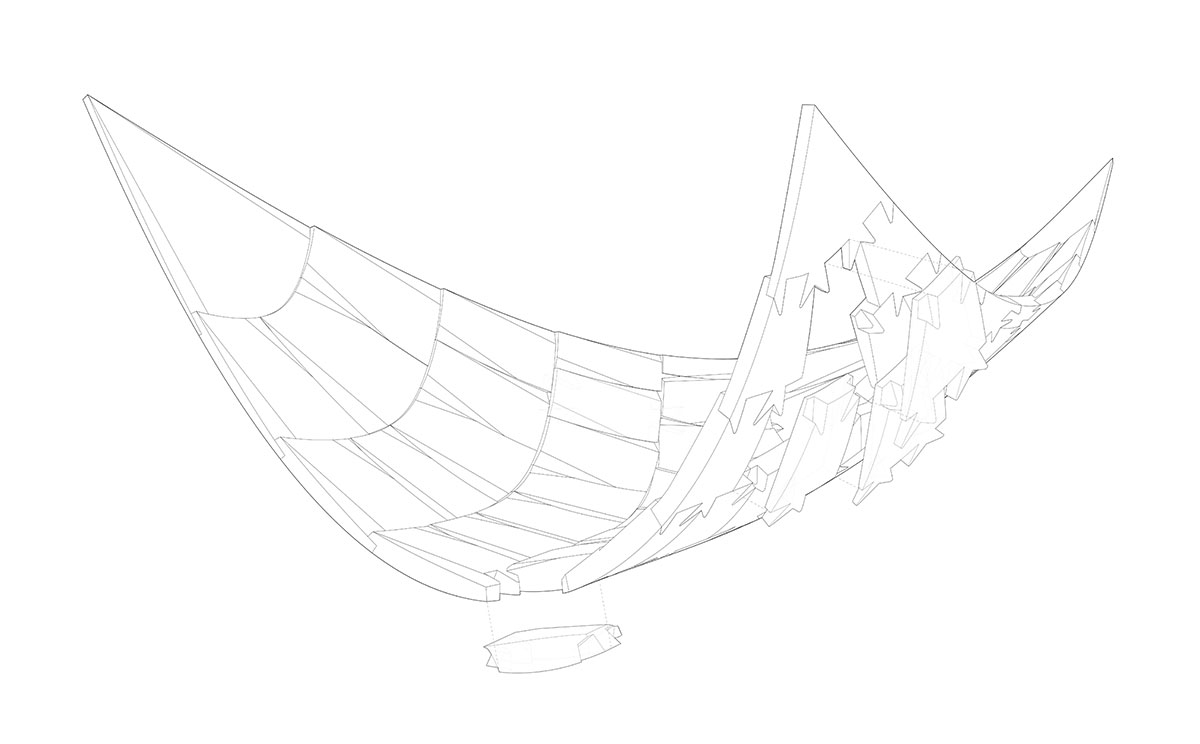
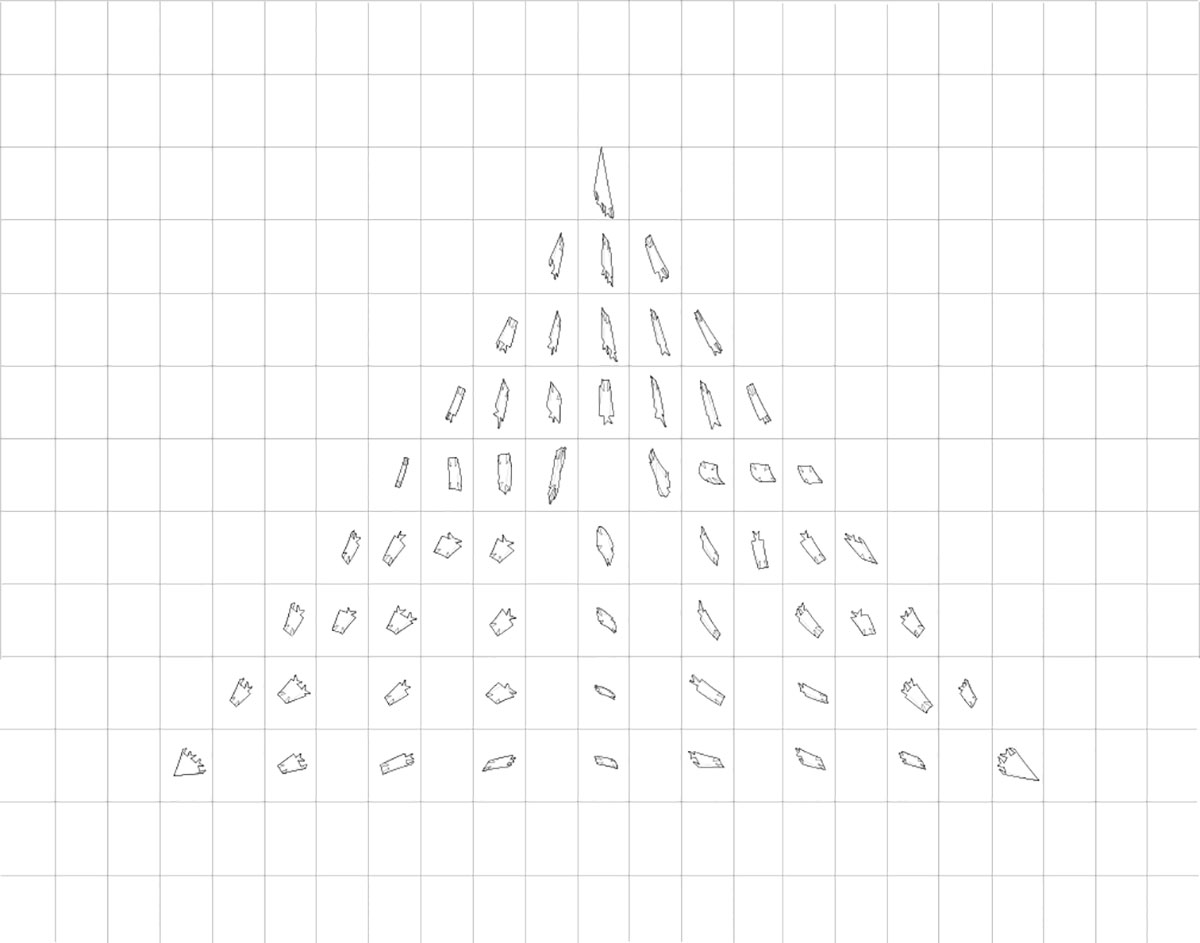
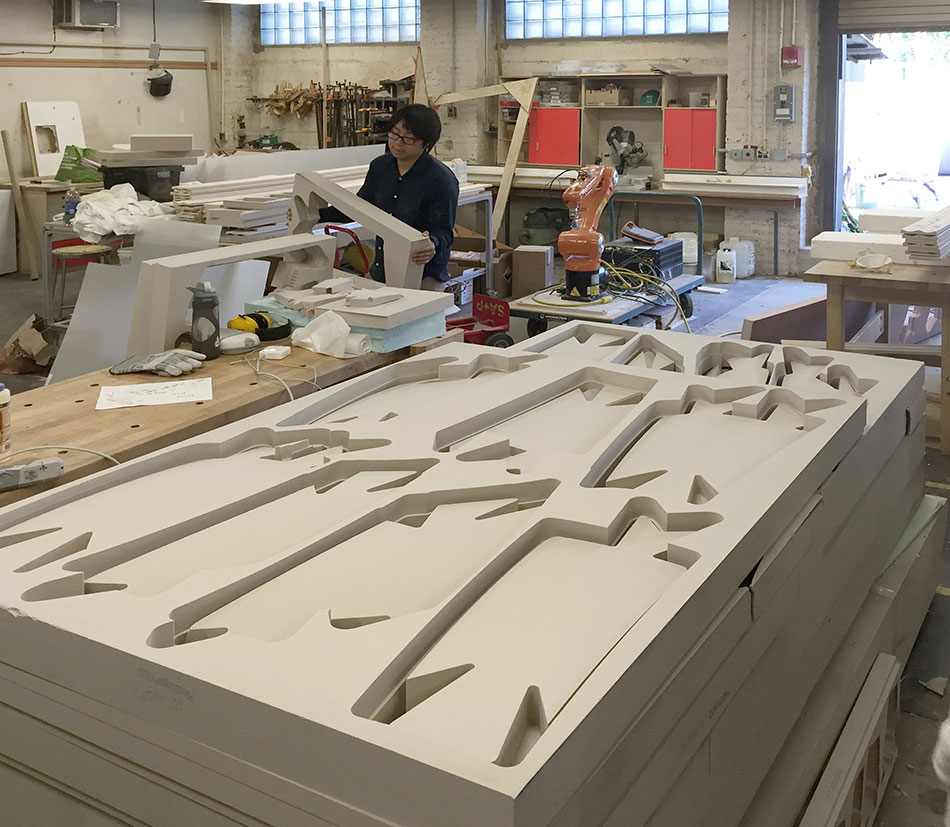
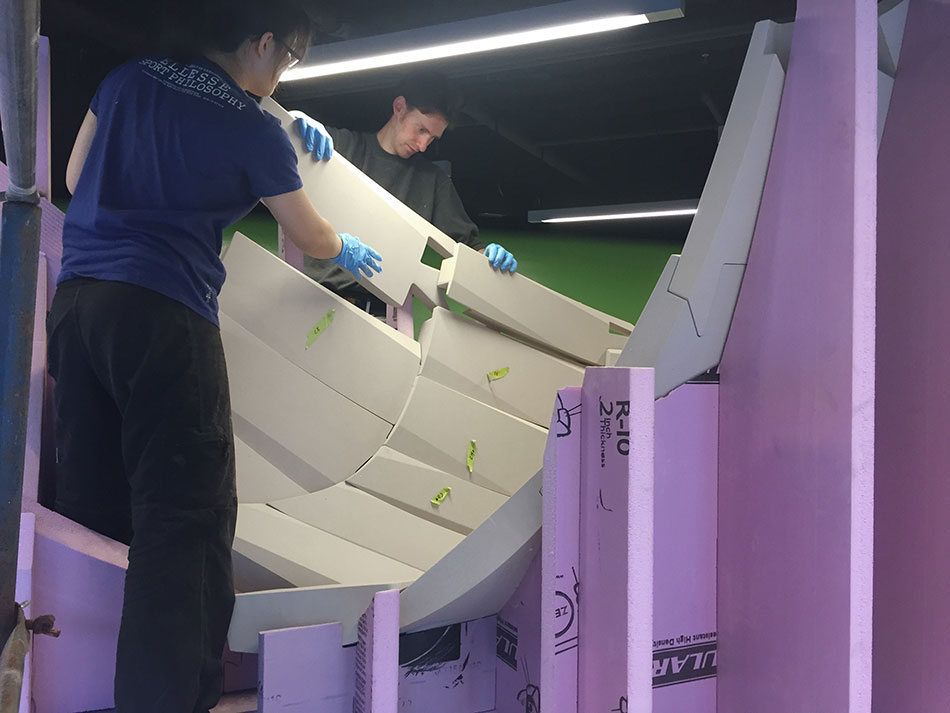
the aggregation comprises 60 individually carved interlocking blocks, each CNC-routed from polyurethane foam board. numerous computer models analyzed the anticipated forces, and mockups were tested for loading and integrity. the puzzle-like pieces are conjoined by inverted ‘keystones’ that work against gravity to deflect the tensile forces.
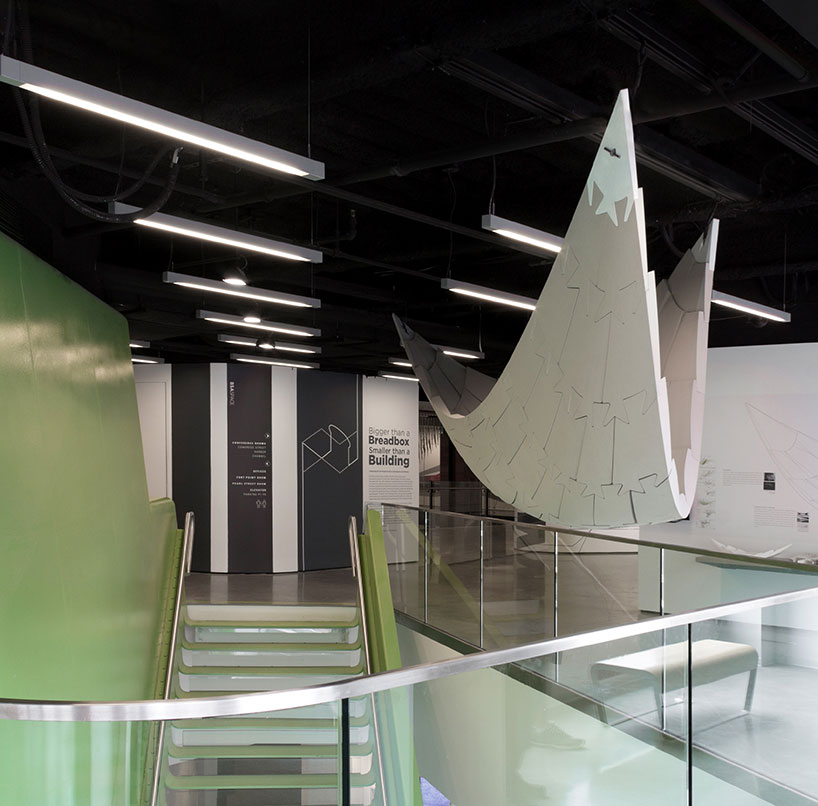
the structure hangs freely from three points
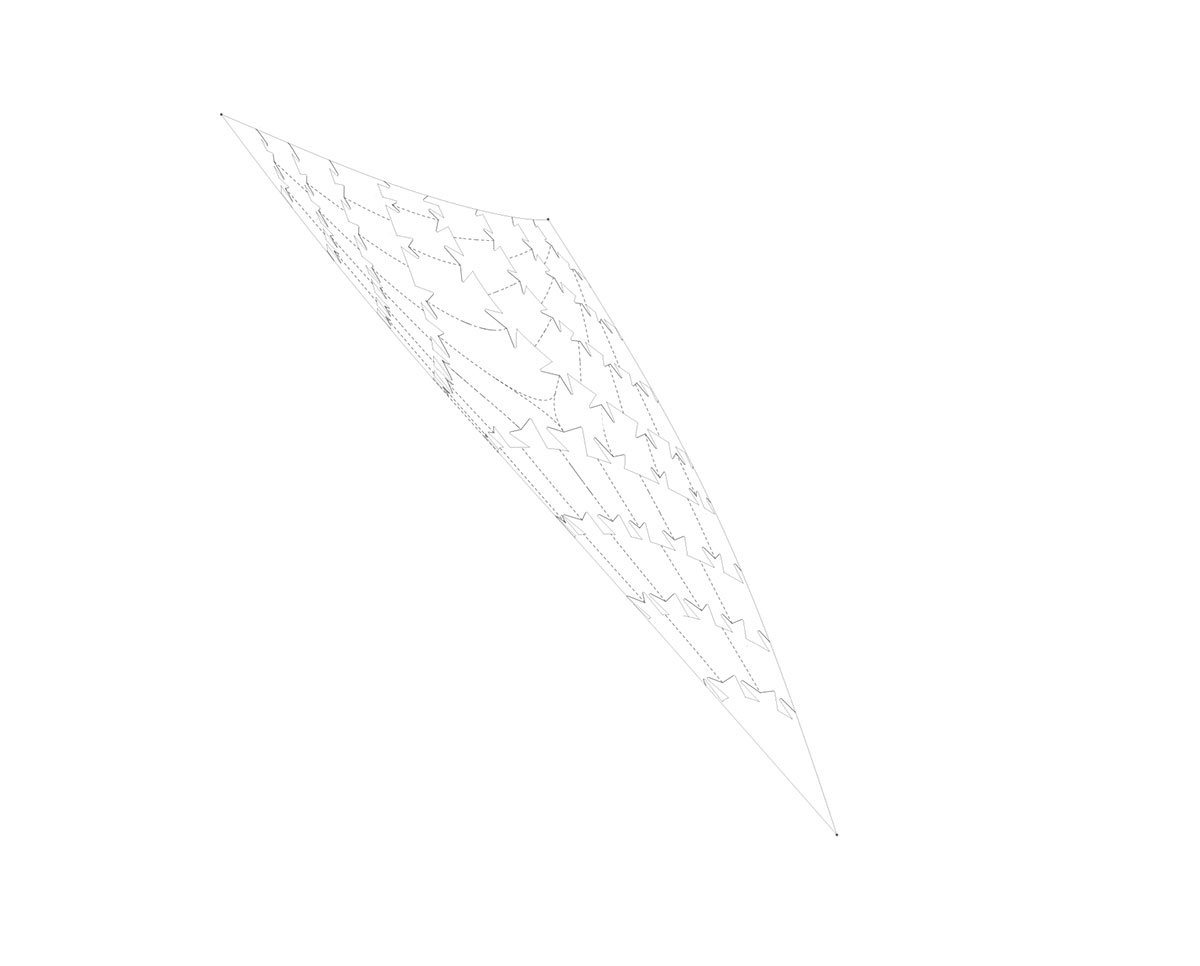
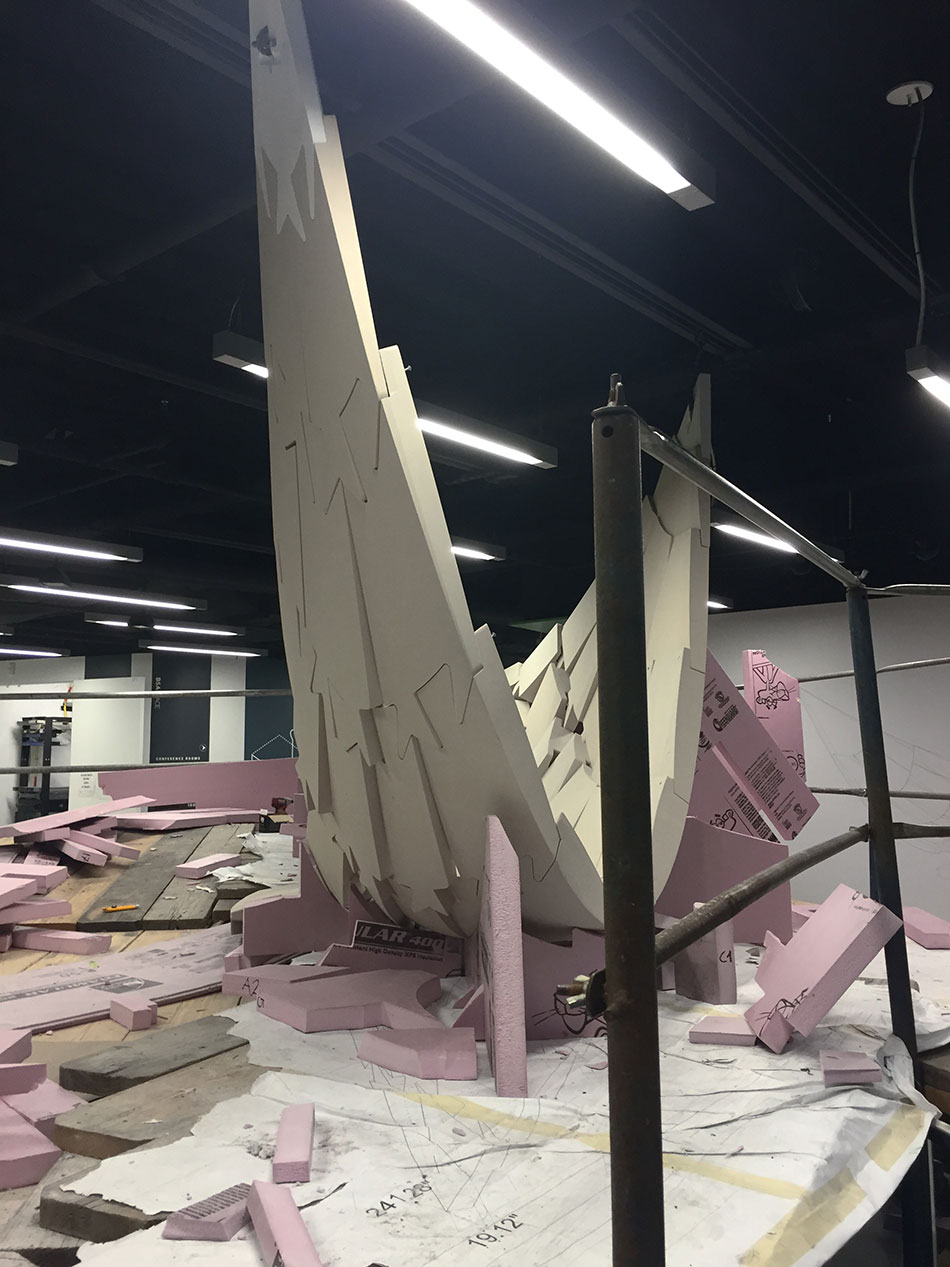
contrary to a dome, where a single keystone serves as the construction’s crowning moment, here, a field of keystones connects the entire work, working together to produce a tensile monolithic surface. ‘in turn, the terminus of the catenary, its nadir, is characterized by an ocular void acting as a tensile ring,’ explains the design team. ‘the underbelly of the vault displays the continuity of the tensile surface, while the top surface remains articulated, as its carvings help to offset the necessary tolerances needed to overcome misalignments between blocks, a rustication of sorts.’
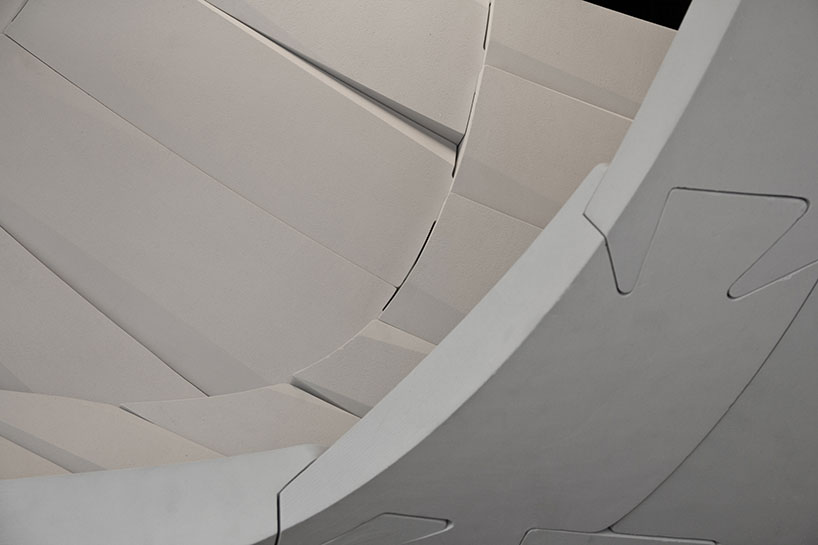
the aggregation comprises 60 individually carved interlocking blocks
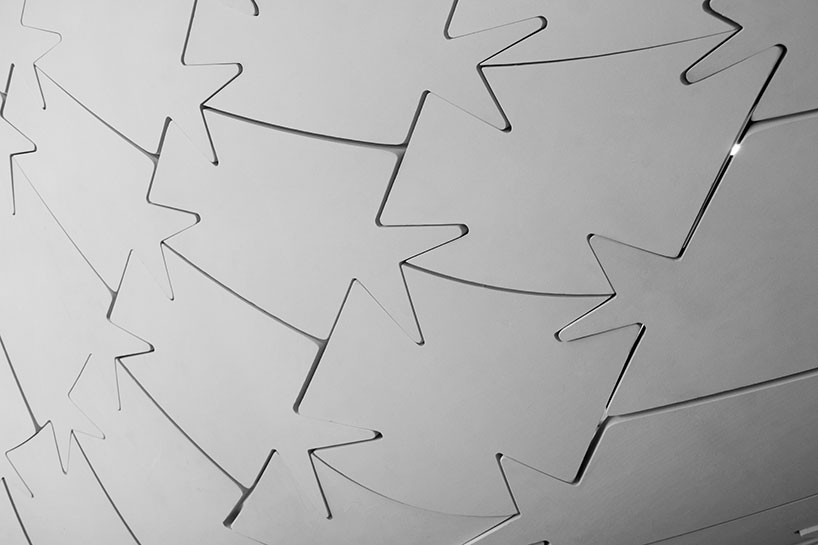
the components were CNC-routed from polyurethane foam board
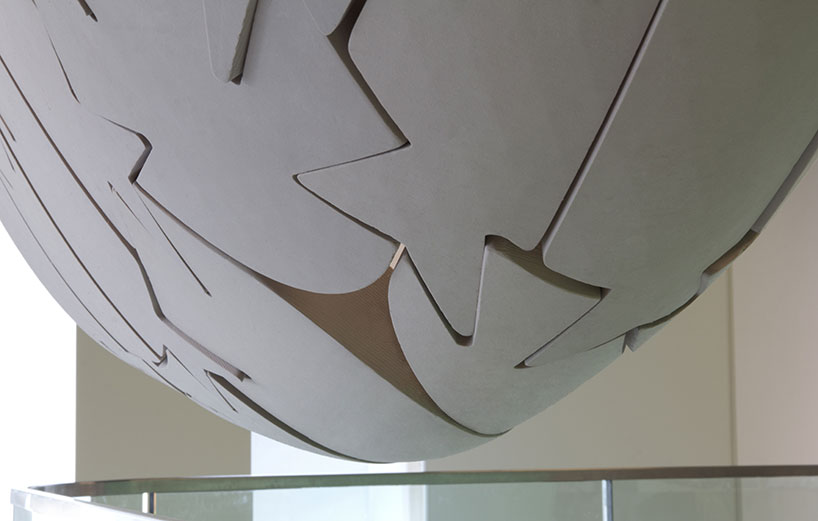
numerous computer models analyzed the anticipated forces
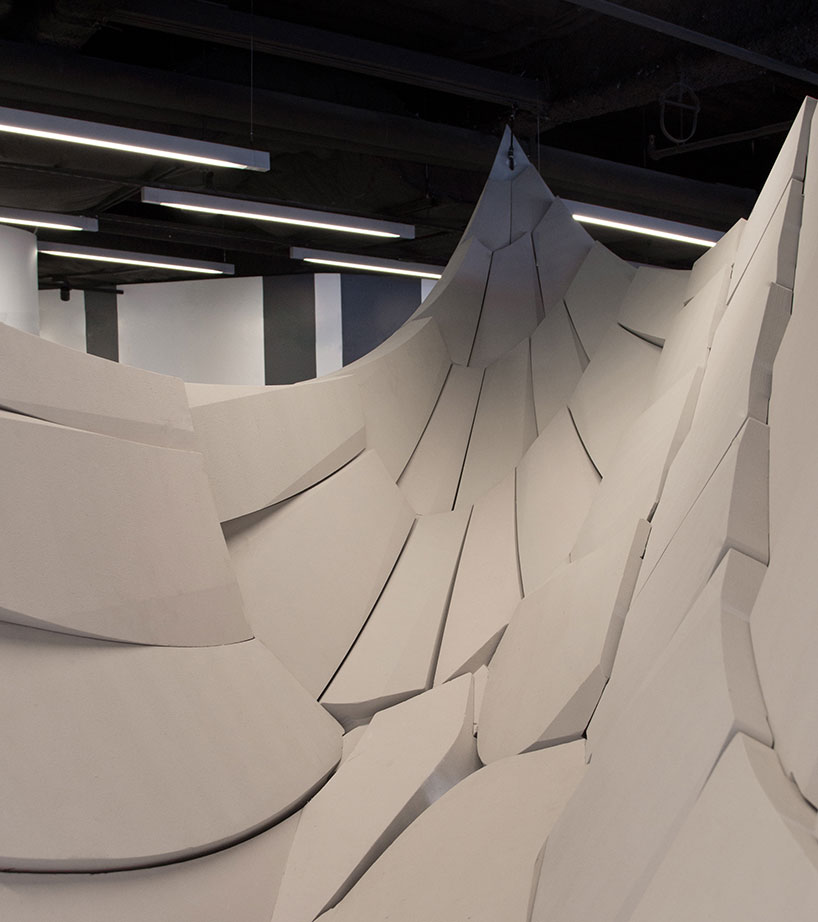
inside ‘catenary compression’
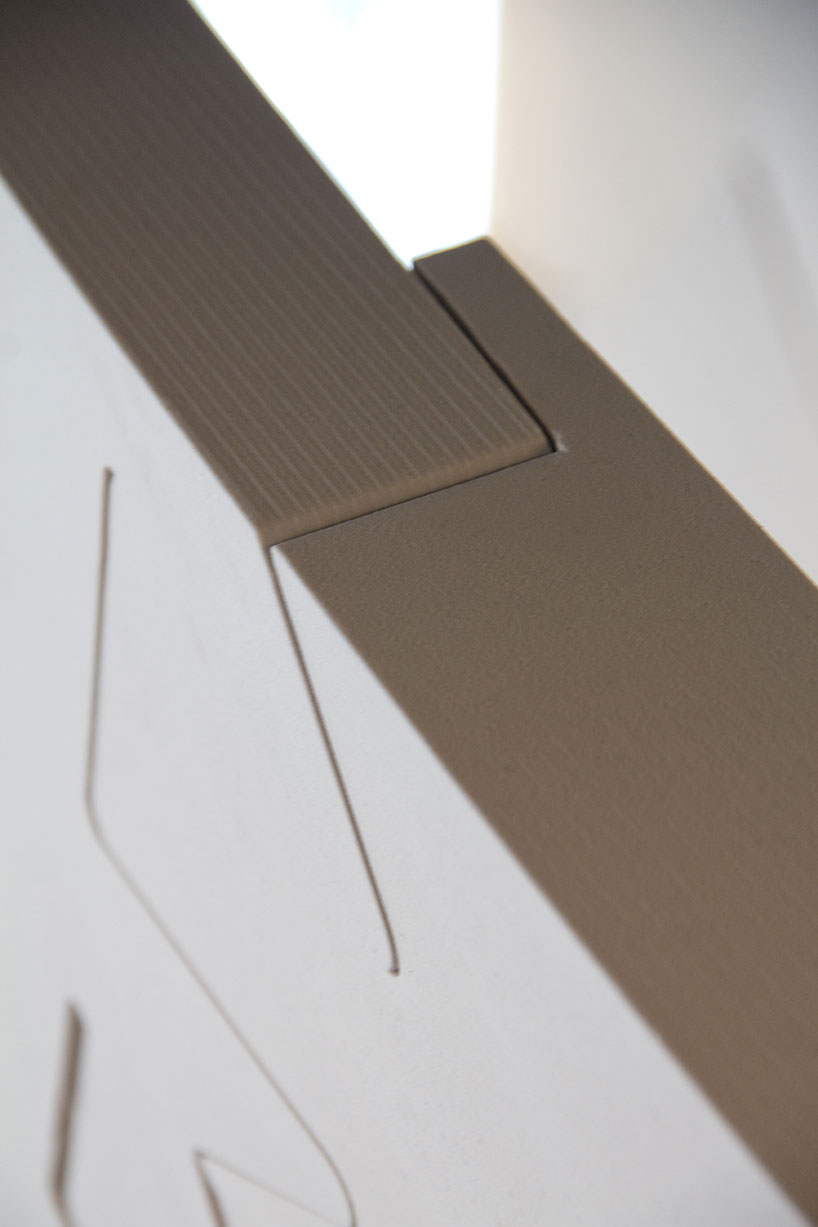
a field of keystones connects the entire installation
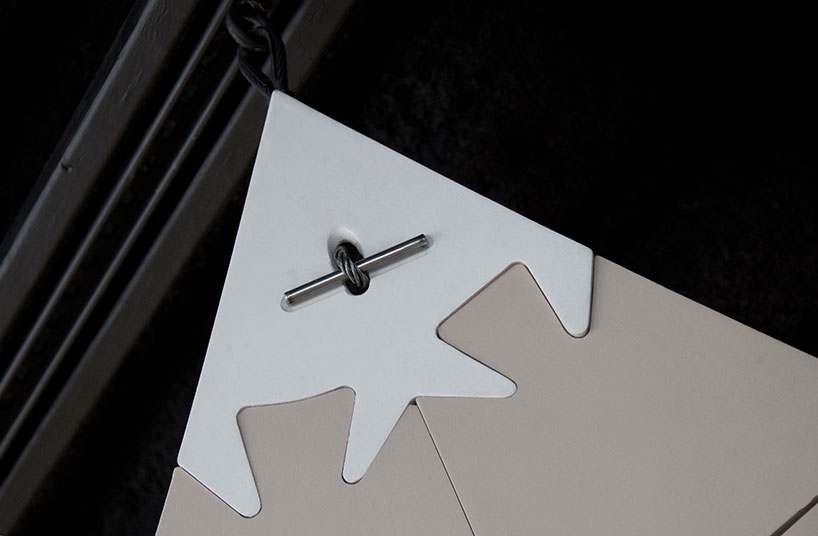
a tensile monolithic surface is produced
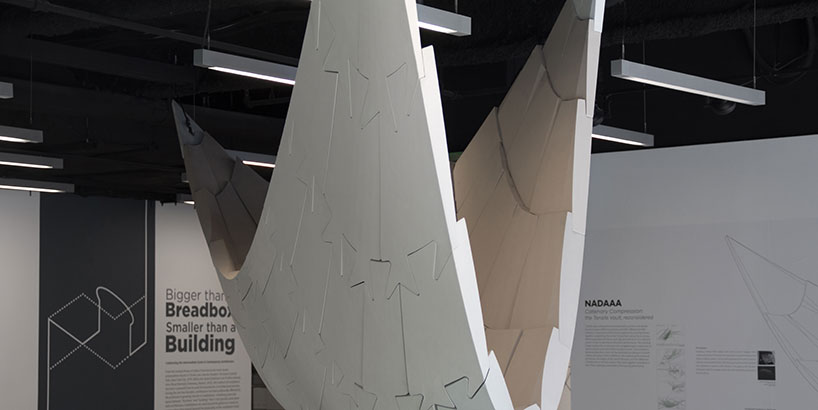
the prototype was developed as both a ‘provocation and experiment’
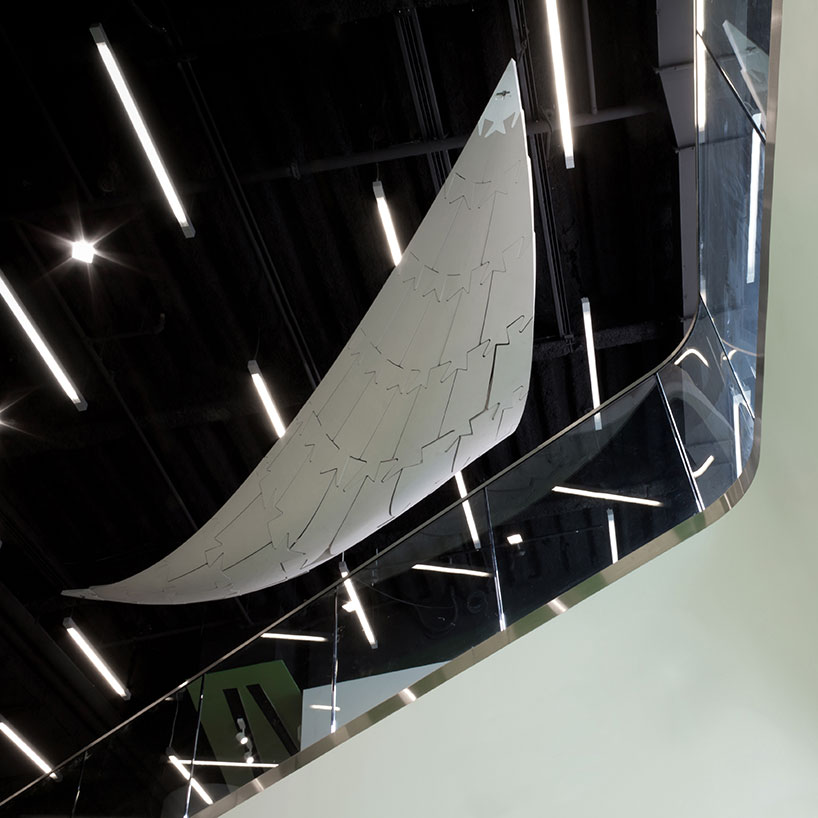
looking upwards from beneath the structure
1/8
project info:
NADAAA
principals in charge: nader tehrani, katie faulkner
project coordinators: matthew waxman, shiyu wei
project team: dustin bergman, ching ying ngan, kaining peng, joohui son, thomas tait, hanxi wang, jocelyn wang
structural engineer consultant: simpson gumpertz & heger — matthew johnson and paul kassabian
fabrication consultants: chris dewart, justin lavallee, caitlin mueller
shop
your own online design shop — no sales commission collected