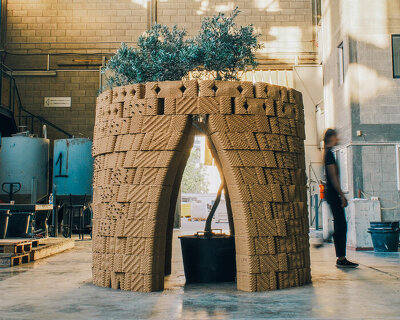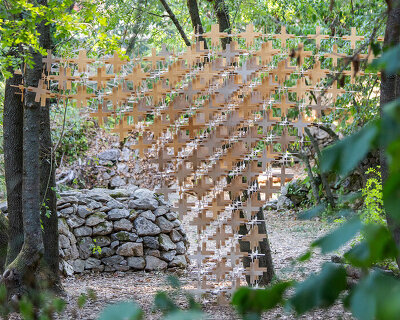
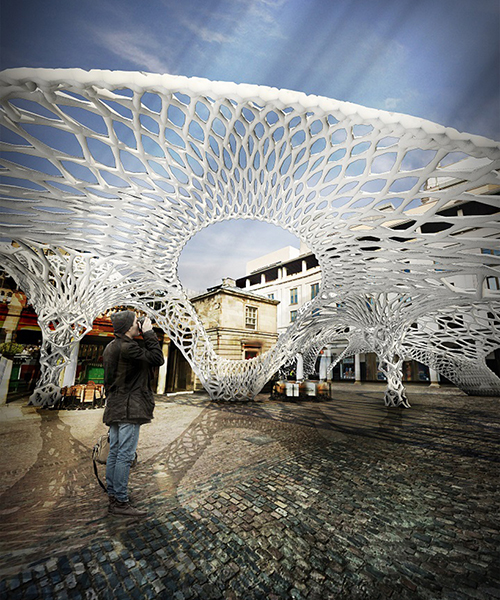
automated robotic fabrication for temporary architecture
the team's research utilizes low-melting plastics (bio-degradable polycaprolactone polymer), and robots to extrude temporary structures.
automated robotic fabrication for temporary architecture
all images courtesy of sulaf aburas
london alone now hosts 1,418 pop-up shops, or temporary structures for events, retail, small businesses, etc. a number that, like co-factors cost and waste, is continually rising. of the city’s total waste production, seventy percent comes from construction-related sources, no doubt including some above-mentioned pop-ups. with current practices in place, an equal percentage of that waste is processed solely by landfill. an initiative by the municipality of london intends to reduce heavy land-based dumping to less than half (20% total) of current statistics, and increase city-wide recycling fourteen percent by 2020.
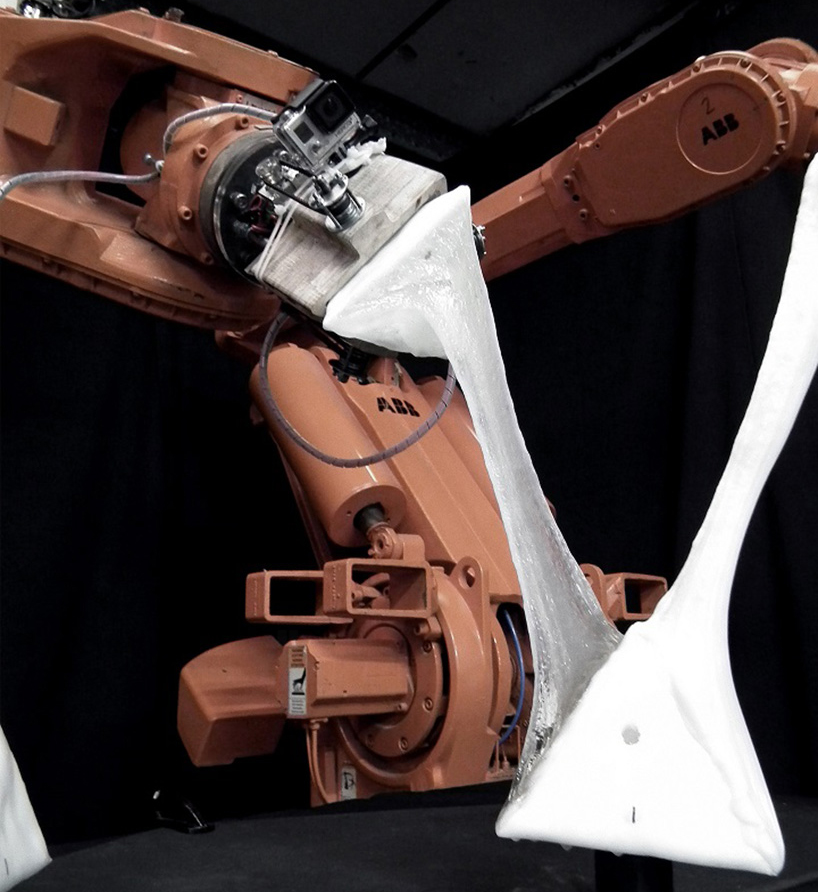
pulling plastic
given the staggering contribution of architecture (temporary and otherwise) to london’s environmental impact, a methodology much different than the current must be imagined. a small team working from the design research laboratory at the AA school of architecture, wishes their work, titled ‘osteobotics’ to contribute to the on-going ‘green’ dialogue. their research utilizes low-melting plastics (bio-degradable polycaprolactone polymer), and robots to extrude structures. the system is deployed as a mobile-unit for on-site fabrication, and due to its joint-less, self-supporting, mono-material capabilities, all extrusions can be efficiently re-melted and formed perpetually.
video courtesy of sulaf
the regenerative implications of the project and drastically reduced part-execution turn around have great potential in relation to, as of now, temporary architectural applications. a high level of flexibility is achieved by mobile-deployment, where sections can be directly fabricated and assembled on-site. once the structure is no longer needed, it can be processed for use again, or left to bio-degrade at location.
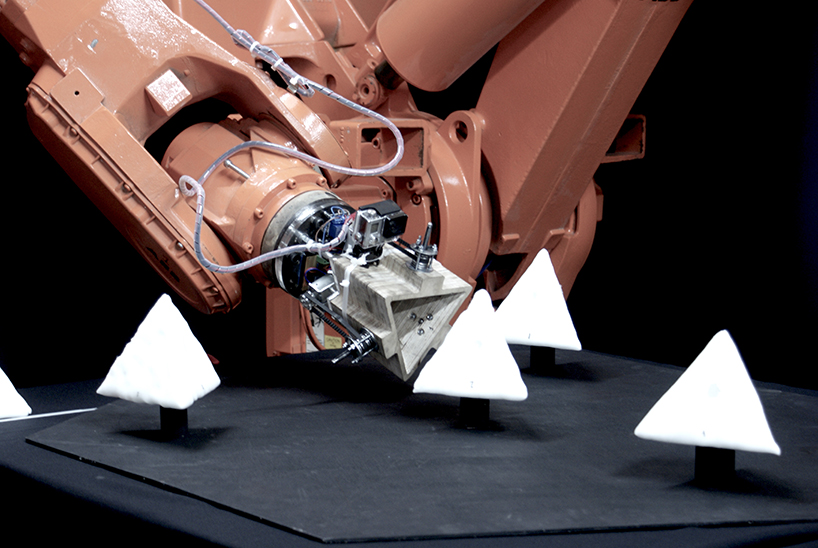
robotic choreography, robofold IO, london
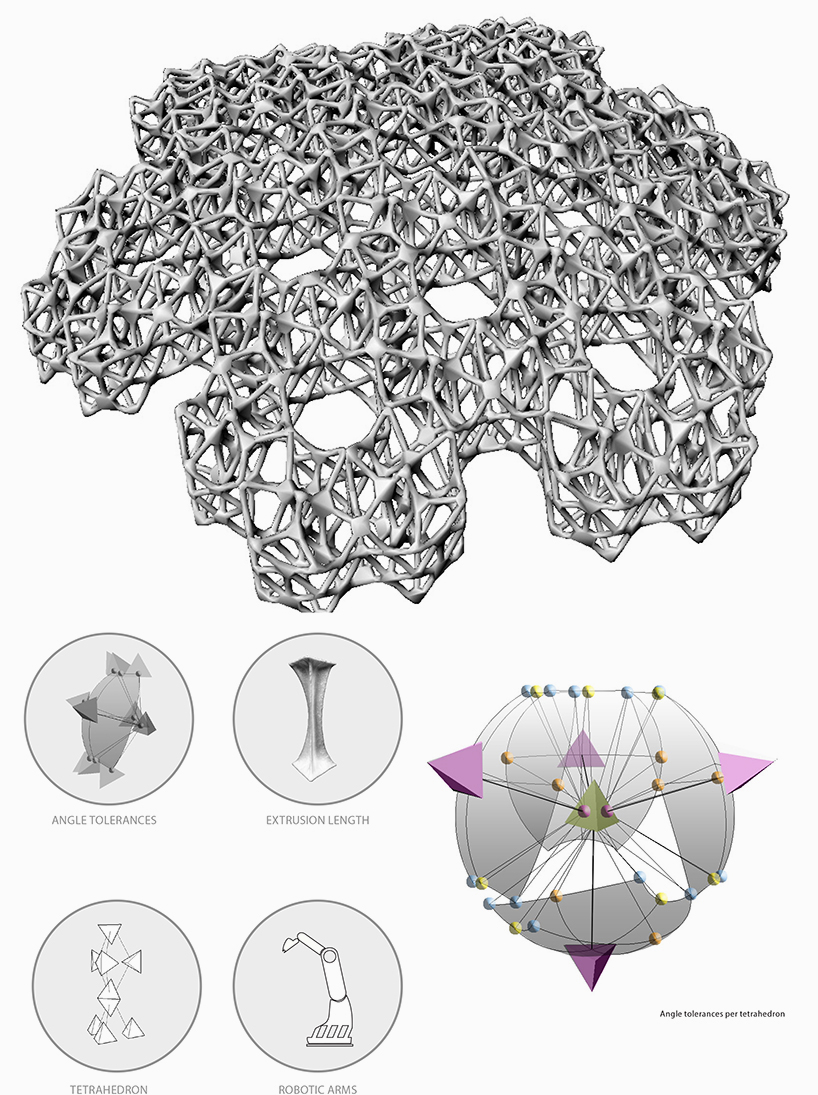
growth logic
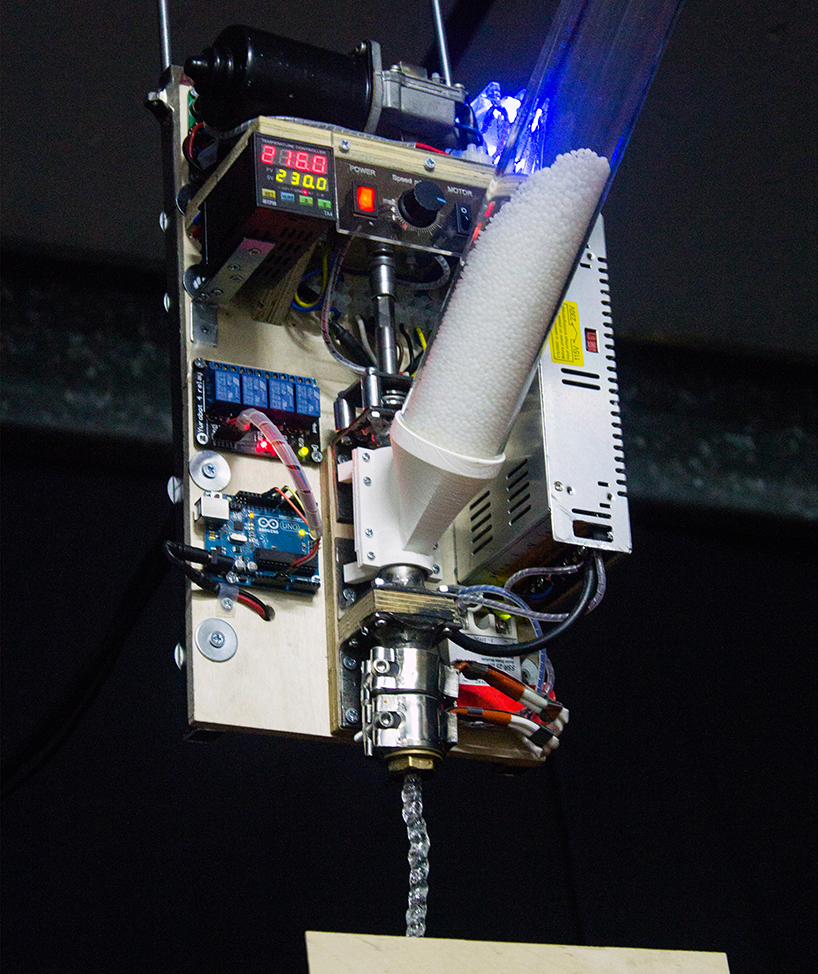
extruder
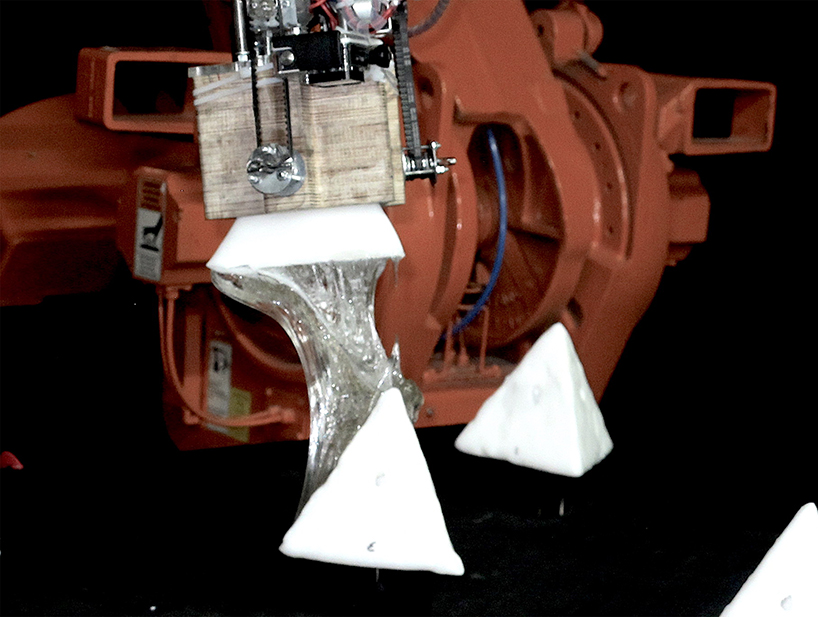
polymer stretching
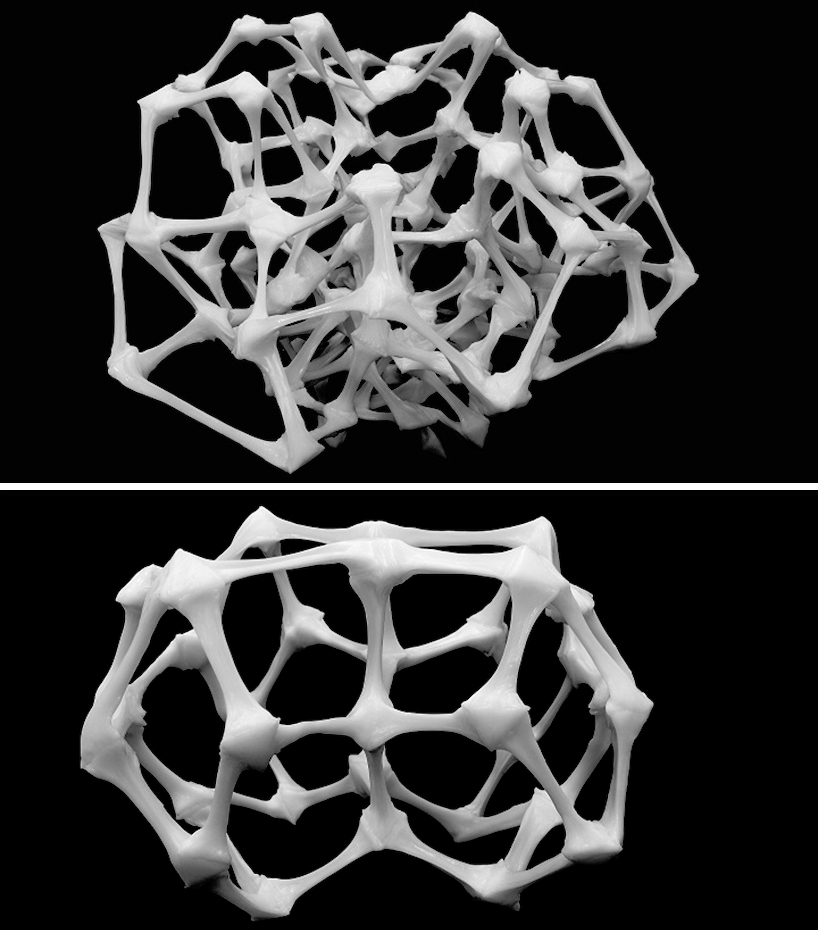
lattice growth models
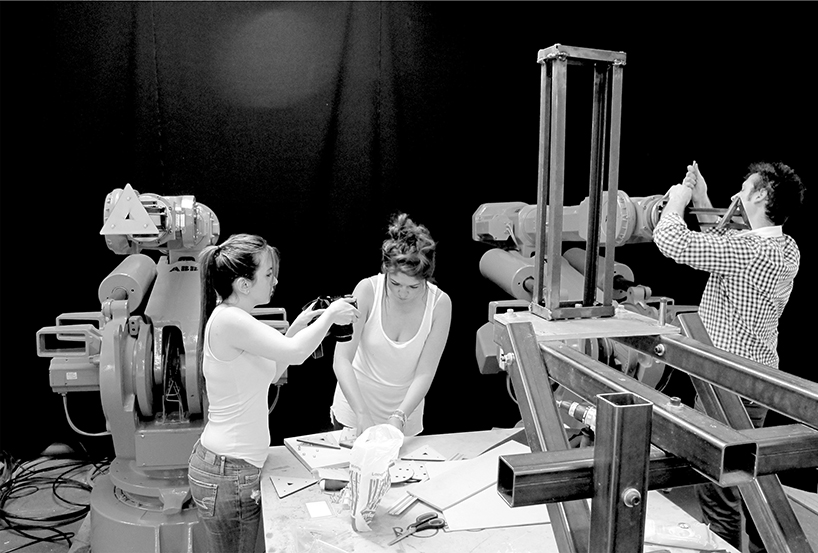
setting up the scene
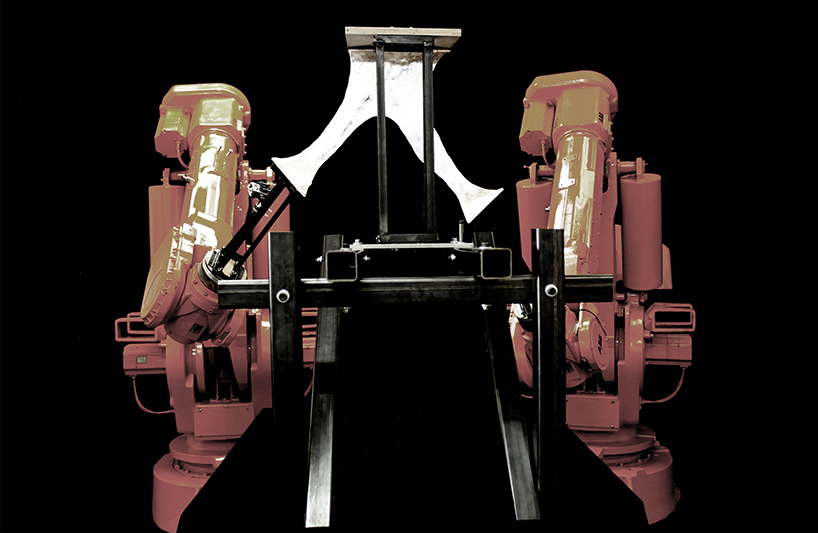
fabrication process
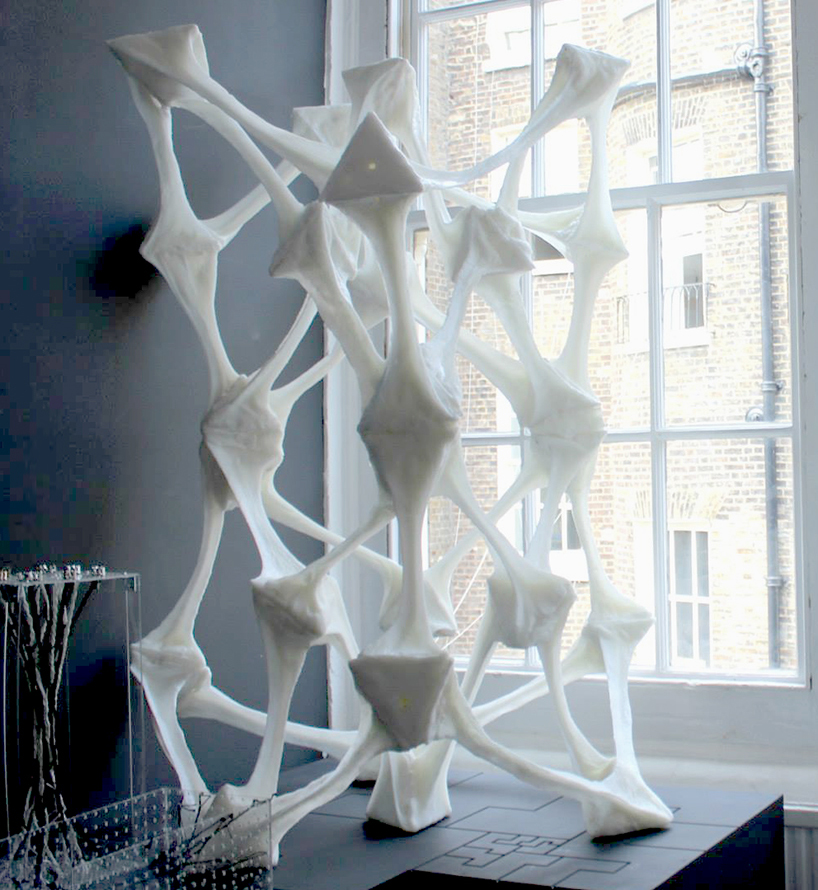
1:1 prototype
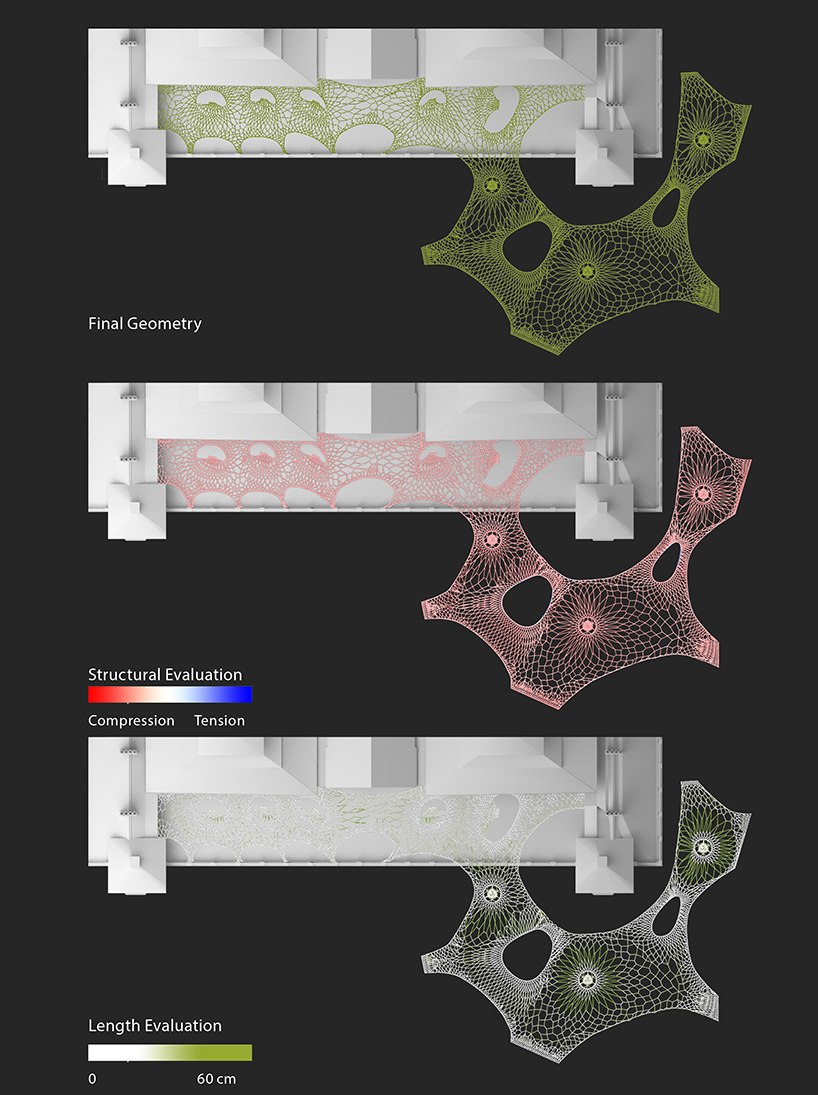
site-lattice population
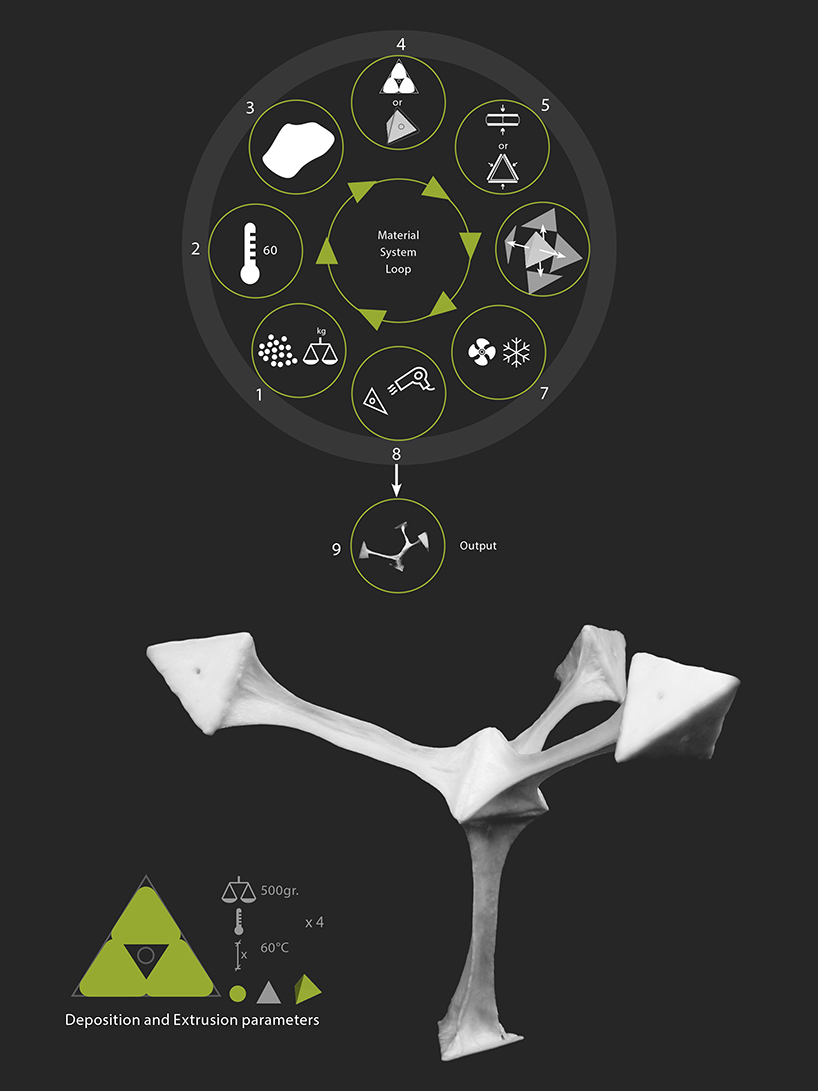
continuity in node vs beams
project info:
name: osteobotics AADRL 2015
team: soulaf aburas, maria paula velasquez, giannis nikas, mattia santi, shajay bhooshan studio
designboom has received this project from our DIY submissions feature, where we welcome our readers to submit their own work for publication. see more project submissions from our readers here.
shop
your own online design shop — no sales commission collected