alcantara stages de/code exhibition in the tapestry rooms of milan’s royal palace
the exhibition includes four installations by sabine marcelis, constance guisset, qu lei lei and space popular.
prefer designboom on google[FEATURED]
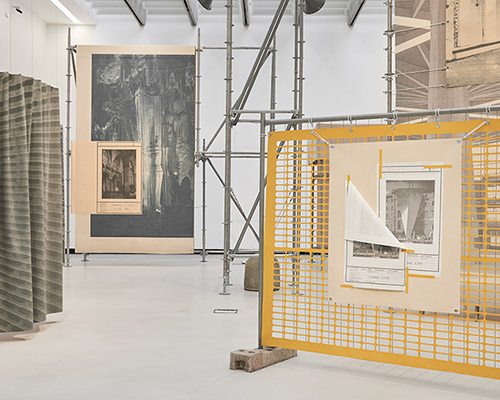
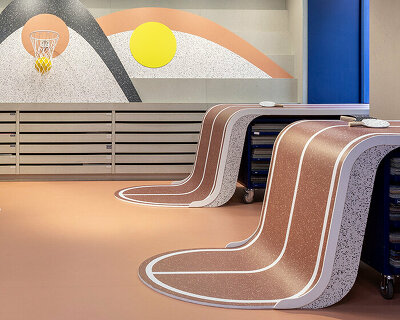
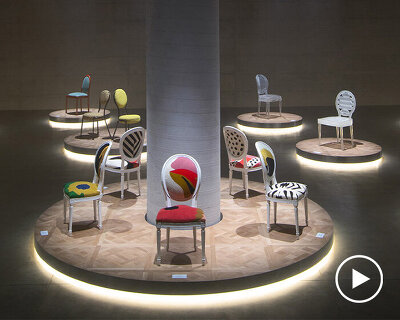
italian company alcantara has collaborated with constance guisset, qu lei lei, sabine marcelis and space popular for de/coding, an exhibition at the tapestry rooms of milan’s royal palace. drawing from the specificities of a single medium – the company’s homonymous material – and studying it in great detail, the four participants have created site-specific works, dialoguing with the exhibition rooms and reinterpreting the central theme of their tapestries.
 all images courtesy of alcantara
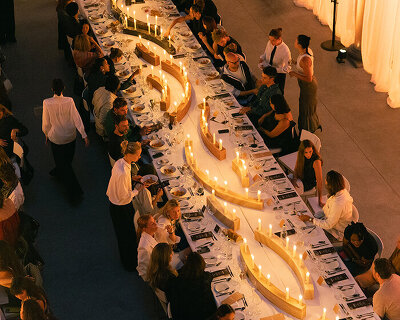
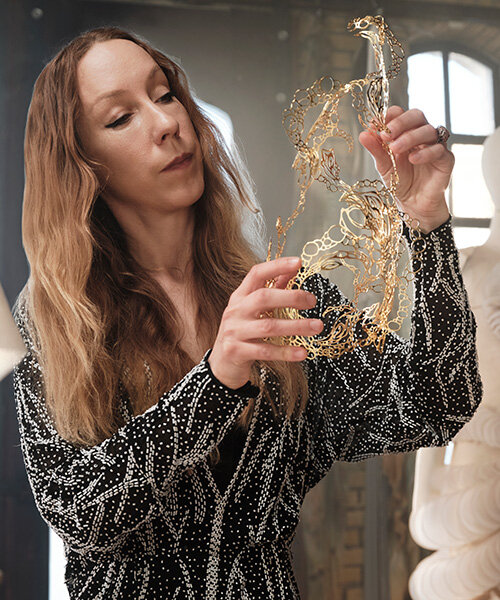
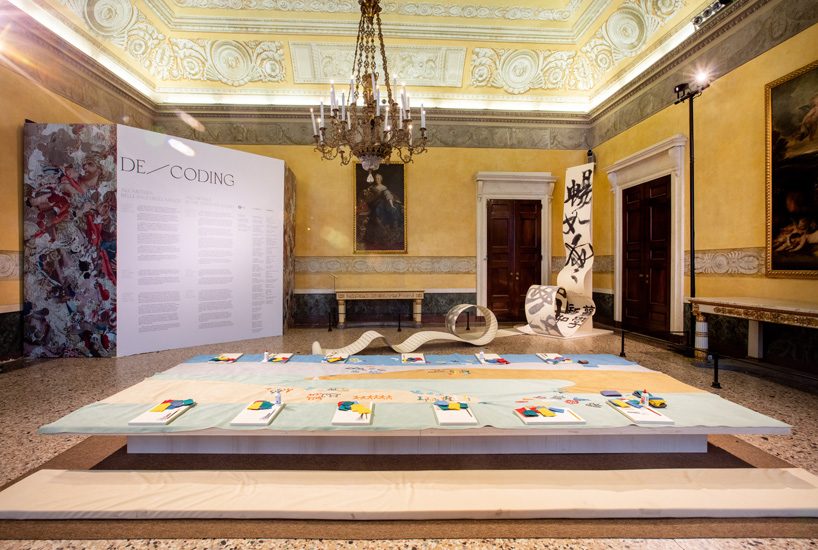
the first of the tapestry rooms houses the installation by qu lei lei: signs, symbols and scripts
in de/coding, constance guisset, qu lei lei, sabine marcelis and space popular have used alcantara in four unique installations that become playful mechanisms, encouraging interaction with the public. curated by domitilla dardi and angela rui, the exhibition is staged in he royal palace’s tapestry rooms where episodes from ovid’s metamorphoses are depicted, i.e. moments in which the eternal development and mutation of gods, men and things is highlighted. 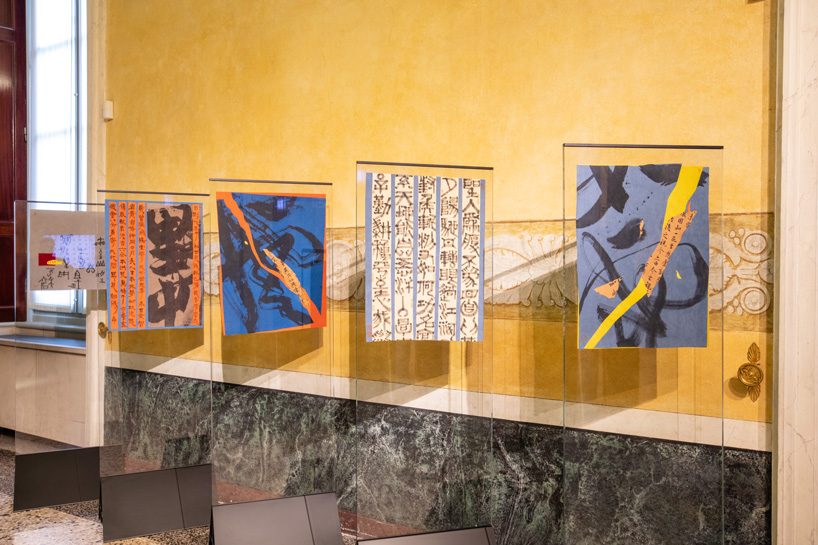 the artist invites visitors to assist him in the creation of works that draw from the chinese calligraphic tradition
‘the exhibition project staged by alcantara unfolds through four installations that seek out a correspondence with the space and with the myth, from the multiform dimensions of medea, to the incarnation of scylla, only to then experience the virtual company of the argonauts,’ note the two curators. ‘one room after another, the relationship with the notion of the code evolves in spatial terms: signs, symbols and calligraphy all together constitute a founding matrix in the work of qu lei lei, to be understood as a conceptual moment of the writing of the code itself; the meaning and context of the myth are instead rethought and remodelled by the audience in their passage to the three-dimensional, as rendered by sabine marcelis. in the third room, the process of decoding the myth embraces the space as the stage for the metamorphosis itself, personified by the powerful fantastical creature of constance guisset; while the expansion of the correlation between visual code and its physical enactment is sublimed in the last room, designed by space popular, in which the myth is presented in its ideal form of augmented reality, i.e. as a mixture and cohabitation between the real and the virtual.’
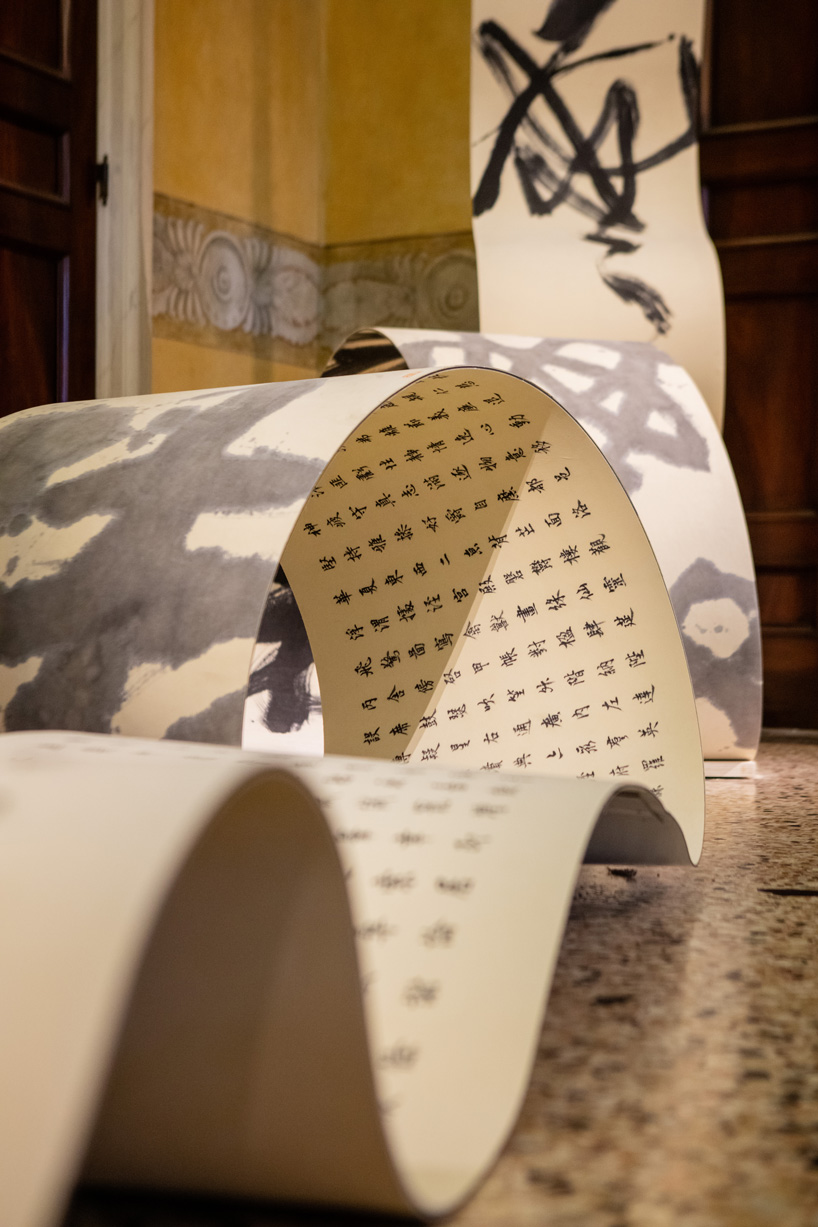 at the same time, he exploits ancient pictograms and collage technique using alcantara
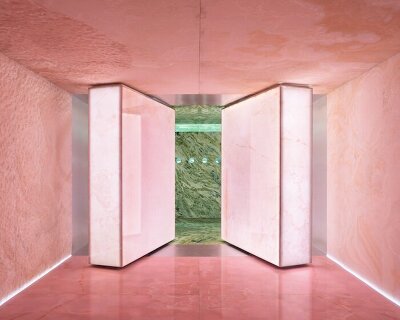
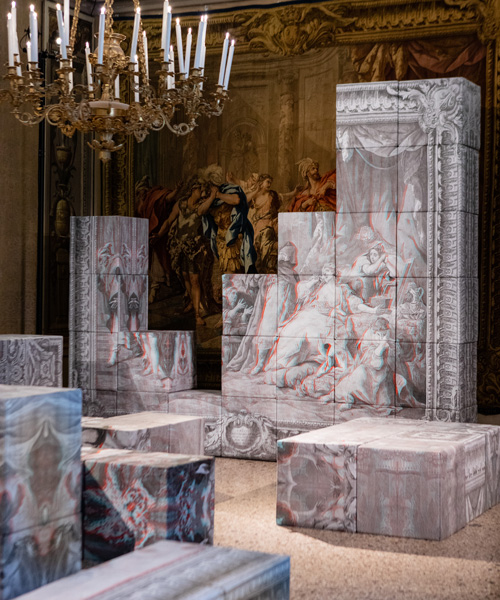
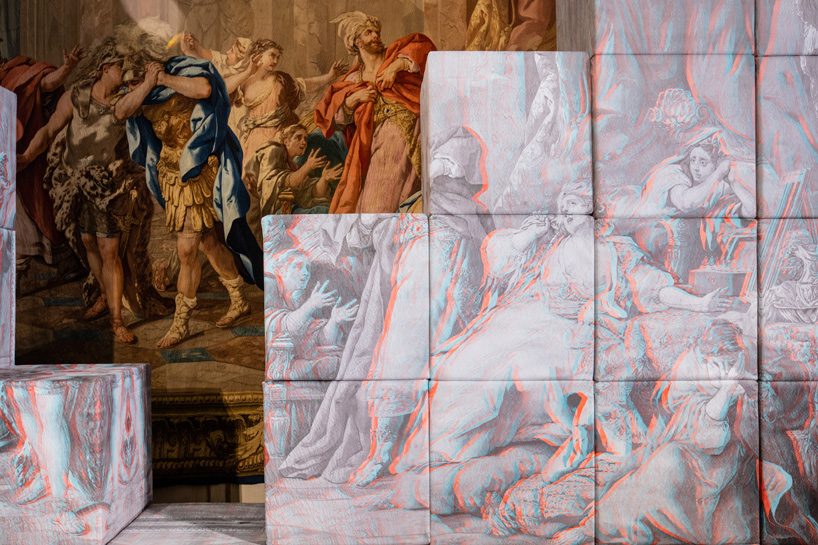 in the second room, sabine marcelis’ dimensions of medea draws from the tapestries on the walls
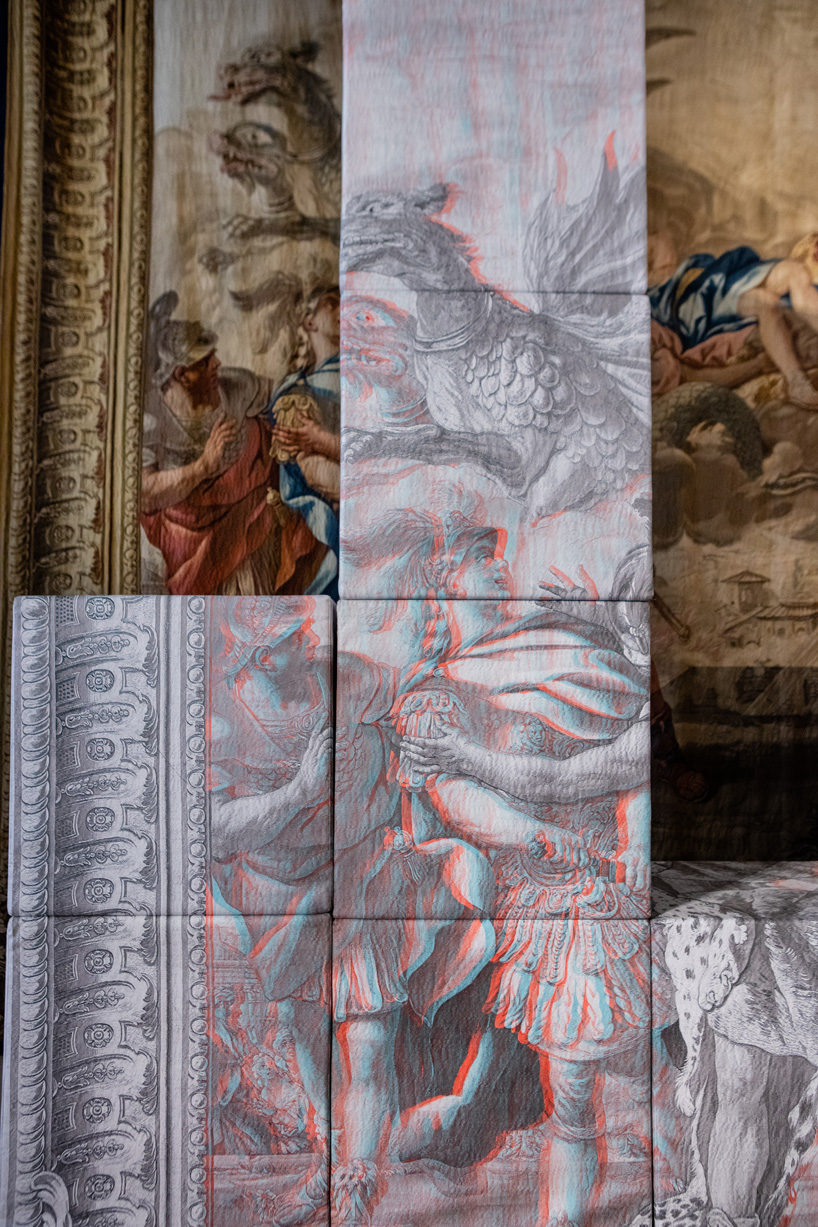 the designer decodes the two-dimensional images of the tapestries that tell the story of medea
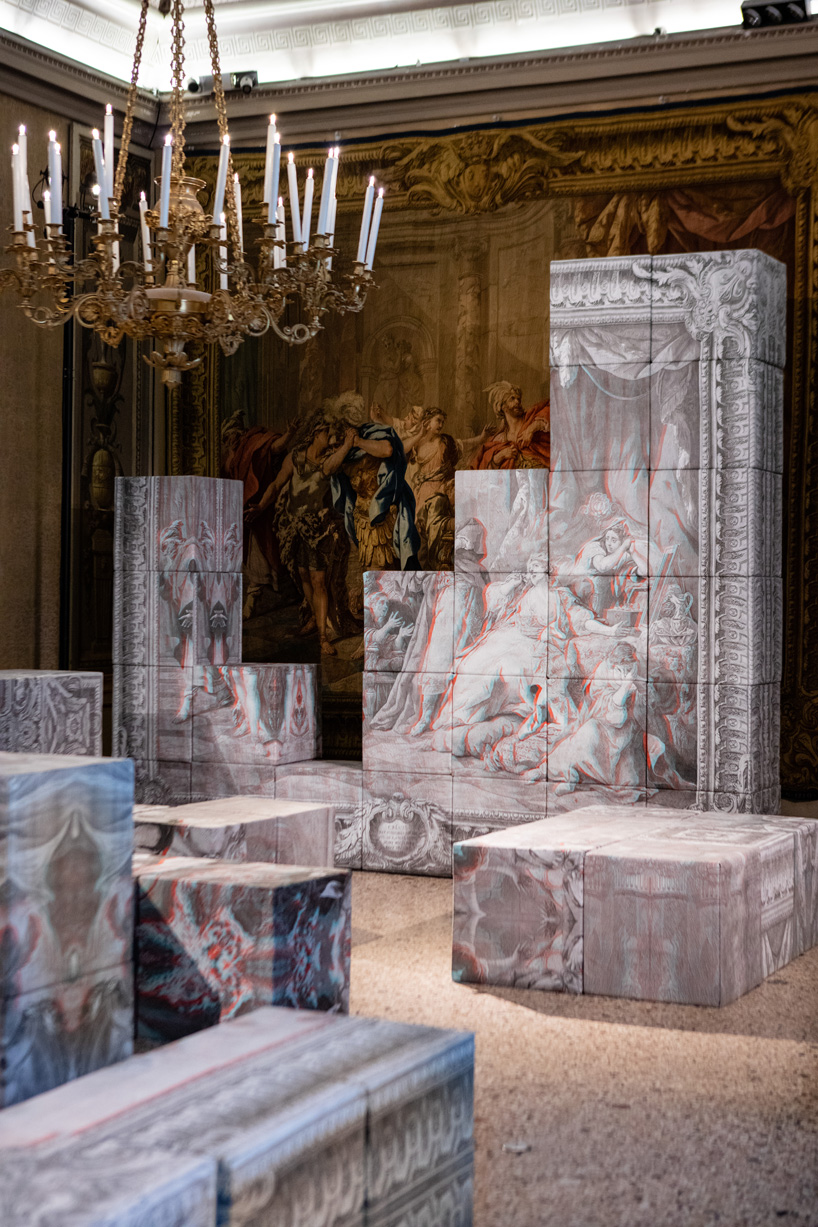 fragments of them are digitally transformed onto the faces of moveable 3d cubes, which may be viewed with the aid of anaglyph glasses
 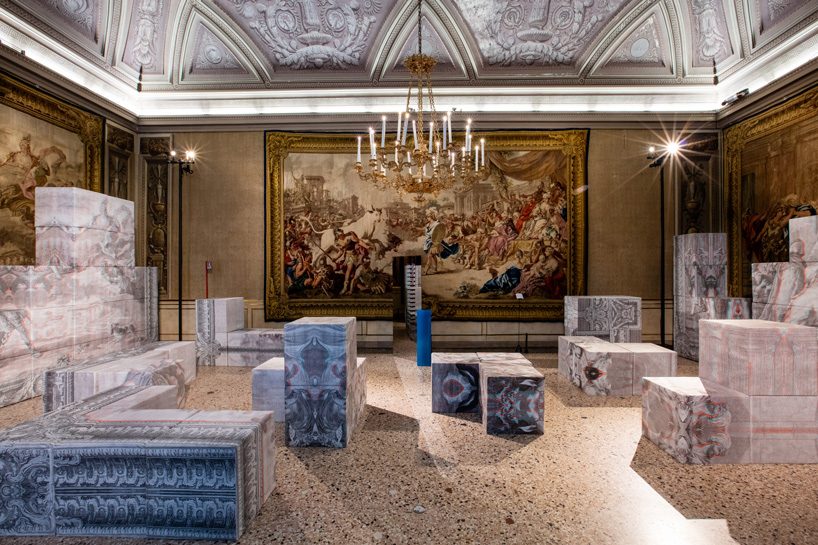 spectators are invited to interact with the space and objects, and independently imagine a new story
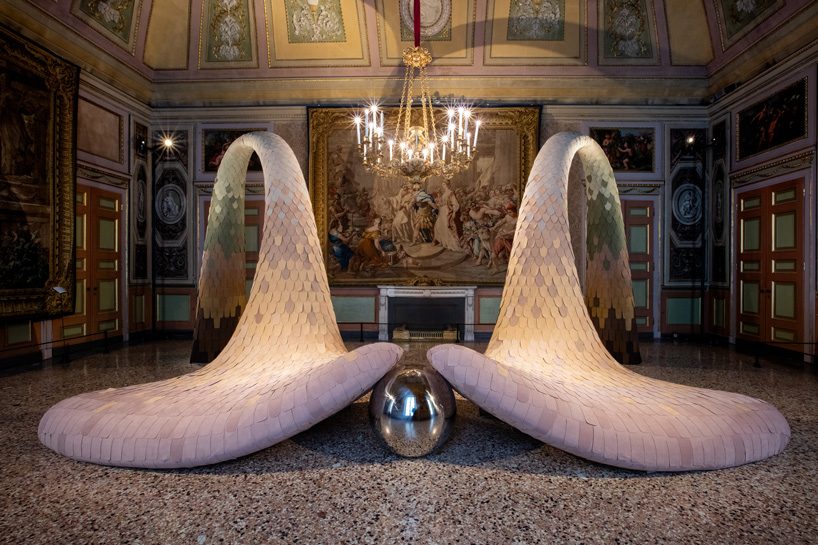
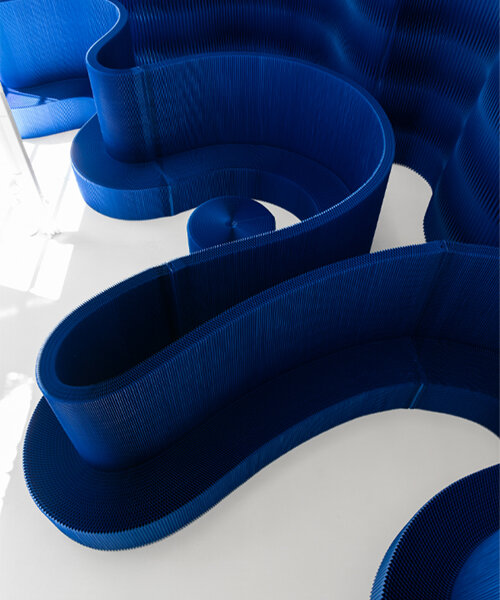
the following space hosts scylla by constance guisset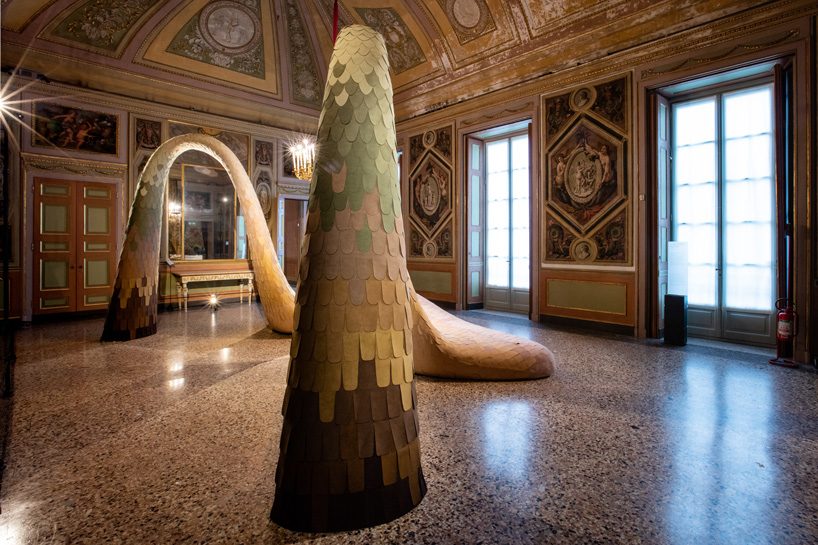 in the immersive installation, the tapestries come to life and invade the space with fins and tentacles
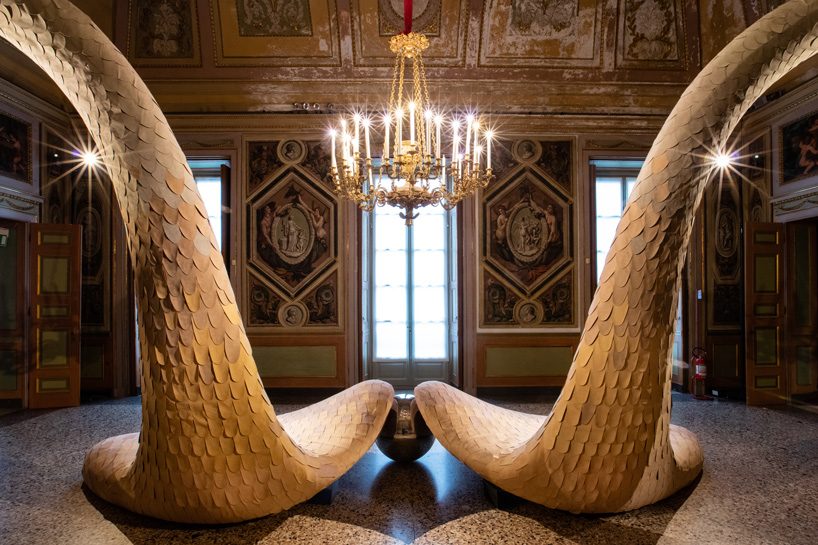 the different elements join together in the center of the room
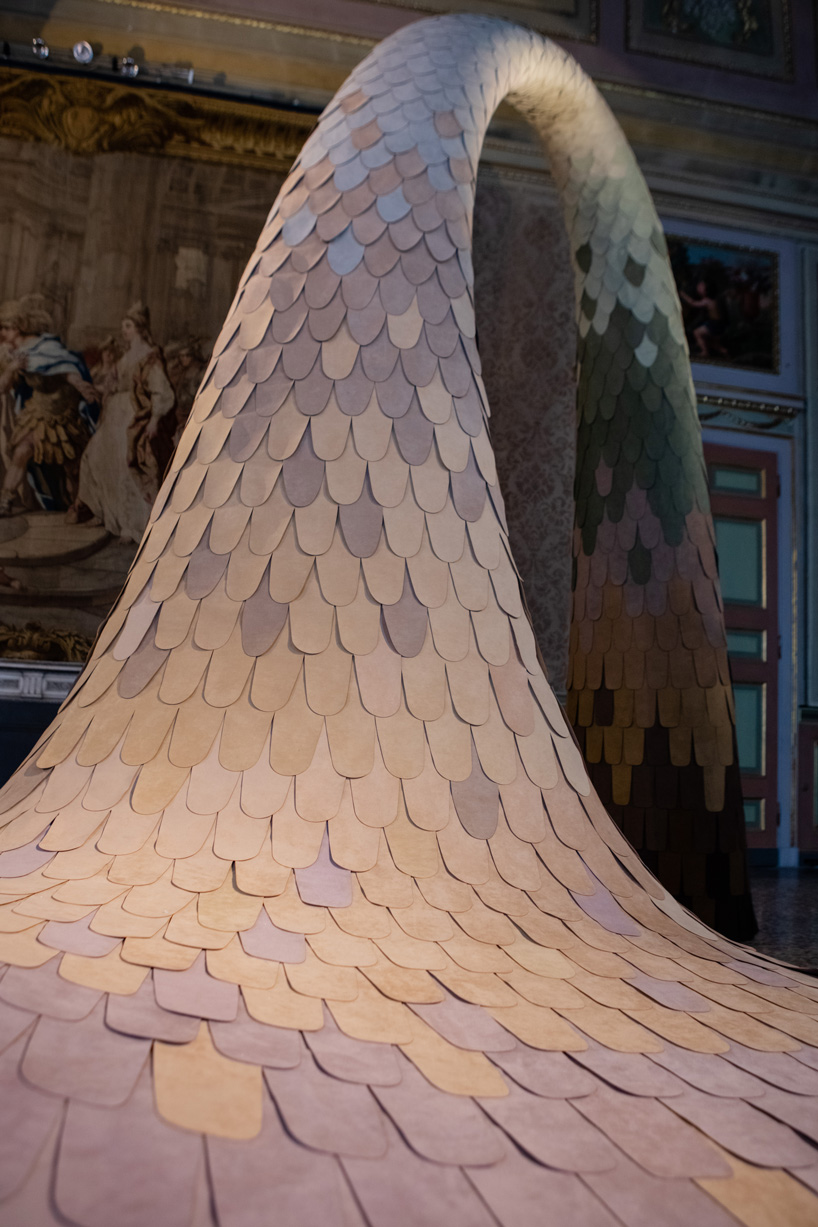 the appendages appear to belong to mythological chimeras due to the particular texture given to them by the use of alcantara
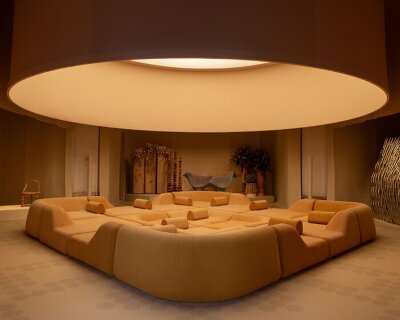
 the exhibition comes to a close with the wardian case by space popular
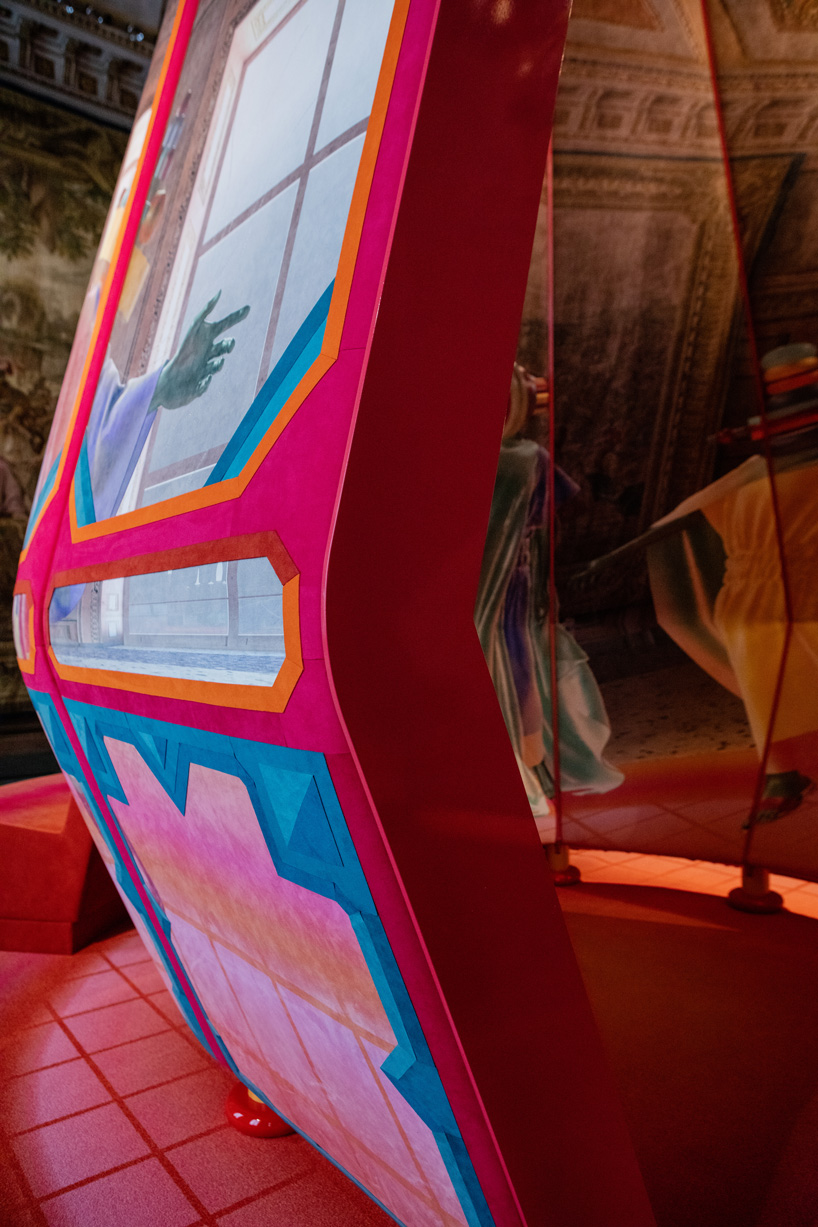 the wardian case, invented in 1829, is a sort of mini-greenhouse made out of glass and metal for the shipping of plants
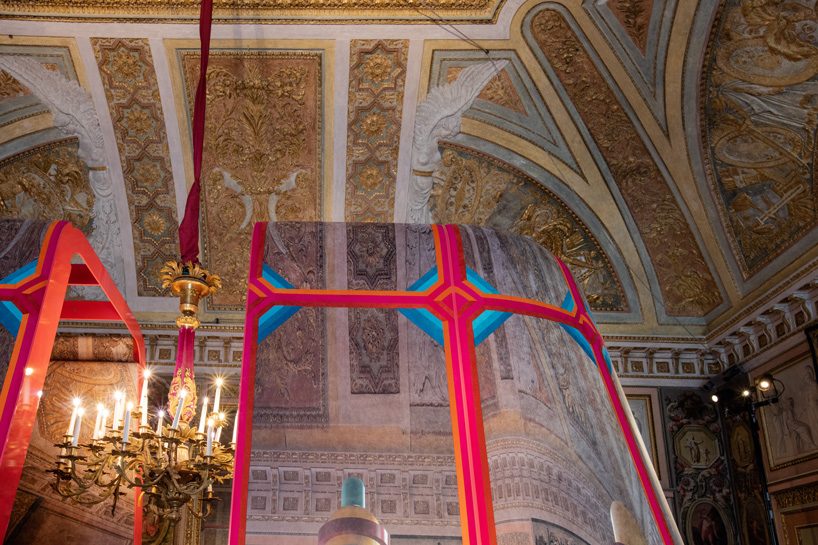 the tapestries in the room serve as mirrors recounting myths and stories of the past
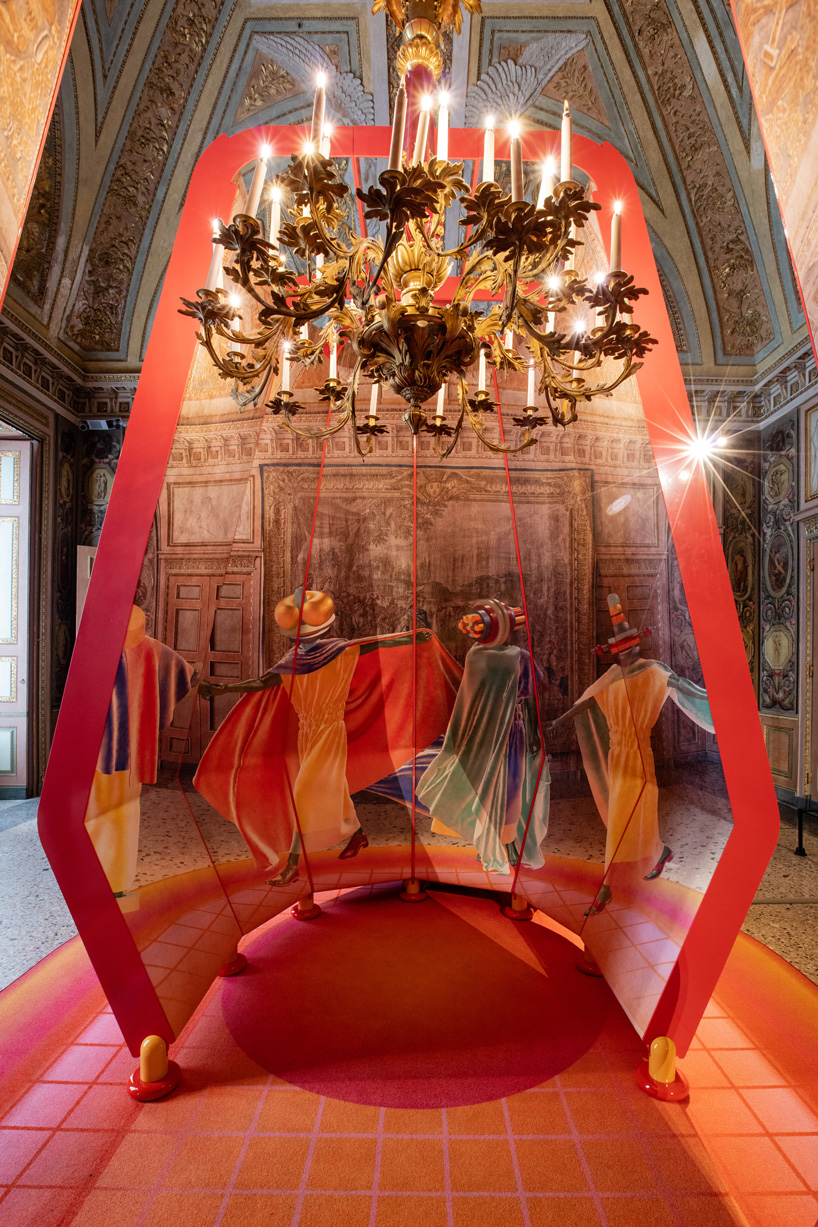 the wardian case is a container of information which may be accessed through the interaction between physical world and the digital domain
project info:
name: de /coding
designer: constance guisset, qu lei lei, sabine marcelis, space popular
company: alcantara
curator: domitilla dardi, angela rui
producer: municipality of milan – culture office, palazzo reale, alcantara s.p.a.
dates: 4 april to 12 may 2019
location: tapestry rooms, royal palace, milan (free entrance)
shop
your own online design shop — no sales commission collected