nh village architects includes rainwater collection system in vietnamese house
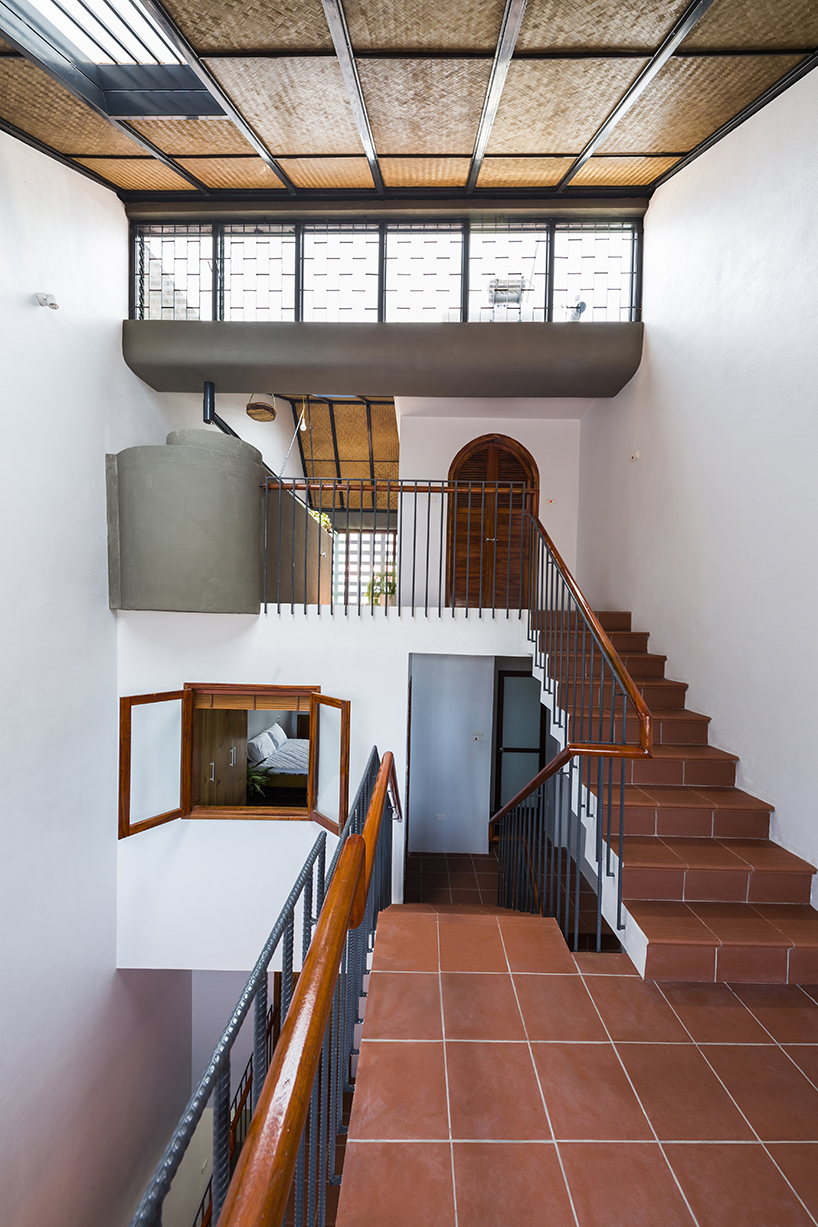
the main rainwater collecting elements such as the water tanks and drain pipes become part of the house’s interior aesthetic.
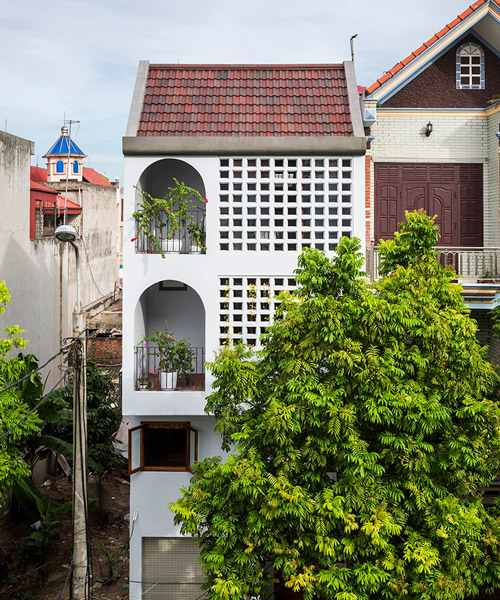
prefer designboom on googlenh village architects’ rainfall house is located in a small town in hung yen province, 80km away from hanoi, vietnam. the project sits on narrow tubed plot sized 5x14m typical of viet nam, and in an area with a deep connection to the culture of rainwater use. rainwater tanks in the yard corner of old traditional houses nearby populate the neighborhood. the project aims to collect rainwater and reuse it, as an experiment to reintroduce the familiar vietnamese rural house typology into a typical city tube house.

the house’s roof includes a spit gable and butterfly in and the facade boasts a double skin facade for climate control
the architects designed the roof like a split gable with the butterfly and all the gutters are expressed on the inside as big, curved beams. the main rainwater collecting elements such as the gutters, water tanks and drain pipes are visible and become part of the house’s interior aesthetic.

the perforated outer skin allows light and natural ventilation in the interiors
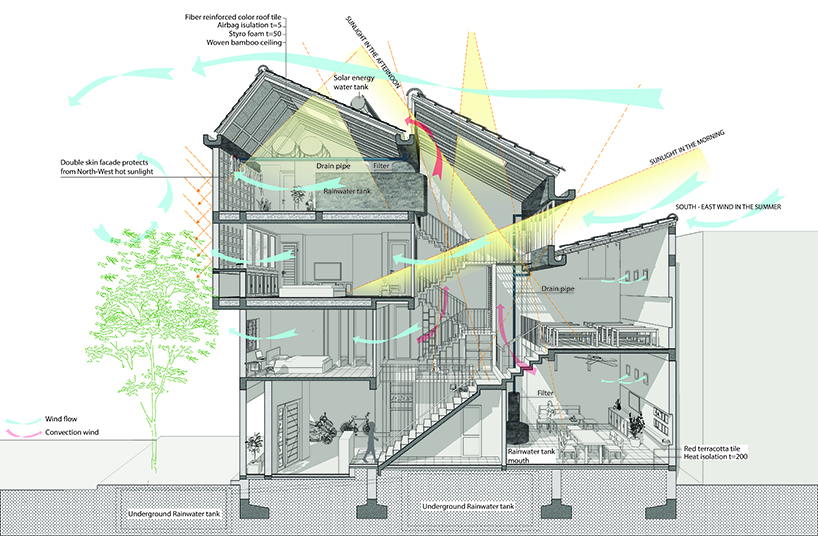
the residence features a central staircase, connecting the split-level floors so that people inside can see the roof and landscape outside. people living in the house will experience the landscape through windows on the rainy days, listening to the sound of rain. not designed exclusively for water, the house also includes efficient natural sunlight and ventilation systems, designed to save energy and bring nature to the interiors.

the inspection mouth of the underground rain water tank is visible from the first floor
the house’s rainwater system and municipal water supply system are integrated together so that the family can choose which to use depending on the rain quantity. rainwater is cleaned by a filter in the traditional way before flowing inside the tanks. there are 3 rainwater tanks in total that can collect a maximum of 32m3. according to the owner, from april to october, there is no need to use the municipal water supply and at the rest period, rainwater is 50% enough for daily using on average.
the altar room, a very solemn and important area in vietnamese culture, is placed at the highest level and always to be surrounded by fresh air
the building’s design expresses the rainwater collecting system, takes natural light and wind inside the house. besides, due to the limited budget, the architects decided to use local materials such as terracotta tiles and woven bamboo. in this way the design aims to bring the user’s activities and lifestyles closer to nature and recall the feeling of living in the vietnamese village nearby.

the owner of the house is a school teacher, so the classroom area incorporated in the home is filled with natural sunlight
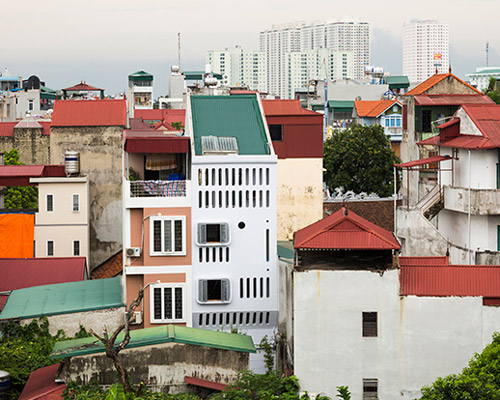
facing the street, the house’s faces the north-west direction, making it hot in the summer and cold in the winter. however, the double skin facade allows privacy for the occupants in house and protects the interio spaces from the hot sunlight in the summer and cold wind in the winter.

the water filter is placed next to the kitchen and dining room, as a centerpiece of the area

void space in the house. People will feel nature elements like sunlight, natural wind and raining water while walking around

the exposed water tank on the fourth floor recalls the typical volume found in old villages

the master bedroom is well lit and ventilated through the double skin facade

project info:
designers: nh village architects, based in hanoi, vietnam
project name: rainfall house
principal architect: tran dai nghia team: tran dai nghia, nguyen phuong hieu, đo quang minh, pham thu trang, đao van thieu
project location: phu cu district, hung yen province, vietnam
site area: 73 m2
construction area: 210 m2
completion year: 2017
photographer: hiroyuki oki
designboom has received this project from our ‘DIY submissions‘ feature, where we welcome our readers to submit their own work for publication. see more project submissions from our readers here.
shop
your own online design shop — no sales commission collected