
ma yansong, founder of MAD architects gave designboom a personal tour of the beijing based studio image © designboom
earlier this month, designboom visited beijing’s headquarters of MAD architects.
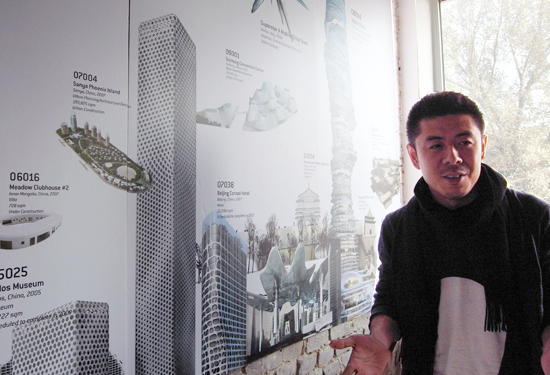 ma showing us the project of the sinosteel international plaza in the binhai economic district in tianjin (project of 2006 – under construction – scheduled to complete in 2012) image © designboom
tianjin will be the third special economic zone in china, after the city of shenzhen in the 1980’s, and pudong district in shanghai in the 1990’s.
sinosteel, china’s nationalized steel giant, commissioned MAD to create two towers within the binhai economic district in tianjin: an office tower of 358 metres, and a 95 metre hotel (358,886 sqm in total; tower A 228,638 sqm /358; tower B 69,216 sqm / 95 m).
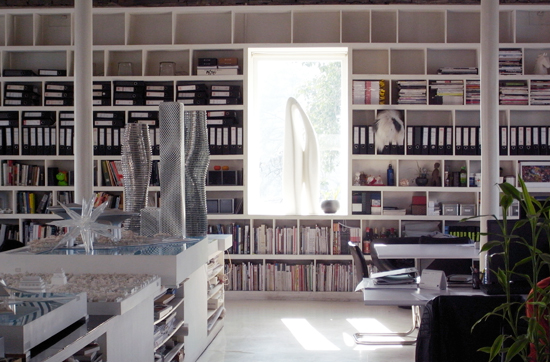 a view into the architecture studio of MAD image © designboom
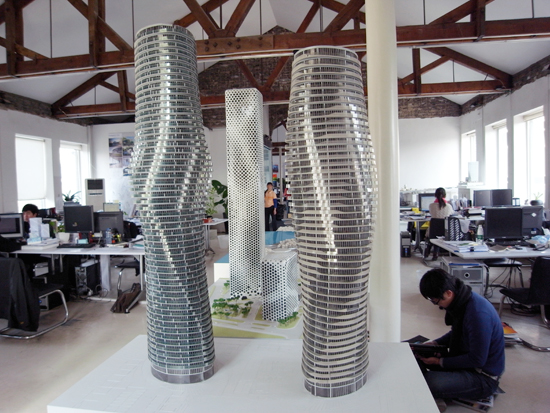 the model of the sinosteel towers is in the center, between the two models of absolute towersimage © designboom
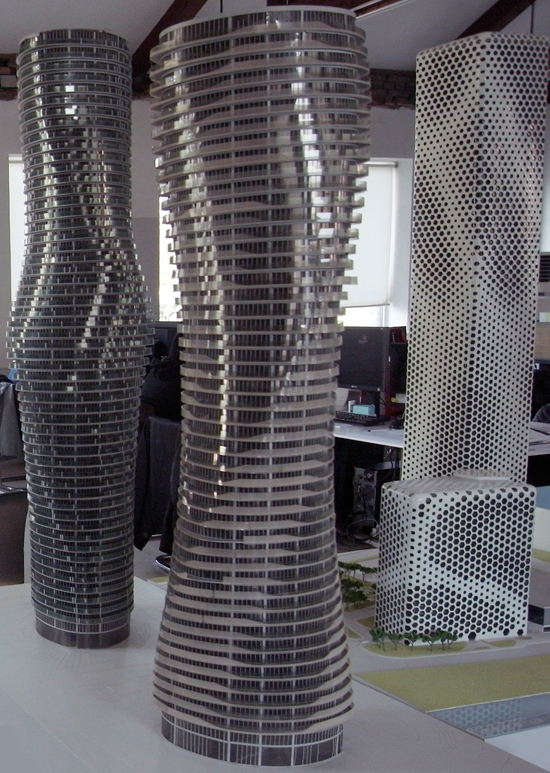 the façade (right) is made up of five different sizes of hexagonal windowsimage © designboom
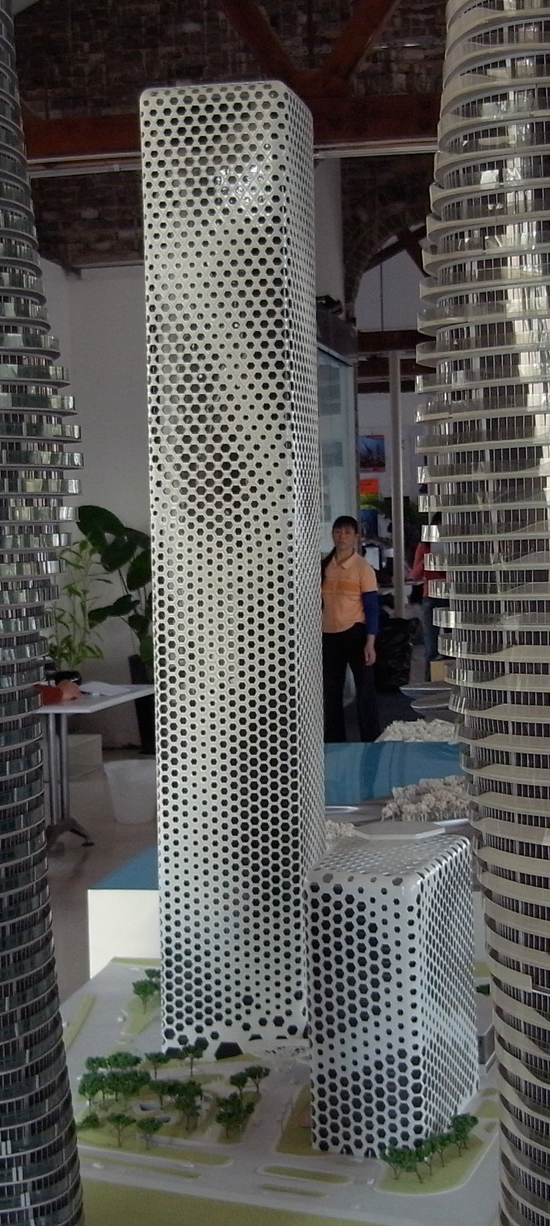 close-up of the modelimage © designboom
a hexagonal pattern on the façade, multiplying and growing across, creating an ever-changing image of the building from each different perspective
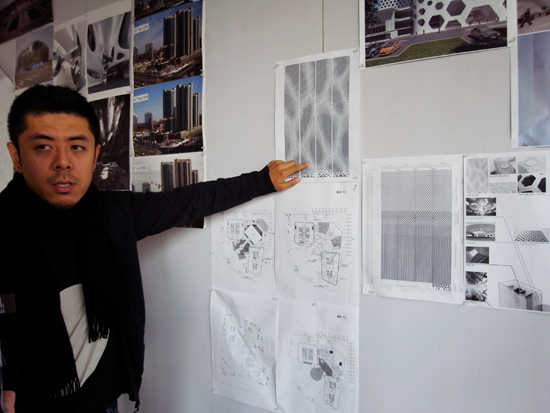 ma explaining to us the facade structure developmentimage © designboom
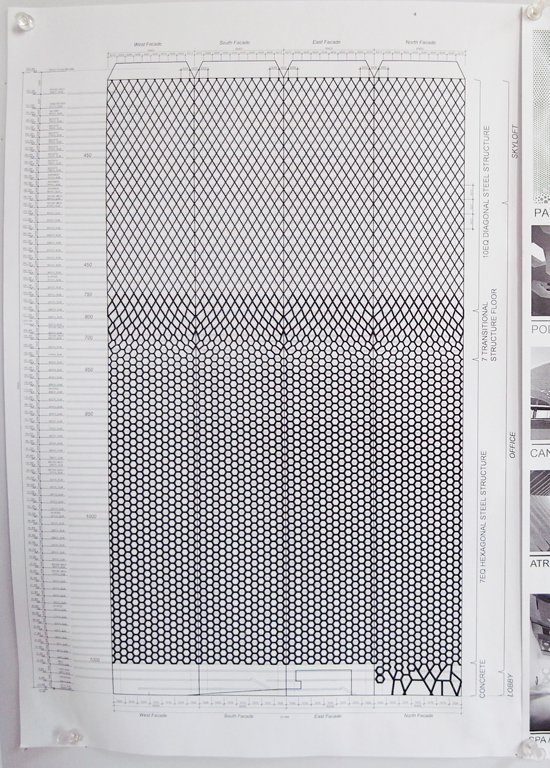 the design concept combines shape, structure and cultural symbolism in one repeated motif: hexagonal steel structure vs diagonal structure and transitionsimage © designboom
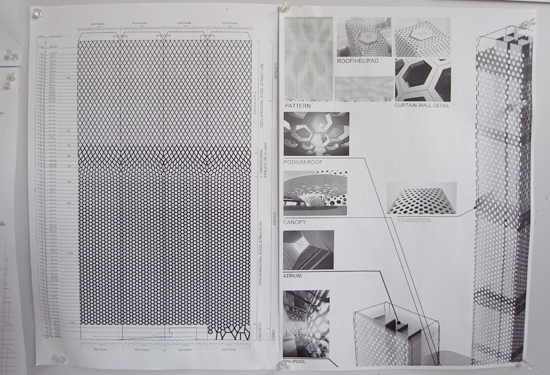 the sinosteel international plaza project sheets are displayed in the officeimage © designboom
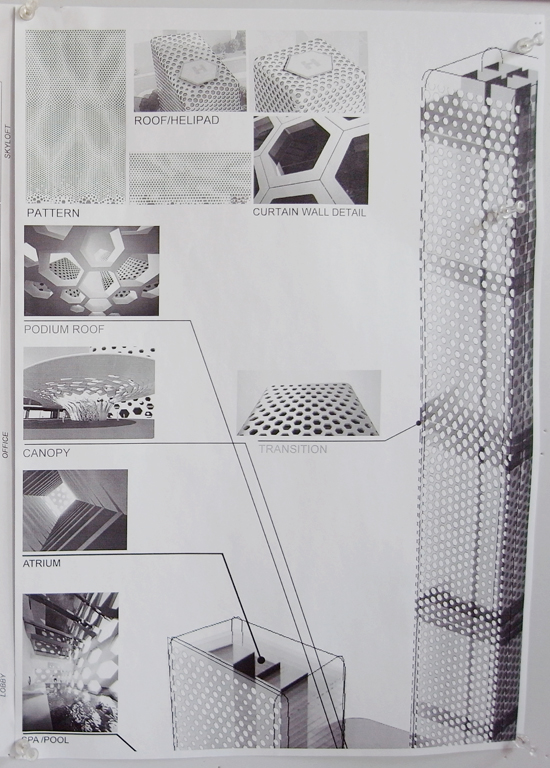 the varied honeycomb also improves the building’s energy efficiencyimage © designboom
although the façade pattern at first appears random, it actually responds to the climatic conditions of the site. by mapping the different air-flows and solar direction across the site, and positioning the windows accordingly, it is possible to minimize heat loss in the winter and heat gain in the summer.
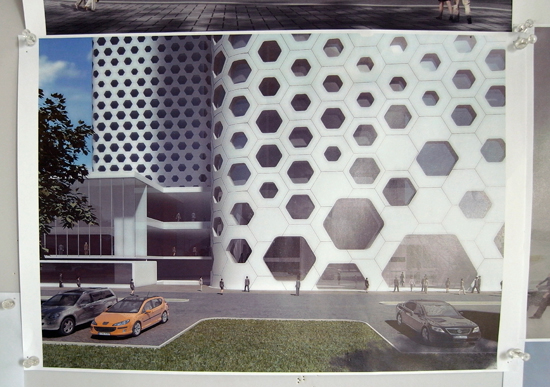 rendering of street level entranceimage © designboom
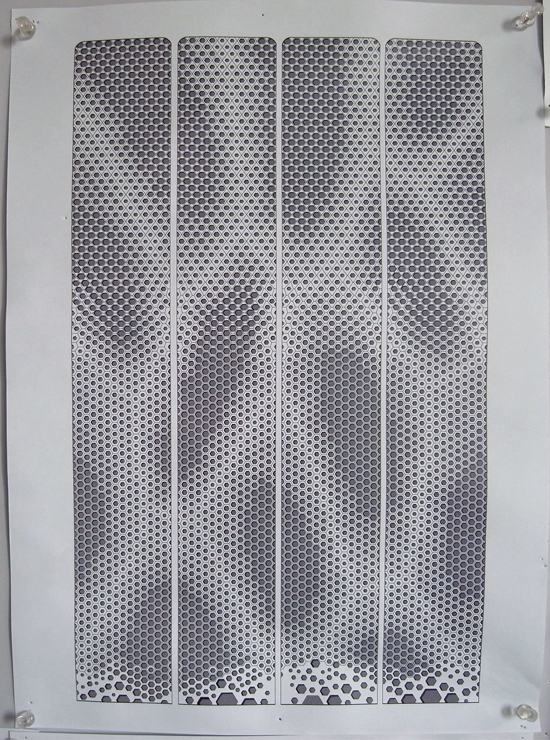 the windows flow across the building in an irregular, naturally occurring pattern, like cells multiplyingimage © designboom
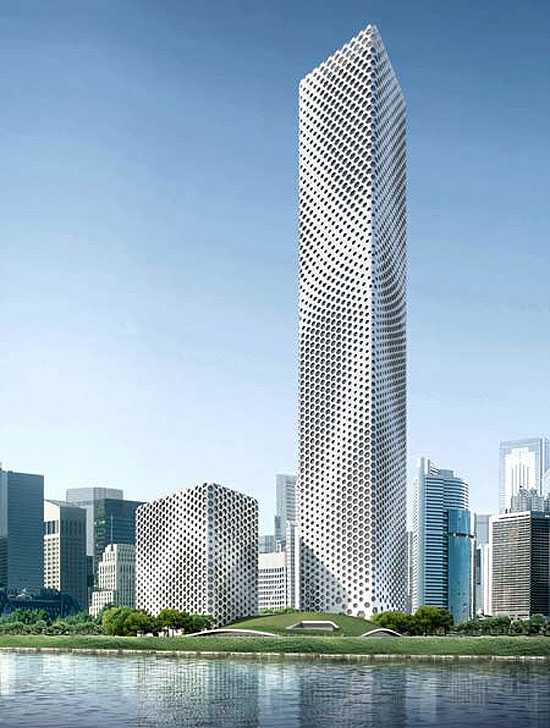 the sinosteel international plaza rendering image courtesy MAD architects
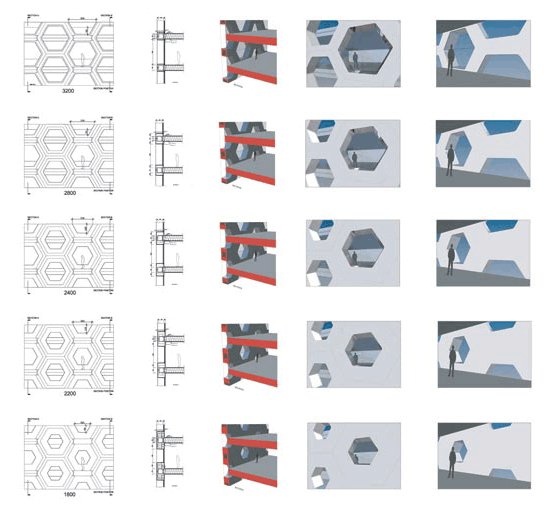 image courtesy MAD architectsthe honeycomb also allows the building to be energy efficient. the pattern responds to patterns of sun and wind on the building. by mapping the different air flows and solar direction across the site, MAD were able to position different sized windows accordingly, minimizing heat loss in the winter and heat gain in the summer.

happening now! ISE 2026 showcases how high-performance sound and smart technologies transform residential spaces into stress-reducing environments.
MAD architects (176)
 Nov 13, 2025
 Oct 03, 2025
 Aug 22, 2025
 Aug 20, 2025
 Jun 18, 2025
studio visits (118)

 Jan 20, 2026
 Jan 15, 2026
 Dec 30, 2025