francis kéré leads the crowds into the unknown unknowns of the 23rd triennale
francis kéré, who made history as the first african to win the renowned architectural prize, sets up four worth-seeing installations for the 23rd edition of triennale
prefer designboom on google[FEATURED]
Pritzker Prize winning architect francis kéré curates the 23rd triennale exhibition
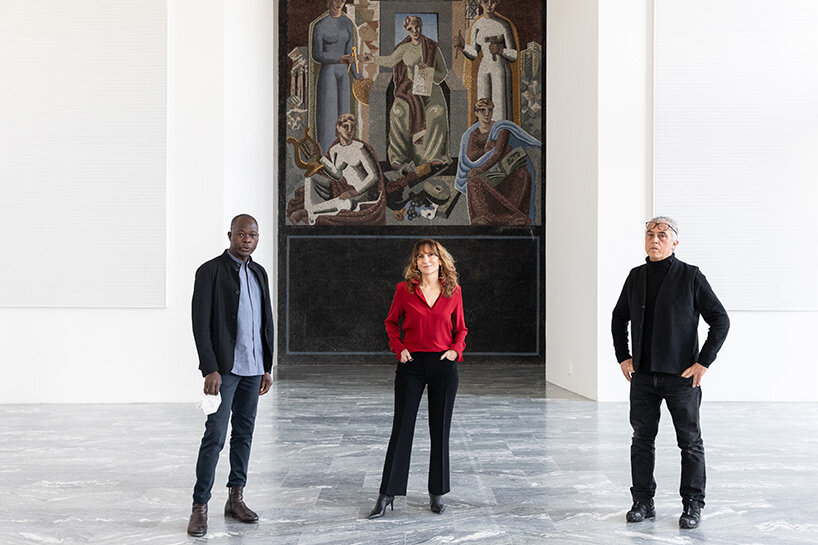
23 national pavilions arise for Triennale’s 23rd International Exhibition. Curated by Pritzker Prize winning architect Francis Kéré, and Ersilia Vaudo, astrophysicist and Chief Diversity Officer at the European Space Agency, the Unknown Unknowns. An Introduction to Mysteries begins its journey until December 11, 2022. From the evolution of the city to the oceans, and from genetics to astrophysics, scientists, artists, and designers come together to show the world what we still don’t know we don’t know. For the first time, the presence of Africa is stronger than ever as amongst the international participations present, the continent is represented by 6 states: Burkina Faso, Ghana, Kenya, Lesotho, Democratic Republic of Congo and Rwanda.
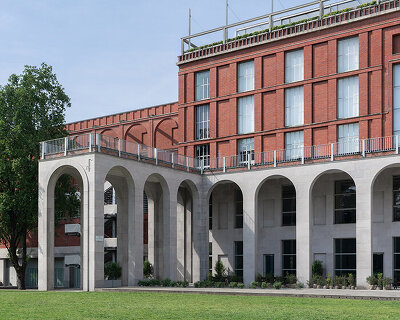
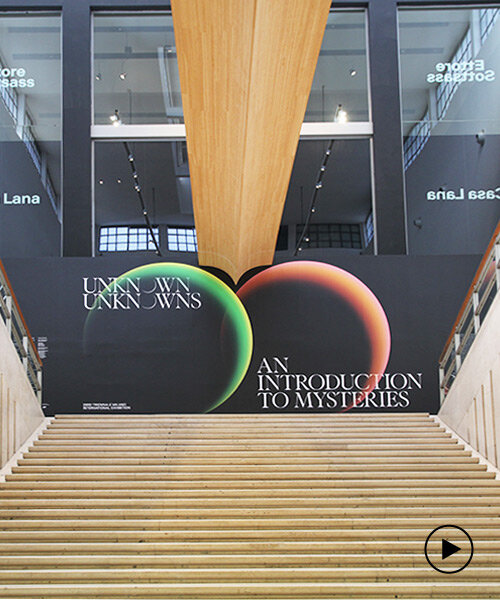
(banner) the iconic staircase into the Palazzo dell’Arte | image © designboom
Francis Kéré, who made history as the first African to win the renowned prize, sets up four installations for the 23rd International Exhibition of Triennale that lead the visitor’s path in, out, and around the famous Milanese building. With the aim to address the lack of recognition towards the African continent, the Burkinabé architect shows the world traditional culture and beauty, as well as emerging issues and worries.
‘A huge continent with so many great countries is always excluded, and it is a great opportunity for Burkina Faso, Ruanda, Kenya, Ghana, Lesotho, and the Republic of the Congo, it’s a great opportunity for these little-known countries to tell something about themselves. Although it is the closest neighboring continent to Europe, Africa is not talked about in the news much and not much is being broadcasted,’ says Francis Kéré.
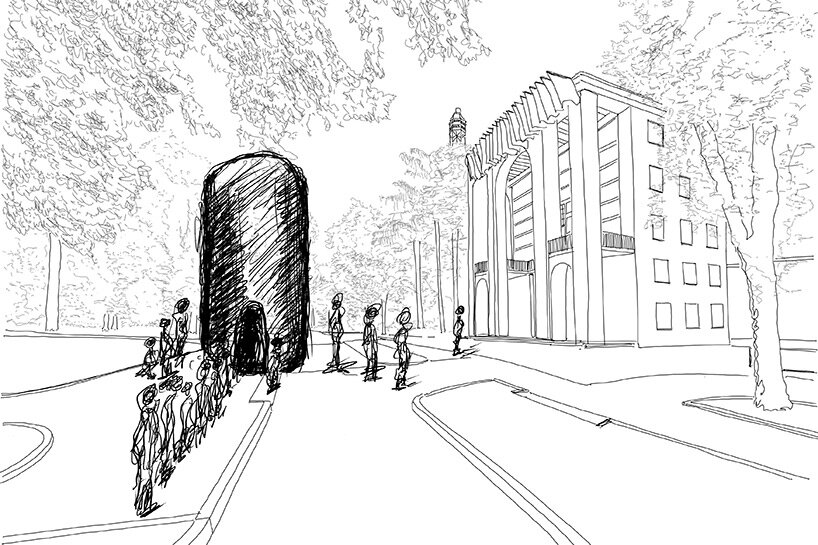
the 12m tower invites the visitors to escape the city rhythms
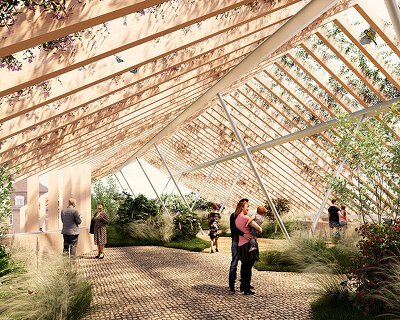
Of the architect’s installations, one cannot miss ‘The Future’s Present’, the 12m tower right across the entrance of Triennale. The construction creates a space for people to escape the busy rhythms of the city and escape into a tower that overlooks the surrounding landscape; a quiet place in the hectic rhythms of Milan. The relationship between people and nature fortifies and a space of contemplation and imagination arises.
‘The aim of each of the four installations is to create spaces for people to find comfort, no matter their financial situations. The tower encourages the people of Milan to find the time for a quiet place, and to sit and reflect on what they just witnessed through the exhibits. Through ‘The Future’s Present’, we get to see the surrounding environment and nature, and forget the burden of today’s problems like climate change, resource limitation, conflict, and population growth. Basically, what I wanted to do with this structure, with my team, was to create a relationship between people and the sky, as well as a space for the imagination,’ continues the architect and curator.
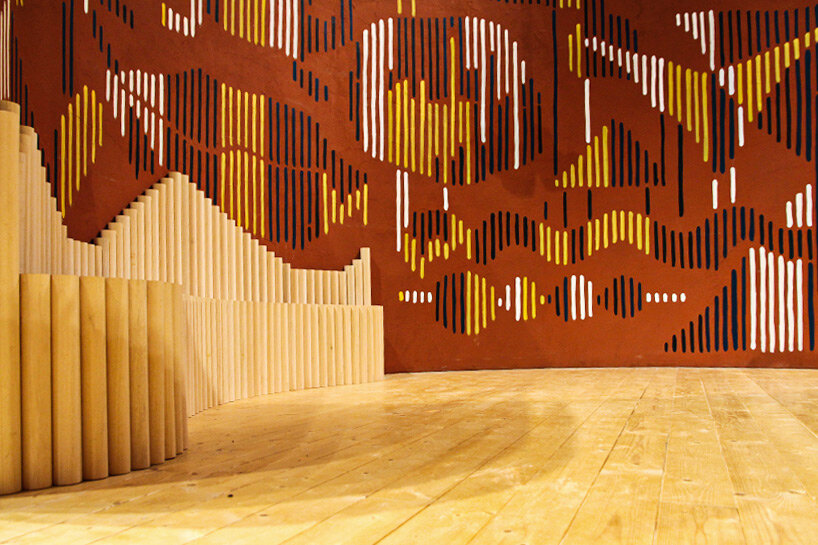
‘yesterday’s tomorrow’ curves in itself as a seating space
‘Yesterday’s Tomorrow’ is found right in the central space of the international exhibitions. Constructed as a tribute to the vernacular architecture of Burkina Faso, the installation consists of two walls that curve into themselves. Once in and around, a seating area reveals itself, offering another small escape to the visitors.
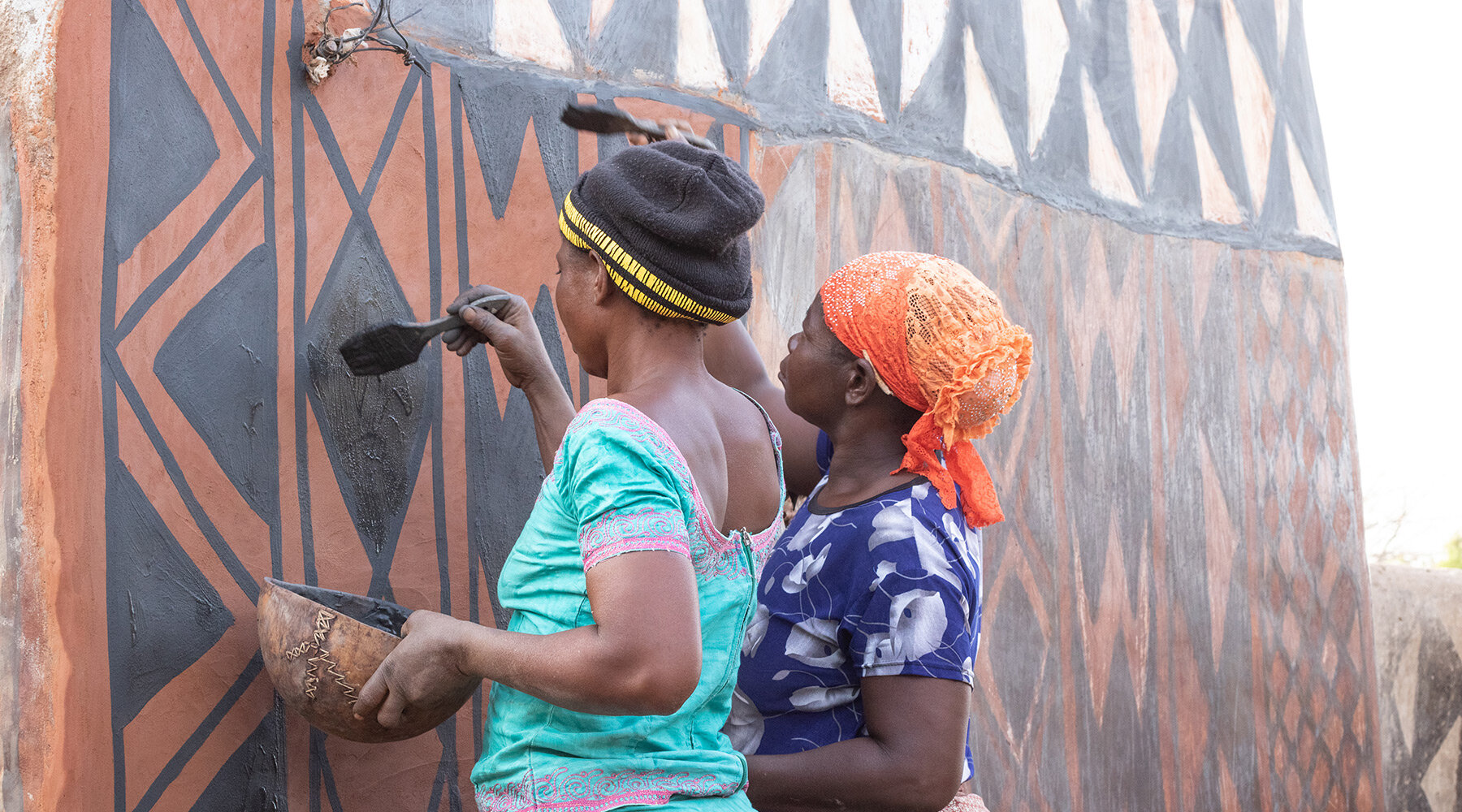
the women artisans of the Burkina Faso pavilion completing the mural painting | video © designboom
‘Drawn Together’ welcomes people to paint the mural
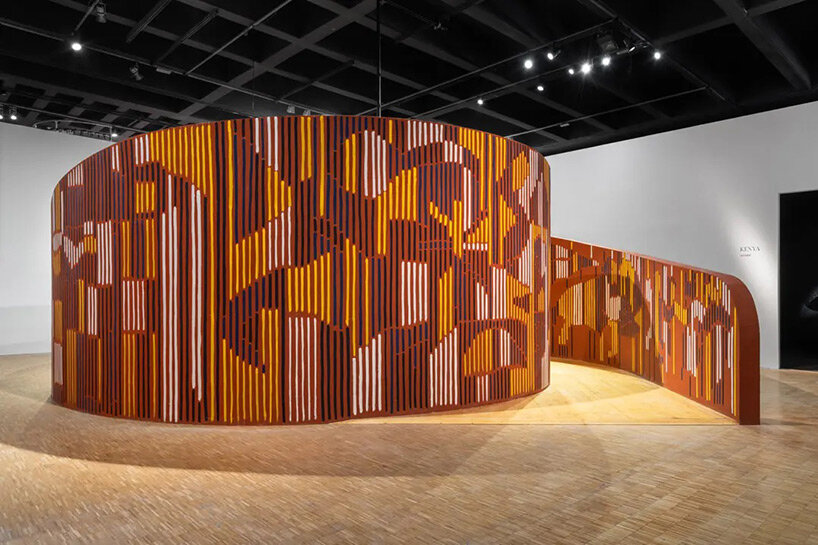
The traditional motifs and patterns continue in the ‘Drawn Together’ room, which marks the country’s first participation in the exhibition. Here, women artisans are seen embellishing the mural wall painting with simple brushes and paint, made out of natural materials. More than just decorations, the depicted symbols represent the importance of music, family, and the role of animals into the world. Human or not, equality takes form as the sharing of resources evolves in harmony.
‘For a country like Burkina Faso to be in Milan and talk about its greatness is truly fundamental, as it is a great chance to show something different than what we, in the West, know about. This goal of drawing together, which you will see the artisans at the Burkina Faso pavilion, they will be standing there trying to use natural products to create a mural painting, which is telling the story and which is totally about participation. Here the women are inviting the public to join and to really try to experience a tradition that is vital in Burkina Faso,’ continues the architect.
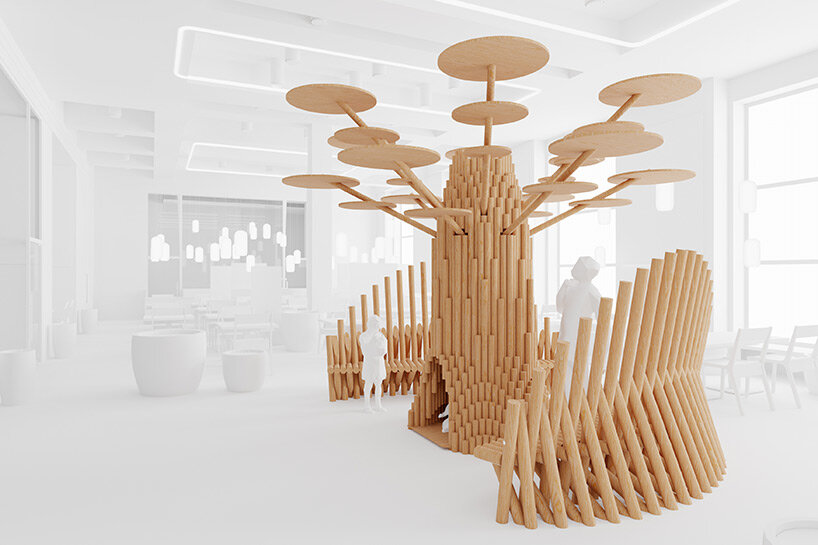
the triennale café becomes part of the installations
‘Under a Coffee Tree’ decorates Triennale’s communal café area. Here, in collaboration with the Lavazza Group, the tree and seating benches bring people closer together, as does the ritual of coffee for countries around the world.
‘To discover the Unknown Unknowns is to be ready to tackle what is actually unknown, and this goes all the way to the Lavazza installation. Every little single cup of coffee is the result of a bean from the coffee tree. What we want, is for people to sit and reflect on what they have seen during the exhibition, and then begin a dialogue of contemplation with their seating neighbor,’ says the architect.
other highlights from the international pavilions
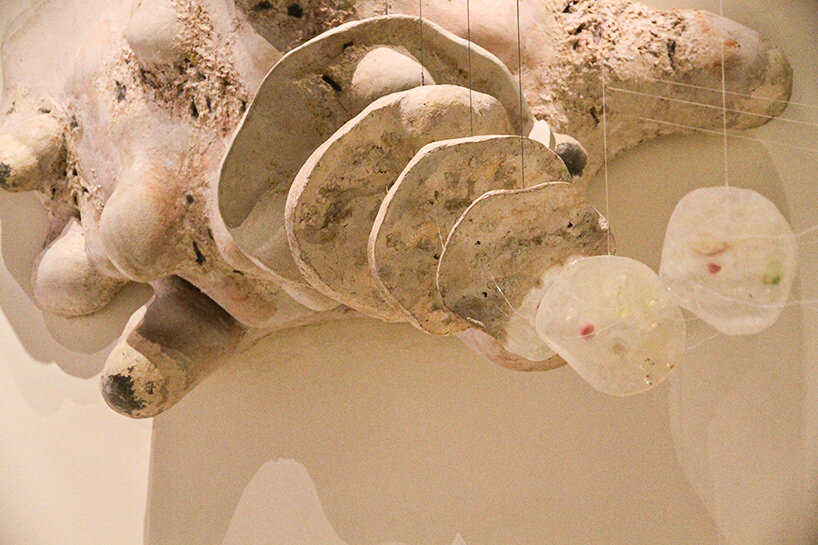
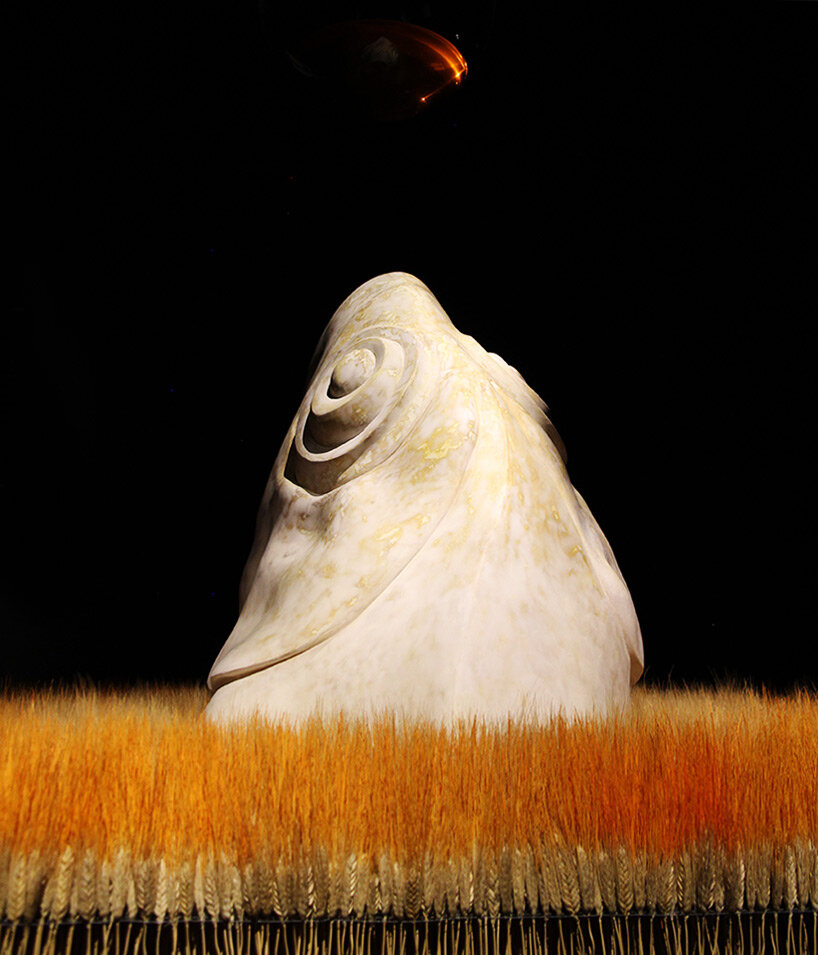
Besides the African countries, other pavilions that stand out include Austria, where artist Sonja Bäumel magnifies an amoeba in the form of a sculpture, that stretches out across the room. With a projection in the background, the installation explores the vital connections between body and microbes, inviting people to explore these fragmentations and movements.
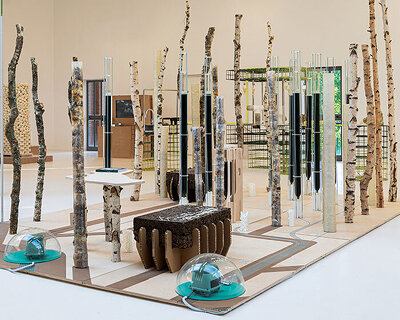
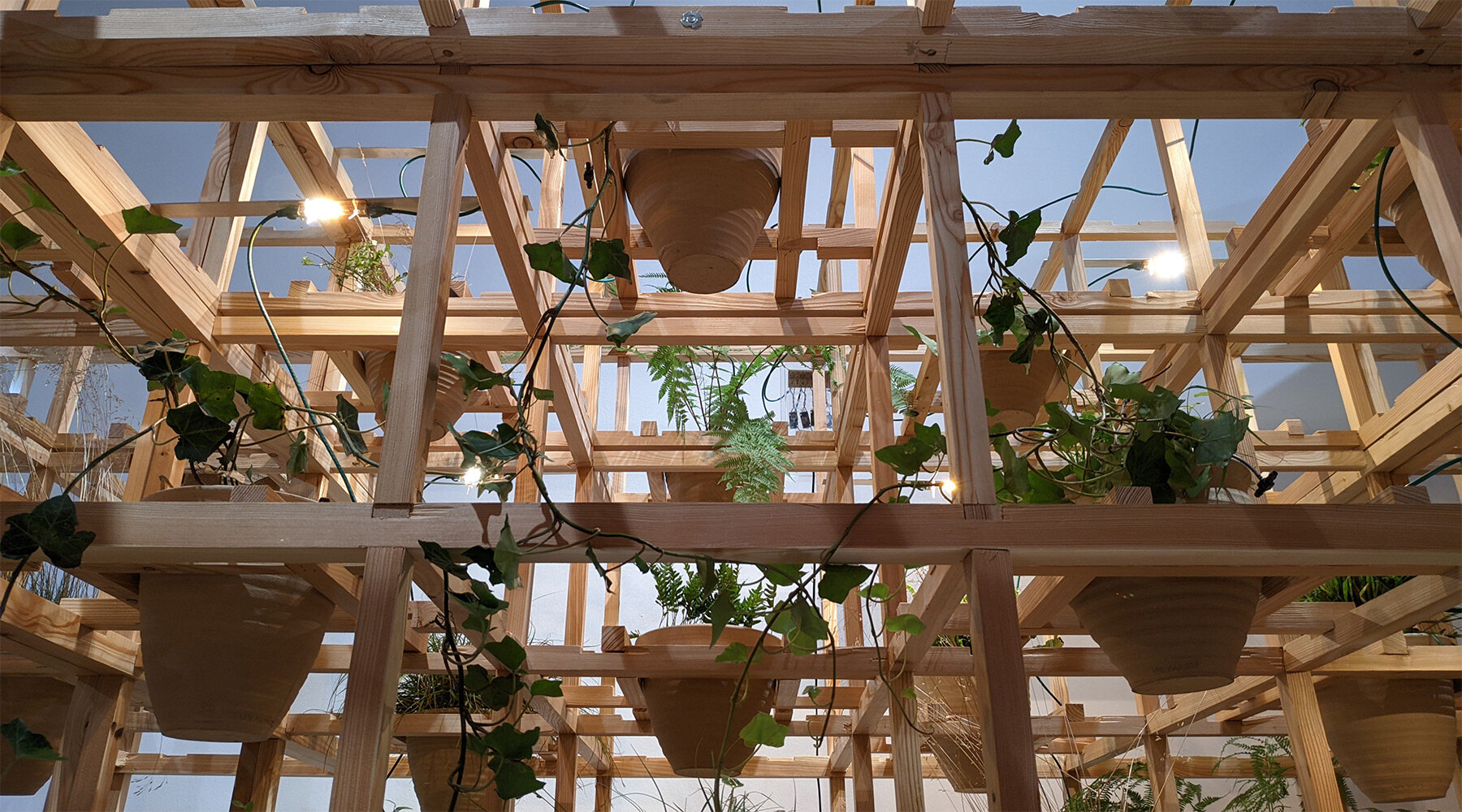
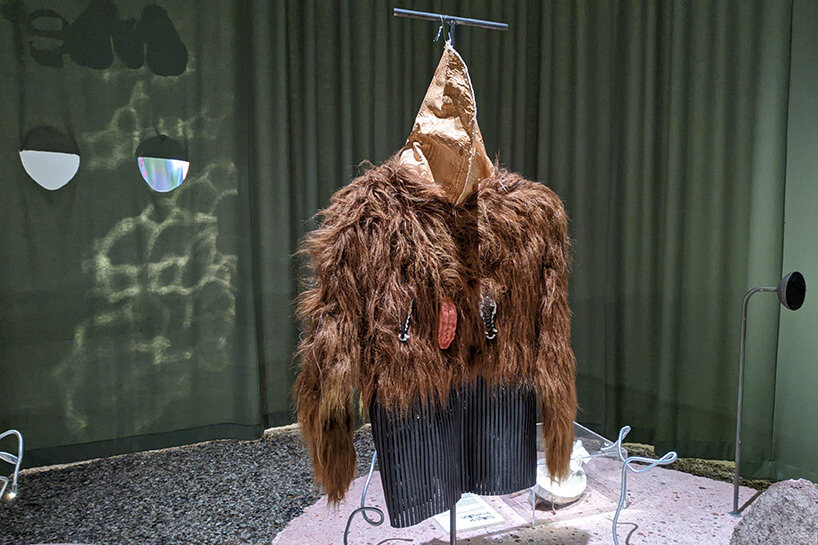
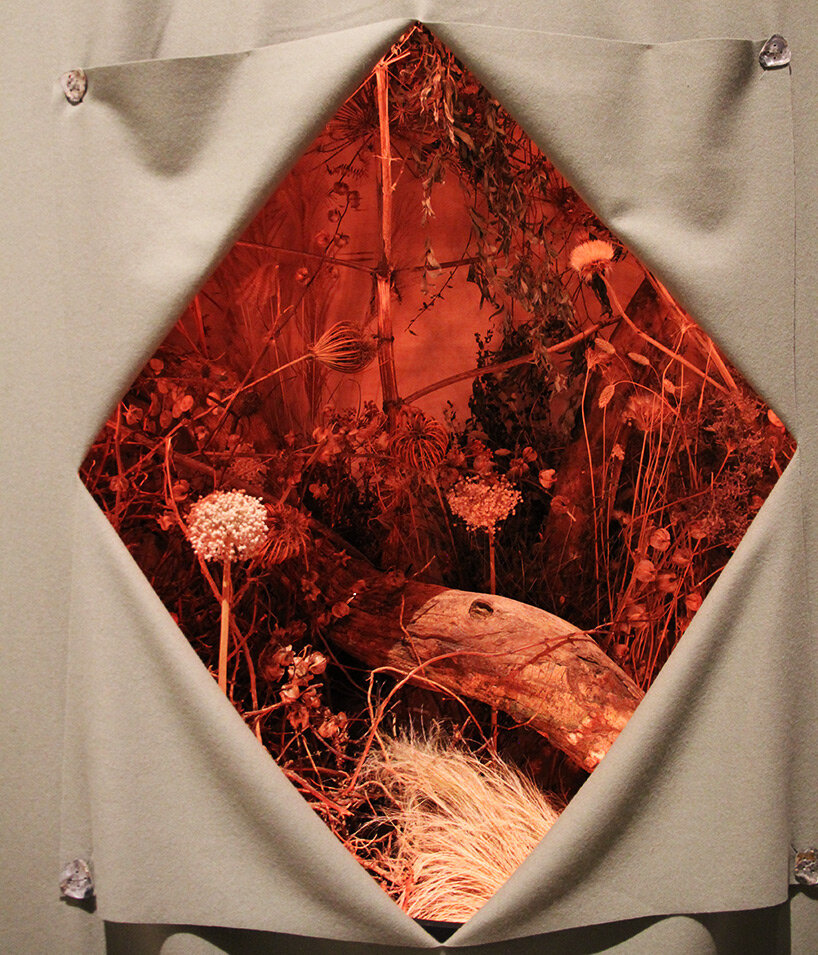
Polish Hazem Kalaji on the other hand touches upon the needs of the ecosystem. Through the literal Greenhouse Silent Disco, digital sensors pick up the behavior and reactions of plans when touching, atmospheric conditions or sounds begin to interplay. Similarly, the Netherlands seeks to understand the environmental crises facing the Earth, approached through an investigation of attitudes, technologies and organizational means. The relationship between human and non-human beings is seen through samples of sea shells, plants, fossils and other collaborative tools.
project info:
exhibition name: Unknown Unknowns. An Introduction to Mysteries
curators: Francis Kéré; Ersilia Vaudo
occasion: Triennale 23rd International Exhibition
location: Palazzo dell’Arte, Milan, Italy
duration: July 15 – December 11, 2022
shop
your own online design shop — no sales commission collected