thomas medicus’ optical illusion installation made of glass shards confronts climate change
as observers encircle the sculpture, images of four animal species under threat disintegrate into fragments then reassemble themselves.
‘human animal binary’ questions the Anthropocene
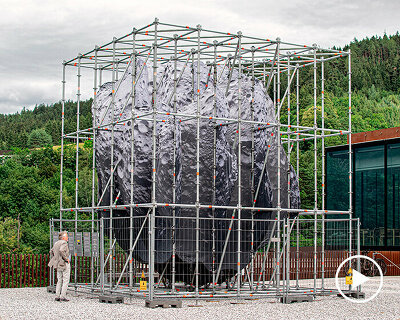
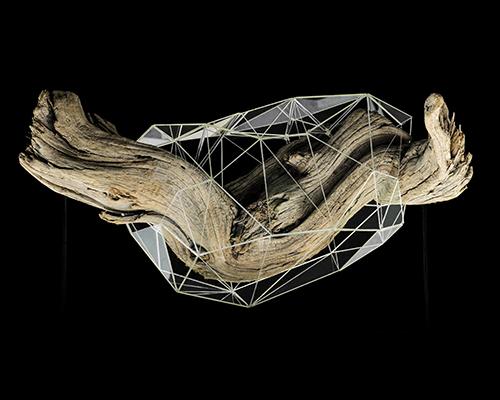
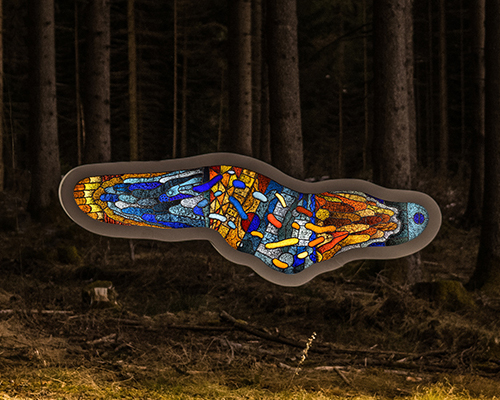
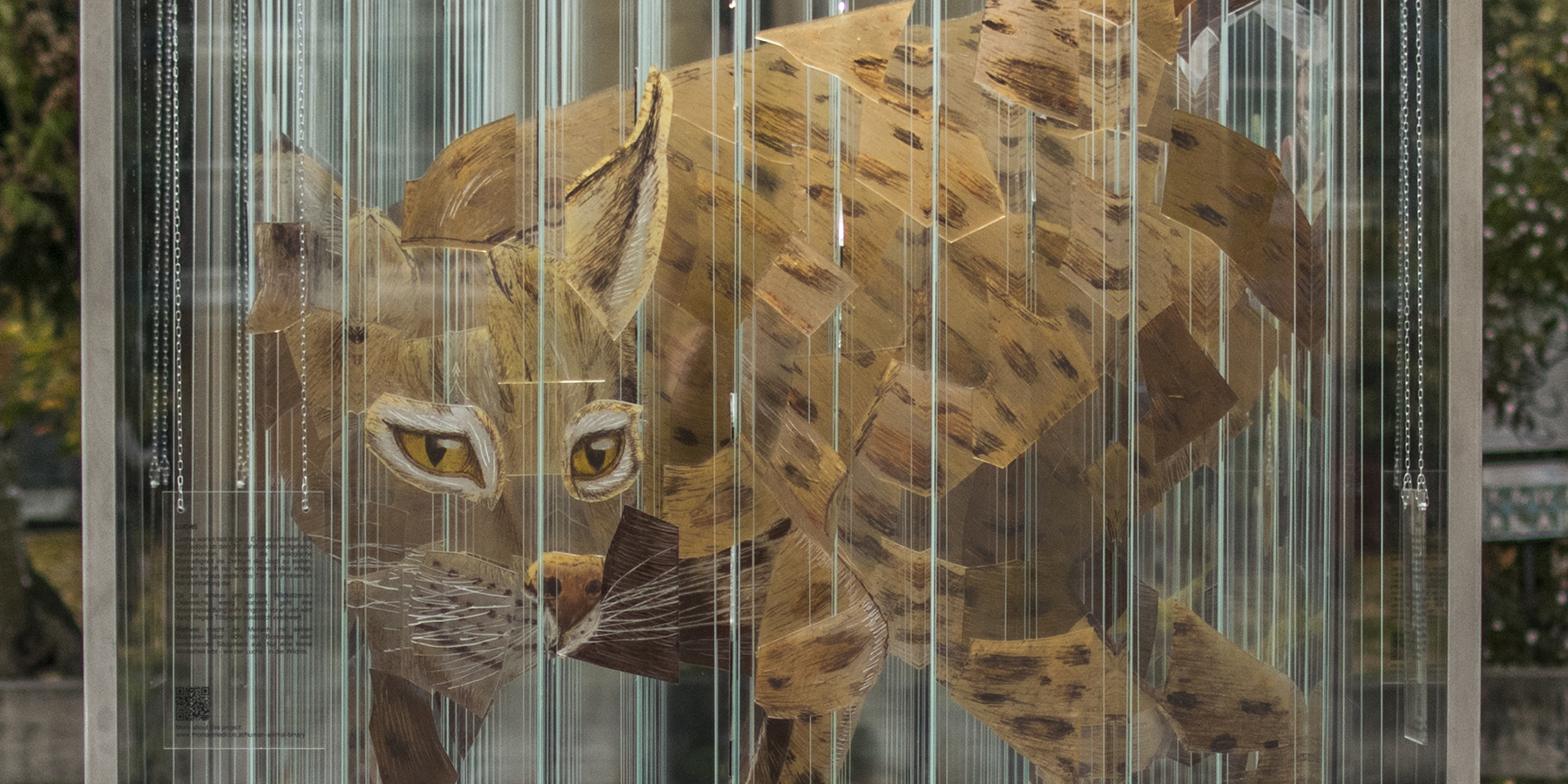
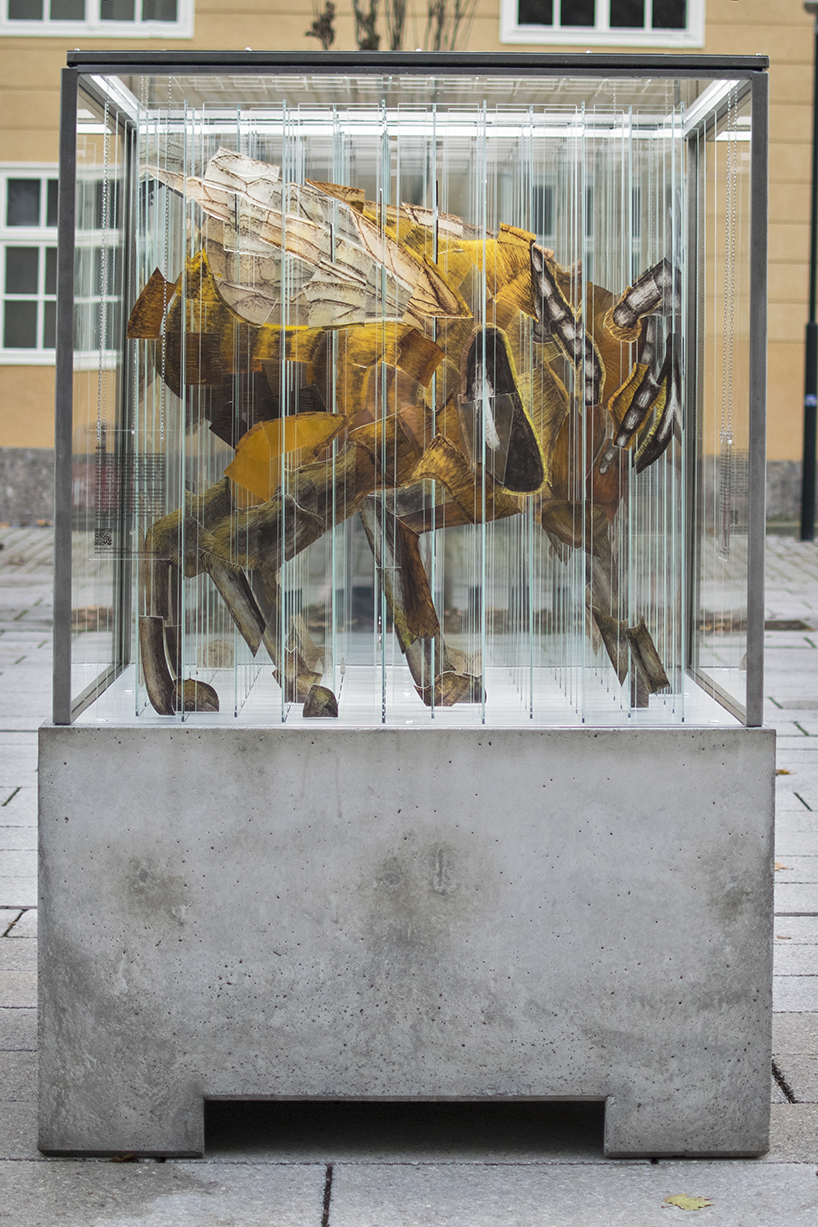
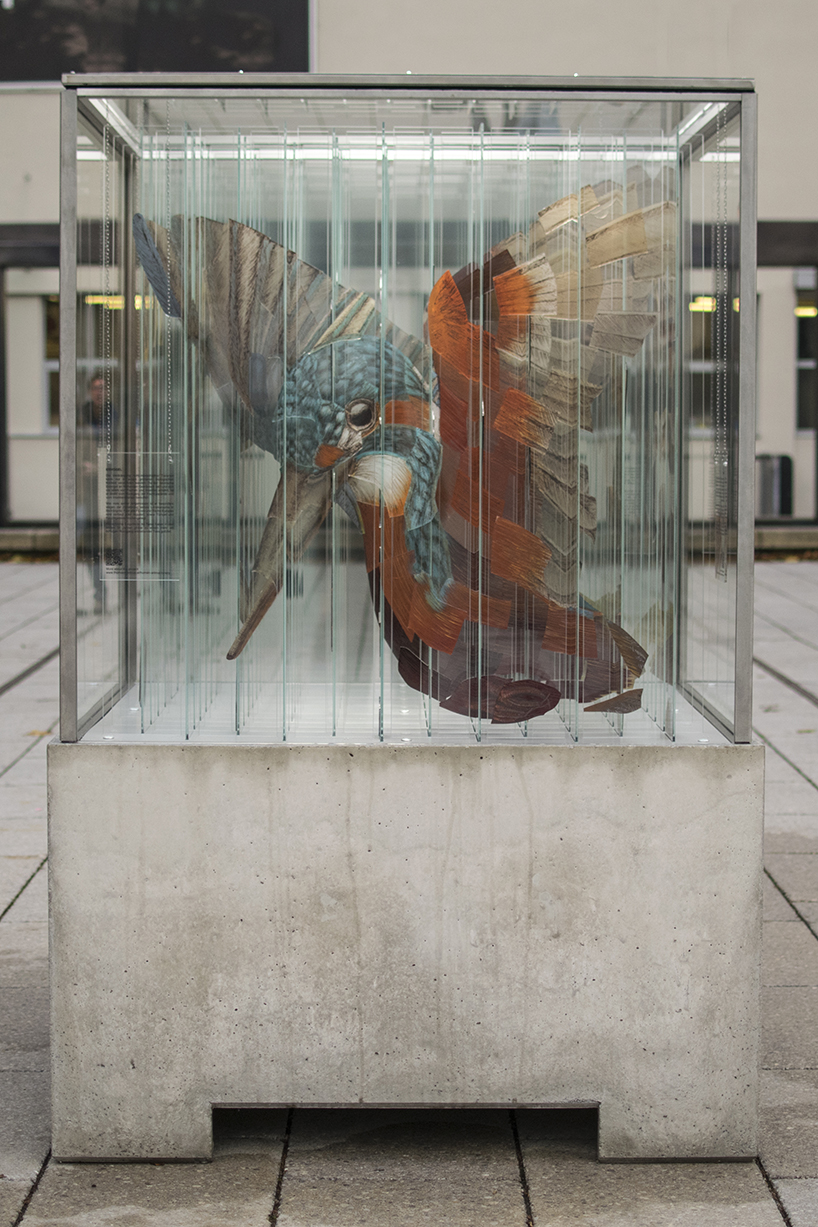
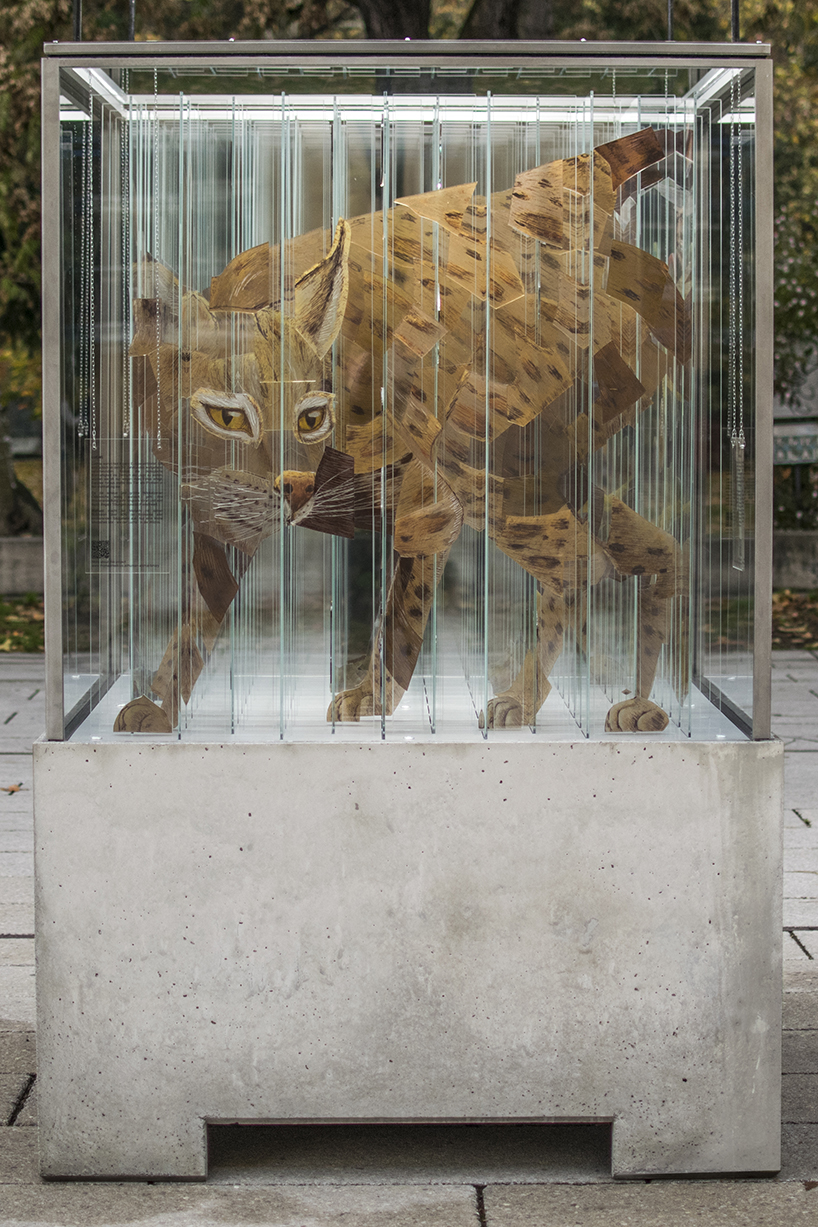
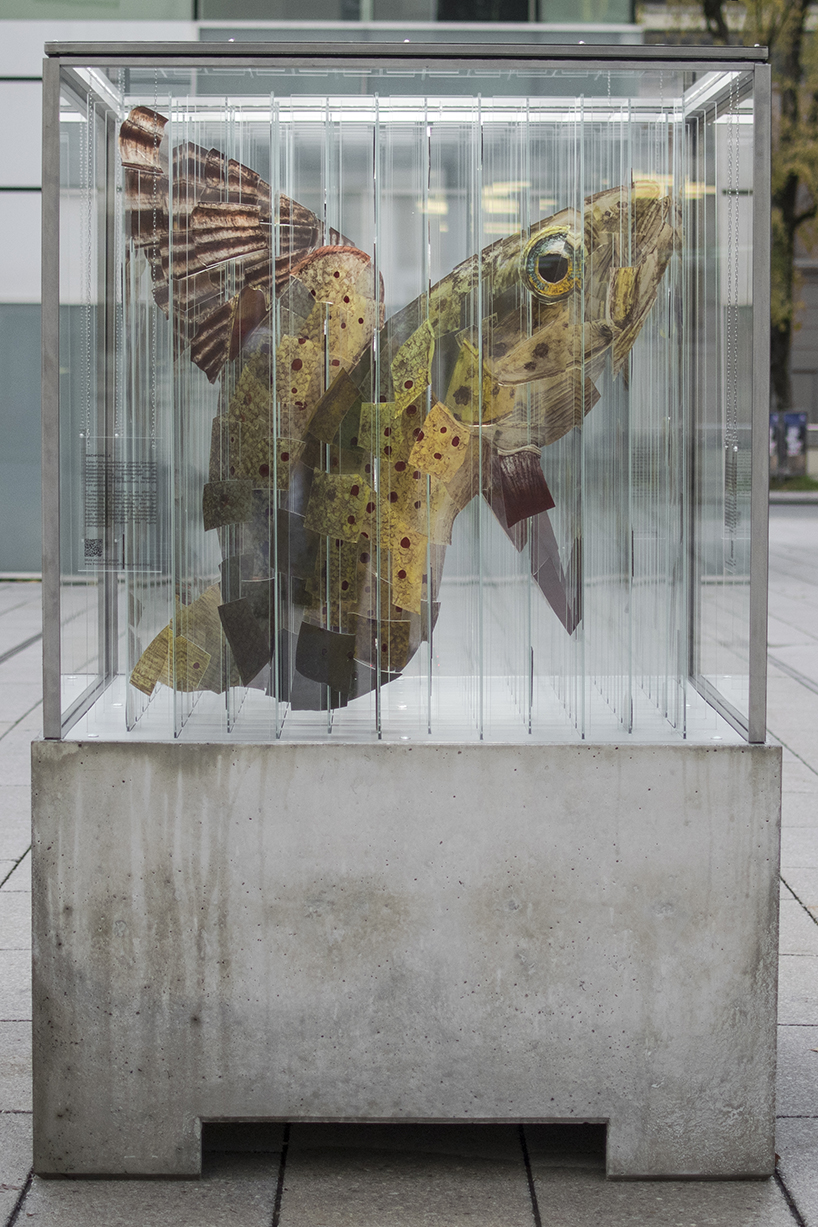
In a creative, thought-provoking response to the prolonged discourse on climate change, Thomas Medicus’ art installation ‘Human Animal Binary’ depicts four fragmented illustrations of animal species facing the threats of disaster. Made from industrial materials such as glass, concrete, and metal, richly detailed images of a lynx, bee, kingfisher, and river trout are interlocked over a system of 144 strips of glass within a cube-shaped space.
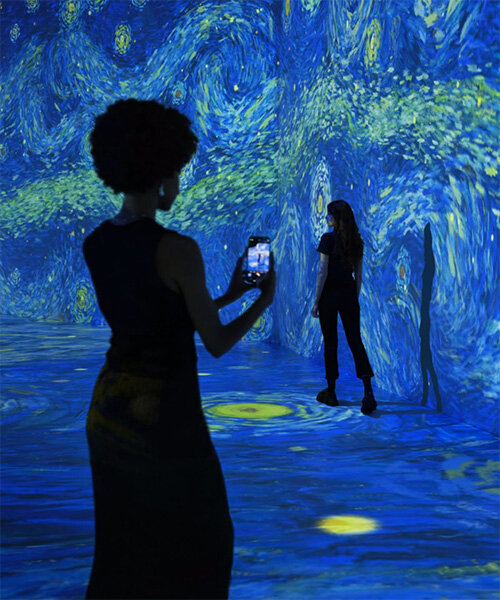
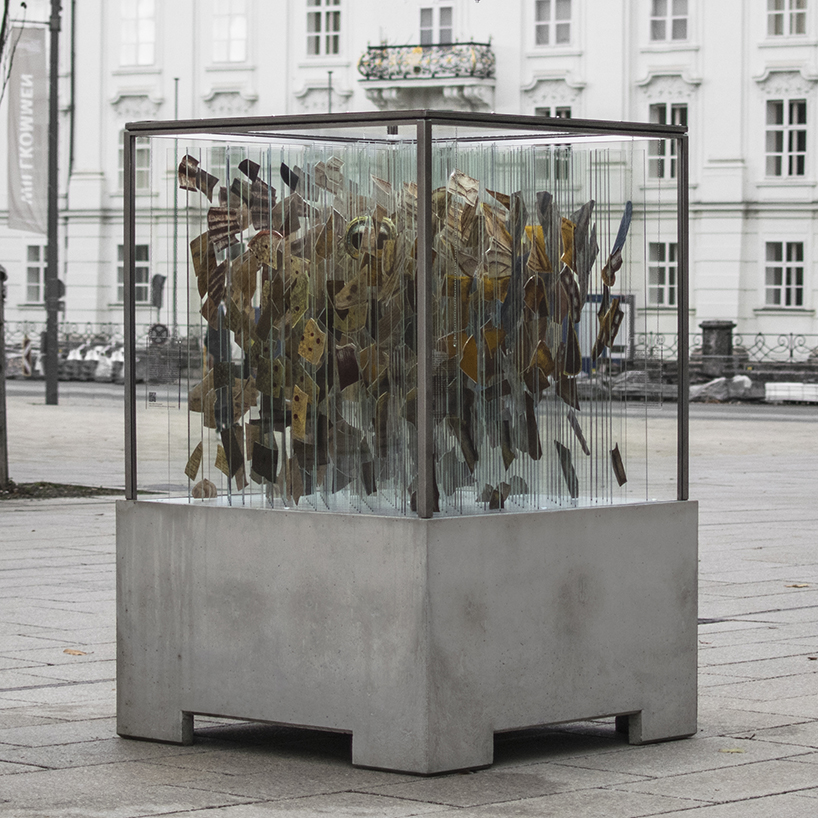
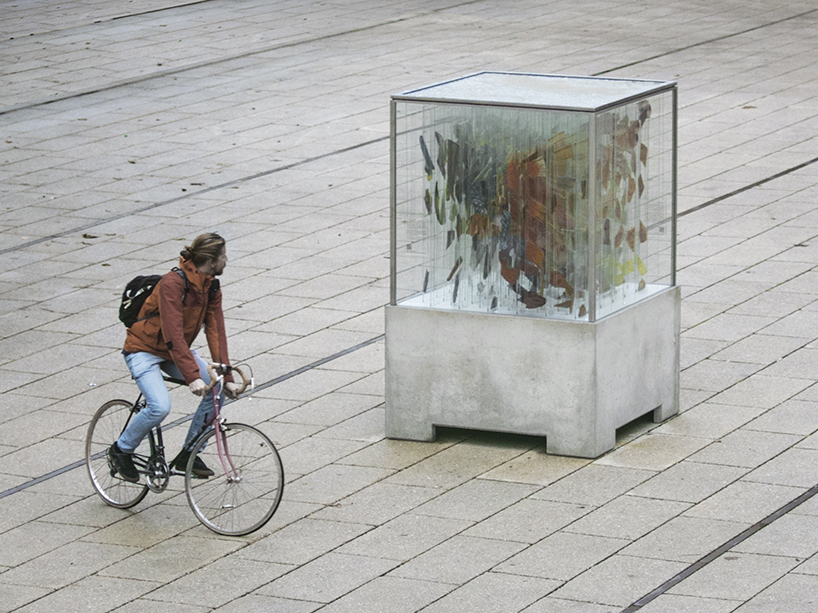
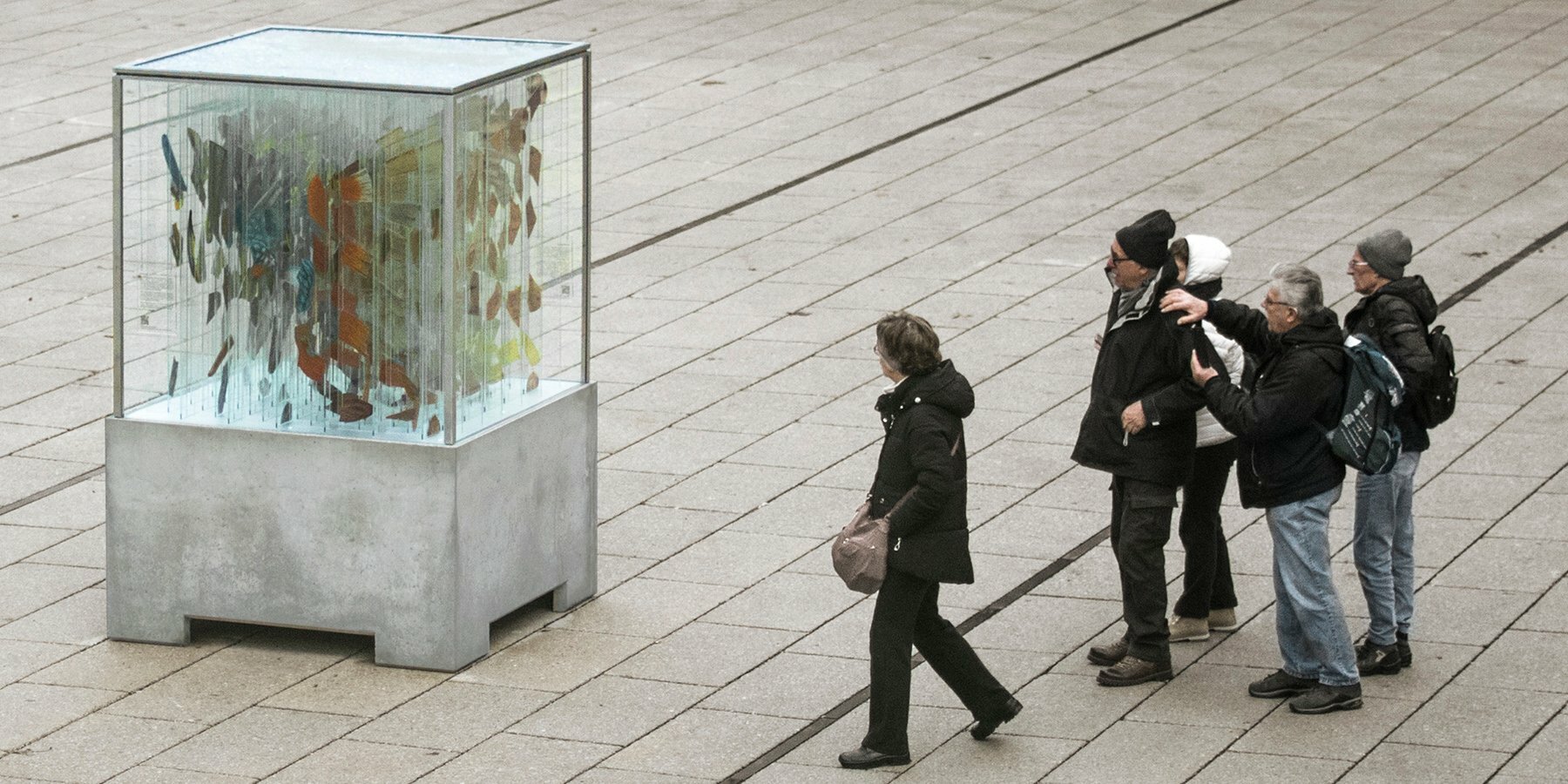
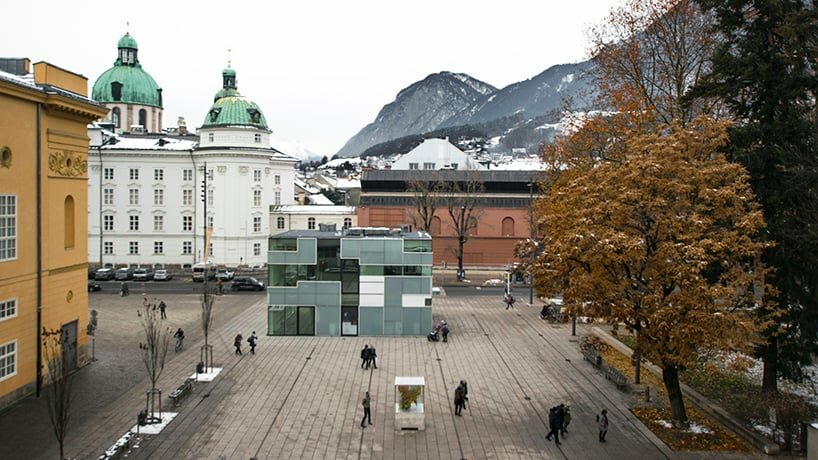
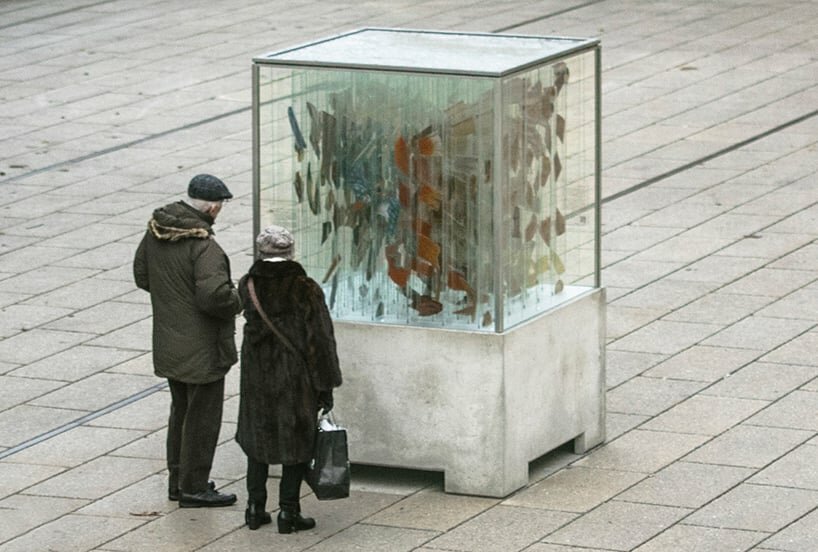
As a result, an optical illusion emerges and as observers circumnavigate the sculpture, and the two-dimensional representations disintegrate into a cloud-like complex of image fragments and then reassemble themselves — like a constant emergence and decay of living creatures. Ultimately, the piece with its changing faces, is designed to confront passersby in the public sphere, and invoke conversation about a contradictory dilemma in which a large part of humanity finds itself: human habitats harmfully coexisting with non-human animals.
thomas medicus brings fragmented shards to innsbruck
Addressing the decades-long scientific and political debates about humans’ problematic interventions in nature and the discussions’ lack of considerable success in causing a turnaround, Austrian artist Thomas Medicus responds with a symbolic and discursive contribution through an art installation. The anamorphic ‘Human Animal Binary’ sculpture is initially a low-threshold intervention with a strong experiential dimension. Coupled with the idiosyncratic animal representations, its illusionary techniques fulfil an affirmative task in conveying the incomprehensibility of life.
Moreover, this artistic treatment is accompanied by a text on the biodiversity crisis. Starting from the respective depiction, an arc is drawn to larger ecological contexts; the linking of locally particular phenomena and globally universal processes is expressed therein.
an optical illusion based on middle-ages design techniques
The title ‘Human Animal Binary’, as well as the use of the industrial materials, allude to the Anthropocentric dilemma of harmful human intervention onto non-human animals’ habitats and ecosystems. The countless image fragments of the sculpture were further made with the help of the stained-glass technique that has existed since the Middle Ages, wherein colors are burned into the surface of the glass and can last for many centuries, despite the fragility of their support material.
The sculpture’s construction caused about one ton of CO2, which takes a mature spruce fifty years to bind. Meanwhile, a maximum of two tons of the greenhouse gas may be emitted per capita and year for the human species to become climate-neutral. This limit is currently exceeded many times over in industrialized countries. ‘Would it have been better not to produce Human Animal Binary at all because of this incorporated contradiction?’ questions Thomas Medicus.


1/3
project info:
name: Human Animal Binary
designer: Thomas Medicus
designboom has received this project from our DIY submissions feature, where we welcome our readers to submit their own work for publication. see more project submissions from our readers here.
shop
your own online design shop — no sales commission collected