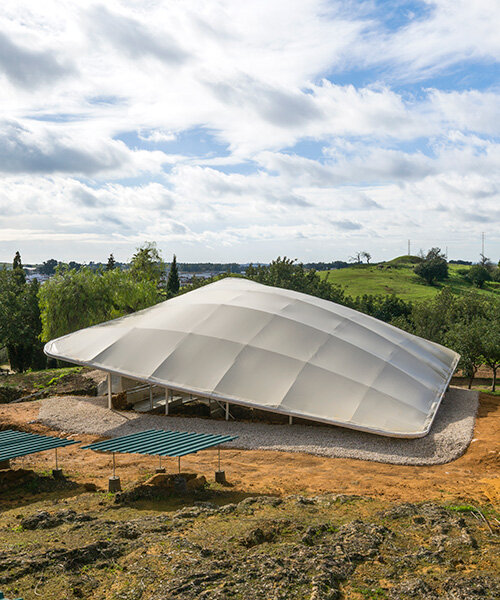
lightweight canopy uses passive environmental control to protect roman tombs in spain
ventilation and air extraction components are embedded within the roof to regulate temperature and humidity.
prefer designboom on google[FEATURED]
lightweight canopy shelters Roman tombs in Spain
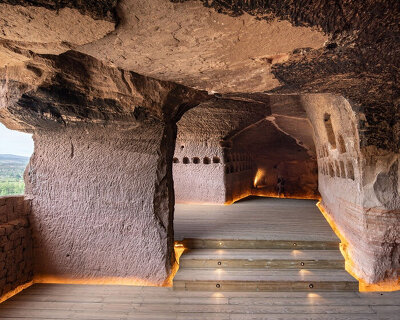
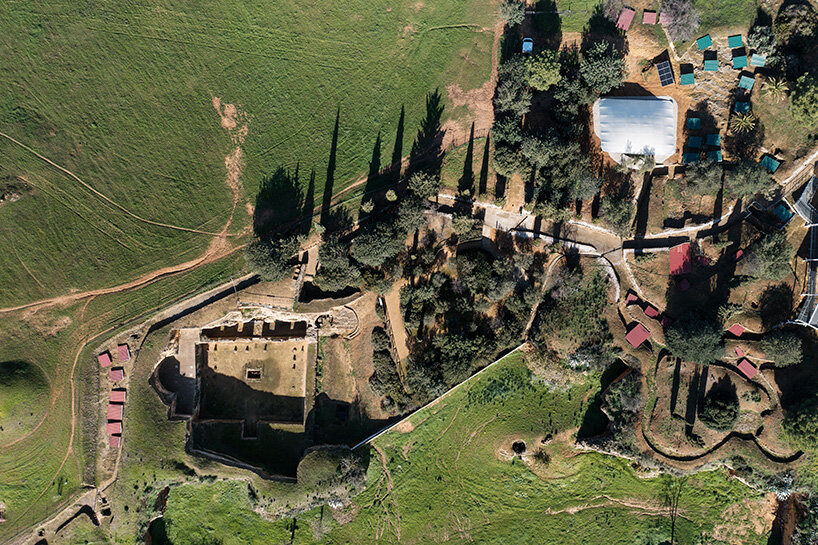
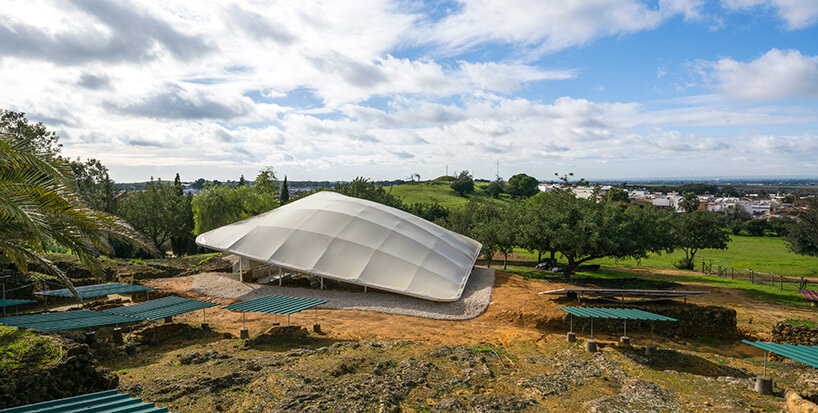
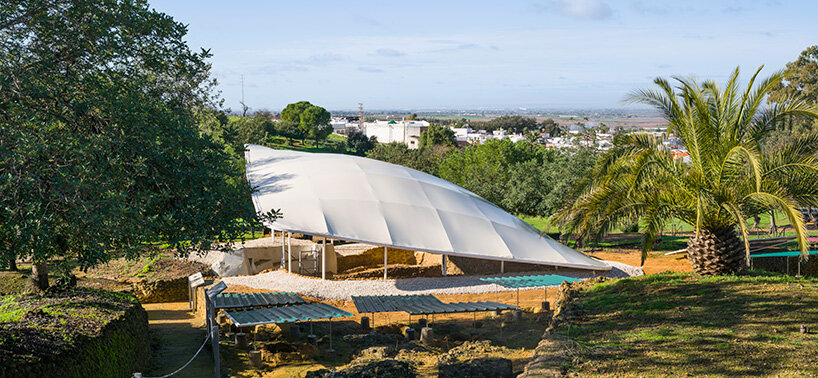
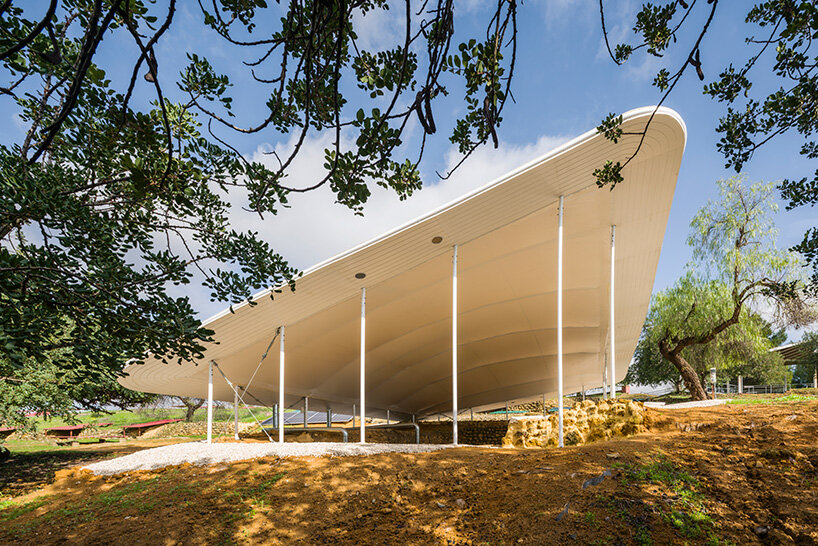
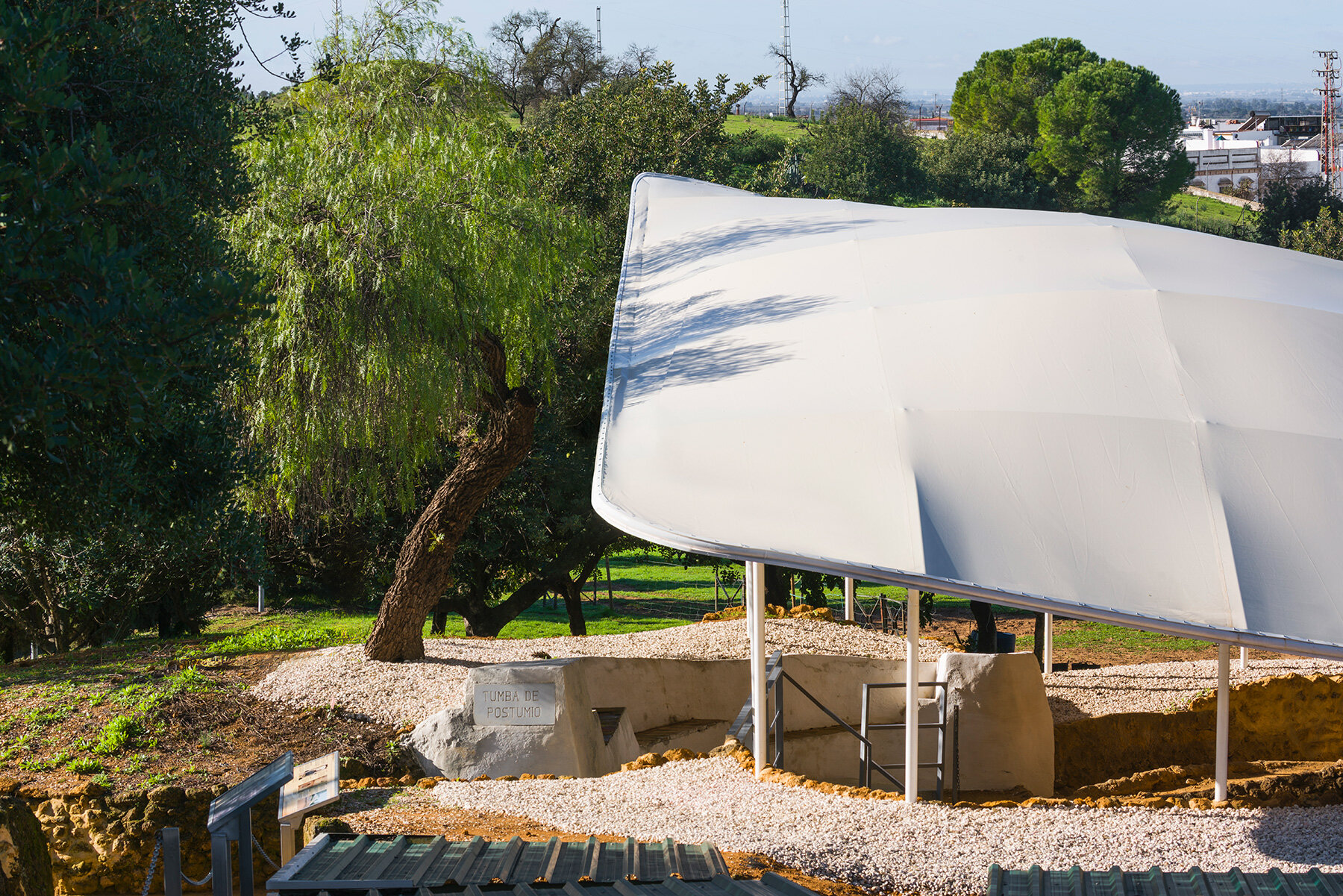
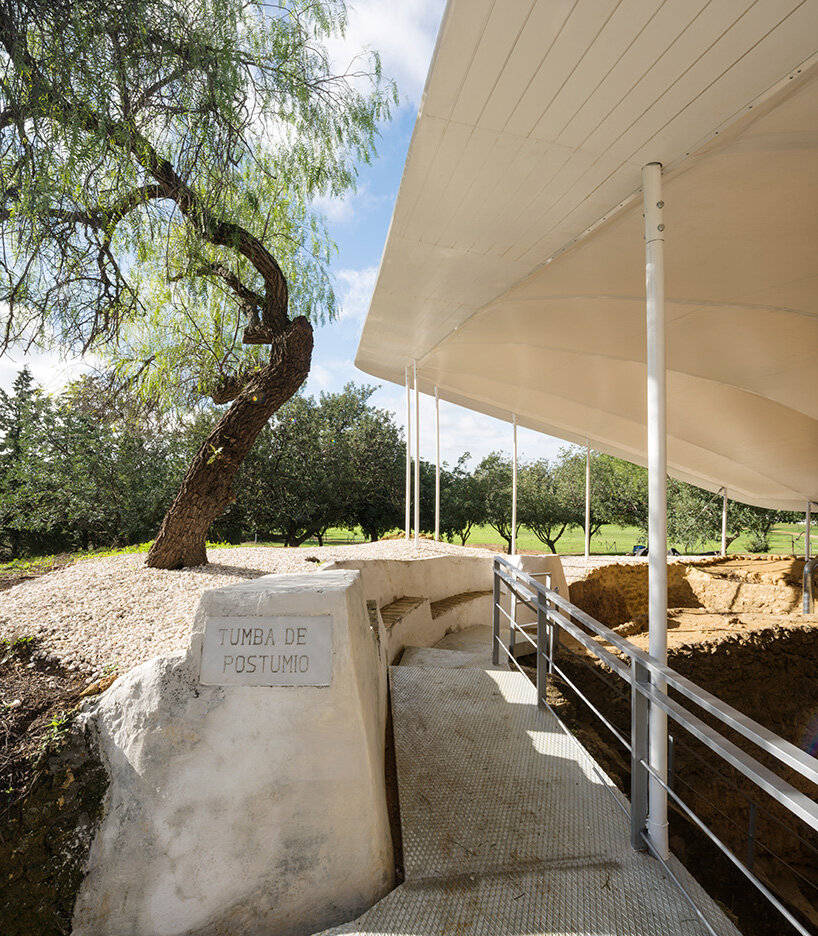
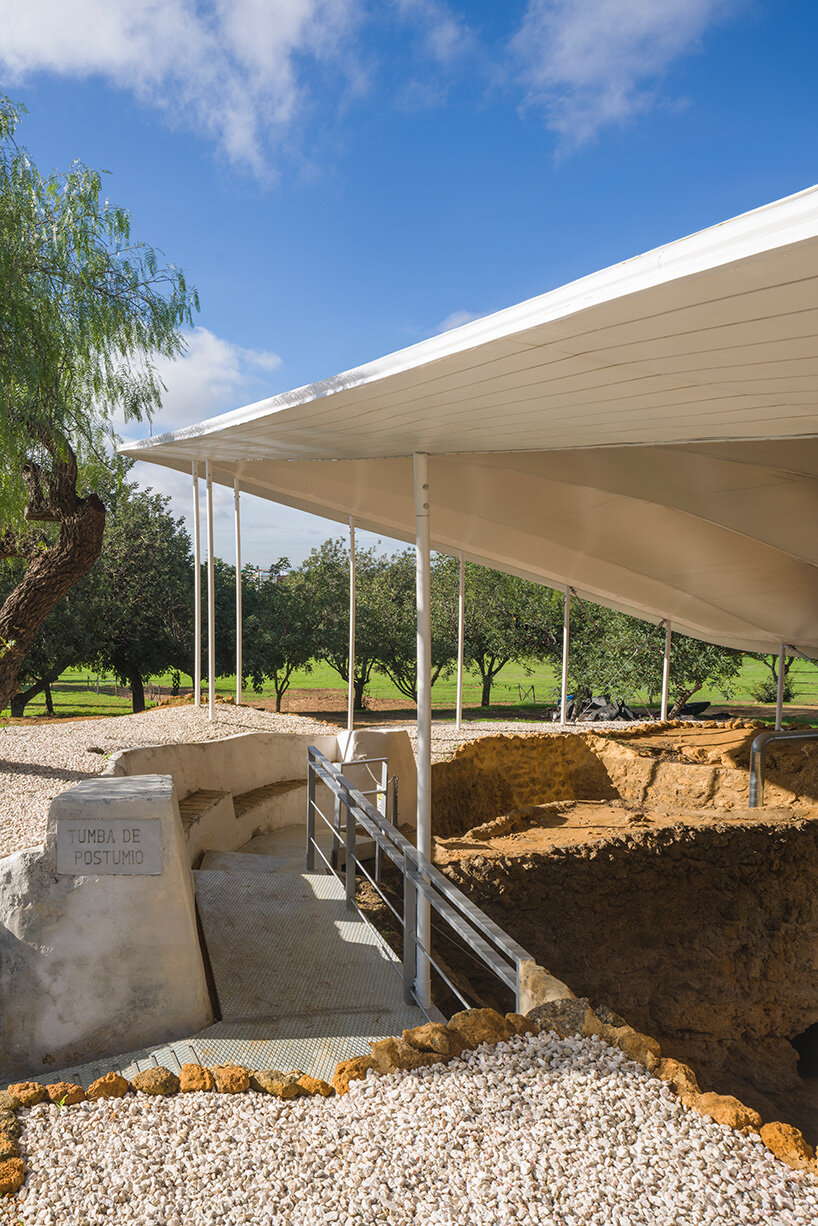
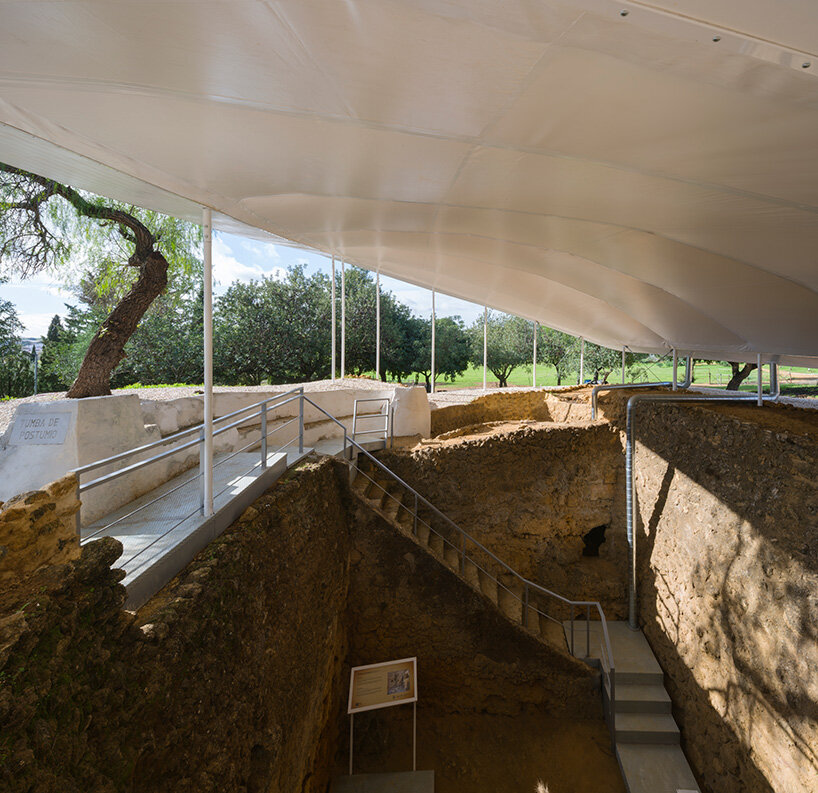
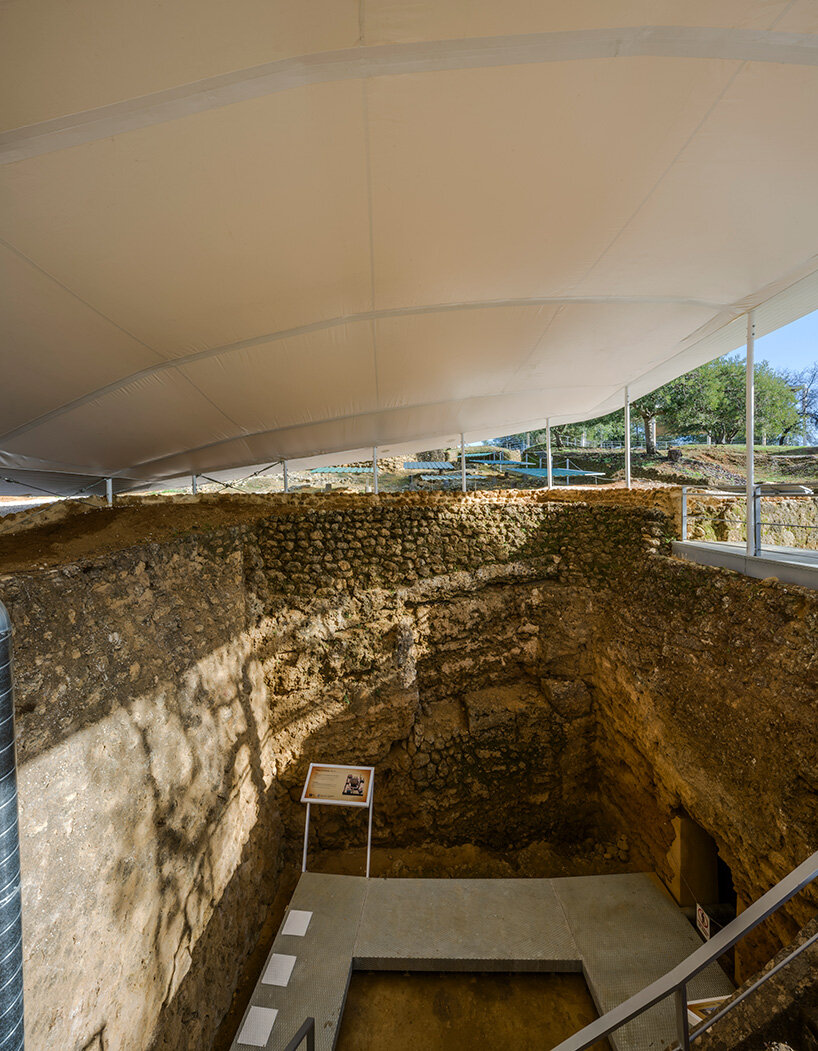
A lightweight and textile roof protects the Tombs of Postumio and Tres Puertas at the Archaeological Complex of Carmona in Seville, rethinking how contemporary architecture can engage with heritage conservation. The project by Juan Carlos Gómez de Cózar and Manuel Ordóñez Martín introduces a single canopy, generated through a parametric software optimization process. The structure covers both Roman tombs while operating as an environmental machine designed to stabilize their long-term preservation.
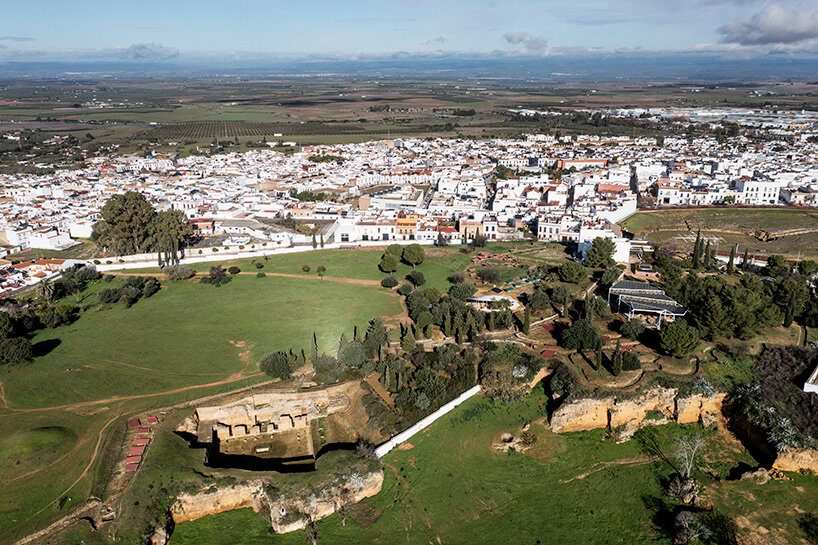
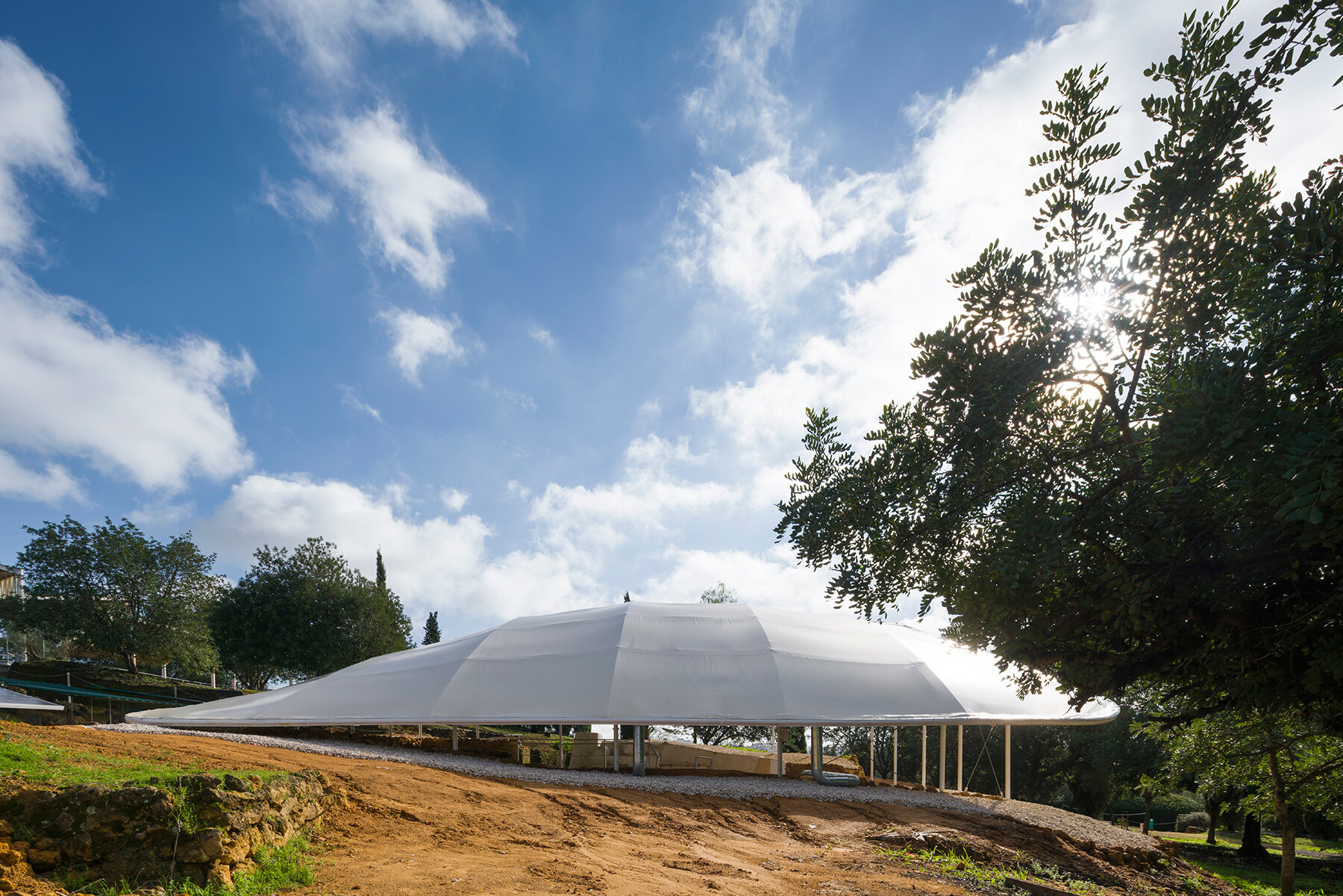
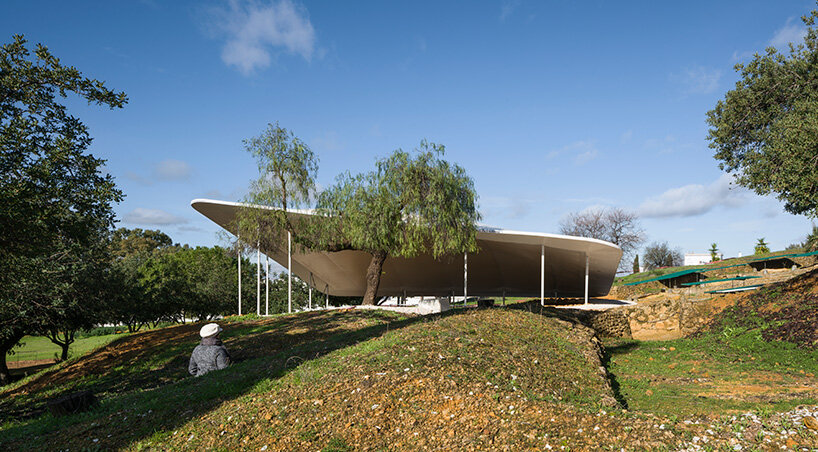
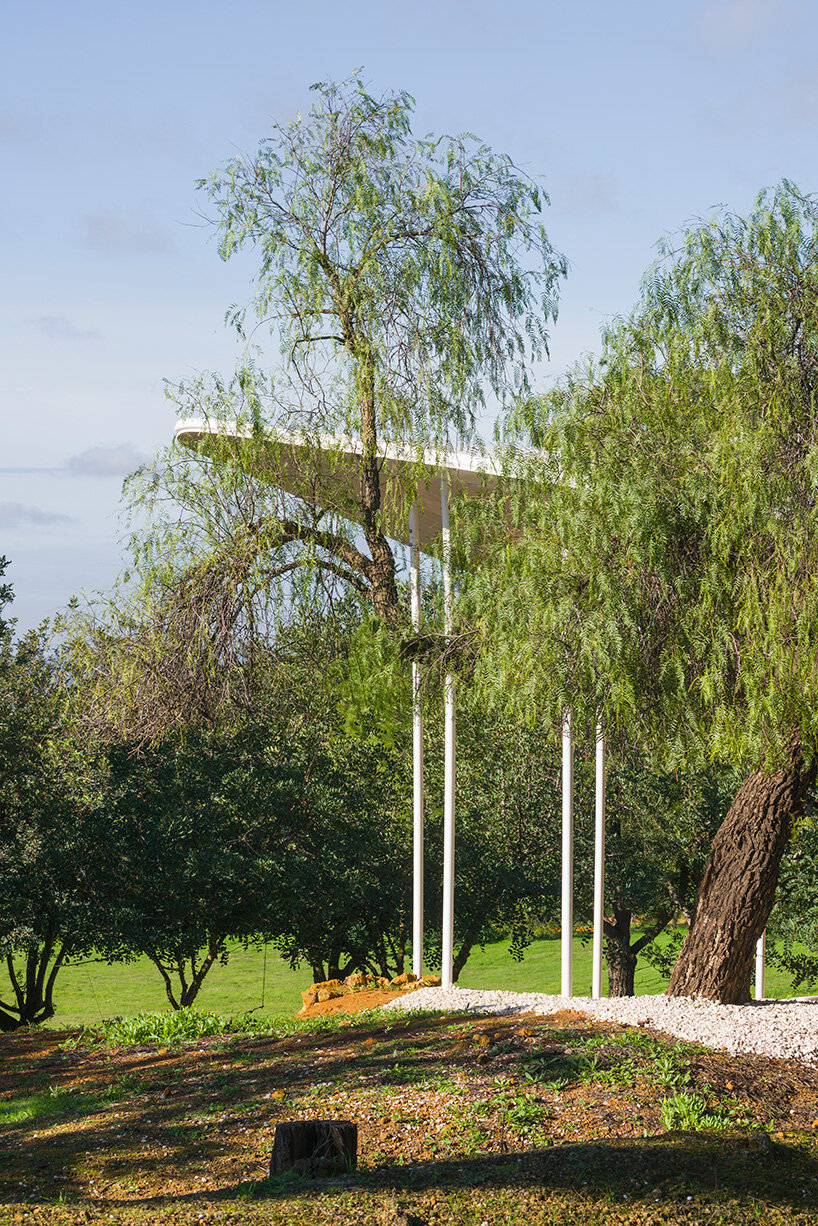
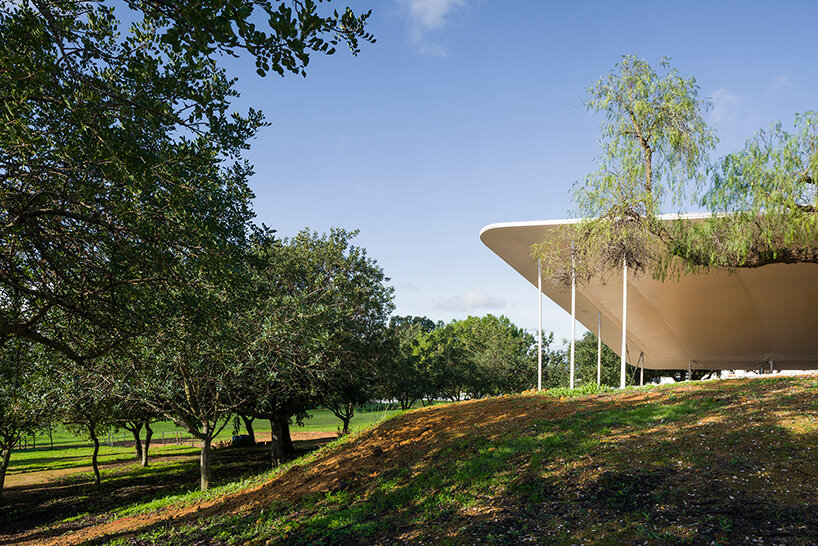
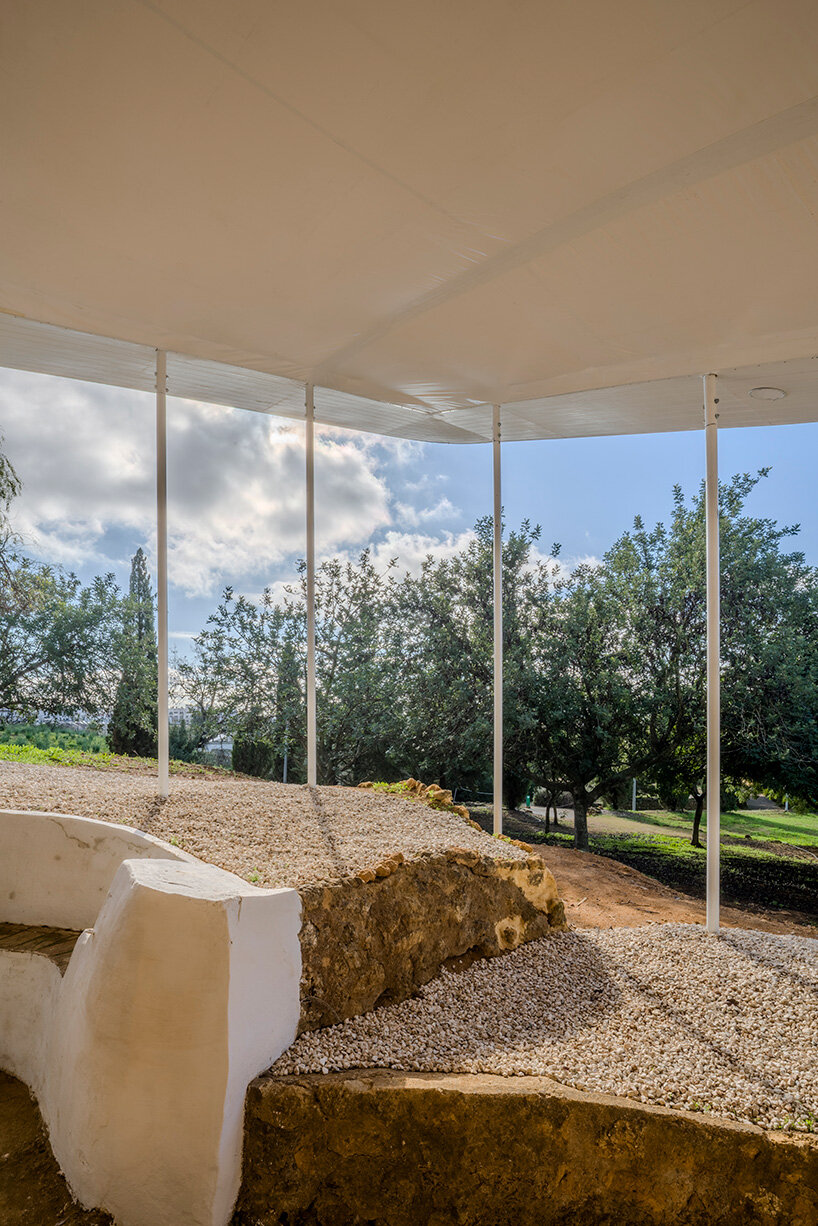
The canopy rises just enough to accommodate curvature and airflow, positioning itself within the landscape as an artificial topography. Its presence is deliberately restrained, emerging from the ground to protect what lies beneath while avoiding visual dominance over the archaeological site.
Beyond shelter, the double-layer envelope functions as an active environmental system. Ventilation and air extraction components are embedded within the roof to regulate temperature and humidity, maintaining stable hygrothermal conditions critical for the conservation of the tombs.
a reversible system with minimal impact
The structural system by Juan Carlos Gómez de Cózar and Manuel Ordóñez Martín, both PhD architects, minimizes the number and visual impact of supports, reinforcing the idea of an open, continuous space above the Roman tombs. This strategy preserves sightlines and maintains a sense of spatial continuity across the site, allowing the architecture to recede in favor of the archaeological remains. Integration with the natural surroundings is prioritized over formal expression.
Designed as a lightweight and industrialized system, the canopy emphasizes minimal material use and rapid assembly. Its construction is reversible and recyclable, allowing future removal without permanent impact on the archaeological remains. The environmental footprint of the project is kept below 100.0 kg CO₂ equivalent, aligning conservation goals with contemporary sustainability criteria.
project info:
name: Cover for the Tombs of Postumio and Tres Puertas
architects: Juan Carlos Gómez de Cózar, PhD Architect, Manuel Ordóñez Martín, PhD Architect
location: Archaeological Complex of Carmona, Seville, Spain
supporting team: Rosa Benítez Bodes, PhD Architect, Neli Chyzheuskaya, Architect, Íñigo Ariza López, PhD Architect
archaeological collaboration: Archaeological Complex of Carmona, José Ildefonso Ruiz Cecilia, PhD in Archaeology and Ancient Studies, Ignacio Rodríguez Temiño, PhD in Archaeology and Ancient Studies
photographer: Jesús Granada | @jesusgranada
shop
your own online design shop — no sales commission collected