
The Hungry Caterpillar uses 3D-printed modular kitchens
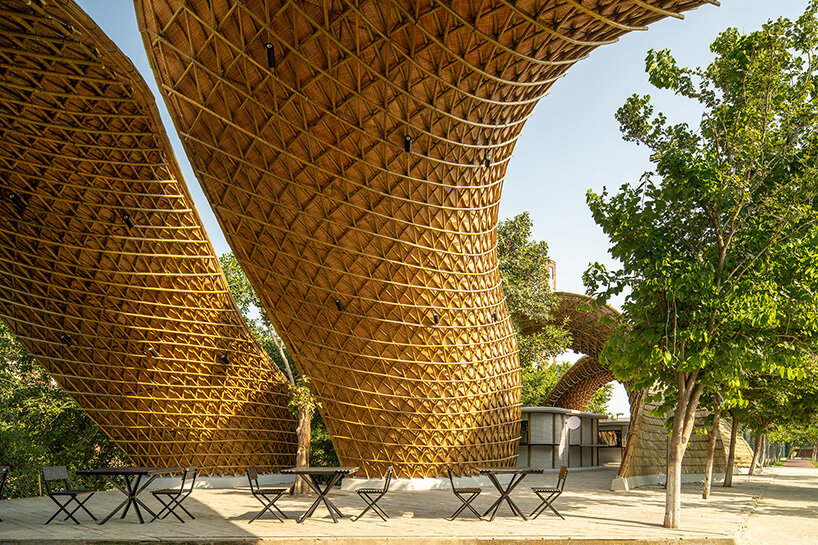
Set beneath a dense canopy of trees in India’s Ashoka University, The Hungry Caterpillar by Lyth Design rethinks the idea of a food street as a place of shelter, curiosity, and ecological responsibility. Designed by architect Apoorva Shroff, the project moves beyond the logic of fast consumption, proposing a child-friendly environment shaped by nature-inspired form, low-impact construction, and material efficiency.
The concept takes shape through the simple yet evocative image of a caterpillar feeding calmly within its habitat, protected by foliage and form. From this initial intuition, the bamboo structure evolves into a cocoon-like street structure that invites lingering.
Sustainability is embedded into Ashoka University’s canteen at multiple scales, beginning with its kitchens. Inspired by food trucks, the modular cooking units are 3D printed in concrete and assembled on-site. Produced by Micob Pvt. Ltd. in Ahmedabad, the printing process uses an additive method that deposits material only where needed, reducing construction waste compared to conventional building techniques. The automated fabrication shortens construction time and lowers energy demand, while the cavity between the printed walls acts as thermal insulation, limiting heat transfer and improving energy performance.
all images courtesy of Lyth Design
bamboo gridshell by Lyth Design shields the project in India
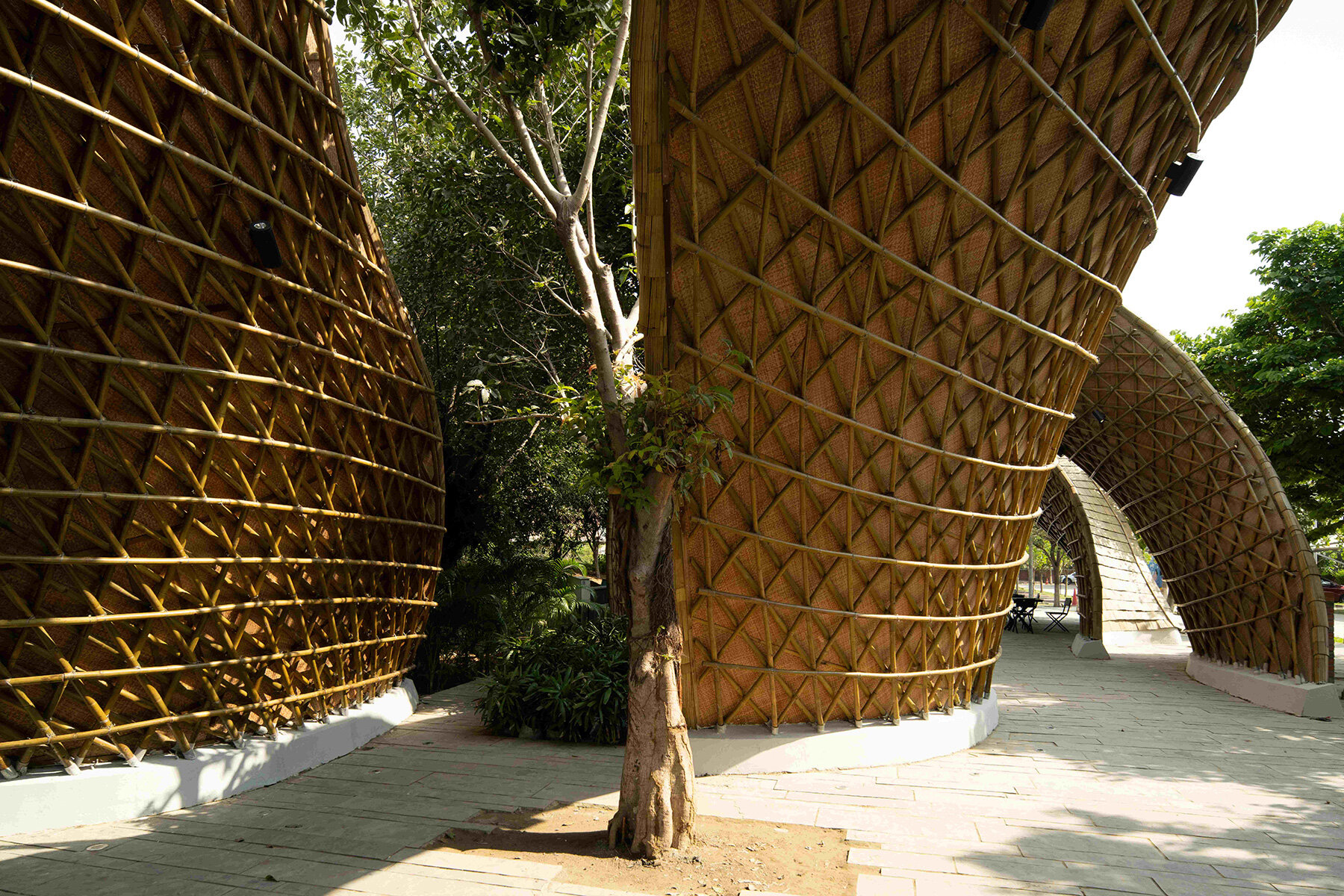
Overhead, Mumbai-based practice Lyth Design unifies the food street by a distinctive bamboo gridshell that gives the project its caterpillar-like identity. Drawing from natural geometries, the shading structure curves in two directions, achieving strength through form rather than mass. Like a leaf that folds efficiently toward sunlight, the bamboo shells use minimal material while spanning large distances. The longest gridshell extends 19 meters and is composed of four layers of bamboo poles, each measuring 30 to 50 millimeters in diameter and laid at 45-degree angles. A crushed bamboo mat completes the surface, reinforcing the structure while maintaining a low environmental footprint.
The structural system was developed by Atelier One in London, with architectural detailing by Jurian Sustainability, and construction carried out by Jans Bamboo. The use of slender bamboo sections enables the complex double curvature, resulting in a lightweight yet expressive canopy that balances craftsmanship, engineering precision, and ecological sensitivity.
Seating elements, developed by Placyle, are made from recycled plastic waste, transforming discarded material into weather-resistant pieces suited for outdoor use. Rather than treating sustainability as an abstract principle, the furniture translates it into a tangible, everyday interaction, where reuse and longevity become part of the user’s physical experience of the space.
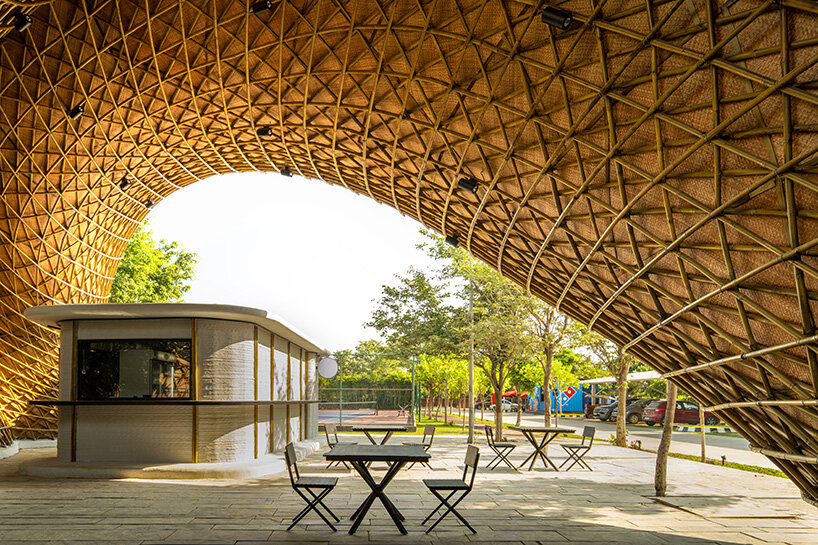
a bamboo gridshell canopy arches over the food street
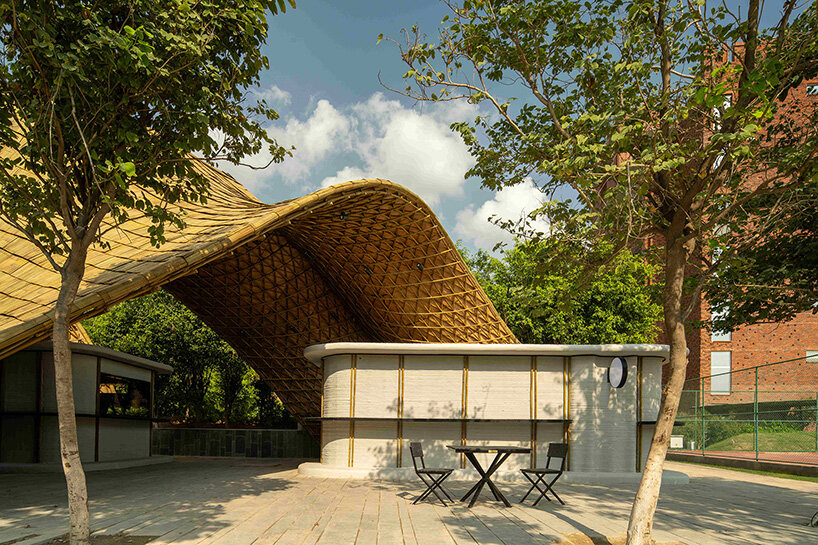
a shaded public space beneath the tree canopy
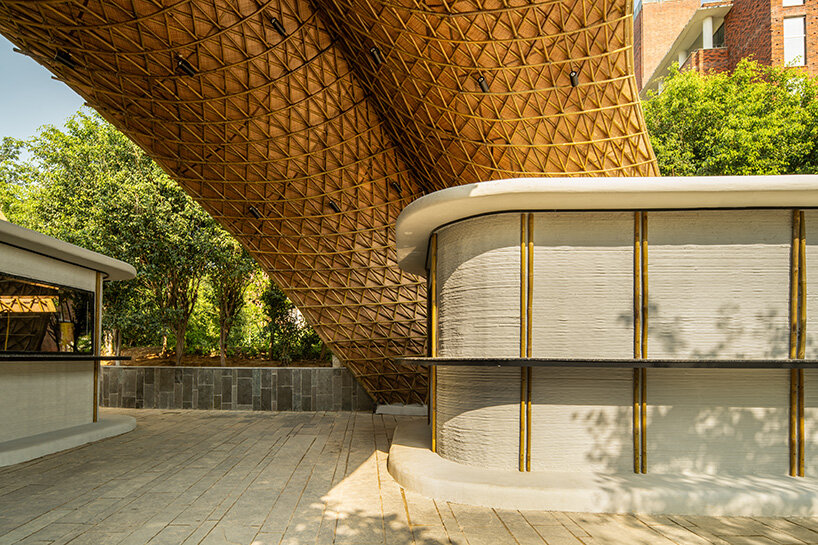
the double-curved bamboo structure frames views across the campus
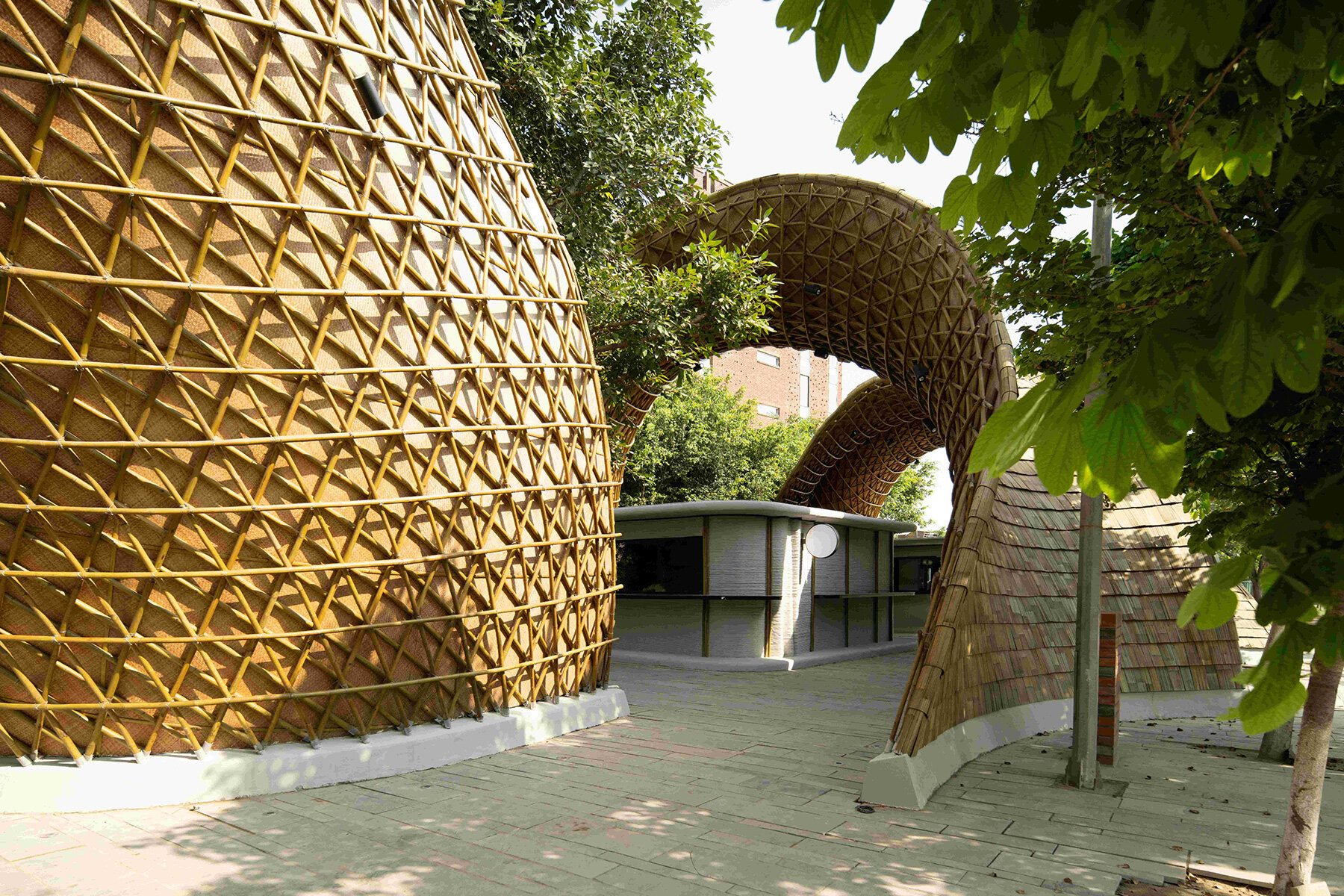
woven bamboo members create a lightweight gridshell that spans the food street without heavy supports
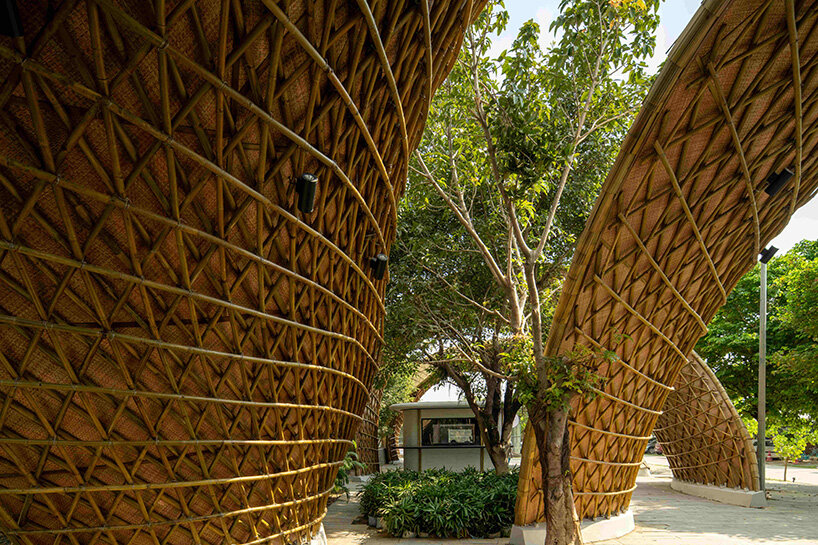
the bamboo gridshell bends and narrows
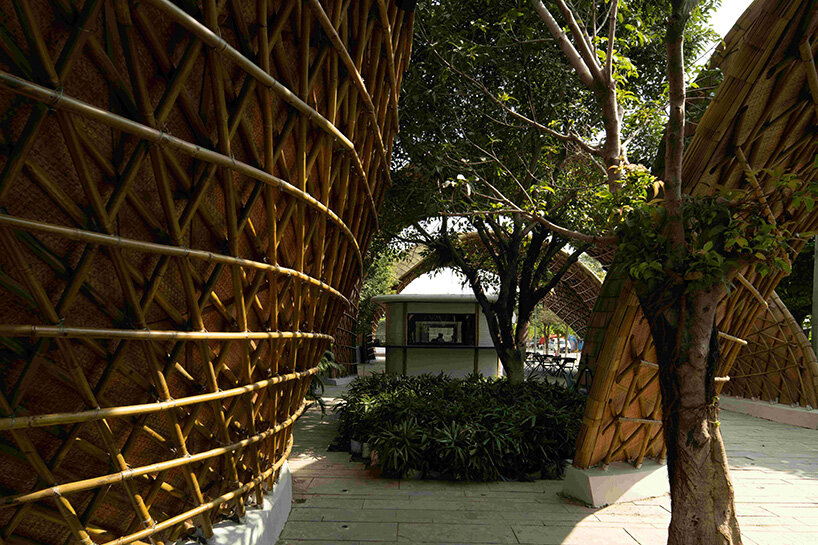
emphasizing the caterpillar-like form that inspired the project
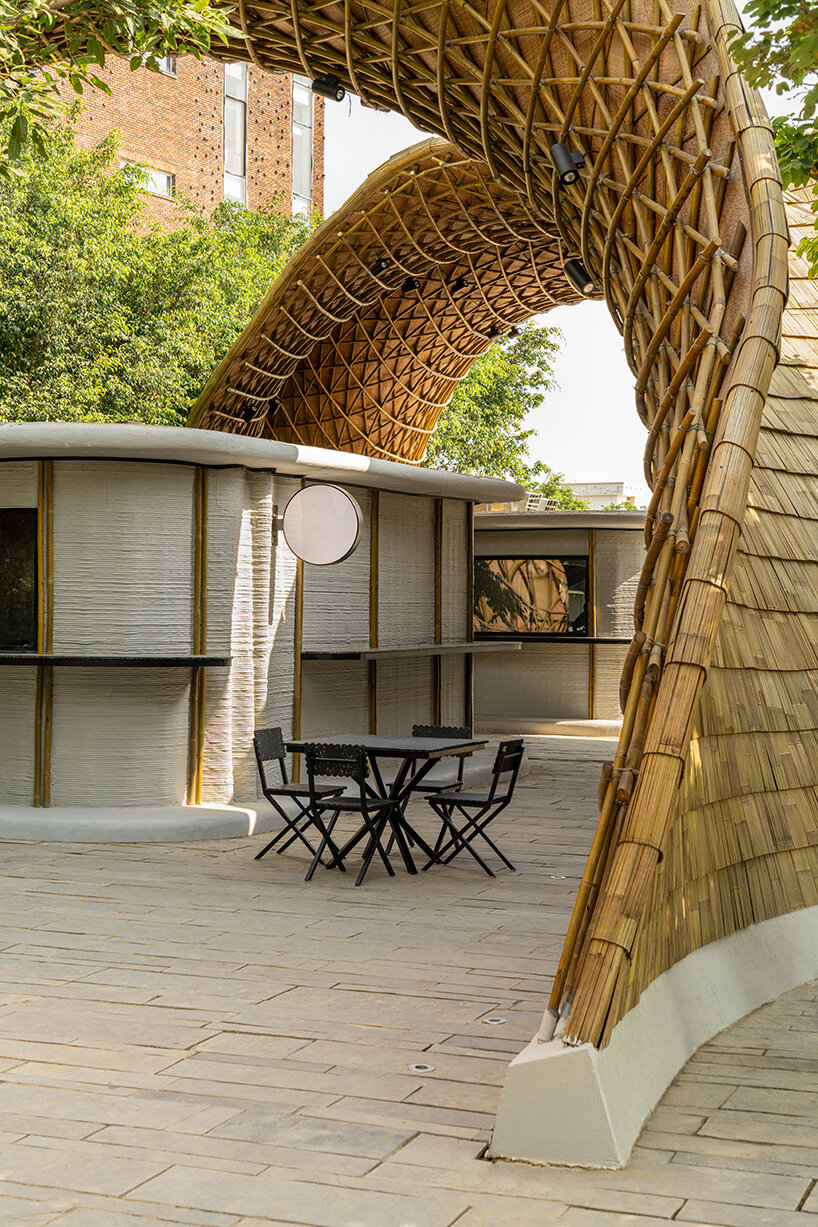
3D-printed concrete kitchen units sit beneath the bamboo canopy
organized as modular food stalls
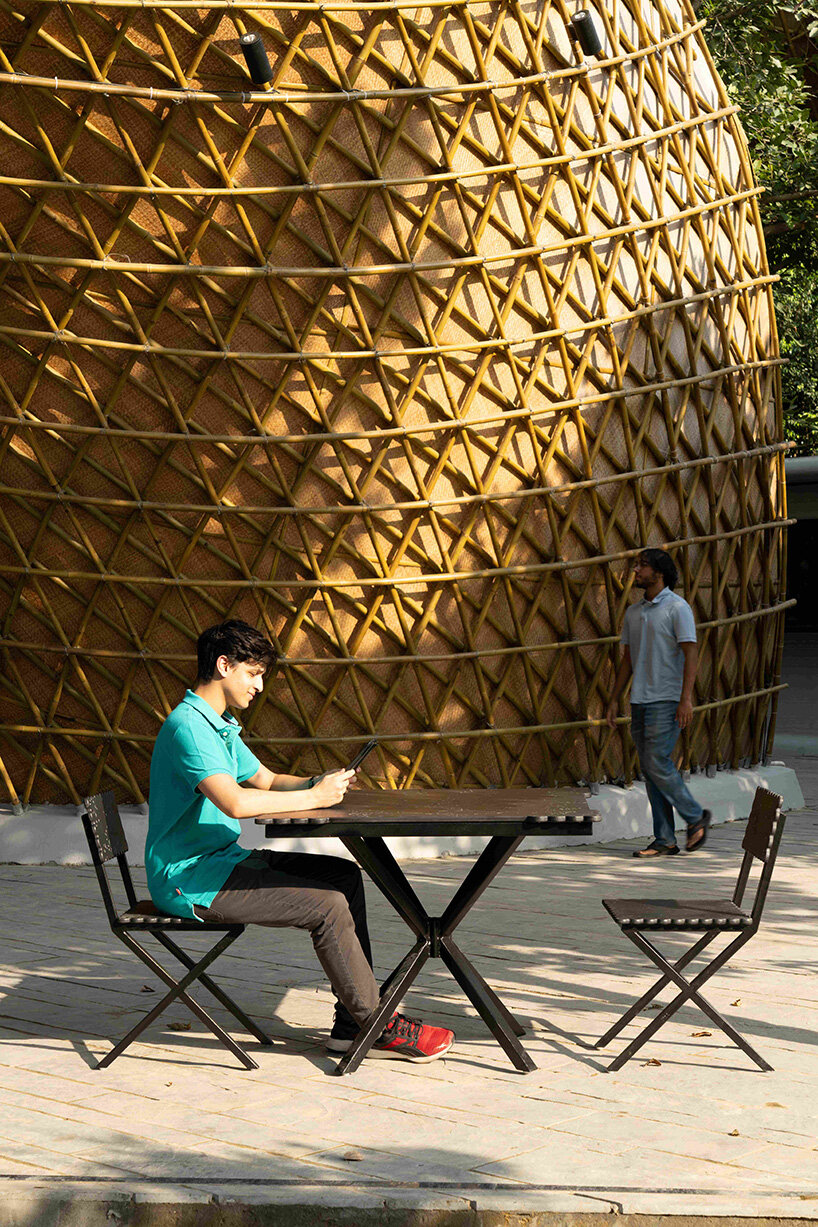
outdoor seating is arranged along the shaded walkway between kitchen units
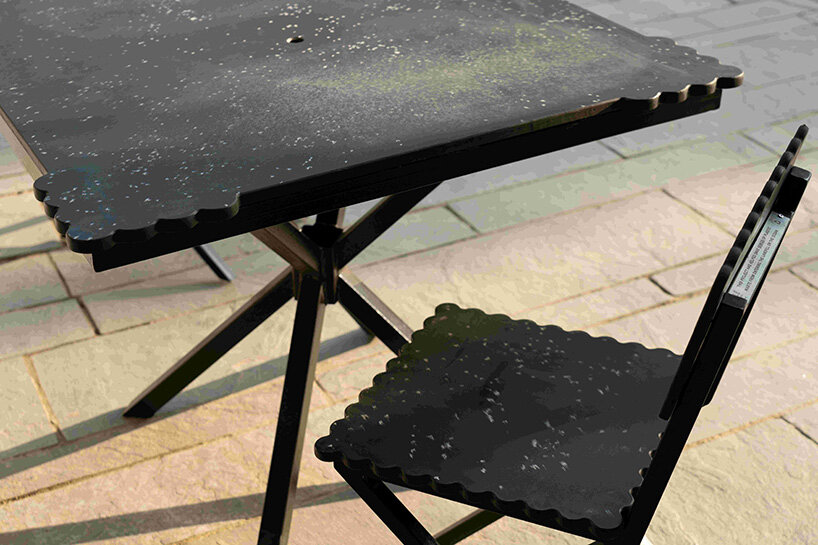
recycled plastic tables and chairs provide durable seating for everyday campus use
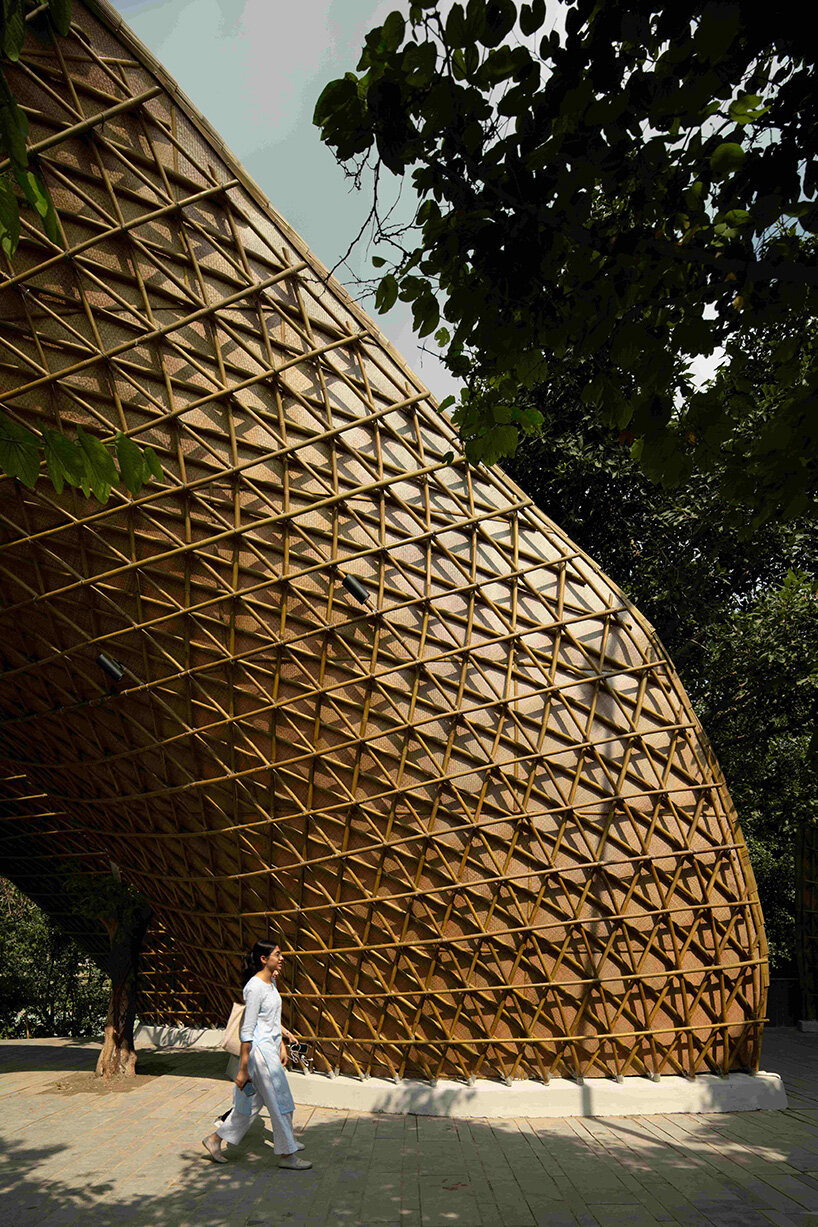
the bamboo canopy rests lightly on the ground
project info:
name: The Hungry Caterpillar
architect: Lyth Design | @lythdesign
location: Ashoka University, Sonipat, Haryana, India
lead architect: Apoorva Shroff
structural engineering: Atelier One, London
architectural detailing: Jurian Sustainability
bamboo construction: Jans Bamboo
fabrication: Micob Pvt. Ltd., Ahmedabad
furniture: Placyle
3D printing (882)
 Feb 17, 2026
 Feb 11, 2026
 Feb 09, 2026
 Feb 05, 2026
 Jan 23, 2026
architecture in india (428)
 Feb 20, 2026
 Feb 19, 2026
 Feb 18, 2026
 Feb 14, 2026
 Feb 13, 2026
bamboo architecture and design (409)
 Jan 26, 2026
 Jan 16, 2026
 Jan 07, 2026
 Dec 22, 2025
 Nov 20, 2025
concrete architecture and design (971)
 Feb 21, 2026
 Feb 20, 2026
 Feb 16, 2026 Feb 14, 2026
 Feb 12, 2026
 Feb 10, 2026
 Feb 04, 2026
 Jan 20, 2026