3D Printed Sand Blocks Shape Tùr House’s Reusable Building Shell
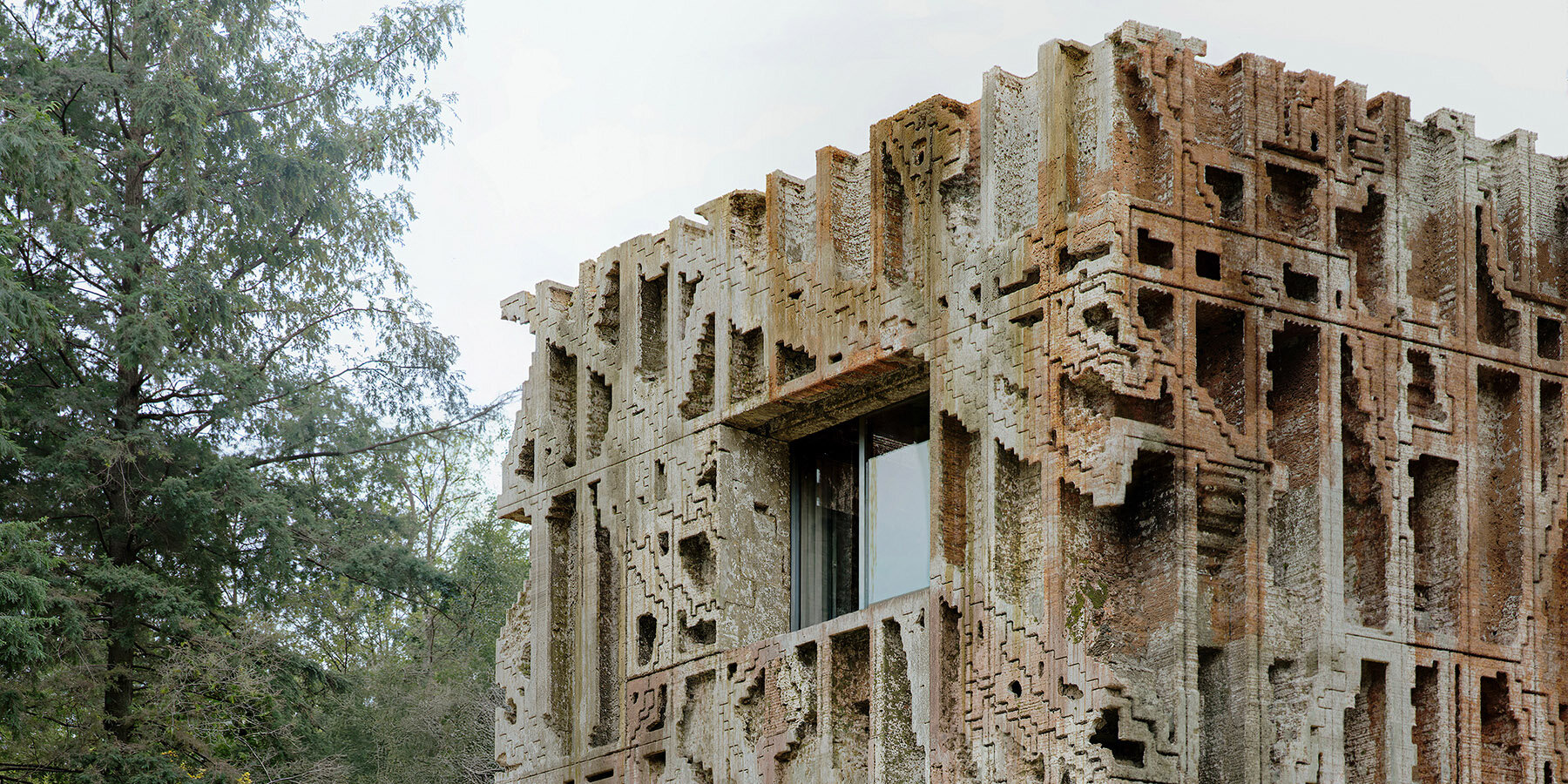
Tùr House is a speculative architectural research project by Barry Wark Studio that explores adaptability, disassembly, and long-term material reuse as foundational design principles. The proposal challenges conventional notions of buildings as fixed and disposable objects, instead framing architecture as a system capable of evolving over time through repair, modification, and reconfiguration.
The residential project is centered on a single-material building envelope composed of large-scale 3D printed sand blocks. This facade operates as an independent outer layer, separated from the structural frame and interior spaces. By avoiding complex, multi-layered wall assemblies, the design proposes a simplified and circular construction approach in which materials can be removed, reused, or replaced with minimal waste. Each sand block is printed at a scale sufficient to form a thick, load-bearing facade that also functions as the building’s thermal barrier. Openings are carved directly into the monolithic elements, with recessed glazing that maintains thermal continuity while admitting daylight. The fractured geometry of the elevations allows individual components of the facade to be added or removed over time without disrupting the overall architectural coherence.
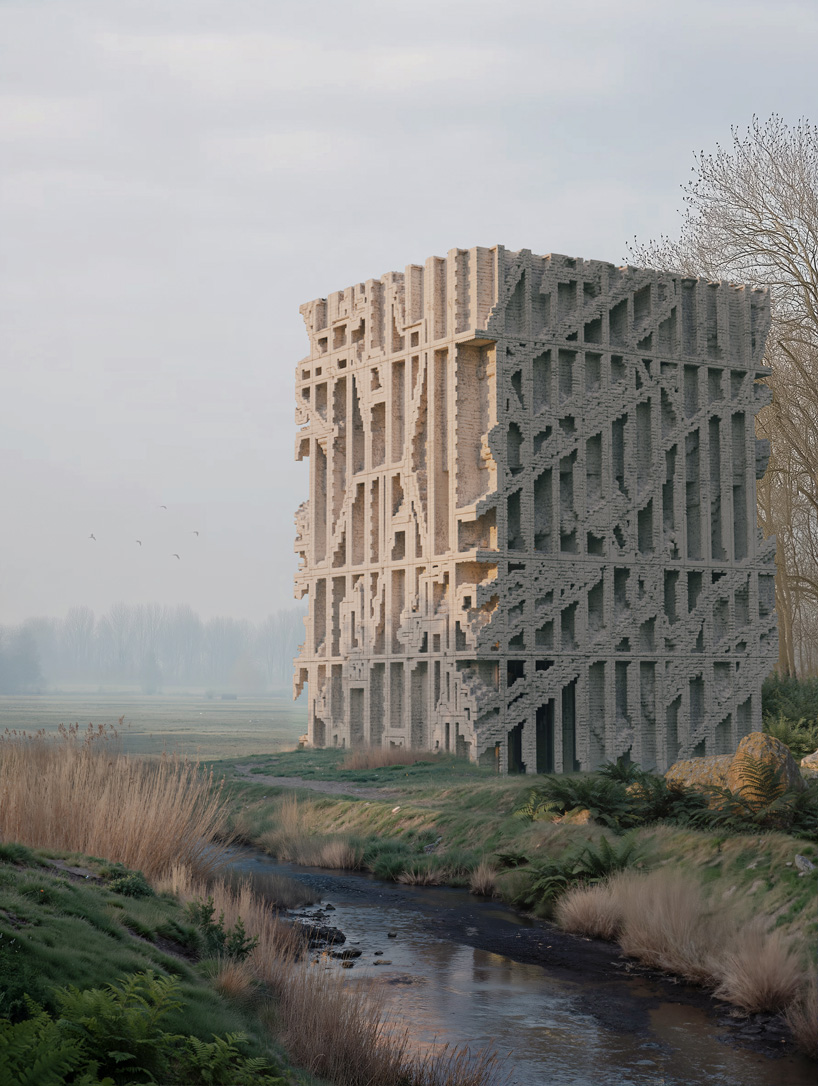
the white, 3D printed blocks when first built | all images by Analog1
Flexible Interior Framework Supports Long-Term Spatial Change
Behind the envelope, a lightweight structural system of steel and 3D printed columns supports a flexible interior layout. Glass partitions provide acoustic separation while allowing internal spaces to be reconfigured independently of the outer shell. The spatial sequence progresses vertically, with open communal areas at ground level transitioning into more private rooms above, before expanding again into a double-height living space and mezzanine.
The house is initially situated at the edge of a forest and is conceived to change alongside its environment. Recesses and ledges within the thick facade are designed to collect organic matter such as leaves, moss, and lichen, allowing weathering to become an integral aspect of the architectural expression. Rather than resisting environmental influence, the building incorporates gradual transformation as part of its material and spatial logic. Through material density, controlled openings, and long-term adaptability, Tùr House by Barry Wark Studio positions architecture as a durable framework capable of evolving slowly over time in response to both use and landscape.

entry pathway to the house, 100 years later

forest has grown around the building over time

100 years later, blocks weather and merge with the environment
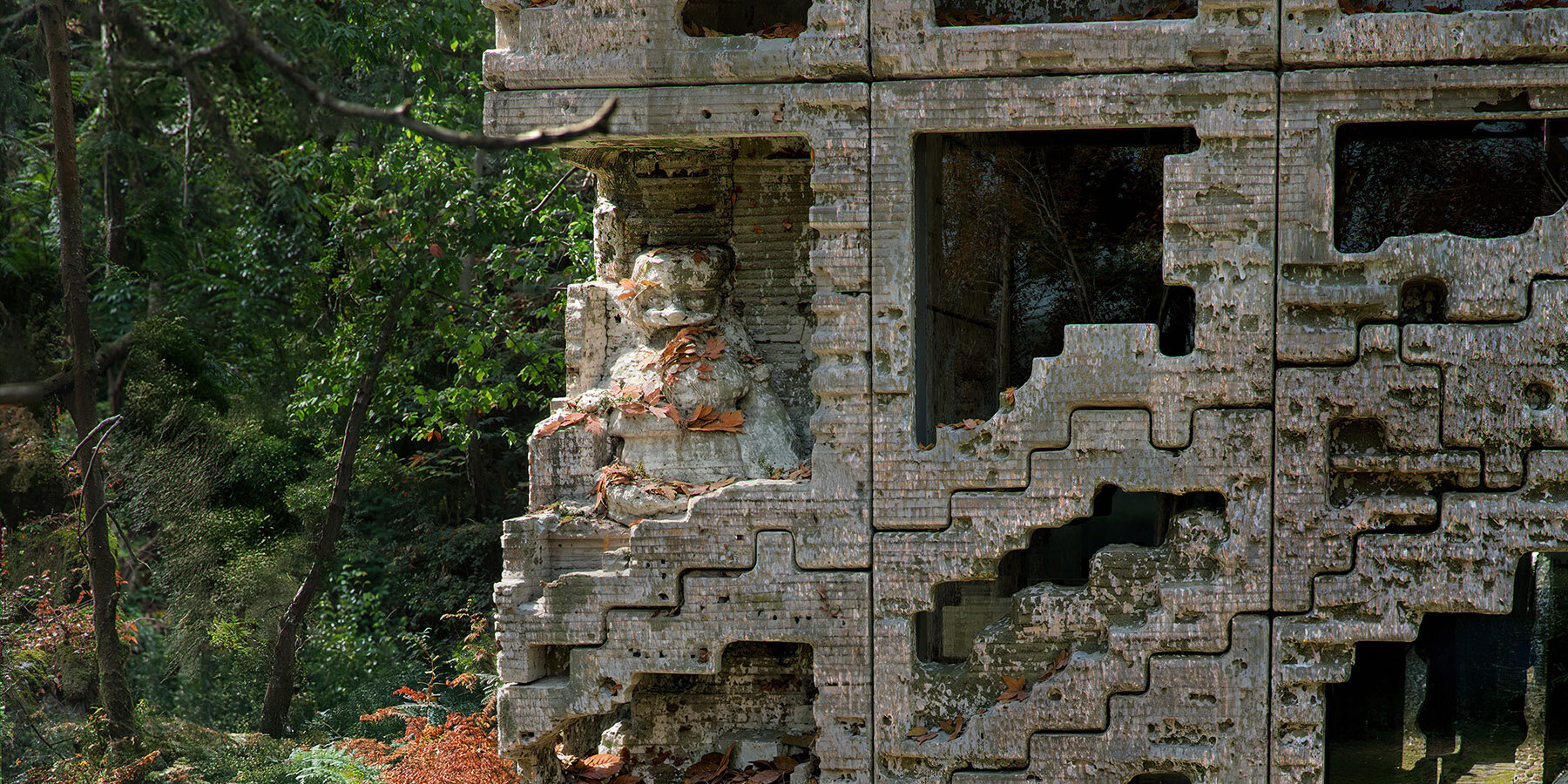
the project by Barry Wark Studio explores adaptability, disassembly, and long-term material reuse
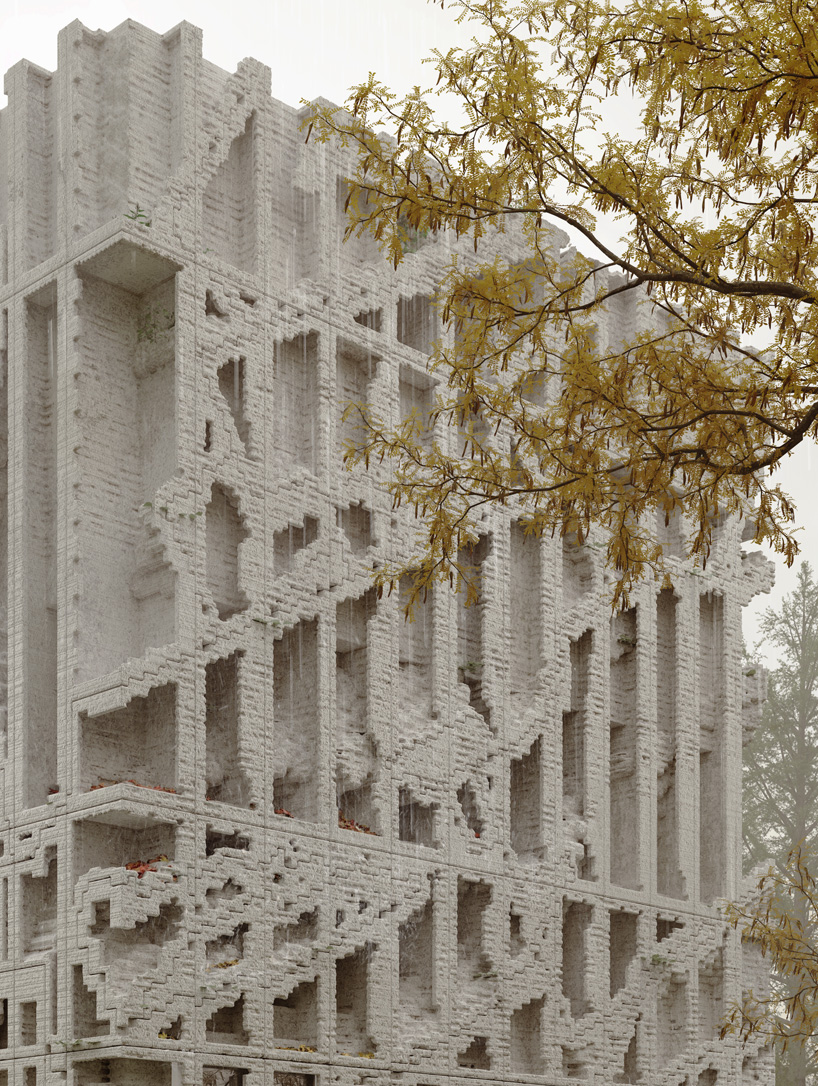
rain and leaves begin to take hold of the facade
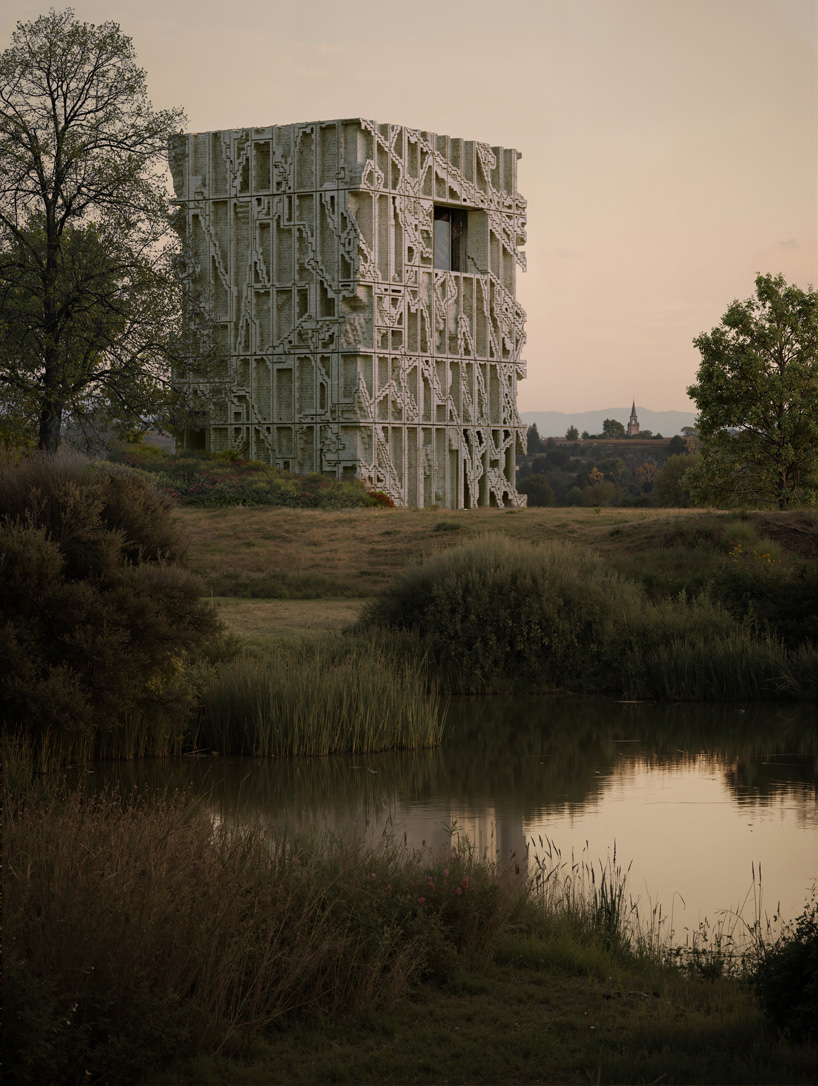
Tùr House in the landscape when first completed
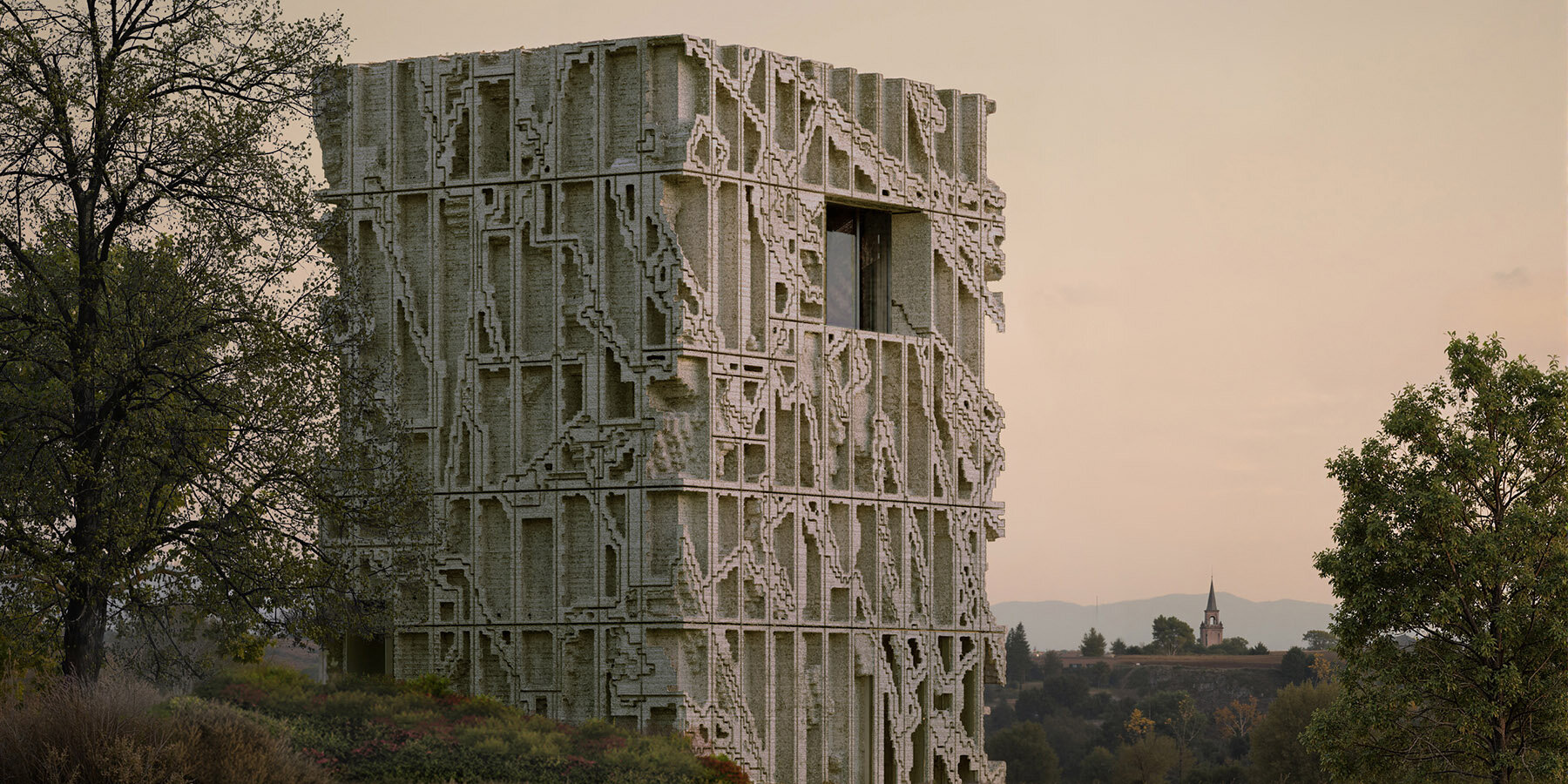
large-scale 3D printed sand blocks are used as Tùr House’s sole facade material
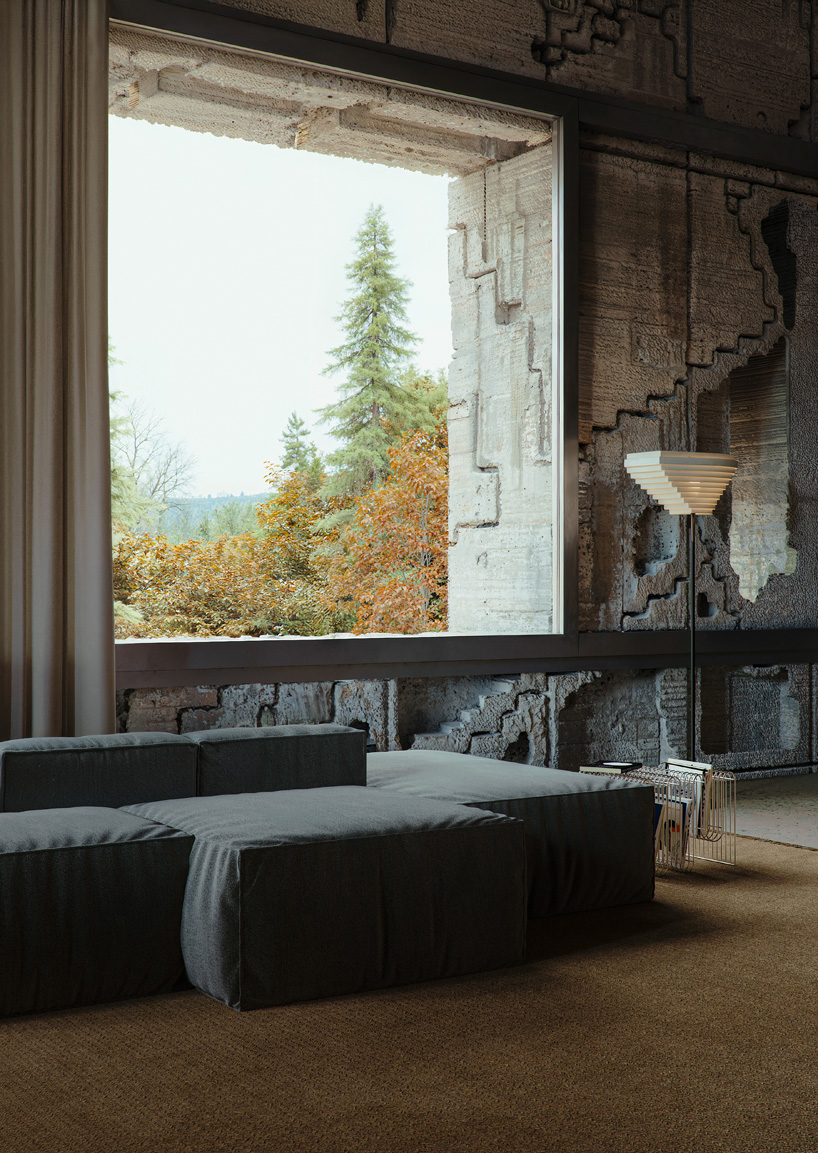
living room with a large, sliding picture window with views over the landscape
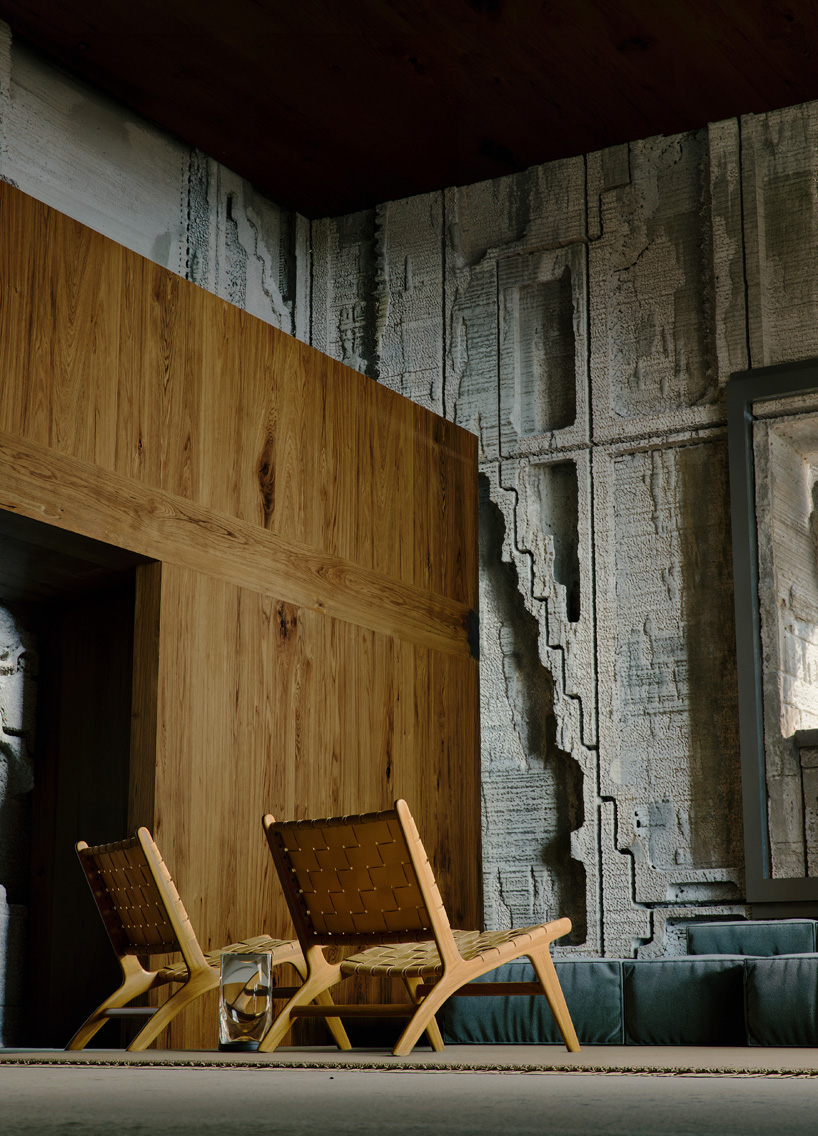
living room with monolithic blocks and timber wall

kitchen view with 3D printed stone column
project info:
name: Tùr House
architect: Barry Wark Studio | @barry_wark
renders: Analog1
designboom has received this project from our DIY submissions feature, where we welcome our readers to submit their own work for publication. see more project submissions from our readers here.
edited by: christina vergopoulou | designboom
3D printing (882)
 Feb 17, 2026
 Feb 11, 2026
 Feb 09, 2026
 Feb 05, 2026
 Jan 23, 2026
facades (462)
 Feb 20, 2026
 Feb 20, 2026
 Feb 13, 2026
 Feb 11, 2026
 Feb 10, 2026
residential architecture and interiors (4757)
 Feb 22, 2026
 Feb 20, 2026 Feb 20, 2026
 Feb 19, 2026
 Feb 19, 2026
 Feb 10, 2026
 Feb 04, 2026
 Jan 20, 2026