
a2o architecten completes convent conversion in belgium
in hasselt, a former convent becomes a health care centre with a rest home and service flats that provide an oasis of relaxation and tranquility, right in the city center.
prefer designboom on google
a2o architecten completes convent conversion in belgium
on june 6th, 2004, the colettine poor clares vacated the convent of the order of st clare, a former walled building, situated on the guffenslaan in hasselt, belgium. a2o architecten takes the enclosed edifice and its inner courtyards to turn an austere, secluded dwelling into a bright open health care facility with a rest home and service flats that provide an oasis of relaxation and tranquility, right in the city center.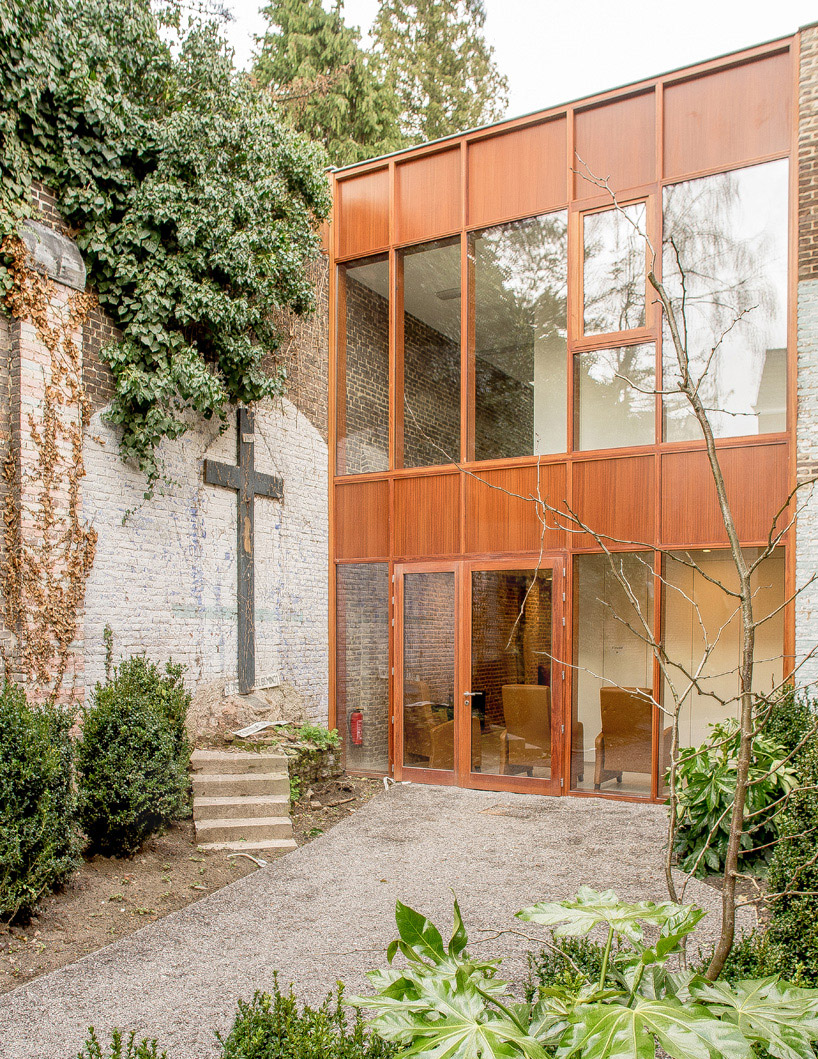
an inner courtyard of the project
the original structure is absent from the street scene. its buildings are hidden behind a 4-metre-high wall. the secured premises are divided into quadrangles. subsequently, the edifices were raised around courtyards. the southern part contains the enclosed convent complex, while the northern part consists of the chapel, and is open to visitors. the design is characterised by a high degree of austerity, and a limited number of building materials. its construction employs simple building techniques: no concrete lintels or floors, but spans made of elliptical arches, or floors made of boards on wooden beams, decorated with motifs referring to tapestries. everything is submerged in an atmosphere of modesty, simplicity, even a certain degree of poverty.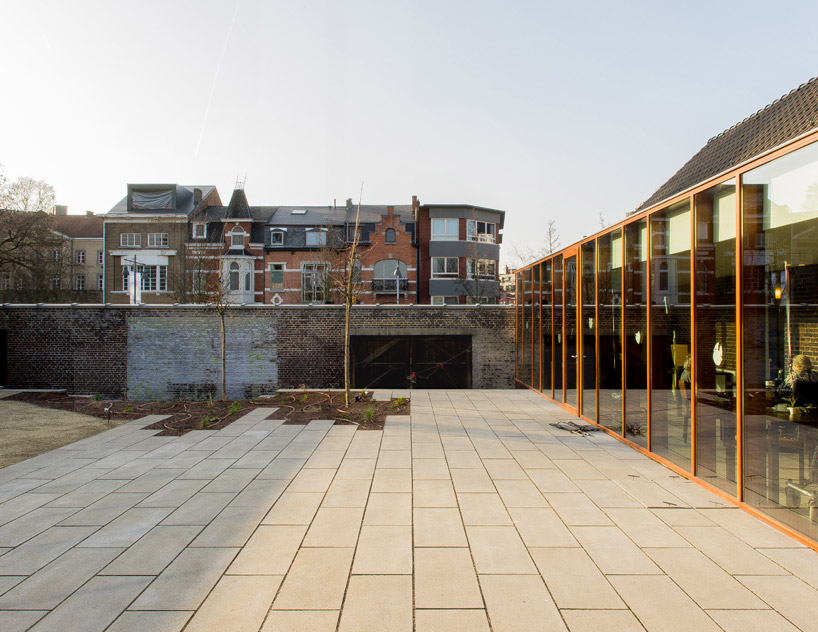
one of the common areas, adjacent to an inner courtyard
in the search for a new use for the convent, the ‘health care’ theme was a deliberate choice. it provides a secular extension of the ‘contemplative care’ that the sisters always represented. today, the complex is a residential and health care facility, with service flats and public meeting areas, such as the redesigned chapel – the renewed ‘living room’ of the center.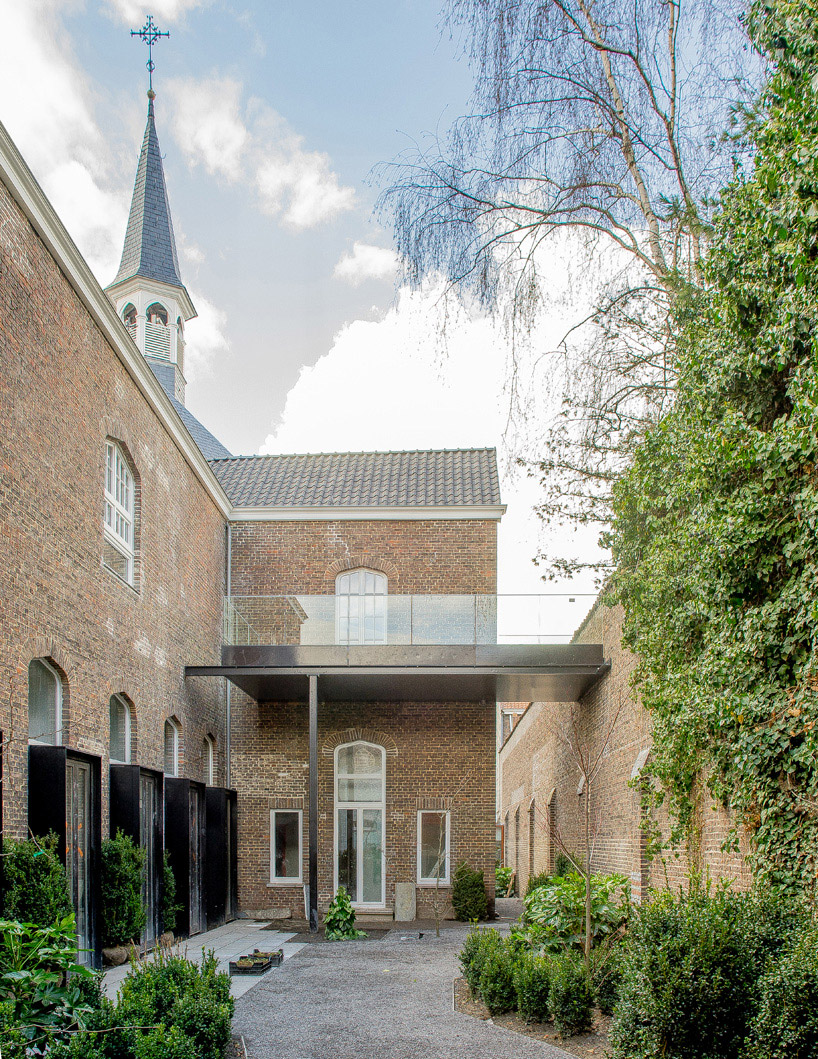
exterior view of the chapel and the renovated facades
the entire complex is encapsulated in an atmosphere of peace and tranquility. the new design is based on the importance of the walled gardens, and thus retains the spatial structure of the location. continuing from the former convent gallery, users pass through the newly built parts. the circumambulation is clear and easily recognizable. the walk is extended equally logically in the gardens of the courtyards. natural light accesses the corridors indirectly through skylights and decorative openwork in the walls.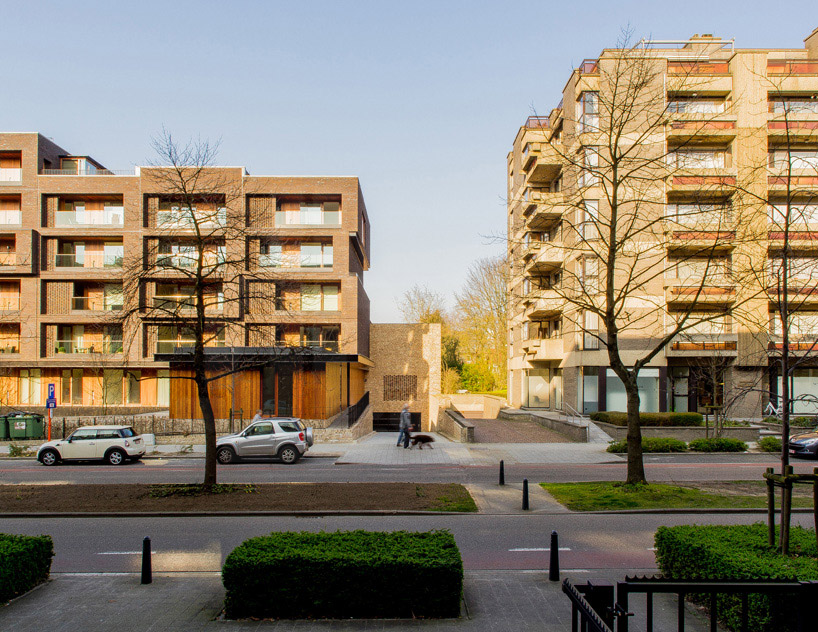
view from the street at the kunstlaan
this new circulation path creates two new gardens, around which care rooms have been situated. the concept ensures that all rooms face the green space. the immediate and fully open relationship between the patient quarters and the outdoors, results in a special experience. there is an abundance of daylight inside. the courtyard plantations are pivotal to the experience, with a design that aims for living with the seasons: colour and scent, shadow and light. sensory experiences, mild stimulation for the elderly living here.


an art project in the chapel on site
the entirely new part within the convent walls has a wooden facade. without creating a sharp contrast with the existing buildings, the intervention is nevertheless recognisable. old and new have been linked in an appropriate way.

view from above at the work in progress
the premises have been extended. new buildings, leaning against the outer convent wall, were added. this volume contains the service flats, which are stacked as individual cells, a reference to those in the former nuns quarters. the new building is u-shaped, its location creating another courtyard garden. raised above street level, it marks the natural boundary with the public area, heightening the sense of privacy.


situation of the site in hasselt, belgium
a suitable location for every health care function was found in the existing convent complex. the boundaries between public, semi-public and private derive logically from the existing situation and create large interstitial spaces that can be used for meetings within a protective environment. design and materials are in keeping with the existing formal idiom of the previous partii, and retain the atmosphere of security and silence exemplified by the colettine poor clares.

the plan of the existing convent

plan of the conversion of the convent into a health care facility
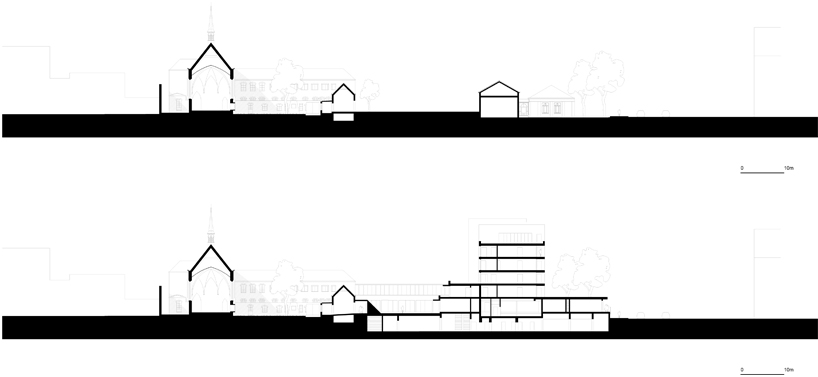
(above): section through the existing convent
(under): section through the new buildings
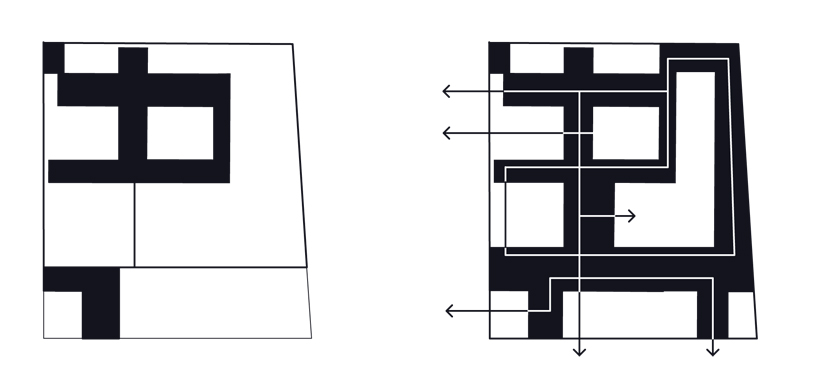
(left): diagram of the convent
(right): the new concept of the conversion
designboom has received this project from our ‘DIY submissions‘ feature, where we welcome our readers to submit their own work for publication. see more project submissions from our readers here.
shop
your own online design shop — no sales commission collected