a layering courtyard in qianmen, beijing by archstudio
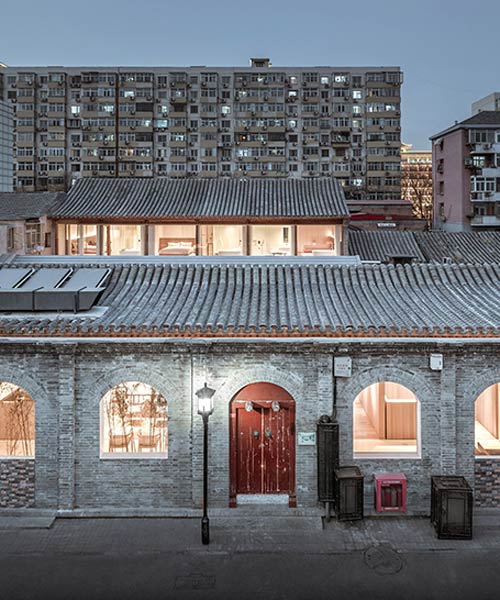
occupying slightly more than 500 sqm, the structure is located in a noisy hutong area.
prefer designboom on google[FEATURED]
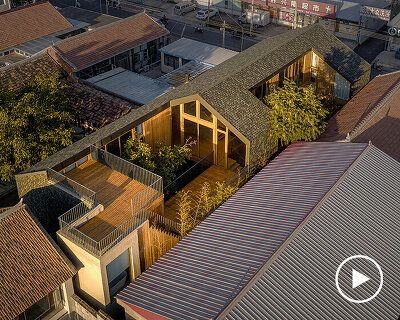
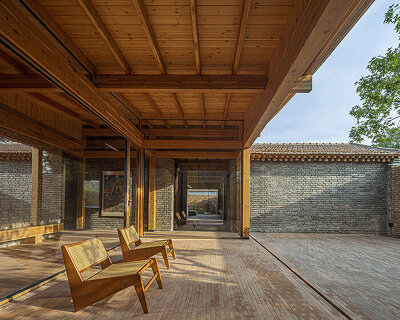
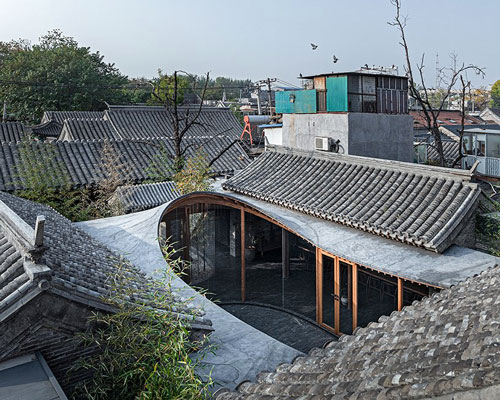
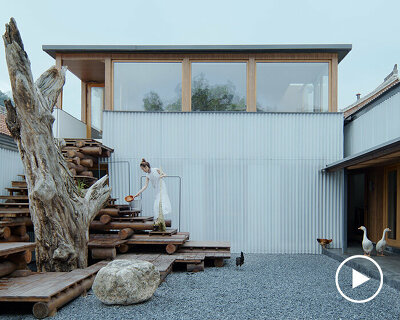
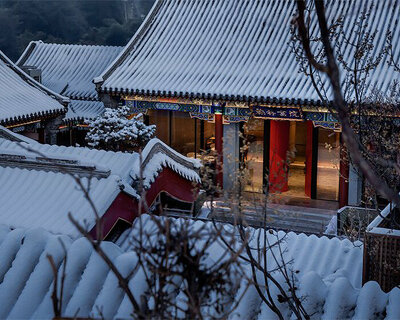
beijing-based archstudio renovated a former quadrangle courtyard commercial building into a modern multipurpose complex for public activities and living. occupying slightly more than 500 sqm, the structure is located in a noisy hutong area and aim at attracting urban population with increasingly diversified consumption demands.
plan view
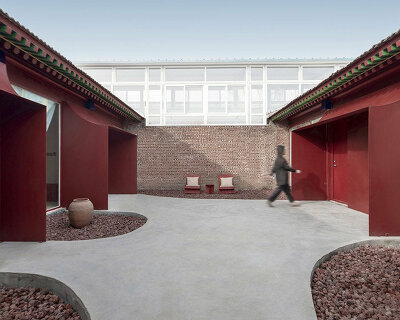
a prominent feature of the traditional architecture is the layering courtyard. in a quadrangle courtyard with three layers, the house’s function changes as people enter each yard, the privacy gradually increases from outside to inside, giving the visitors an impression of deep space. archstudio’s design was inspired by ‘multiple layering courtyards’ in traditional spaces, thus the previous inner yard was changed into a ‘three-layered courtyard’ in order to adapt to the transition from the public spaces to private spaces step by step.
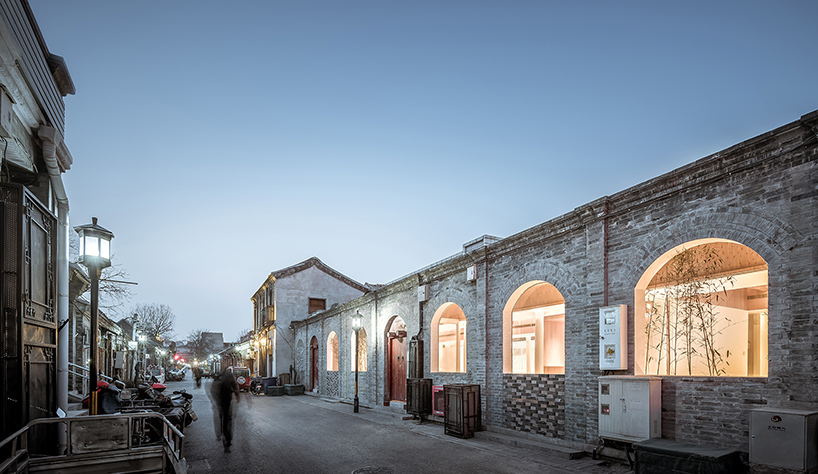
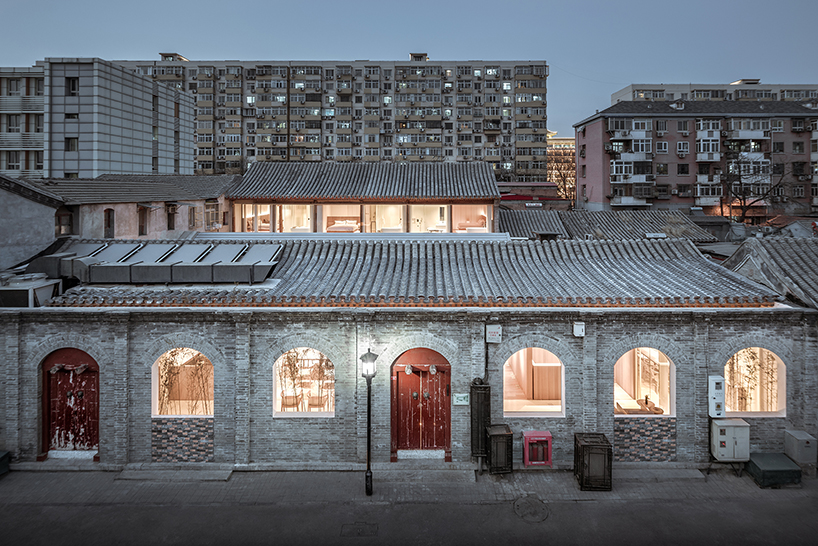
facade facing the street — night view
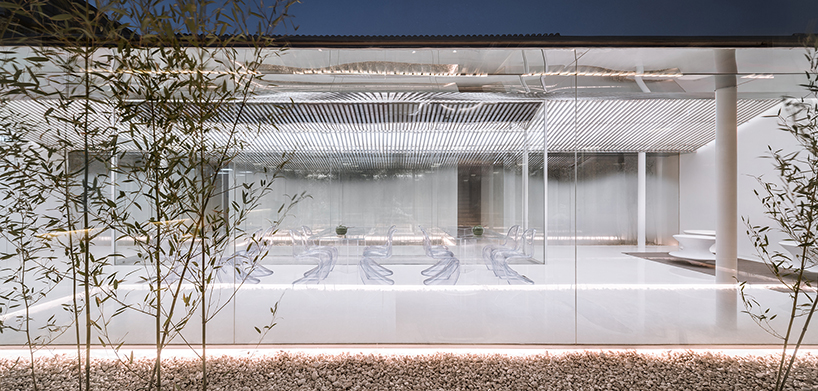
layering courtyard has rearranged the relationship between new and old, inside and outside, artificial and natural. firstly, the designers demolished some parts of the house roof in the south so that the first layer between the interior space and street yard was created, secondly, they added a slope-roof building between houses on the north and south, and then separated the old and new with two parallel yards.
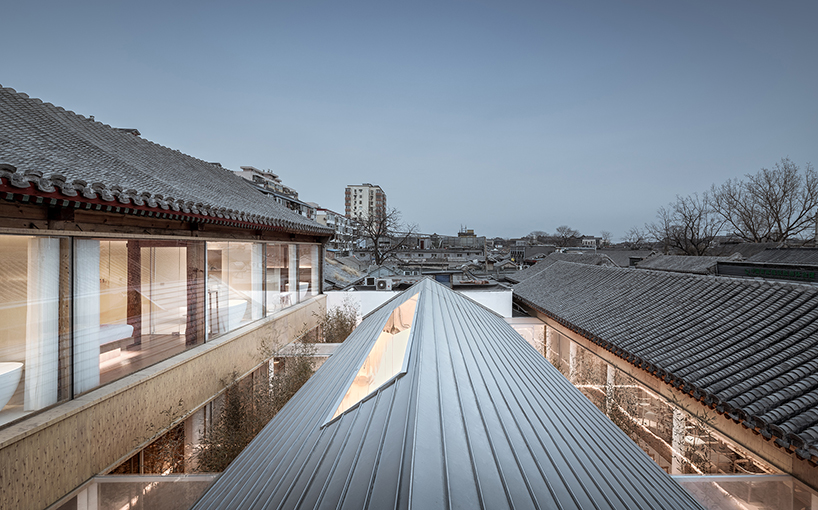
courtyard relationship
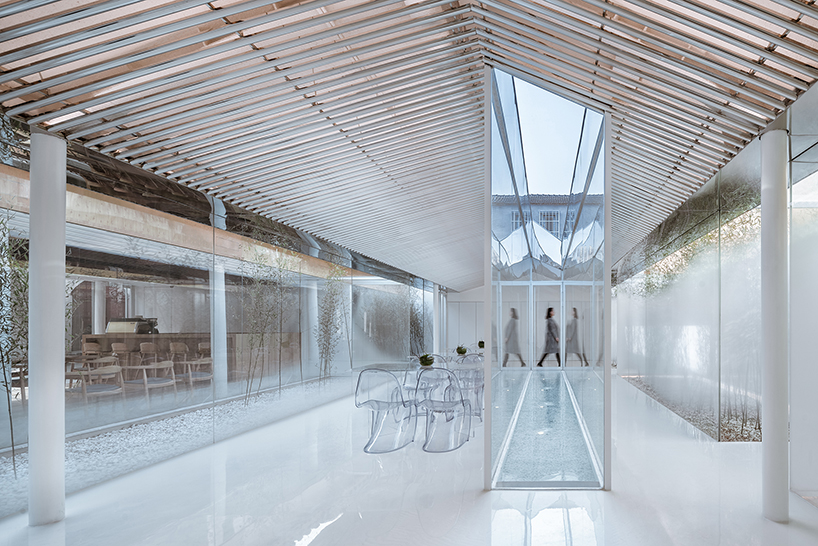
the spaces are separate but communicate with each other, the glass walls with spray patterns look like overlapping peaks, which further strengthen the translucent sense, thus achieving the layering juxtaposition of different scenes and living situations from outside to inside. the house’s usage patterns follow the natural transition from openness to privacy of the three-layered courtyard.
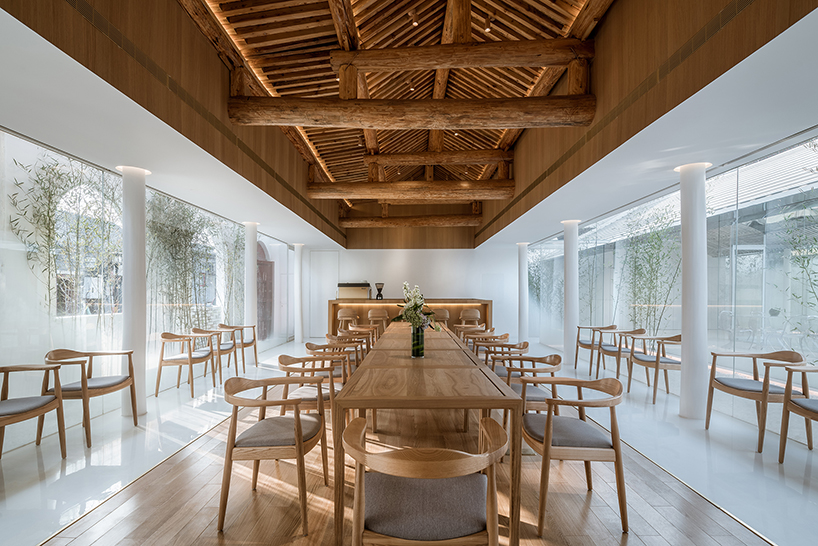
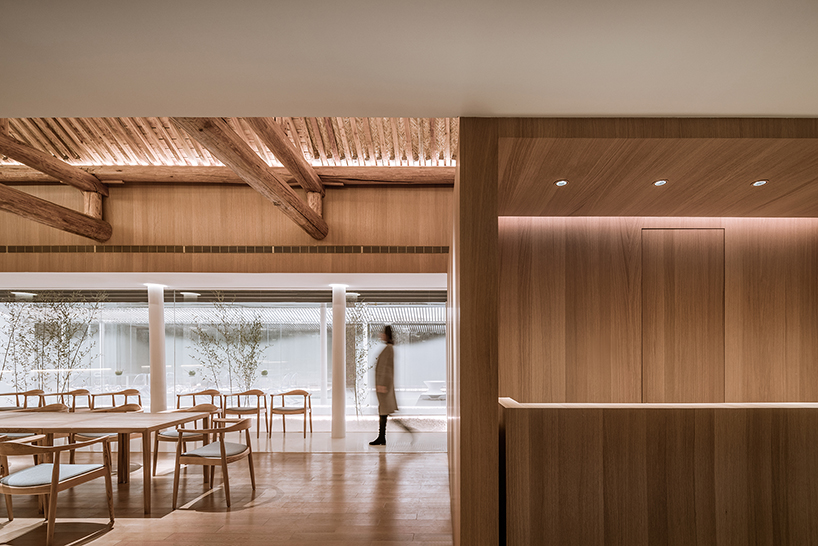
dining room
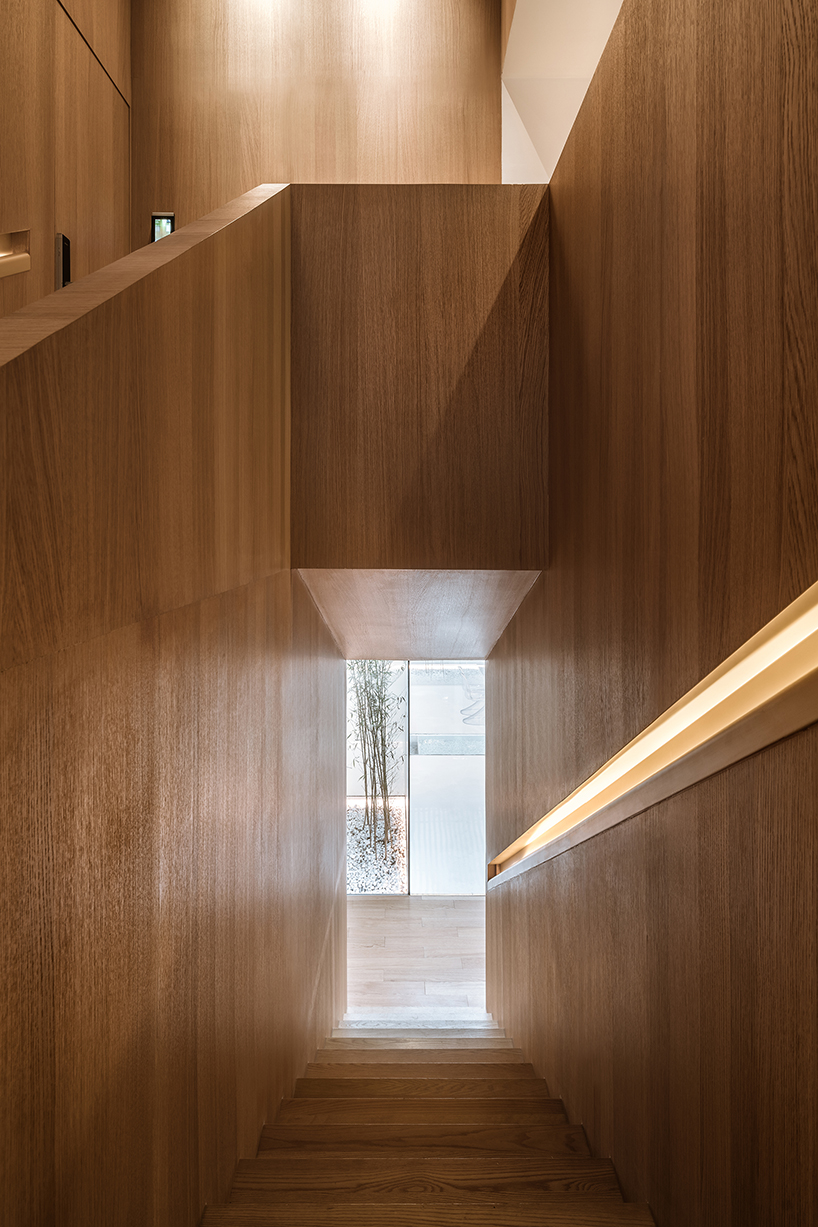
the south house is a place for public gathering activities, with an arrangement of reception space, dining room, bar, kitchen, office, warehouse, and other features. the original wooden beam and column structure were preserved as much as possible, and two new wooden box service units were placed inside to divide spaces of different scales. through the first layering yard, the window openings of the original building and the painted doors form the effect of ‘shadow wall’, together they outline a real and colorful hutong life scenes under the setting of a bamboo forest.
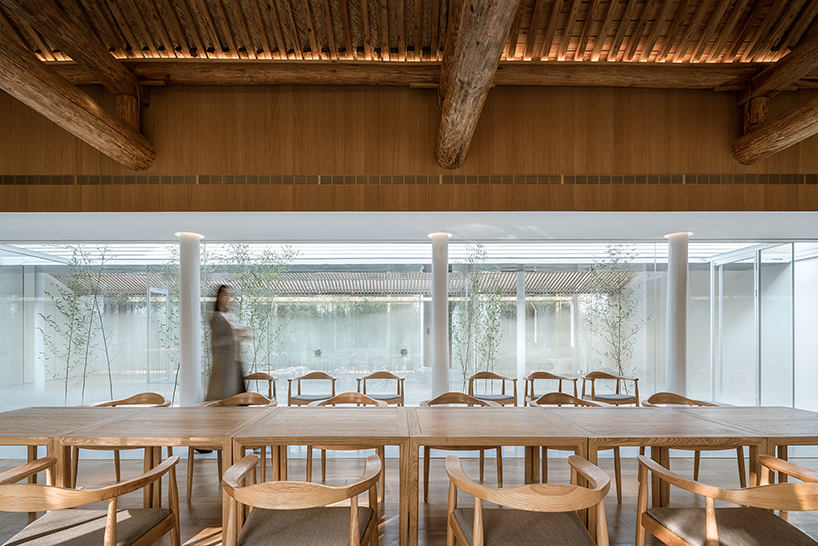
dining room
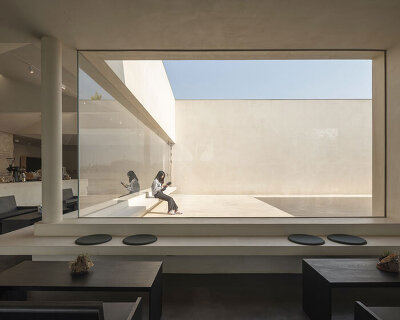
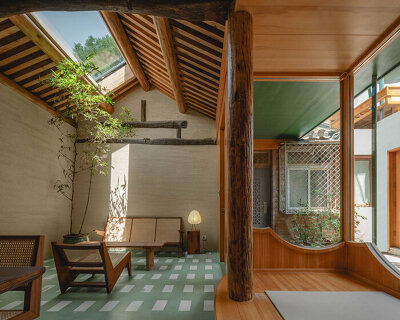
the house in the middle was changed into a flexible multifunctional space, which can be used together with the front restaurant, or as an independent exhibition hall, or be integrated with the guest room area to become a rest area. the designers tried to consider the harmonious relationship between the new building and the two old slope-roof ones on both sides in terms of the scale, lighting, and distance. the inner spaces were built around a linear waterscape garden, and mainly used transparent, translucent, reflective materials and furniture to weaken the spaces’ physical feeling and create a light, transparent and floating atmosphere that is different from the old building, making the spaces allusive and concealing in the bamboo courtyard.
entrance
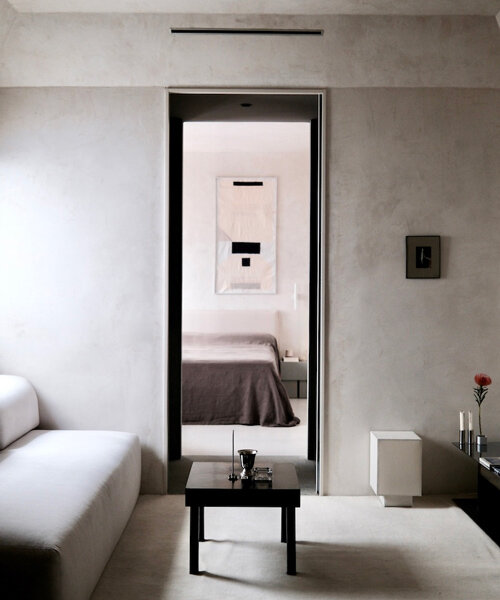
houses on the north side are the most private places. the designers made use of the original structure to divide the first floor into four rooms. the rest area and bathroom area were separated from each other by the change of materials. each guest room has an individual bamboo courtyard, and the inside and outside are stacked with together. the second floor was divided into three rooms of different sizes. through the floor glass curtain wall, people can enjoy the best views of layered gray tile roofs, green trees, and blue sky. all rooms are equipped with facial recognition and intelligent control system. guests can book a room online and scan a code to check in, providing an easier and more convenient living experience.
 multifunctional space
multifunctional space
stairs
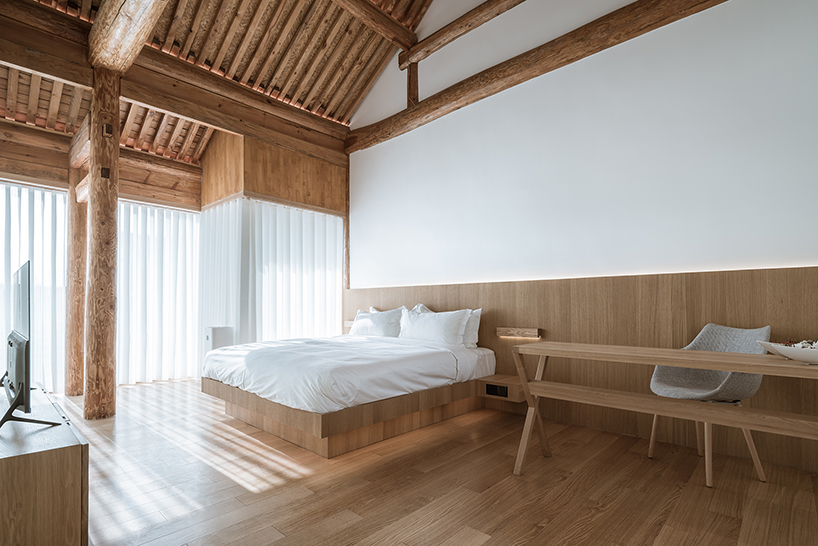
guest room
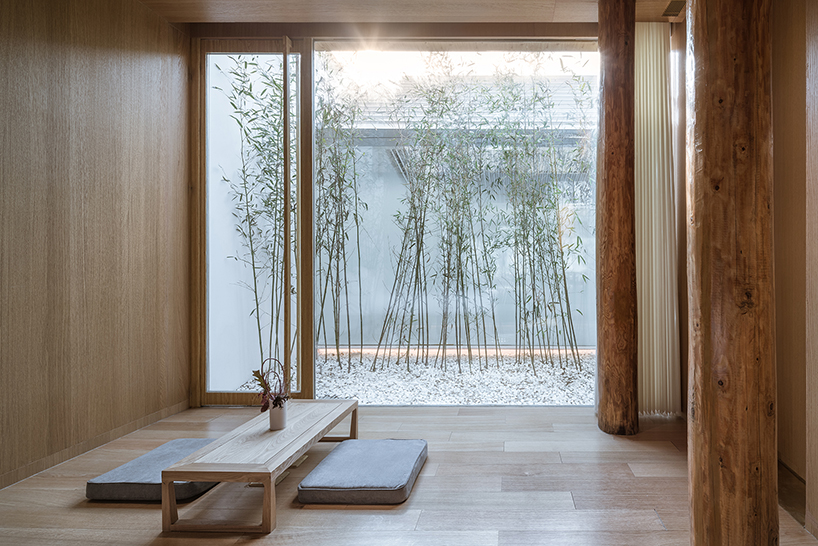
guest room
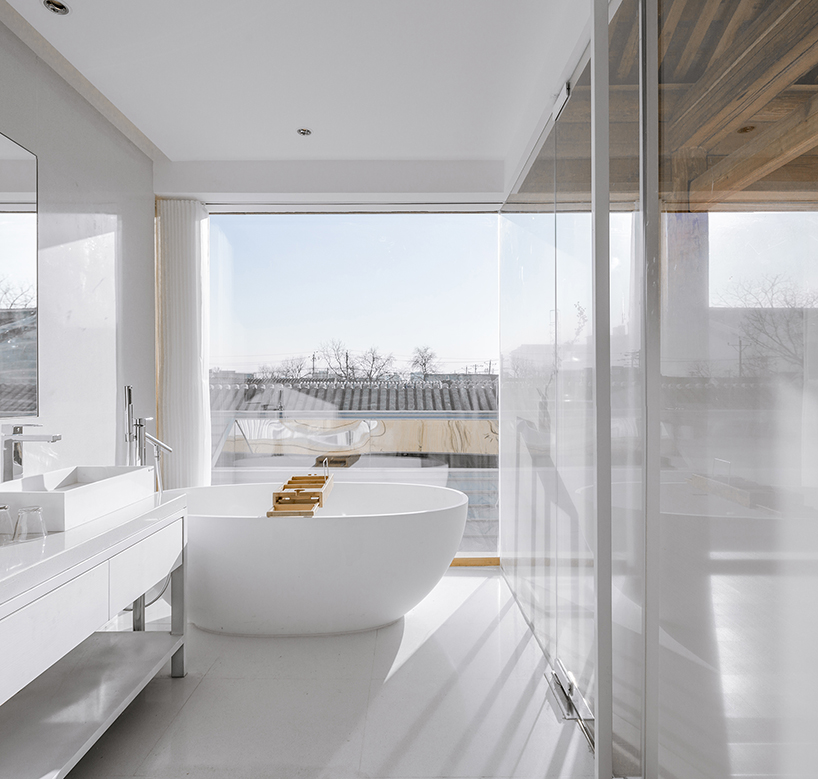
bathroom in the guest room
project info:
project name: layering courtyard
project location: qianmen, beijing, china
area: about 530 m2
completion time: 2018.02
main materials: mirror stainless steel, printed glass membrane, translucent brick, oak board
designers: han wenqiang, huang tao
structure consultant: zhang fuhua
hydropower design: zheng baowei
lighting consultant: dong tianhua
furniture consultant: song guochao
photography: luo juncai, jin weiqi
designboom has received this project from our ‘DIY submissions‘ feature, where we welcome our readers to submit their own work for publication. see more project submissions from our readers here.
shop
your own online design shop — no sales commission collected