atelier ST renovates the historic faktorenhaus in schönbach, germany
architectural firm atelier ST has completed faktorenhaus, its latest renovation project in schönbach that marries historic architecture with contemporary design.
prefer designboom on google[FEATURED]
aterlier st’s FAKTORENHAUS REIMAGINES saxon HERITAGE
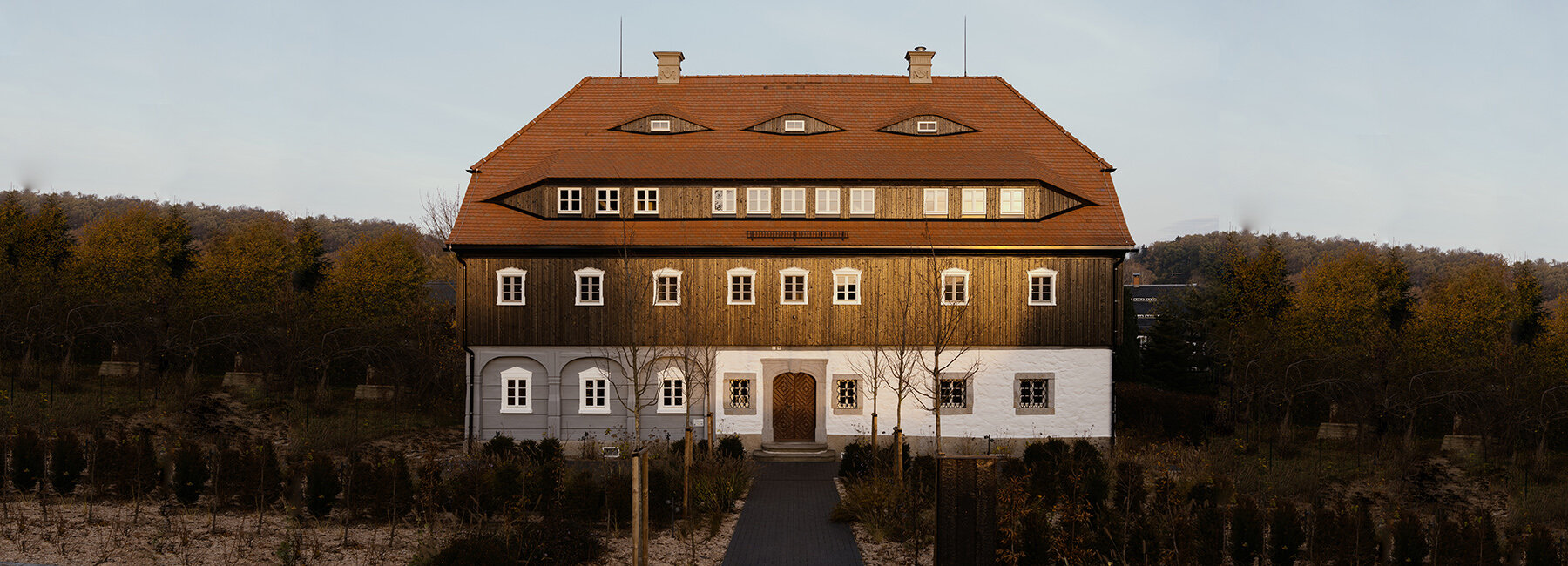
architectural firm atelier ST has completed its latest renovation project, faktorenhaus, in the town of schönbach, in saxony, germany. built in 1785, faktorenhaus was once a residential and commercial building that hosted canvas merchants – also known as “faktoren” – who supplied cloth processors with yarns and linen. today, the building is home to möbelstarke – a medium-sized company that trades in contemporary furniture, kitchens and all related accessories.
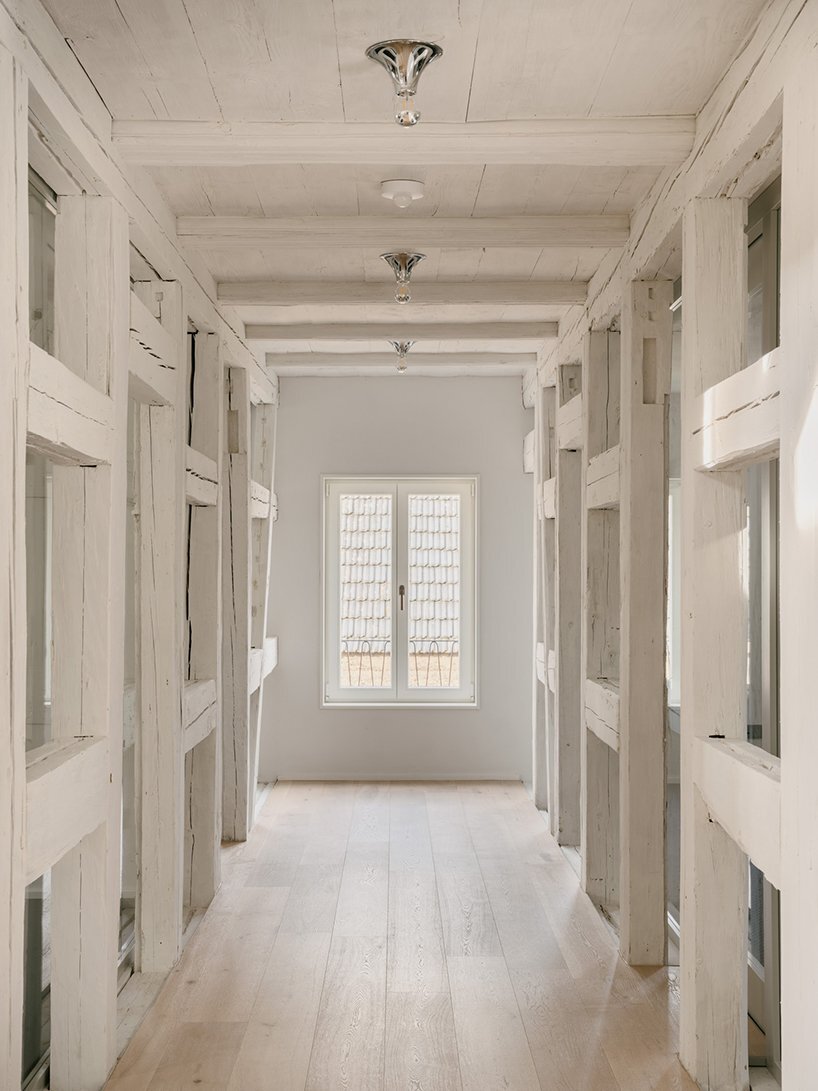
since faktorenhaus is listed as an important cultural monument, the ultimate goal was to preserve its historic value all while integrating a contemporary design that caters to new functions. the atelier ST drove that vision by focusing on a unique architectural feature that characterizes schönbach; the “umgebindehaus” or half-timbered houses. in such houses, the main room on the ground floor is designed as a separate wooden log structure surrounded by a circumferential support system.

stripped-back: A NEW SPATIAL EXPERIENCE
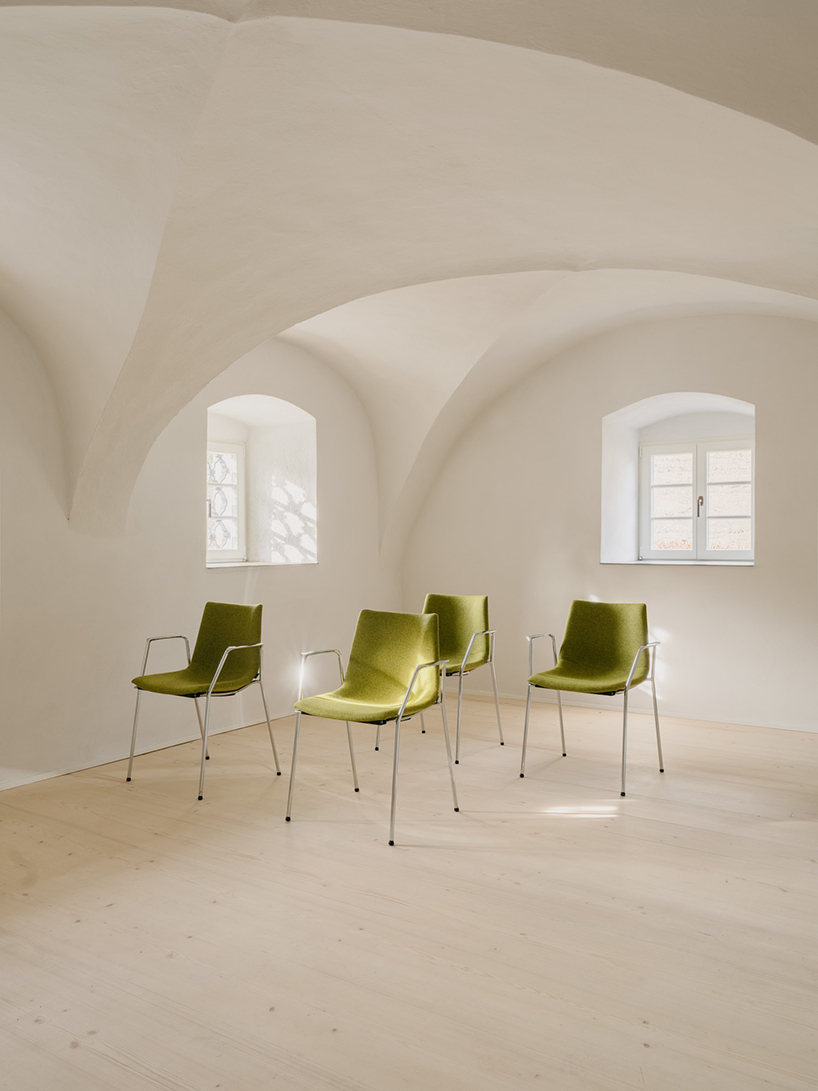
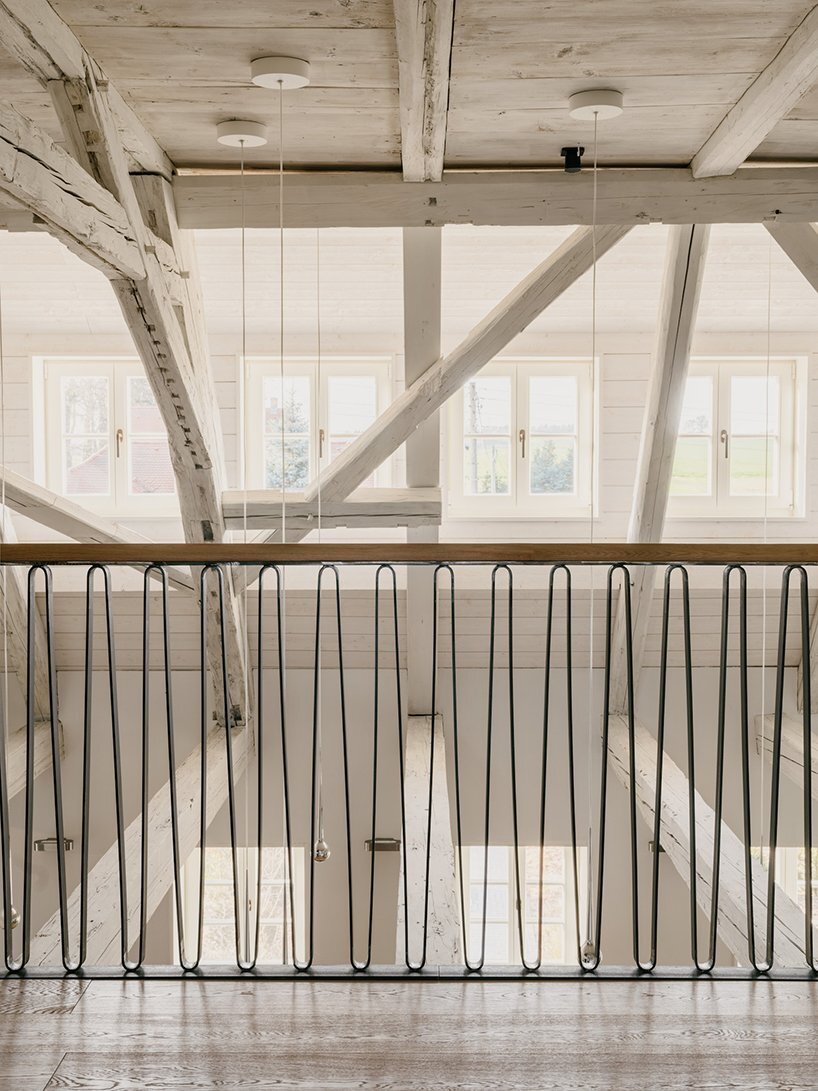
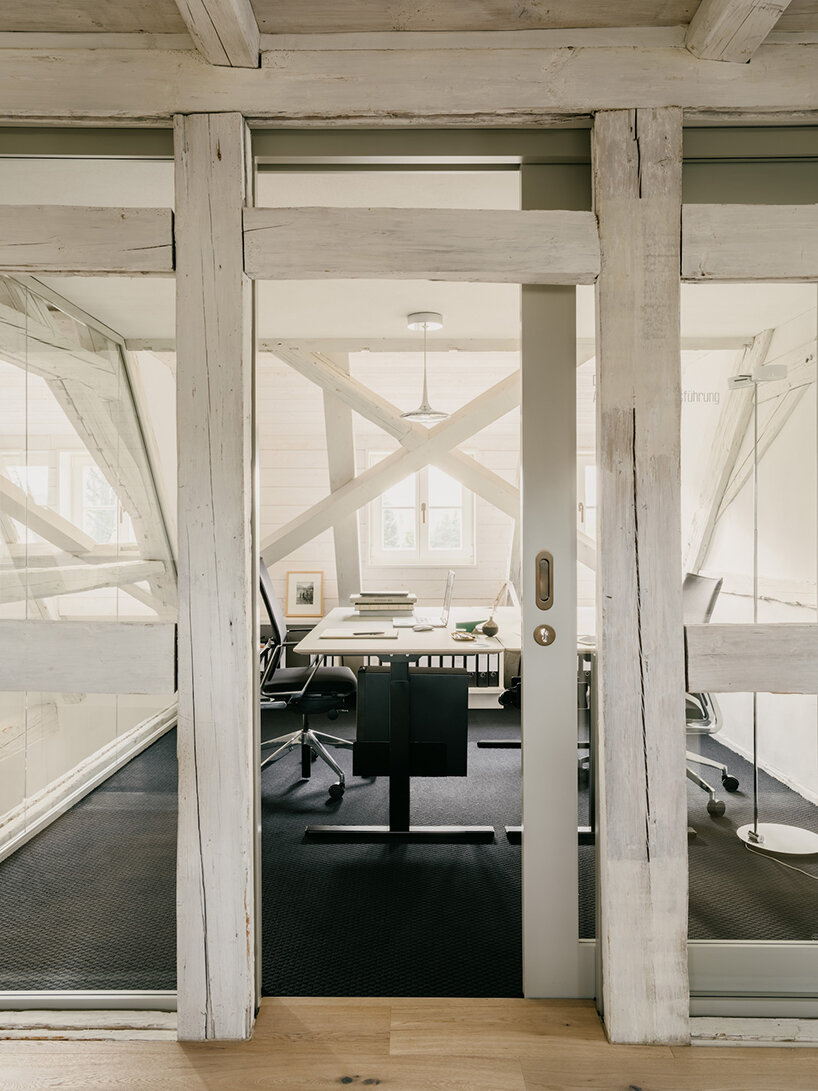
with that in mind, the team at atelier ST freed faktorenhaus from all extensions – reverting it to its clear cubature and supporting structure. for example, the timber framing and beams were largely uncovered and made visible to bring in more natural daylight as well as to create a subtle spatial experience within. the exposed, stripped-back ceiling and wall surfaces resulted in unique spaces of light and air as well as galleries that offer visual links between different office levels.
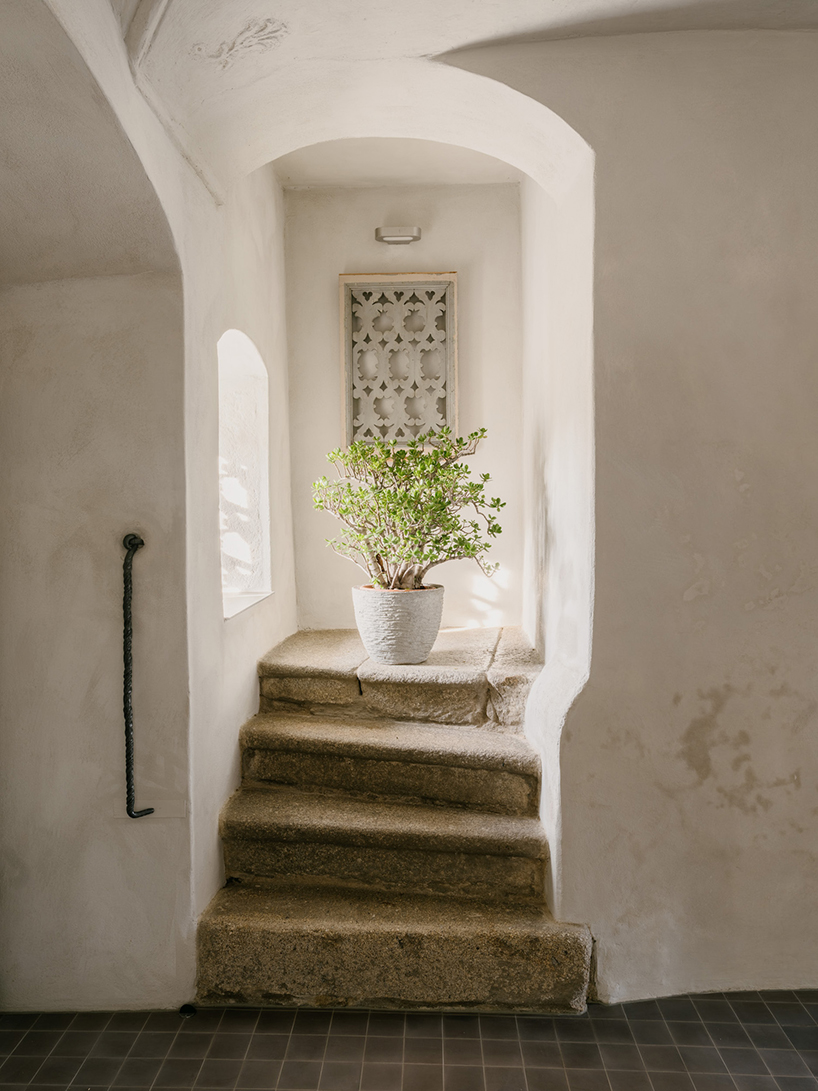
moving on to functionality – the office structures for möbelstarke‘s administrative apparatus are arranged on the upper two levels while the ground floor is reimagined as a semi-public area that houses a foyer, a cloakroom, toilets and seminar rooms under its historical cross and barrel vaults. the log cabin, however, still remains the heart of the building. with its historical structure retained, it has been converted into a pleasant guest room with an open kitchen and fireplace.
access to the upper office rooms is provided by a new staircase on the north side that also acts as the required first escape route – allowing direct evacuation into open air.
surfaces, materials AND COLORS
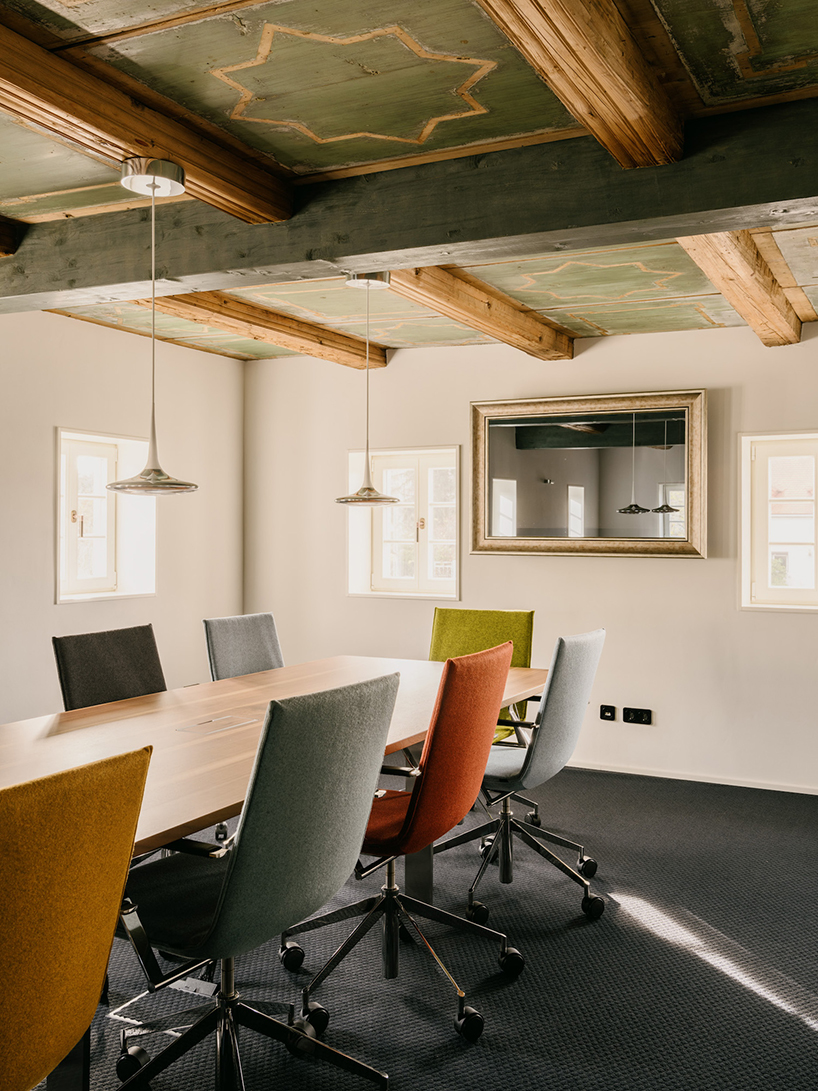
materials and surfaces were chosen according to the principle of “what you see is what you get”. quarry stone, marsh lime sludge and charred wood in combination with hand-carved white decorative frames characterize the exterior appearance. inside, natural clay plasters and light casein colors contrast with dark crude steel or reflective chrome steel surfaces.
office and meeting room floors were laid out with sound-absorbing and anthracite-colored carpets while other surfaces on the upper level were tiled using large-format, oiled oak planks. for the log cabin, historical planks found in the building were reconditioned and reused. all other public areas were covered with cement tiles.
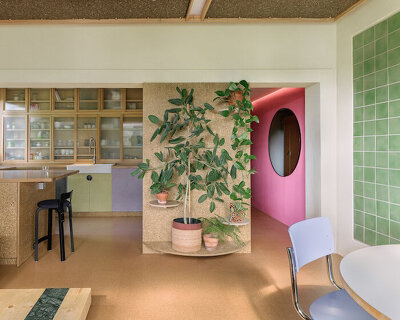
finally, the three main floors feature differently colored sanitary facilities. compared to the subdued coloring of the main structure, bright colors such as violet, purple and turquoise were used in these ‘subordinate’ rooms.
ultimately, atelier sk’s faktorenhaus project emphasizes historical structures while deliberately presenting modern elements as ‘new’ additions to create a rich experience within the building space. as the firm describes it, “the existing and the new complement each other and form a natural unity”.


designboom has received this project from our ‘DIY submissions‘ feature, where we welcome our readers to submit their own work for publication. see more project submissions from our readers here.

shop
your own online design shop — no sales commission collected