architect aurélien chen sculpts sinuous threshold for dragon mountain
french architect aurélien chen completes this sinuous 'dragon mountain tourist center' in china's postcard landscape of rizhao.
slender, curving architecture within nature
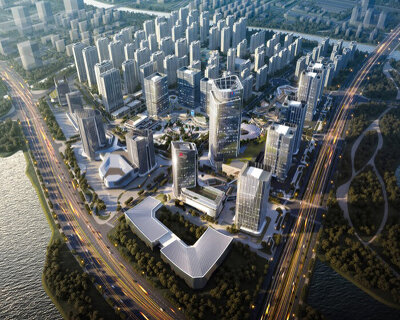
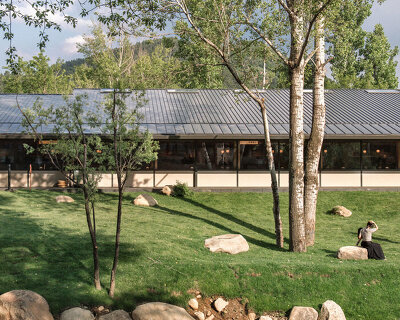
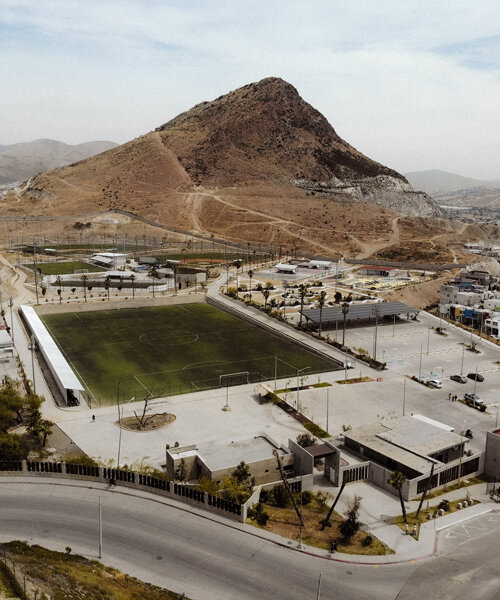
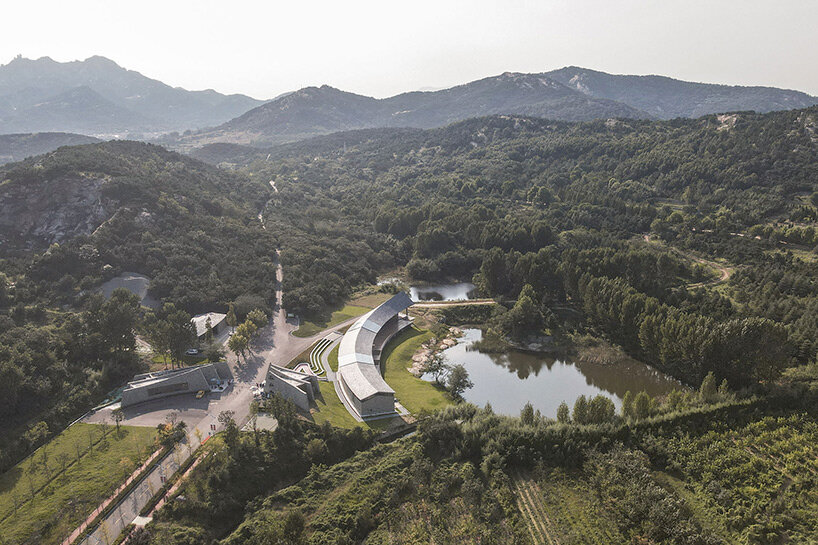
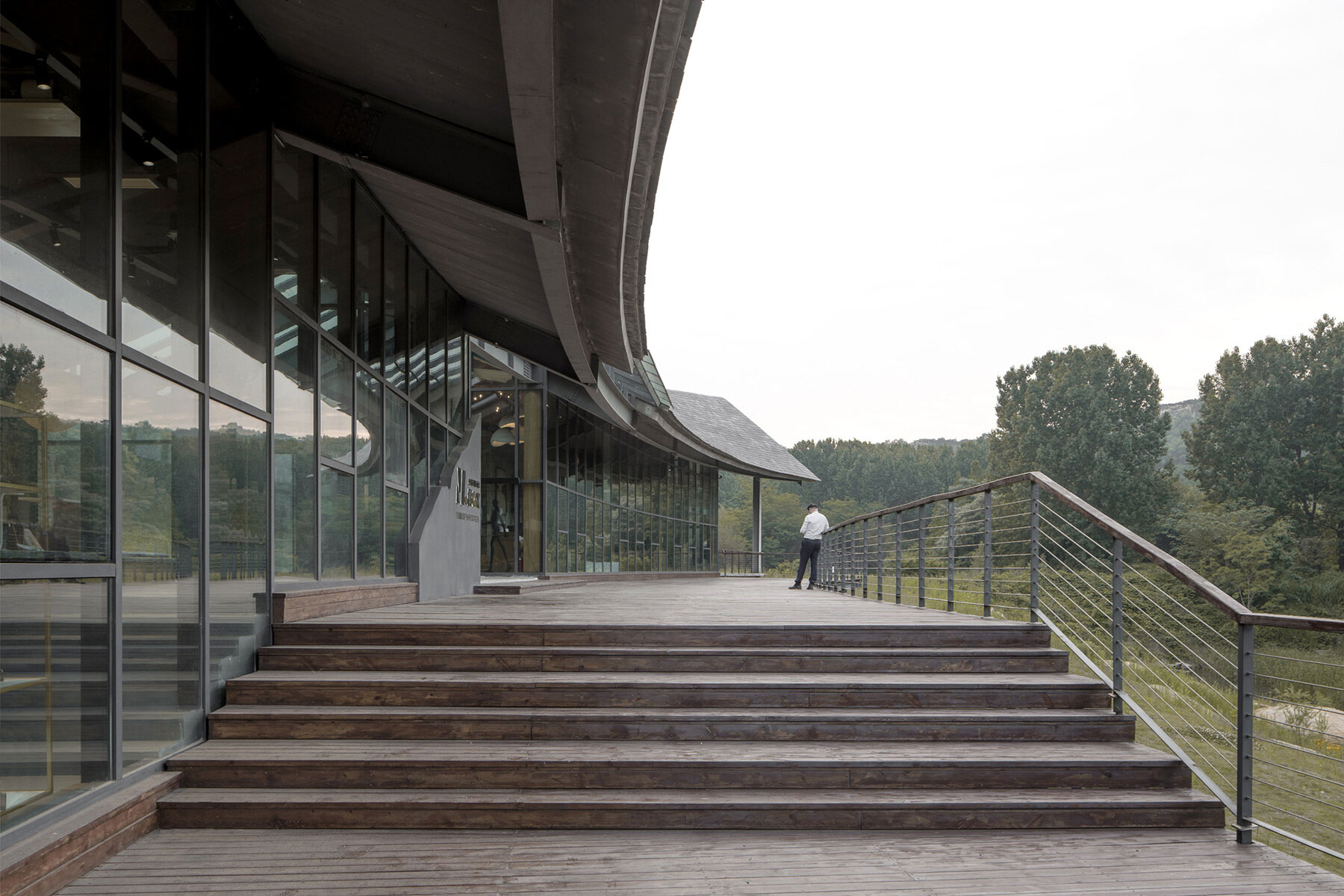
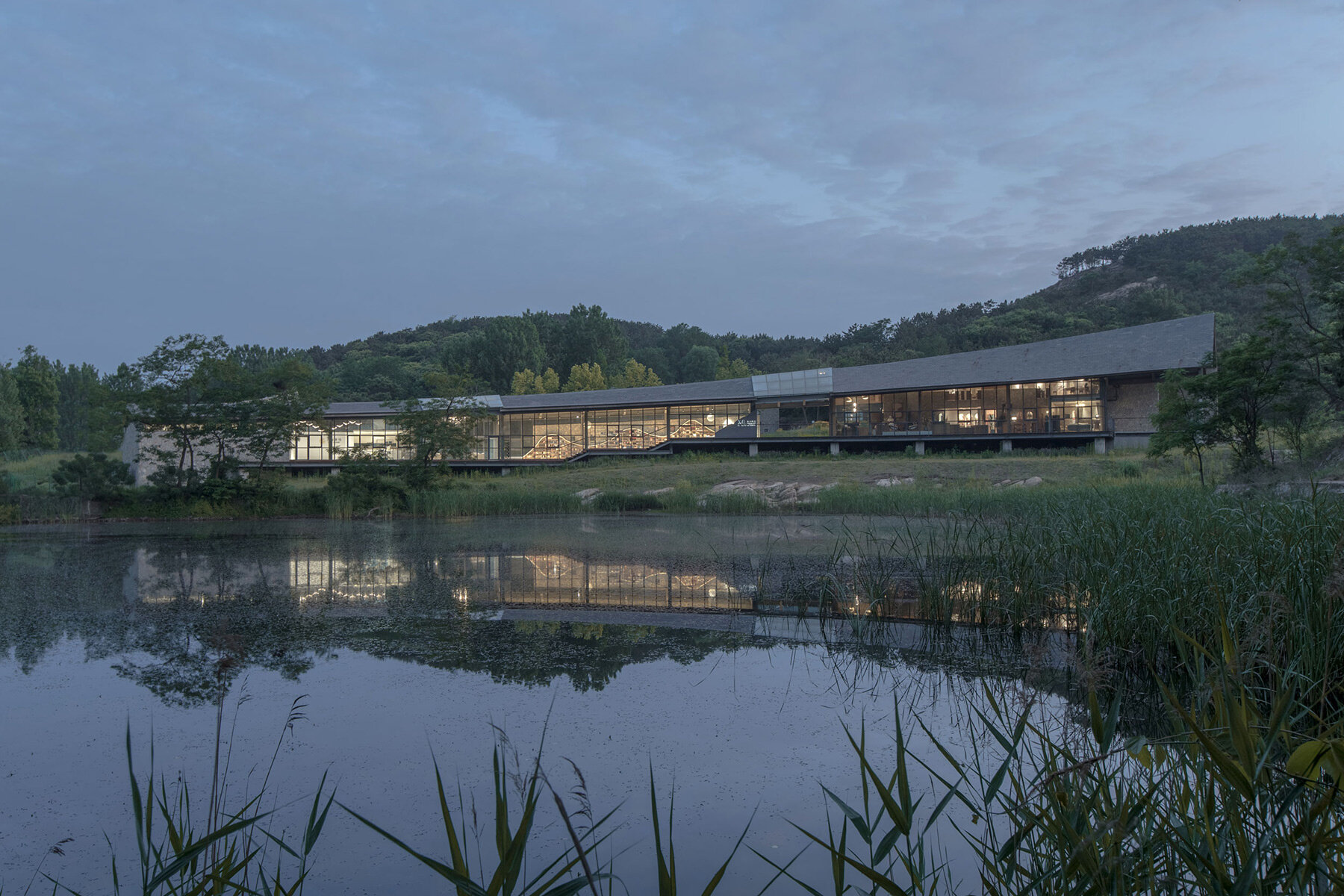
This newly completed Dragon Mountain tourist center has taken shape amongst China‘s postcard landscape of Rizhao, standing as the latest creation of French architect Aurélien Chen. The architectural complex, covering a sprawling 3,000 square meters, exemplifies a symbiotic relationship between the built structures and the natural environment, all while drawing inspiration from traditional Chinese philosophy and vernacular architecture. The development joins the Dragon Mountain Pavilion, which the architect had completed nearby in 2020 and now stands as a signifier for the site’s North Gate (see designboom’s coverage here).
 images © Aurélien Chen, drone photograph © Rizhao Fada Jituan
a new entrance for dragon mountain
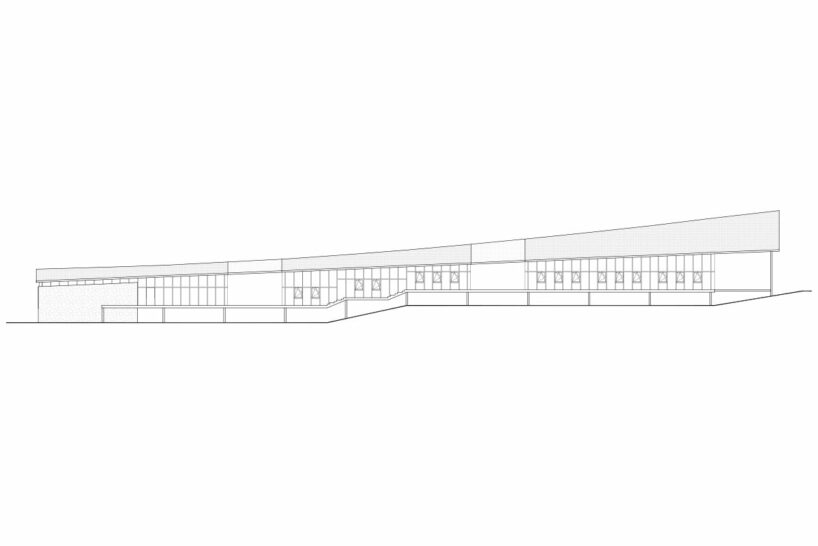
The entrance to the Dragon Mountain natural tourist site sets the stage for a unique experience, curated by architect Aurélien Chen. The site’s entrance alley bifurcates, offering two distinct paths — one ascending towards the mountain and the other descending to serene ponds surrounded by trees. Chen’s design philosophy revolves around fragmentation, breaking down the surface area into five architectural elements which each integrate softly with the topography. These elements orbit a central square, creating an architectural complex that is at once fragmented and harmonious.
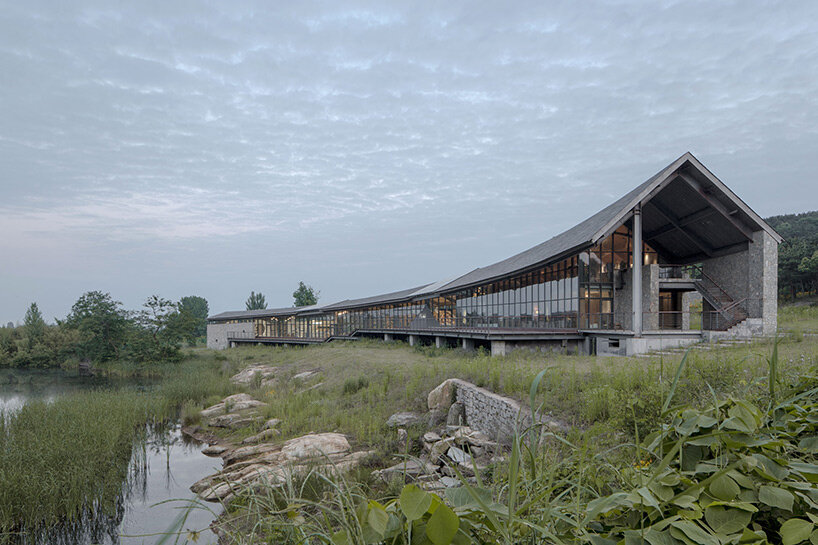
Aurélien Chen designs the Dragon Mountain Tourist Center to follow the site’s sloping topography
aurélien chen bridges ‘earth, humans, and heaven’
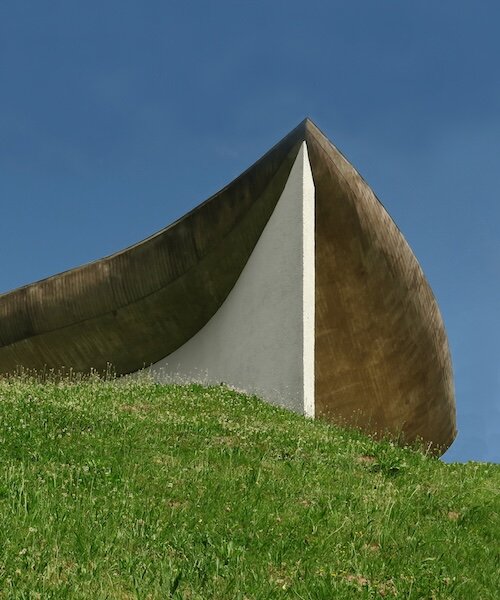
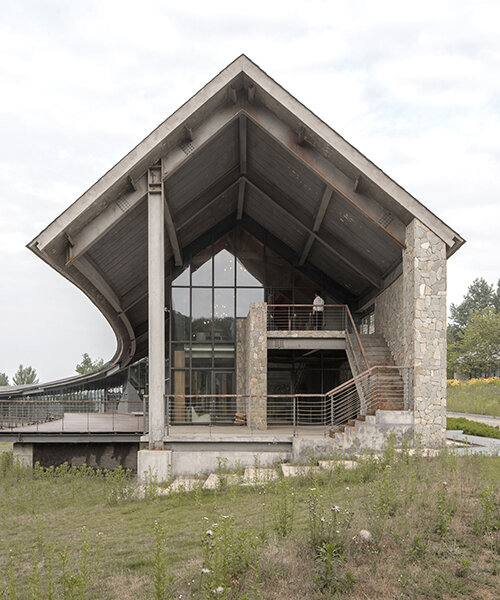
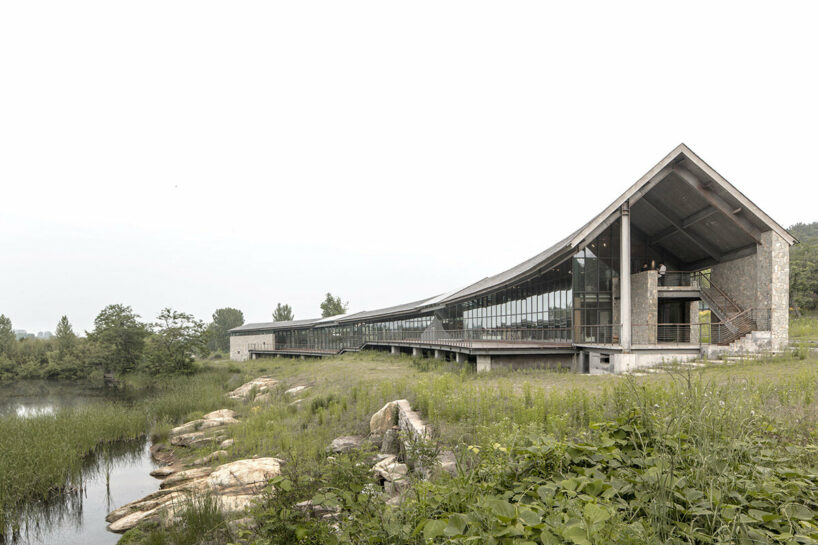
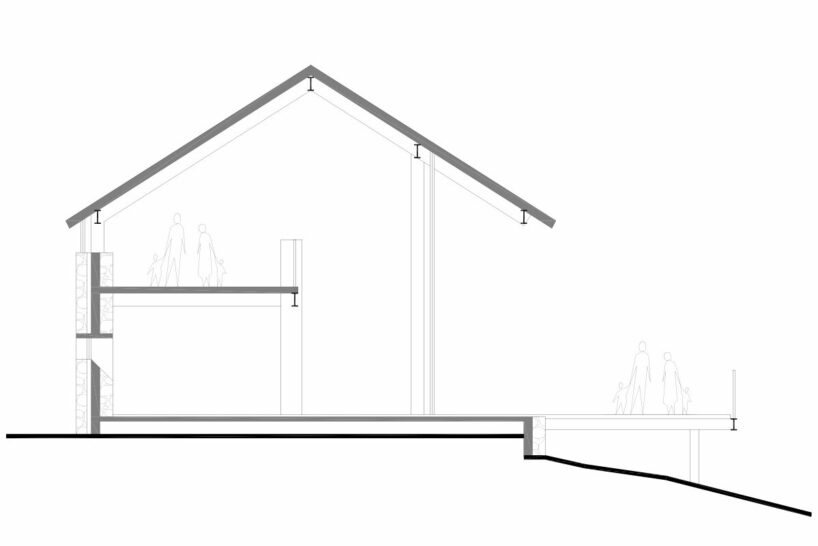
Aurélien Chen’s design for the Dragon Mountain tourist complex reflects purity and slenderness. As the buildings ascend towards the mountain, they symbolize a connection between Earth and Sky. Chen’s thoughtful approach embraces Chinese tradition, emphasizing the interconnectedness of humanity with the Cosmos. The buildings, rooted in the Earth on one side and reaching for the Sky on the other, echo the Taoist concept of the ‘Cosmic Triad,’ which the architect describes as the ‘Earth, the Human Being, and Heaven.’
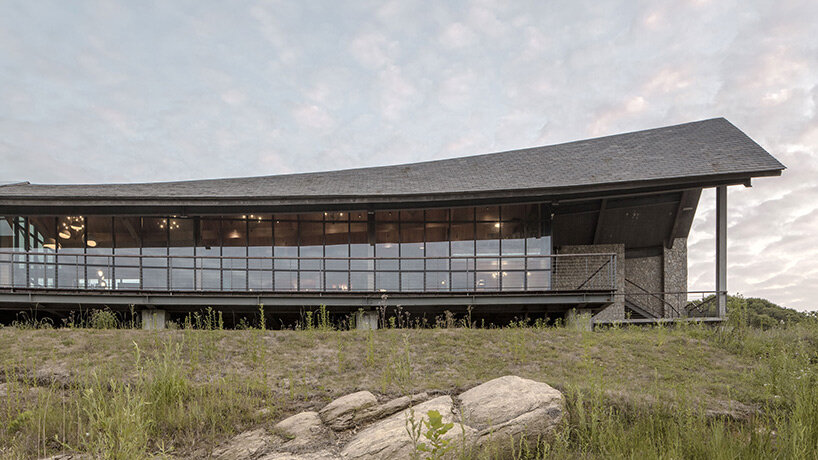
the project is divided into five buildings to create a complex that is both fragmented and harmonious
Traditionally, entrances to tourist sites follow a standardized sequence in China. However, Aurélien Chen deviates from the norm by incorporating the entrance gate into the architectural composition. The gate serves a dual purpose, housing the ticket counter and security staff area. Comprising three rows of arched walls, it delineates the public square outside the site, resembling traditional structures. The absence of a portal creates a void, framing distant mountain peaks — a unique landscape frame.
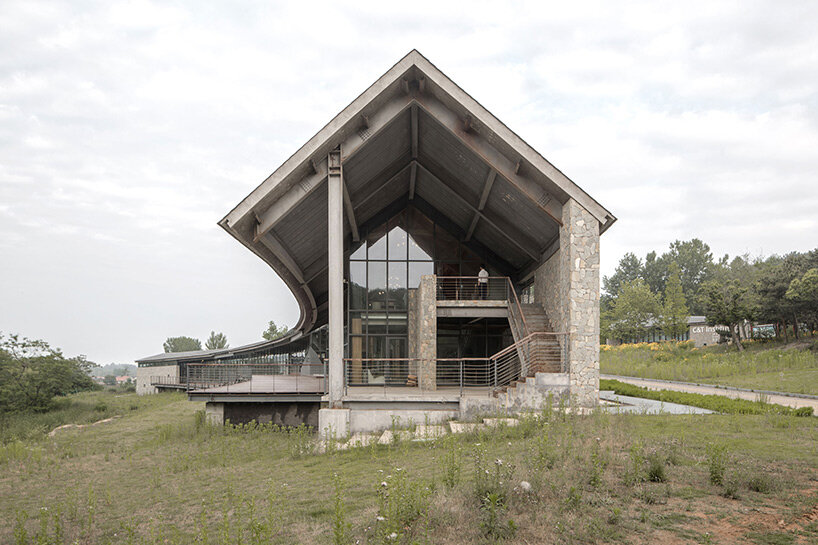
the design symbolizes the interconnectedness of humanity with the Earth and heavens
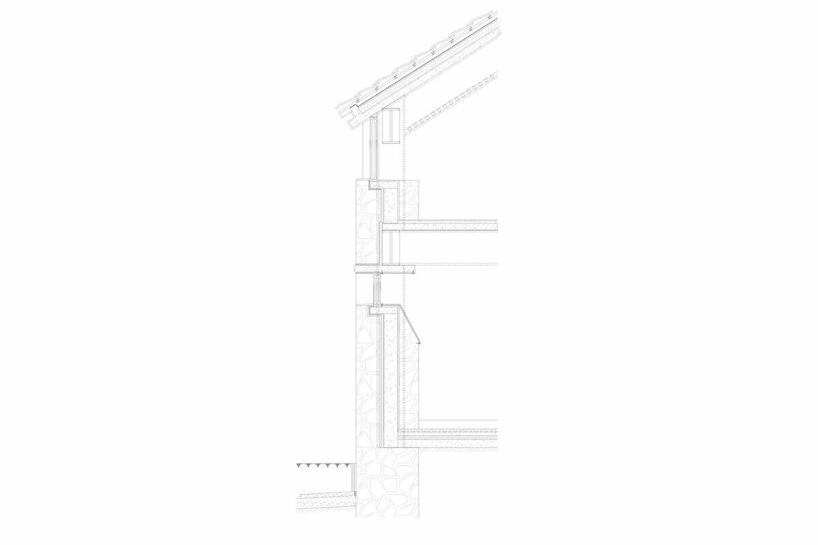
Chen’s choice of materials further enhances the integration of the Dragon Mountain Tourist Center with its natural surroundings. Stone cladding signifies a connection to the Earth, blending the gate with the landscape. Raw concrete, crafted from wood formwork, pays homage to the irregularity of natural elements, ensuring ease of construction. A delicate layer of natural bamboo sticks acts as a screen, bridging the gap between massive concrete and transparent glass, creating a subtle harmony between built space and the natural environment.
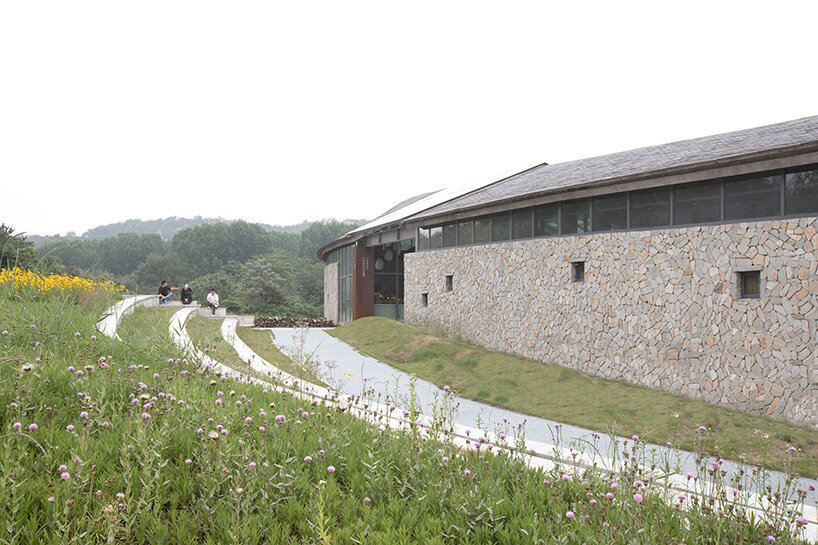 the symbolism is shaped through the ascent of the buildings towards the mountain
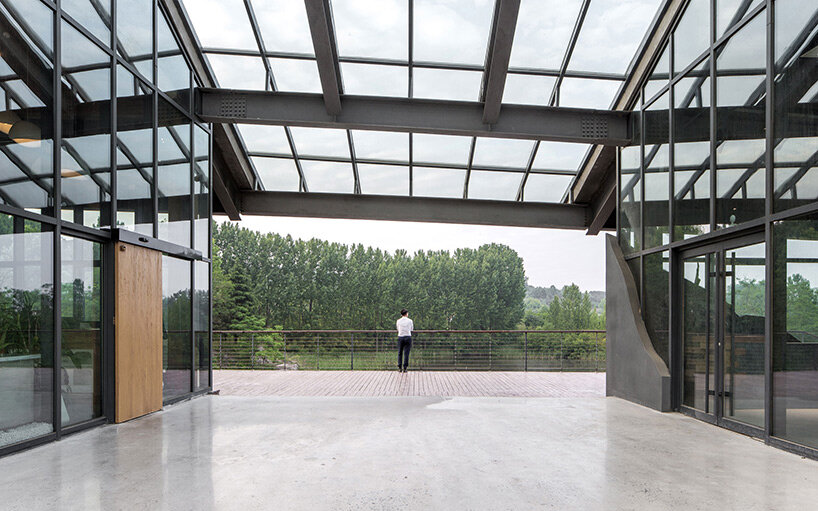
a void in the entrance gate serves as a unique landscape frame to highlight distant views




1/14
project info:
project title: Dragon Mountain Tourist Center
architecture: Aurélien Chen, CSCEC
location: Rizhao, China
shop
your own online design shop — no sales commission collected