bits to atoms uses upcycled stone to reconstruct baskinta house in lebanon
situated in the depths of a valley, the architect has reconstructed the abandoned house to create a contemporary residence.
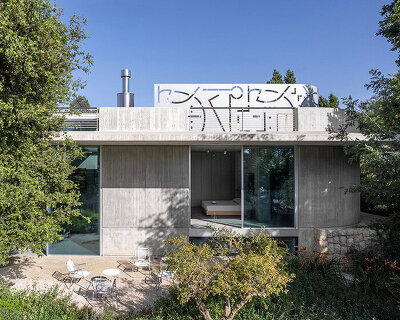
situated in the depths of a valley in lebanon, architecture studio bits to atoms has renovated baskinta house to create a contemporary residence. as one of the oldest in the area, the existing building was abandoned and left to ruin for generations. the new project involved dismantling the previous structure and upcycling the stone to rebuild the house. the result is a design that respects the original characteristics while bringing a contemporary architectural edge.
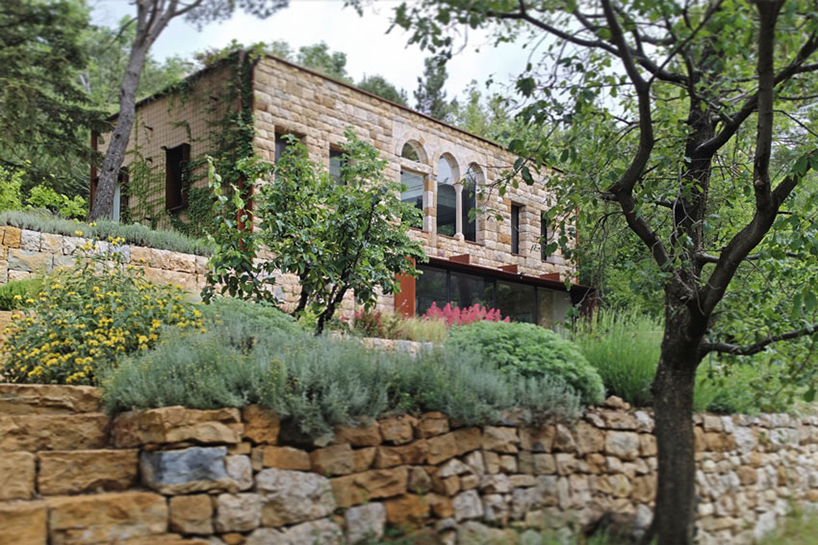
baskinta house, all images courtesy of bits to atoms
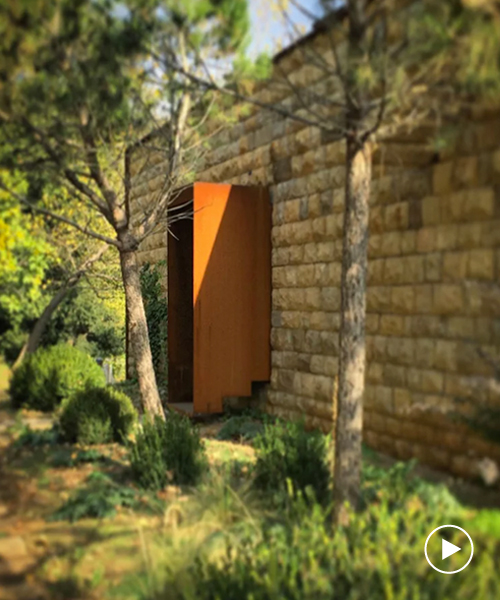
the elevation and position of the house in the valley were preserved by the architects but the need for a contemporary living space at garden level introduced a large bay window. framed by a corten steel box, this new intervention protrudes neatly from the original volume, which connects with the terrace to provide shading from the summer sun.

the new corten steel box on the north elevation
the south elevation’s iconic venetian triple arches, typical of traditional lebanese houses, are also preserved to their simplest form, defining the suspended patio. to echo the beautiful minimalism the ruin possessed when the timber frames were gone, all the windows have been designed to be recessed behind the local stone, resulting in a simple architectural expression.

the venetian-style triple arches
the initial farm house use of the building has been amplified: side walls and roof are planted, mainly with fruits plants, creating a continuous arch of greenery over the structure. materials are simple and raw: hardwood, corten steel, fair face concrete and upcycled local stone. corten was chosen to match the iron rich valley’s rusty tones, in which the house blends naturally.

the wooden deck viewed from above
a fixation system was developed for the herringbone patterned boardwalk that allows the wood to change dimensions according to humidity without causing any structural damage, preventing aging and stress on fixations.

ventilation holes and brass plugs
at 1200m of altitude, even in lebanon, negative temperatures are easily reached. in the gradient of temperature between outside and inside, corresponds a dew point in the thick insulation of the walls, which therefore needs ventilation to be dried out. holes puncture the walls to ensure the building can breathe and, in order to avoid birds, mice and insects of the garden to get into the house, brass plugs, each with a unique pattern, were designed and 3D printed.

water pond pergola
with the enlargement of the garden, the old pond capacity had to be doubled. extension and shading pergola were digitally fabricated using a bespoke modular joint system forming a lightweight but durable intervention. using only corten steel and wood, with thoughtful tectonic details, the pergola participates to the project and shades the entrance pathway to the garden.

lateral planted elevations

interior view

blind wall on the north elevation
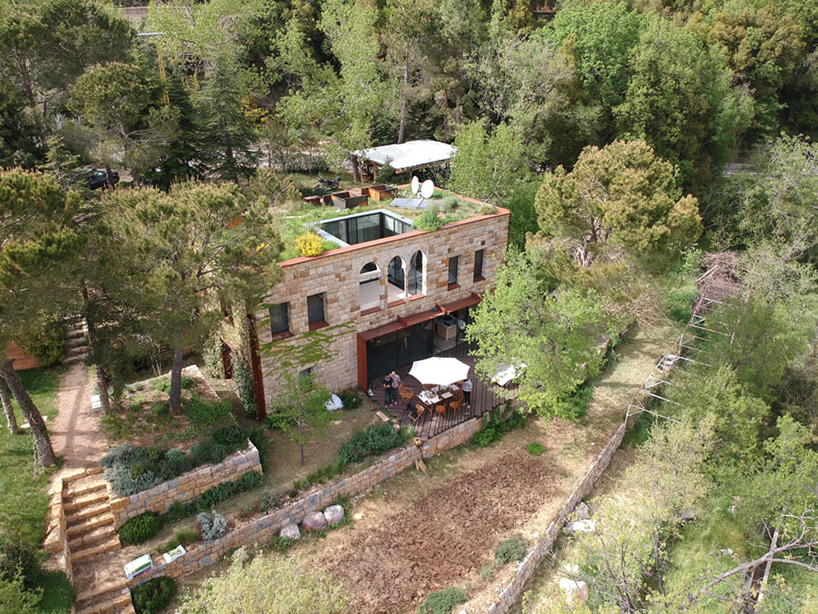
bird’s eye view of the house

the wooden deck in winter

winter time
project info:
project name: baskinta lebanese mountain house reconstruction
location: nahr baskinta, lebanon
architecture office: bits to atoms
lead architect: guillaume credoz
designboom has received this project from our ‘DIY submissions‘ feature, where we welcome our readers to submit their own work for publication. see more project submissions from our readers here.
shop
your own online design shop — no sales commission collected