‘boathouse’ straddles the threshold between the salish sea + san juan islands’ woodlands
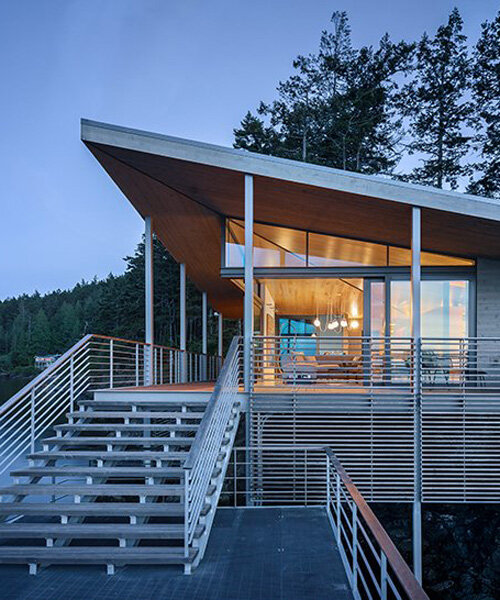
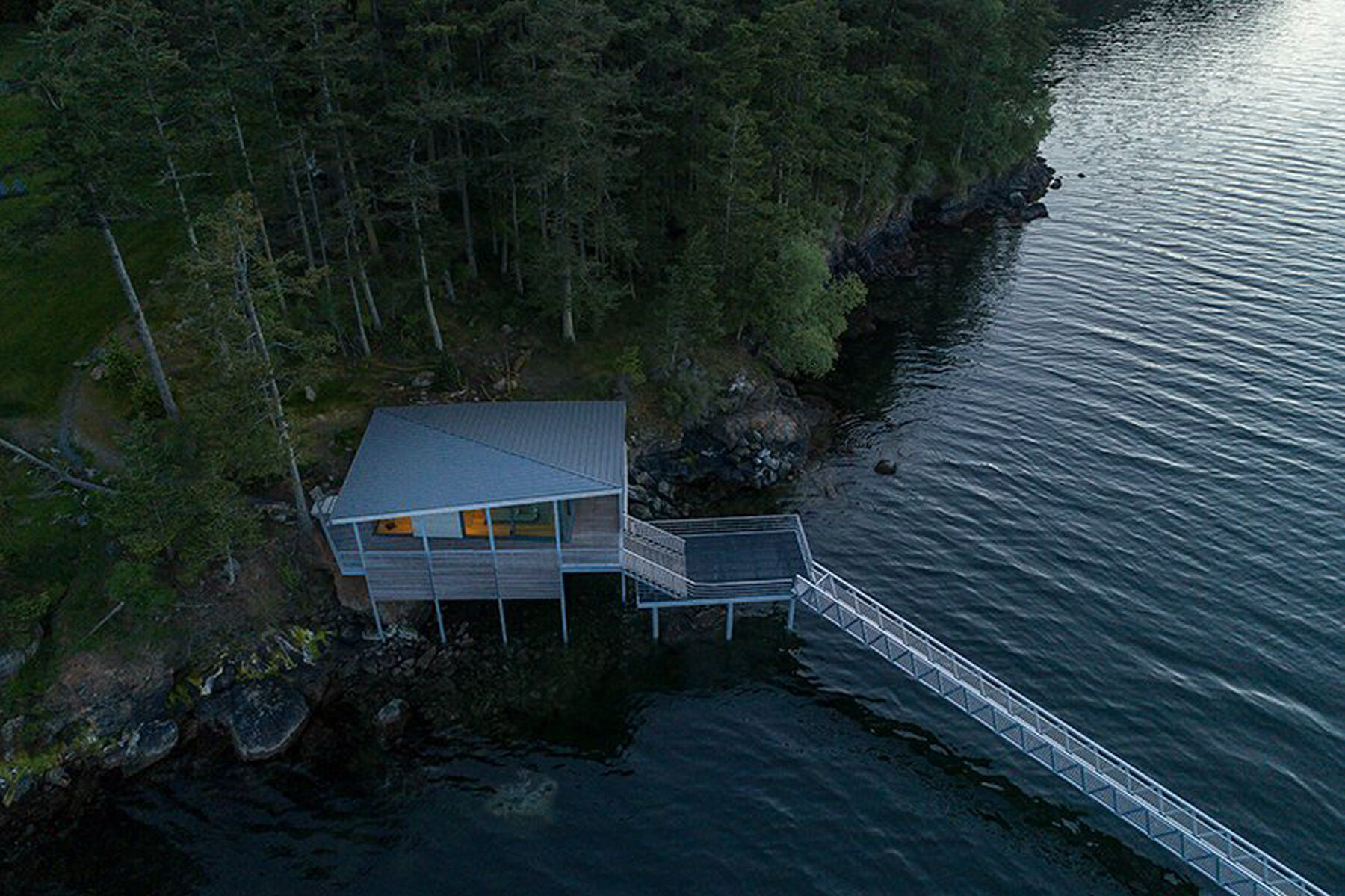
the angular roofline rises in two planes, lending a sensation of floating lightly over the seascape and woodlands.
prefer designboom on google[FEATURED]
pbw architects’ boathouse welcomes visitors from the sea
Emerging from the coastline of the San Juan Islands in Washington, PBW Architects’ Boathouse stands as a threshold between water and land, a welcoming entryway greeting visitors who arrive by the sea before they enter the client’s island home beyond it. With careful consideration of its site and environmental impacts, the structure discreetly nestles into its rich encompassing landscape, drawing beauty and meaning directly from its surroundings. Along its sea-facing façade, the structure is lightweight with expansive glazing and delicate, liner steel elements, while the rear forest-facing façade is a wooden volume that tucks into the woodlands.
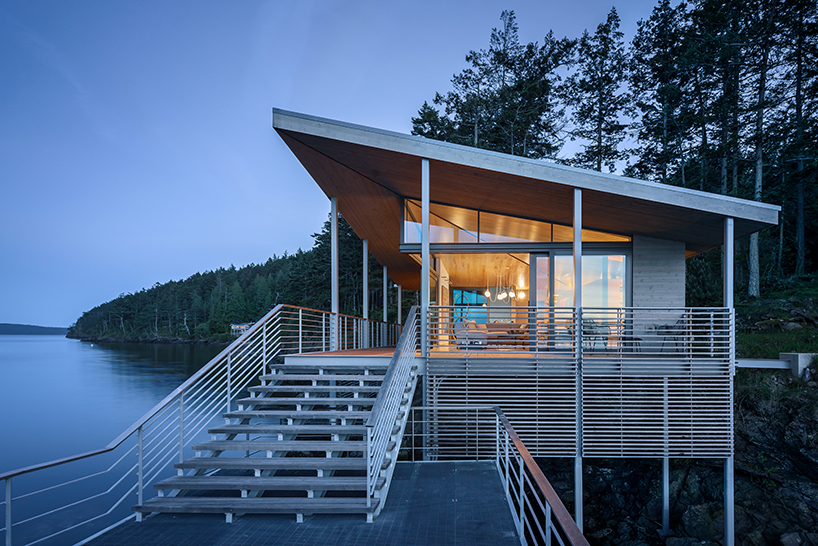
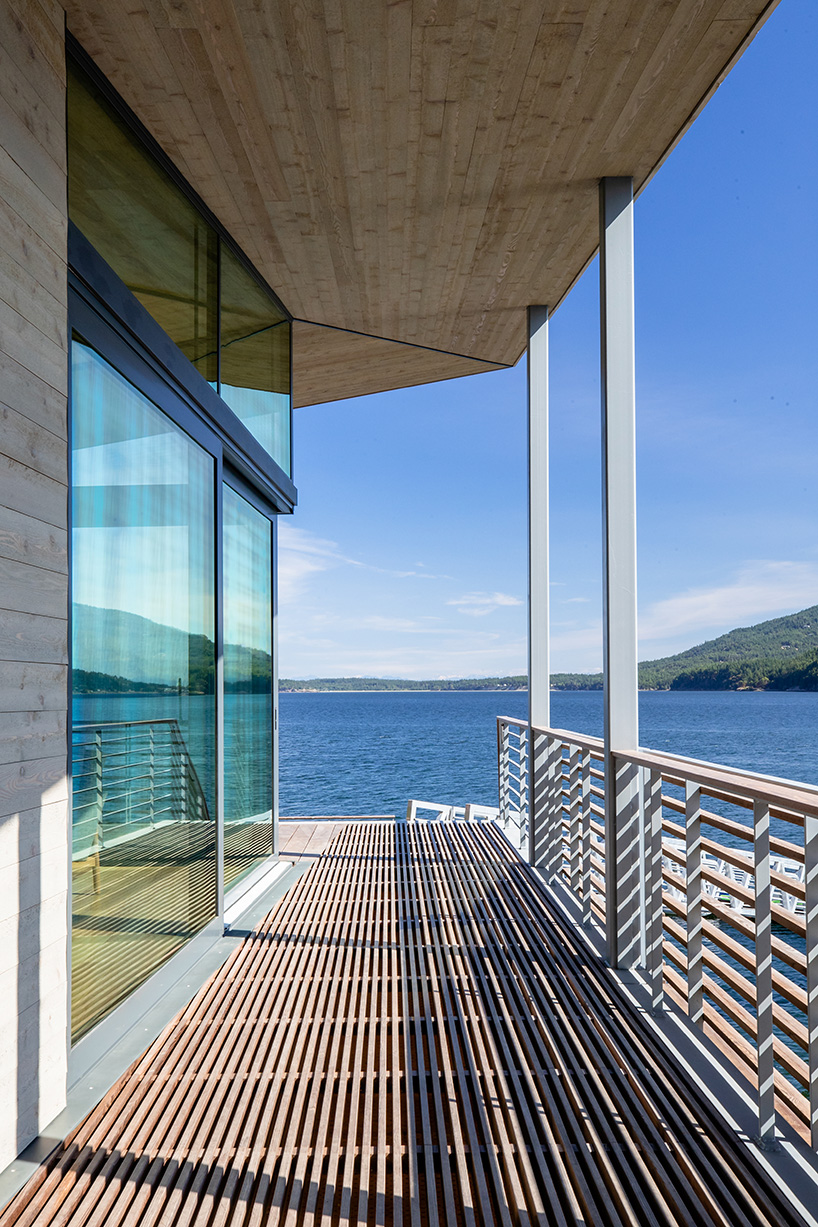
the lightweight deck emerges from the coastline + woodlands
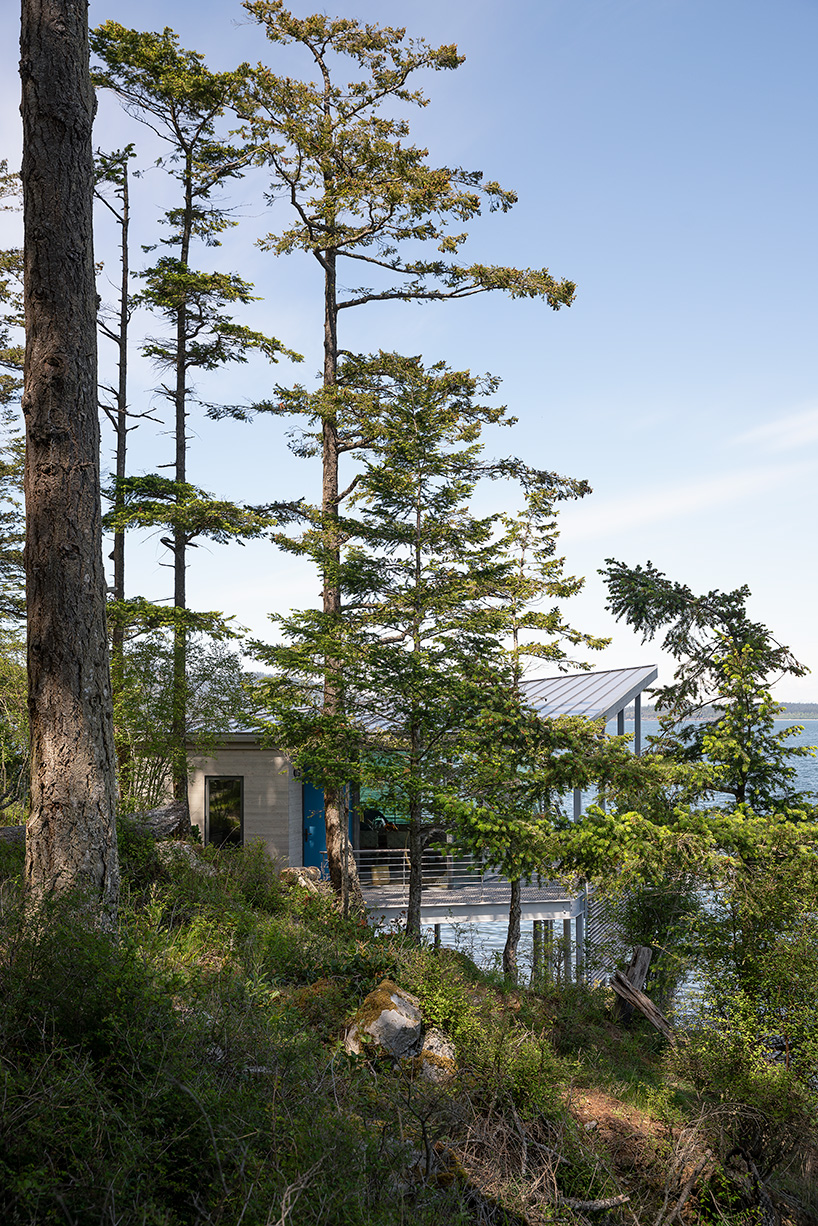
‘A transition point between worlds – nature and the built environment, old and new, land and sea – the Boathouse is a refined answer to the age-old problem of thresholds.’ notes PBW Architects. Approaching the Boathouse from the land, the low-slung structure is almost entirely concealed by the dense foliage that nestles it. A dip in the topography together with the discreet roof geometry further integrates the building into the landscape. The angular roofline rises in two planes, seamlessly transitions between exterior and interior and lending a sensation of floating lightly over the water.
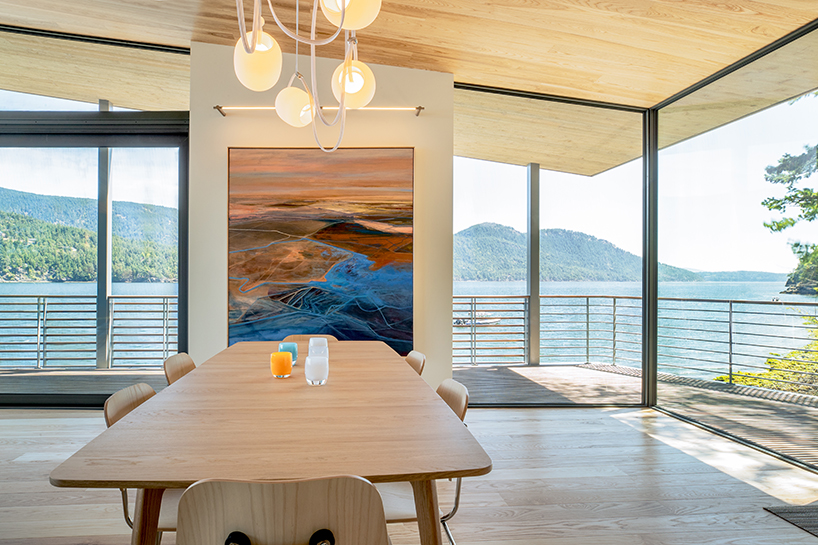
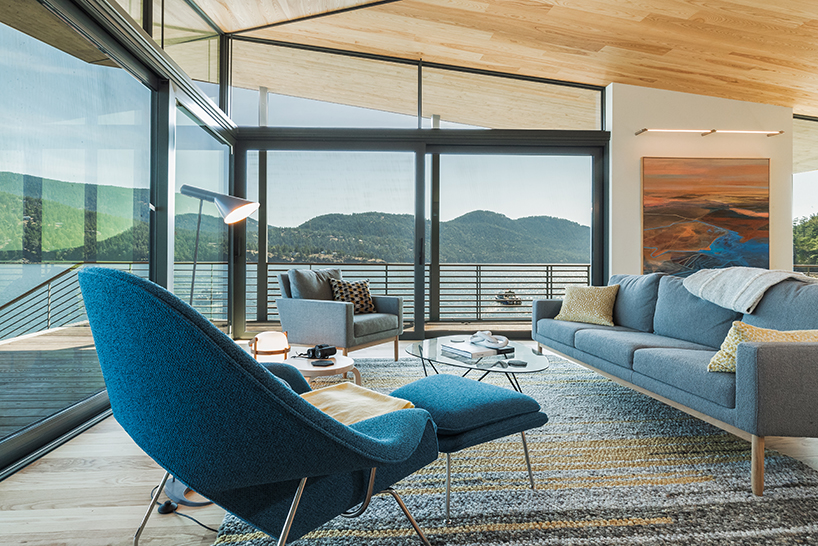
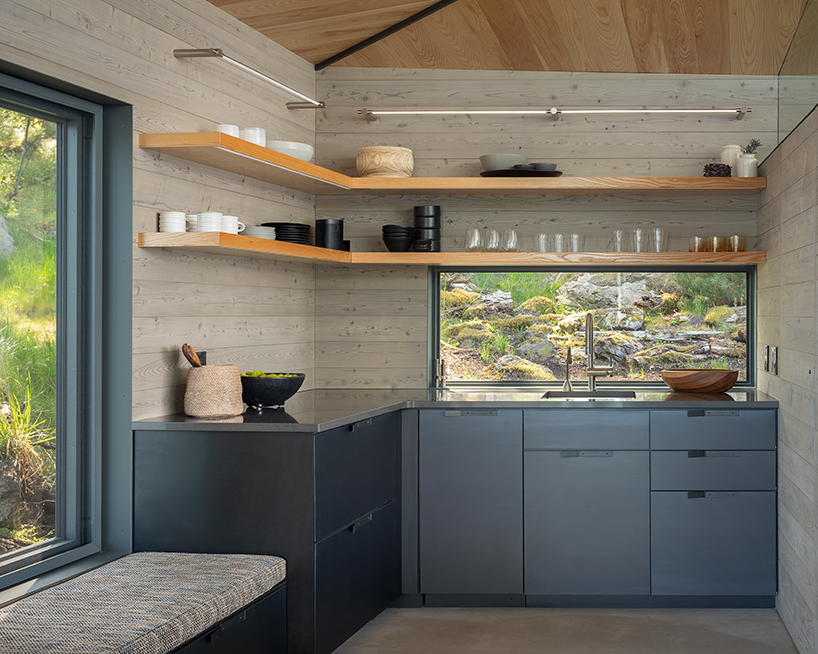
Moving through the space, the Boathouse opens out onto dramatic, panoramic views of the Salish Sea, framed by expansive glass walls and sliding glass corner doors. On the landward façade, the architects arrange the services in a wood-clad volume, punctuated with small windows strategically positioned to capture calming views of treetops and moss-covered stones. Throughout the living and dining space, slender lines of the ash wood ceiling which rises outwards and steel accents guide visitors’ eyes directly and naturally towards the seascape.
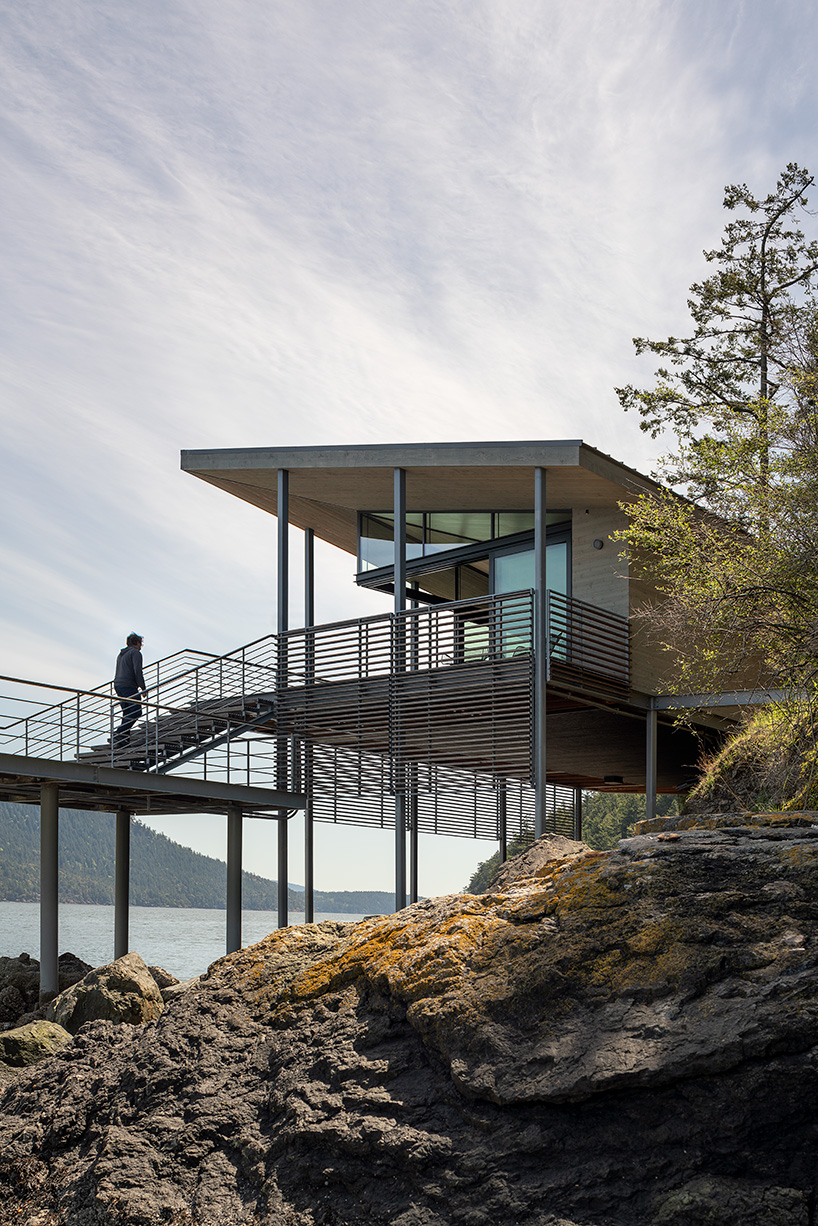
The language of the interior continues to the exterior, expressed with resilient materials to weather the harsh environment. The smooth ash ceiling and floor transition to rough stained cedar and heat modified ash decking, while the refined clear cedar interior cladding carries into rough tight-knot exterior siding. The weathered wood railings extend down to blur the mass of the structure’s façade and provide privacy from passing boats.
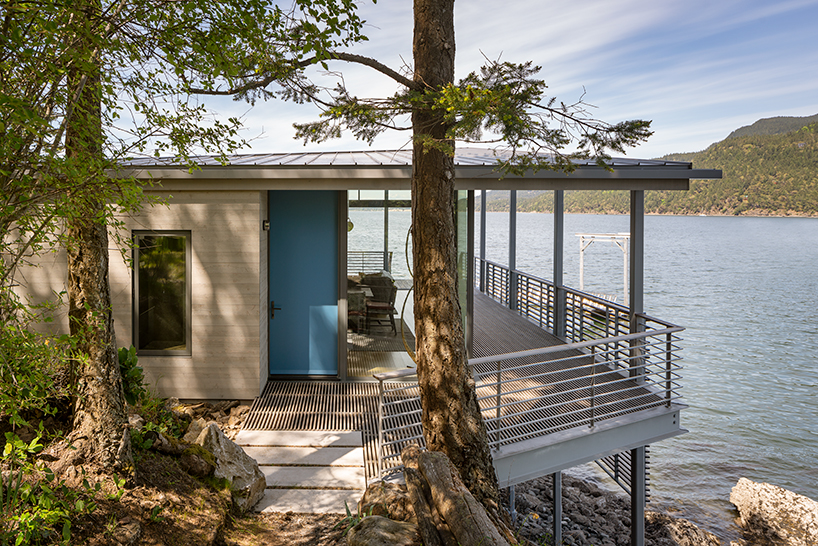
an environmentally conscious intervention
The Boathouse replaces a dilapidated, haphazardly constructed structure, with a strategy aimed to naturalize and restore the shoreline. PBW Architects began with removing the previous 400 square feet of concrete and creosote-coated piles from the water, replacing it with 4 square feet of thin steel that supports the new structure on stilt foundations. A concrete breakwater, alongside a significant number of old tires and debris by the old structure’s foundation were also captured and replaced with a native rock substance. The new dock and ramp were carefully tuned to avoid and span beyond beds of eel grass, and design details such as the porous wood grated decking were crafted to emphasize connection to the water while allowing light to permeate through the structure to the marine life below.
project info:
name: Boathouse
architects: PBW Architects
location: San Juan Islands, Washington, USA
designboom has received this project from our ‘DIY submissions’ feature, where we welcome our readers to submit their own work for publication. see more project submissions from our readers here.
shop
your own online design shop — no sales commission collected