cattelan in a locomotive factory: how former factories have been transformed by culture
artists and architects reshape vast industrial interiors into exhibition spaces, giving former factories and infrastructure a new public life.
prefer designboom on google[FEATURED]
Adaptive Reuse in the Cultural Sector
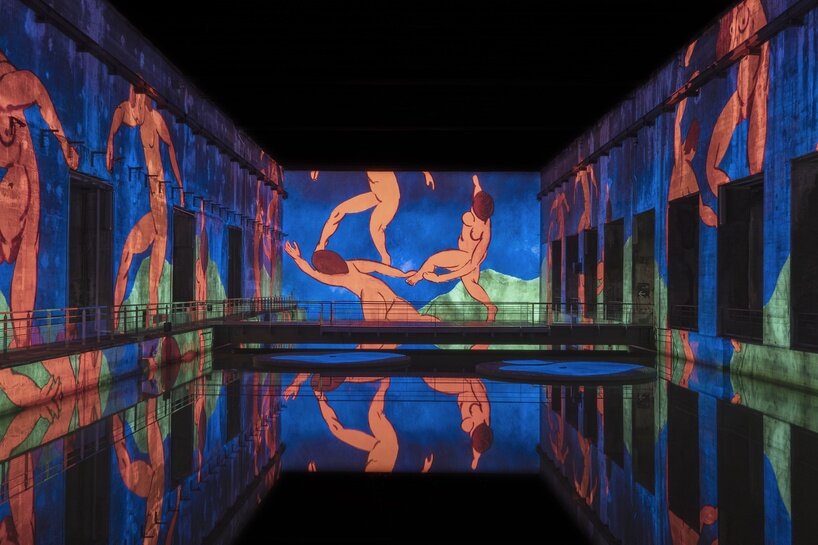
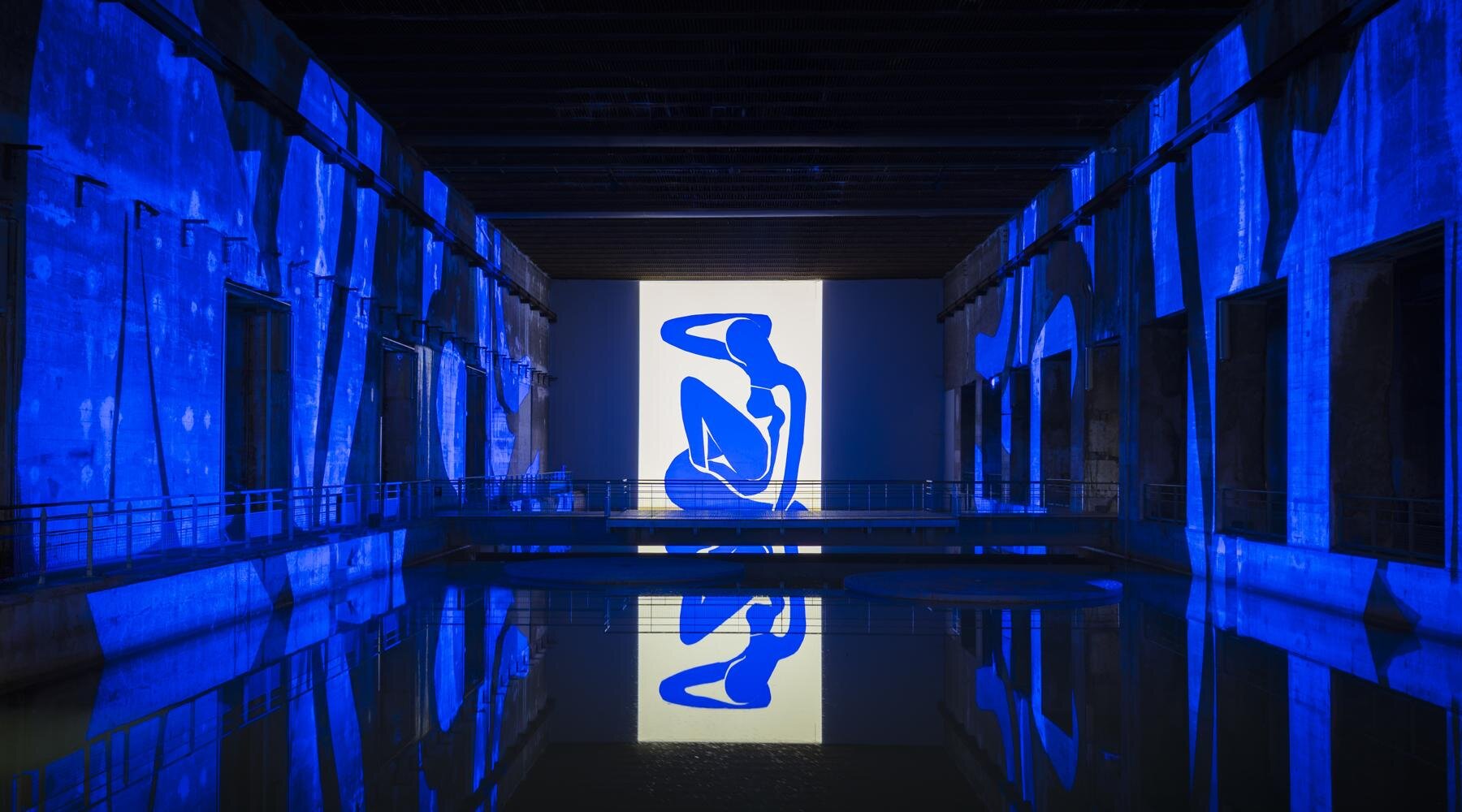
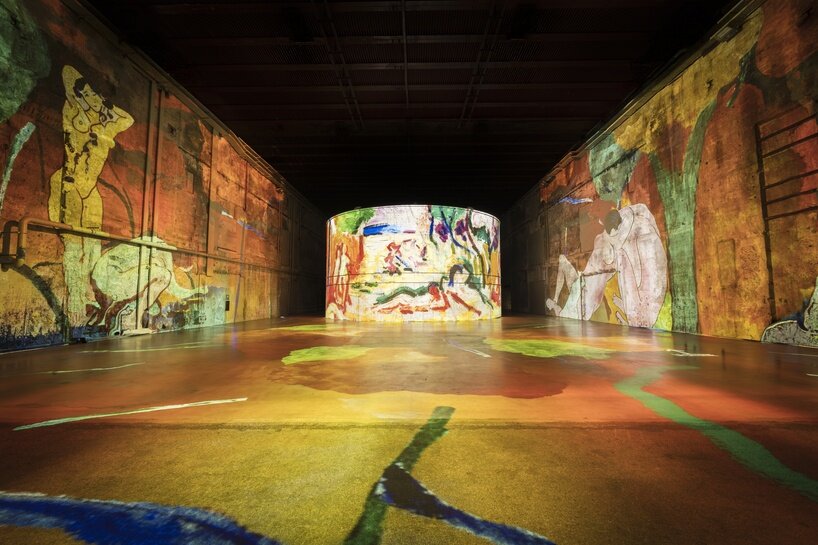
It’s difficult to believe, watching Matisse’s works sweep across the walls of Bordeaux’s Les Bassins des Lumières, a former submarine base, that many of Europe’s most celebrated museums occupied entirely different lives just a century ago. From the Tate Modern’s cavernous Turbine Hall, which has hosted installations by artists like Olafur Eliasson and Anish Kapoor, to Pirelli HangarBicocca, a former locomotive manufacturing facility that now welcomes artists like Nari Ward and Maurizio Cattelan to Power Station of Art, Shanghai alongside the Huangpu River, these institutions have transformed industrial spaces, often just beyond historic city centers, into major cultural destinations.
Beginning in the late eighteenth century and continuing through the twentieth, the Industrial Revolution pushed manufacturing to the edges of European and American cities. Factories, warehouses, locomotive works, and other industrial facilities grew alongside expanding urban centers, helping shape the cities we know today. But as deindustrialization gathered pace in the twentieth century, many of these enormous structures fell into disuse. Their surrounding neighborhoods, however, did not stand still. Often close to increasingly desirable city centers, these former industrial districts became fertile ground for a new kind of urban development: the adaptive reuse of industrial architecture as cultural space. From former factories to military installations, here are a few museums that have given these buildings a remarkable second life.
Power Station of Art, Shanghai
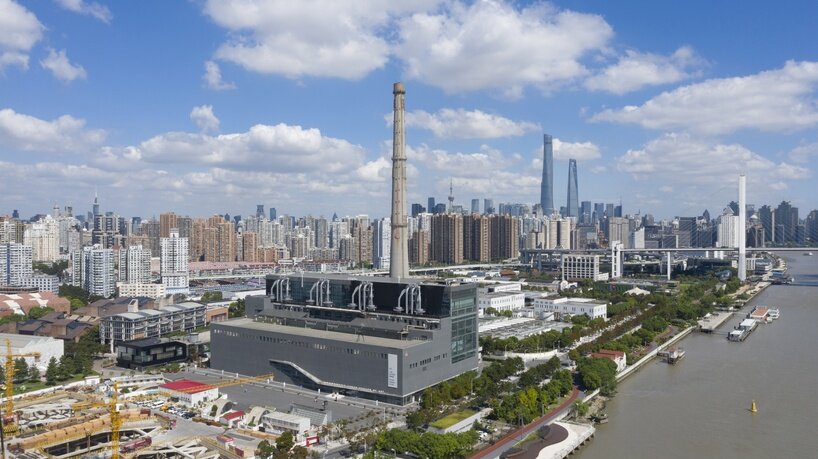
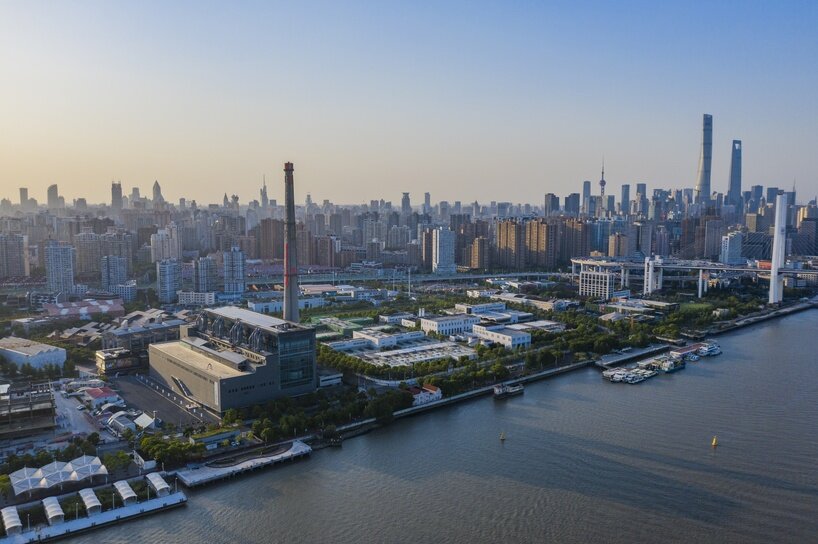
Power Station of Art Shanghai, China’s first state-owned museum dedicated to contemporary art in mainland China, echoes the Tate Modern in the UK in its occupation of a former power station. Bordering the Huangpu River, a common location for thermal power stations given their substantial cooling-water requirements, each facility holds echoes of its past use that extend beyond its massive halls and industrial architecture. Formerly the Nanshi Power Plant, the space has become home to the Shanghai Biennale.
DOX, Prague
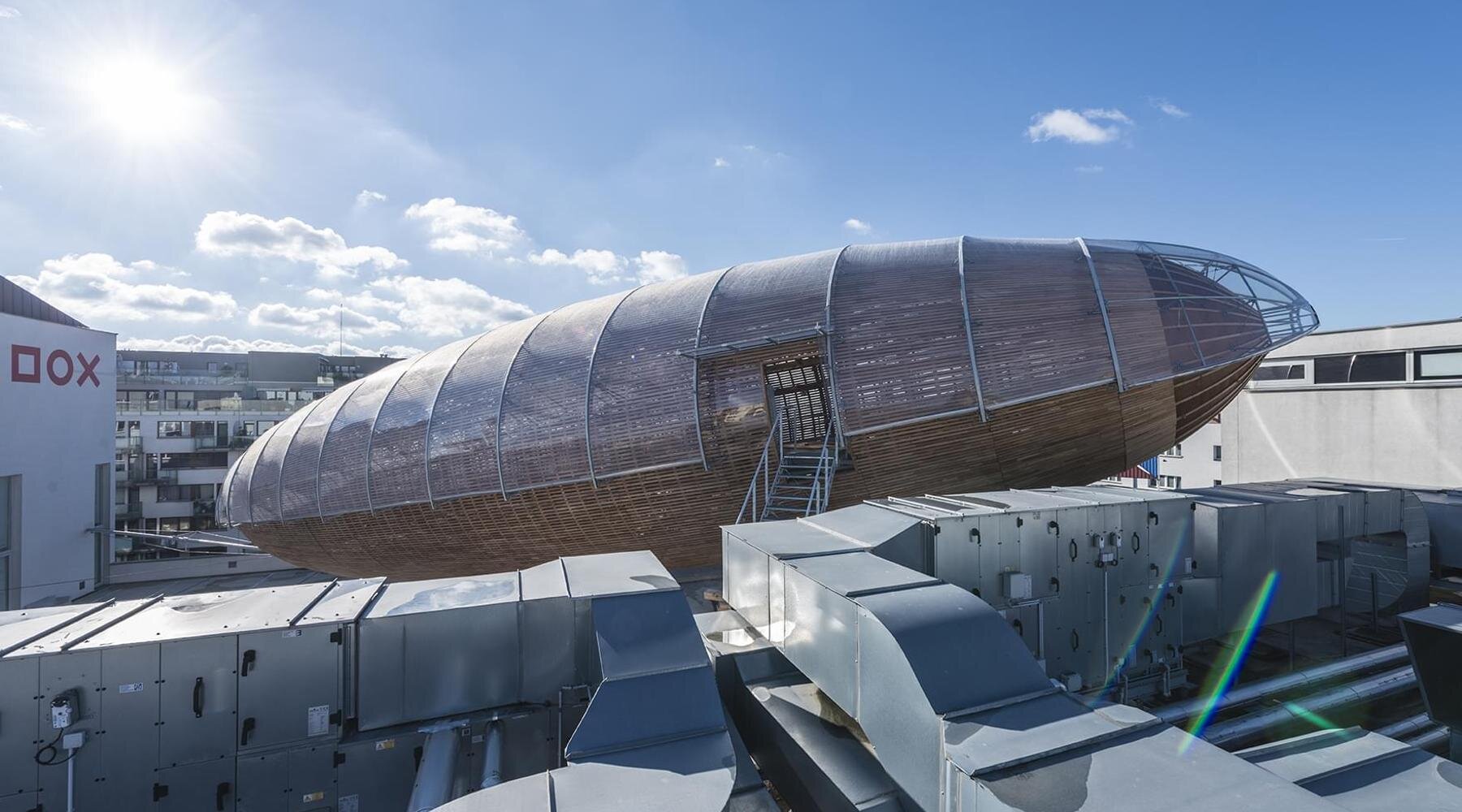
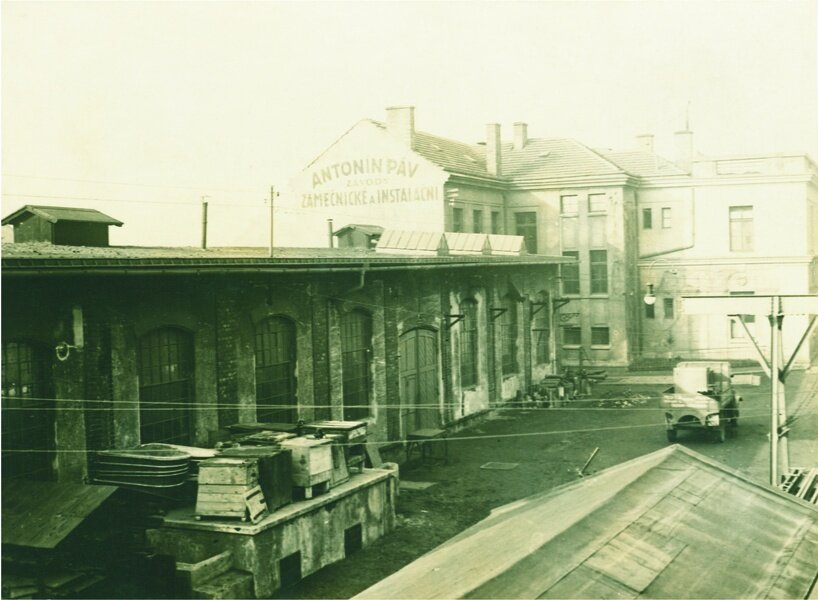
Flying back to Europe, there’s the DOX Centre for Contemporary Art in Prague, Czech Republic. Although the building is iconic for the giant Zeppelin that looks like it is crash-landing onto its roof, its former use actually spanned both ground and air transportation. In the early twentieth century, the site housed a machine factory operated by Rossemann & Kühnemann. Although the company also produced train wagons and locomotives at a separate factory in Prague-Radotín, the Holešovice building briefly became home to the Miloš Bondy factory, which produced Avia aircraft, from 1925. In the following decades, its ownership passed between plumbing companies, locksmiths, and other users. In 2008, DOX took over these historic halls, with its eventual addition of the DOX+ multifunctional hall being nominated for a Mies van der Rohe Award.
HangarBicocca, Milan
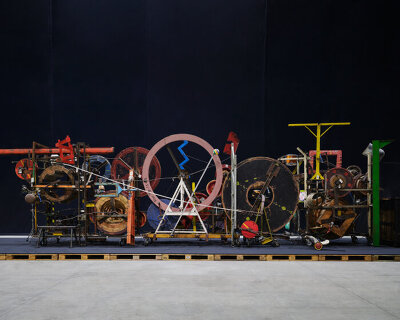
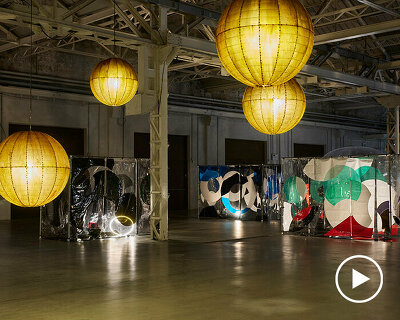
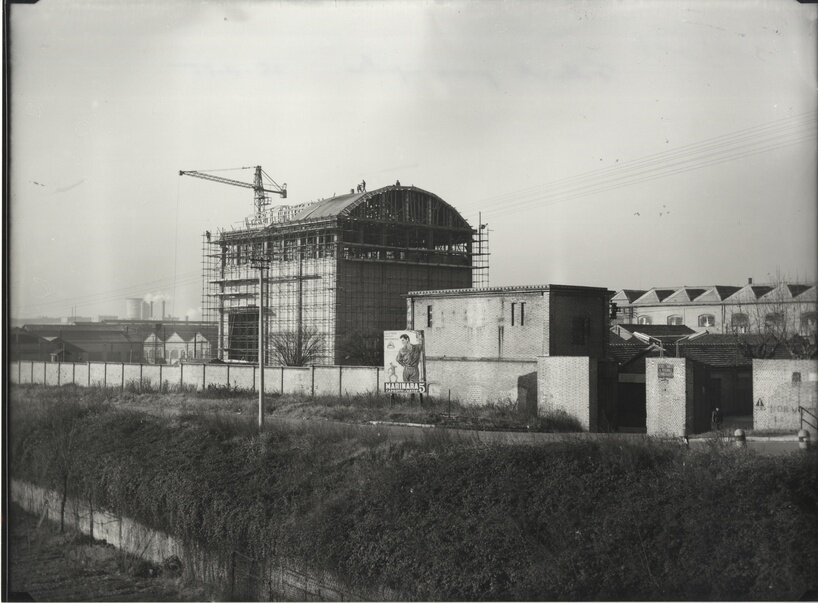
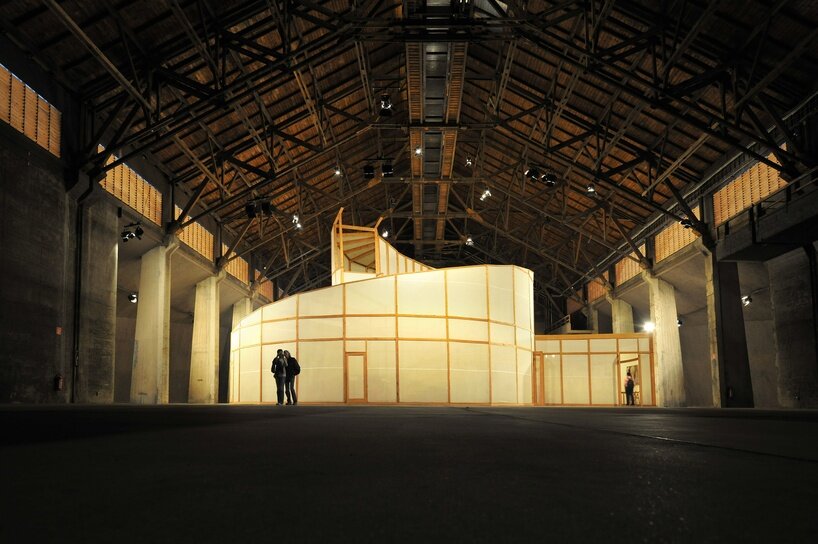
In Milan, just outside the city center, Pirelli HangarBicocca didn’t manufacture tires, as its namesake might suggest, but locomotives. The large scale of the building resulted from its former use by the Società Italiana Ernesto Breda, founded in 1886 to produce railway carriages alongside steam and electric locomotives. One of the museum’s most iconic spaces is the Navate, originally built between 1963 and 1965 for Breda’s transformers department, where large electrical machines were assembled and tested. With its nearly 30-meter-tall ceilings and 9,500-square-meter space, its unusual scale has prompted famed artists like Nan Goldin and Rirkrit Tiravanija to adapt their works to meet the demands of its volume, resulting in unique renditions of their iconic oeuvres.
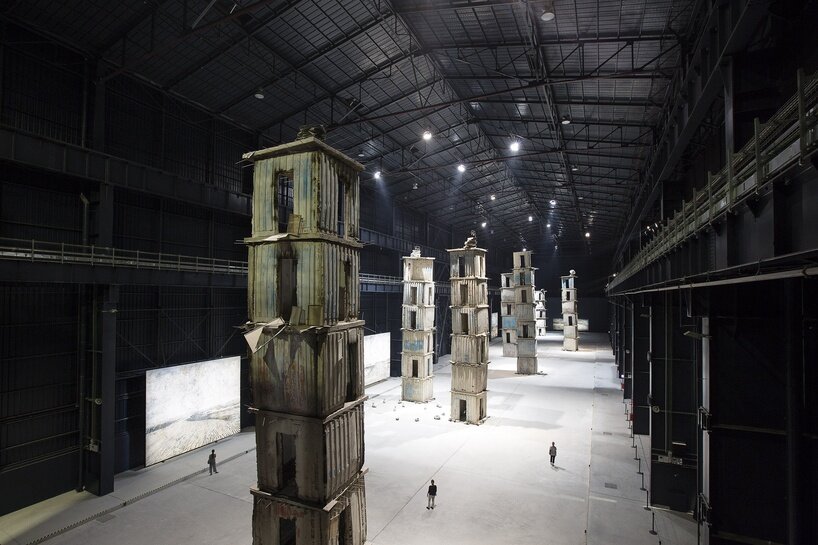
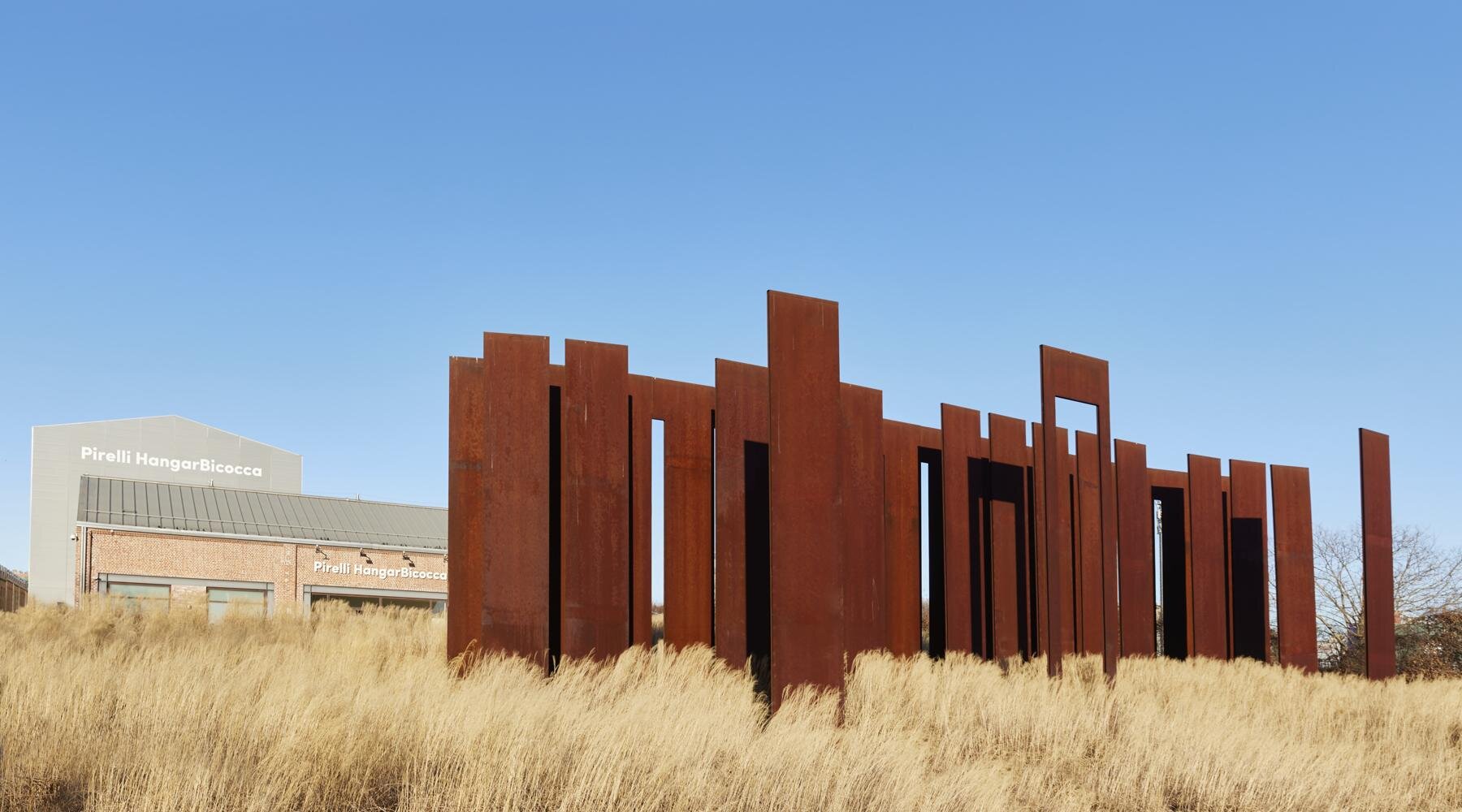
Fausto Melotti, La Sequenza, 1971-81, installation view at Pirelli HangarBicocca, Milan, 2022 | image by Agostino Osio, courtesy of Fondazione Fausto Melotti, Milan and Pirelli HangarBicocca, Milan, © Fausto Melotti, by SIAE 2026
Zeitz MOCAA, Cape Town
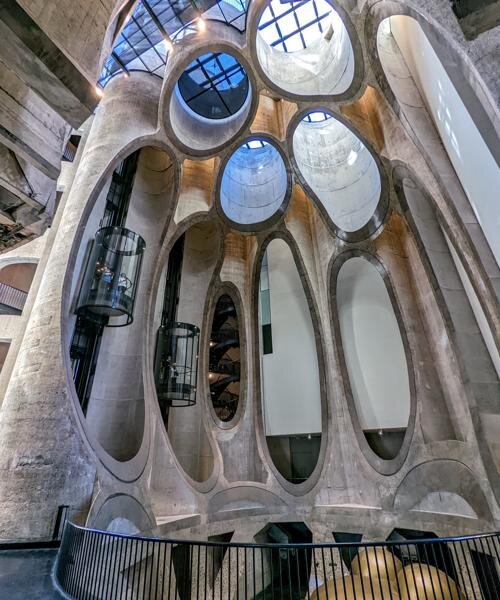
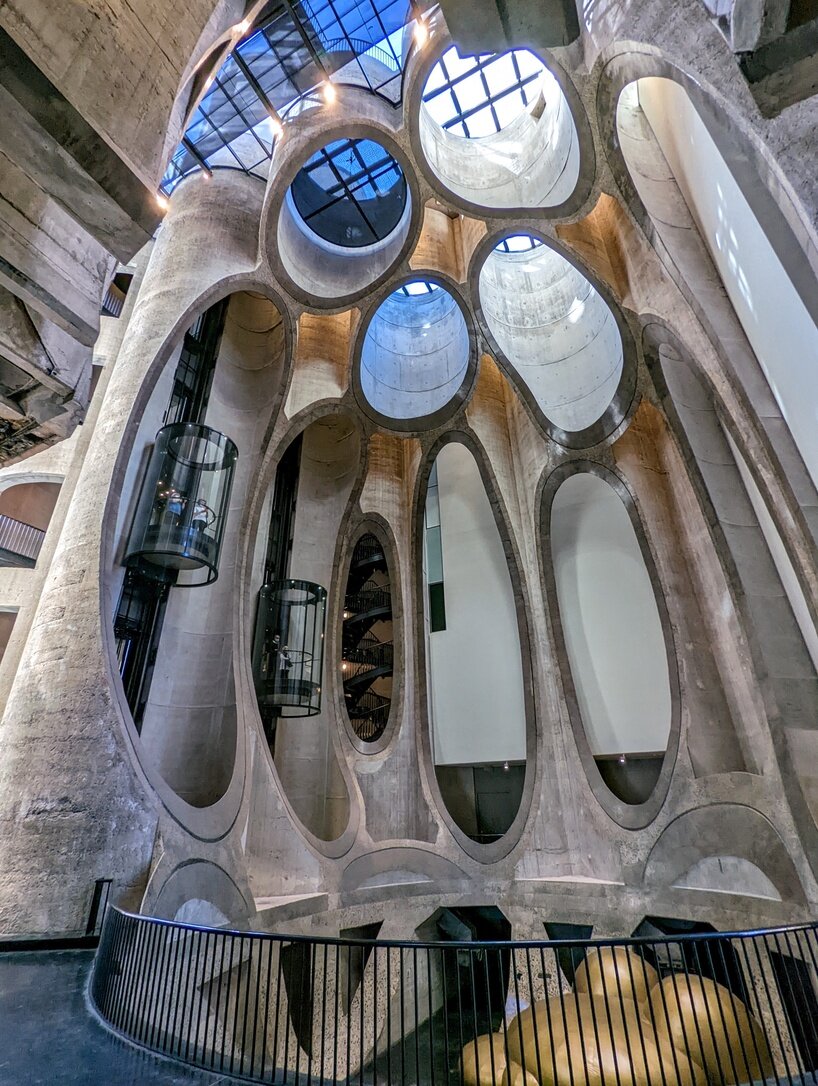
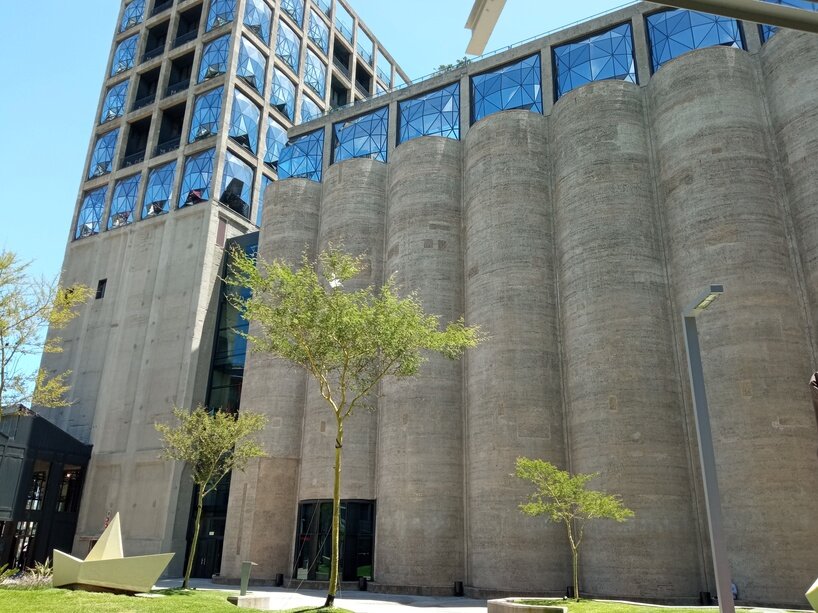
In South Africa, Zeitz MOCAA, dedicated to contemporary African art, is instantly recognizable by its distinctive, exposed cross-sections. A former grain silo, Heatherwick Studio took on the project of adapting the massive concrete structure into a home for contemporary art. The building originally consisted of 42 tubes, each 5.5 meters wide (18 feet), packed into a grid. The studio approached the space by carving out the cylinders at varying angles, letting light stream into the institution and making space for restaurants, galleries, and an atrium.
Zollverein, Essen
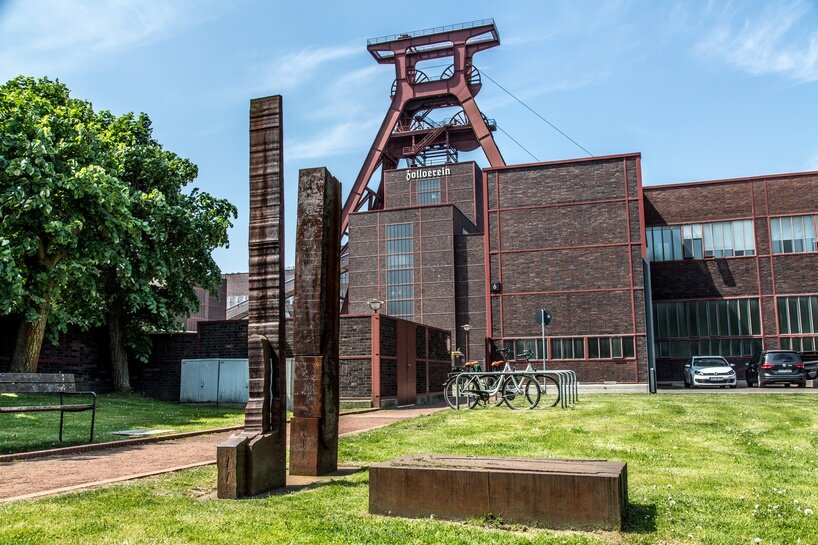
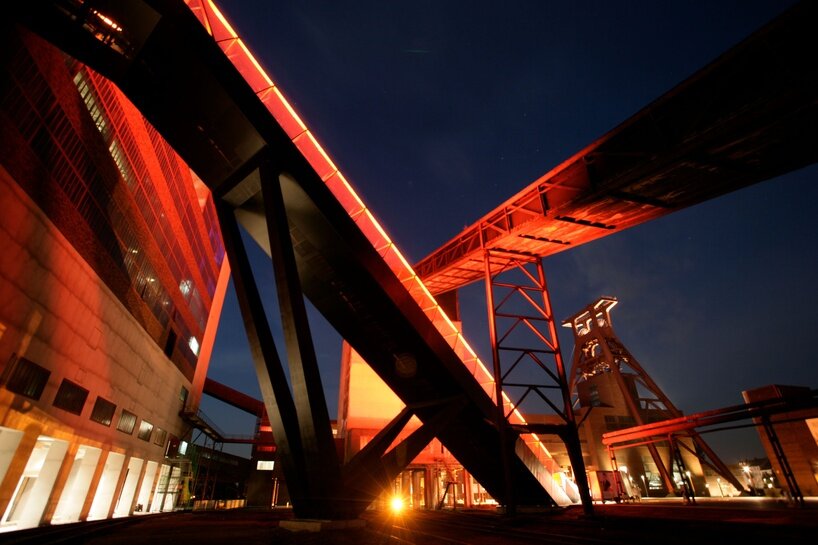
Located in the Ruhr Area of western Germany, the next museum is actually a UNESCO World Heritage Site. Zollverein is home to the Ruhr Museum, which sits within the adapted site of the Zollverein Coal Mine and Coking Plant in Essen, which closed in 1986 and 1993, respectively. In the sloping stacks of metal beams, spaces for art, meetings, and cultural activities arise in what was once a major producer of the region’s major export, coal. In 2002, Rem Koolhaas’s Office for Metropolitan Architecture developed the basis for the site’s development. Koolhaas’s studio has embarked on many such examples of adaptive reuse, with this experience culminating in the publication of Preservation is Overtaking Us (2014), which consists of two lectures he delivered at Columbia University’s Graduate School of Architecture, Planning and Preservation.
Les Bassins des Lumières, Bordeaux
Last, but not least, is Les Bassins des Lumières in France’s Bordeaux region. While not technically a factory, the former submarine base was created in the 1940s through an extremely laborious process. Its initial use was as a naval base for German submarines, or U-boats, during the Second World War. When the war came to a close, the base had survived despite attacks on the region. Over the next decades, the space had many lives, even being explored by artists, before being officially transformed by Culturespaces into Les Bassins des Lumières, which opened in 2020. It’s now one of the biggest sites for digital art, with its massive water basins serving as pensive, reflective spaces for the light and sound displays of exhibitions that pass through.
project info:
institutions: Tate Modern, London, United Kingdom; Power Station of Art, Shanghai, China; DOX Centre for Contemporary Art, Prague, Czech Republic; Pirelli HangarBicocca, Milan, Italy; Zeitz MOCAA, Cape Town, South Africa; Zollverein, Essen, Germany; Les Bassins des Lumières, Bordeaux, France
This article is part of designboom’s STATES OF MOTION chapter, exploring how architecture, design and art are transforming the way we move. These stories rethink the experience of movement through evolving transit spaces, mobile habitats, inclusive infrastructure, slower journeys and kinetic art – learn more here! Each designboom editorial series explores one theme in depth through projects, interviews, features and news across architecture, design, art and technology. Discover more chapters here, and get in touch if you’d like to submit a story through our submissions portal or contact form.
shop
your own online design shop — no sales commission collected