chaoffice lines academic’s home in china with maze of bookshelves storing 20,000 volumes
a new suspended structure within the core of the house showcases the client's collection while blending with the existing architectural fabric.
prefer designboom on google[FEATURED]
chaoffice cloaks ‘house under the boat’ in vegetation
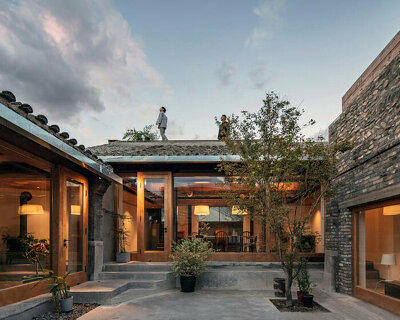
Envisioned by Chaoffice, House Under the Boat integrates a series of disparate spaces of various scales into a fluid whole, mirroring the transition of dry land into a river. Amid a rich tapestry of nature in China’s Chaobai River wetlands, the site comprises a cluster of neighboring buildings veiled within a canopy of vegetation, each sitting as a secluded island. The home itself, created for an academic, is a space for both living and private study. The client’s recollections of travels to monasteries and ancient temples across Europe, India, and Japan informed the design which seeks to embody a similar sense of immersion and serenity.
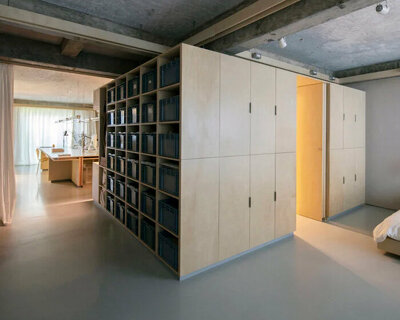
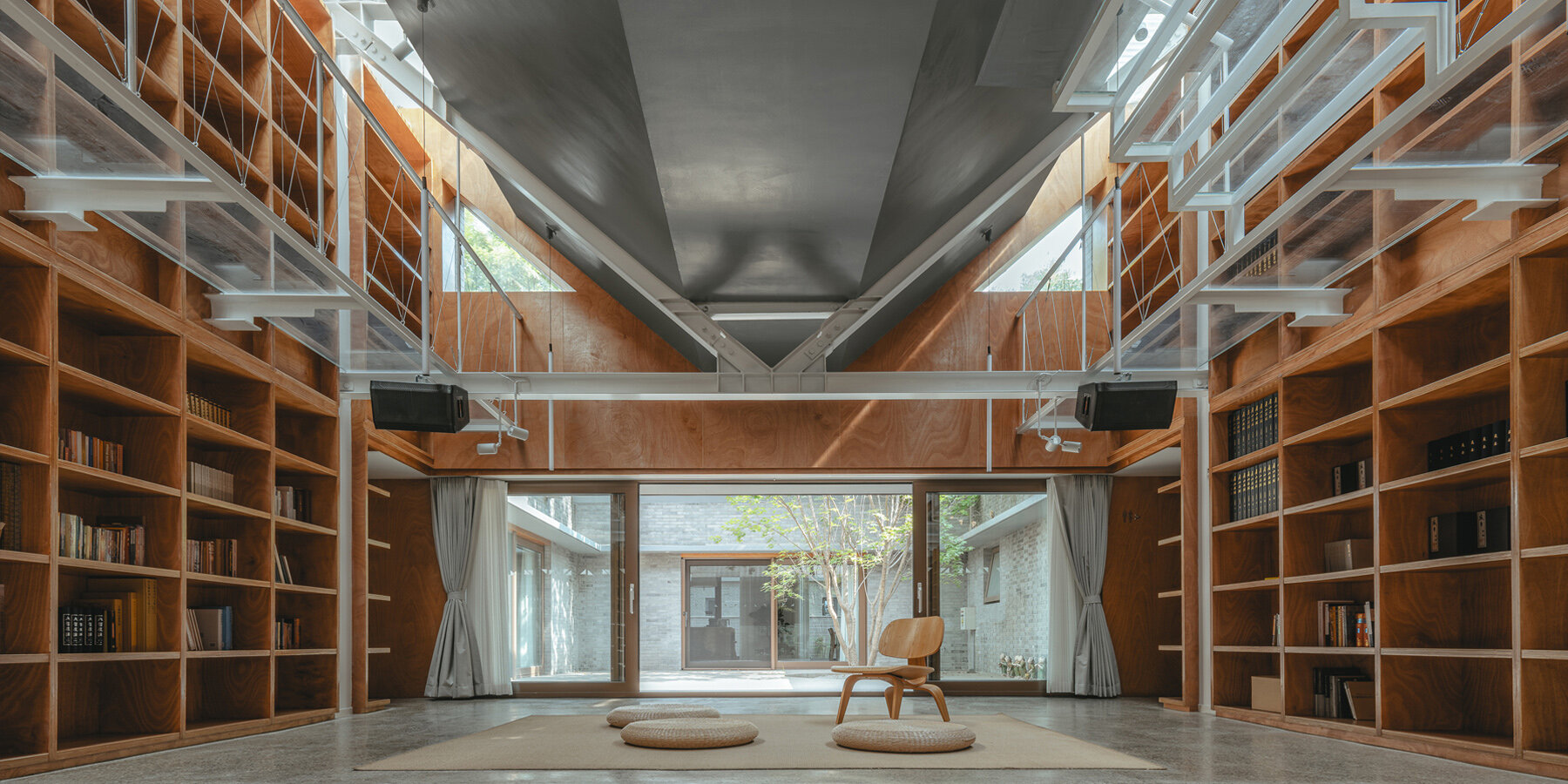
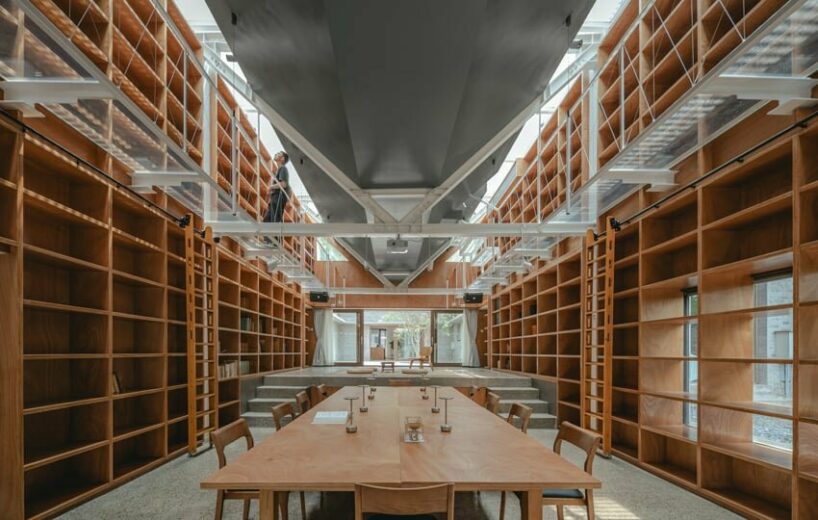
The house incorporates a multitude of nooks and corners, each fitted with desks and bookshelves to foster study, and housing a vast collection of over 20,000 books. This posed a design challenge which was resolved with the integration of a suspended structure within the core of the house, blending with the existing fabric while generating a huge internal cavity.

a library cavity takes center stage
Within House Under the Boat, the architects at Chaoffice sought to maintain consistency in scale between the large library cavity at the center of home and the smaller spaces by inverting the roof, creating a double-height space akin to a ship’s hull. Here, the walls occupied by bookshelves reach a height of up to 6 meters, while the ceiling descends towards the middle of the room. A steel structure suspends this roof, with joints of the framework incorporating skylights for daylight penetration in the vast space.
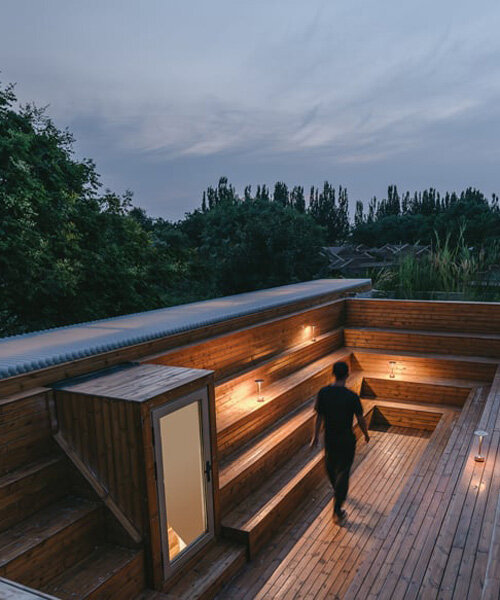
A second-floor gallery extending from the side wall, its floor adorned with tempered glass, melds with the outdoors and casts a spotlight on book collection below. Adjacent, a descending roof crafts an intimate amphitheater where stepped platforms that gradually recede naturally create a seating arrangement fostering dialogue. Further, the library’s narrative extends to the existing building’s primary living area and new section housing guest and study rooms.

a secluded space for living and studying
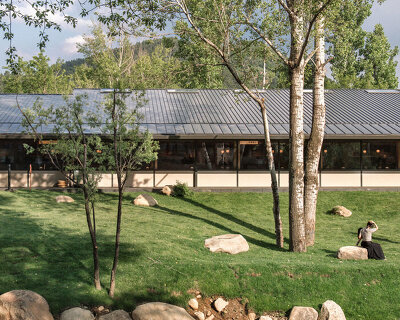
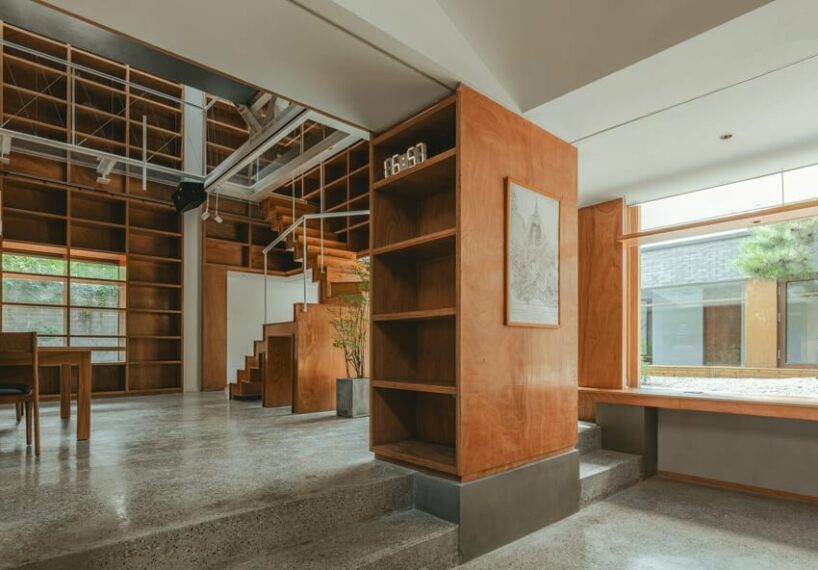
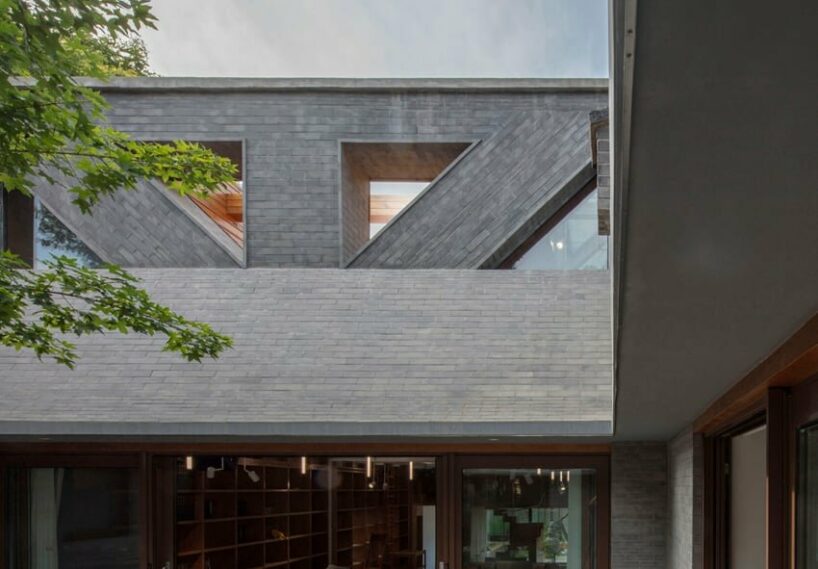
Chaoffice preserved the existing trees at the northern end of the site, placing a courtyard surrounded by new buildings in the form of a ring. Smaller volumes were inserted between the buildings and the site’s outer wall, resulting in a series of smaller courtyards. In minimizing the impact on the neighboring properties, the entire northern side of the site was sunken in by 1 meter, while the existing trees were left untouched, causing a 750mm elevation difference between the indoor and outdoor areas.
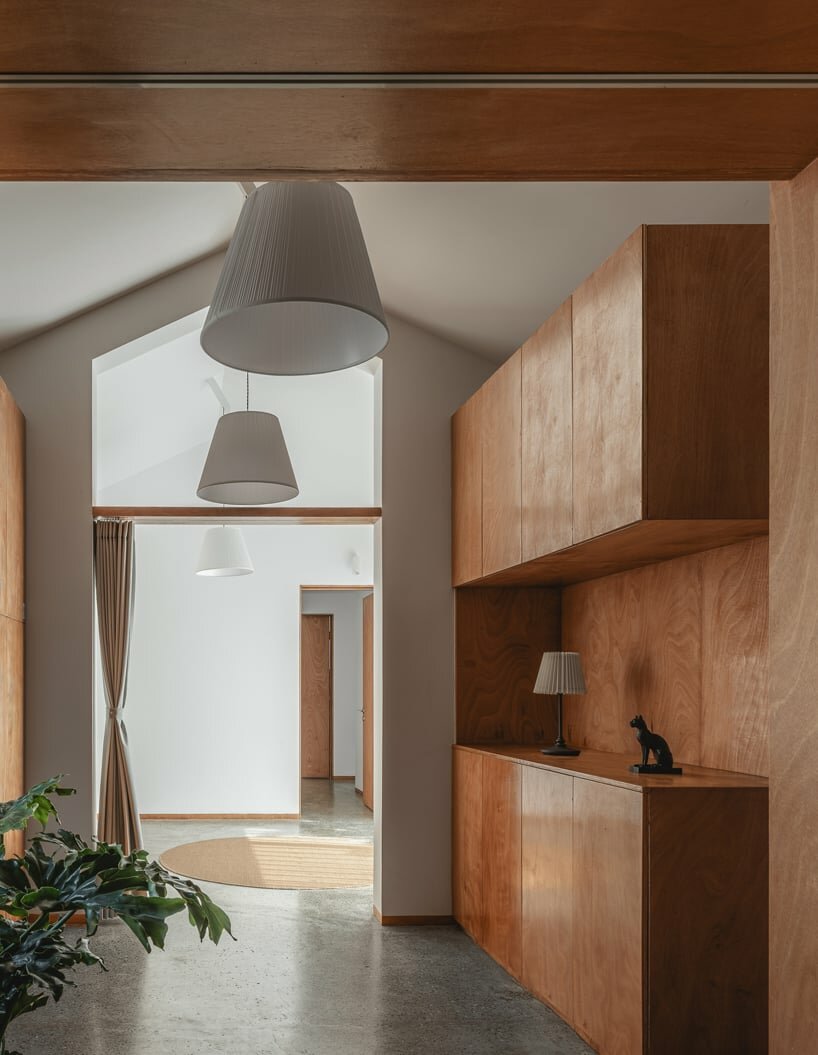
The underlying materials harmonize functionality and aesthetics, with a white steel structure uniting the series of architectural elements including canopies and semi-transparent partitions. The facade embraces the existing brick veneer with only minor modifications, while laminated eucalyptus plywood envelops interior furnishings. Polished concrete is employed for the flooring, weaving together indoors, outdoors, and various zones into a coherent, continuous flow.

The site is marked by diverse and intricate spatial forms where existing sloped-roof buildings, a vast library, and new intimate flat-roof structures coexist. These different structures interconnect, descending from south to north along the original elevation axis. By adjusting the size of the original buildings Chaoffice created a coherent sense of scale, while opening up the junctions between spaces to allow light, air, sightlines, and the flow of people’s activities to move unimpeded throughout the entire building. Accompanying this flow are visible bookshelves, tables, and the vegetation outside.


1/4
project info:
name: House under the Boat
architecture: Chaoffice
location: Chaobai River wetlands, China
designboom has received this project from our DIY submissions feature, where we welcome our readers to submit their own work for publication. see more project submissions from our readers here.

shop
your own online design shop — no sales commission collected