chaoffice revives abandoned wartime prison as tranquil holiday home in chinese village
the crumbling structure laced with remnants of war and fond family memories is transformed into a home infused with light and space.
prefer designboom on google[FEATURED]
From prison to luminous getaway by the mountains
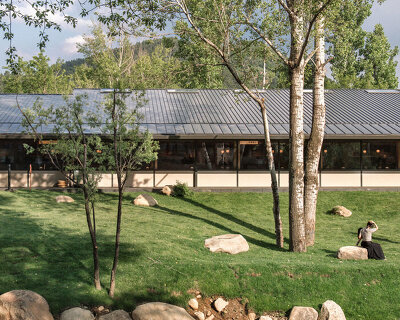
Once an old home family home, then a prison captured by the Japanese military during the Second World War, ‘House Over the Wall’ is a spacious vacation retreat engulfed in the landscape of China’s Taihang Mountains. Sited in a quaint village in Beijing, the project, led by chaoffice, sees the transformation of an abandoned structure laced with remnants of war as well as fond generational family memories into a versatile home infused with light and space.
Preserving the majority of the structure’s unique spatial and cultural history, including its high walls built to restrain prisoners, the Chinese architecture studio revives the almost crumbling structure and injects new orders to create a versatile, airy, and multi-generational family.
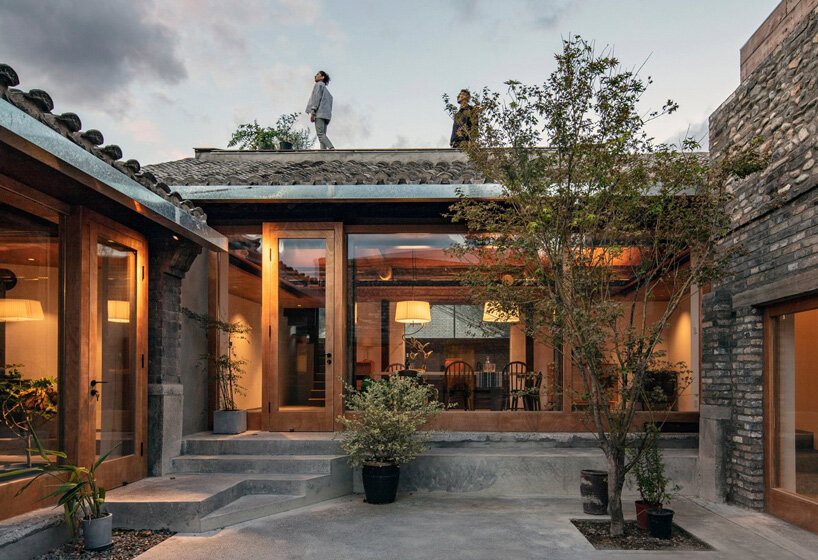
chaoffice preserves the structure’s rich history
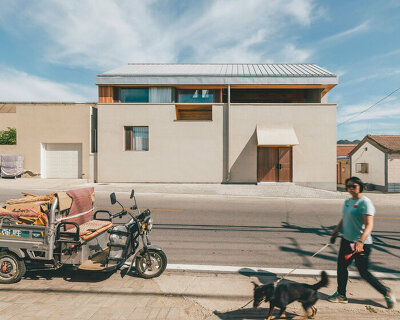
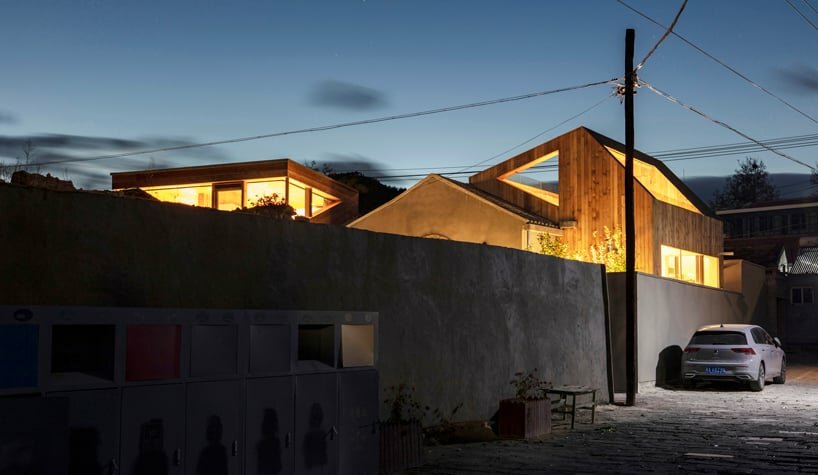
Renovated for a multi-generational family of doctors, the guest house sits in the quaint Junxiang village, which the Japanese once occupied as a military base during the war. While a fire destroyed the original structure of ‘House Over the Wall’ during this period, the invaders ultimately rebuilt it as a temporary wartime prison. The new building was created with high impenetrable walls, a courtyard topped by a single sloping roof with low outward-facing eaves, and encircled by darkly enclosed houses. After the war, the prison was reclaimed, and its original owners were free to return to their homes.
Upon approaching the site recently, chaoffice was met with an abandoned, almost decaying structure infused with remnants of its rich history. While the building had almost entirely collapsed, lead architect Cheng Zhi recalls that throughout the yard and under the high walls and shadows, plants grew wildly — a glimpse of hope. Encapsulating its emotional history and ‘special atmosphere’, the chaoffice rebuilt the abandoned home and prison into a tranquil vacation home with openness, bright light, and natural materials.

injecting a new, open, successive program
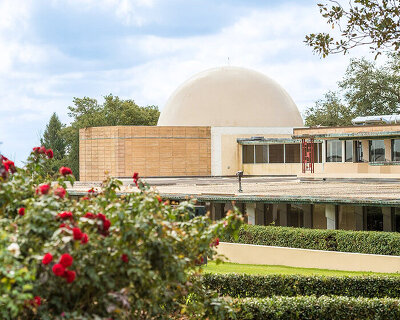
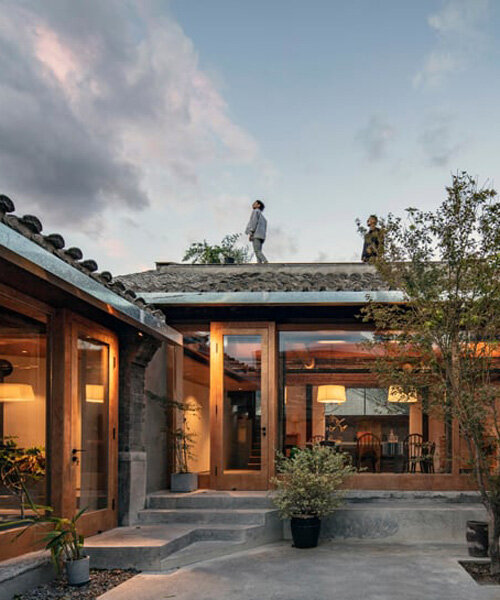
Instead of entirely demolishing the unique spatial identity of the home, chaoffice’s renovation focused on preserving specific memories and elements of the site. First, they revived the collapsing house by strengthening it with a new steel structure. The original brick and stone facade and sloping roof have been recreated, while the old gatehouse, shadow wall, and brickwork on the roof and north building have been maintained. Their coarse textures juxtapose the new modern additions, including lightweight steel, large expanses of glazing, and red cedar veneer.
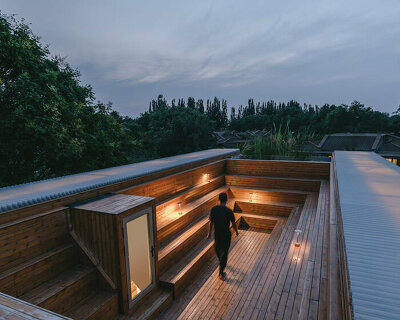
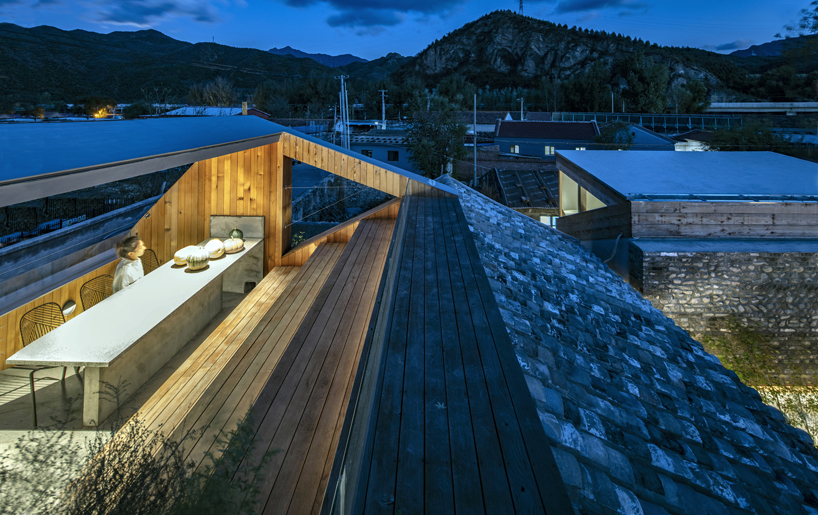
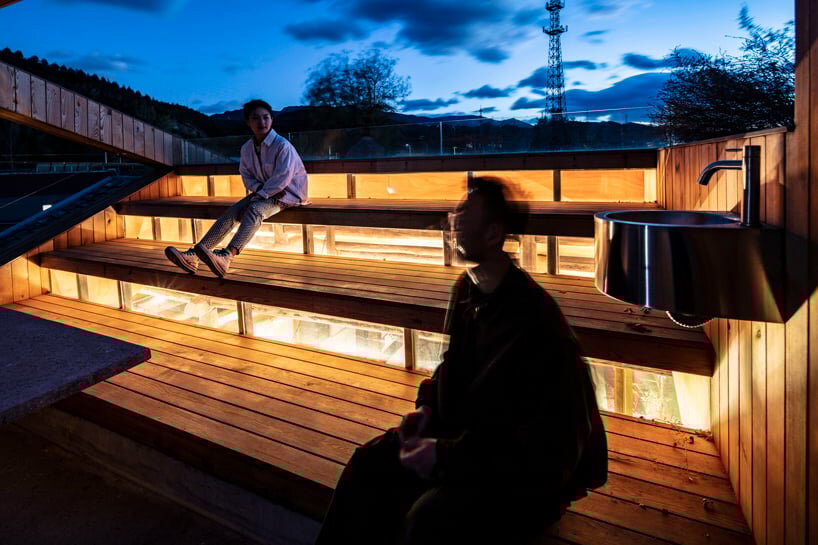
Within the high walls, chaoffice generates a refreshed, open system with diverse spaces. On the ground, new rooms were added as connectors to create new ‘orders’, while above, three new ‘parasitic organism’ structures were attached. The ‘basket’, ‘suitcase’, and ‘cabinet’ all provide natural light and fresh air below, as well as a line of vision and activity to the rooftop, opening up the courtyard to reconnect with the encompassing scenery. Particularly, the steel structural ‘basket expands the terrace’s limited area, which sits tucked into the slope of the original roof as a viewpoint with a staircase, seating, and polished concrete table.

The facade facing the inner yard has also been opened up with large panes of glass that replace the brick walls and wooden frames. Inside, the dark interior has been revitalized by integrating skylights that cast dimensional reflections between the white walls throughout the day and inject light onto the rooftop at night.
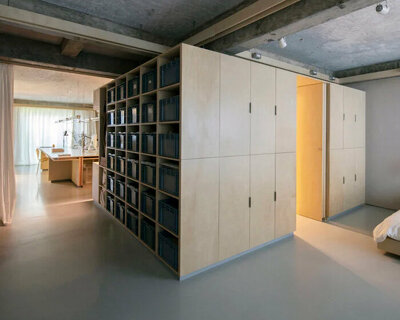
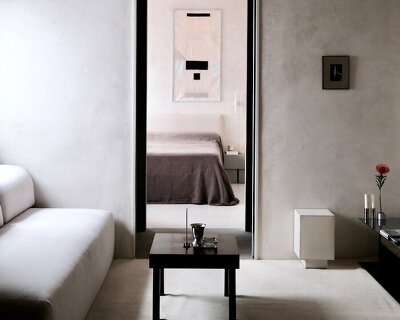
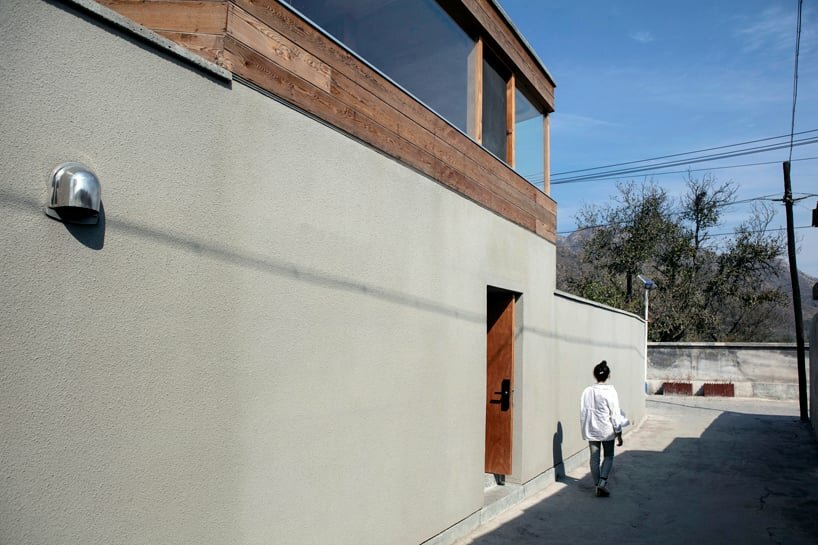
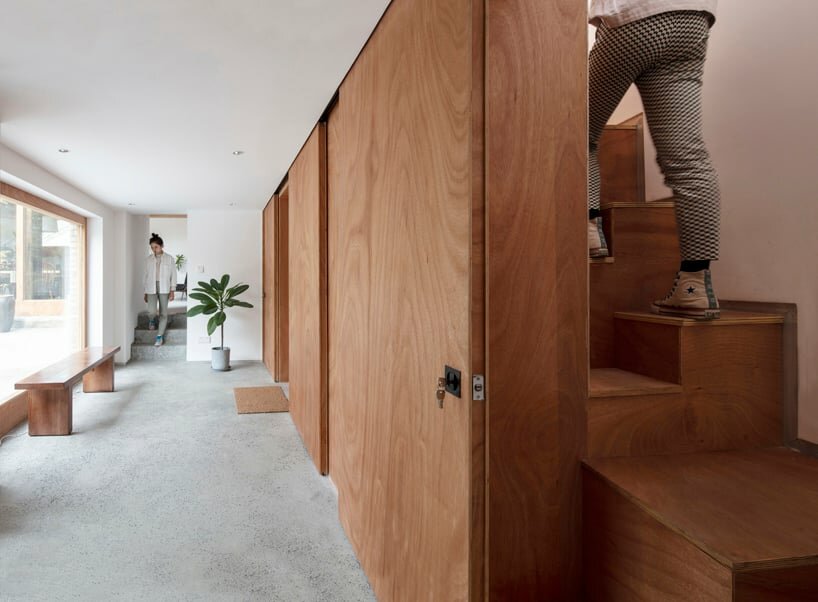
Residents and guests can enter the home through its wall by the hutong of the south building. Inside, the program unfolds as a successive series of versatile spaces. In addition to its function as a lobby by the entrance, a row of sliding doors to the south conceal storage, an equipment room, a laundry room, and a stairwell leading to the second-floor ‘suitcase’ suite. Meanwhile, private bedrooms are positioned in quieter corners with their own yards or on the second floor, set back from the high walls and filled with abundant sunlight and views overlooking the mountains.

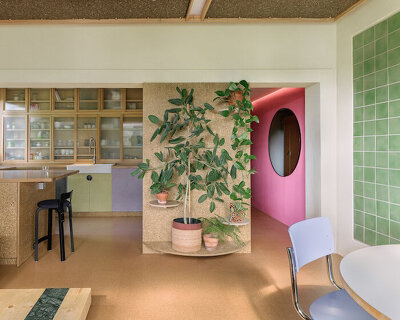
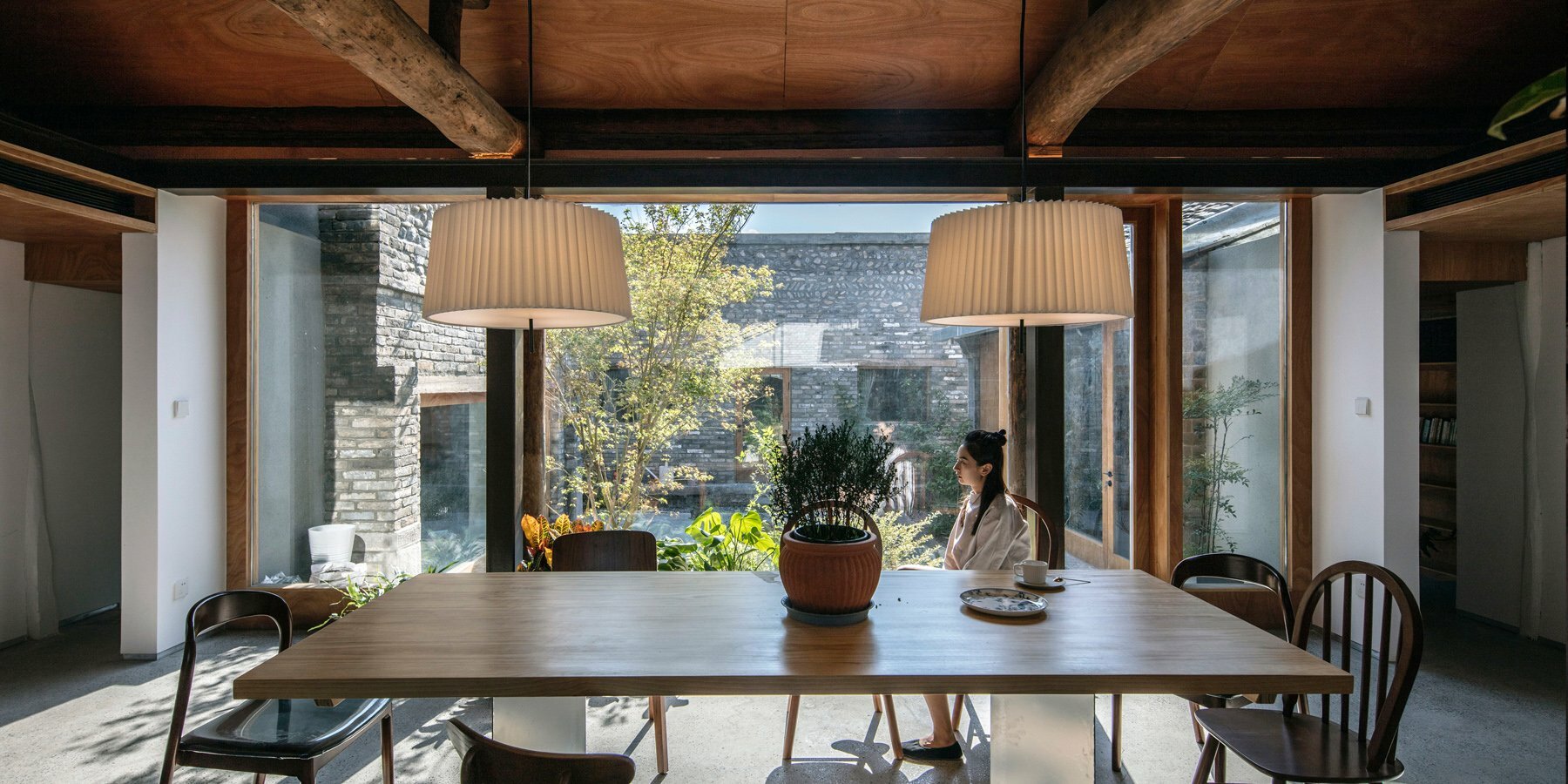
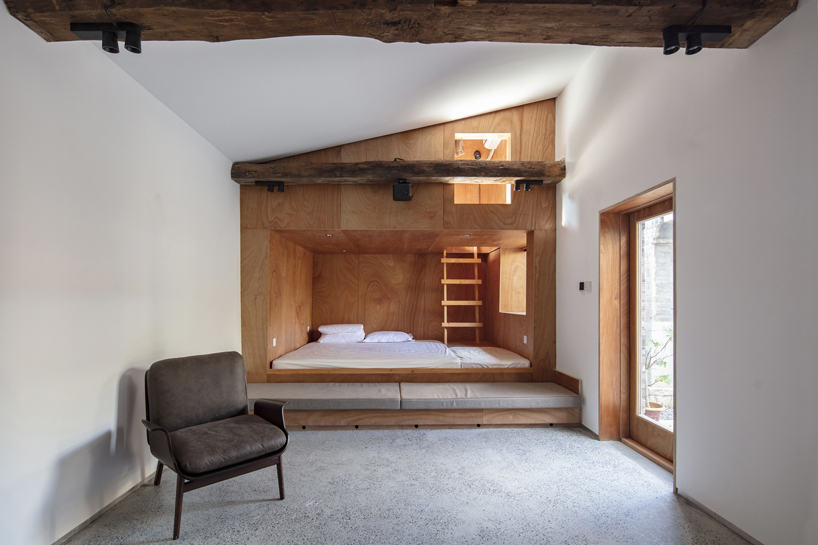
Turning right and entering the west building through a corridor, the core area housing the communal spaces appears, including a large dining room that opens out onto the courtyard. The site over the east wall extends the building, with an open kitchen under a high window looking over the street. The versatile west building at the other end contains the ‘cabinet’ — a public movie room on the first floor that also functions as a temporary bunk room to house overnight guests.

1/4
project info:
name: House Over the Wall
location: Junxiang village, Beijing, China
architecture: chaoffice
lead architect: Cheng Zhi
designboom has received this project from our DIY submissions feature, where we welcome our readers to submit their own work for publication. see more project submissions from our readers here.

shop
your own online design shop — no sales commission collected