curvy ridged organic skin roofs a restaurant by BEHIVE architects in china
BEHIVE architects design a restaurant in aluminum shell rendering a floating wave formation on chengdu's jiaozi boulevard.
prefer designboom on google[FEATURED]
timber + aluminum frame contours organic form in Jiaozi avenue
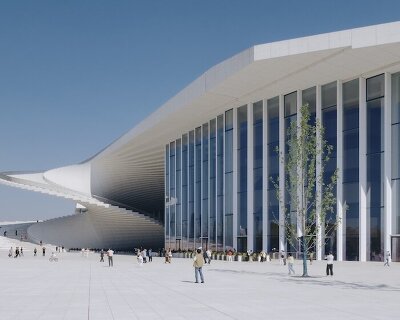
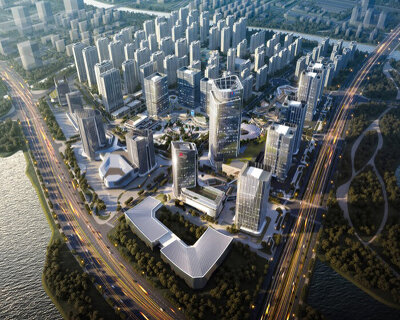
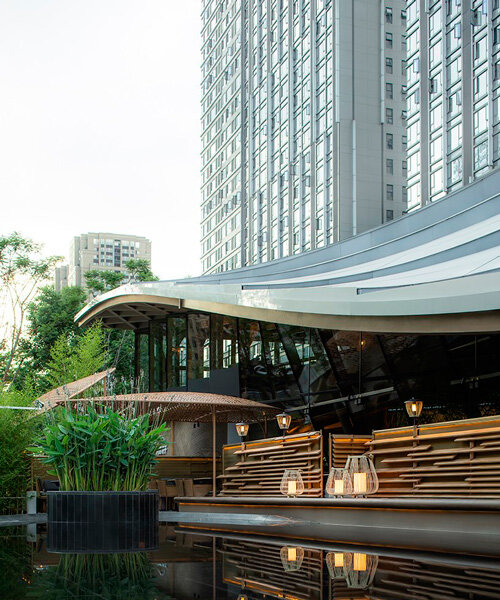
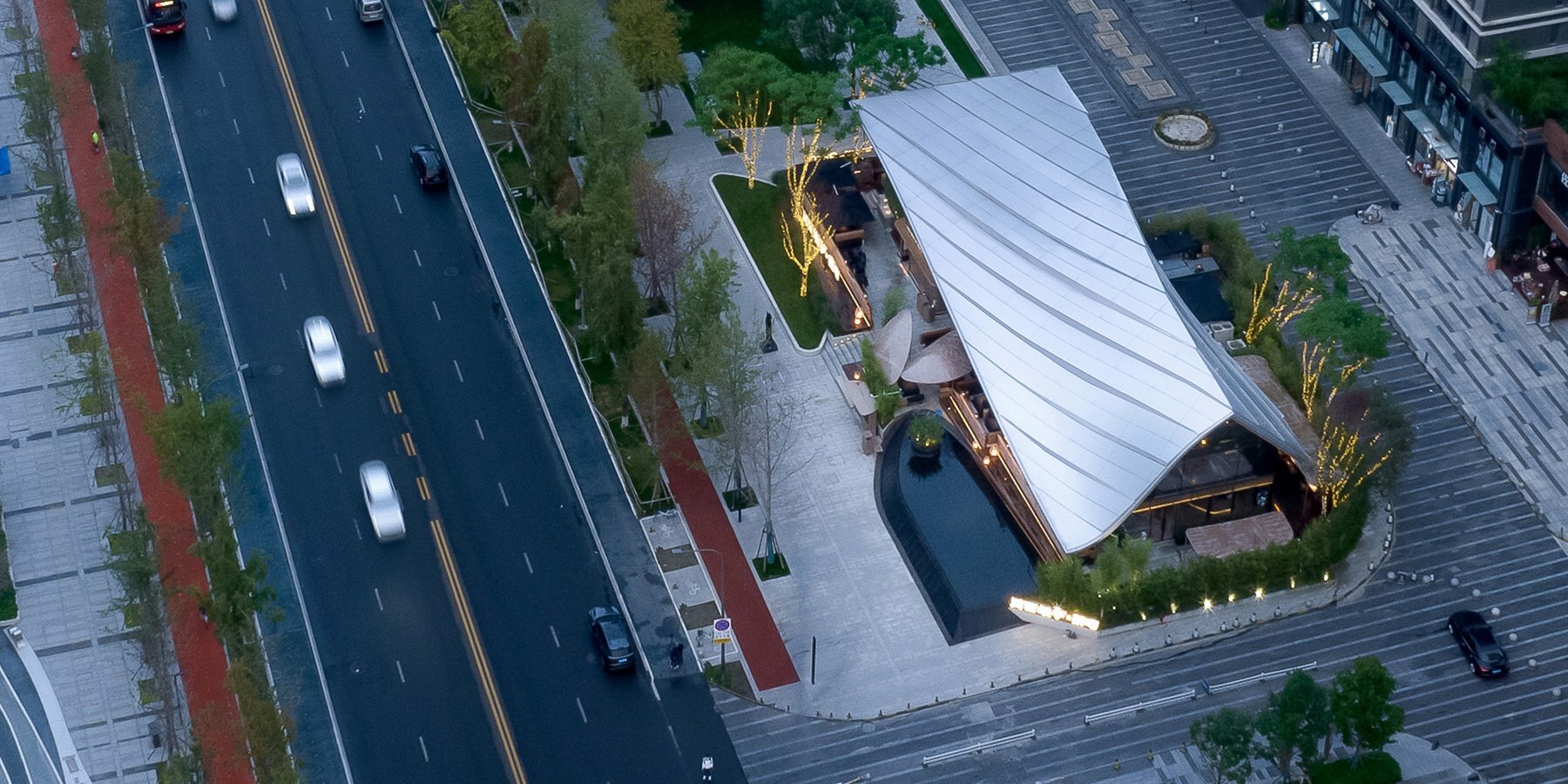
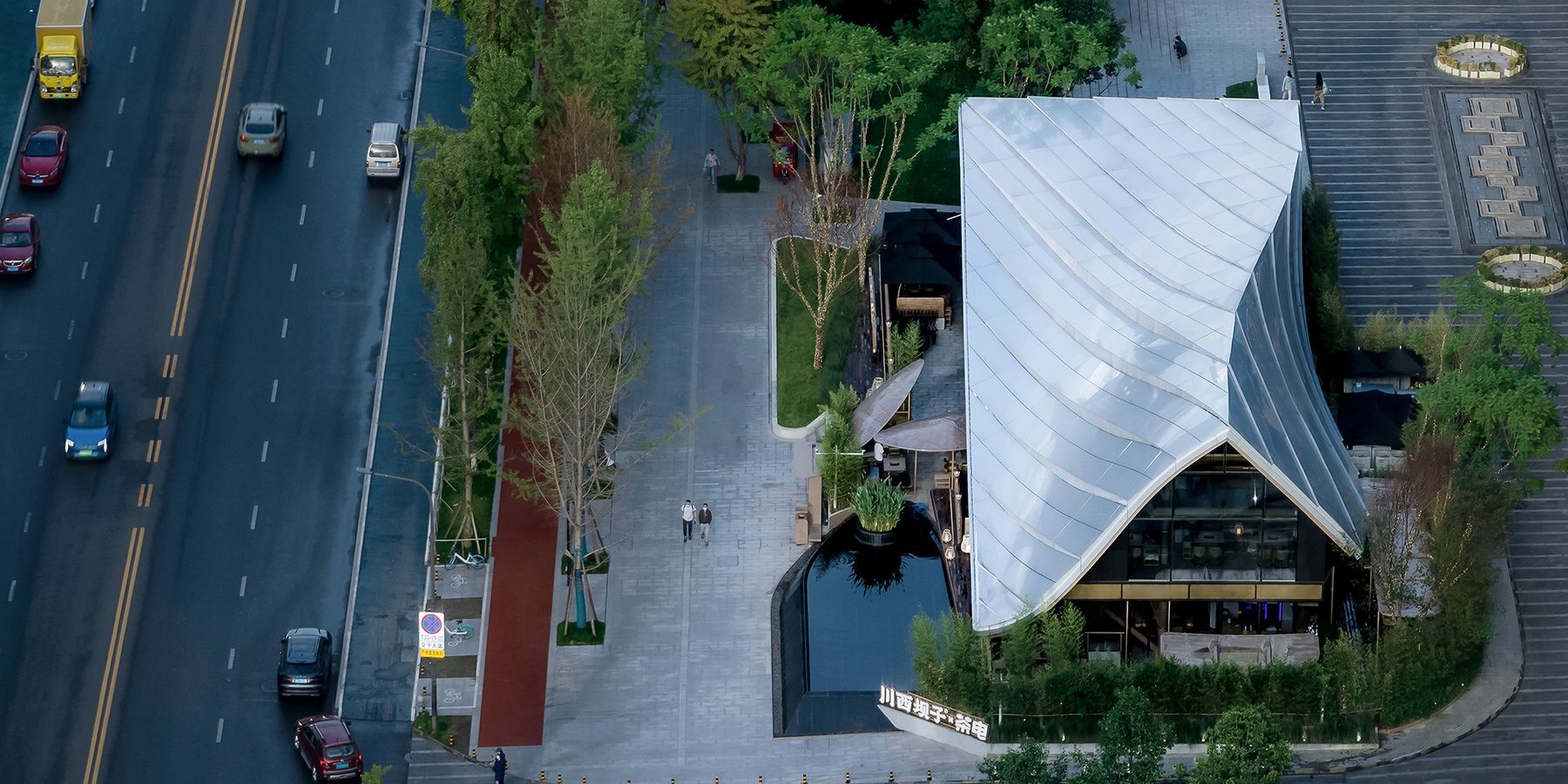
BEHIVE Architects composed a timber-roofed restaurant on the grand boulevard of Jiaozi in Chengdu, China. The avenue stretches two kilometers from east to west, with the restaurant standing in an open site facing the busy street on the south and the high-rise buildings on the north. Contouring an organic form covered in an aluminum shell, the curvy ridged structure creates a relaxing and approachable setting on the busy street.
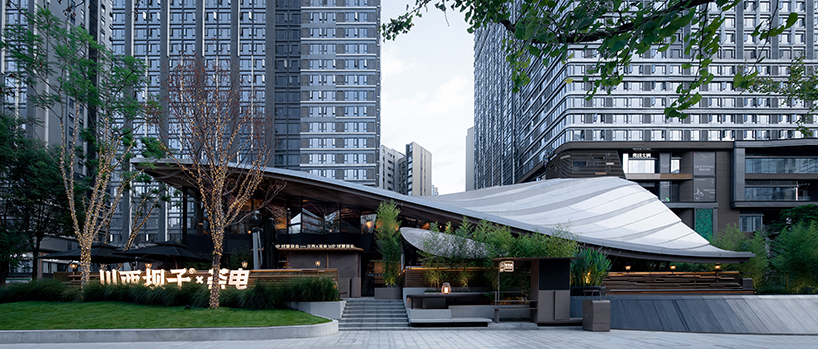
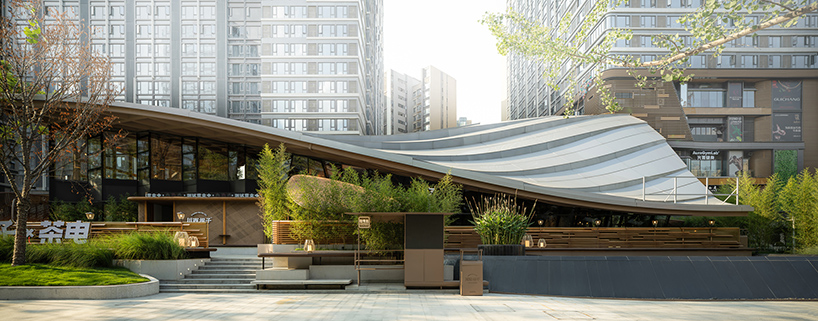
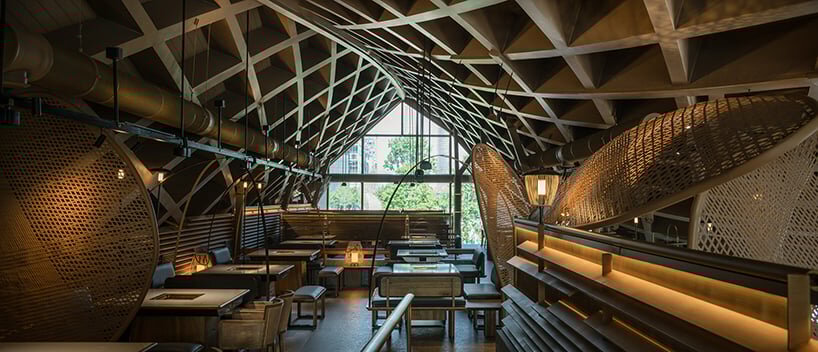
The restaurant consists of a double-story dining area on the south and a concentrated space on the north. The street transits to the south entry through a reflective pool mirroring the structured roof. The east facade reminisces the traditional pitched roof of Sichuan residences, while the west side responds to the context in a rectangle profile. The twisted roof bridges the two sides and acts as a dynamic transition in between. The sprawling surfaces of the double-curved roof stretch along a curved ridge in the middle and hover over the dining space. The concept blends vernacular architectural features with contemporary parametric design in Chengdu’s cityscape.

floating roof ascends in over 4 meters held by steel columns
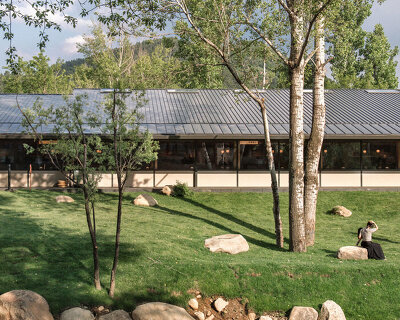
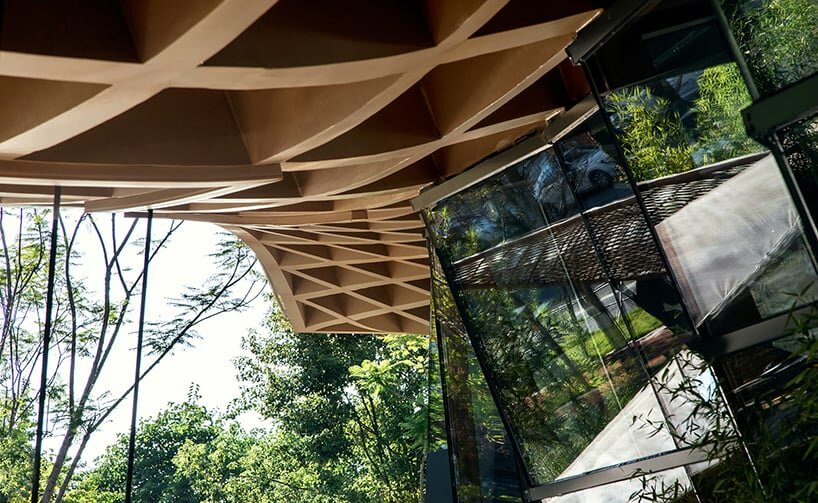
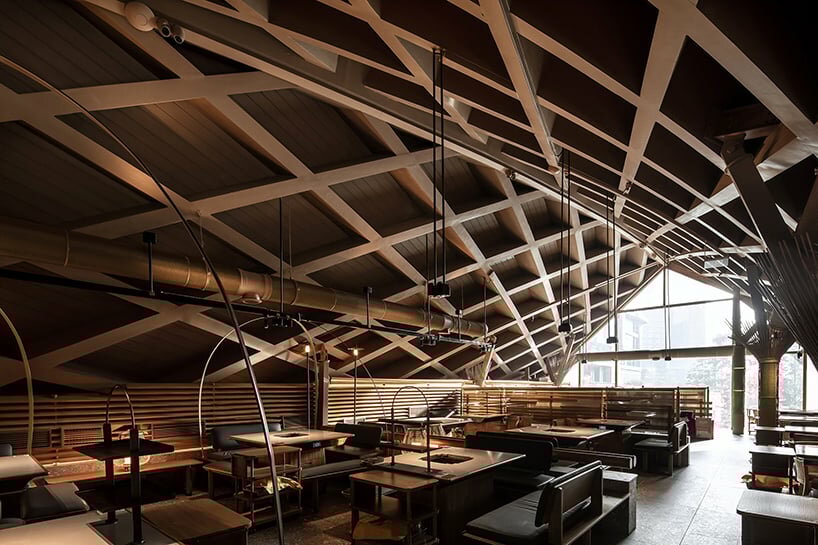
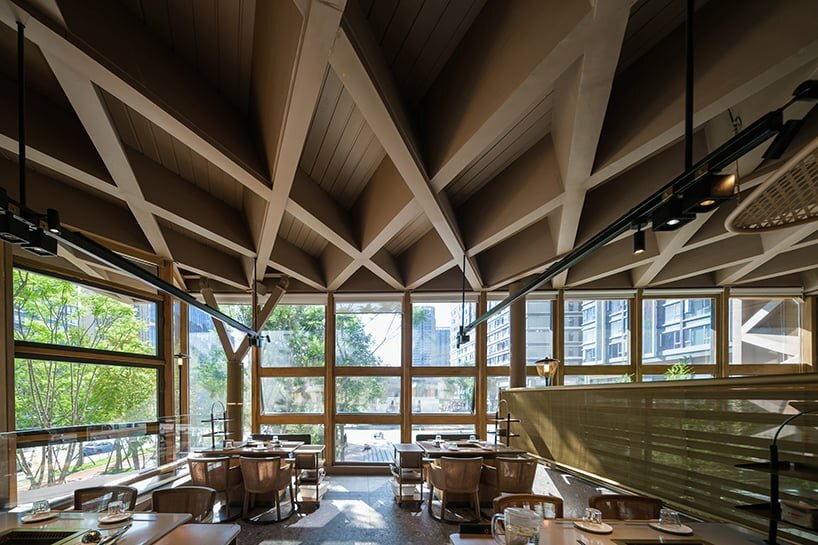
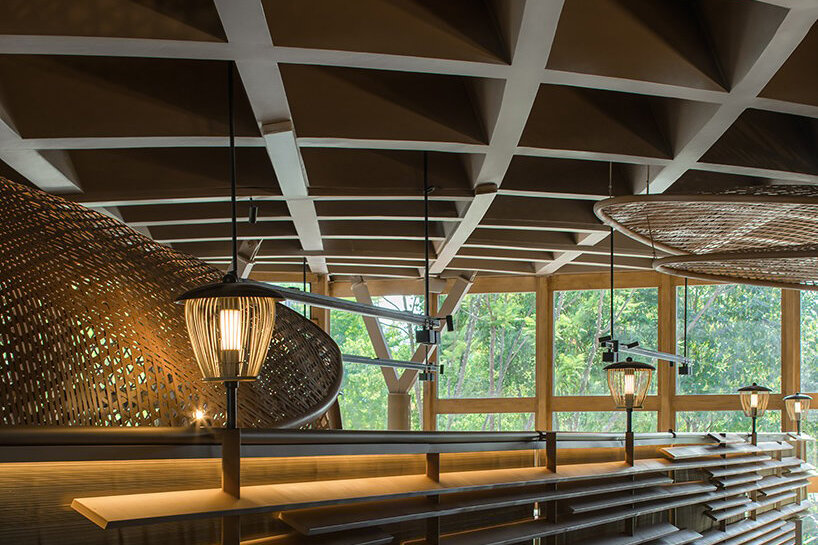
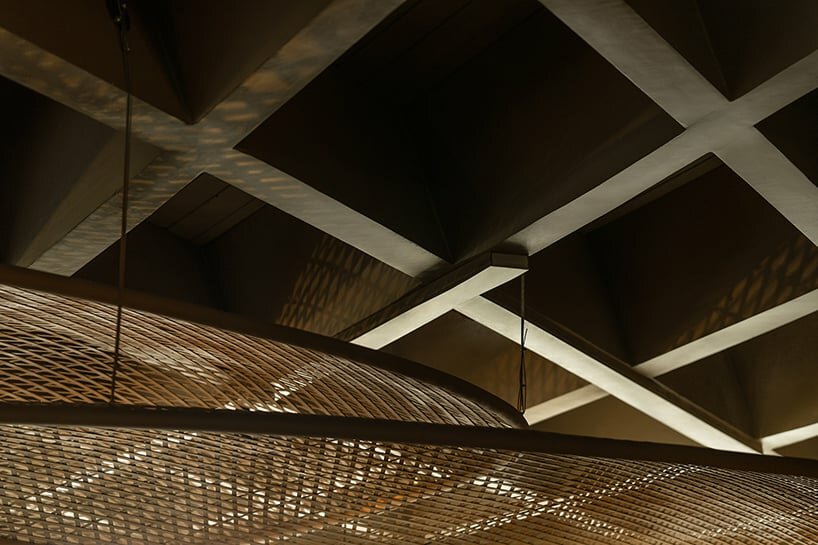
Steel columns and timber roof structure the project by BEHIVE, while laminated timber beams adapt to the double-curved surfaces and extend from inside to outside in diagonally crossing grids. The continuous pattern of structure unifies the interior and exterior spaces. To enhance the stability of the structure, each steel column is connected to two center points on the grid with cross-shaped transfer beams, resulting in a branch-like structure on the second floor. The south facade rises an over 4-meter cantilever, where the glass curtain wall recedes. Four inclined columns are added to the foundation of the front columns to ensure that the roof floats upon the pool without any support on the outside while shaping a linear void space along the curtain wall.
organic spatial design flows in + out of the volume
The exterior design achieves maximal transparency to enhance the continuity of the timber structure from inside to outside. The glass curtain wall on the south and north follows the crossing grid of the timber beams resulting in a continuous undulated profile. The aluminum shell of honeycomb panels adapts to the form of a roof splitting into multiple cascading layers. Translucent acrylic panels and LED lights are used at the splits between the layers rendering the roof with a soft glow at night. The fluid-slanted roof from the original structure extends to the interior maximizing the original spatial concept.





1/6
project info:
name: Timber-Roofed Restaurant on Jiaozi Avenue
designer: BEHIVE Architects
location: Chengdu, China
lead architects: Darcy Chang, Rachael Ouyang
design team: Darcy Chang, Rachael Ouyang, Yingbo Li, Jingwen Shangguan, Yijun Chen, Sam Sun
interior design: HDC Design
interior designer: Jiajun Tang, Rene Liu
landscape design: BEHIVE Architects – HDC Design
architecture construction drawing: SADI
timber structure design and construction: Shanghai SKF Arch Technology Ltd.
structure, MEP, curtain wall consultant: SADI
construction contractor: Chengdu Beite construction installation engineering Co., Ltd.
curved aluminum honeycomb construction contractor: Shanghai Shenfei new curtain wall engineering Co., Ltd.
curtain wall construction contractor: Zhongzhi Construction Engineering Group Co., Ltd.
photography: xf-photography – Shangru Chen – Chuan He
designboom has received this project from our DIY submissions feature, where we welcome our readers to submit their own work for publication. see more project submissions from our readers here.
shop
your own online design shop — no sales commission collected