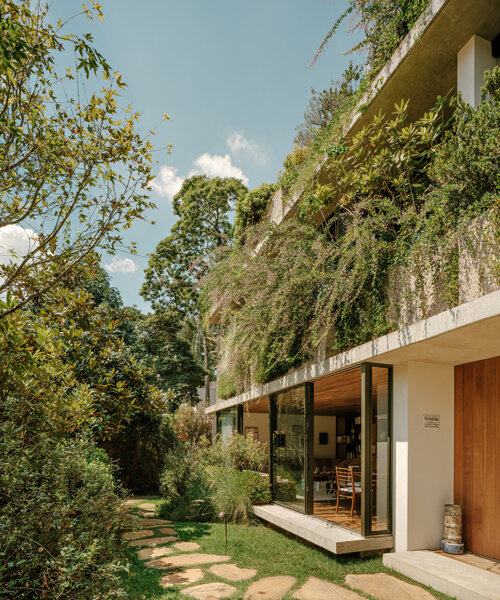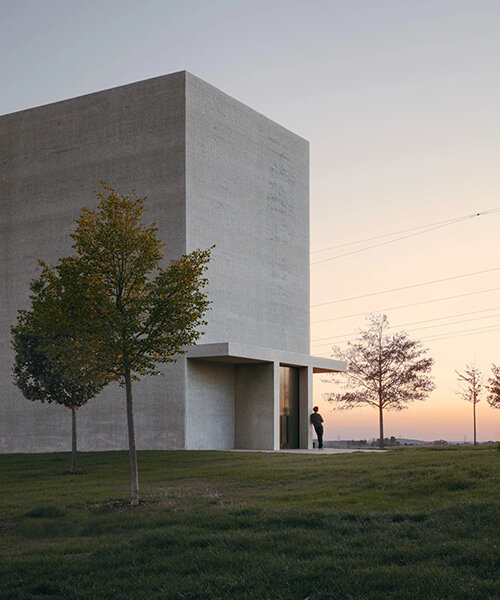
d6thd design studio realizes the shyam farm forest resort in india
the project is driven by an ecologically sensitive notion of experiencing the wild, and embracing it as is.
prefer designboom on google[FEATURED]
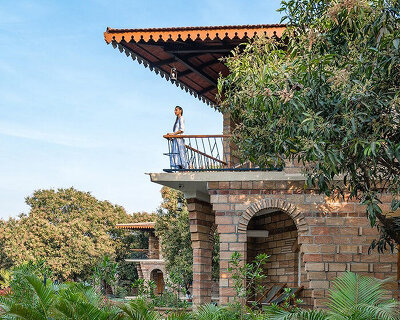
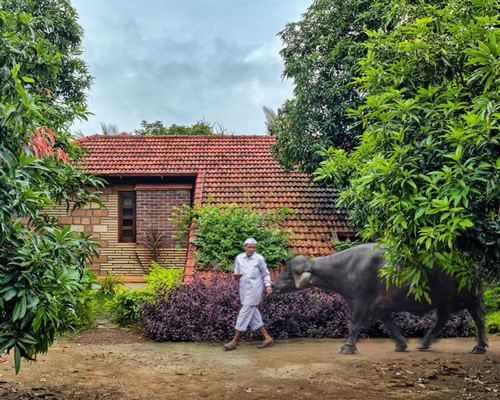
d6thd design studio recently completed their shyam farm forest resort project in gujarat, india. located in the bhodje village next to the gir lion sanctuary, guests are welcomed in fort-like cottages –built according to local nomadic traditions of setting up circular houses within the forest.

view from adjoining farm expressing primal, home-making instincts
when visitors are close to the entrance, they can catch a glimpse of the cottages discretely hidden behind dense greenery. when one finally enters the resort, each sections has a large foyer shaded by a welcoming mango tree. inbuilt seating spots made of sand stone are found below the trees, allowing for an intimate interface with the outdoors. the sequencing and orientation of the clusters is based on the availability of land within the old farm; d6thd design studio created an arbitrary layout to break down the monotony of the design. furthermore, spaces move from light to dark, hot to cool, public to private – reflected through variations in scale & proportion which offer a intriguing spatial experiences.
sitting among wild vegetation, the bold construction of the resort provides a sense of security but still exposes users to the exhilarating natural setting. indeed, the experience of wilderness overrules formal gestures; d6thd designed the project in hopes of seeing nature fight its way back. cottages are built with clay-tiled roofs and exposed bricks that will gradually get covered in radiant moss. sun, rain and wind will also pierce their way through the property, leaving bigger marks every passing year. this feeling of closeness with the natural world is never more apparent than during an evening spent under the stars. there is an element of vulnerability in the action but even more, it brings humbling awareness of one’s place in the world.

a peak at the resort through the foliage, which adds mystery and intimacy to the setting

resort entrance: intriguing play of volumes, scale and spatial planning- with strong underlying cohesiveness
an essential feature of the design is its ecologically sensitive notion of ‘gently embracing nature’. in other words, no aspect of the construction should be imposed unto the site -which was originally a mango tree farm. therefore, d6thd design studio made it seem as if the cottages are ‘planted’ among the old trees without disrupting the natural setting. on the other hand, the simplicity of materials and techniques used reflect a clear cultural sensitivity towards the area. the shyam farm forest resort is thus a testimony to the long-lost respect towards nature, and the desire to preserve local customs that shape the identity of the region.

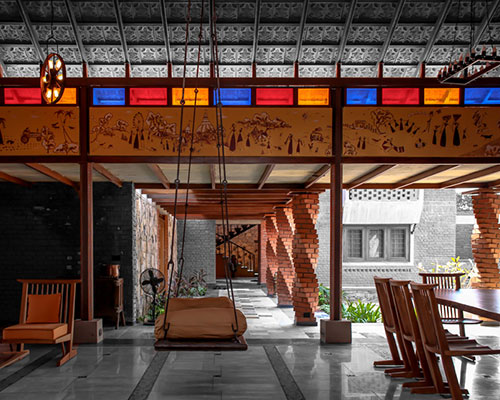
exposed brick walls, arches, sand stone jalis and clay-tiled roofs contributed to a low project cost

courtyard with mango tree acts as a transition space between the private cottage and informal semi-open living area

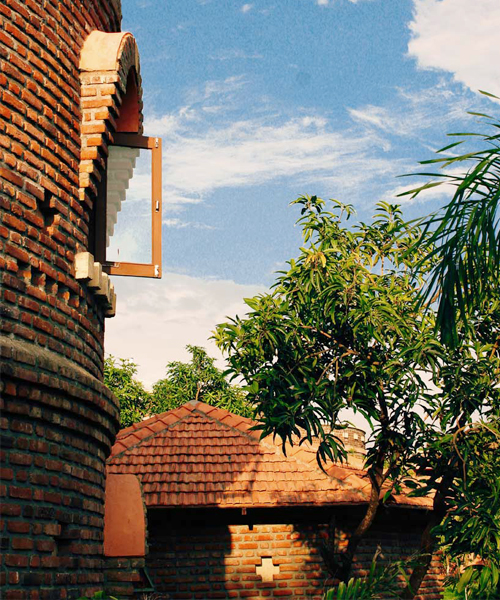
cottages with small arched windows that respond to the regional climate (hot and dry)

exposed brickwork using thin local bricks, in its naked form, gives a very earthy feel to the architecture

standing balcony with unobstructed panoramic view becomes a fascinating extension for upper level cottages

upper cottages are accessed through spiral staircases of rough kota stone, balancing between privacy and interaction

master plan of shyam farm forest resort: cottages are built around the preserved mango trees
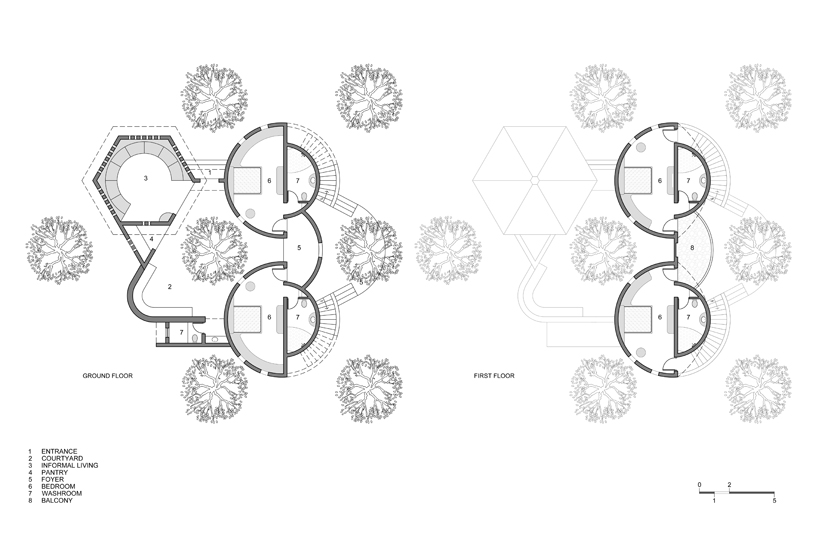
technical plans showing how trees became an inseparable part of the architectural language
project info:
name: shyam farm forest resort
built up area: 1300 sq.mt
site area: 1.5 acre
cost: 1,25,00,000 INR
location: bhojde village, gir lion sanctuary, gujarat, india
completion: 2016
client: local farmer
architect: himanshu patel, d6thd design studio
photography: maulik patel
drawings: nitin panchal
designboom has received this project from our ‘DIY submissions‘ feature, where we welcome our readers to submit their own work for publication. see more project submissions from our readers here.
shop
your own online design shop — no sales commission collected