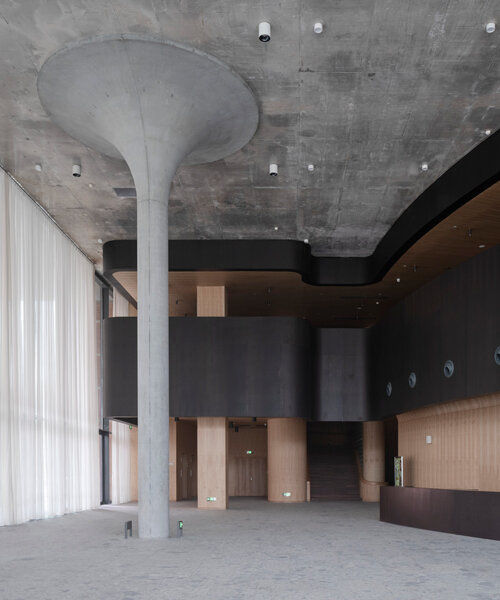
david chipperfield designs theater with ‘mushroom columns’ for jingdezhen cultural quarter
jingdezhen is famous for its porcelain production and this project transforms an area of former factory buildings into a new mixed-use district.
prefer designboom on googledavid chipperfield’s ceramic art avenue taoxichuan masterplan
the berlin and shanghai offices of david chipperfield architects have designed a theater, a music academy, and a hotel complex as part of a new masterplan for jingdezhen in eastern china. the city is famous for its porcelain production and this project transforms an area of former factory buildings into a new mixed-use district.
the new theater, academy and hotel are located in the eastern part of the site, which is being turned into a campus for the performing arts with colleges, performance venues, and additional infrastructure. david chipperfield architects developed the masterplan for this area, which preserves, restores and converts the existing buildings while complementing them with new buildings.
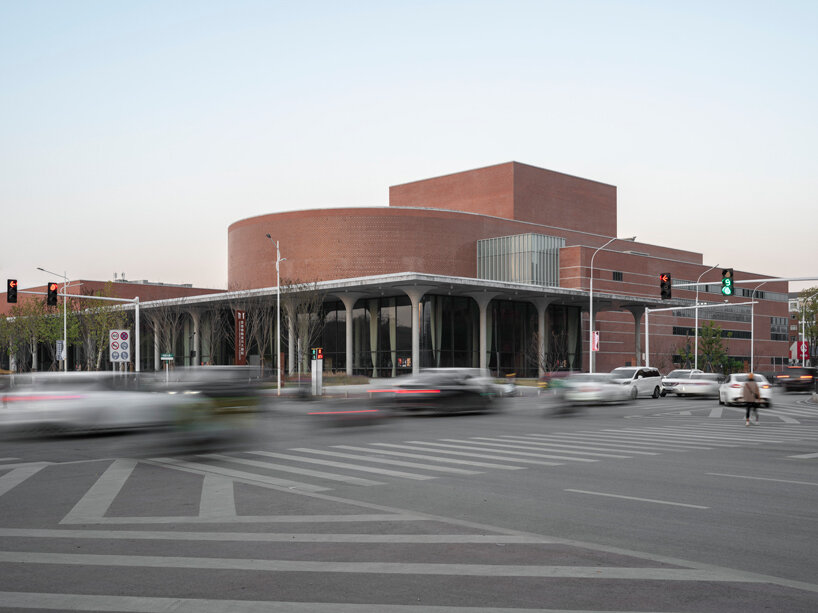
the grand theater
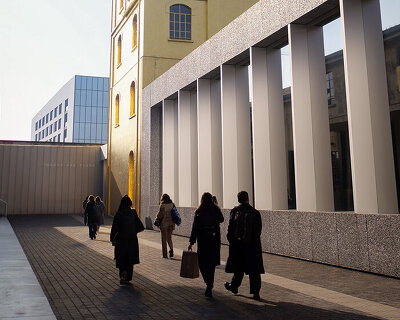
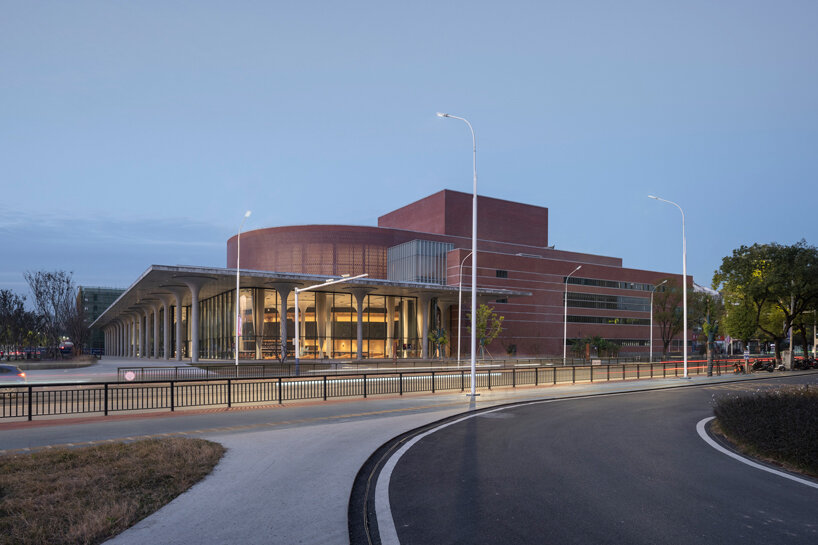
the main public facilities of the new cultural quarter of jingdezhen are located on a boulevard on the western side of the area. the northern end is marked by the grand theater, a new brick construction that refers to the traditional materiality of the historic industrial buildings. it accommodates two venues: a classical opera house and a black box theater.
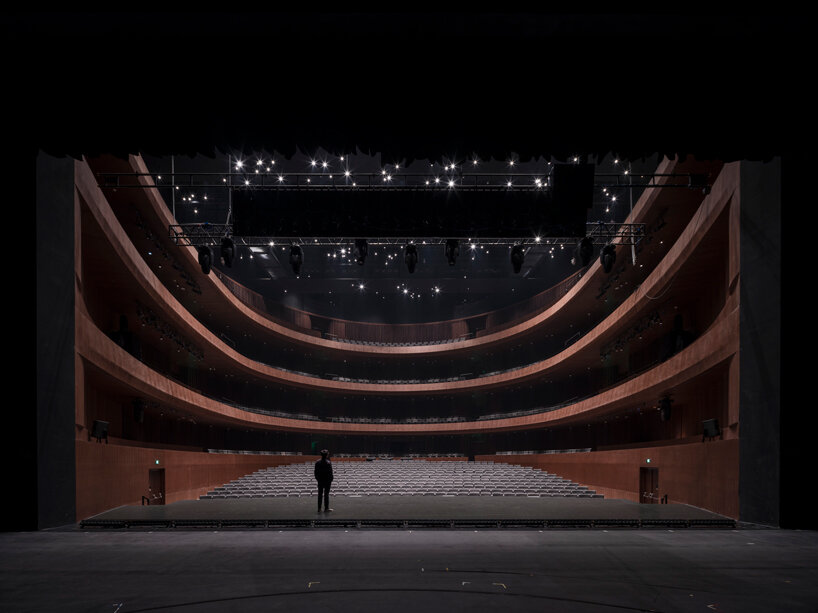
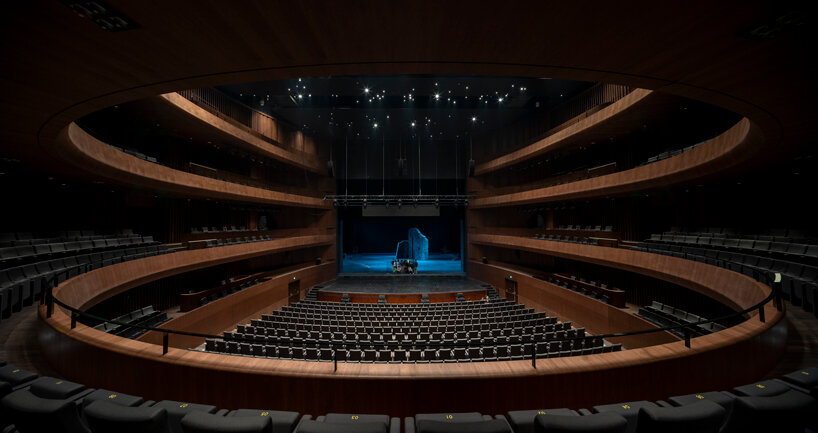
the auditorium of the opera house is fully lined with walnut veneer and holds 1200 seats. the interior is horseshoe-shaped with three balconies. with this classical european format, the auditorium reflects the meaningful connectedness of audience and performers as one community who jointly experience an artistic performance as a singular, authentic live event as opposed to today’s digital environment. the black box theater, lined in black wood, allows for various contemporary performance settings due to its flexible and mobile stage area. in addition, the black box theater can be opened to the outside space – allowing for open-air concerts to be held on the campus.
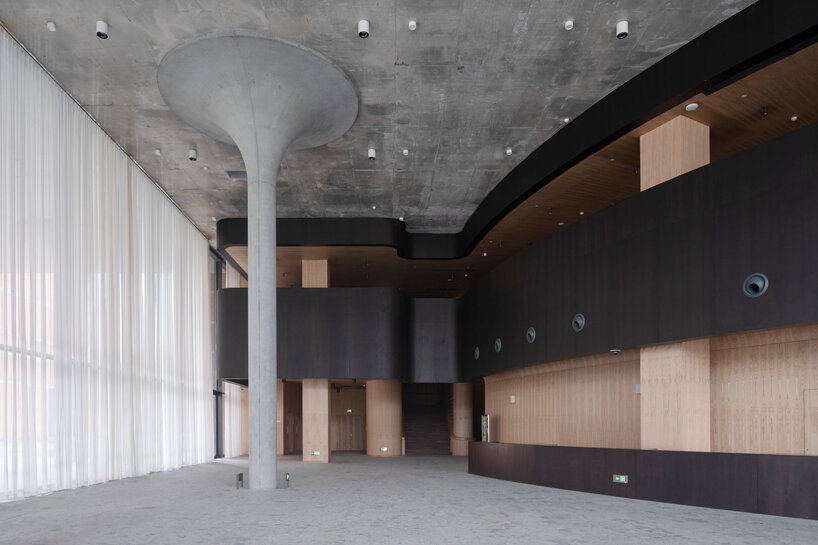
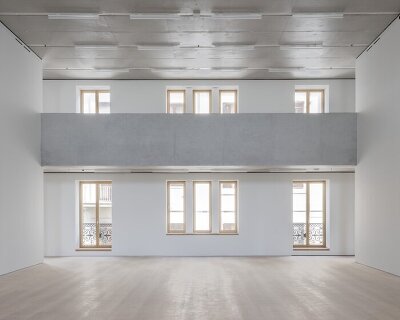
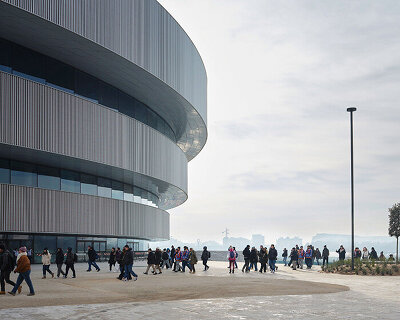
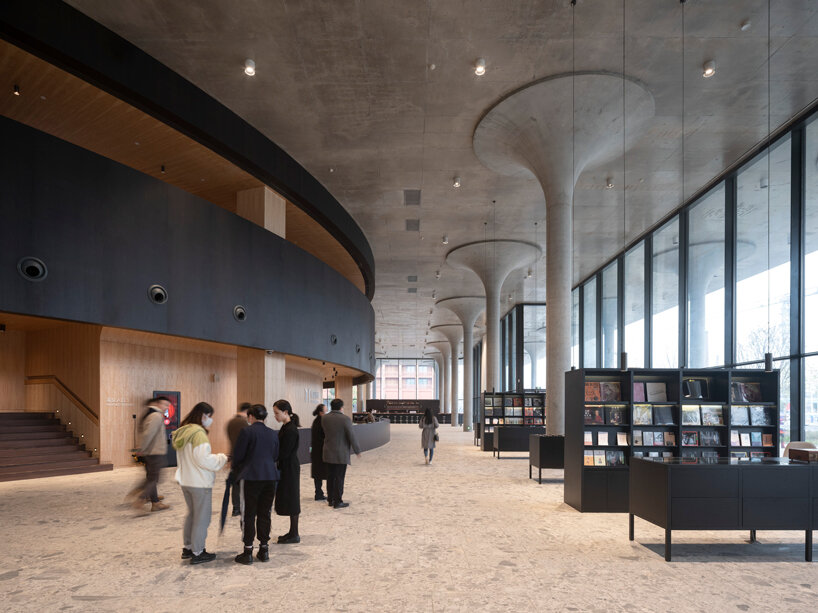
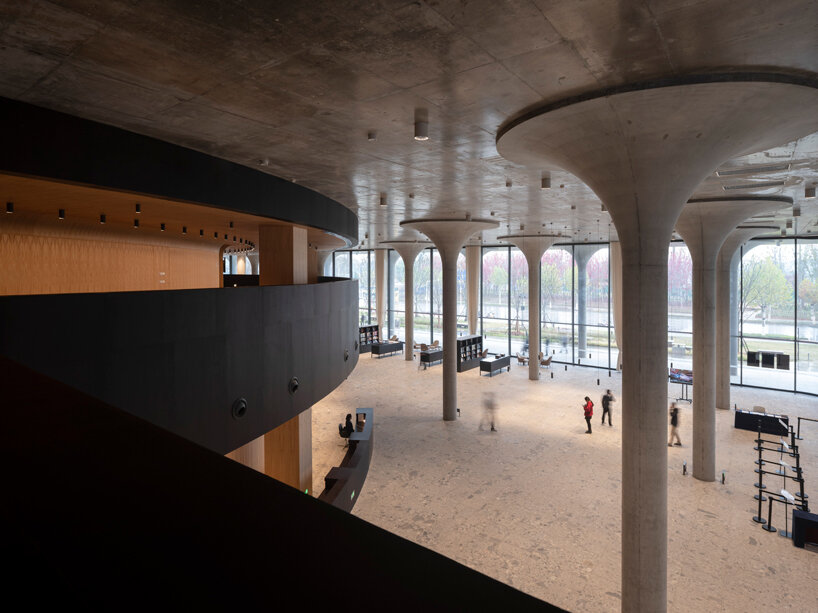
both venues of the grand theater are accessed at ground level via a spacious foyer that opens the building towards the boulevard. the horseshoe-shaped auditorium of the opera projects into the foyer where it is enclosed by a timber clad cloaks area and a gallery above. the in-situ concrete architecture of the large-scale foyer roof carried by mushroom columns creates a continuous transition from the trees of the boulevard into the interior of the grand theater. the natural stone floor connects interior and exterior space further. the curved auditorium also emerges externally as a perforated brick volume above the foyer roof, shining like a crown of light at night and lending landmark character to the new venue.

academy of music
although not photographed here, the new academy of music is situated at the southern end of the campus boulevard and will be housed within two former ceramic factories from the mid-20th century. david chipperfield architects has employed a sensitive approach to the refurbishment, preserving the industrial atmosphere but replacing necessary elements such as the corrugated metal roofs with tiles for improved thermal and sound insulation.
once complete, the larger, northern factory building will be home to a 350-seat concert hall as well as an airy foyer. service facilities for the audience as well as practice rooms for the academy are housed in new wooden cubes, which are stacked inside the buildings as two-story structures. the architecture will be finished in high-quality materials, including maple veneer, pine wood and mastic asphalt, to enhance the industrial appearance of the historic buildings.
the hotel complex
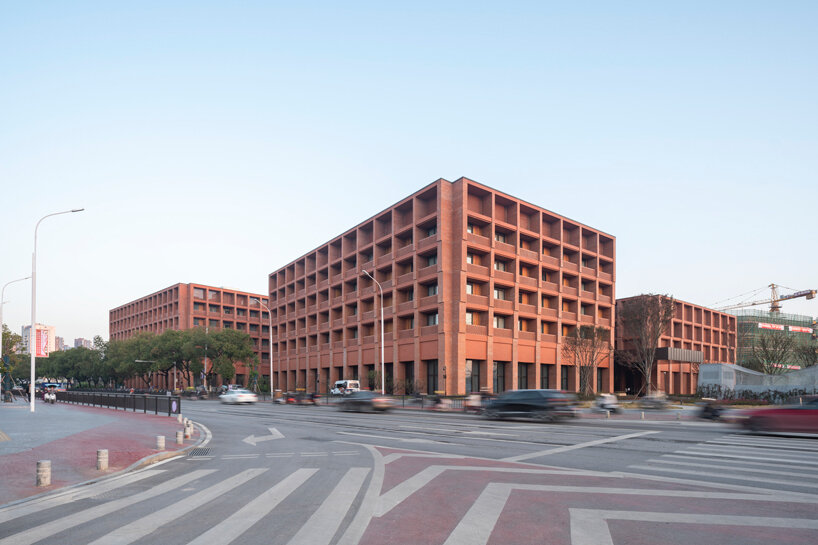
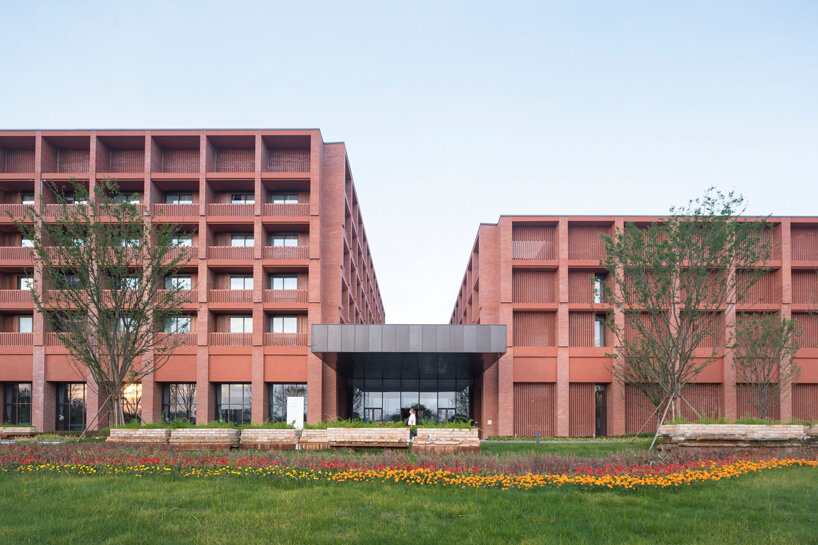
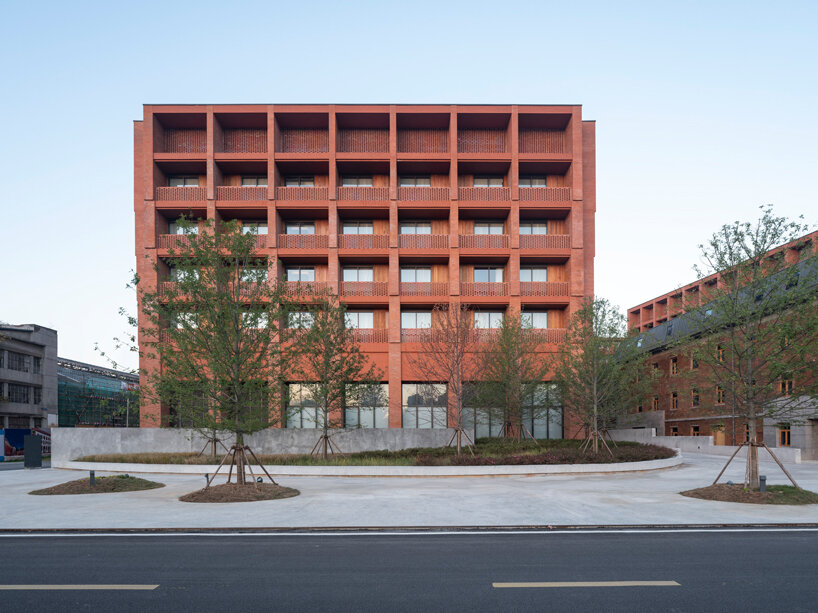
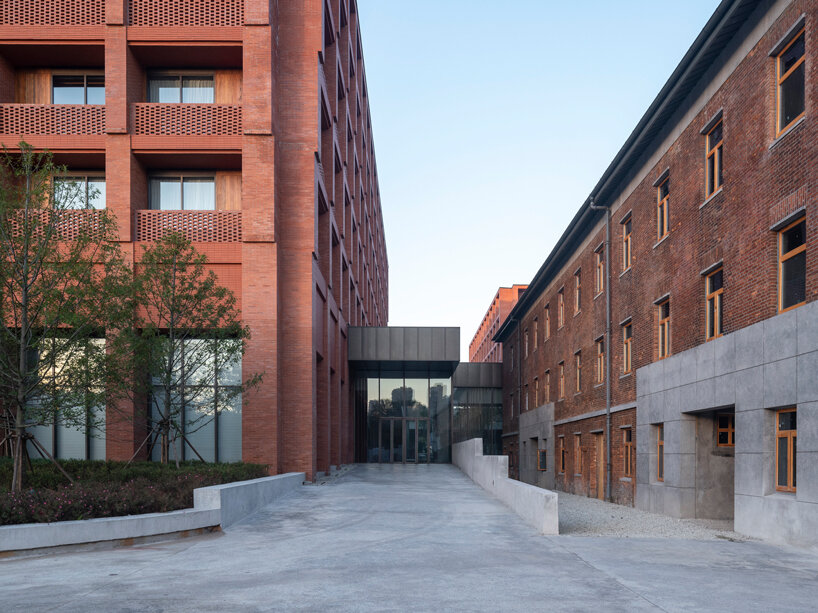
located between the grand theater and the academy of music, the hotel complex is at the center of jingdezhen‘s new cultural district. the complex consists of four separate buildings with a four-star hotel, a five-star hotel and an events venue. a spacious light steel structure connects the buildings at ground level creating communal areas for various public activities.
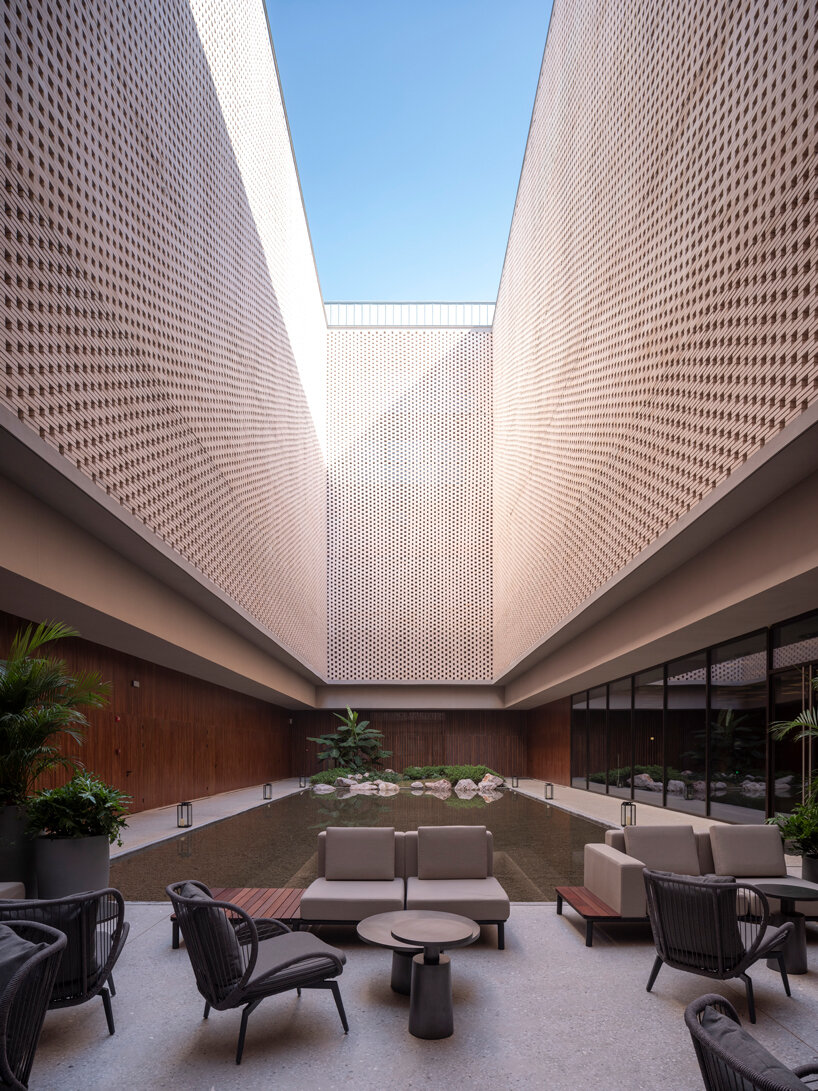
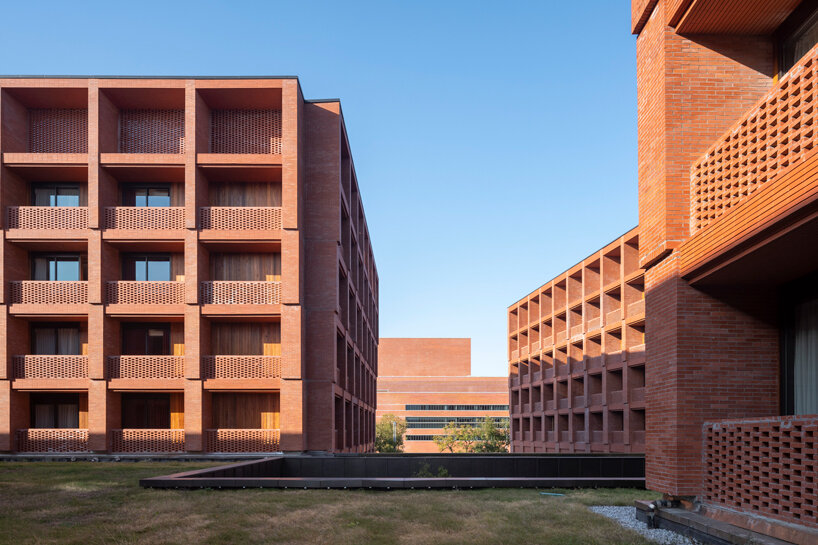
each of the hotel buildings contains an inner courtyard with an individually landscaped garden, which can be seen from each of the adjoining hotel corridors via a perforated brick wall, conveying a sense of belonging, tranquility and orientation. the more southerly of the two buildings directly adjoining the boulevard holds prestigious function rooms for a diverse range of public events. a former dormitory building from the 1960s was preserved and integrated into the complex to complement the hotel as an apartment building.
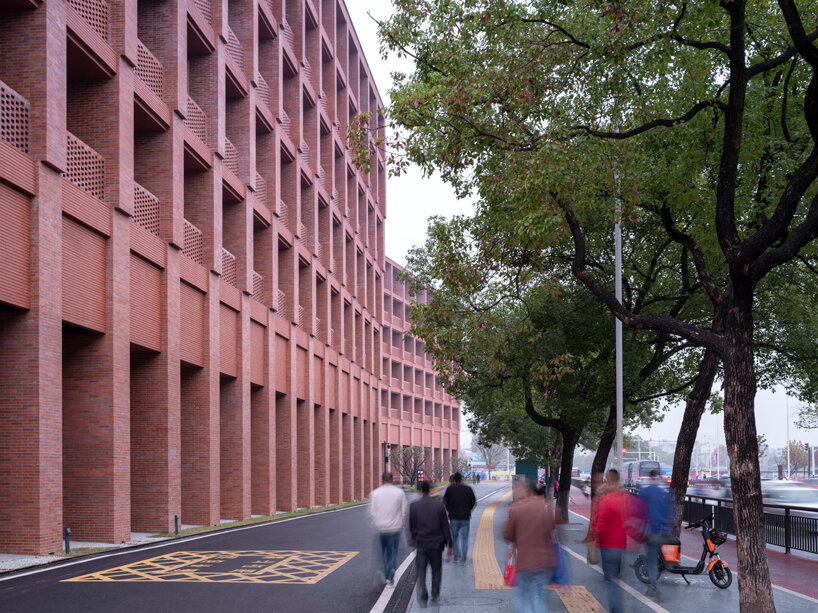
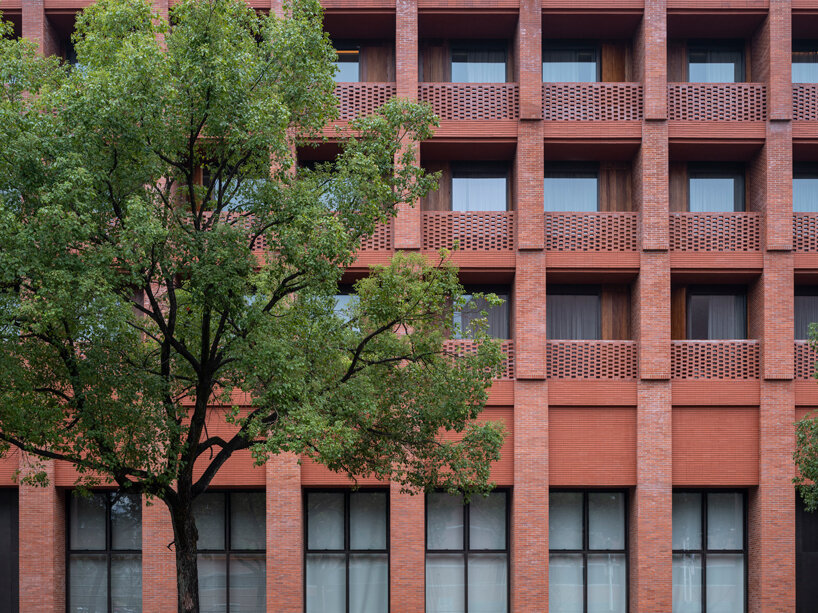
with reference to the historic factory buildings, bricks are primarily used as the local building material for the hotel façades, which thus blend seamlessly into the surrounding area. the semi-transparent façades of the function rooms and the perforated balustrades of the hotel balconies act as a filter between private and public areas. the staggered brick columns bring the overall building volume in relation to the human scale.
1/9
project info:
name: ceramic art avenue taoxichuan
location: jingdezhen, china
client: jingdezhen ceramic culture tourism group
architect: david chipperfield architects berlin & shanghai
gross floor area: 265,000 sqm
concept study: 2018
project start: 2020
completion: 2022
shop
your own online design shop — no sales commission collected