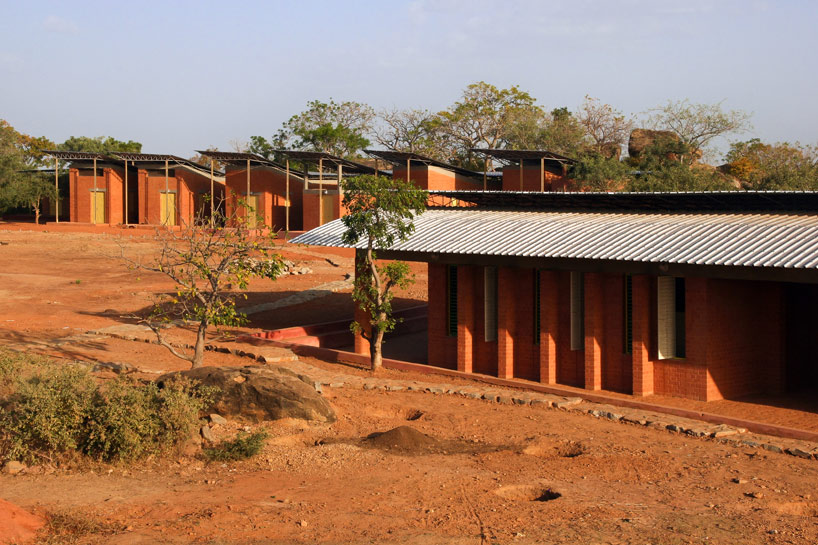
‘opera village’ by diebedo francis kere, laongo, burkina fasoall images courtesy of diebedo francis kere and operndorf afrika
the idea to construct an opera village came about as the result of the visionary idea of christoph schlingensief and a catastrophic national disaster. film and theater director schlingensief first approached the berlin-based studio of francis kere with the task of building an opera in the middle of the town of laongo. of the problems facing the country, an opera house seemed hardly the most effective initial solution to improve the community’s quality of life. burkina faso is, surprisingly, africa’s center for theater and film and schlingensief’s determination and an unfortunate flood occurring at the same time that left the entire town without any resources or homes led to the design of the opera house and the urban extension of an entire village. as formal and informal boundaries were literally washed away, kere saw the opportunity to redefine laongo and create a new infrastructural model based on a sustainable way of life and construction.
clip from the documentary ECOPIA, highlighting the opera villagevideo © operndorf afrika
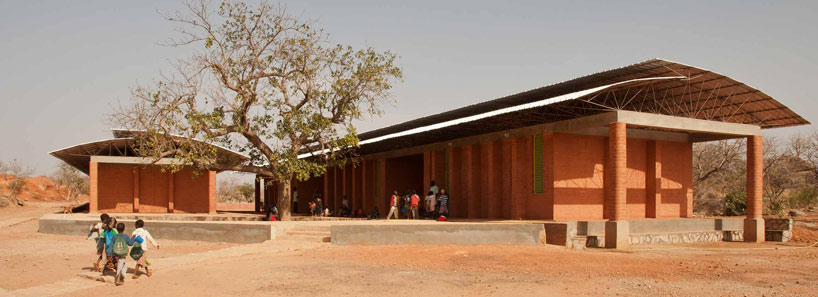
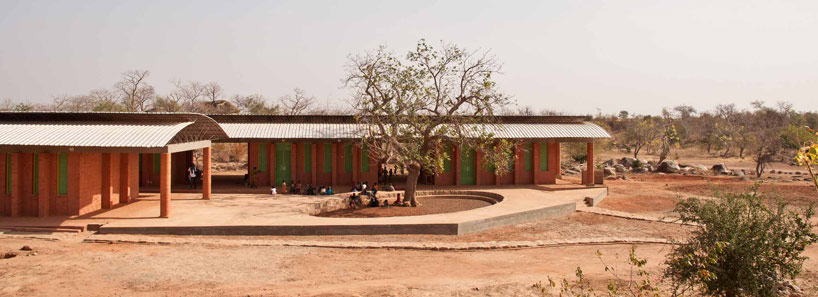
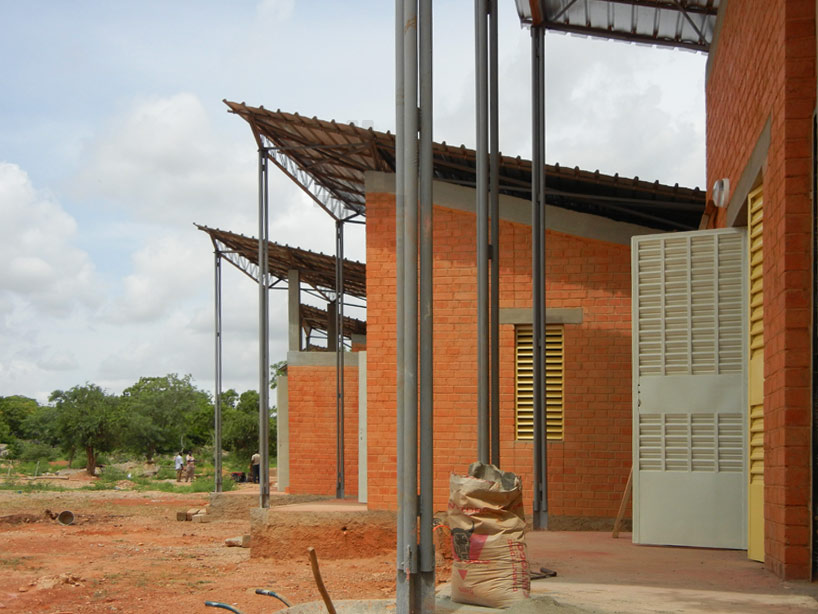
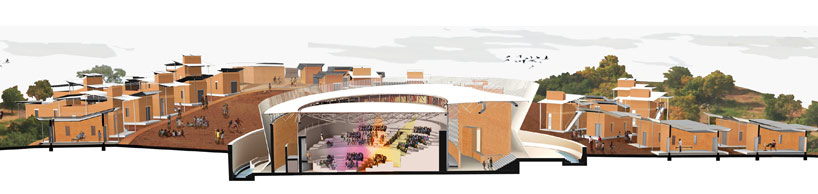
the radial organization of the new 12 hectare town follows the shape of the nautilus curve, featuring the opera house as the center and the soul of the project. around the festival hall and opera house will be workshops, modular housing units, a school for up to 500 young students with music and film classes, the CSPS infirmary (covered earlier by designboom here), a well for water, and an array of solar panels. local material and labor was used for the construction of the various structures, using more contemporary concrete construction techniques for the foundations and major load-bearing beams and columns. the festival hall takes on a circular form with a 15 meter-high wall of spaced wooden dowels that hold up a protective metal roof. the stage and auditorium used in the theater were designed for a performance piece in germany and discarded, recovered by kere to be re-used for the project. several strategies were implemented to make the construction as efficient and comfortable as possible for its users without the need for energy that is not available or cannot be afforded. thick walls made of compressed clay bricks provide the appropriate thermal mass, with operable shutters and the small windows to block out the direct sunlight and maintain a cooler interior temperature. the roof system contains three parts: an outer membrane of corrugated metal that blocks the sun and protects from rainfall, a lighter inner membrane composed of a series of barrel vaults (in the larger structures) with slits that allows the expulsion of heat, and an air plenum in between that ventilated the spaces and acts as a thermal buffer between the directly-heated metal canopy and the interior space. currently under construction, the endeavor will serve as a center for cultural exchange and provide housing, education, and medical care to the local inhabitants.
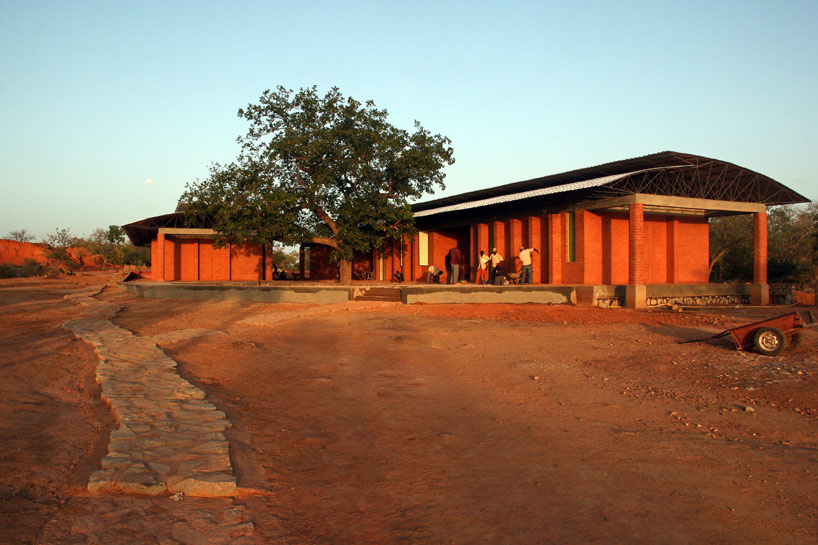 recently completed school
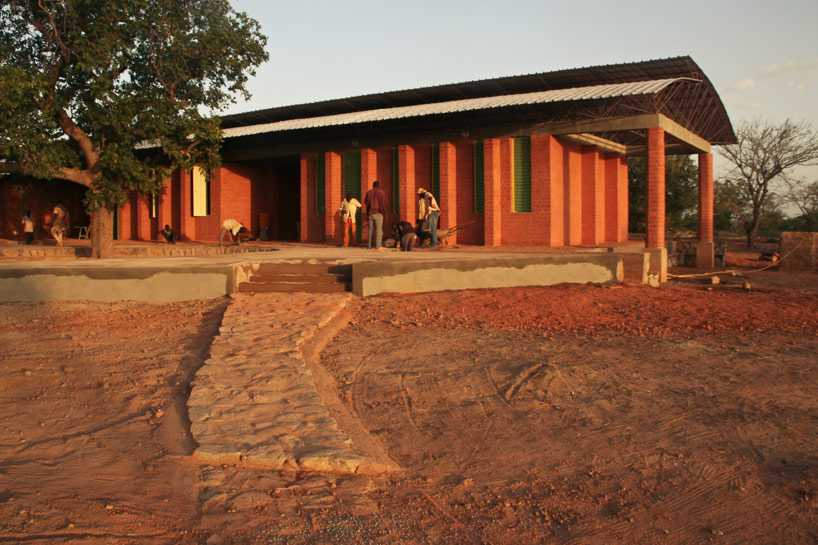 double skin roof membrane over a clay brick construction
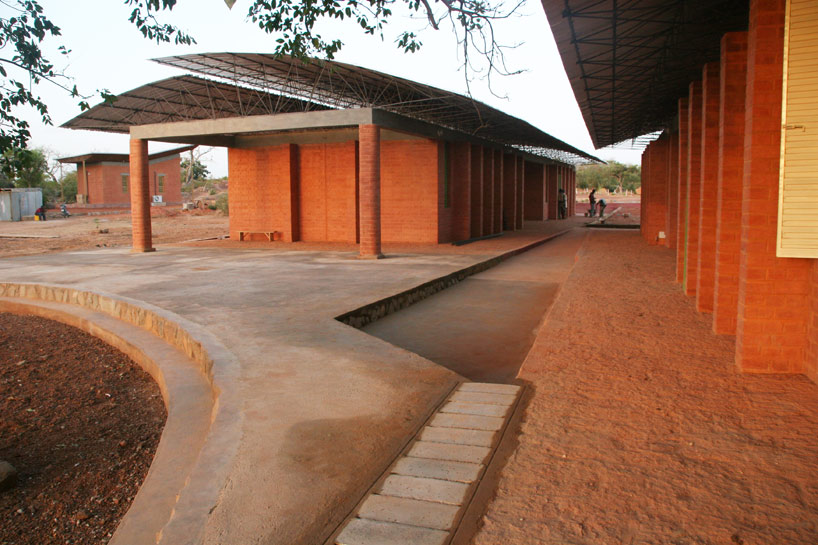 landscaping provides public seating and gathering areas
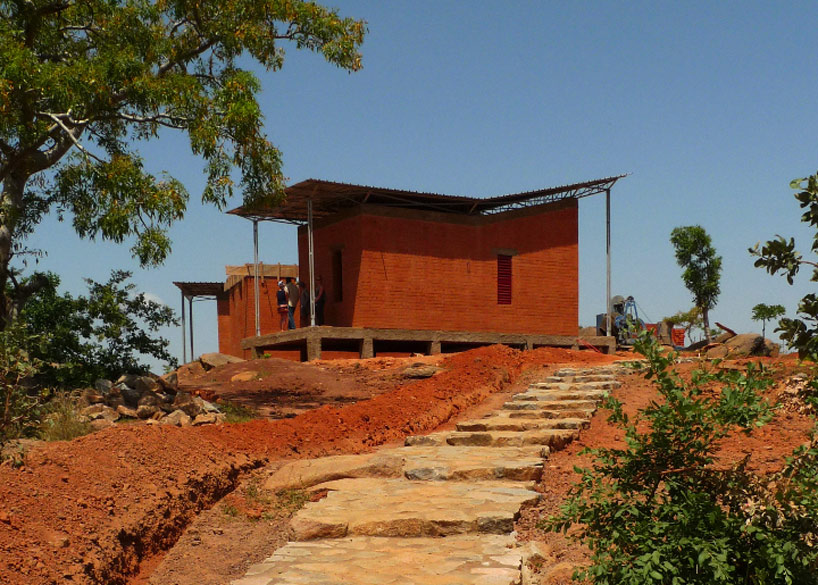
 individual service and living unitsimage © aino laberenz
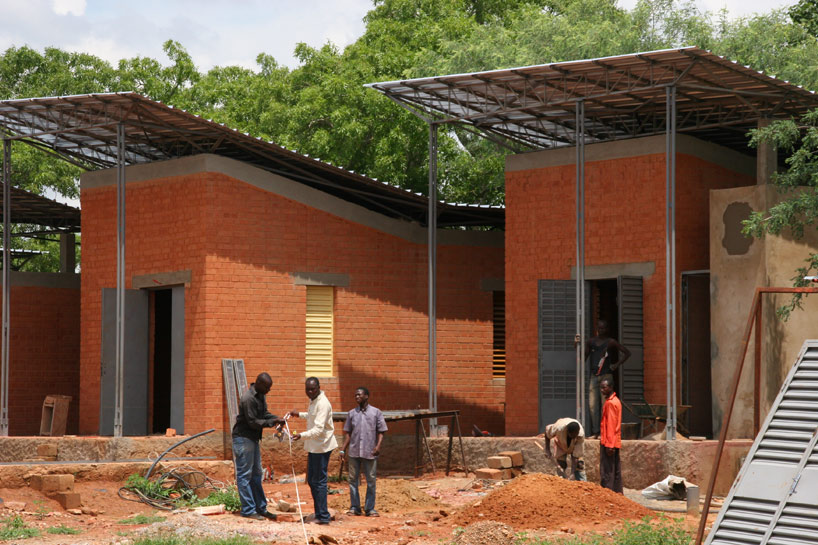
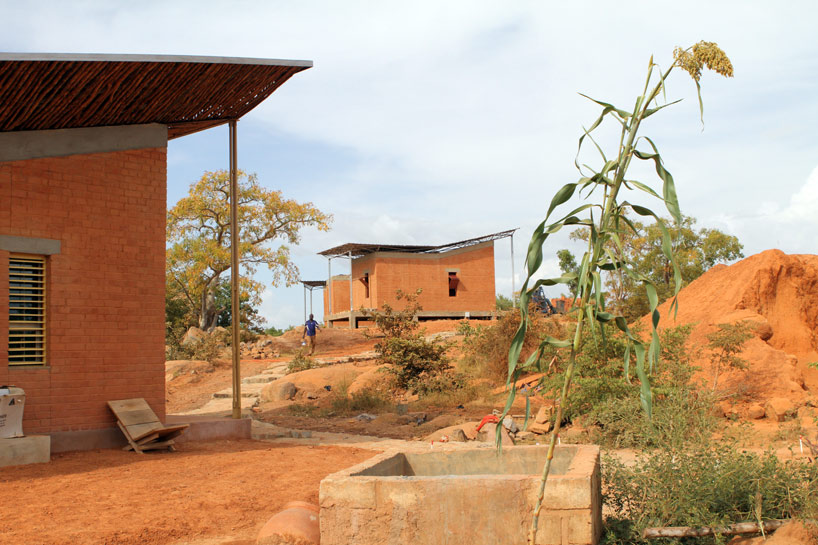 image © michael bogar
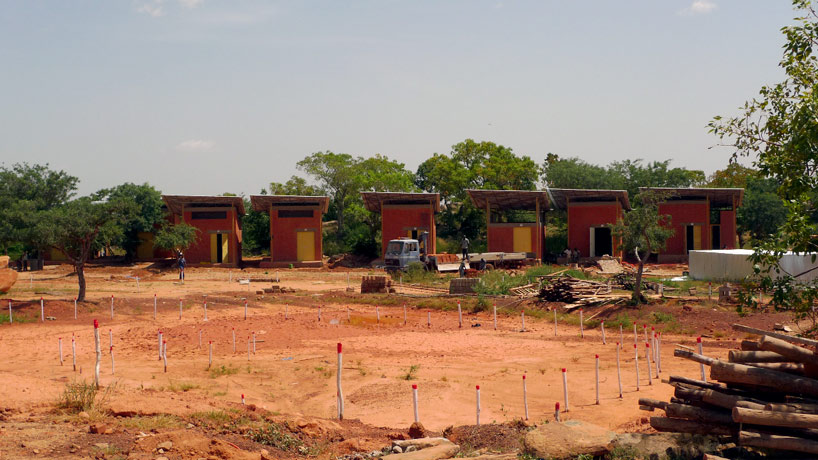 image © aino laberenz
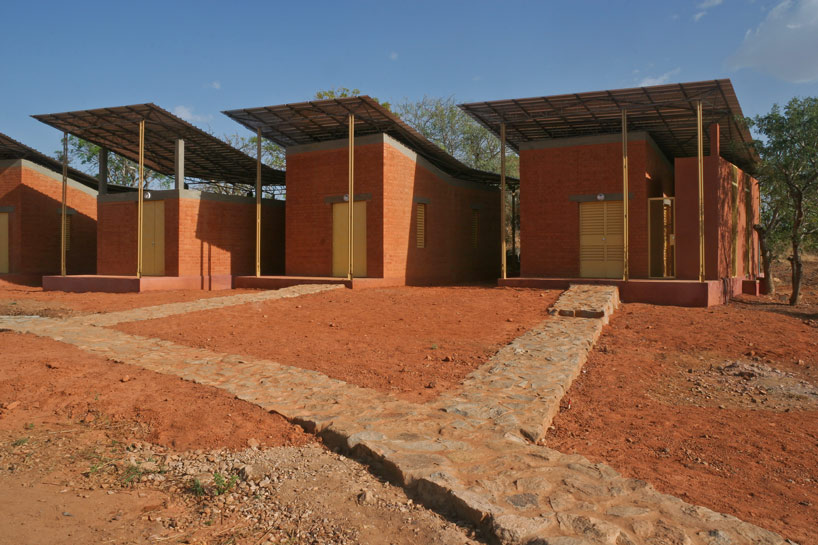 modular residential units
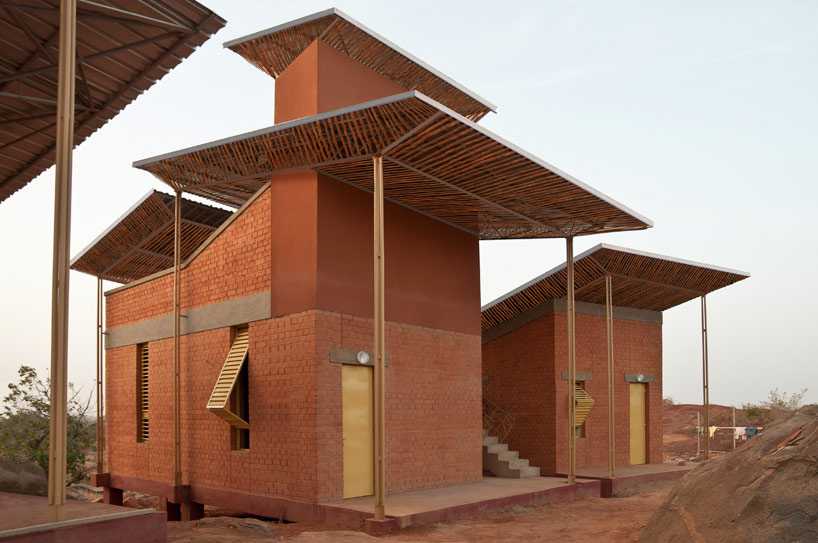 houses utilizing the same design strategies
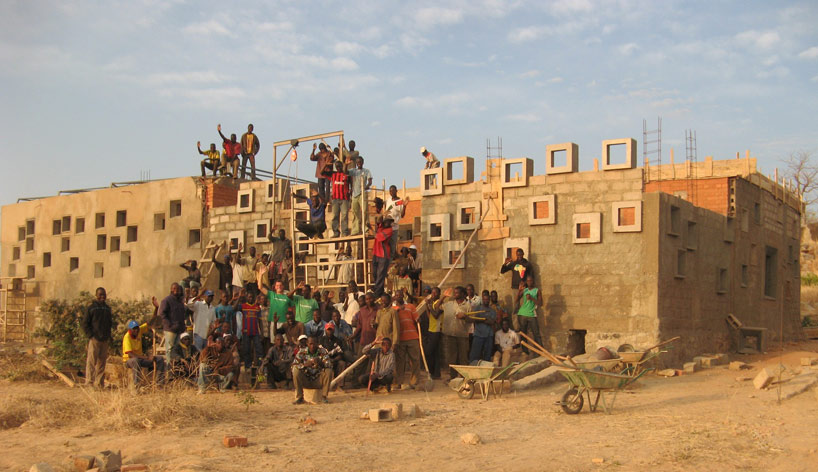 construction of the infirmary. see more images hereimage © till groener
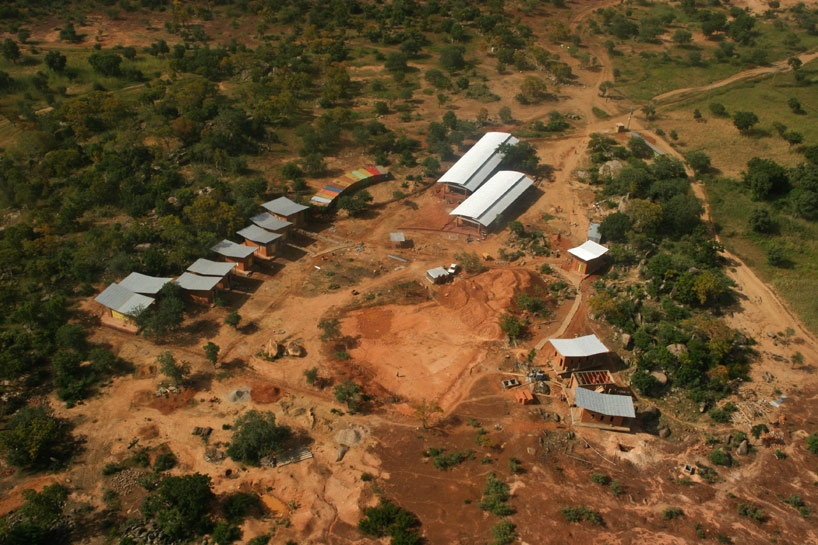 aerial view
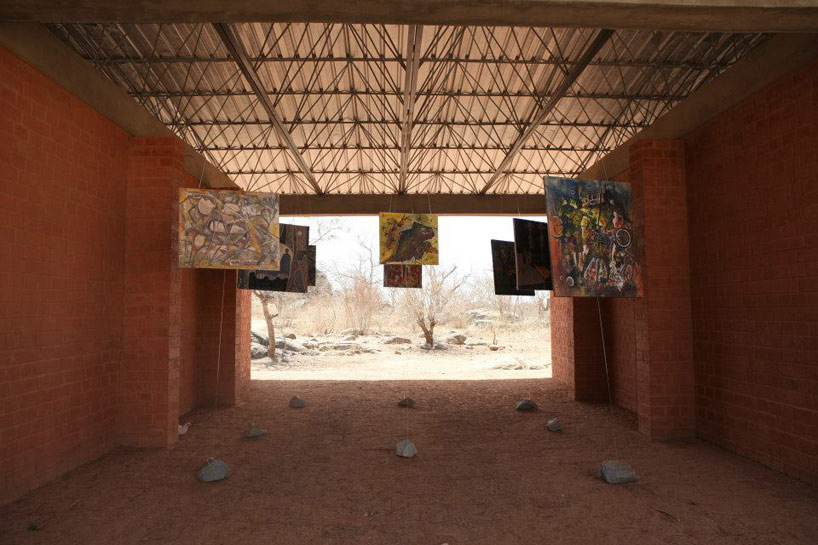 first art gallery exhibition image © enfants village
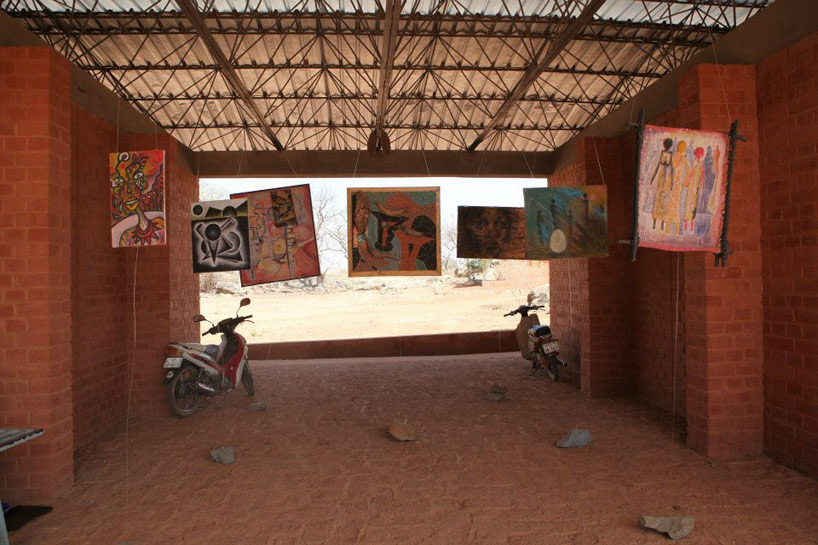 image © enfants village
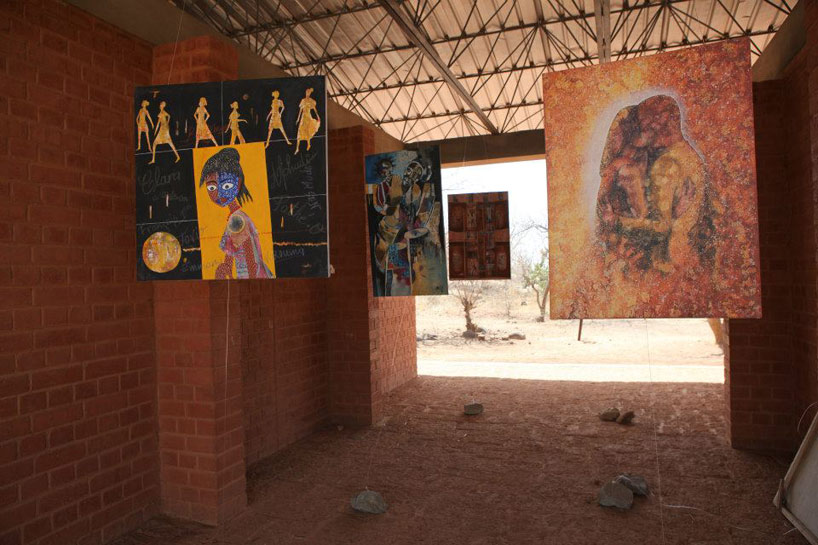 image © enfants village
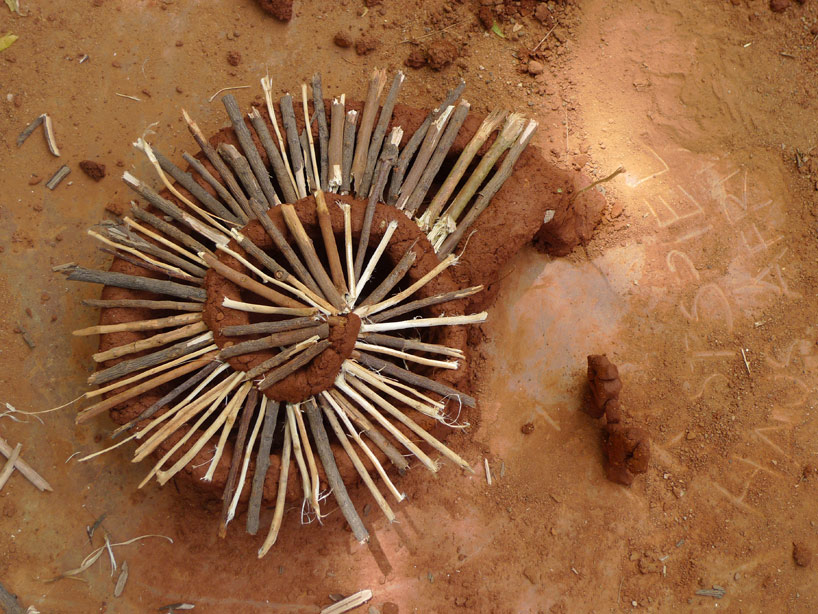 concept model
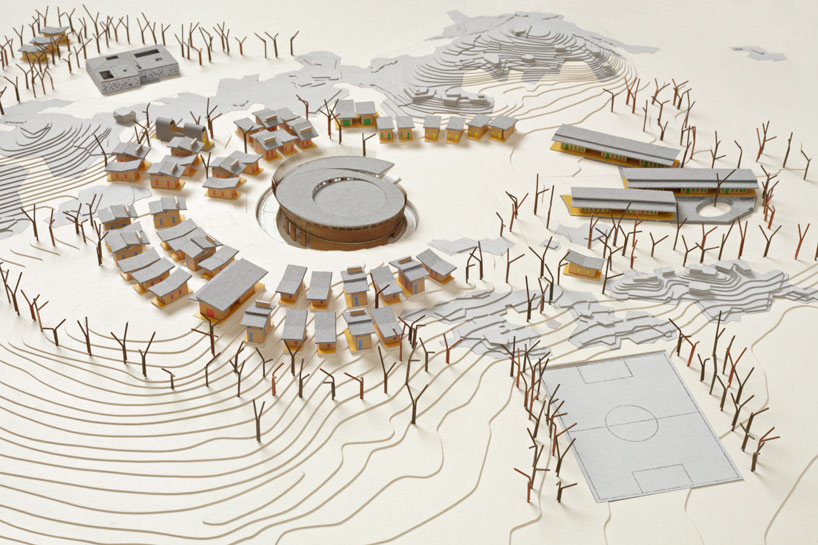 master plan model
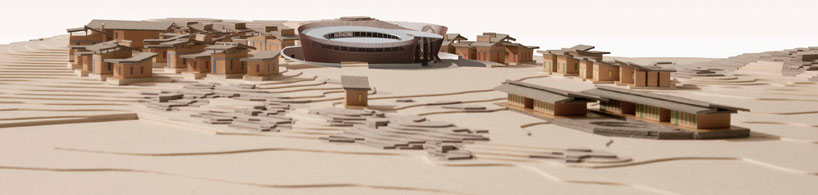 model
model
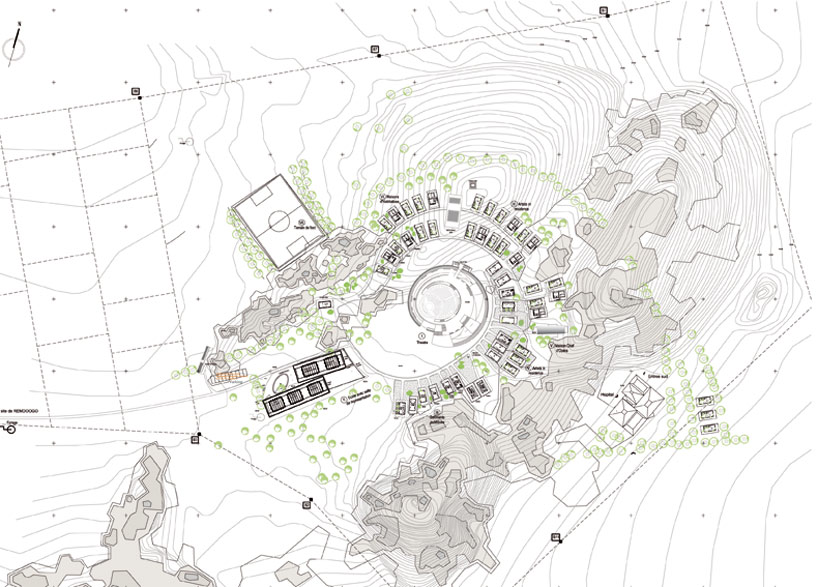 site plan
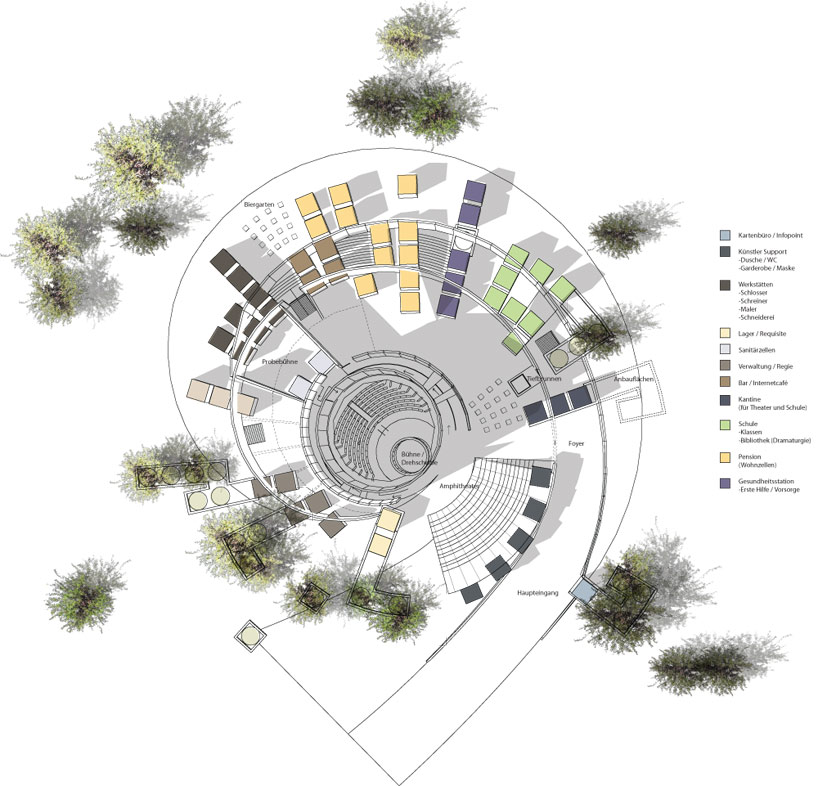 program study
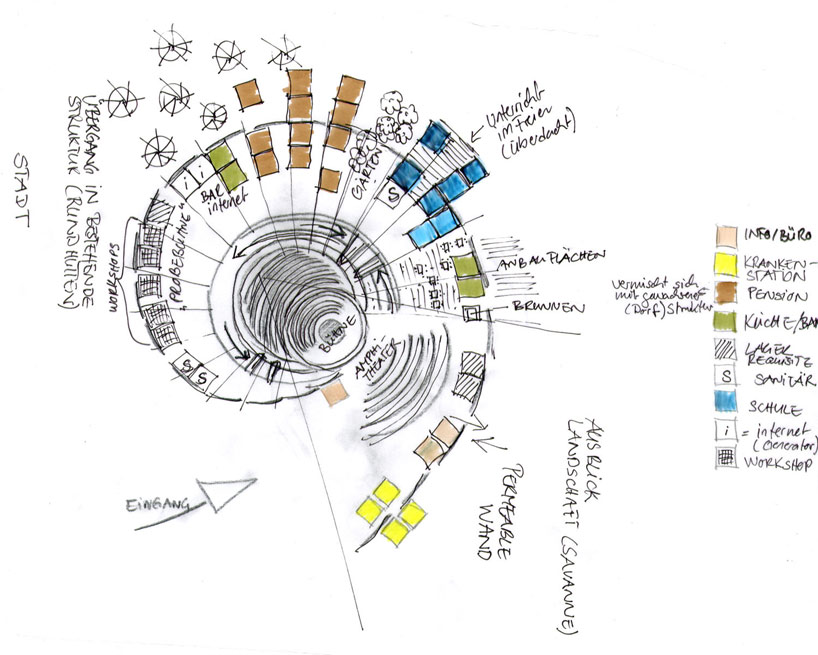 concept sketch
 full section
 section detail
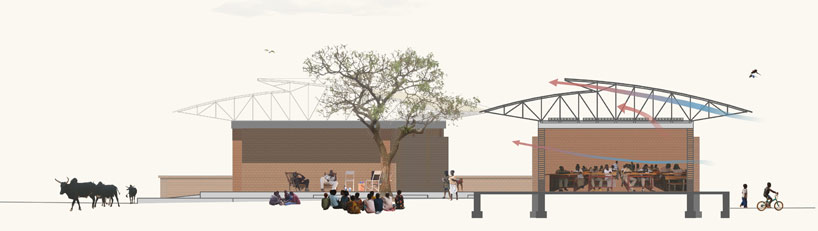 section
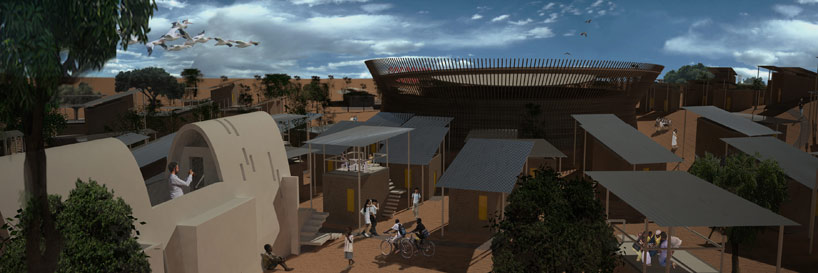 render
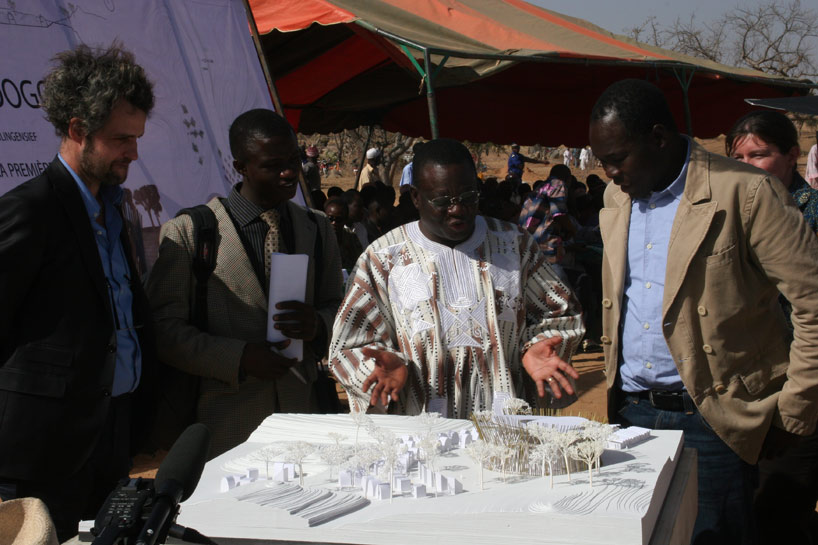 theater director and promoter christoph schlingensief (left) and diebedo francis kere (right) presenting the project to local architects
story behind the project (audio in german)video © operndorf afrika
update: the ‘opera village’ in burkina faso by francis kere architecture has been presented at the 2014 design indaba expo within the curated exhibition ‘africa is now‘. the project was presented within ‘africa is resourceful’, one of the five themes explored in the show, which looks at the contextual solutions that designers in africa are developing based on their local experience, and how their hight-tech and lo-fi innovations and services are also finding application abroad.
design indaba 2014 (20)
 Nov 12, 2014
 Sep 02, 2014
 Apr 18, 2014
 Apr 03, 2014
 Apr 02, 2014
francis kéré / kéré architecture (46)
 Dec 18, 2025
 Nov 25, 2025
 Oct 28, 2025
 May 19, 2025
 Feb 18, 2025
 Mar 12, 2026
 Mar 11, 2026
 Feb 24, 2026