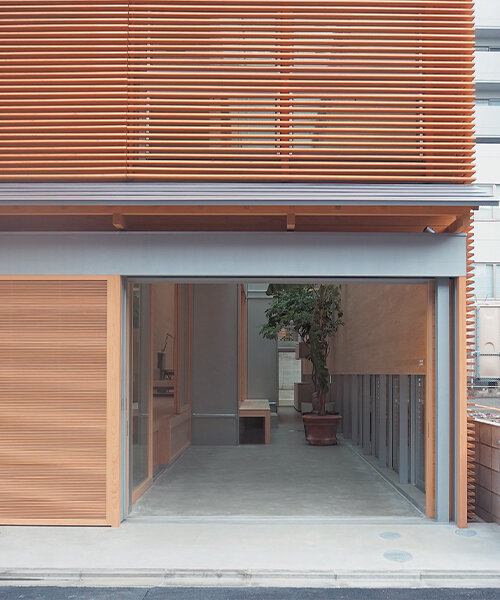
ryue nishizawa brings earthen floors and soaring ceilings to shochikucho house in kyoto
the architect divided the wood-paneled house in two, creating elongated living spaces that receive unobstructed daylight.
prefer designboom on google[FEATURED]
shochikucho house by ryue nishizawa in kyoto
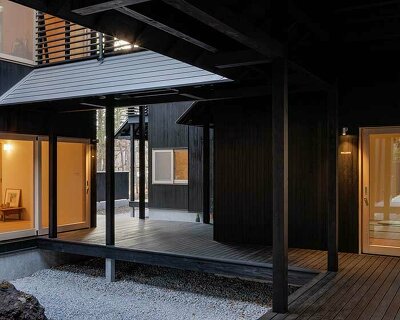
Sited in central Kyoto, Shochikucho House by Ryue Nishizawa takes shape as a private dwelling for a young Japanese family. Its elongated, wood-paneled form responds to the site; a simple rectangular block tucked within a high-density district where buildings rise to nearly 10 meters without setbacks. The plot connects to the road on the west, taking on a long and narrow shape and moving eastward. ‘[This site] reminds us a traditional townhouse once stood here. This led us to think about the machiya or townhouse architecture. First, to create a sense of continuity with the street, I created an elongated to fill the entire site without wetting back from the street, and positioned it to face the street directly,‘ shares the architect.
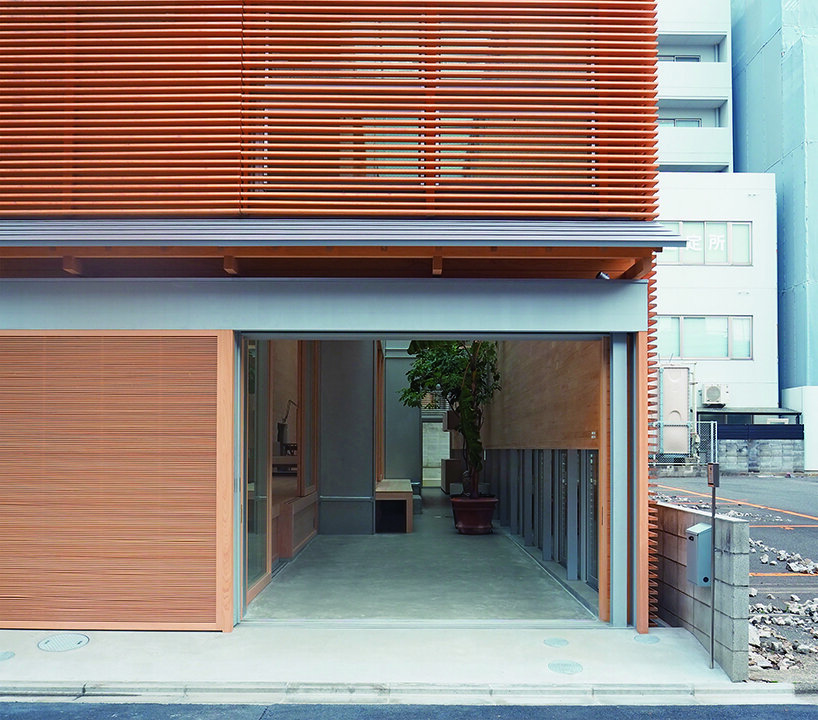
an elongated dwelling with two complementary living spaces
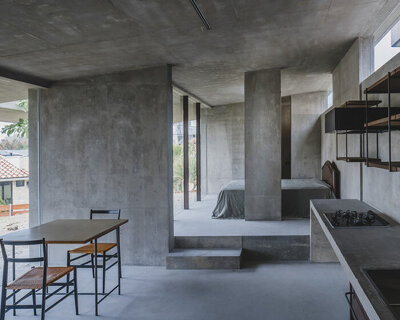
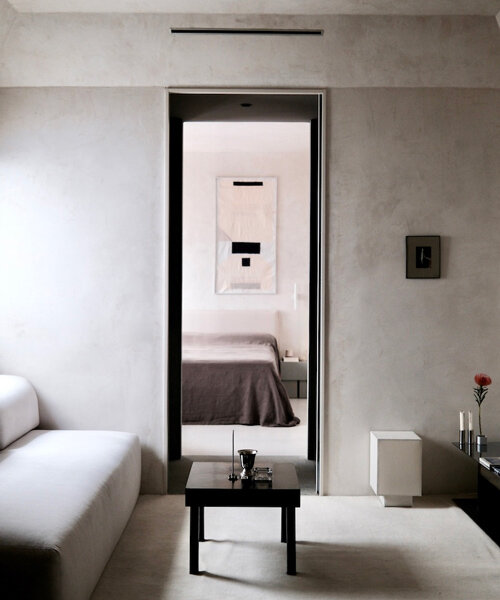
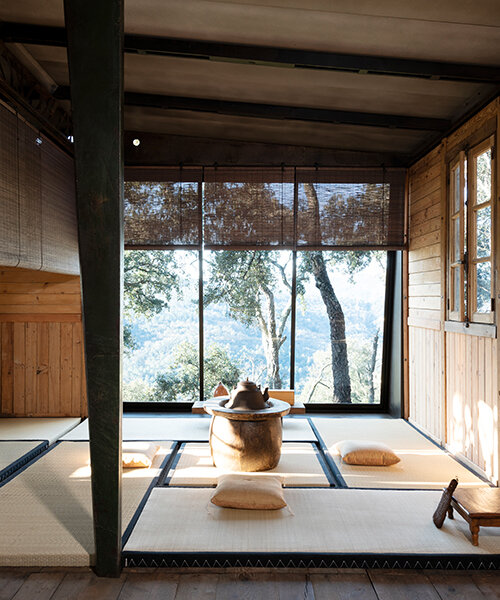
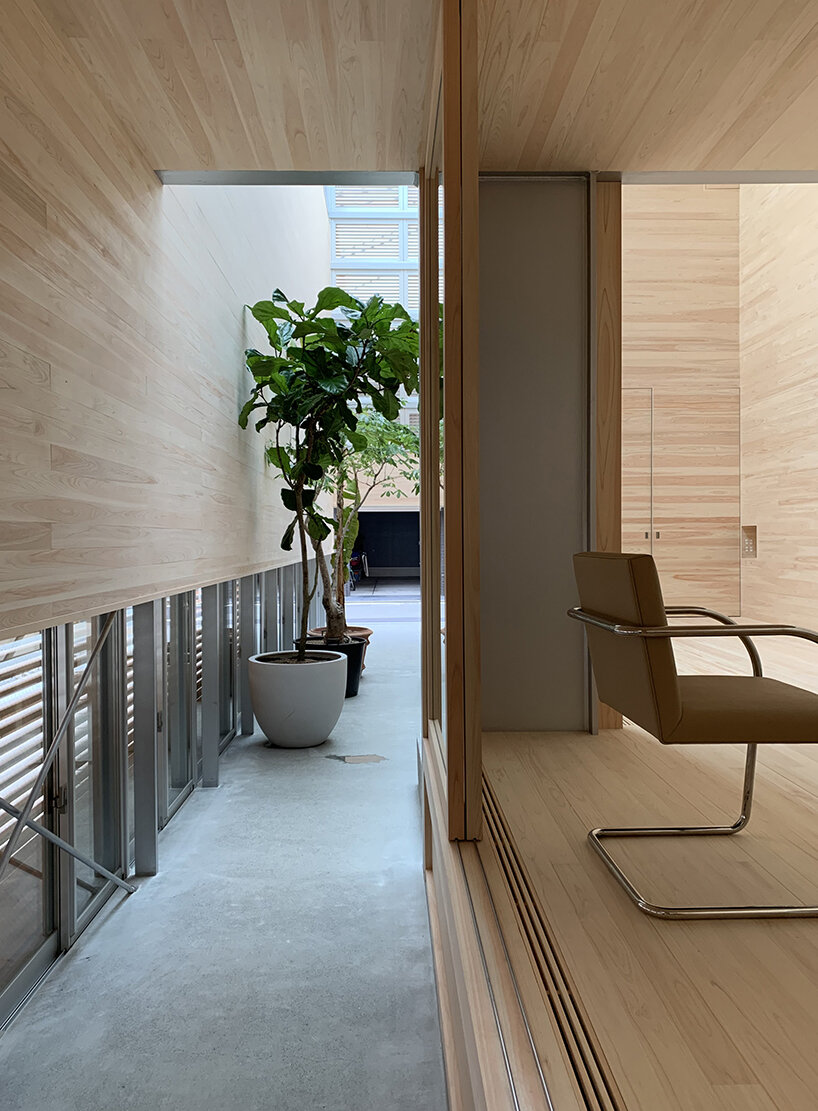
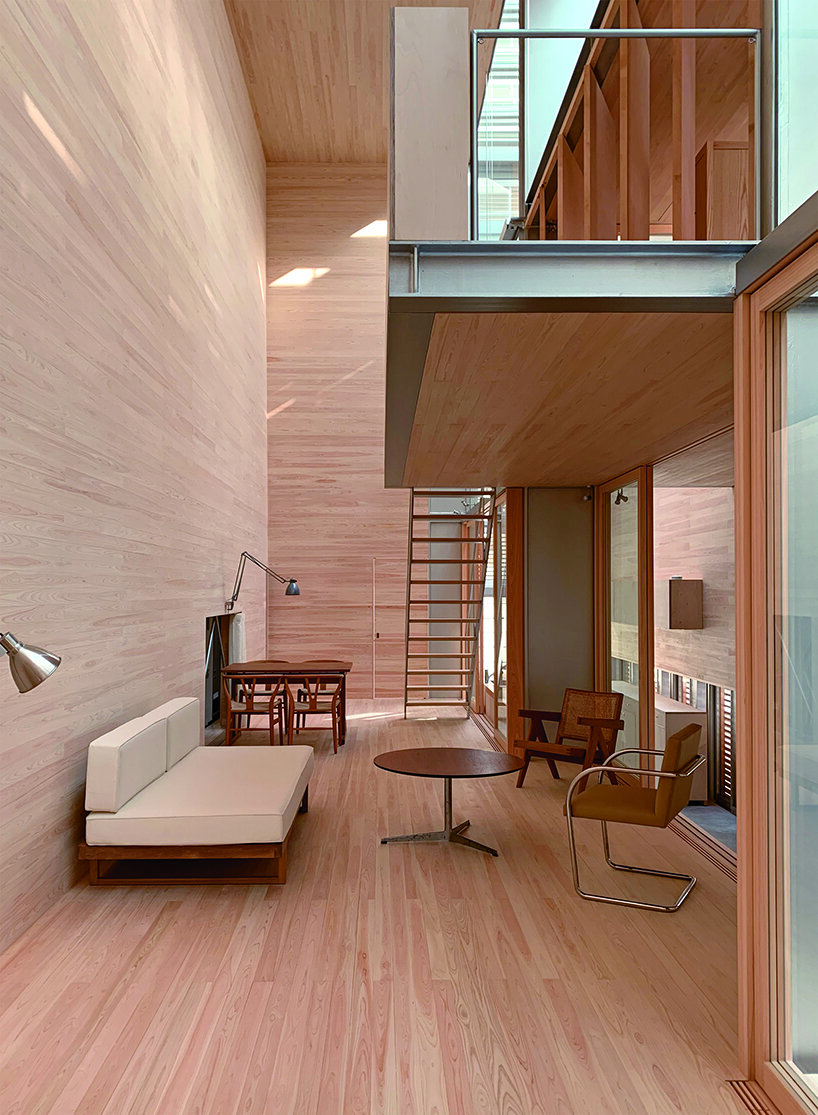
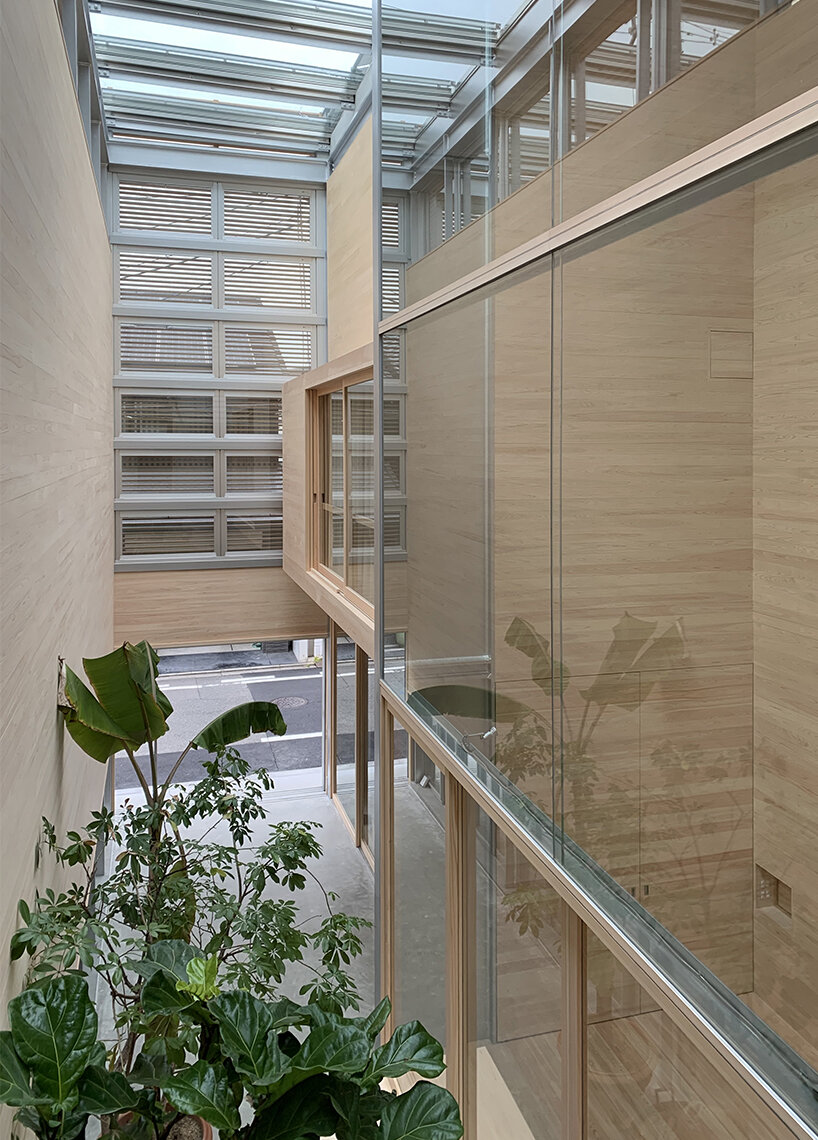
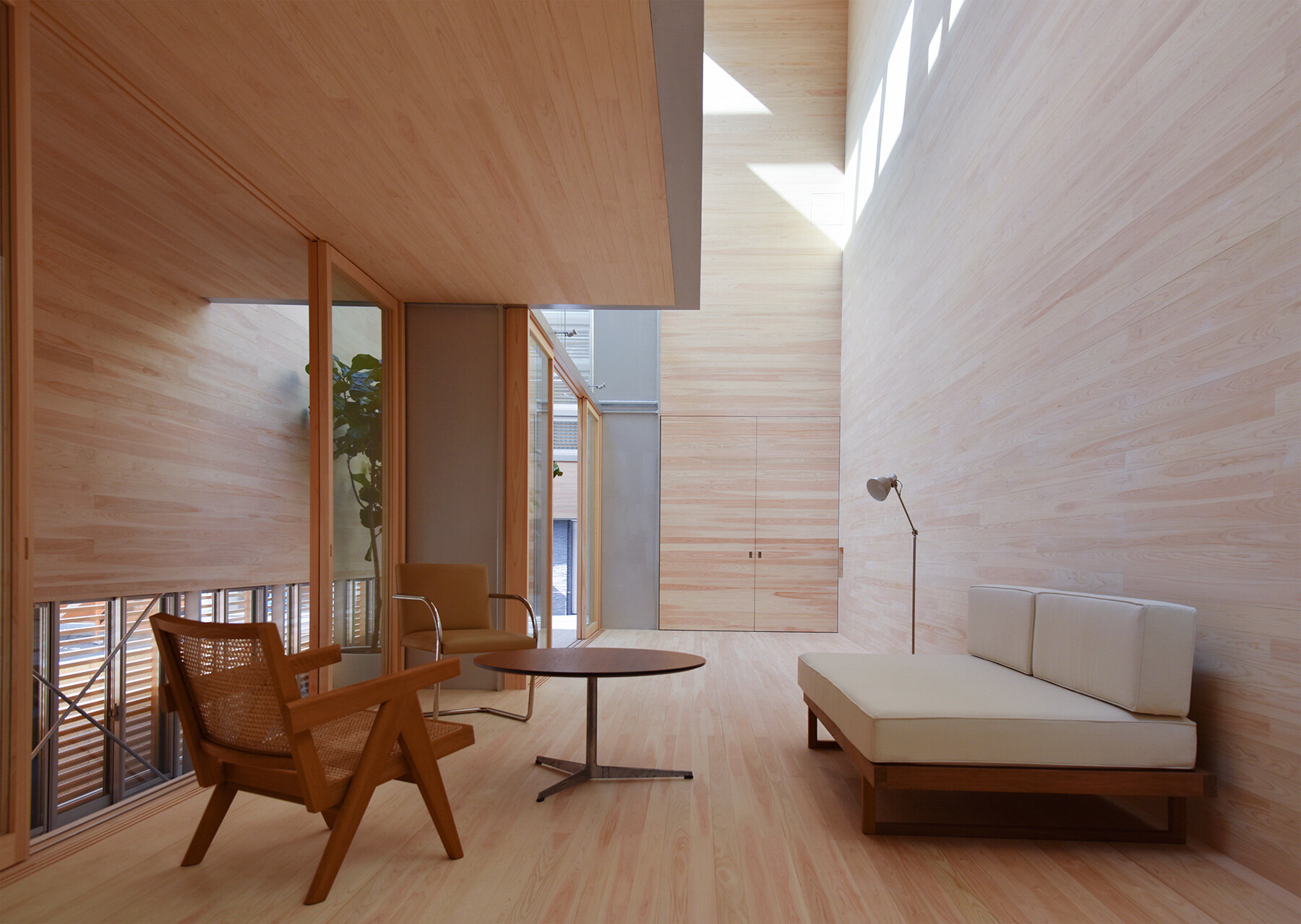
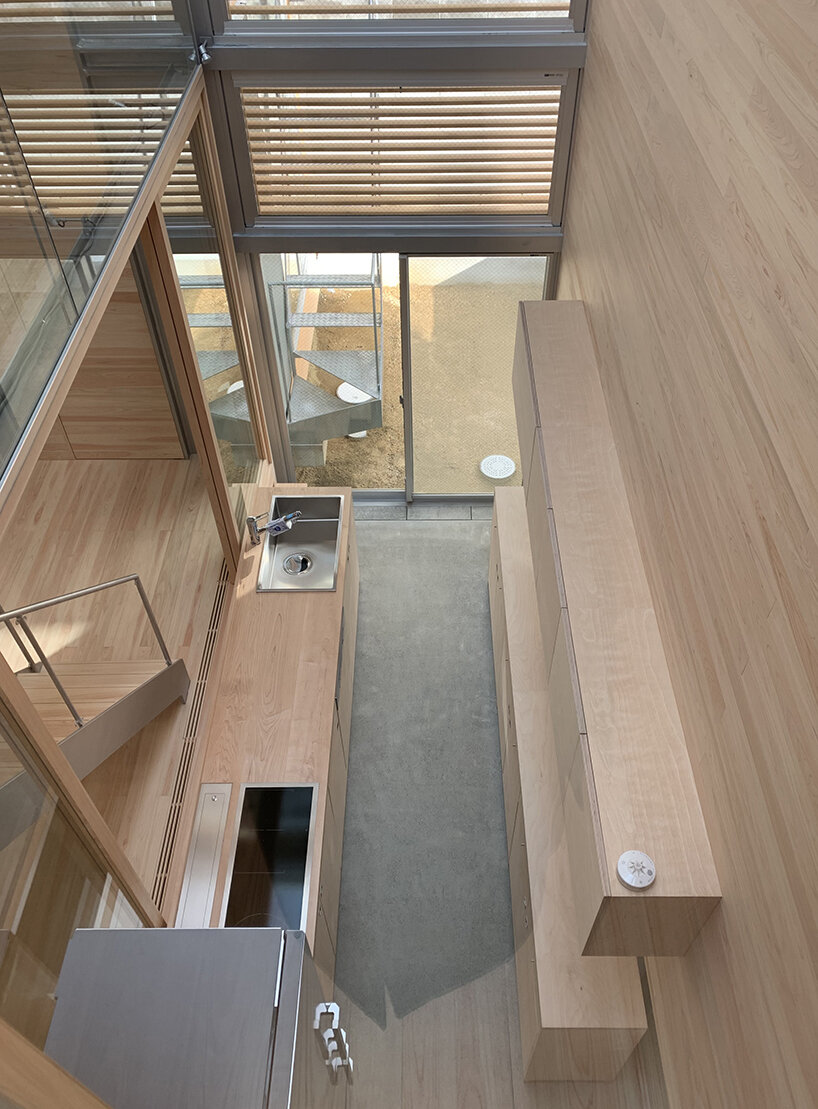
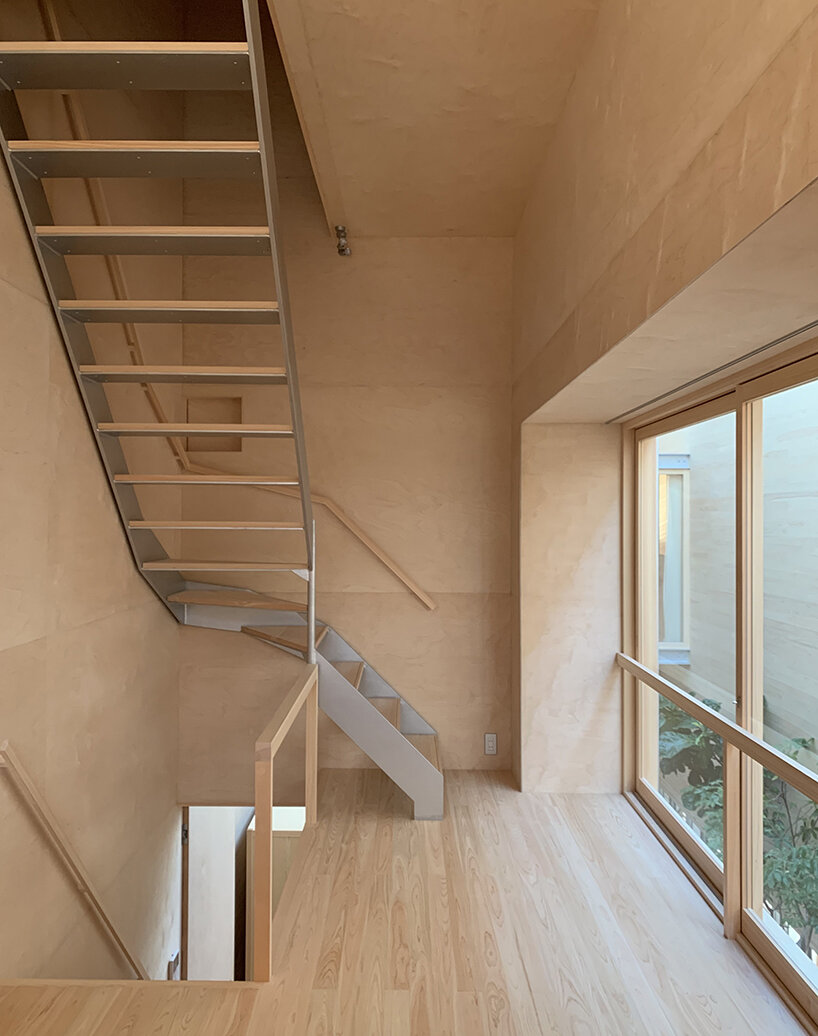
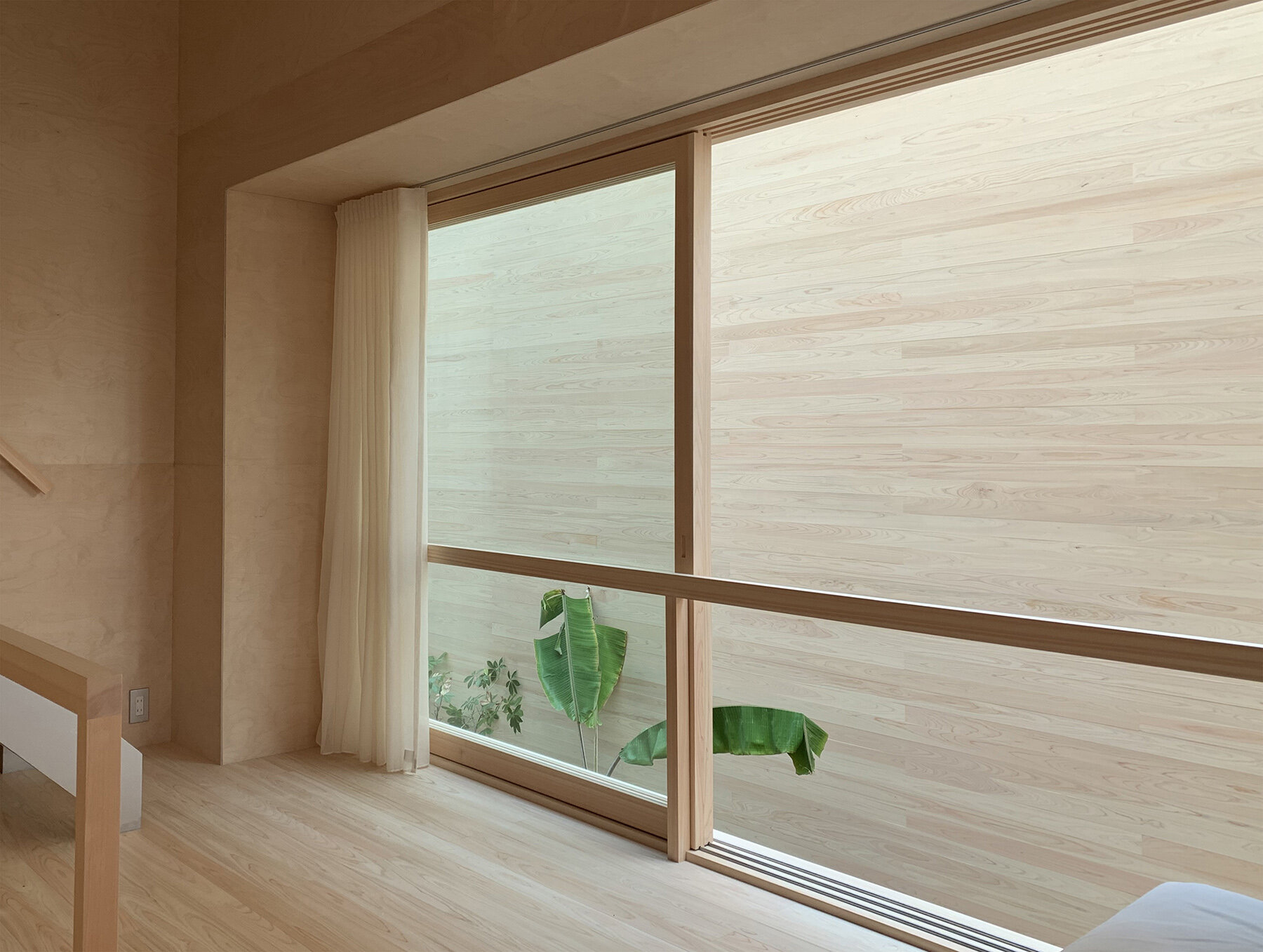
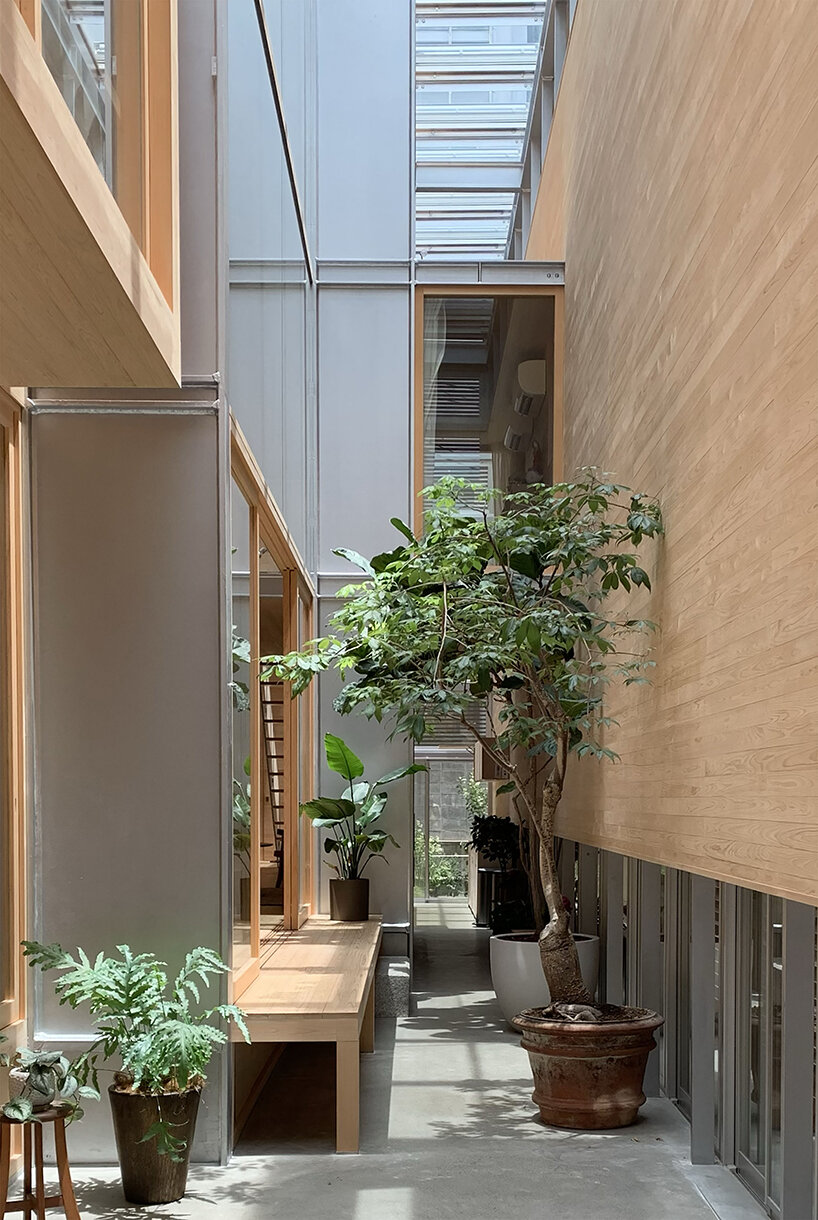
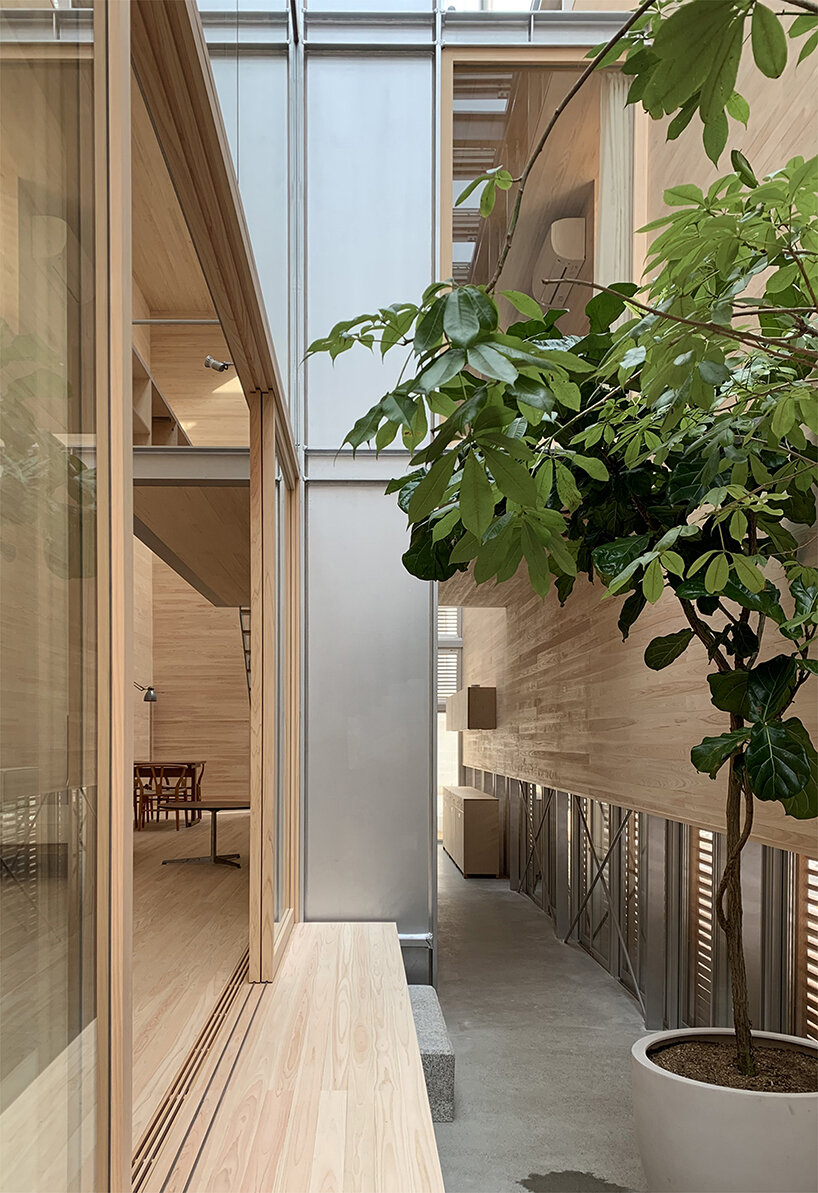
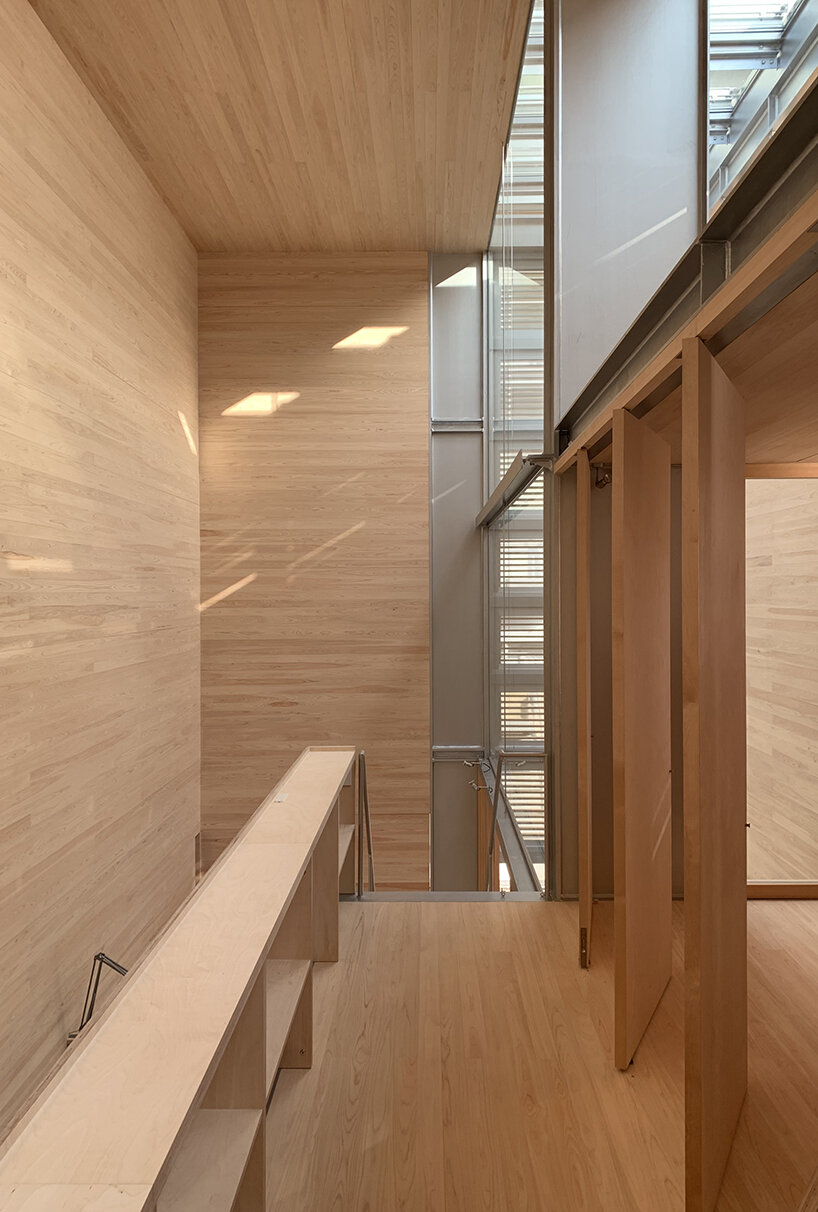
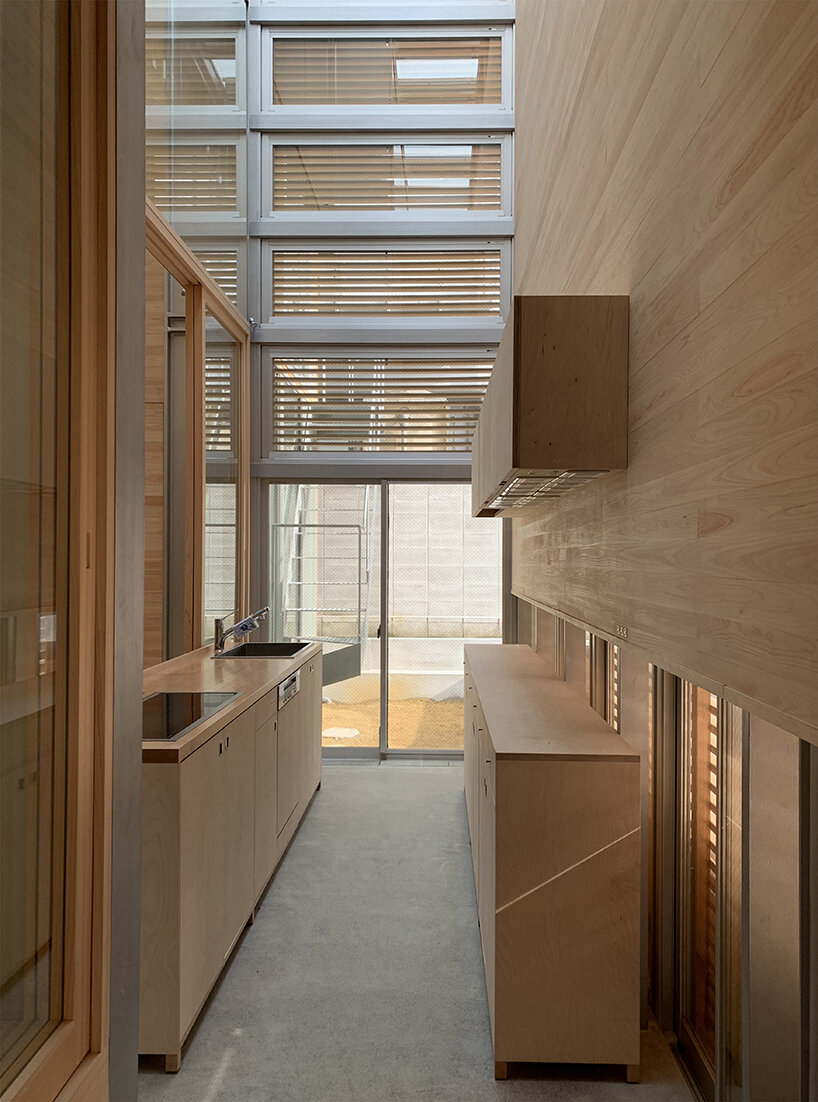
Ryue Nishizawa (see more here) divided Shochikucho House in two, following a longitudinal direction to create elongated living spaces (i.e., high ceilings). The first, on the south side, emerges as a ‘tori-niwa’ (passage made of earthen floor), while the north side turns into the living room — an elevated space with raised floors and finished in wood. This common area receives abundant natural light and ventilation from the tori-niwa, engulfing it with warmth. The earthen-clad tori-niwa on the south side functions as an ‘intermediate’ space — oscillating between inside and out — where residents can park their car or bicycle, water plants, and work in the kitchen.
Returning to the longitudinal layer of the project, both spaces boast extensively high ceilings, soaring up to nine meters, allowing them to receive unobstructed daylight even if surrounded by tall buildings. The nine-meter-high ceiling also creates a summer air flow through buoyancy-driven ventilation.
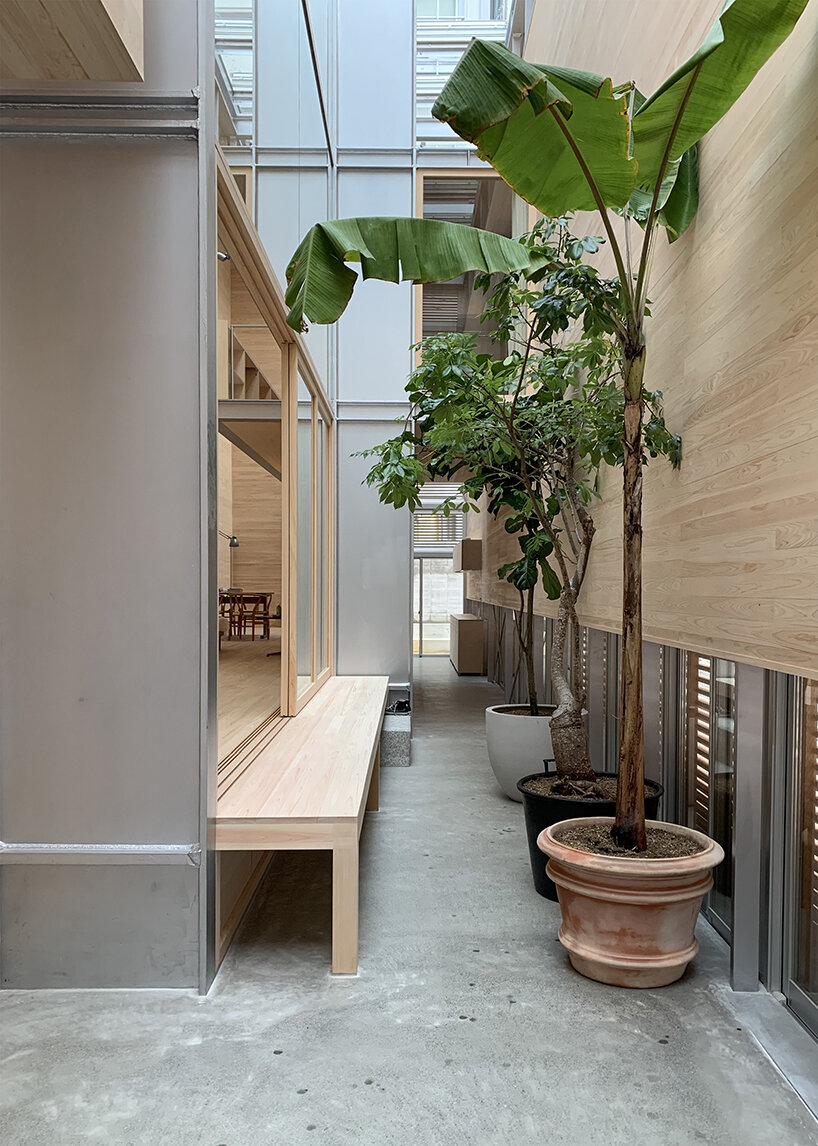
Beyond the difference in flooring — earthen versus raised — Ryue Nishizawa also focused on distinguishing the type of ventilation for each space; the living room is air-conditioned, while the tori-niwa relies on natural ventilation. These differences quickly halt when one leaves the fitting open to unite both rooms for flexible use. ‘By contrasting the raised floor and the earthen floor, I hoped to create a diverse home that can be used in various ways, allowing children to gather and play and adults to entertain and hold parties. The project also reinterprets and utilizes the traditional architectural language of Kyoto in a modern way. It is also an attempt to create a house that is connected to the city and history rather than the architecture becoming independent as a single entity,’ concludes the architect.
1/4
project info:
name: Shochikucho House
location: Kyoto, Japan
architect: Ryue Nishizawa
structural, MEP, facade: Arup
project period: 2015 – 2021
shop
your own online design shop — no sales commission collected